
A Migrating Warbler Burns A Tenth Of Its Weight In One Night – 13 Native Plants In Your Yard That Refuel It This October
A Yellow-rumped Warbler weighs about as much as a few paper clips, yet a single night of flying can burn off a tenth of its body weight. When it drops out of the dark sky at dawn, it needs food fast, and your yard might be the gas station it finds.
The right native plants can fill that tiny tank with fat-rich berries, seeds, and protein-packed insects. Here are 13 that do the job beautifully this October.
1. Dogwood
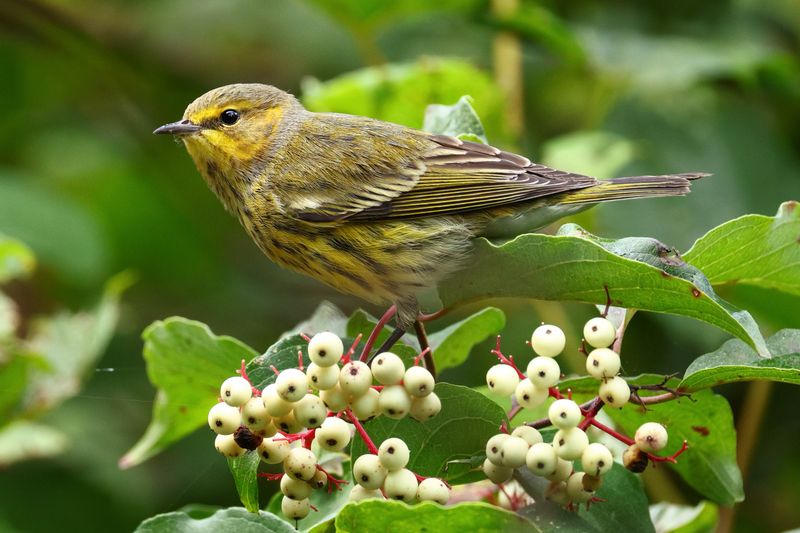
Picture a warbler landing at sunrise, wings tired after eight hours in the dark. A dogwood loaded with berries is about the best welcome sign it could see.
Gray, silky, and flowering dogwoods all ripen their fruit right as fall migration peaks.
Those berries carry a good dose of fat, which is exactly the fuel a long-distance flier burns. Birds often strip a dogwood clean within days, so don’t be surprised if your crop vanishes fast.
That’s a sign it’s working.
Dogwoods also host insects through the season, giving warblers a protein snack between berry bites. Shrubby types like gray dogwood handle sun or part shade and tolerate damp spots that stump other plants.
Plant one this fall while the soil is still warm, and water it weekly until the ground freezes.
2. Arrowwood Viburnum
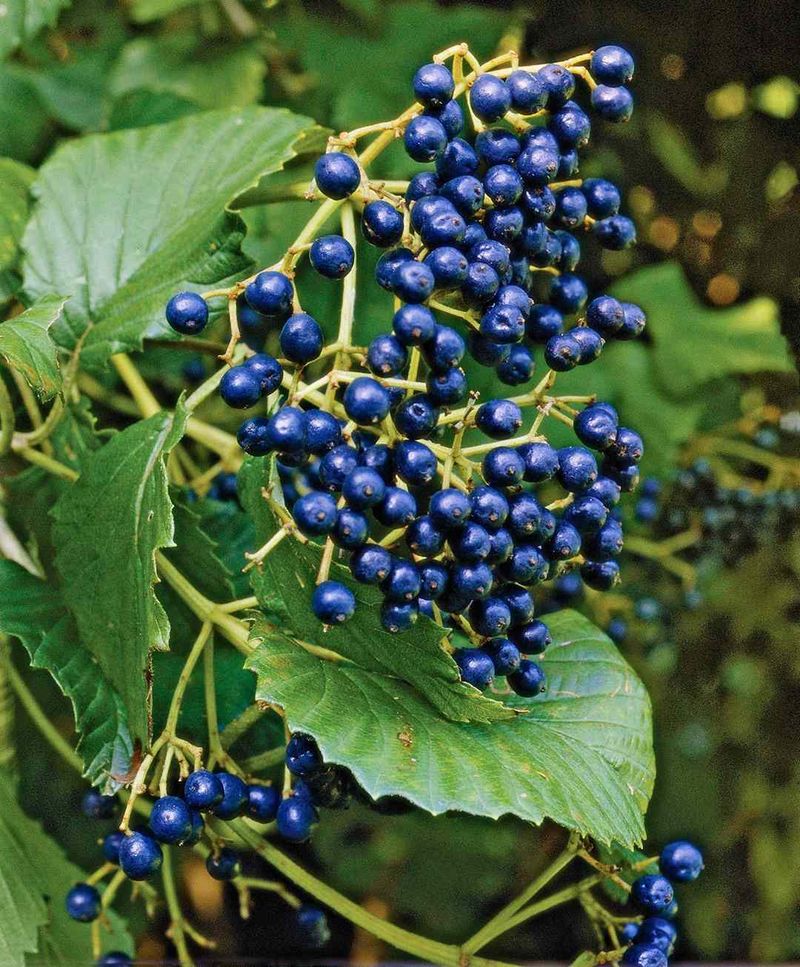
Researchers who measured fall fruits found something surprising about arrowwood viburnum. Its blue-black berries pack fats, carbohydrates, and antioxidants all at once.
For a bird running on empty, that’s a full meal in one bite.
Thrushes, vireos, robins, and cedar waxwings line up for these clusters in October. Warblers benefit too, partly from the fruit and partly from the caterpillars that munch viburnum leaves earlier in the year.
Gardeners love it for practical reasons. It shrugs off clay soil, grows into a tidy screen, and turns burgundy in fall.
Plant two different viburnums near each other for heavier fruiting, since many set more berries with a partner nearby.
3. Elderberry
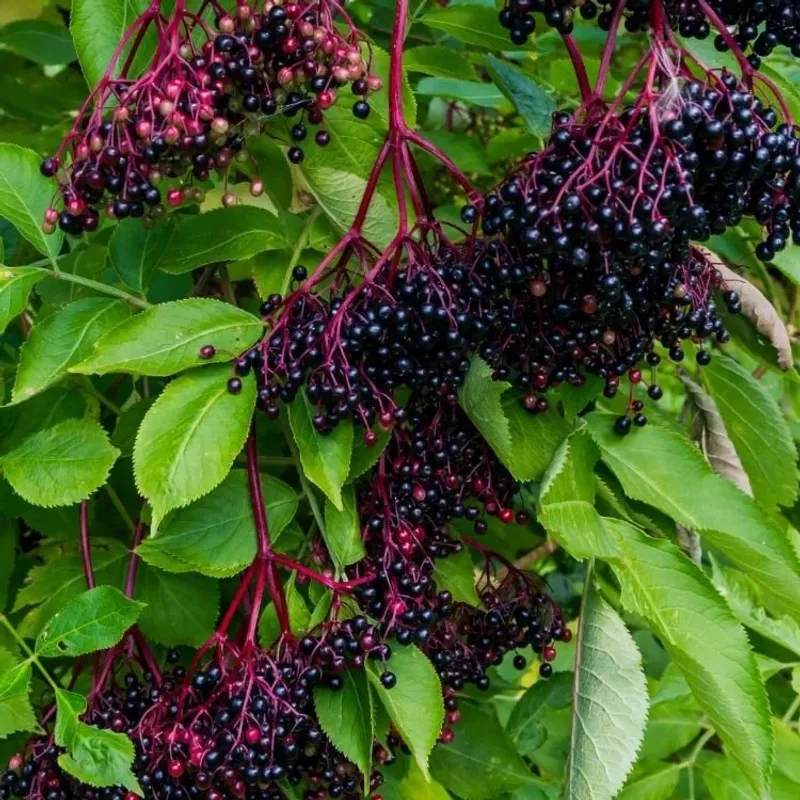
Grandma may have turned elderberries into jelly, but songbirds have been eating them straight off the stem for a lot longer. American elderberry produces big, flat clusters of tiny dark berries that birds gobble greedily.
Robins, mockingbirds, and plenty of migrants pick these clusters over in late summer and early fall. In warmer zones, some fruit hangs on into October, catching later travelers on their way south.
Elderberry grows fast and doesn’t fuss. Give it a sunny, moist corner and it may reach 8 feet in a couple of seasons.
One tip: let the clusters stay on the plant instead of tidying up, because those drooping heads are the whole point.
4. Black Chokeberry
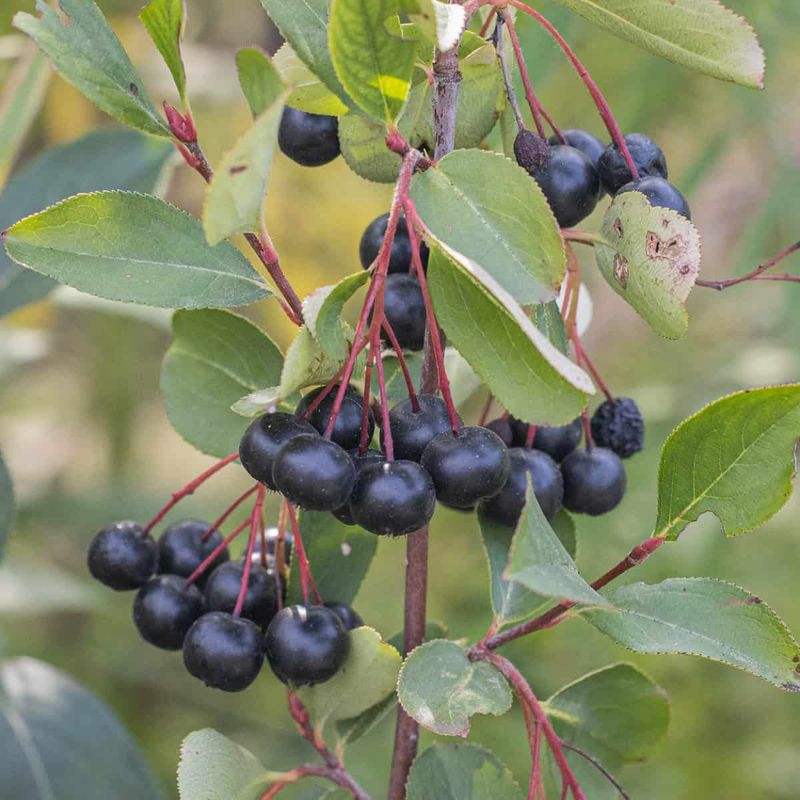
Ever bitten into a chokeberry? The name tells you everything.
Birds, though, don’t mind the pucker, and that sour taste is actually a quiet advantage.
Because the fruit isn’t a first pick, it often stays on the shrub longer than sweeter berries. That means it’s still waiting in October when hungry robins, bluebirds, and other fall migrants come through and the easy food is gone.
Aronia stays compact, usually 3 to 6 feet, so it fits small yards. It handles wet or dry soil and puts on a fiery red leaf show.
If yours sets few berries, more sun is usually the simple fix.
5. Staghorn Sumac
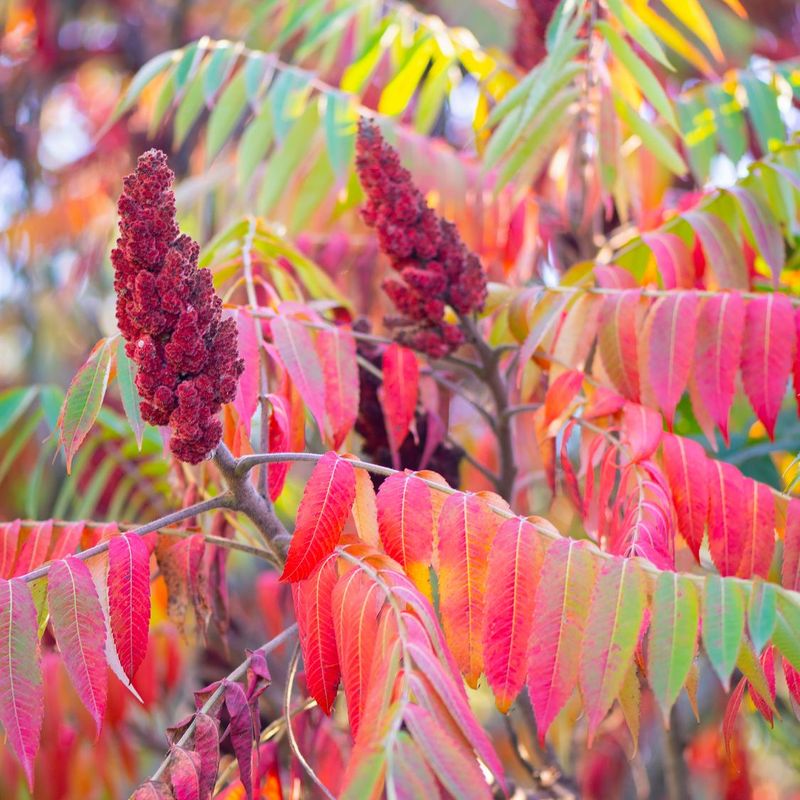
Those fuzzy red cones on sumac look like something from a cartoon, and they hold a secret: they stay put for months. Staghorn and smooth sumac keep their fruit clusters standing straight up through fall and deep into winter.
Fruit like that isn’t the richest food out there. It works as a backup pantry that’s always open, feeding finches, catbirds, and pileated woodpeckers when other shrubs are bare.
A quick heads-up: sumac spreads by roots. Give it a slope, a back fence line, or a spot you’d like filled.
In return you’ll get some of the most dazzling orange and red leaves of any native plant.
6. Oak
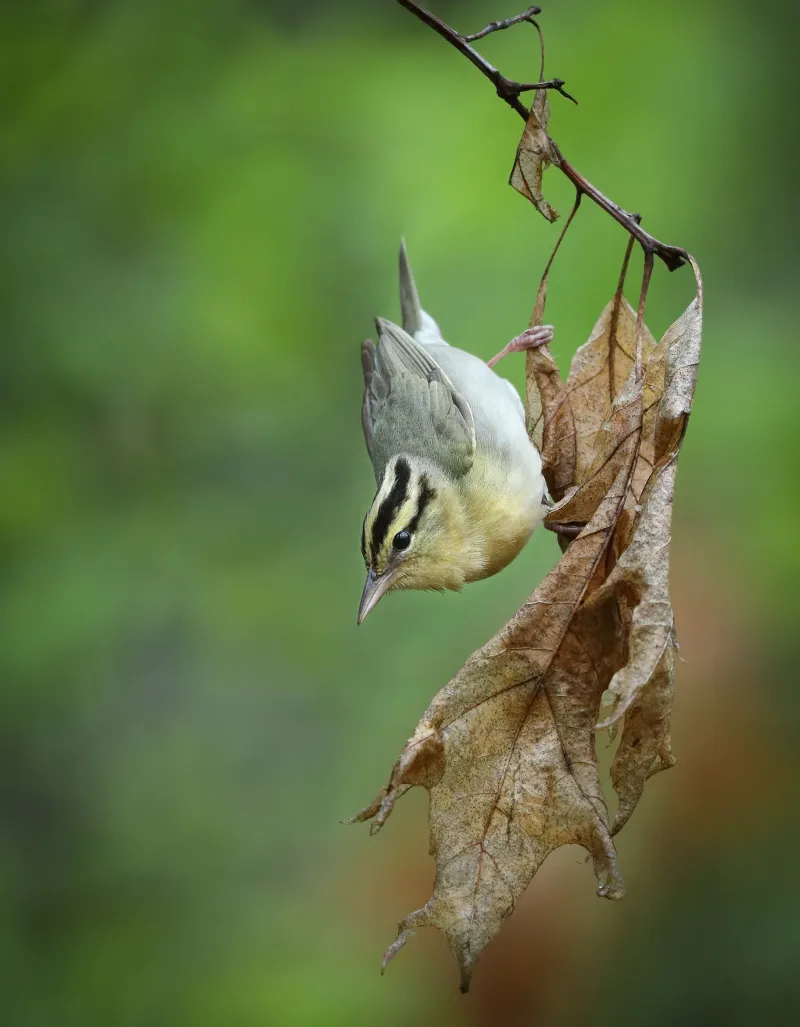
No berries here, and yet an oak might feed more warblers than anything else in your yard. The reason is caterpillars, and lots of them.
Oaks host hundreds of kinds of moth and butterfly caterpillars, more than nearly any other North American tree. Warblers are bug hunters at heart, and a single oak can serve as a buffet of soft, protein-rich prey.
That protein matters, since migrating birds burn muscle along with fat on long flights.
Watch an oak canopy on an October morning and you may spot tiny birds flicking from leaf to leaf, picking off insects. Oaks also offer shelter for resting birds, and acorns for jays and woodpeckers.
They grow slower than you’d like, so plant one this fall and let your future self thank you. Even a young oak starts hosting insects within a few years.
7. Black Cherry
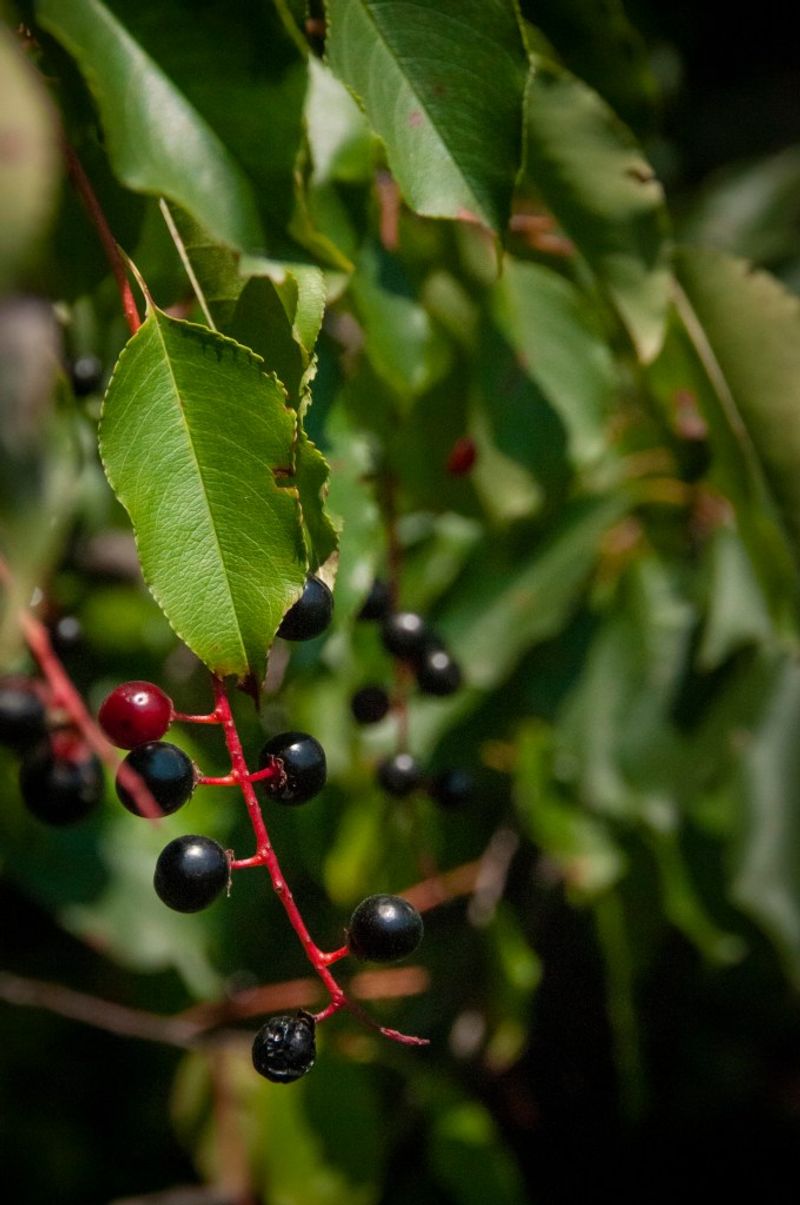
Second only to oaks for hosting caterpillars, black cherry pulls double duty. Its leaves feed dozens of insect species, and its fruit feeds the birds that eat those insects.
Small dark cherries dangle in long strings, and tanagers, thrushes, and orioles strip them eagerly. The insect crop keeps warblers busy, so one tree covers both protein and sugar.
Black cherry can grow tall, so place it away from patios where dropped fruit stains. Smaller native options like chokecherry give similar benefits in tight spaces.
Either way, you’re stocking two kinds of fuel at once.
8. New England Aster
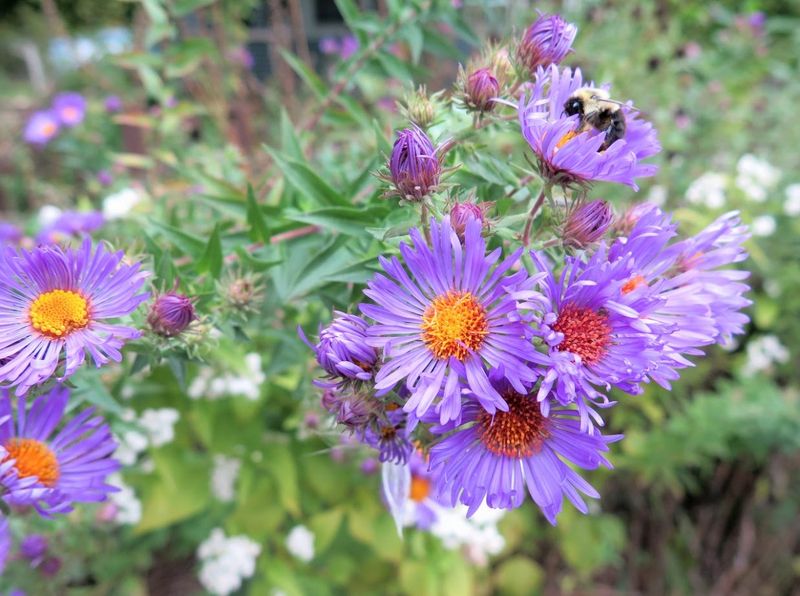
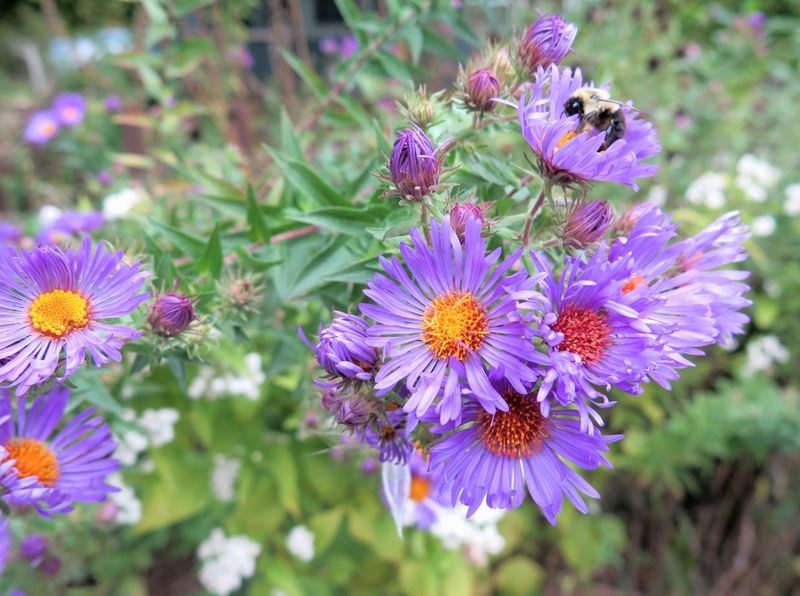
Just when most gardens fade, asters throw a purple party. New England and smooth asters bloom right into October, and that late timing is their superpower.
Flowers buzzing with bees, flies, and small beetles turn into hunting grounds for warblers looking for an easy insect meal. Later, the fluffy seed heads give sparrows and finches steady energy into winter.
The big tip here: skip the fall cleanup. Leave stems standing until spring so birds can keep picking at seeds.
If your asters flop, cut them back by a third in early June next year for sturdier plants.
9. Goldenrod
Let’s clear up an old myth first. Goldenrod does not cause hay fever, since its pollen is heavy and carried by insects, not wind.
Ragweed, blooming nearby, is the real sneeze culprit.
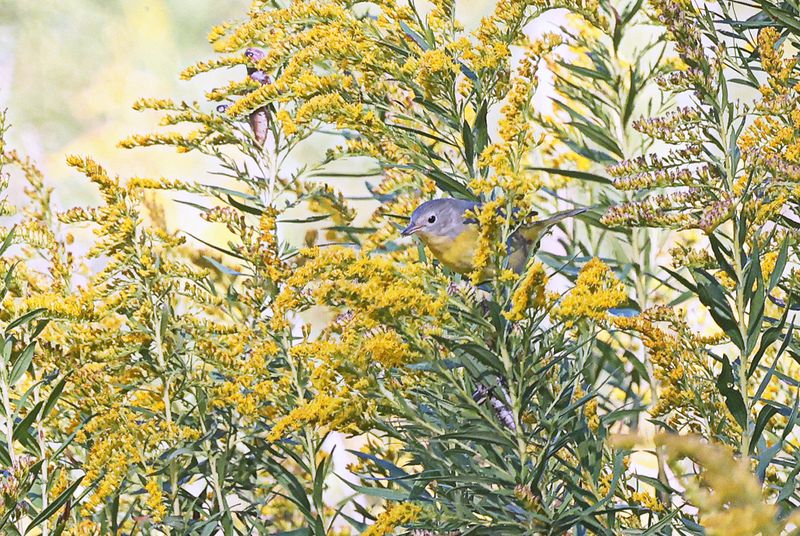
With that settled, goldenrod deserves a spot in any bird-friendly yard. Its golden plumes swarm with insects in September and October, and that crowd draws hungry warblers.
Palm warblers are especially fond of weedy, sunny patches like this.
Later, the seeds feed finches and sparrows. Choose clump-forming types like showy or stiff goldenrod if you’d rather not have it spread.
10. Purple Coneflower
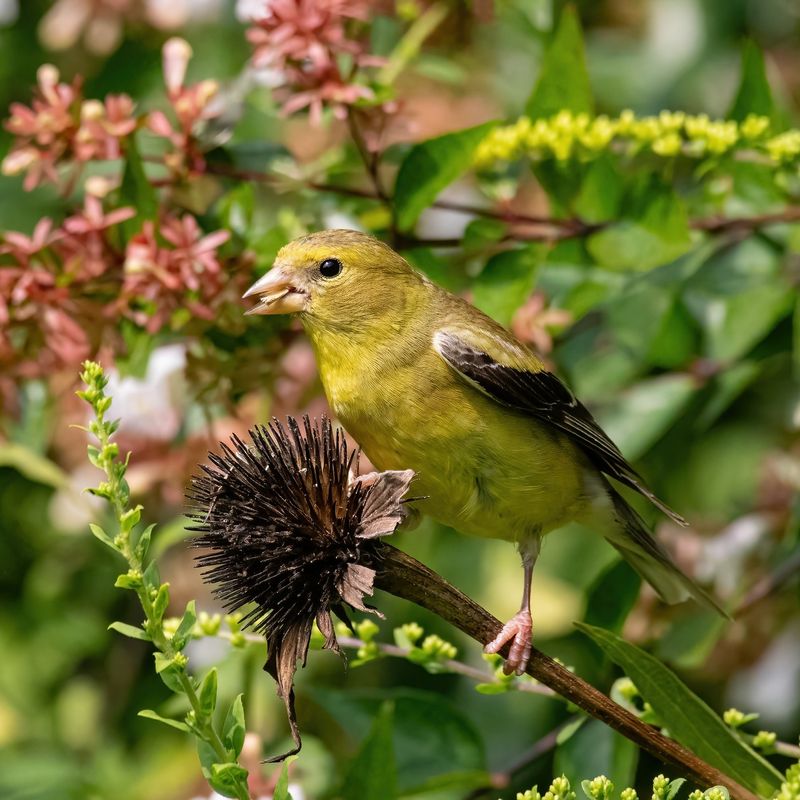
Here’s a plant you might already own. Purple coneflower is a backyard favorite for summer color, but its best work may come after the petals drop.
Those spiky dark seed heads are snack bars for goldfinches, chickadees, and juncos. While it isn’t a top warbler food, it adds variety to the buffet and keeps your yard busy with birds, which helps migrants notice the spot.
The easy fix most gardeners miss: stop deadheading in late summer. Let a few heads dry on the stem, and you’ll have birds perched on them by October.
11. American Beautyberry
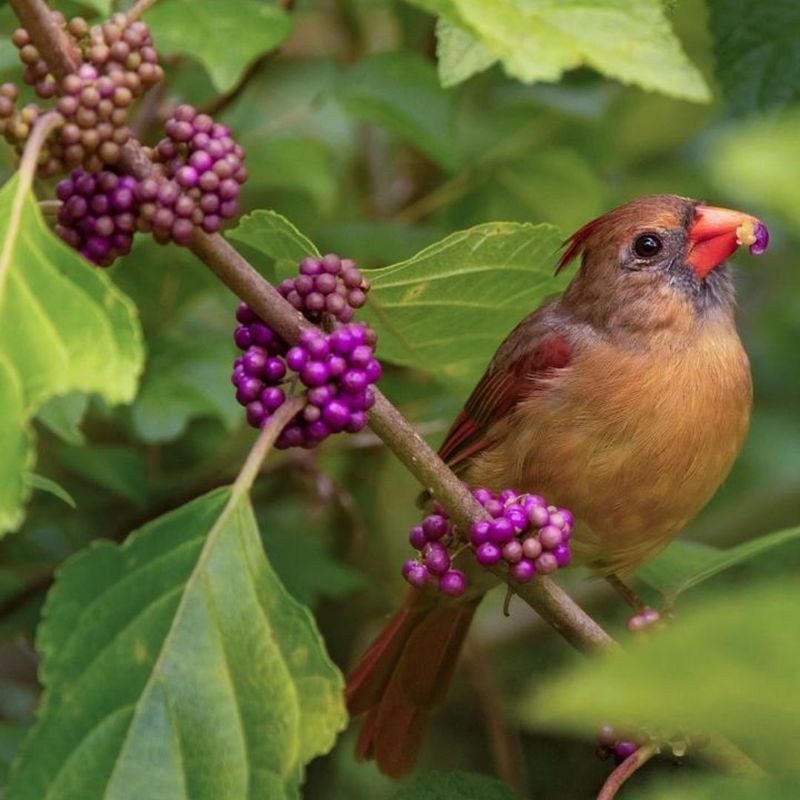
Nothing in the fall garden looks quite like beautyberry. Bright magenta berries ring its arching stems, almost glowing against yellowing leaves.
Dozens of bird species feed on them, including mockingbirds, thrushes, catbirds, and even Black-throated Blue Warblers. The berries hang on through fall and into winter, so birds can return again and again.
Beautyberry thrives across the South and lower Midwest. It handles part shade and poor soil.
If it gets leggy, cut it back hard in late winter, since it fruits on new growth.
12. Winterberry Holly
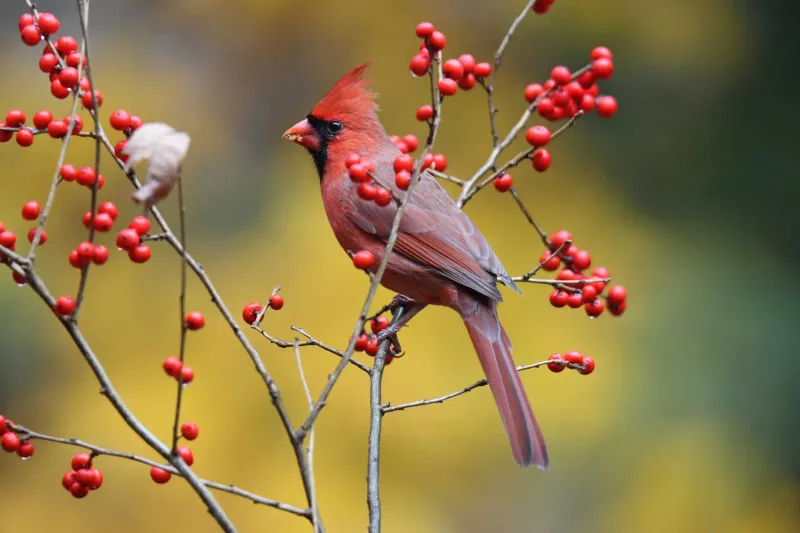
After the leaves drop, winterberry looks like someone wrapped its branches in red beads. That glow is a lifeline for late migrants and winter birds alike.
Winterberry and its evergreen cousin American holly hold berries well past October, when other food is scarce. American holly adds year-round cover where birds can hide from wind and hawks.
One catch trips up many gardeners. Hollies need a male plant nearby for the females to set fruit.
If your winterberry has never berried, a missing male is the likely cause, and one pollinator plant can serve several females.
13. Northern Bayberry
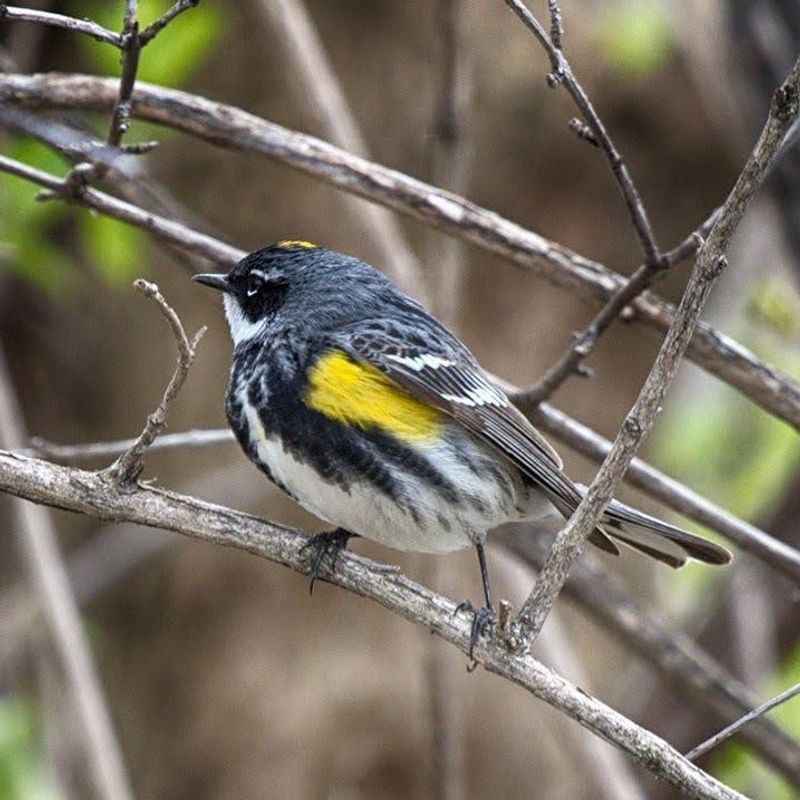
Yellow-rumped Warblers have a party trick most of their relatives lack. They can digest the waxy coating on bayberries, which lets them tap one of the fattiest fruits around.
That fat lets them linger farther north later in fall, sometimes all winter, while other warblers have long headed south. If you want to host this species in October, bayberry is the plant to grow.
Northern bayberry tolerates sandy, salty, and poor soils where many shrubs fail. Like holly, it needs both male and female plants for berries.
Plant a small group and enjoy the spicy scent of its leaves too.