
Opossums Showing Up In Your North Carolina Garden Are Possibly Doing You An Incidental Favor
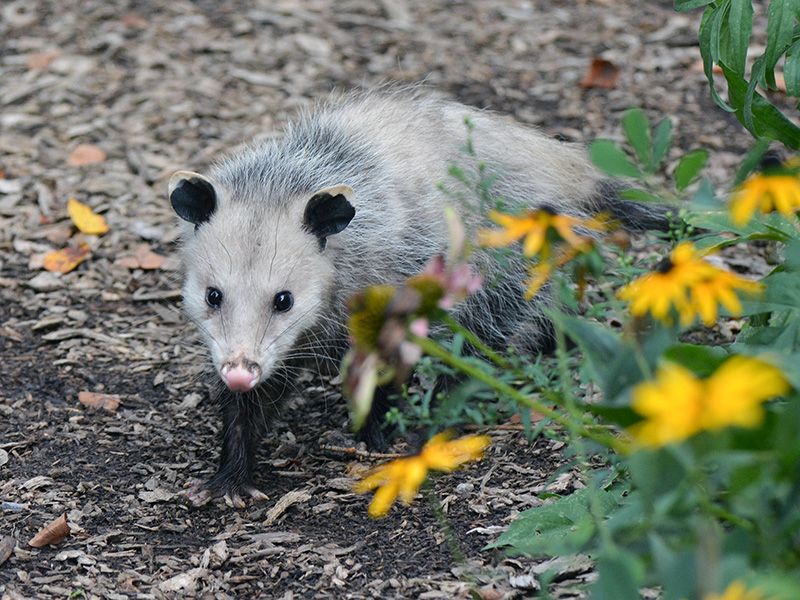
If you spot a shaggy gray animal with a pink nose shuffling across your lawn after dark, you have met the Virginia opossum. You may have heard that it eats ticks and slugs, and that sounds like a gift to any backyard gardener.
The real story is more interesting, and a little more cautious. Here is what North Carolina wildlife experts and researchers actually say, and how to be a good steward of both your garden and your visitor.
A nighttime sighting is ordinary in North Carolina
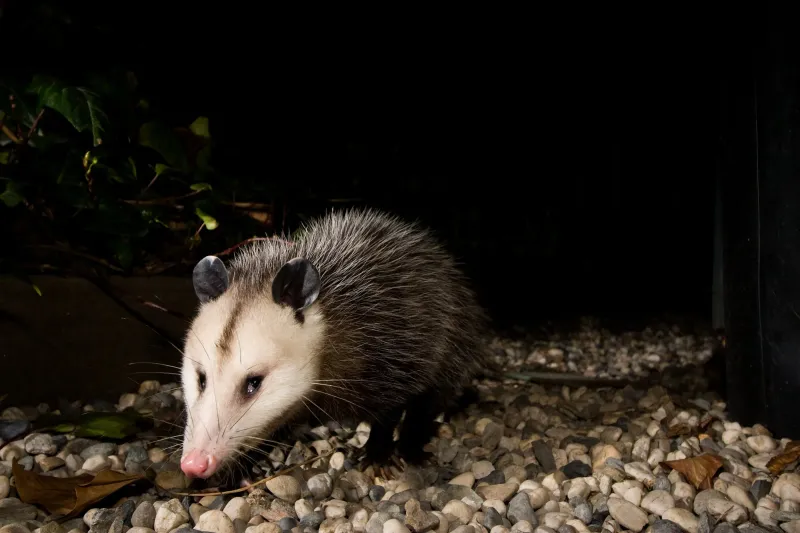
Picture a quiet evening in the Piedmont, the porch light flickering on, and a pale, whiskered face drifting along the edge of your vegetable bed. That is a Virginia opossum, and seeing one is not a sign that something has gone wrong.
According to the NC Wildlife Resources Commission species profile, the Virginia opossum is native here and occurs throughout the state, from the coast to the mountains.
These animals are primarily nocturnal, which means they do most of their traveling, sniffing, and foraging while people are indoors. So a nighttime sighting is simply ordinary behavior.
It does not mean the animal is sick, lost, or looking for trouble.
It also does not mean the same opossum is stopping by your garden on a set schedule. Some homeowners see one often, others once a season, and many never notice them at all.
If you want to know how regularly your yard gets visitors, your own observations are the best clue. A trail camera or a quick look from a window can tell you more than any general claim.
It helps to think of an opossum as a local resident passing through, not an intruder and not a pet. It is a wild North Carolina animal that has lived alongside people for a long time.
Treating it with calm respect, and a bit of distance, is the starting point for everything else in this article.
Once you see it that way, the practical questions get easier. What does it eat while it wanders through?
And does any of that help your garden? The next sections take those questions one at a time.
Slugs and snails are among its documented foods
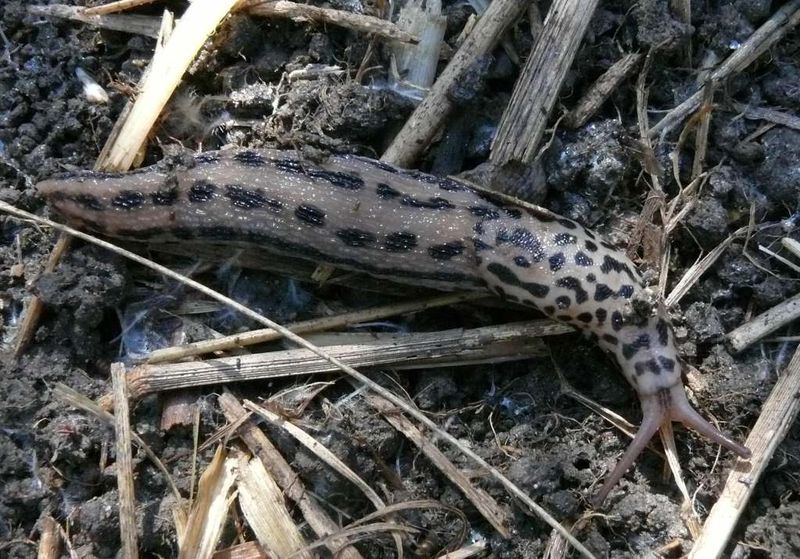
Opossums are not picky eaters. The NC Wildlife Resources Commission describes the Virginia opossum as an omnivore, with a menu that includes insects, worms, fruit, vegetation, small animals, and carrion.
Slugs and snails are on that list too.
That is good news if hostas and lettuce are your pride and joy. It is worth reading the list carefully, though.
A food that appears on a diet list tells you what an opossum may eat when it comes across it. It does not tell you that the animal goes looking for garden mollusks, or that it visits a yard to hunt them.
Think about how a generalist forages. It shuffles along, sniffing at the ground, and takes what is easy to find.
On one night that might be a fallen pear. On another it might be a beetle, an earthworm, or a spilled bowl of cat food.
A slug under a flowerpot is simply one more possibility among many.
The wildlife commission does not say how often opossums eat slugs and snails, and it does not say they do so in residential gardens. So the fair way to put it is that your visitor may eat a slug now and then if it happens to find one.
That is a nice little bonus, but it is not a plan, and it is not something you can count on.
A possible meal is not dependable pest control
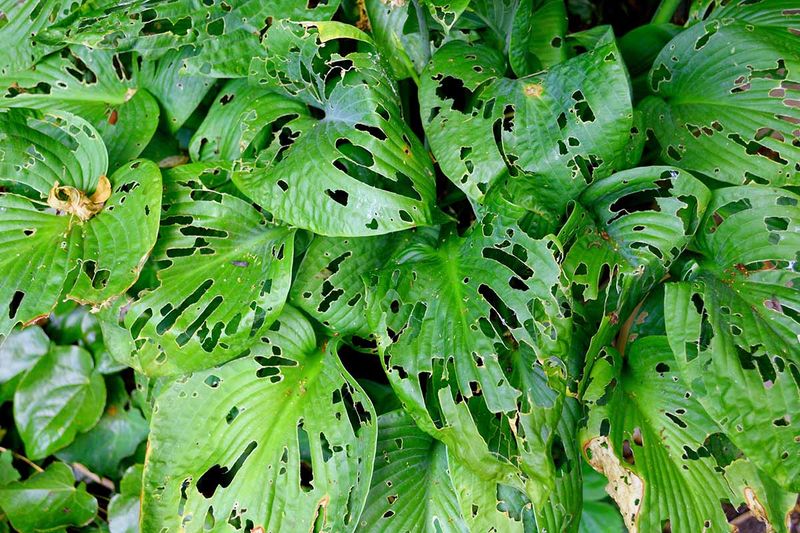
Here is the honest bottom line for your hostas. An opossum may eat some of the slugs or snails it finds, but nobody has measured how many backyard opossums actually eat, and no source shows that their visits lower slug numbers or reduce chewed leaves.
Any benefit you get is a happy accident.
Consider what that means on a damp May evening when slugs are out in force. One opossum, passing through on a wide nightly route, is up against a population that hides under mulch, boards, and pots all day and multiplies when conditions stay moist.
Even a hungry visitor would be unlikely to keep pace, and the wildlife commission’s diet information does not claim otherwise.
A useful diagnostic clue: if you are finding ragged holes and silvery trails week after week, the problem is still there, whether or not an opossum has been through. Trust the damage you can see over a claim about what a wild animal might be doing out of sight.
The practical move is to manage slug pressure yourself and treat the opossum as a bystander. You do not need to chase it off, and you should not lure it in either.
Leave it out of the plan, and put your effort into the habitat changes covered in a later section, which are within your control.
The tick story does not prove yard-wide protection
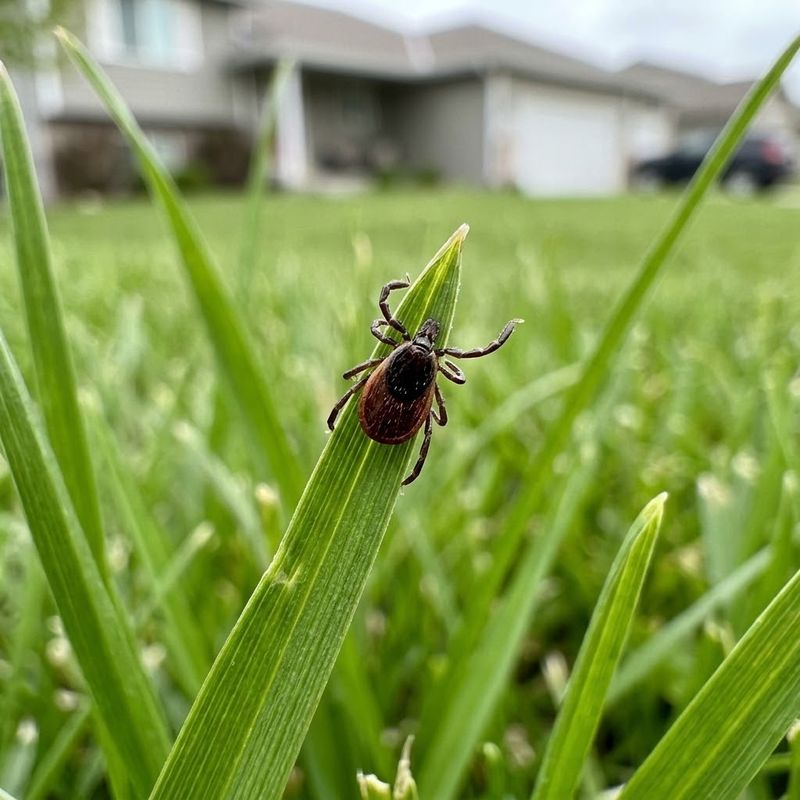
You have probably heard that one opossum eats thousands of ticks. It is a popular claim, and it deserves a closer look.
It traces back to a 2009 experiment in which many blacklegged tick larvae that tried to feed on certain hosts, including opossums, did not feed successfully. Larvae that went missing were assumed to have been eaten during grooming.
That result is about how ticks fare on a host. It is not the same as showing that opossums eat ticks in the wild, or that they reduce ticks around homes.
A later look at actual stomach contents points the other way. A 2021 study examined 32 Virginia opossums in central Illinois and found no ticks or tick parts.
The authors also found no backing for tick eating in earlier diet studies. One small study does not prove that no opossum ever eats a tick, but it is a good reason to drop the big numbers.
So where should your tick effort go? North Carolina DHHS suggests reducing tick habitat around the home with selective landscaping, such as pruning shrubs, removing leaf litter, and keeping grass short.
For you and your family, CDC tick guidance centers on personal bite prevention and tick checks after time outdoors. This weekend, a rake and a pair of pruning shears will do far more than any hope of nocturnal help.
Manage slug pressure directly
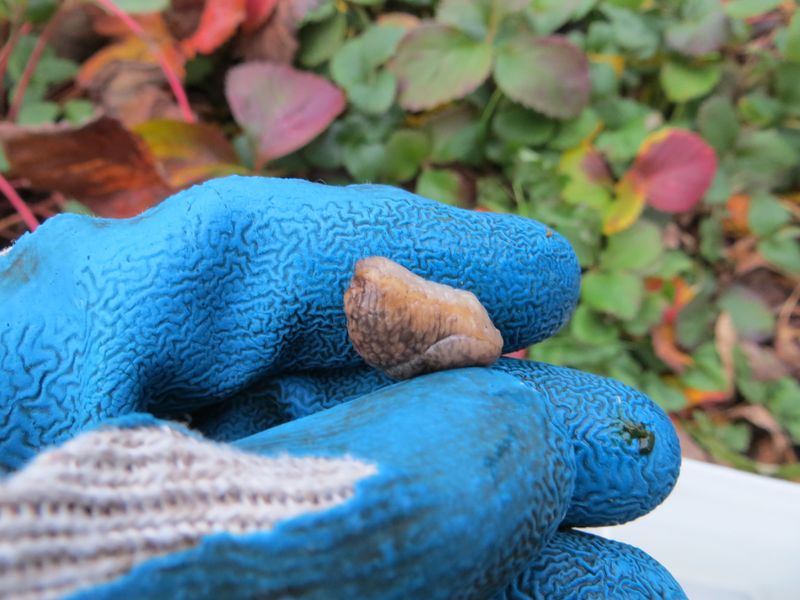
Slugs love damp, shady shelter. NC State Extension recommends cutting down on moist hiding places and debris, and, in home gardens, hand-picking slugs.
Both steps are simple, cost nothing, and work on your schedule instead of an animal’s.
Start with a walk around your beds. Look for old boards, stacked pots, thick piles of leaves, and anything else that stays wet and dark during the day.
Clearing those spots takes away the daytime shelters slugs rely on.
Next, try a evening or early-morning round with a flashlight, when slugs are active and easy to spot. Pick them off the plants you care about most, such as hostas, seedlings, and tender greens.
A small container makes the job quick, and repeating it over a few nights keeps pressure down.
Notice how different this is from waiting on a wild visitor. These steps are direct and repeatable, and you can see whether they help.
An opossum’s visit is unpredictable and unmeasured. If one happens to snack on a slug while passing through, consider it a pleasant extra rather than part of your pest plan.
Coexist without feeding or handling the animal
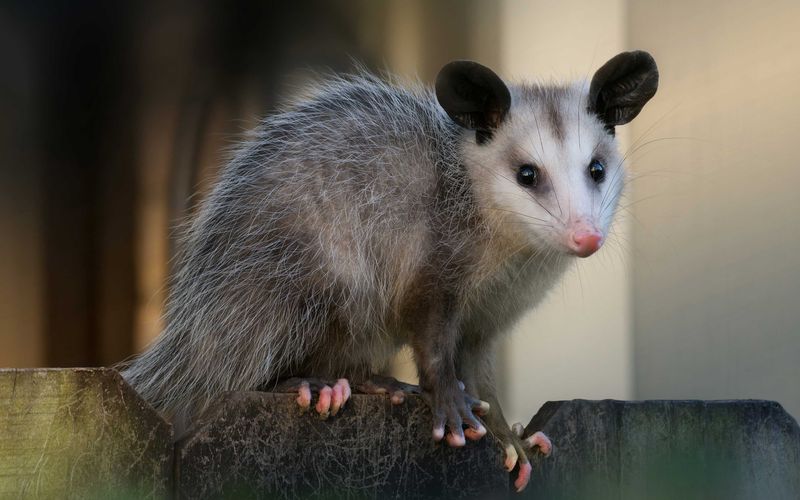
Letting an opossum pass through is mostly about what you do not do. The wildlife commission’s conflict guidance advises against feeding wildlife and recommends securing pet food and other attractants.
Bring bowls inside at night, and keep bird seed and compost from becoming an open buffet.
Garbage is the other big draw. The commission’s opossum profile recommends tight-fitting lids, and says that removing food scraps can prompt an animal that regularly visits trash to move on.
It also notes that opossums may occasionally prey on eggs or young chicks, so secure a backyard coop.
Keep your distance and never try to pick one up. If you see an opossum in daylight, that alone is not necessarily cause for concern.
Prolonged exposure in the open or tight circling may be a reason to call a wildlife rehabilitator.
On health, opossums are highly resistant to rabies, but not immune, so do not call them harmless. CDC rabies guidance recommends staying away from wild animals.
If anyone is bitten or scratched, wash the wound well and contact a healthcare provider or your local public health department promptly for advice.
Keep pets and children indoors or supervised near dusk if an opossum has been spotted, and let it go on its way.
Let it pass, but use proven prevention
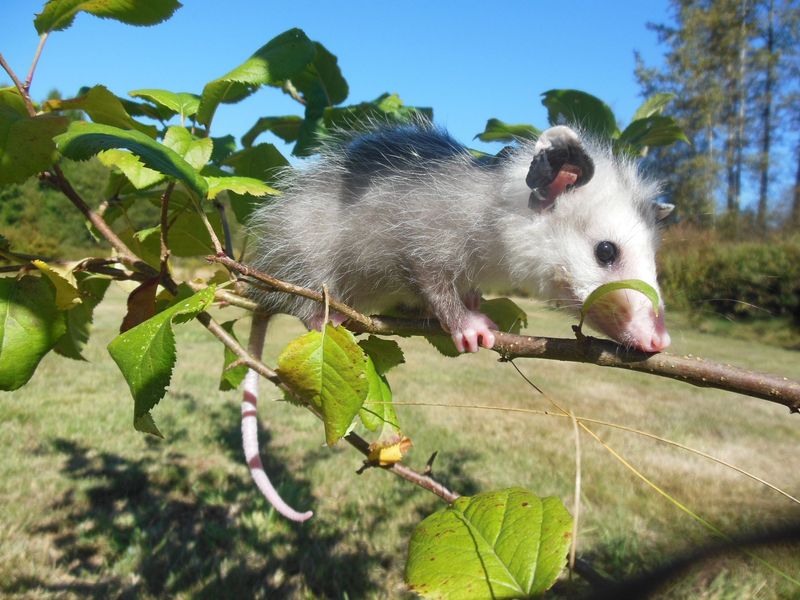
The wildlife commission lists slugs and snails on the opossum menu, so a visitor may nibble a few. That is where the promise ends.
Your garden and your family still need the steps that are known to work.
Keep the damp debris cleared and hand-pick slugs, as NC State Extension suggests. Follow CDC tick prevention every time you spend time outdoors.
Then simply let the night shift go by. A quiet yard, secured scraps, and a respectful distance are the whole welcome it needs.
The best garden guest is the one you never have to manage.