
The Quiet Step North Carolina Gardeners Take Before Bringing Potted Plants Indoors So Pests Never Spread To Houseplants
Your fern, hibiscus, or jade plant spent the summer outside, and it may have picked up some small passengers. Tiny pests can be hard to see, and a crowded windowsill gives them an easy path to your other plants.
A short, calm routine can lower that risk. Here is a simple sequence for North Carolina gardeners to follow this fall.
A single inspection can miss pests that spread indoors
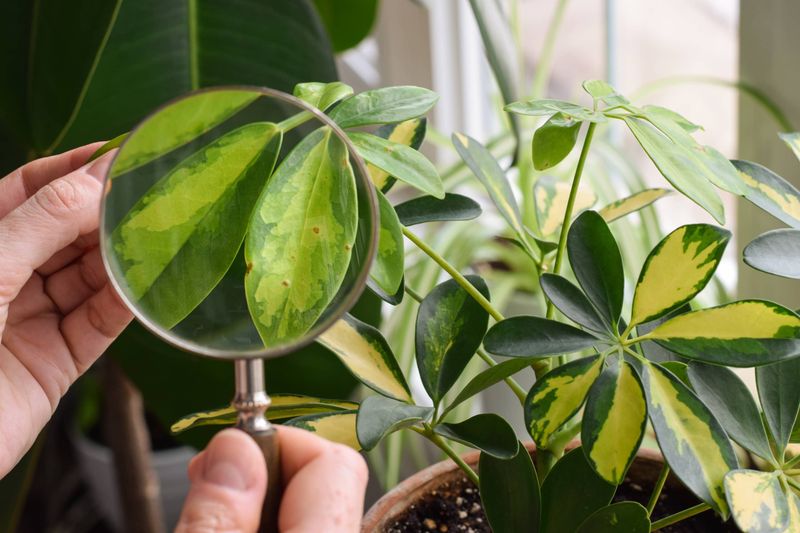
Summer outdoors is good for container plants, but it also puts them in contact with whatever lives in your yard. Aphids, scale, and spider mites are common examples of pests that can ride along in a pot.
They are not the only ones, since mealybugs, whiteflies, and fungus gnats also show up on indoor plants. Not every pot will have a problem, but it is wise to treat hitchhikers as a possibility.
The trouble is that a quick look may not catch everything. Scale can look like a harmless bump on a stem, and spider mites are so small that early damage is easy to overlook.
Spider mites are arachnids rather than insects, but they can still multiply and move from one plant to the next. University of Minnesota Extension describes common indoor plant pests and notes how easily they can go unnoticed.
That is why extension advice leans on isolation, not just a single inspection. Penn State Extension recommends keeping plants apart while you watch for trouble.
Keeping returning pots separate from your established houseplants can reduce the chance of spread, though it cannot promise that pests will never reach them.
The routine in this guide has a few parts: time the move indoors, inspect carefully, keep plants separate, respond to problems with care, and keep checking afterward.
Temperature needs determine when a plant comes inside
Quarantine and the move indoors are two separate decisions. The date a plant comes inside should depend on what the plant can tolerate and what the forecast says.
A cold-sensitive plant should not be left out in the chill for weeks just so it can finish an isolation period.
For tender plants, NC State Extension advises bringing them inside when nighttime temperatures drop to 55°F. Think of that as guidance for tender plants, not a rule for every species.
Some plants shrug off cooler nights, and others sulk well before that, so check what your specific plant prefers.
Watch the forecast in the Piedmont, the mountains, and along the coast, since fall nights cool at different speeds in each region. A mountain gardener may be hauling pots in weeks before someone near the coast.
Penn State Extension also gives timing guidance that differs a bit from NC State, which is another reminder that thresholds vary.
Once a plant comes in, the separation can simply continue indoors. A spare room, a closed-off porch, or a corner far from your other plants can serve as its temporary spot.
Inspect the places pests and their signs can hide
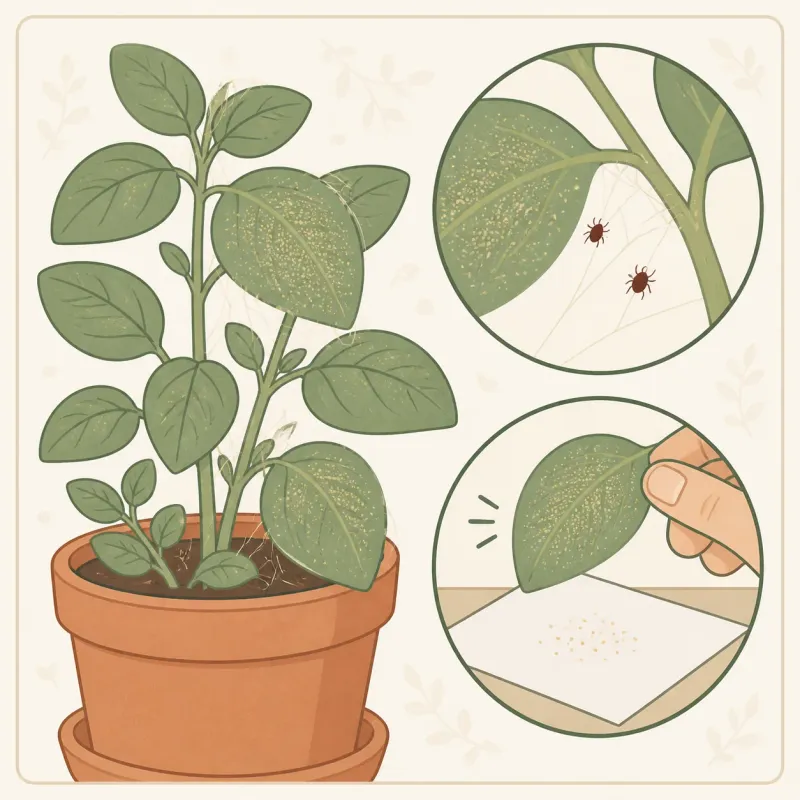
Do the inspection before the plant goes anywhere near your indoor collection. Work slowly and in good light, and look at both the tops and the undersides of leaves.
Check along the stems and in the joints where leaves meet the stem, since small pests like to tuck into those spots.
Then look lower. Examine the soil surface, the rim of the pot, and the saucer underneath, because pests and their eggs can hide in all of these places.
You are looking for insects, tiny eggs, fine webbing, chewed or speckled leaves, and sticky honeydew. University of Minnesota Extension lists these kinds of clues for common indoor plant pests.
A hand lens helps a lot, since many pests are nearly too small to see. To check for spider mites, hold a sheet of white paper under a suspect leaf and tap the leaf firmly.
Tiny specks that start to crawl across the paper may be mites. Another University of Minnesota guide suggests inspecting plants carefully before they come in for winter.
Even a thorough check can miss small pests or eggs, so treat inspection as the first step and not the whole plan. Isolation still comes next.
Keep returning plants apart while you watch them
Physical separation is the heart of quarantine. Choose a spot away from your established houseplants, such as a spare bedroom, a bathroom with a bright window, or a sunroom with a door.
Keep the new arrivals from touching leaves with your other plants, and avoid sharing saucers or trays.
Each time you water, glance at the plant. Look for new webbing, sticky leaves, or spots, and wash your hands or tools if you handle a suspect plant before touching others.
How long should it last? Advice differs.
Penn State Extension suggests keeping plants apart for three to four weeks, and a second Penn State guide describes isolation as a way to watch for problems. University of Minnesota guidance in its houseplant article points to a shorter window, around a couple of weeks.
Treat three to four weeks as a cautious choice, not a proven requirement. None of these periods has been shown to guarantee a pest-free plant.
If you can spare the space, a longer watch gives slow-building problems more time to show themselves.
If you find pests, treat the affected plant with care
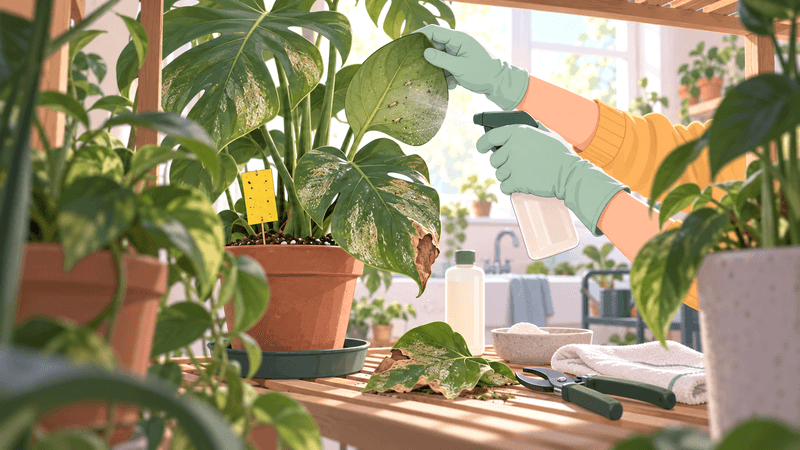
If you spot something suspicious, keep that plant isolated and take a closer look. Identify what you are dealing with before you act, since aphids, scale, mealybugs, and mites are handled a little differently.
For minor problems, simple steps may help. University of Minnesota Extension mentions options such as removing pests by hand, pruning off badly infested parts, and rinsing foliage.
A rinse can knock off visible pests, but it will not necessarily remove every egg or hidden insect.
A lukewarm-water soak of the pot is another measure Penn State Extension describes. It is not needed for every plant, and it does not guarantee results.
Pesticides are not a routine step for every returning plant. If you decide one is warranted, choose a product labeled for your particular plant, the specific pest, and indoor use.
The EPA explains why reading labels matters, and the label directions should be followed exactly.
After any treatment, keep the plant apart and keep watching it. Repeat checks will tell you whether the problem is fading or returning.
Keep checking after plants join the collection
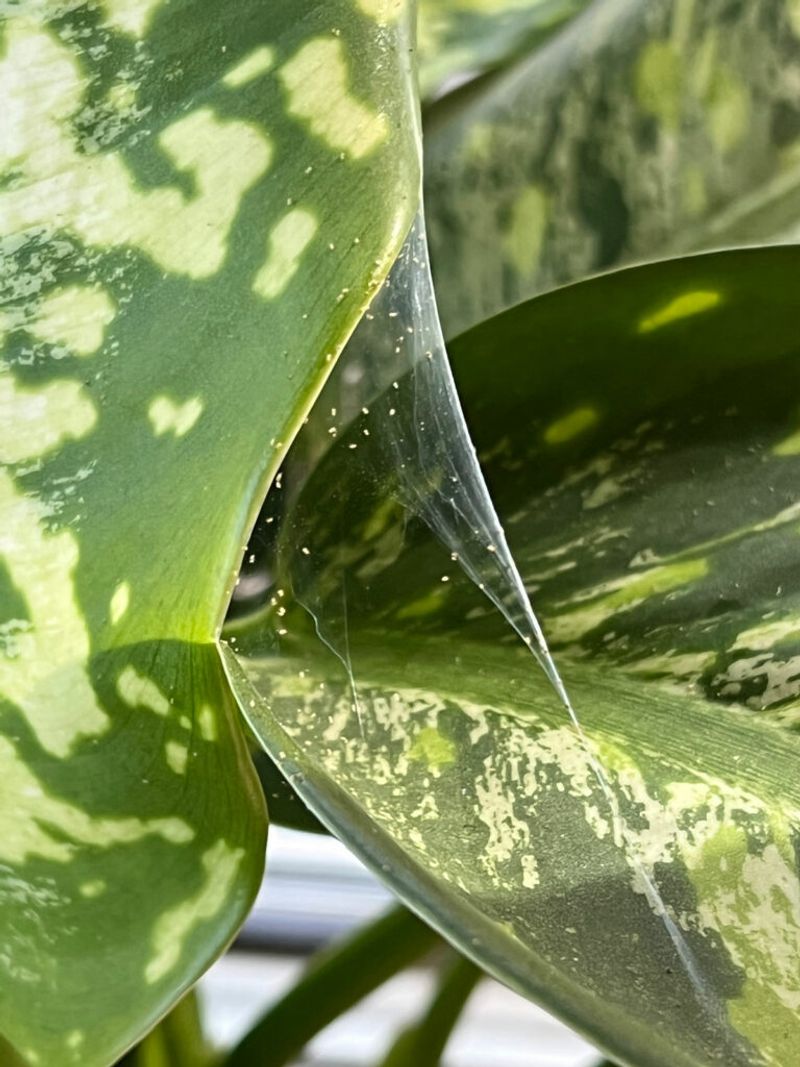
When quarantine ends and a plant moves next to your other houseplants, the watching should not stop. A clean first inspection or a finished isolation period does not prove that no pests remain.
Small problems can show up weeks later.
Spider mites are a good example. They are tiny and easy to miss, and Penn State Extension explains that their life cycle can be short in favorable conditions, so numbers can climb quickly.
University of Minnesota Extension also encourages ongoing attention to plants brought in for winter.
Make it a habit. Look over leaves and stems when you water, and pay extra attention to the plants that spent the summer outside.
A few quiet minutes of looking now and then is the cheapest pest control a houseplant collection will ever get.