
Thin Fall Lawn? Measure the Thatch Before You Rent a Dethatcher
Fall is when many lawns show their weak spots, and thin grass can make you want to grab the nearest machine. But renting a dethatcher is not always the right move.
A few simple checks can tell you what your lawn actually needs. Then you can pick the gentlest fix that fits.
A thin lawn is a symptom, not a diagnosis
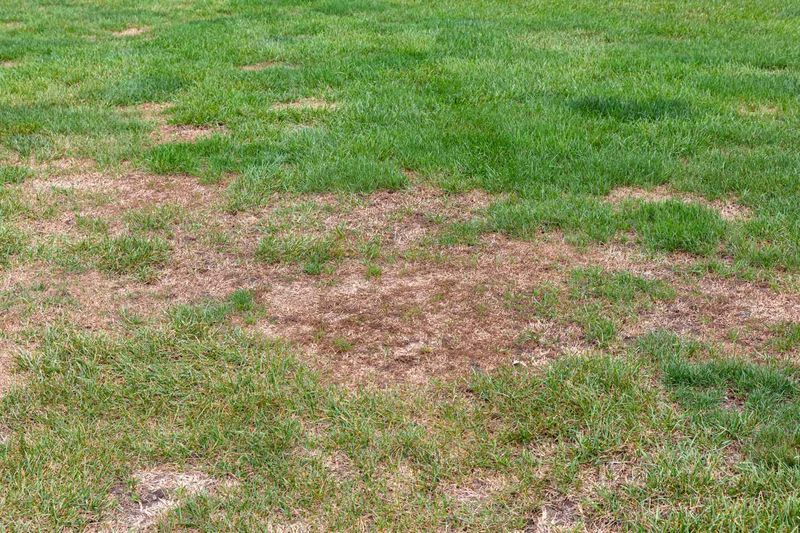
Thin grass tells you something is off, but not what. Excess thatch is one possible cause.
Compacted soil, poor drainage, shade, a grass type that does not suit the site, and other stresses can leave a lawn looking sparse too.
Thatch is the layer of living and dead stems and roots that builds up between the green blades and the soil. It sits above the soil, which is why it is a different problem from compaction.
Illinois Extension describes thatch as this organic layer and notes it can be managed when it grows too thick.
Since several problems can look alike, a thin lawn does not prove you need a dethatcher. Renting one without checking could tear out living grass and still leave the real cause untouched.
University of Minnesota Extension also treats thatch as something to measure and control, not something to assume.
So start by looking. Walk the lawn and note where the thin areas are.
Are they in shade, along a low spot that stays soggy, or where people walk? Those clues point toward different remedies, and no single fix is certain to thicken every lawn.
Once you have a rough idea of the pattern, the next step is easy and costs nothing: check the thatch layer itself.
Measure the thatch before choosing a remedy
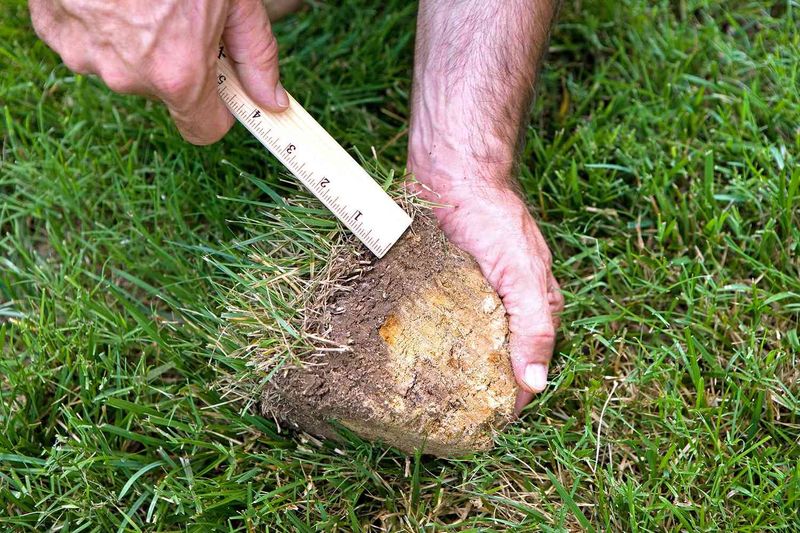
Grab a spade or a sturdy knife and cut a small wedge or plug of turf, a few inches deep. Look at the side of the cut.
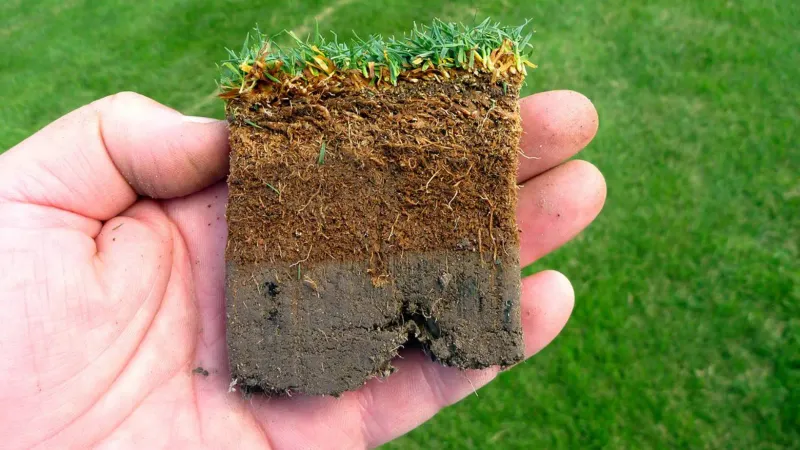
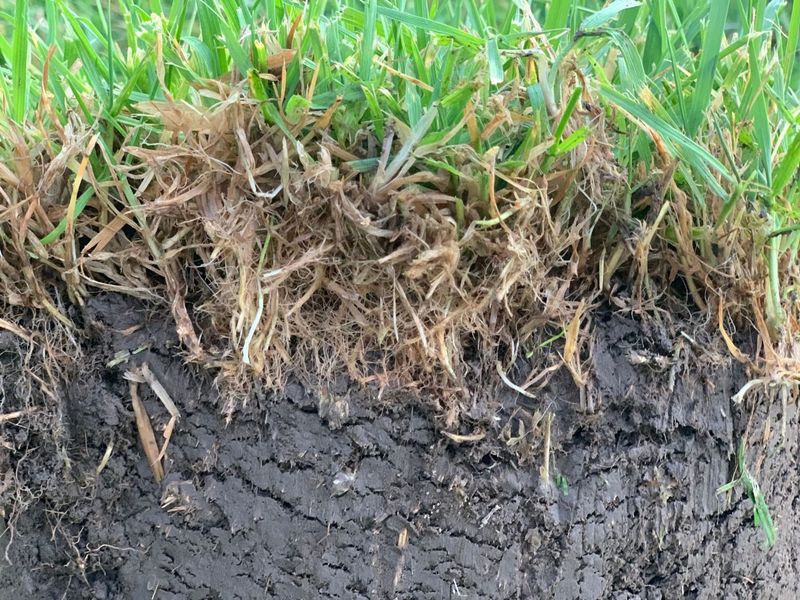
You should see green blades on top, soil at the bottom, and, if present, a spongy, tangled brown layer sandwiched between them.
Hold a ruler against that spongy layer and measure its thickness. Check a few spots around the yard, since thatch can vary from one area to another.
According to Illinois Extension, about one half inch is where thatch management becomes worth considering. Minnesota Extension gives the same general benchmark.
A layer of half an inch or less is usually not a problem.
Treat that number as a common threshold, not an automatic order. A reading above half an inch means you should think about management, but it does not mean you must rent a machine tomorrow.
This measurement is the decision point for everything that follows. Modest thatch points toward light preparation and overseeding.
A thicker layer calls for a different plan, which later sections cover.
Give seed a path to soil
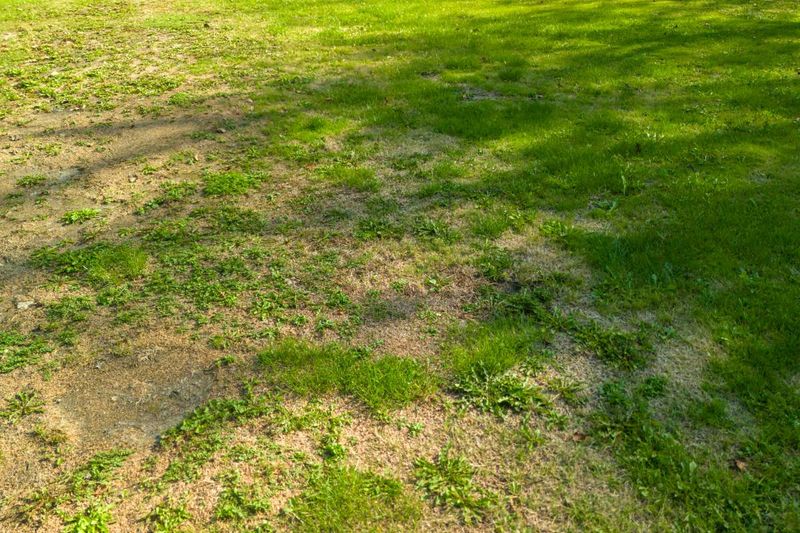
Grass seed that lands on top of a dense mat of old stems may germinate, yet the young roots can struggle to reach soil. What seed needs is contact with soil and a little room to sprout.
University of Missouri Extension warns that seed placed on or in thatch can germinate but produce a poor stand. That is why measuring first matters so much.
When thatch is modest, a light rake over bare patches can help. Use a leaf rake or a garden rake to scratch up the surface, remove loose debris, and expose some soil.
Then scatter seed and rake gently again so it settles in. Oregon State Extension includes this kind of seedbed preparation in its fall renovation advice.
Keep the meaning of raking narrow here. It is light surface work in bare spots, not power-raking or mechanical dethatching, which can tear up healthy turf.
Also skip this plan if your measurement showed a thick spongy layer. Seeding into substantial thatch is likely to disappoint, and even careful preparation will not make up for it.
Results also depend on seed quality, moisture, and why the grass thinned in the first place.
Match seedbed preparation to the job
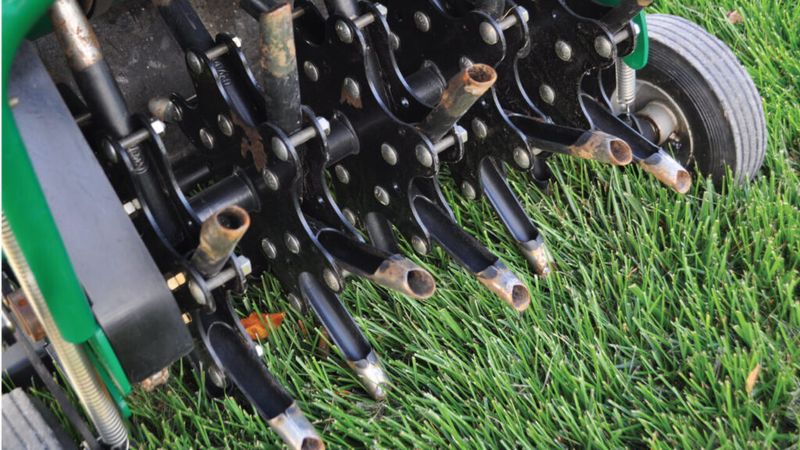
A hand rake works well for small bare spots. For a big thin area, or soil that feels hard as a brick, it may not be enough.
Compaction is one such case. Core aeration pulls small plugs of soil out of the ground and can help where packed soil is the concern.
That is a different job from dethatching, which targets the organic layer sitting above the soil, as Illinois Extension explains.
For broader renovation, a slit seeder or other seedbed preparation can place seed into the surface more evenly across a larger area. Missouri Extension covers several ways to prepare a seedbed for cool-season lawns.
Penn State Extension also discusses aeration and overseeding as part of a seasonal lawn plan.
Here is a simple way to sort it out. Small bare patches with soft soil may only need a light rake.
A hard, packed area may benefit from aeration. A large thin lawn may call for a slit seeder, which you can often rent or hire out.
Oregon State Extension likewise matches the amount of renovation to the condition of the lawn. Pick the least involved tool that actually fits what you found.
Topdress lightly and keep the seedbed moist
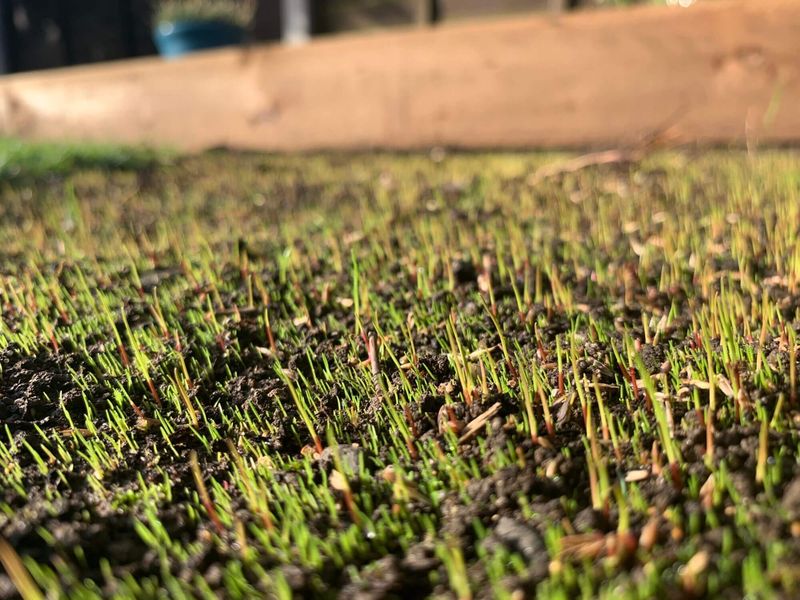
Topdressing is a bonus step, not a cure. It does not fix whatever caused the thinning, and it cannot stand in for seed touching soil.
Sources describe different amounts for different jobs. Illinois Extension mentions one eighth to one quarter inch when topdressing over thatch.
Oregon State Extension recommends no more than one quarter inch of mulch after seeding in its renovation guidance. Think of these as separate tasks, not one rule.
The shared message is to keep it thin. A heavy layer can smother existing grass and bury seed too deep to sprout.
If you can still see grass blades poking through, you are in a safe range.
Moisture matters just as much. Keep the seedbed evenly damp until the seed sprouts.
That often means light watering more than once a day at first, with a lot of adjusting for rain, wind, and your local weather. Oregon State’s establishment guide covers keeping new seedings moist.
Check the soil with your finger each day. If the top inch is dry, water lightly.
If water pools or washes seed away, ease up.
Let grass type and region set the fall schedule
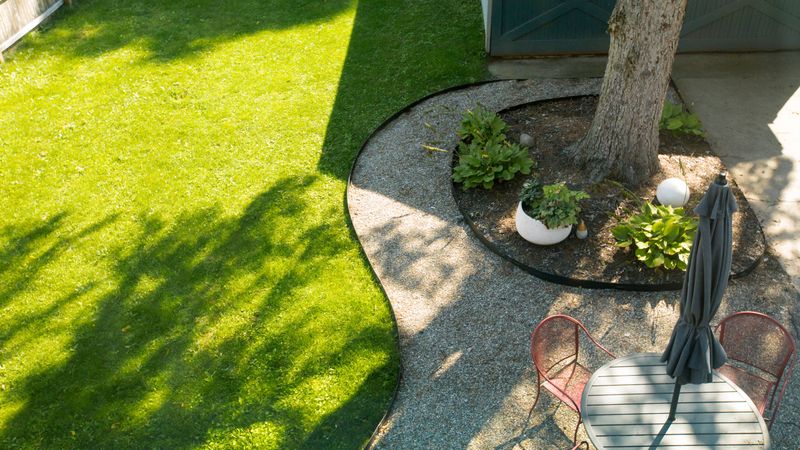
Fall is commonly a good time to seed cool-season grasses like Kentucky bluegrass, tall fescue, and perennial ryegrass. Warm soil helps seed sprout, and cooler air is easier on young plants.
The workable window, though, changes from place to place. As one regional example, Penn State Extension cautions against seeding later than mid-October in most of Pennsylvania.
That is not a national cutoff, and a lawn in a warmer or colder area will follow a different calendar.
Your best move is to look up your own state or county extension office. They publish local seeding dates based on regional frost patterns.
Warm-season grasses such as bermudagrass and zoysiagrass run on another schedule. They grow most actively in the heat of summer, not in fall.
Missouri Extension favors early fall dethatching for cool-season lawns but mid-June for actively growing bermudagrass and zoysiagrass.
If you are not sure what grass you have, identify it before buying seed or planning any work. Timing a job to the wrong season is a common reason fall projects fall flat.
Dethatch only when the measured layer warrants consideration
Thin-looking grass alone is not a reason to rent a dethatcher. Mechanical dethatching can be destructive, and it may pull out living grass along with the thatch.
Your lawn can end up thinner for a while.
That said, a thick layer is a real obstacle. Missouri Extension notes that seed placed in thatch can yield a poor stand, and it advises removing thatch above half an inch before establishing a lawn.
So when your measurement runs high, managing thatch before seeding makes sense.
If you decide to dethatch, plan for what comes after. Expect bare or ragged areas, and be ready to reseed and water.
Illinois Extension covers methods for reducing thatch and what to expect.
For severe cases, slower may be better. Missouri Extension’s thatch guide notes that gradual management over multiple years may be preferable.
Spreading the work out can spare the lawn one big shock.
Remember that half an inch is a point to start thinking, not a rental trigger. Grass type, season, and how fast your lawn can recover all belong in the decision.
Choose the least disruptive option that fits
Here is the path in short. Measure the thatch first.
If it is modest, prepare bare soil lightly, overseed at a time that suits your region, and keep the seedbed moist. If it is thick, consider thatch management before seeding, since seed in heavy thatch often gives a poor stand.
None of this guarantees a thicker lawn, and no one method wins every time. A lawn rewards a good look before any tool comes out of the shed.