
The North Carolina Native Shrubs That Earn The Sunny Spot Most Yards Give To Crape Myrtle
Drive down almost any street in North Carolina and you will spot crape myrtles in the sunniest corner of the yard. They come from East Asia, though, and they do very little to feed the caterpillars, bees, and birds that make your yard feel alive.
Worse, a pest called crape myrtle bark scale is now coating many of them in black sooty mold. The good news is that a group of tough, pretty NC native shrubs can take over that sunny spot and give your local wildlife a real home.
1. Sweet Pepperbush (Clethra alnifolia)
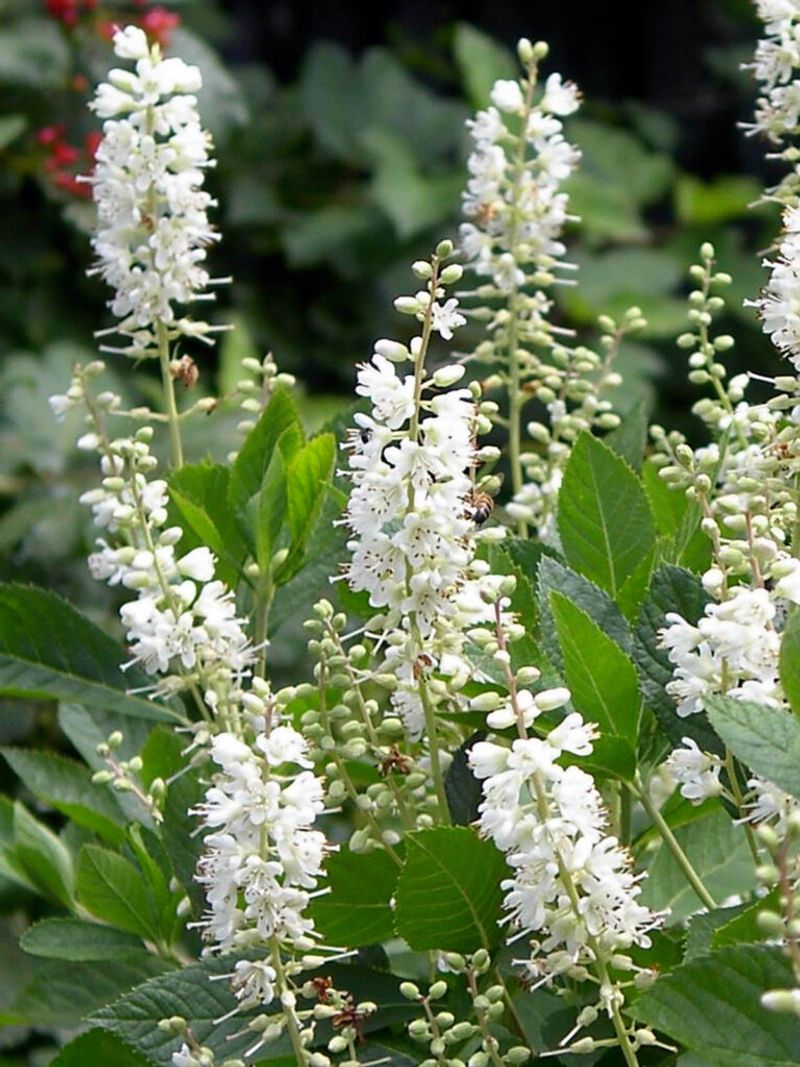
Walk past a sweet pepperbush in late July and your nose will find it before your eyes do. The spicy, honey-like scent drifts across the yard right when crape myrtles are hogging the summer spotlight.
Of all the shrubs on this list, summersweet is the closest match for that midsummer flower show.
Its upright white or soft pink spikes open from July into August. That timing matters, because many spring bloomers are done by then, and native bees and butterflies are scrambling for food.
You get to fill that hungry gap right in your own yard.
Clethra handles heat, humidity, and even soggy ground, which makes it a natural fit for Coastal Plain yards and low spots in the Piedmont. Expect it to reach 5 to 10 feet, with yellow to orange leaves in fall.
Plant it where you sit outside in the evening, and enjoy the perfume.
2. Buttonbush (Cephalanthus occidentalis)
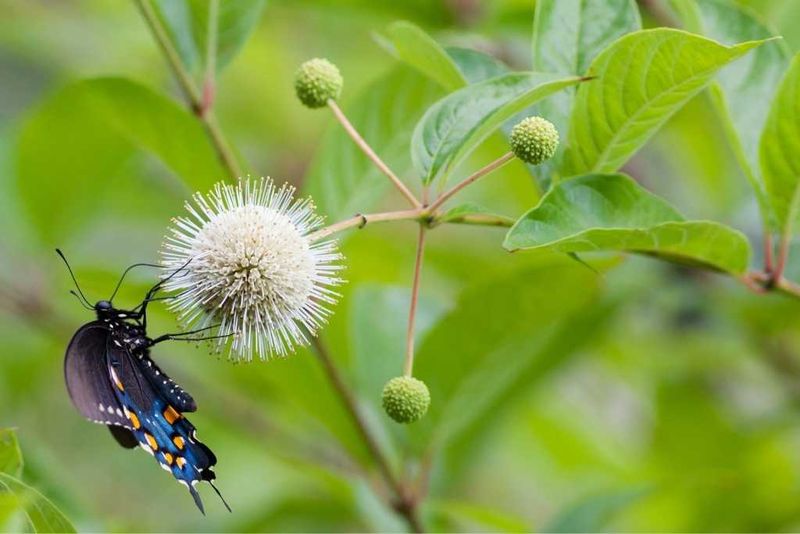
Picture a shrub covered in tiny white pincushions, each one buzzing with visitors. That is buttonbush in June, and it keeps blooming through late summer.
Kids tend to love it because the flowers look like something out of a cartoon.
Behind the fun looks is serious wildlife value. Sphinx moths hover at the blooms at dusk, while bees and butterflies work them all day long.
Few shrubs in the state serve up nectar to so many different guests.
Here is the catch: buttonbush wants wet feet. It shines in a rain garden, beside a pond, or in that soggy corner where downspout water collects.
Give it full sun and space, since it can stretch to 12 feet tall and 8 feet wide in an open, relaxed shape.
3. Virginia Sweetspire (Itea virginica)
Crape myrtles are known for decent fall color, but Virginia sweetspire quietly beats them at their own game. Its leaves turn fiery orange, red, and deep burgundy, and they often hang on well into winter.
On a gray January day, that warm glow is a gift.
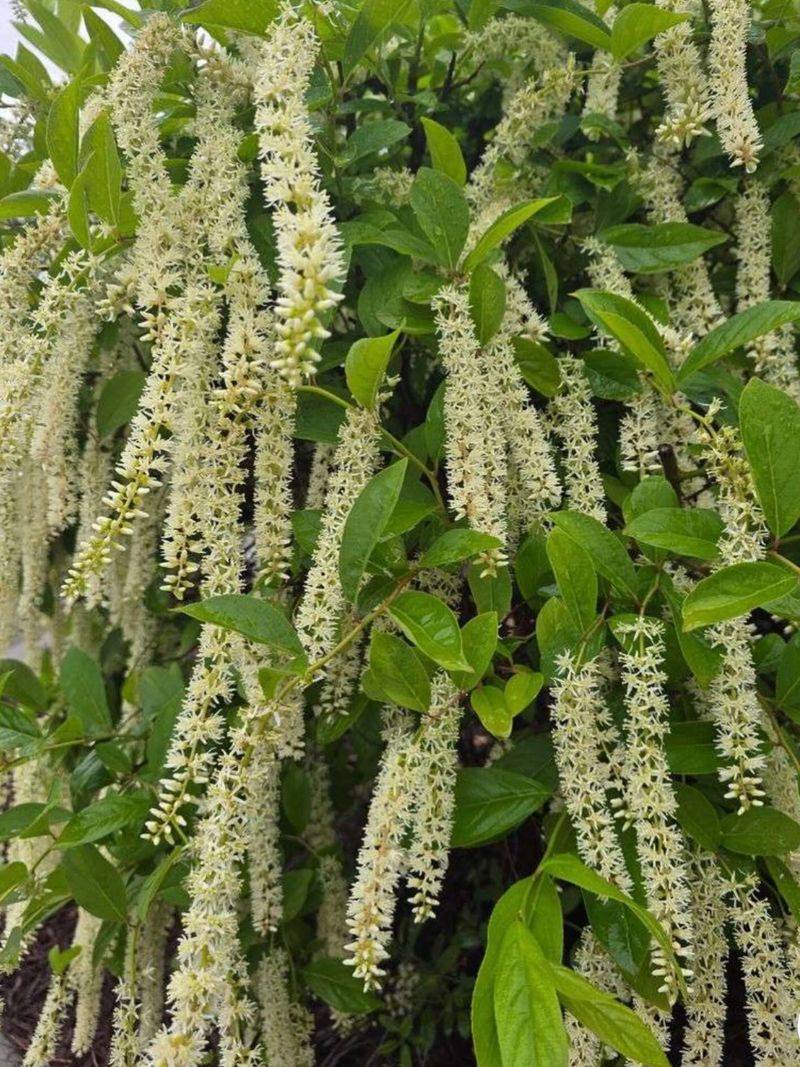
Early summer brings a different show. Graceful, arching stems drip with fragrant white flower tassels that draw in insects and even hummingbirds.
Later, the small woody seed capsules feed birds and little mammals.
This Coastal Plain native grows up to about 8 feet and spreads slowly into a loose clump. It works well as a soft border along a fence or as a replacement for nonnative burning bush, which is invasive in parts of NC.
Same red fall color, far better for your local wildlife.
4. American Beautyberry (Callicarpa americana)
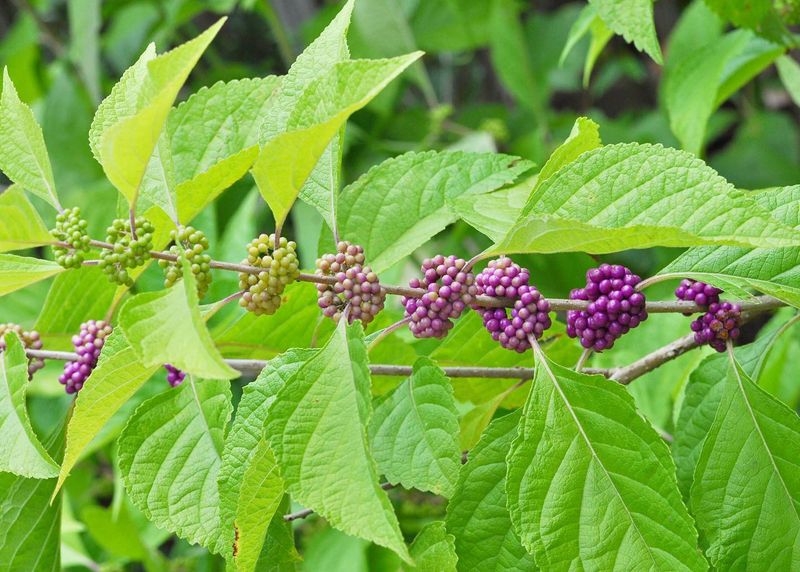
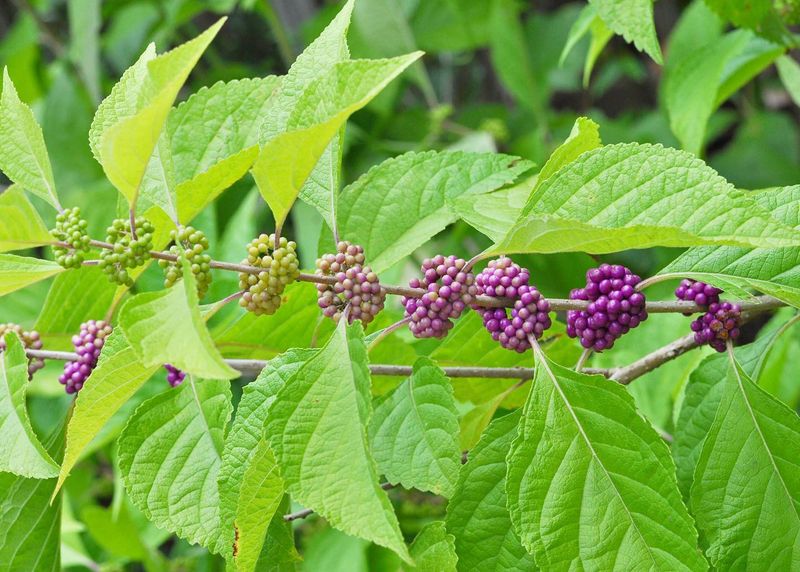
Honestly, the first time most people see beautyberry in September, they assume somebody painted it. Clusters of glossy, almost neon purple berries wrap around every stem.
No crape myrtle can pull off a color like that.
Those berries are a big deal for wildlife. Eastern towhees, American robins, and purple finches all eat them, and so do foxes, raccoons, opossums, and squirrels.
The tiny pink summer flowers are easy to miss, but pollinators find them just fine.
Beautyberry is about as easygoing as shrubs get. It handles full sun or part shade, most NC soils, and our sticky summers.
Cut it back hard in late winter, and it will reward you with more flowers and heavier berry crops the next fall.
5. Running Serviceberry (Amelanchier stolonifera)
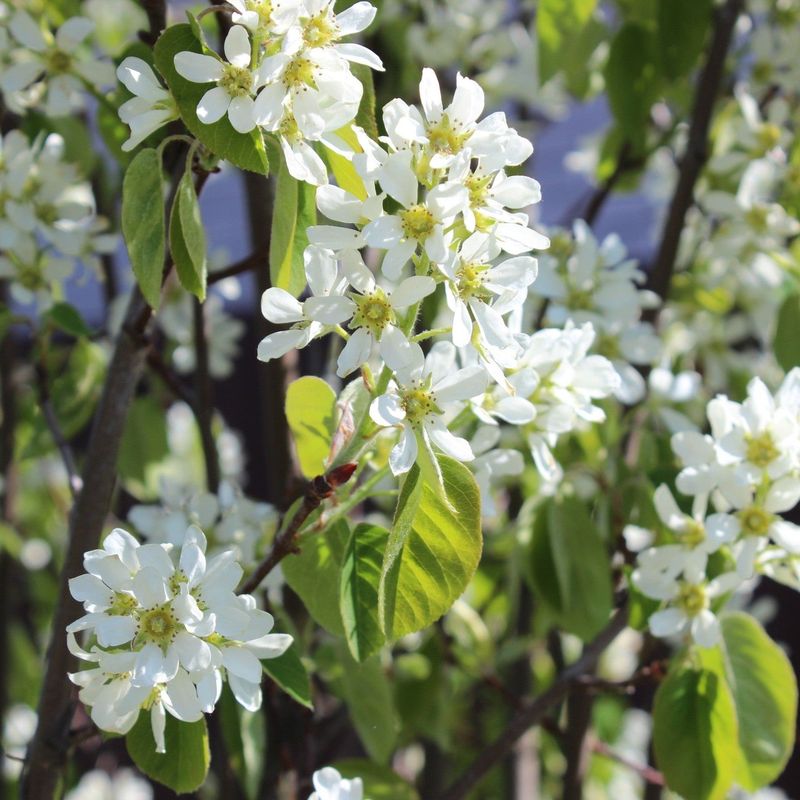
Spring in North Carolina gets an early wake-up call from serviceberry. Its clouds of white blossoms open before most other natives have even leafed out.
Early bees, desperate for a first meal, flock to them.
By late spring, the flowers turn into small, sweet berries. Cedar waxwings, mockingbirds, and catbirds strip them fast, so you may have to race the birds if you want a taste.
Yes, people can eat them too, and they make a lovely jam.
Running serviceberry stays shorter and bushier than the tree forms, especially in full sun. It slowly spreads into a low thicket, which gives small birds shelter.
That makes it a smart pick for a small yard where a full-size tree would be too much.
6. Red Chokeberry (Aronia arbutifolia)
Some plants are fussy. Chokeberry is not one of them.
Clay, sand, wet spots, dry spells, it shrugs off most of what a North Carolina yard can throw at it.
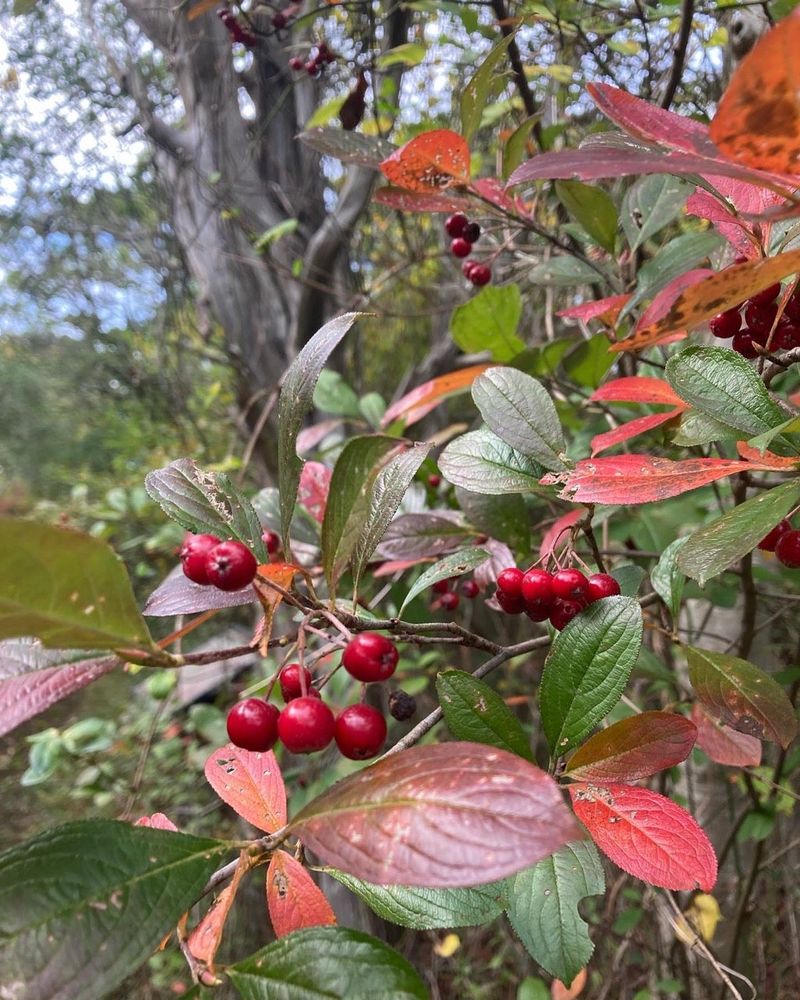
White flowers open in spring and feed native bees. Then come clusters of glossy red fruit that hang on the branches into winter.
Because the berries last so long, they become a backup food source for songbirds when other pantries run empty.
Black chokeberry, Aronia melanocarpa, is a close cousin with dark purple fruit and works just as well. Both offer rich red fall leaves.
Tuck a few into a mixed border where you would have planted a single crape myrtle, and you will get color in three seasons instead of one.
7. Fragrant Sumac (Rhus aromatica)
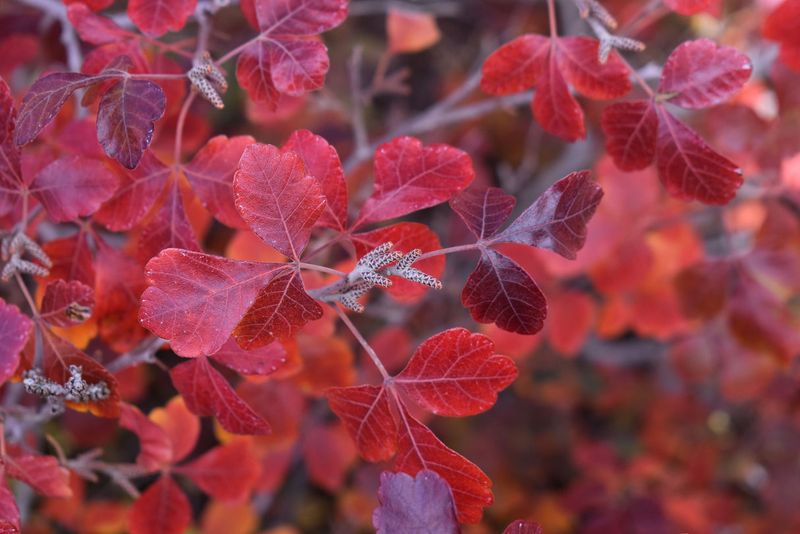
Got a sunny slope where grass keeps washing away? Fragrant sumac was made for that problem.
It forms low colonies about 2 to 6 feet tall, and its roots help hold soil in place.
Don’t worry about the name, either. This is not poison sumac, and it is perfectly safe to plant near paths.
Crush a leaf and you will get a pleasant, citrusy smell.
Yellow flowers show up in late winter or early spring, feeding some of the first pollinators of the year. By late summer, fuzzy red berries appear for wildlife.
The leaves also host caterpillars of luna moths and red-banded hairstreak butterflies, so you are raising the next generation of beautiful insects.
It grows in sandy loam or clay, as long as the ground drains. Fall brings reddish purple and gold foliage.
8. Yaupon Holly (Ilex vomitoria)
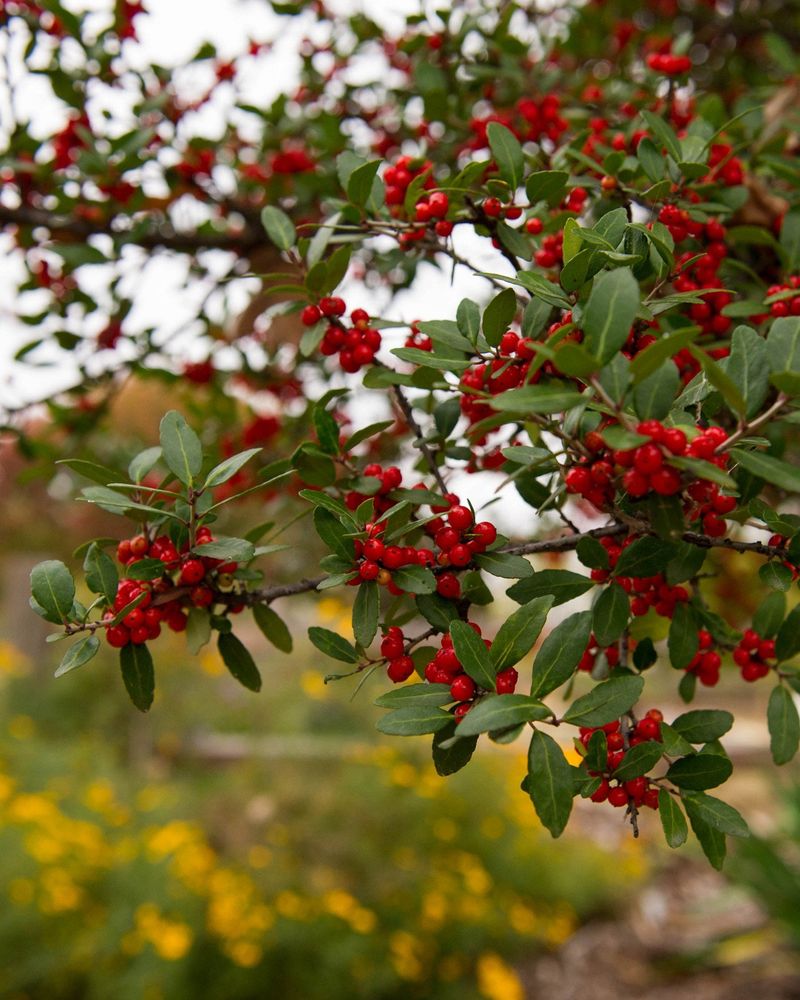
Long before anyone sold crape myrtles at a garden center, Native Americans brewed yaupon leaves into a caffeinated tea. It is the only plant native to North America with caffeine in its leaves.
That is a fun fact to share over the fence with neighbors.
In the yard, yaupon is a workhorse evergreen. It shrugs off drought, salt air, poor soil, and the occasional flood.
That is why it is so common along the NC coast.
Female plants carry loads of bright red winter berries, especially with a male nearby for pollination. Birds rely on them in the lean months.
Dwarf forms stay small, while straight species can reach 10 to 30 feet, so check the tag before you buy. It also makes a fine native swap for invasive Chinese privet hedges.
9. Wax Myrtle (Morella cerifera)
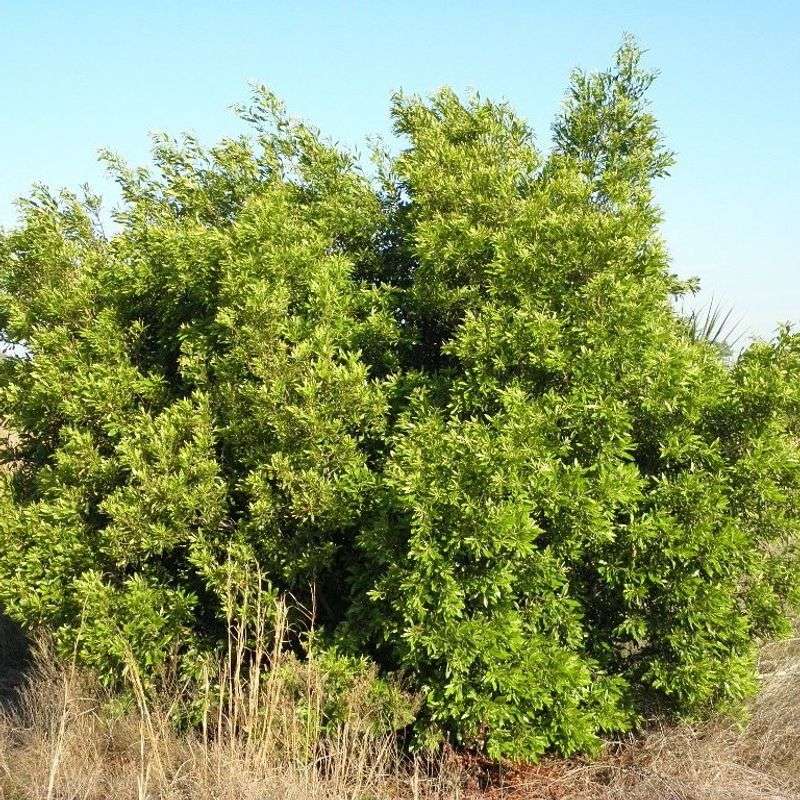
Here is a shrub that even shares part of the crape myrtle’s name, yet it is a true Carolina local. Wax myrtle thrives in hot, sunny spots, including deep sand where little else wants to grow.
Coastal homeowners know it well.
Its dense, twiggy branches stay green all year. Cardinals, mockingbirds, and wrens tuck nests deep inside, safe from hawks and cats.
In winter, yellow-rumped warblers feast on the waxy gray berries, which few other birds can digest.
Early colonists boiled those berries to make bayberry candles. Today, wax myrtle is a favorite for fast privacy screens.
Just know it grows quickly, so give it room or plan on a yearly trim.
10. New Jersey Tea (Ceanothus americanus)
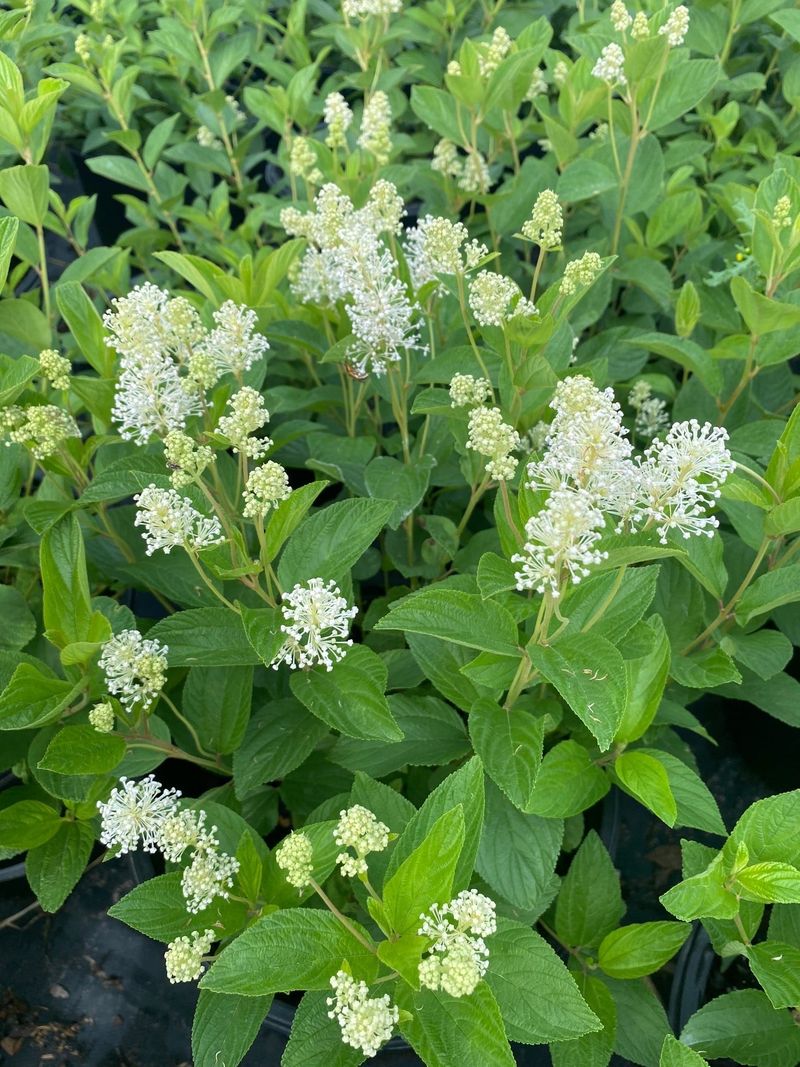
Small but mighty might be the best way to sum up New Jersey tea. It tops out around 3 feet, which makes it perfect for that hot, dry patch by the driveway where a crape myrtle once struggled.
During the American Revolution, colonists brewed its leaves as a substitute for taxed British tea.
Late spring brings frothy white flower clusters that attract an amazing crowd. Native bees, wasps, and butterflies swarm the blooms.
Its leaves also feed caterpillars of spring azure and mottled duskywing butterflies.
Once settled, it laughs at drought thanks to a deep root. That same root means you should plant it young and leave it be, since it hates being moved.
Give it full sun and well-drained soil anywhere from the mountains to the Sandhills, and it will quietly take care of itself.