
Your Empty Window Boxes Are Begging For A Holiday Makeover – 17 Christmas Ideas That Stop Neighbors On The Sidewalk
Those window boxes that held your petunias and geraniums all summer are probably sitting bare and sad right now. You do not have to leave them empty until spring.
With a few branches, some berries, and a little sparkle, they can become the cheeriest part of your house. Here are 17 easy ideas that turn plain boxes into a holiday show people will slow down to see.
1. Classic Evergreen Elegance
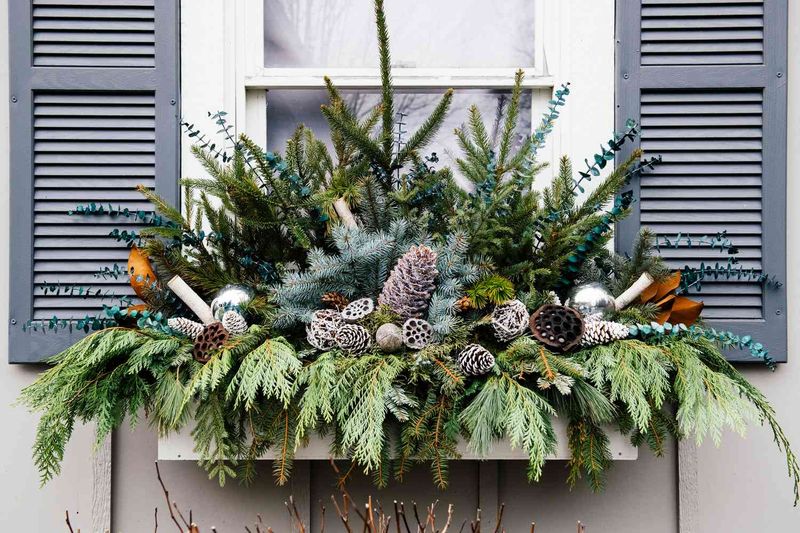
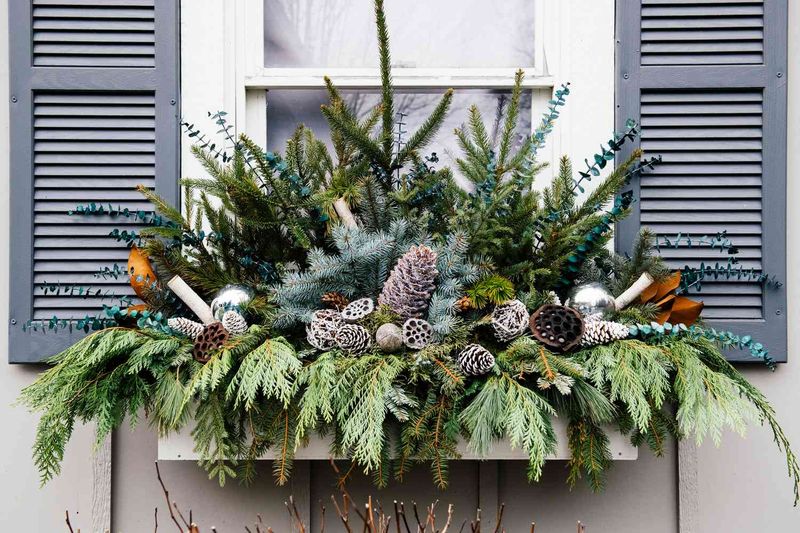
Walk past any old New England house in December and you will spot the look that never goes out of style. A box stuffed with mixed evergreens feels calm, rich, and welcoming all at once.
Start with three or four kinds of greens, such as cedar, white pine, fir, and juniper. Each one has a different shape and shade, so mixing them gives depth even without any other decoration.
Tuck pinecones in the gaps and add a few birch twigs for texture.
Cut stems at an angle and push them deep into the old potting soil from your summer flowers. Damp soil holds branches upright and can help keep them fresh for weeks in cold weather.
2. Vibrant Berry Accents
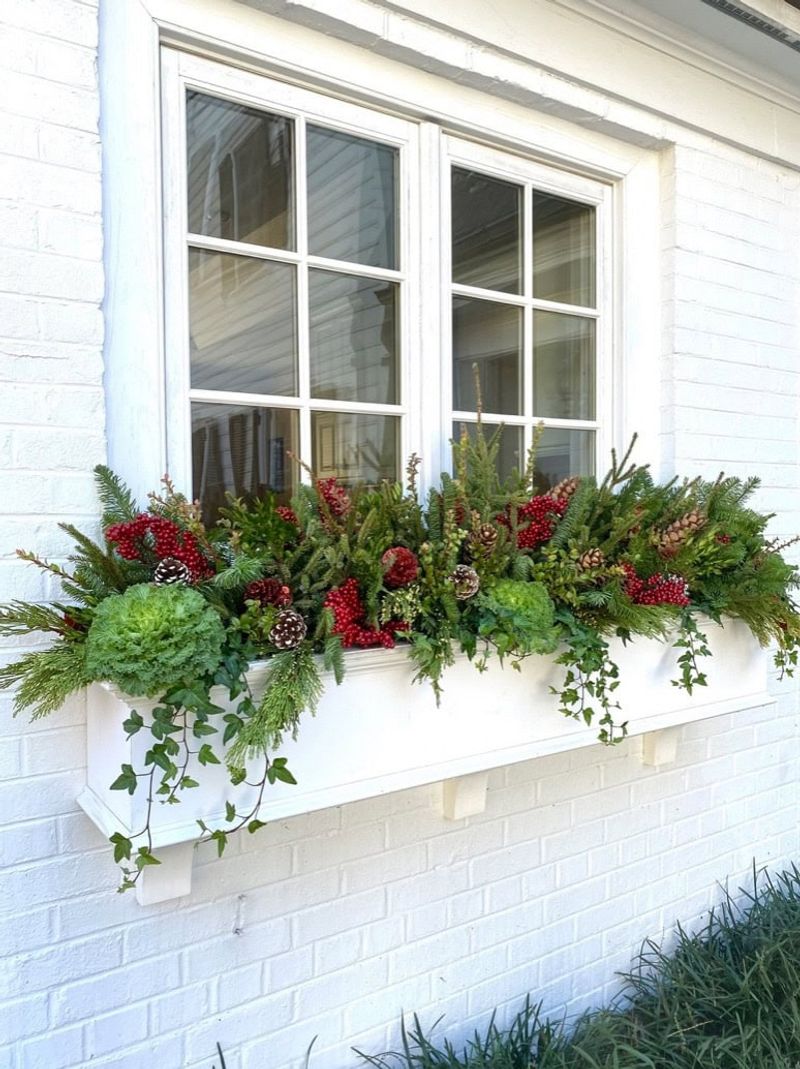
Red against green is the oldest color trick of the season, and berries do it best. Even a handful of stems can make a dull box suddenly glow from across the street.
Winterberry is a favorite because its bare stems are covered in bright red fruit. Holly works well too, and its glossy leaves add shine.
If birds tend to strip real berries, faux berry picks hold their color all winter and look convincing from the sidewalk.
Place berries in odd-numbered groups, like three or five clusters, rather than spreading single stems everywhere. Grouping makes the color read stronger from a distance.
3. Twinkling Lights Display
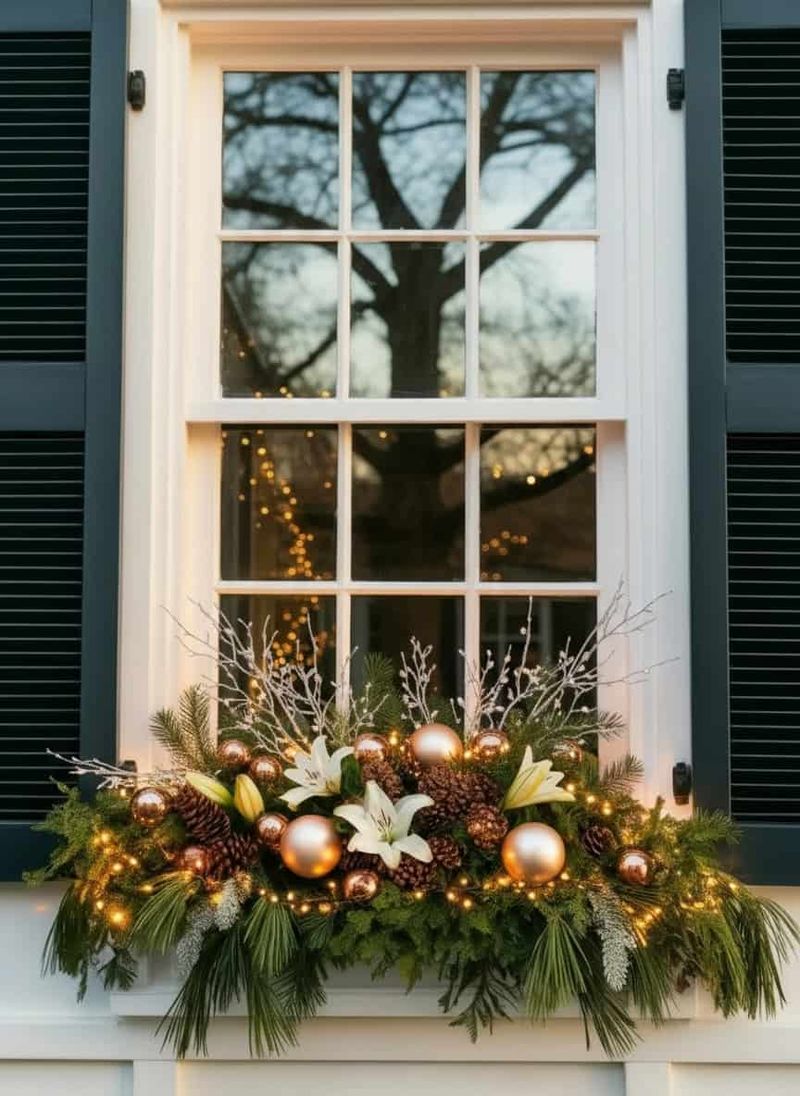
Daylight disappears around five o’clock in December, which means a box without lights vanishes for most of the evening. A strand of warm white bulbs fixes that in about ten minutes.
Choose lights marked for outdoor use. Battery-powered fairy lights with a timer are handy if no outlet sits near your window, and they keep cords out of sight.
Weave the strand loosely through the greenery instead of wrapping it tight, so the glow seems to come from inside the arrangement.
Warm white usually looks more natural against evergreens than cool blue. Neighbors walking dogs after dinner will notice.
4. Festive Ornament Cluster
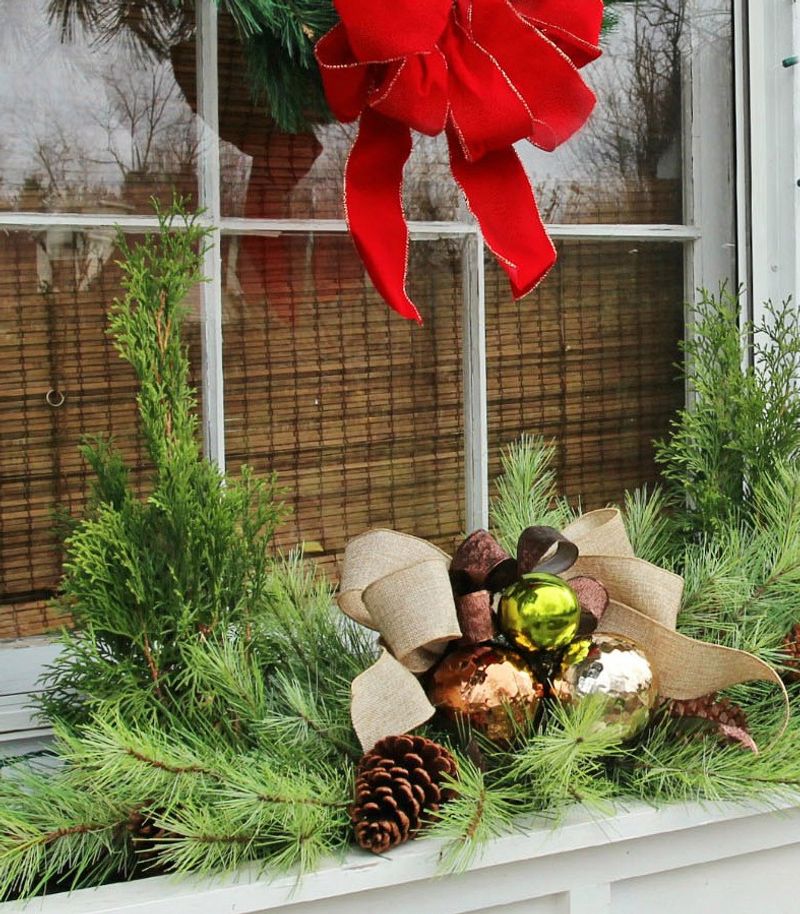
Ornaments are not just for the tree. A few shiny balls nestled into greens catch sunlight in the morning and porch light at night.
Shatter-resistant ornaments are the smart pick, since wind, ice, and squirrels can knock things loose. Mix two or three sizes in a simple palette, like red and gold or silver and white.
Wire them to a wooden skewer or floral pick, then push the pick into the soil so they stay put.
Keep the bigger balls toward the center and let smaller ones drift outward.
5. Poinsettia Power
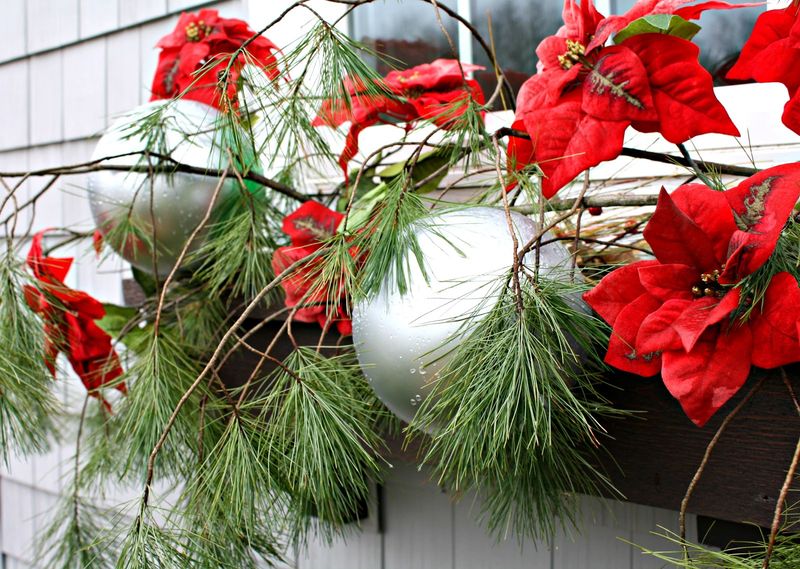
Fun fact: poinsettias are native to Mexico, where they can grow as shrubs over ten feet tall. That tropical background is exactly why they struggle outdoors in most US winters.
Live poinsettias can be damaged by temperatures below about 50 degrees, so they really only work outside in places like southern Florida or Southern California. Everywhere else, high-quality artificial poinsettias give the same bold red without the heartbreak of finding droopy leaves the next morning.
Set two or three blooms in the middle and frame them with greens. Want something living?
Swap in a cold-hardy evergreen and keep the real poinsettia inside by a sunny window.
6. Rustic Charm with Birch and Dogwood
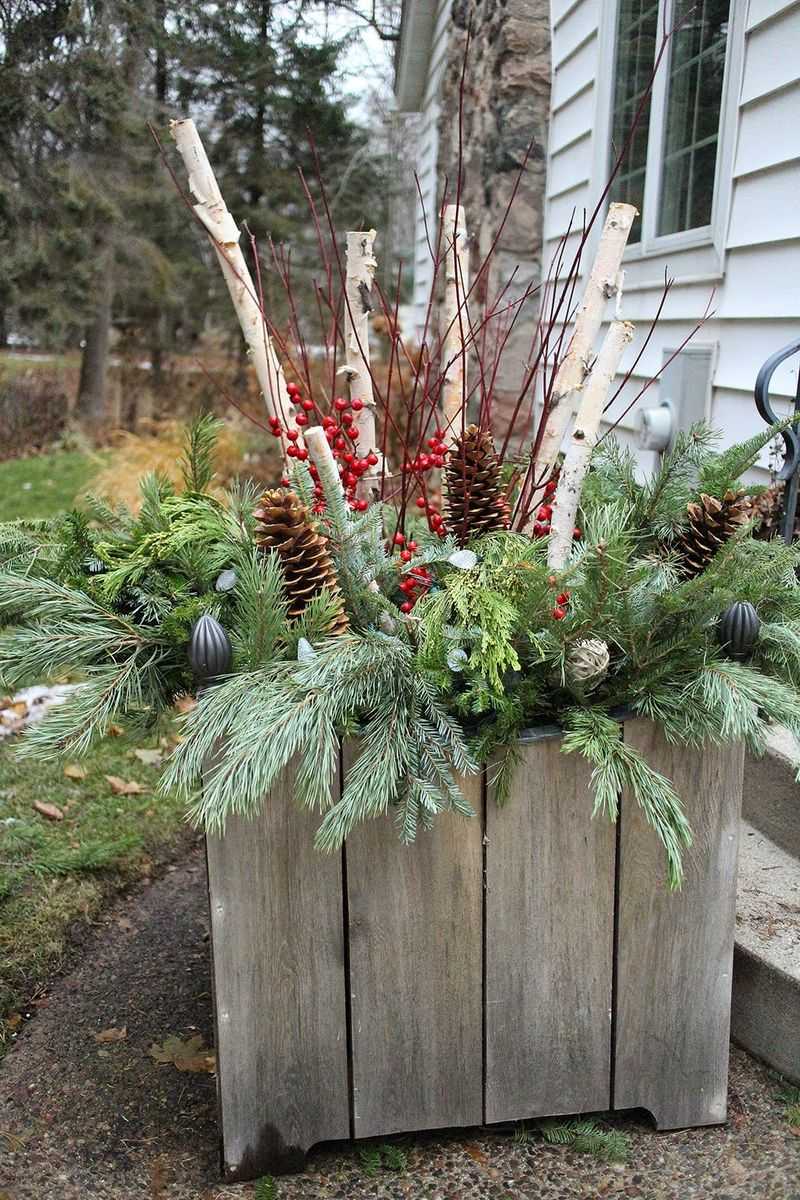
Picture a cabin in the woods, then shrink it down to fit under your kitchen window. Birch and red twig dogwood bring that cozy, rustic mood with almost no effort.
Stand the branches straight up at the back of the box. They add height, which keeps the arrangement from looking flat.
The white bark of birch and the bright red of dogwood stems also stand out beautifully on gray winter days.
If you grow red twig dogwood in the yard, winter pruning gives you free stems.
7. Layered Greenery and Drape
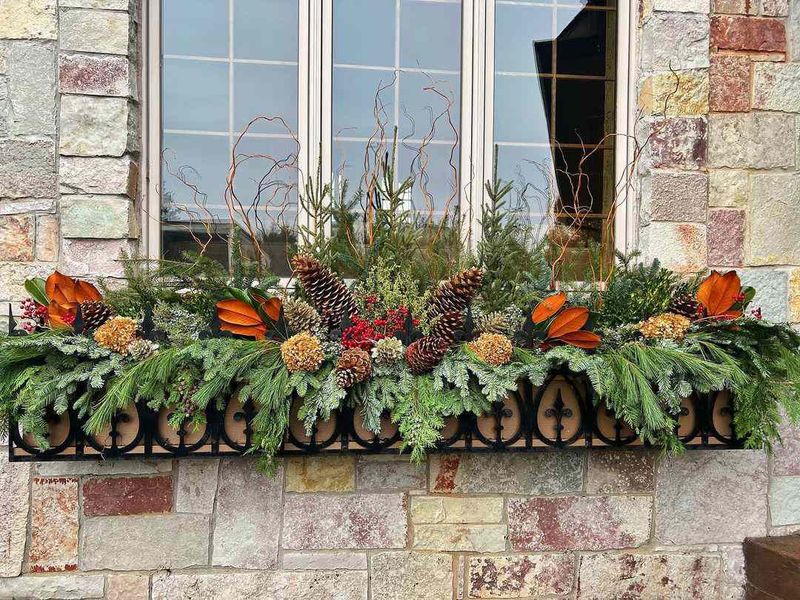
A skimpy box looks unfinished, and the fix is all about layers. Think of it like making a bed: a firm base first, then the soft blanket on top.
Begin with sturdy stems or a cut piece of faux garland to fill the inside. Then add soft, droopy cedar or pine along the front so it spills over the edge.
That draping hides the box itself and makes the whole thing look full and generous.
Step back to the sidewalk and check for gaps. Fill any holes you see from out there, not from up close.
8. Miniature Christmas Trees
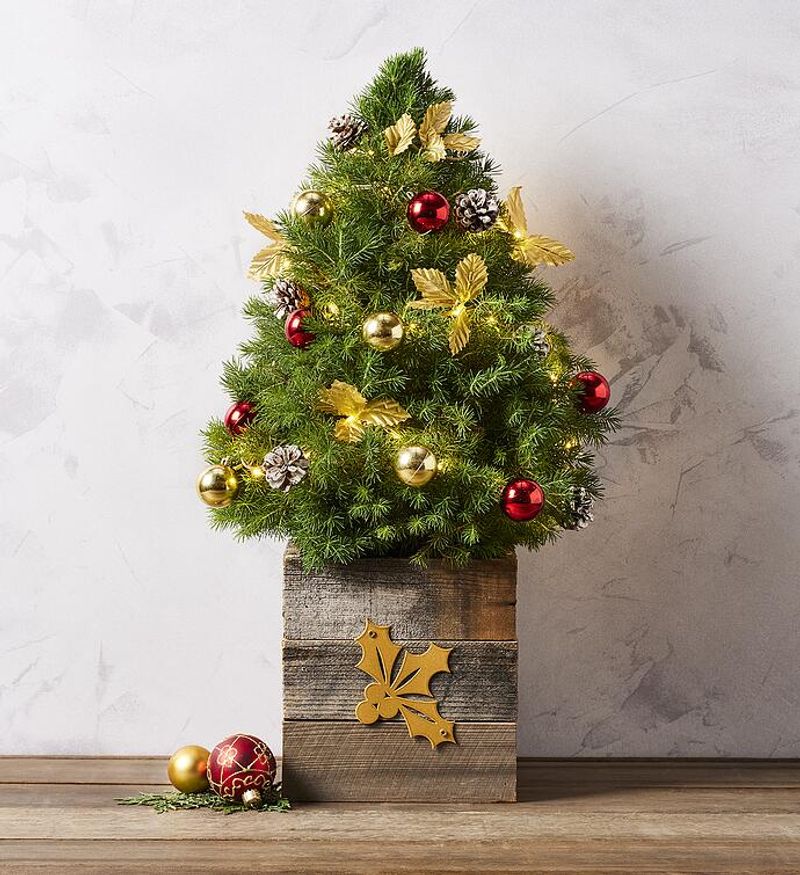
Kids love this one, and so do grownups who secretly want more trees. A row of tiny spruces looks like a little holiday forest on your windowsill.
Dwarf Alberta spruce is a popular choice because of its neat cone shape. Keep it in its nursery pot and set the pot right into the box, then pack greens around it.
After the holidays, plant it in the yard before the ground freezes hard or keep it in a sheltered spot. Water it during dry, mild spells, because evergreens can dry out in winter wind.
Faux mini trees work too if you want zero upkeep.
9. Ribbon as a Focal Point
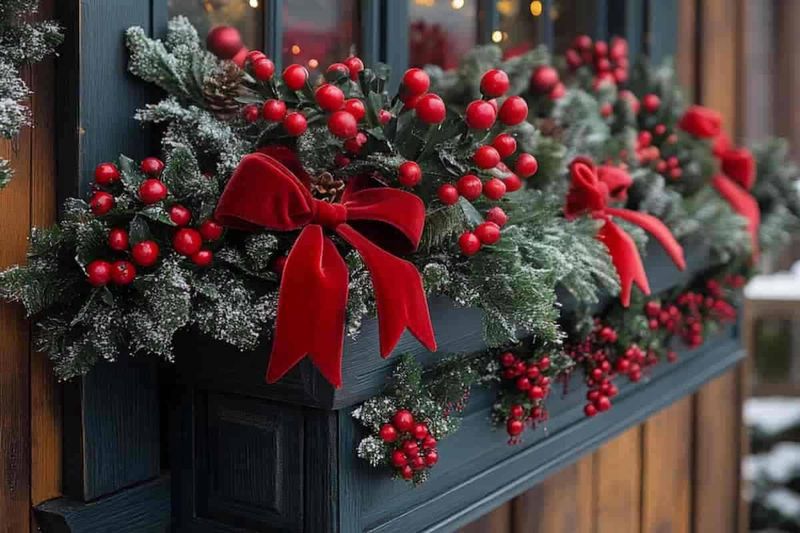
Sometimes one big bow does more than a dozen small decorations. A ribbon gives the eye a clear place to land.
Outdoor or wired ribbon holds its shape through rain and wind. Velvet looks rich in red, while plaid feels cozy and a little country.
Tie a large bow at the center front, or add smaller bows at each end for balance.
Tip: spray fabric ribbon with a water repellent so it does not sag after the first storm.
10. Pinecone and Natural Texture Mix
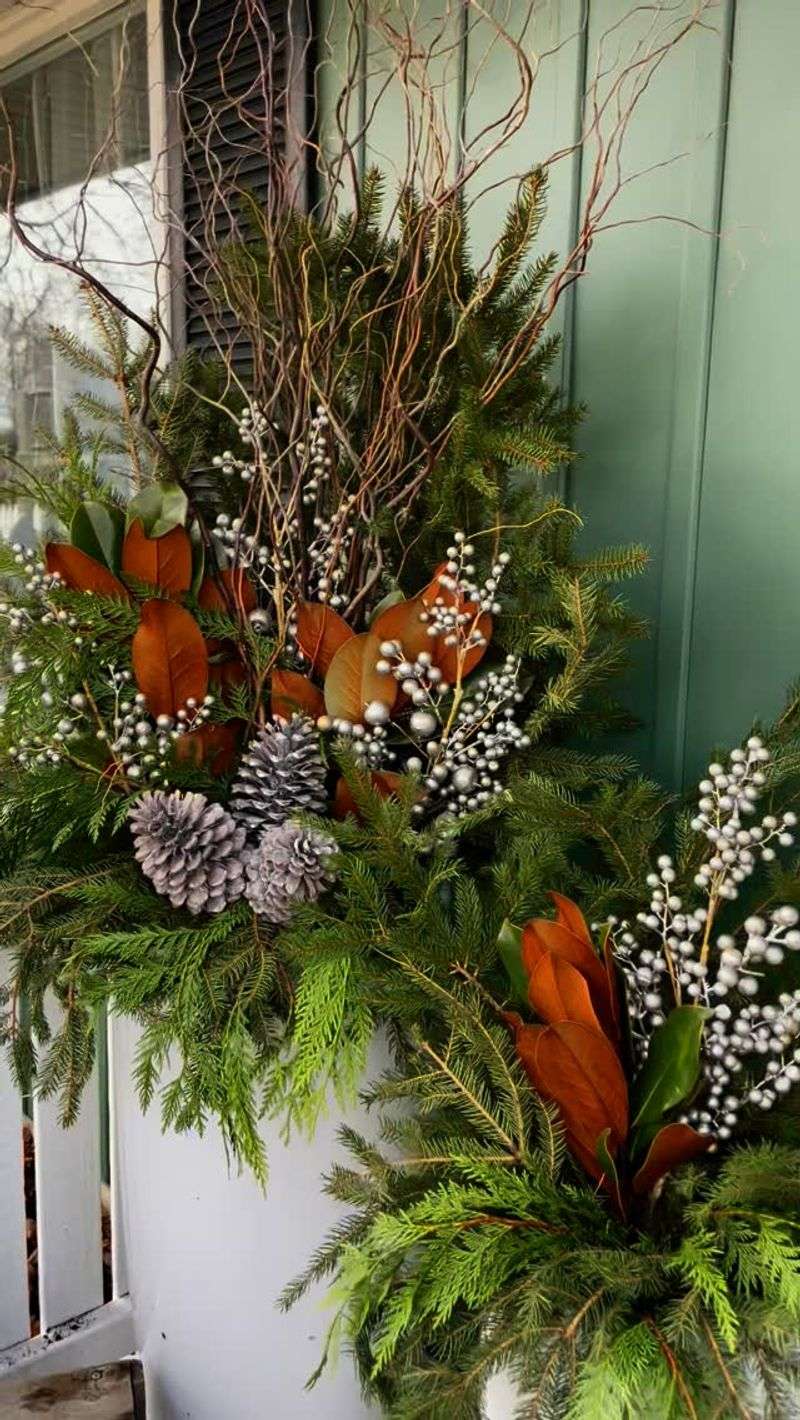
Nature already did the decorating. You just have to collect it.
Go beyond regular pinecones and look for seed pods, bare twigs, and magnolia leaves. Magnolia is especially striking, with glossy green tops and fuzzy bronze undersides.
Turning some leaves backward adds warm color without buying anything.
Mix big and small cones for variety. The result feels quiet and grown-up.
11. Thriller, Filler, Spiller Method
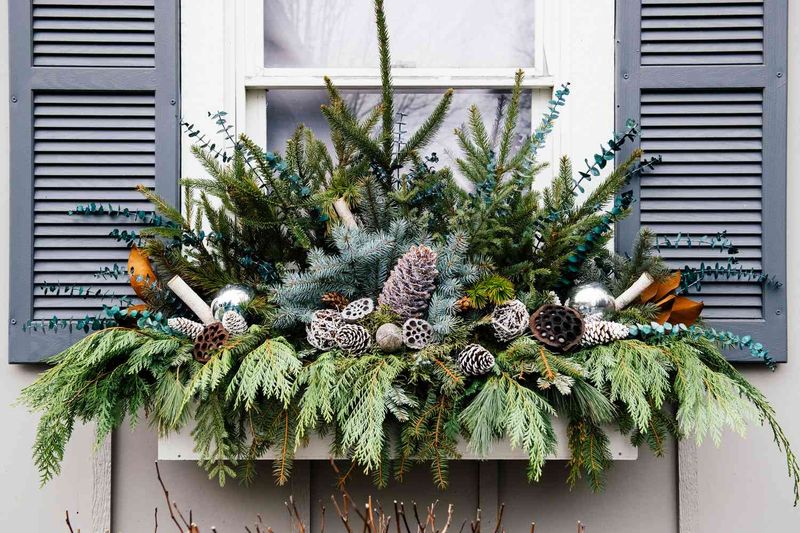
Remember how you planned your summer containers with something tall, something bushy, and something trailing? That same rule works in December.
The thriller is your tall star, like a mini tree, birch branches, or tall spruce tips. The filler is full greenery that covers the middle.
The spiller is anything that hangs over the edge, such as soft cedar or a faux trailing vine.
Using all three keeps the box balanced from every angle. If something looks off, it is usually missing one of the three parts.
12. Monochromatic Winter Greens
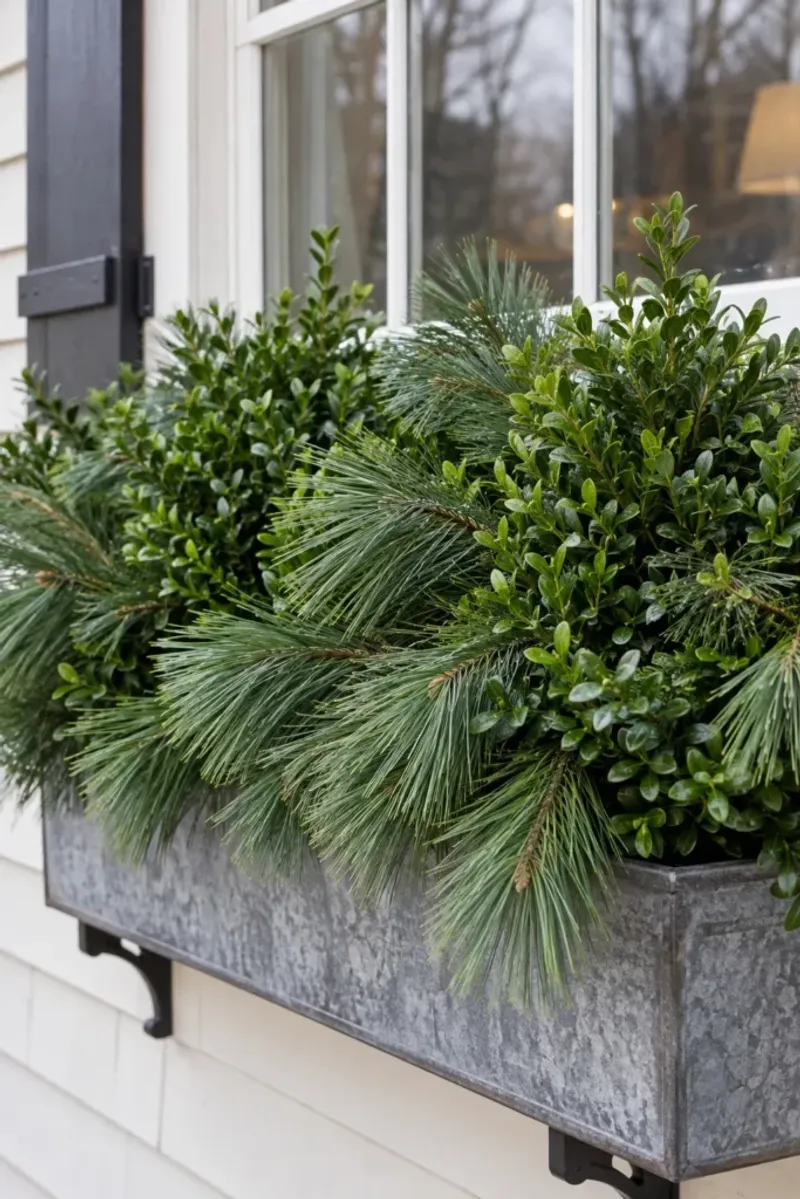
Not everyone wants red and gold. An all-green box feels peaceful, like a walk in the woods.
The secret is contrast in texture and shade. Pair blue-gray spruce with bright boxwood, flat cedar, and soft pine needles.
Each one catches light differently.
A few pinecones add warmth. This style can stay up through February, since it is wintry rather than strictly Christmas.
13. Wreaths and Garland Integration
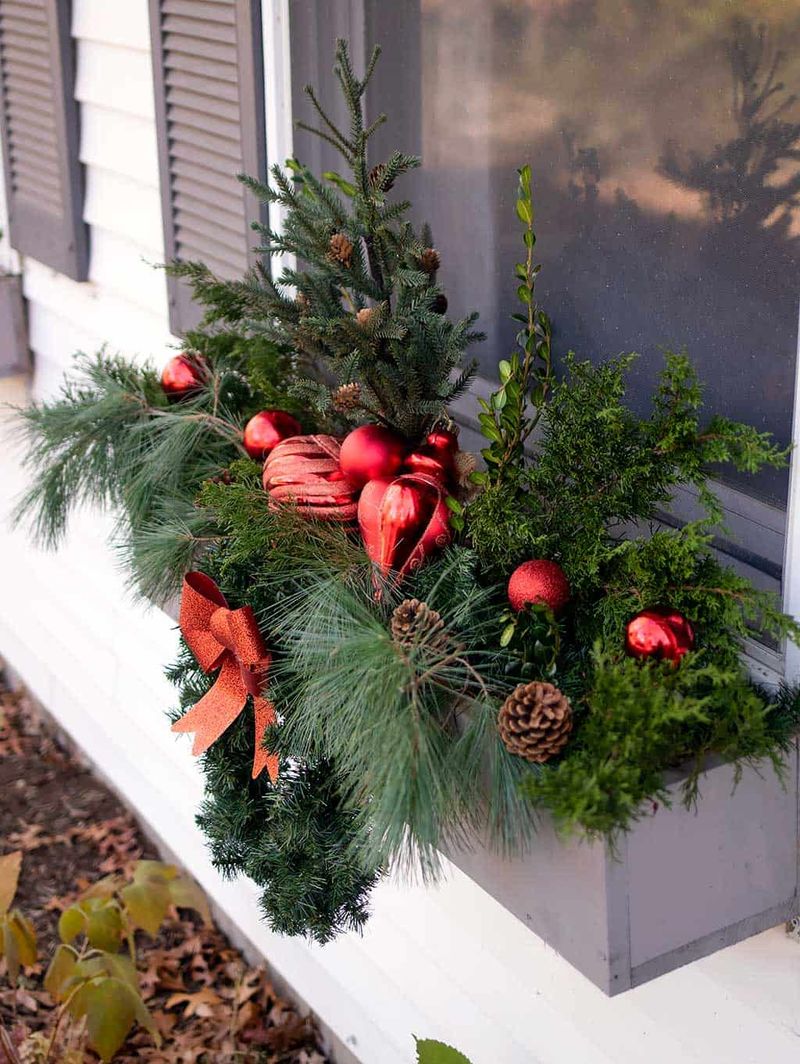
Most people hang a wreath on the door and stop there. Putting a small one on the front of your window box is an unexpected twist.
A 10- to 12-inch wreath centered on the box face works well. Attach it with outdoor hooks or wire.
You can also weave a garland through the greenery to tie everything together, or match it to your door wreath so the whole house looks planned.
Boxwood wreaths look tidy on narrow boxes.
14. Sparkly Snowflakes and Flocking
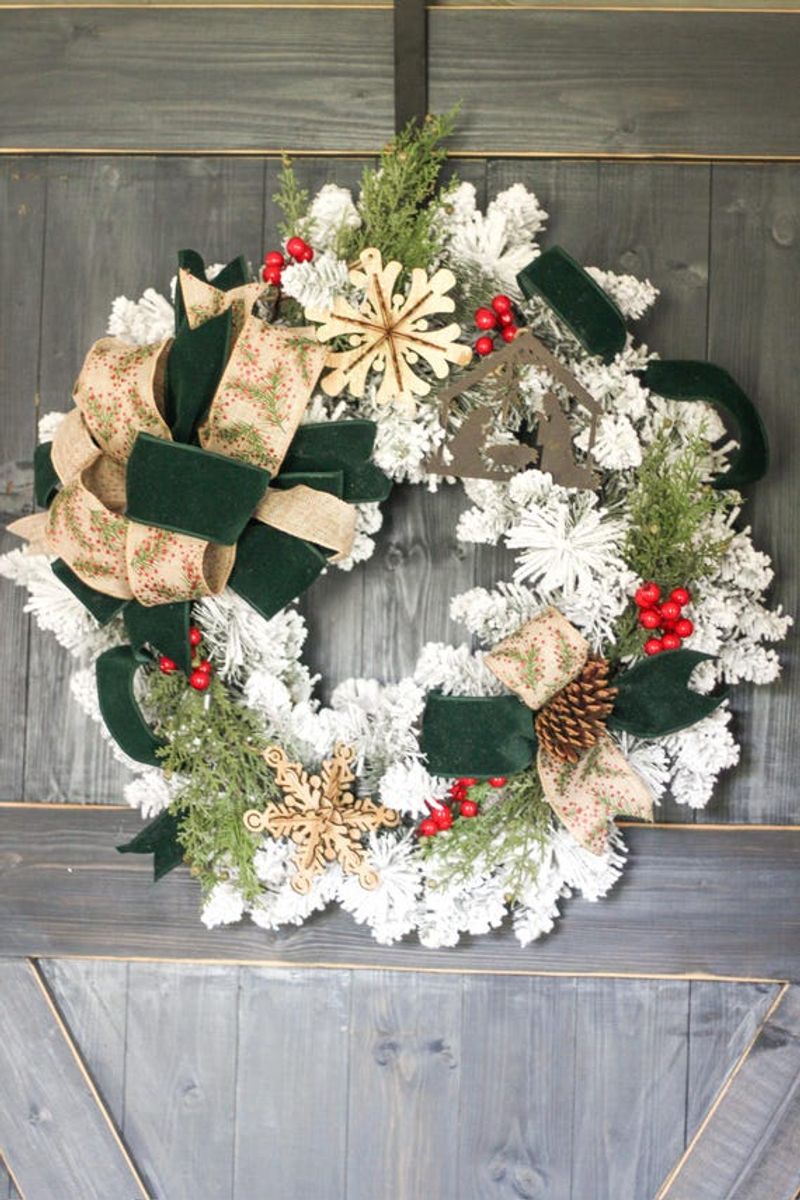
Live somewhere it barely snows? Fake it.
Flocking gives branches that frosty, just-snowed look.
Spray flocking on pine tips outside and let it dry fully before arranging. Add glittery snowflake picks and white ornaments.
The white sparkles in sun and glows under lights.
Keep flocking light, just on the tips, so it looks natural rather than painted.
15. Autumn to Winter Transition
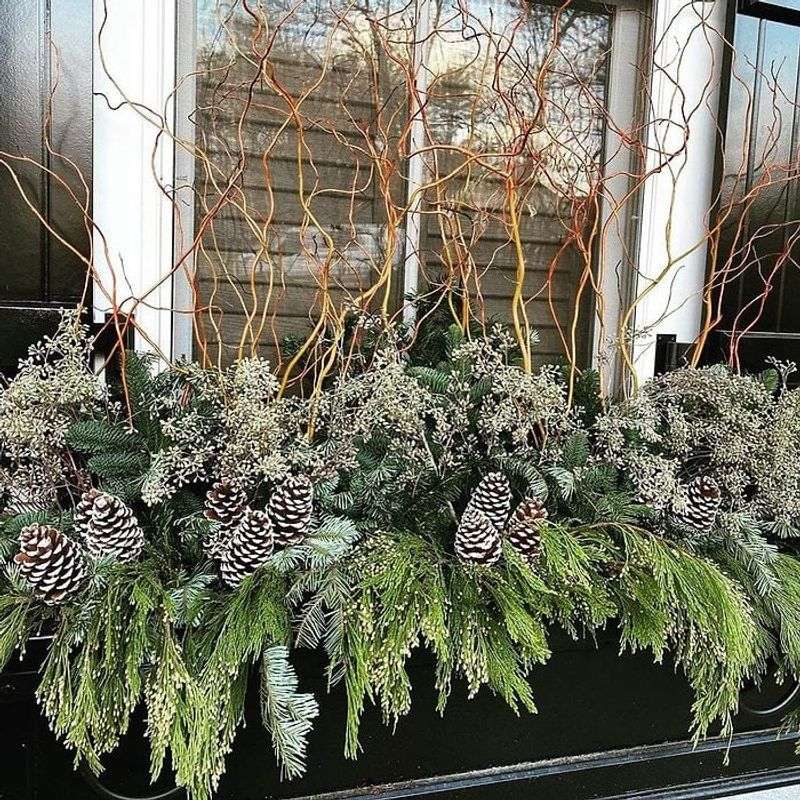
Still looking at frost-bitten mums or blackened geraniums from fall? You do not have to rip everything out at once.
Pull dead annuals first, leaving the soil. Then add greens and keep a few sturdy fall pieces, like dried hydrangea heads or small gourds.
As December arrives, swap those for berries and pinecones.
Dried hydrangea blooms from your garden look lovely tucked into greens, and give those flowers one more season.
16. Inexpensive Foraged Elements
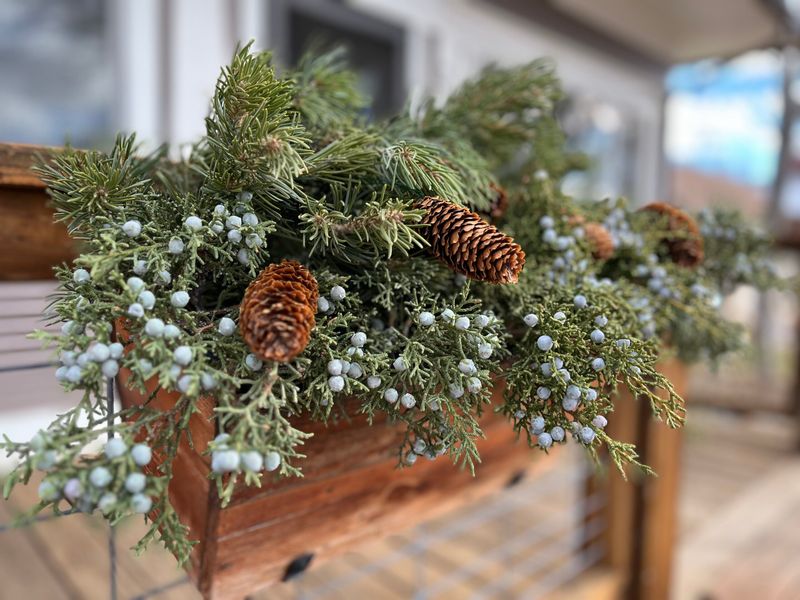
A gorgeous box can cost nothing. Your yard probably holds most of what you need.
Trim cedar, holly, juniper, or overgrown shrubs, and gather fallen pinecones. Pruning lower evergreen branches lightly in winter is usually fine.
Always get permission before cutting on land you do not own.
Shake out bugs and debris before arranging. Free materials also mean you can refresh the box mid-season.
17. Floral Foam or Soil Base
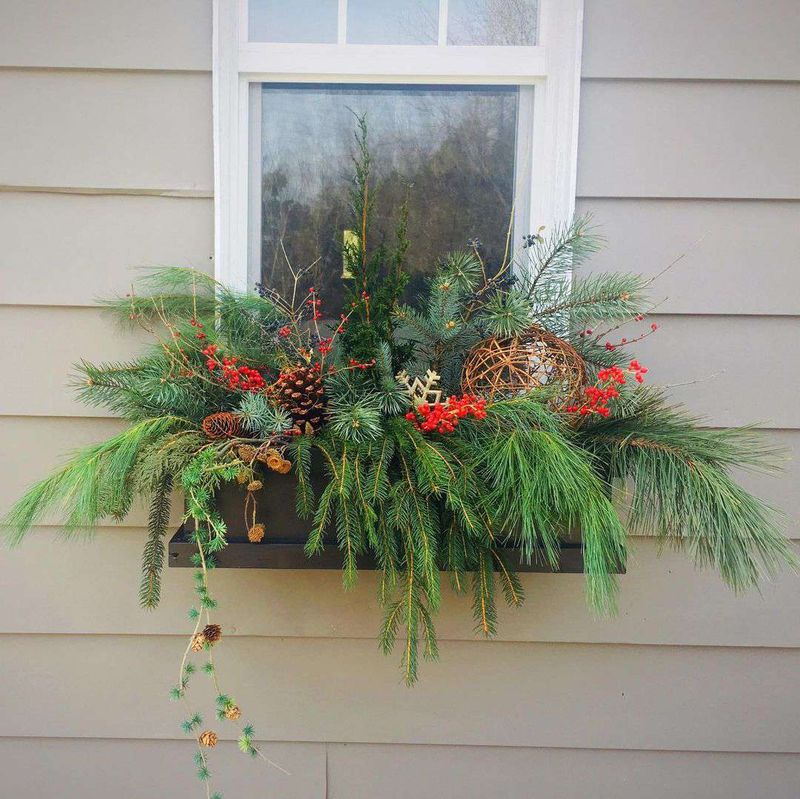
Here is the boring step that saves every other idea on this list. Without a firm base, branches tip, slide, and blow away.
The leftover potting soil from summer is often perfect. Water it before a hard freeze so stems lock in place.
If your box is empty, floral foam made for outdoor use is an option.
Push stems at least three inches deep. Firm footing means your display looks great until New Year.