
Pink Muhly: The North Carolina Native Grass That Can Wrap a Fall Planting in Pink Haze
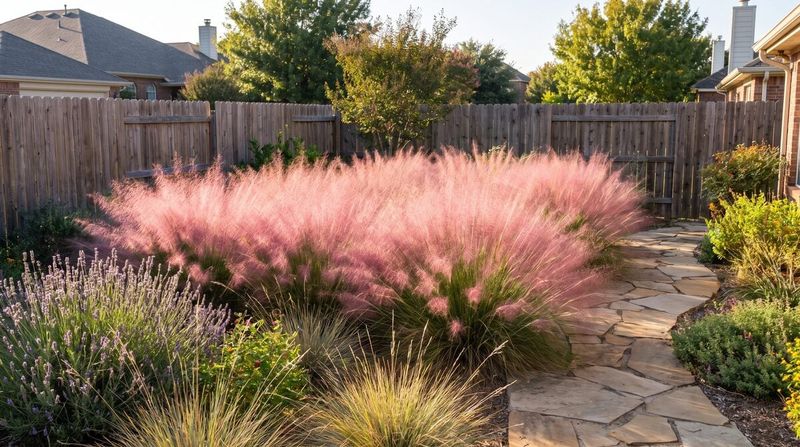
Some grasses look plain all summer, then put on a show when the days shorten. Pink muhly is a North Carolina native that can turn a planting into a soft, pink-toned cloud in fall.
How big that effect gets depends on where you live, how much sun you have, and how many plants you set out. Here is how to decide if this grass fits your yard.
What creates the pink haze?
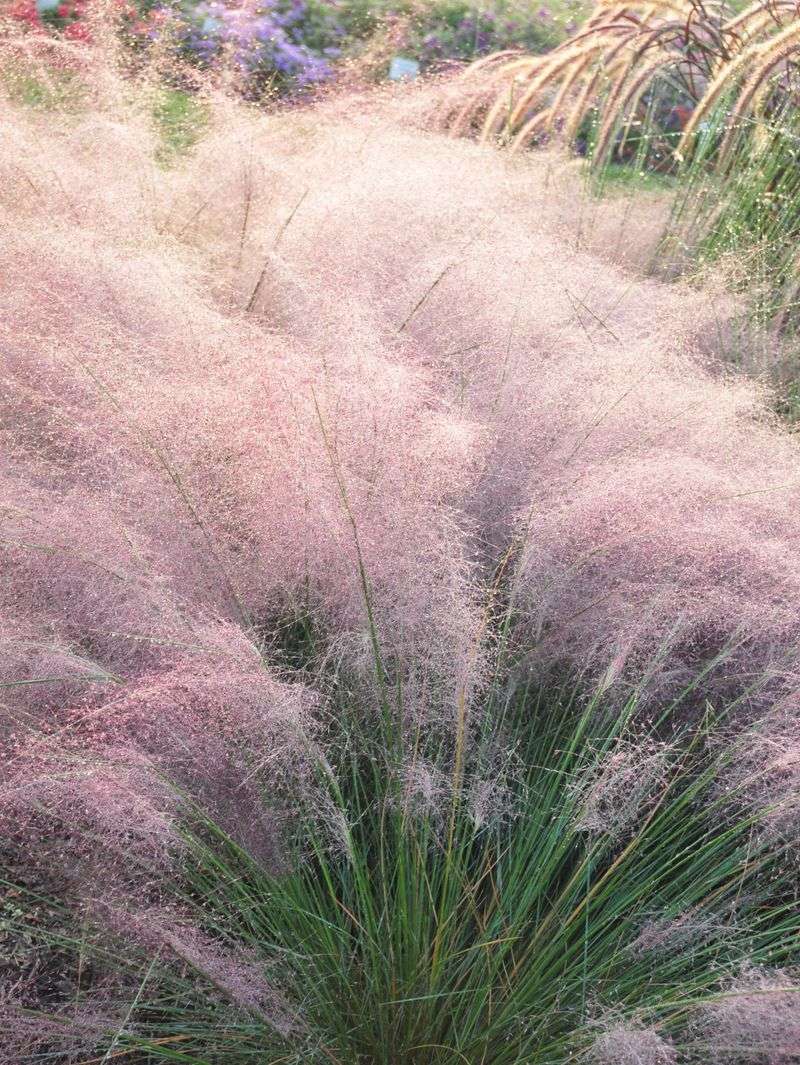
The grass behind the haze is pink muhly, known to botanists as Muhlenbergia capillaris. Its color does not come from big petals.
It comes from fine, airy flower clusters that rise above the leaves and blur together like mist.
The N.C. State Extension Plant Toolbox says those clusters may be pink, purplish red, or purplish gray, and later fade to a light buff.
So the shade you get may not be the bright pink in photos, and it changes as the season moves along.
Timing also varies. The Vascular Plants of North Carolina account lists flowering and fruiting from August to October, and notes that large populations can look like a pink-purple mist.
The Extension profile gives a garden bloom window of September to November.
Think of those as broad seasonal ranges, not a set peak date. Your plants may color up earlier or later depending on the year and the site.
Walk past your planting every week or two in early fall and you will catch the change as it happens.
Pink muhly is native, but its distribution varies
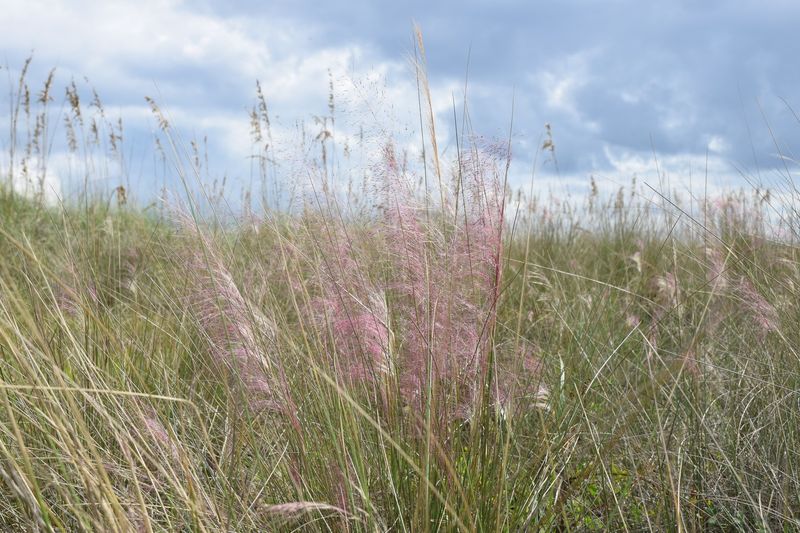
Pink muhly counts as a true North Carolina native. According to the state’s plant records, it grows in the Coastal Plain, the Sandhills, and the Piedmont, with scattered records in the Mountains.
Native across the state, though, does not mean equally common everywhere. The same records show it is much less common in the Mountains and the western Piedmont than in the Coastal Plain and eastern Piedmont.
That gives you a useful starting point. If you garden near the coast or in the eastern Piedmont, you are planting within its stronger natural range.
If you garden in the western Piedmont or the mountains, you can still try it, but treat it as a small test patch first.
Look at your own yard, too. A sunny, open bed will tell you more than a county map.
Notice how nearby sun-loving perennials perform, and let that guide how much you commit to.
Full sun and good drainage support the strongest display
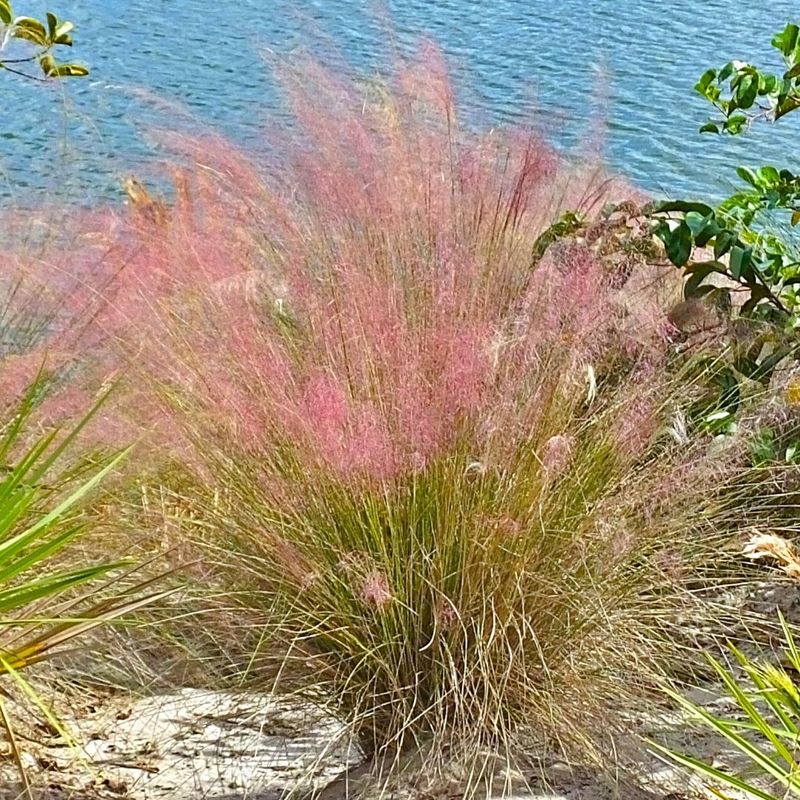
Start your site check with a simple question: where does the sun linger? For the strongest ornamental display, N.C.
State Extension recommends plenty of sunshine and well-drained soil. The Plant Toolbox lists full sun as six or more hours a day.
Soil can be more forgiving. The listing covers a range of soil textures and moisture levels, as long as water drains well.
After a heavy rain, watch the spot. If puddles hang around for a day or more, choose a higher area or build up a mound.
These are preferences for the best show, not strict demands. The grass also tolerates heat, humidity, drought, and poor soil, so you do not need to bring in rich compost.
That makes it a good fit for a tough, hot corner where other plants struggle.
Still, a shady or soggy bed will probably give a thinner, less colorful haze. Match the plant to the spot you have, and expect results to vary from yard to yard.
Groups of clumps create a broader fall effect
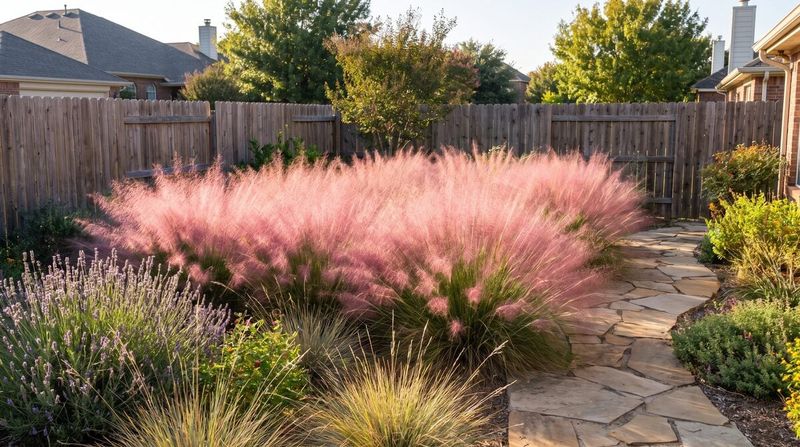
One clump gives you a small cloud. A group gives you the wide, picturable glow people notice from the street.
The NC Plant Toolbox describes pink muhly as a clumping grass and suggests groups or masses for fall color.
Plan around two different numbers. A mature clump reaches roughly 2 to 3 feet tall and about 2 feet 4 inches to 3 feet wide.
The recommended available planting space is 3 to 6 feet, which is the room to leave around and between plants.
Do not mix those up. The clump size tells you how big one plant gets, while the planting space tells you how much bed to set aside.
Sketch the area, mark where each clump will sit, and leave breathing room.
There is no magic plant count. A long border, a sunny slope, or a corner bed can all work, and bigger groupings echo what the state flora notes about large populations resembling a pink-purple mist.
Start with what your space allows.
Tan plumes can carry interest into winter

When fall color fades, the show does not have to end. The flower clusters turn a light buff, and N.C.
State Extension notes the tan plumes can add winter interest. On a frosty morning they catch the light in a quiet, golden way.
Leaving them standing is an option, not a rule. If you prefer a tidier bed, University of Georgia Extension advises cutting the plant back in late winter, before new growth starts in spring.
Either choice works, and neither one changes the fall display you already enjoyed. Pick based on how your yard looks to you in January.
If you do cut back, do it before the new green shoots begin to push up. That way you trim only old stems and avoid clipping fresh growth.
Many gardeners simply mark a late-winter weekend on the calendar.
Its wildlife benefits have clear limits
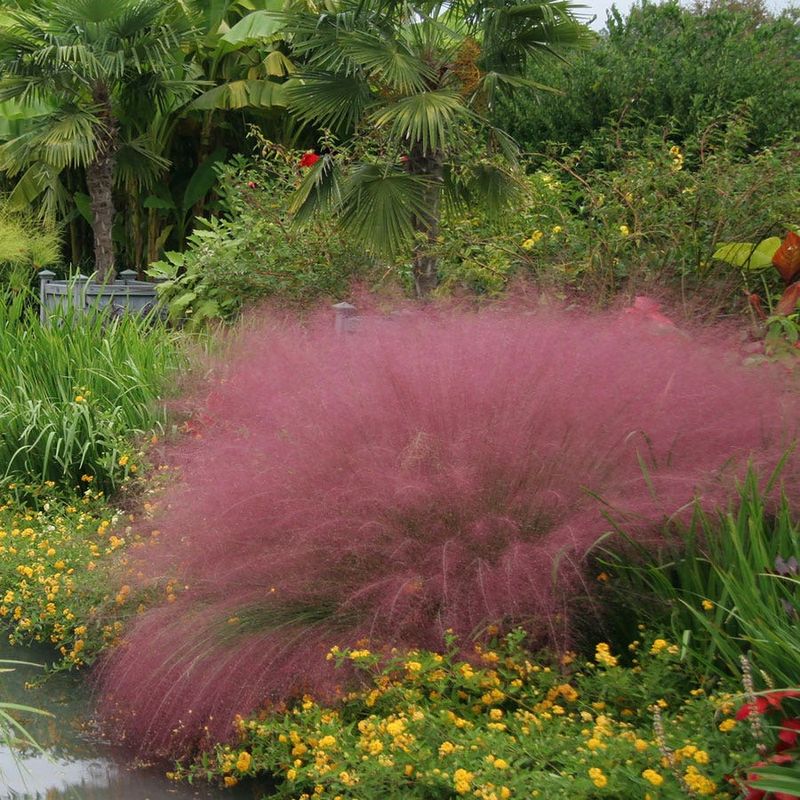
A native grass can do real good for a wildlife-friendly yard, but it is one piece of the puzzle. According to the NC Plant Toolbox, pink muhly gives year-round cover, its seeds are eaten by songbirds and small mammals, and it attracts butterflies.
That is the documented list, and it is worth appreciating as is. Dense clumps offer a place to hide, and the seed heads give birds and small animals something to eat.
Pair it with other natives for flowers, shelter, and food through the seasons.
Deer are a common worry. The same source rates the grass as highly resistant to deer grazing.
A local Cooperative Extension article reminds gardeners that no landscape plant is truly deer-proof, so a hungry herd may still sample it.
Skip bigger claims you may see online. Pink muhly is not documented as a fix for ticks or as a draw for any single species.
Choose the right spot before planting
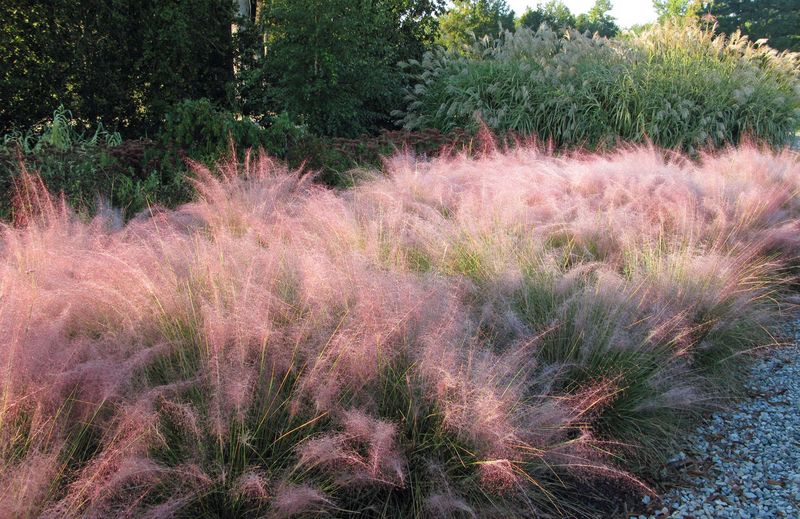
Before buying plants, run a quick checklist. Is your yard in a region where pink muhly is common, such as the Coastal Plain or eastern Piedmont?
Does the spot get six or more hours of sun and drain well? Is there room for a group of clumps?
If you can say yes, a mass planting is your best route to a broad display, and the Extension guidance backs that plan. Expect color and timing to vary.
A lone clump is a pleasant accent, but the haze belongs to the crowd.