
This North Carolina Native Perennial Turns a Moist, Periodically Wet Sunny Corner Into Its Best Border
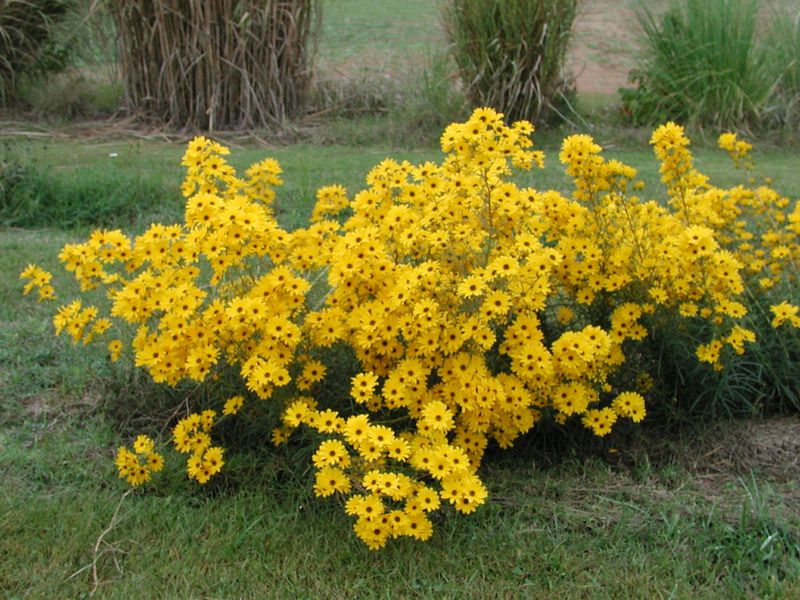
Got a sunny corner where the ground stays damp after rain and the lawn never looks right? A North Carolina native called swamp sunflower may be the plant that finally makes that spot worth showing off.
It rises tall, blooms late, and gives a rain-soaked patch a purpose. Before you plant, though, you will want to know how big it gets and how far it spreads.
Swamp sunflower is a strong fit for a moist, sunny site
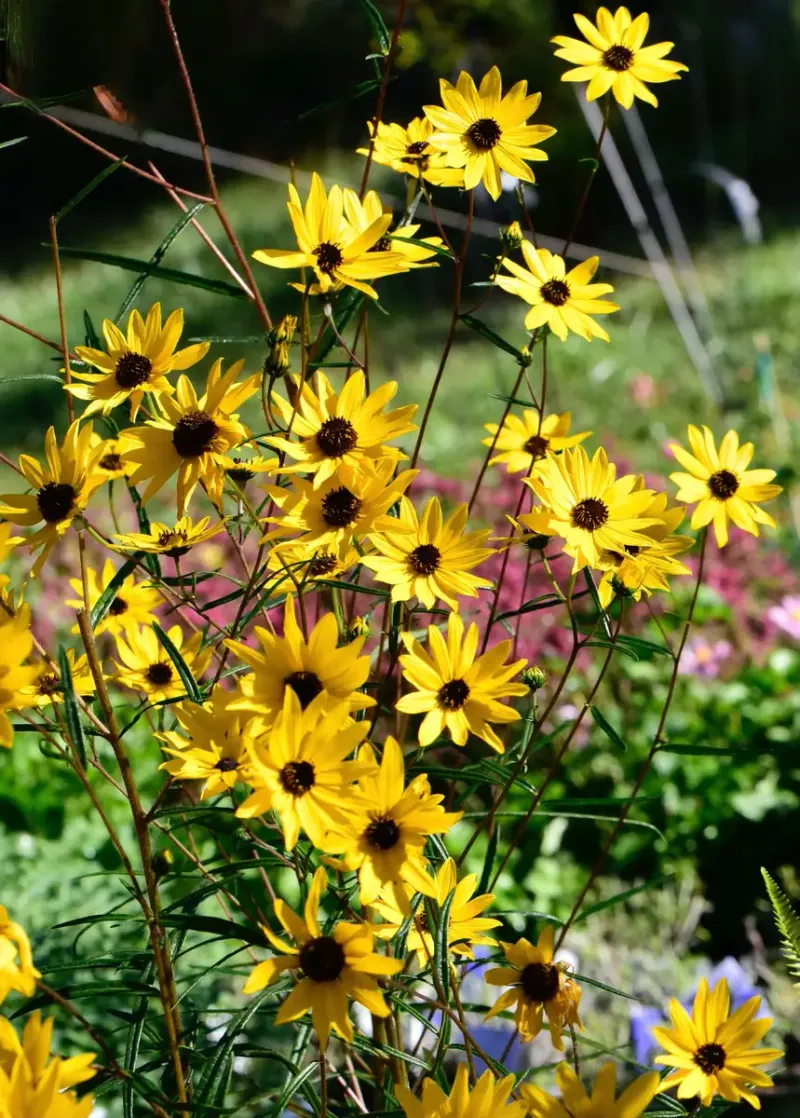
Swamp sunflower (Helianthus angustifolius) is the best match for a sunny North Carolina spot that stays moist and sometimes gets wet. NC State Extension’s plant profile describes it as a North Carolina native that likes full sun and moist to occasionally wet soil.
It blooms from mid or late summer into fall, and NC State suggests it for a back border or a rain garden.
That description fits a yard problem many of us know well: a bright corner where water lingers after storms and fussy plants sulk. Instead of fighting the spot, you plant something that was built for it.
A native perennial also means you are putting a plant from our own region to work in your yard.
You may run into swamp milkweed (Asclepias incarnata) while researching wet, sunny sites. It is another good choice, and North Carolina’s plant account places it in marshes and wet meadows in full sun.
But it is a different plant with pink flower clusters, and everything in this article is about swamp sunflower.
Fair warning: this is a big, bold plant, not a delicate one. The next sections cover how to match it to your site.
Check how wet the site stays
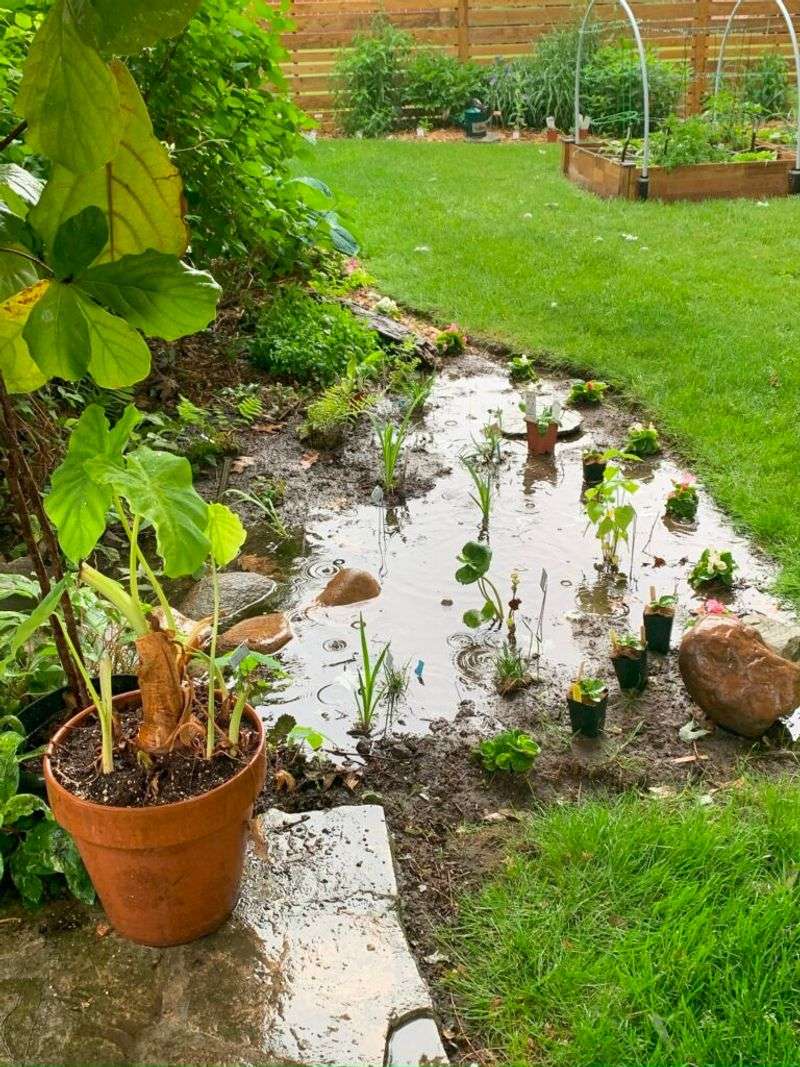
Start with a simple look at your corner. NC State’s profile calls for full sun and moist to occasionally wet soil, so you want a place that gets plenty of direct light and holds water for stretches without staying flooded.
A good clue is what the ground looks like a day or two after a heavy rain. Damp and squishy that dries out in time is a good sign.
Full sun matters here. NC State notes that flowering is better in full sun than in part shade, so a damp corner under big trees is not the same thing.
If your spot gets only a few hours of light, expect fewer blooms.
The plant is listed for the Coastal Plain, Piedmont, and Mountains, and for clay, loam, or sandy soil. That is a wide range, but it does not mean every yard in those regions will suit it.
Heavy red clay in the Piedmont and sandy ground near the coast can both work, as long as the moisture and light are right.
Here is the honest limit. The sources describe moist to occasionally wet ground, not water that sits for weeks.
Nothing there shows that swamp sunflower handles continuous standing water. If a low spot looks like a pond for long periods, it is not the place to test the plant.
Give this tall, spreading plant room
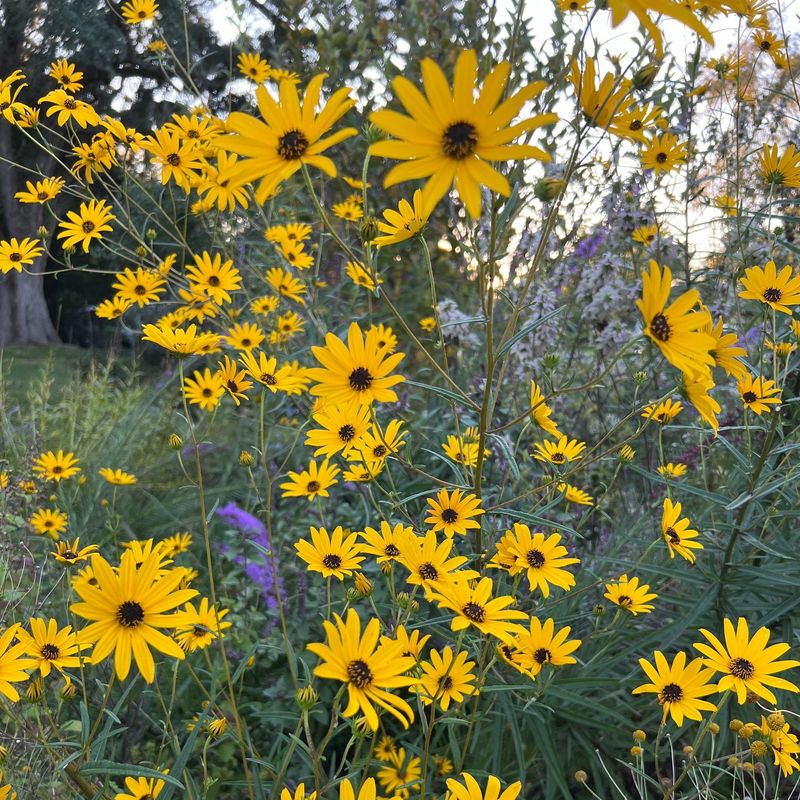
Picture a plant taller than a basketball hoop. NC State lists swamp sunflower at 5 to 8 feet tall and 2.5 to 4 feet wide.
That is a lot of plant for one corner, so measure your space before you buy.
Height is only half the story. NC State also notes that its rhizomes make it aggressive, which means it creeps outward underground and can form a growing patch.
Over a few seasons, one start can become a thicket.
So where does it belong? The back of a roomy border is the natural home, with shorter plants in front to hide its lower stems.
A naturalized area along a fence, a drainage swale, or the far edge of a rain garden also works well.
A narrow, formal edge is the wrong place for it. Next to a walkway or a tidy strip along the house, it will crowd its neighbors and need constant trimming.
It is not a compact or neat edging plant, and it is not hands-off.
Try a quick test. Stand where the plant would go and imagine a wall of stems 6 feet tall growing wider each year.
If that sounds like a lovely backdrop, you have the right spot. If it sounds like a headache, choose something smaller there.
Yellow flowers bring late-season color and habitat value
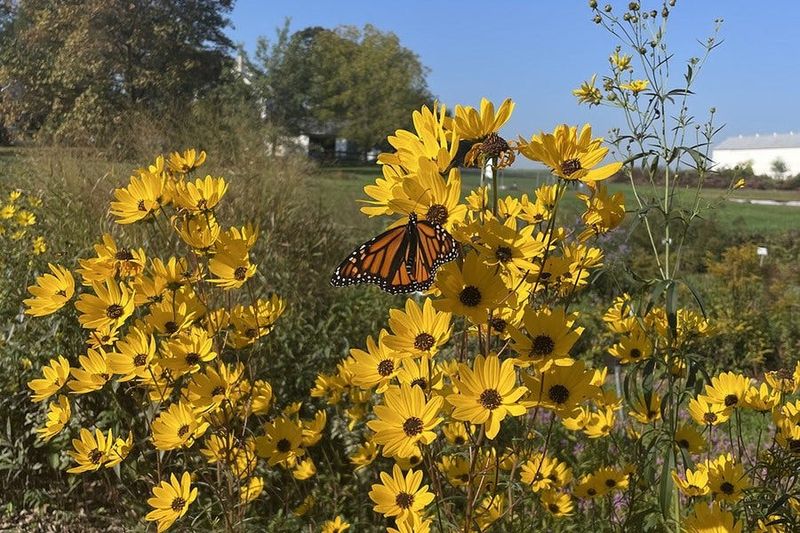
Just when many borders start to fade, swamp sunflower is getting going. Its showy, daisy-like yellow flowers open from mid or late summer and carry on into fall.
In a yard that looks tired by September, that late color is a real bonus.
The blooms are a bright, cheerful gold that stands out against green foliage and evening light. Because the plants are tall, the flowers float above everything else in the border.
Plant a group of them and the effect is a wall of yellow.
There is habitat value too. NC State’s plant profile lists swamp sunflower as useful to pollinators and songbirds and suggests it for pollinator gardens and rain gardens.
NC State’s wildlife landscaping guide identifies it as a source of nectar and seed.
Think of that as general habitat support. Flowers offer nectar for pollinators, and seed heads can offer food for birds.
It does not mean any particular bird or insect will show up in your yard, so treat any visitors as a bonus.
If you want a late-season anchor that gives back to the local ecosystem, this plant does that job. Just keep its size in mind when you decide where the show happens.
Use fall planting guidance with the right qualification
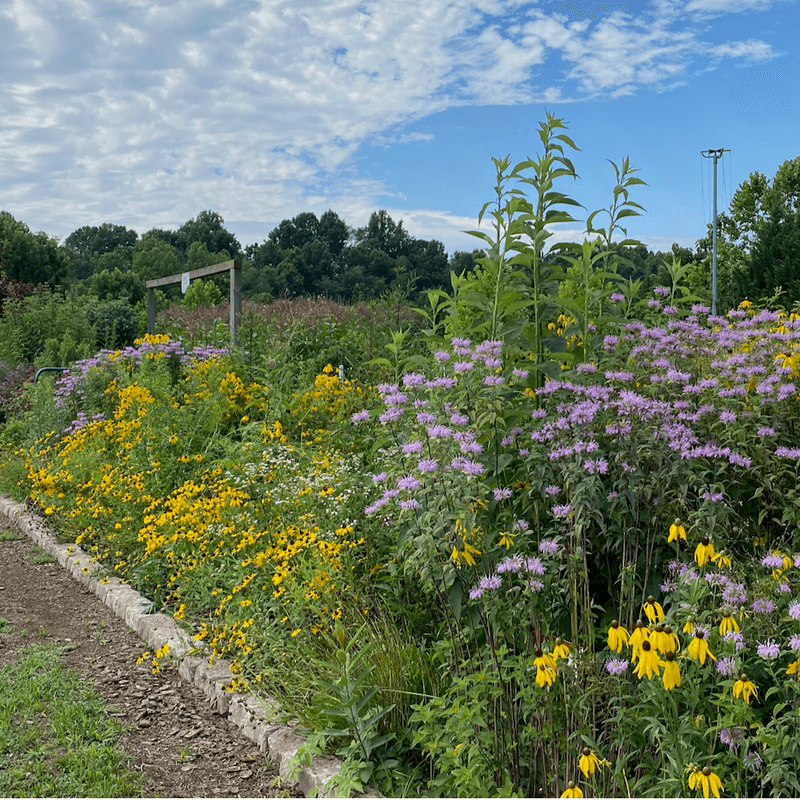
Timing is simple, with one catch. NC State’s wildlife landscaping guide says fall planting works best for most native plant species in North Carolina.
That makes autumn a smart season to shop and plant natives in general.
The catch is that this is a broad recommendation for natives as a group. It is not a rule written just for swamp sunflower.
Think of it as a good default rather than a strict requirement for this plant.
That also means you have some planning time. Use the warmer months to watch your corner, note how long water lingers after storms, and decide how much room the plant will need.
Then you can plant in fall knowing the site is a good match.
This article does not cover planting depth, watering schedules, or how long the plant takes to settle in, because the sources do not give those details. For those, check with your local Extension office.
Plan for cutback, possible staking, and spread
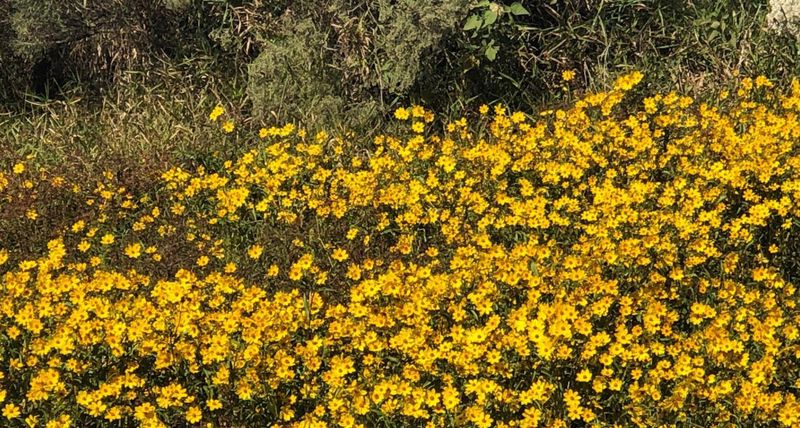
Swamp sunflower is not a plant you plant and forget. NC State recommends cutting it back in June to encourage branching.
The idea is a bushier plant with more side stems, which can mean more flowers later.
Stems can be flimsy, and NC State notes they may need staking, especially in windy locations. A tall plant with heavy flower heads can lean or flop after a summer storm.
Setting stakes early, before the plant gets big, is easier than propping it up after it falls.
Spread is the other chore. Because the rhizomes are aggressive, plan to keep an eye on the edges of the patch each year.
Digging out unwanted shoots, or giving the plant a boundary such as a mowed strip, keeps it where you want it.
Shorter cultivars are available, and they may be worth a look if the full 5 to 8 feet is too much. Still, a shorter cultivar does not prove the plant will stay compact or stop spreading, so keep the same room and upkeep in mind.
Give it space, a June trim, and a stake or two, and it will reward you in fall. Few plants turn a damp, bright corner into such a golden finish.