
Moonflower Vines Open in the Evening, and Some Blooms Unfurl in Minutes
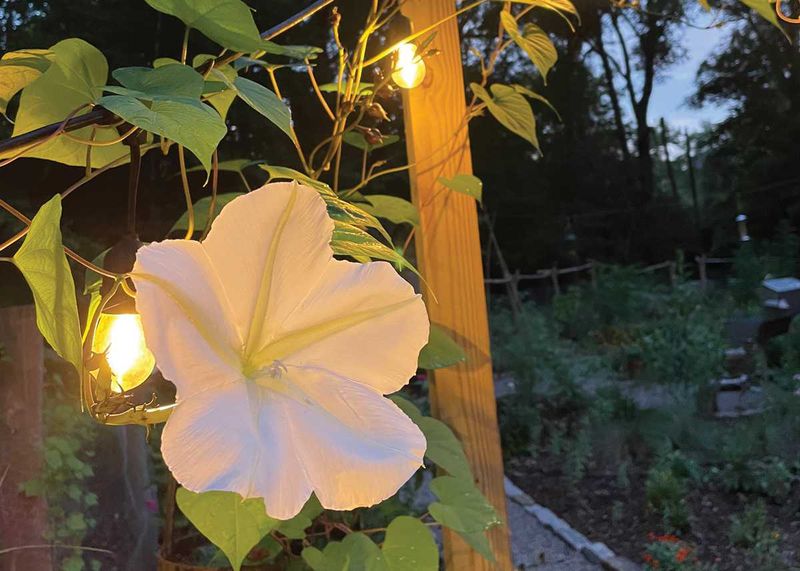
Picture a pale green bud on your patio trellis that slowly loosens and spreads into a wide white flower as the light fades. That is the evening show of the moonflower vine, Ipomoea alba.
Some blooms open over just a few minutes, though the speed changes from night to night. Here is how to set up your patio so you can catch the display, and what to know before you plant.
Meet the evening-blooming Ipomoea alba
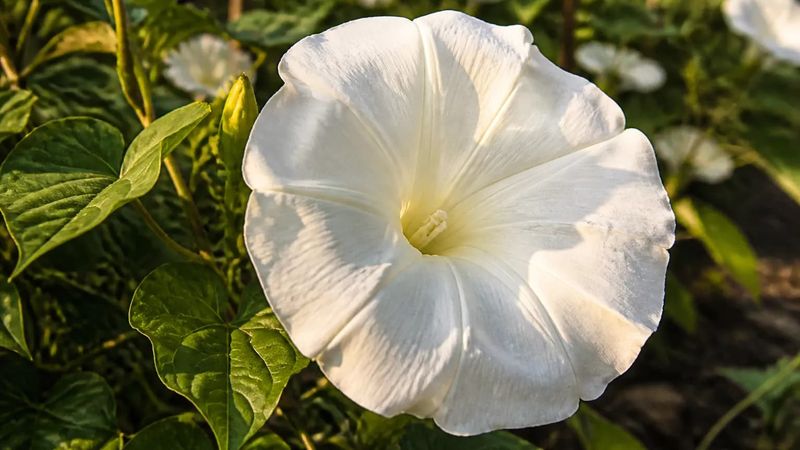
Moonflower vine, known to botanists as Ipomoea alba, is a twining climber with heart-shaped leaves and big, fragrant white flowers. According to North Carolina State Extension, it needs something to climb, and it makes a fine choice for a patio or a garden meant for night viewing.
The flowers are the reason people grow it. They open in the evening and close around dawn, so a bloom that greets you at supper is usually fading by the next morning’s coffee.
Each flower lasts only one night, but a healthy vine keeps producing new buds.
Extension descriptions place the opening anywhere from late afternoon into evening, as noted by University of Illinois Extension. No source gives a fixed hour, so think of the vine as an evening bloomer rather than a clock.
That is part of the fun. You pull up a chair, keep an eye on the plump buds, and let the flowers set the pace.
Some evenings you may see several open close together, and others may feel slower. Either way, the scent alone can make a patio feel different once the sun drops.
How quickly can a moonflower open?
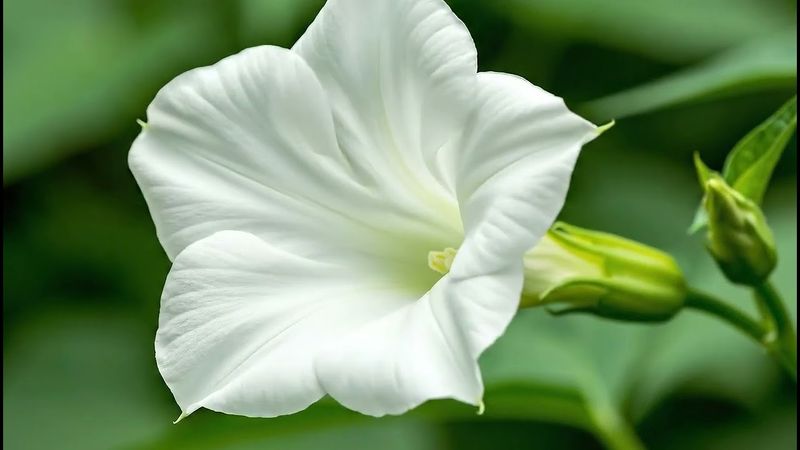
Watching a moonflower open can feel like watching a tiny curtain being pulled back. Indiana University’s Plants in Motion time-lapse shows a warm summer night opening that took several minutes.
A North Carolina State Extension profile also describes flowers that open over several minutes.
Not every flower follows that pace. The same Indiana University page includes a cool fall example that took noticeably longer.
So a few minutes is a fair description of some openings, not a promise for every bloom or every evening.
What you can count on is a general evening pattern. Buds swell, then flowers unfold, usually as the day cools toward night.
Nobody has shown that one exact change in light flips a switch on each flower, so skip the stopwatch and the sunset calculations.
There is one more clue that light is not the whole story. A University of Florida Extension newsletter reports that the vine also blooms on very overcast days.
Temperature, weather, and the individual bud may all play a part.
A practical plan is to start checking buds in the late afternoon. Look for ones that are fat and loosely twisted, since those are the likeliest to open soon.
Then settle in and enjoy whatever speed the evening gives you.
Moths visit the flowers, but do not explain their opening
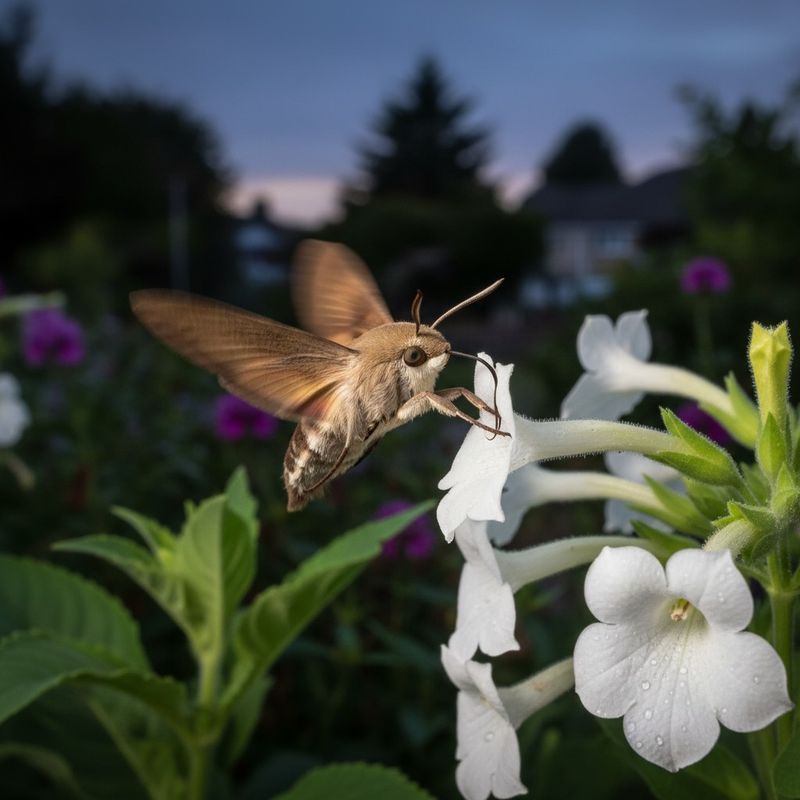
Sweet scent drifting across a patio at night is a message, and moths are among those who receive it. The North Carolina State Extension profile notes that the fragrant white flowers attract night-flying moths.
Researchers have seen it happen, too. A field study of nectar and pollinators in Ipomoea species recorded sphingid moths, often called hawk moths, visiting Ipomoea alba.
Those visits are a good sign that the flowers are doing their job.
Here is the part that is easy to mix up. A moth showing up is not the same as a moth making the flower open.
Nothing in the sources reviewed says moths trigger the opening. The flower seems to open on its own evening schedule, and visitors arrive to a flower that is already ready.
It also helps to keep the guest list open. Moths are among the pollinators, not the only ones, and the vine is not tied to a single moth species.
If you see a wide-winged visitor hovering at the blossom, enjoy it, but do not count on one appearing every night.
A dim porch light left off near the vine may make moth watching easier, since you will see them against the pale petals.
Give the vine support near your viewing spot
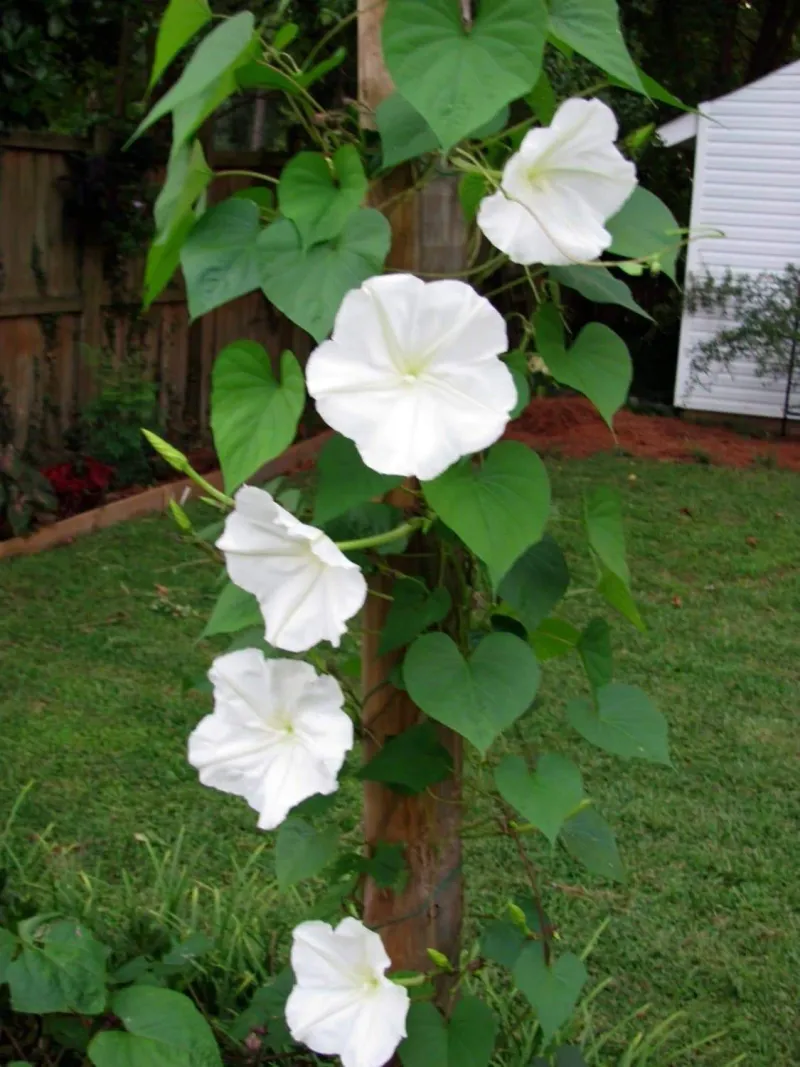
Plant the vine where you will actually sit. A trellis, arbor, or sturdy fence a few steps from your patio chairs puts the flowers at eye level and the scent within easy reach.
North Carolina State Extension says this twining vine needs support, and it does best in full sun and well-drained soil.
If water tends to pool in your bed, a large container with drainage holes can work well. Just give it a tall support right from the start so the stems have something to grab as they grow.
Once buds form, change how you watch. Rather than waiting for a promised hour, wander out in the late afternoon and again after supper.
Fat, loosely twisted buds are your cue that something may happen soon.
Gardeners in colder regions generally grow moonflower vine as an annual. University of Illinois Extension advises starting seed indoors because the plant has a long growing season.
Starting early gives the vine a head start before it goes outside.
Plan for patience, too. No source offers a flowering date, so treat the first bloom as a pleasant surprise instead of a deadline.
Check the species before applying safety advice
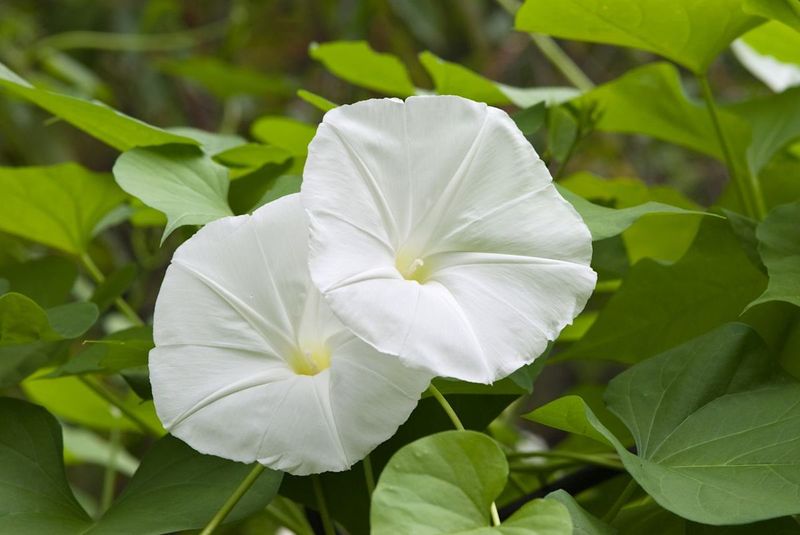
The name moonflower is slippery. Besides the climbing vine, it can also be used for Datura and Brugmansia, which are different plants.
The University of Florida Extension newsletter touches on this overlap, and an Ask Extension answer separates the Datura moonflower from Ipomoea alba.
Before you follow any growing tip or safety tip, check the Latin name on the seed packet or plant tag. Growing instructions for one plant may not fit another, and the same is true for safety advice.
For Ipomoea alba, the seeds have toxic properties. North Carolina State Extension lists the seeds as the poisonous part and says that eating them can cause vomiting, with hallucinations possible after large amounts.
So do not taste any part of the plant, and do not treat it as harmless just because it is pretty. Keep seeds and seed pods away from children and pets, and wash your hands after collecting seed.
If someone swallows seeds, contact poison control or a medical professional.
Watch the buds instead of the clock
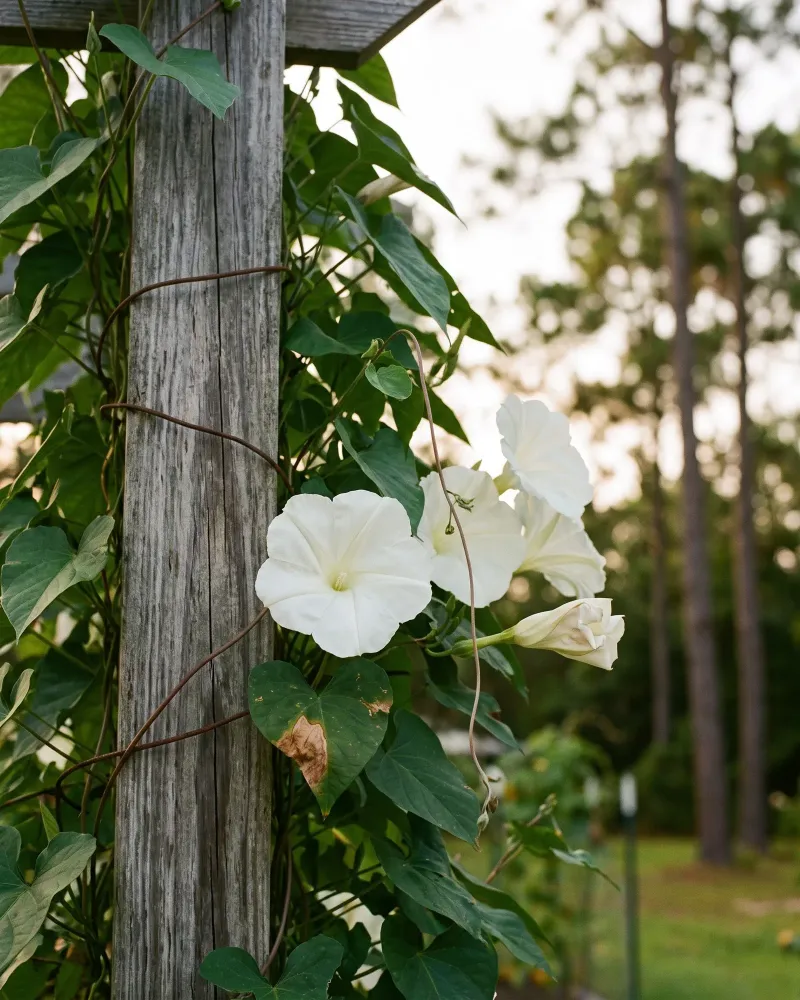
Grow your Ipomoea alba on a sturdy support near your seats, then check the buds each evening. A minutes-long opening may happen on a warm night, but it is a possibility, not a schedule.
Moths may stop by, though they are not the reason the flowers open.
Some nights the show starts early, and some nights it makes you wait. The patience is part of the reward.