
Tiny White Moths on Houseplants? They May Be Whiteflies, and Here Is When Watering Matters
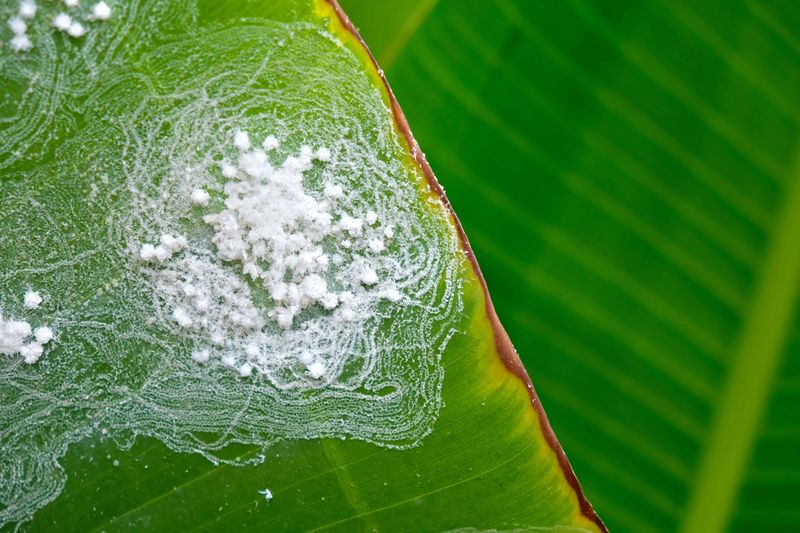
You lift a pot, and a puff of tiny insects floats up from your plant. They look like little white moths, and it is easy to wonder what you did wrong.
The good news is that the insect may not be what you think, and the fix depends on a closer look. Once you know which pest you have, a few simple habits can help without a trip to buy sprays.
White moth-like insects may be whiteflies, not fungus gnats
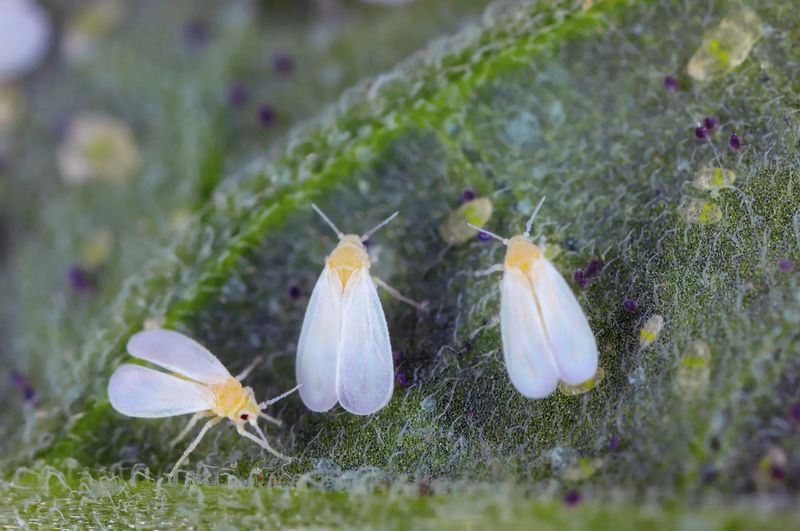
If you saw small white insects fluttering off your plant, your eyes did not fool you. Something is clearly there.
The mix-up is in the name, because the insects that look like tiny white moths are often whiteflies, not fungus gnats.
Adult fungus gnats look quite different. According to University of Minnesota Extension, they are small, dark, mosquito-like flies that hang around pots and soil.
Adult whiteflies, on the other hand, can resemble tiny white moths, as University of Maryland Extension describes.
Appearance alone may not settle the question, so take a closer look. Gently turn a leaf over and check the underside for flat, disk-like immature whiteflies.
If the insects are white and rise from the foliage when you brush the plant, whiteflies are a strong possibility.
When you cannot tell, snap a clear photo or hold a sticky card nearby and look at the catch up close. A magnifying glass or your phone’s zoom can help a lot.
Here is why this matters. Soil-focused advice, such as adjusting how you water, applies only if the pest is confirmed to be fungus gnats.
Sorting out the insect first keeps you from fixing the wrong problem.
Plants may carry gnats indoors before fall
Fall is a common time to notice insects around pots, but the calendar is not proof of what caused them. Plants that spent the summer outside may already carry fungus gnats in their growing media.
As Colorado State University Extension explains, outdoor plants can be colonized before they ever cross your threshold.
Once inside, conditions change. Cooler, darker months slow plant growth and water use, so the same pot of soil can stay damp longer than it did in July.
Moist soil can favor gnat development, which may make a small group suddenly easier to spot.
That is why the best first move is checking the plant and its soil instead of searching for someone to blame. Look for small dark flies near the pot, especially when you water or move the plant.
University of Minnesota Extension also encourages careful attention when plants make the move indoors.
Fungus gnat adults are mainly a nuisance. They generally do not harm people or established houseplants.
The larvae are the part to watch. UC Statewide IPM Program notes that when larval numbers are high, they can damage roots or stunt growth, and seedlings and young plants are most at risk.
A big, settled geranium or pothos is usually far less vulnerable than a tray of new starts.
Let the soil surface dry only as far as the plant can tolerate
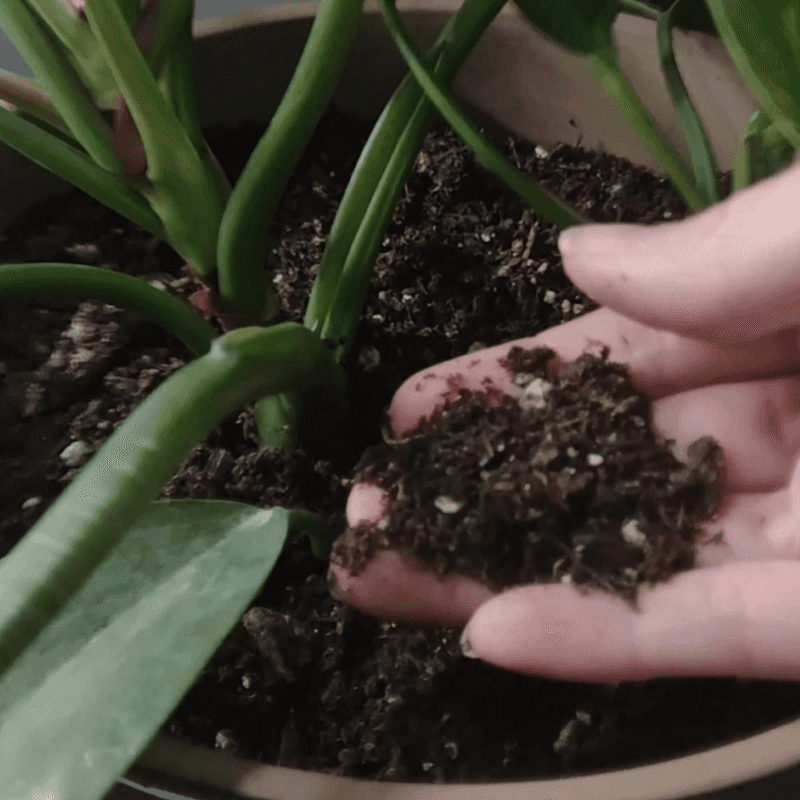
Once you have confirmed fungus gnats, the main watering tip is simple: check before you pour. Push a finger into the soil and feel the top inch or so.
Guidance from Colorado State University Extension and others points to letting the top inch, or the top 1 to 2 inches, dry between waterings.
That number is a starting point, not a rule for every pot. A thirsty fern and a drought-tolerant succulent need very different care.
University of Minnesota Extension advises drying the surface without letting the plants wilt.
So skip the fixed calendar and do not dry the whole pot to bone-dry. Watch the plant itself.
Drooping leaves mean you have gone too far, and pest control is never worth a wilting plant.
Why does this help? Fungus gnat larvae live in damp growing media, as Oregon State University Extension and UC IPM both describe.
A drier surface gives them a less welcoming home.
Notice what this does not say. Soggy soil does not prove your watering started the problem, and a drier surface may not end it on its own.
Think of it as one helpful step in a larger plan.
Improve drainage and remove damp debris
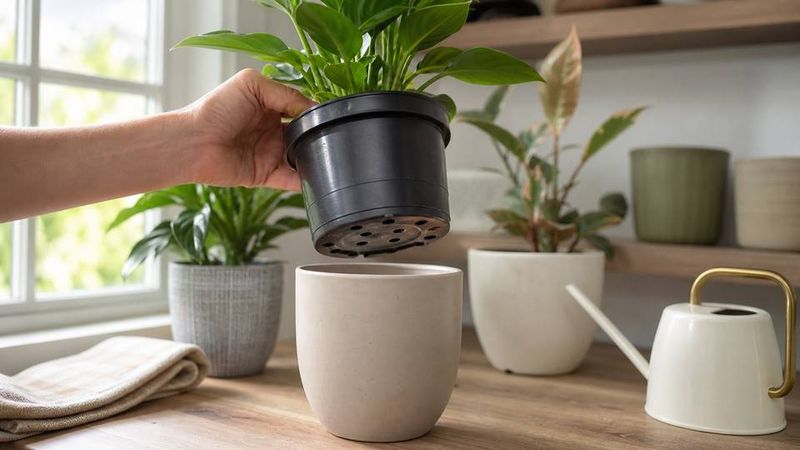
Take a look at the pot and everything around it. Standing water in a saucer keeps the lower soil wet long after the surface looks fine.
Tip it out soon after watering, and your plant’s roots will thank you too.
Drainage matters just as much. A pot needs holes at the bottom so extra water can escape, and a decorative outer pot can quietly trap a pool beneath the plastic one.
Lift the inner pot now and then to check.
Then do a quick tidy. Fallen leaves, spent blooms, and other dead plant material can hold moisture on top of the soil.
Pinch them off and toss them, as UC Statewide IPM Program suggests.
These steps cut down on damp, decaying spots where larvae can thrive. The University of Minnesota Extension also lists good drainage among its basic moisture tips.
Keep expectations realistic. Clean pots and empty saucers reduce favorable conditions, but they are not a guaranteed cure by themselves.
They work best alongside the other steps in this article.
Use traps for adults and labeled Bti for larvae
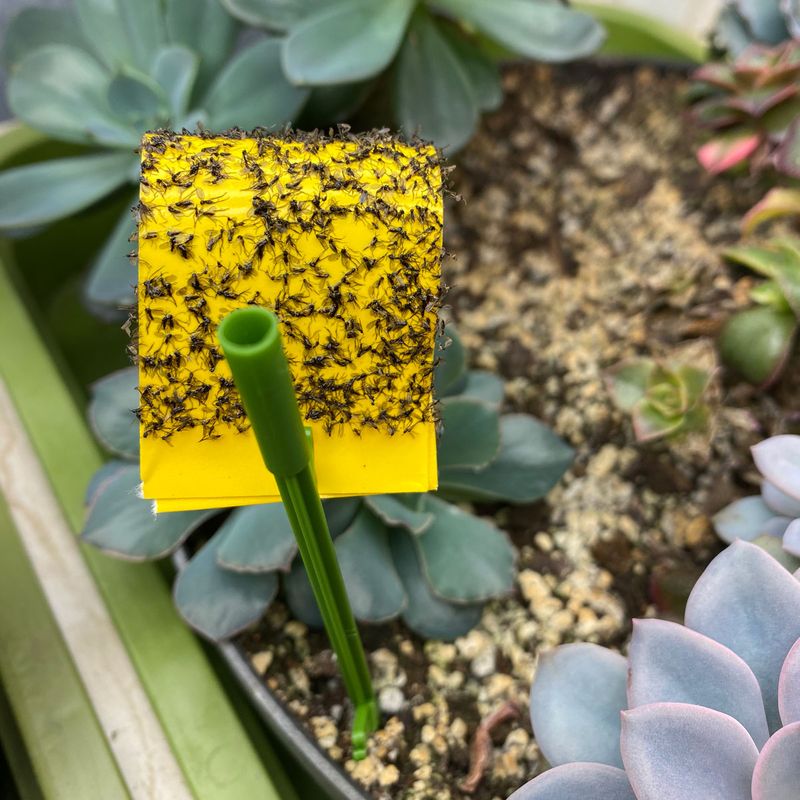
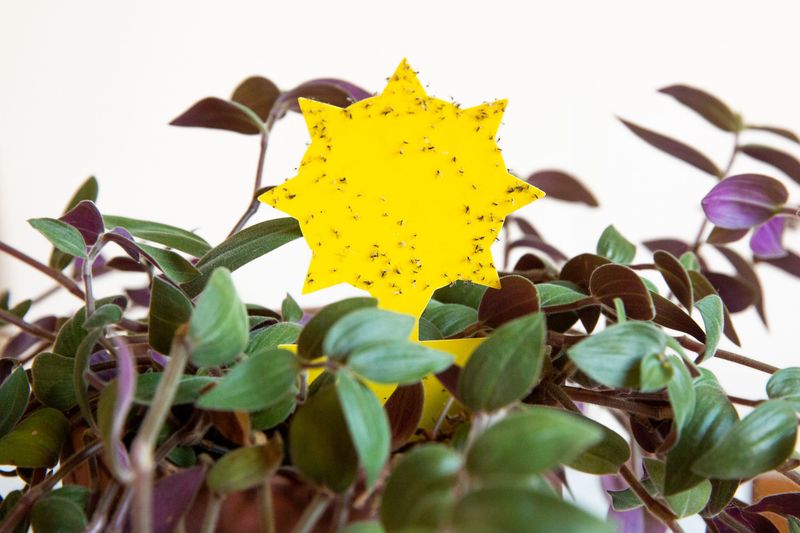
Sometimes moisture changes are not enough, and that is okay. A yellow sticky card pushed into the soil is an easy next step.
It catches adult flies and shows you whether the numbers are rising or falling, as Oregon State University Extension describes.
Cards have a limit, though. They monitor and trap adults but do not, by themselves, deal with larvae in the soil, a point University of Minnesota Extension makes clearly.
If you want to go further, a Bti product is an option. Bti targets larvae, not flying adults, according to UC IPM.
Use one only when the product is labeled for fungus gnat larvae in soil.
Always follow the label for your specific product. The EPA label for Mosquito Bits, for example, gives soil directions and repeat-treatment instructions.
An adult-killing spray will not replace treating larvae, since the next batch keeps hatching from the soil. No single method promises to wipe the gnats out.
Stacking small steps and watching your cards over a few weeks gives the best chance of progress.
Inspect plants before bringing them back indoors
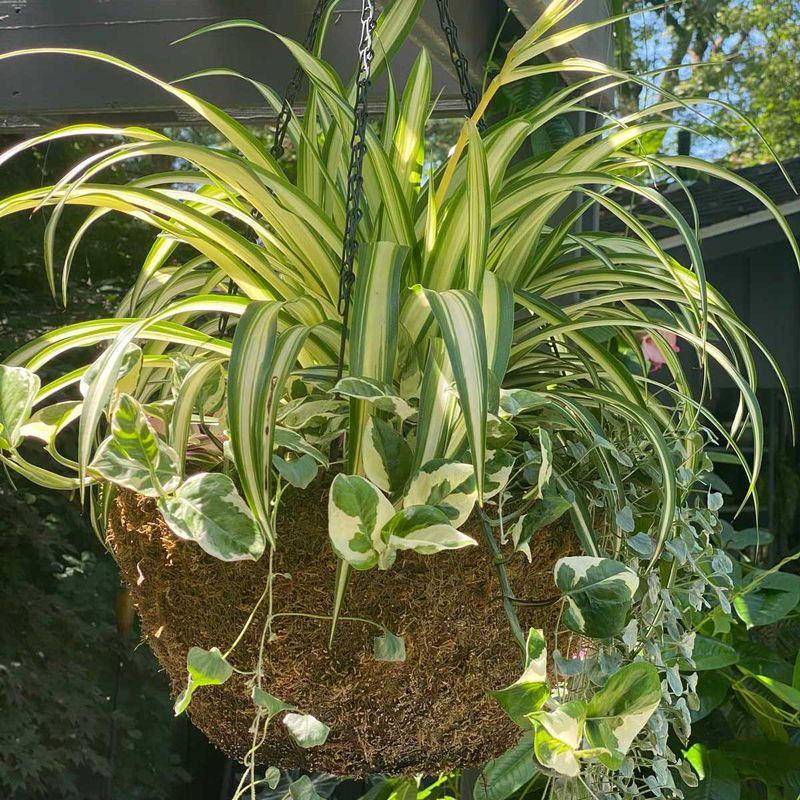
Next fall, give each returning plant a short checkup before it comes through the door. Turn over a few leaves, peek at the soil surface, and look for flying insects or sticky residue.
University of Minnesota Extension recommends inspecting plants for pests before the move.
Consider keeping returning or new plants apart from your other houseplants for a while. A spare room or a corner works fine.
If something shows up, it stays away from the rest of your collection.
This habit matters because fungus gnats may already be present outdoors and become more noticeable once plants come inside, as Colorado State University Extension notes. Inspection will not guarantee a pest-free plant, but it can catch problems early.
If insects do appear, identify them first. White and fluttery points toward whiteflies, while small, dark, mosquito-like flies near the soil point toward fungus gnats.
Only then choose your response, and adjust moisture only within what each plant tolerates.
A calm look beats a panicked spray every time.