
Your Leafy Amaryllis From Last Year May Bloom Again, But Don’t Count on Christmas
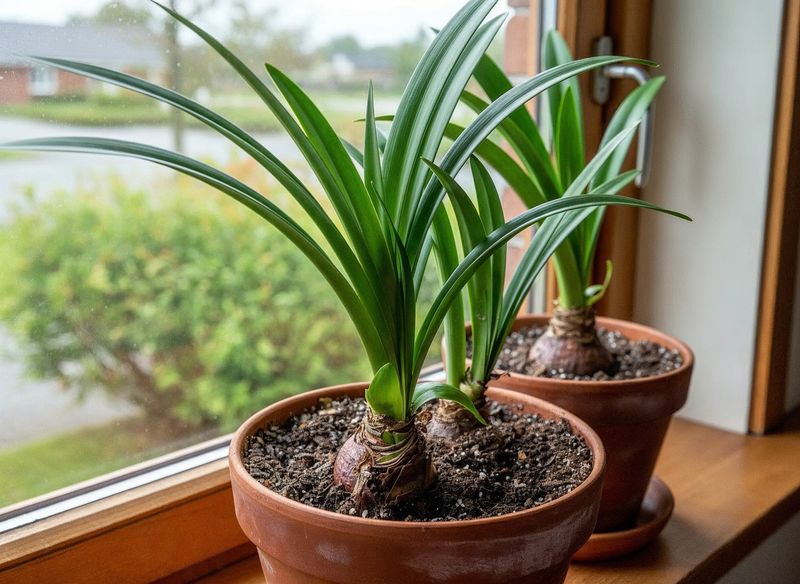
You have an amaryllis from last year with plenty of green leaves and no flower stalk in sight. Before you toss it, know that the bulb may still have some fight left.
The way you treat those leaves now can shape whether flowers show up later. Here is a plain, honest plan, including a straight answer about timing.
Green leaves mean the bulb may still be rebuilding
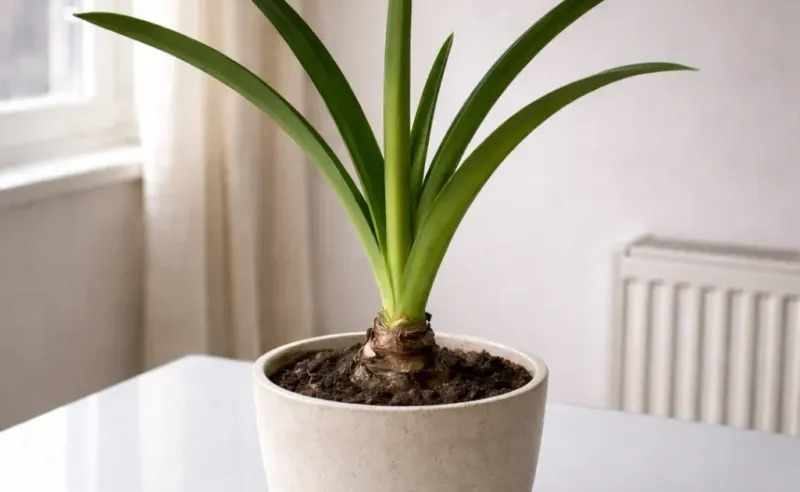
A leafy amaryllis with no flower stalk looks like a failure, but it is not necessarily finished. Those strap-shaped leaves work like solar panels, collecting energy and sending it down into the bulb.
That stored energy is what a bulb draws on to build a future flower.
According to University of Illinois Extension, healthy leaves should stay on the plant after blooming because they store the energy needed for future flowers. So if you were about to snip them off to tidy up, put the scissors down.
Cutting green leaves early can work against a rebloom.
Candor matters here, too. University of Minnesota Extension notes that a bulb may grow leaves but no flowers if it did not store enough nutrients.
Prior light, feeding, and the bulb’s own reserves all play a part.
The takeaway is simple. Green leaves are a good sign and a useful tool, but they are not a promise.
Treat them as the bulb’s recharging system and give them time to do their job.
A small side note on names: the holiday plant we call amaryllis is generally Hippeastrum, not true Amaryllis. The care advice here applies to the one sold in stores each winter.
Keep the foliage growing until it begins to yellow
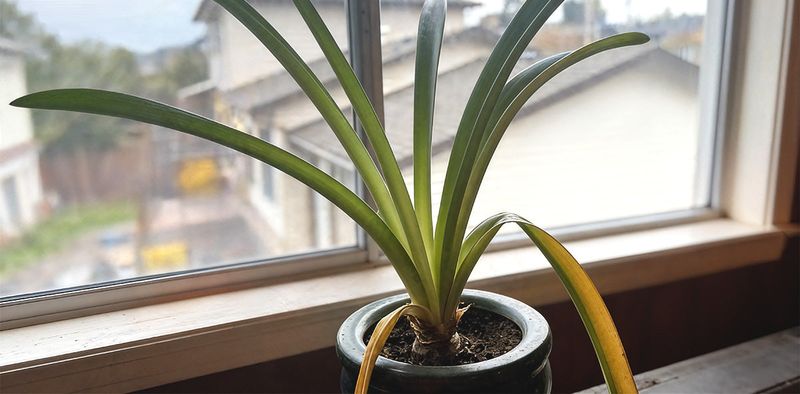
Think of the next few months as feeding time for the bulb. Park the pot in a bright, sunny spot so the leaves can soak up as much light as possible.
A south-facing window or a sunny porch while nights stay mild works well.
Water when the soil surface feels dry, and skip the habit of watering on a fixed schedule. Soggy soil can rot a bulb, which is a far bigger problem than a thirsty leaf.
During active growth, feed it according to the directions on your fertilizer label, as Illinois Extension recommends.
Here is the part many people get wrong. Do not stop watering and shove the pot into a dark closet while the leaves are still green.
A green leaf is still working, and shutting it down early cuts off the bulb’s refill.
Watch for the natural signals instead. When leaves begin to yellow and flop on their own, the plant is telling you it is ready to slow down.
Until then, keep the routine steady and boring.
If you have dogs, cats, or horses, keep the pot out of reach. The ASPCA lists amaryllis as toxic to them, and chewing on leaves or bulbs can cause vomiting and other symptoms.
A rest can help with timing, but it is not the only route
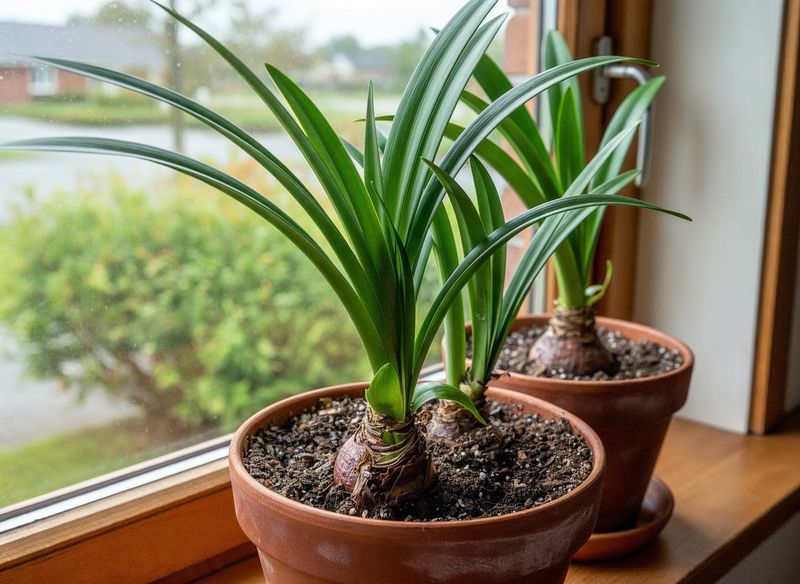
Gardening advice on amaryllis does not all match, and that is worth knowing. Some extension guides build a cool, dry rest into their reblooming routine.
Others treat it as optional.
Illinois Extension says dormancy is optional for reblooming, and Minnesota Extension agrees that a bulb can flower again without a forced rest. Meanwhile, Iowa State and University of Maryland describe a cool rest as part of their reblooming or holiday-forcing routines.
So how do you choose? Think of the rest as a scheduling tool.
It helps you line up regrowth and flowering for a time you pick, but it does not guarantee blooms, and your bulb may flower without it.
One rule holds either way. Any rest steps come after the foliage is ready to die back, not before.
If your leaves are still green and firm, you are not at the rest stage yet.
If you like predictable timing, try the rest. If you prefer low effort, keep the plant growing and see what happens.
Let the leaves die back before starting a cool, dry rest
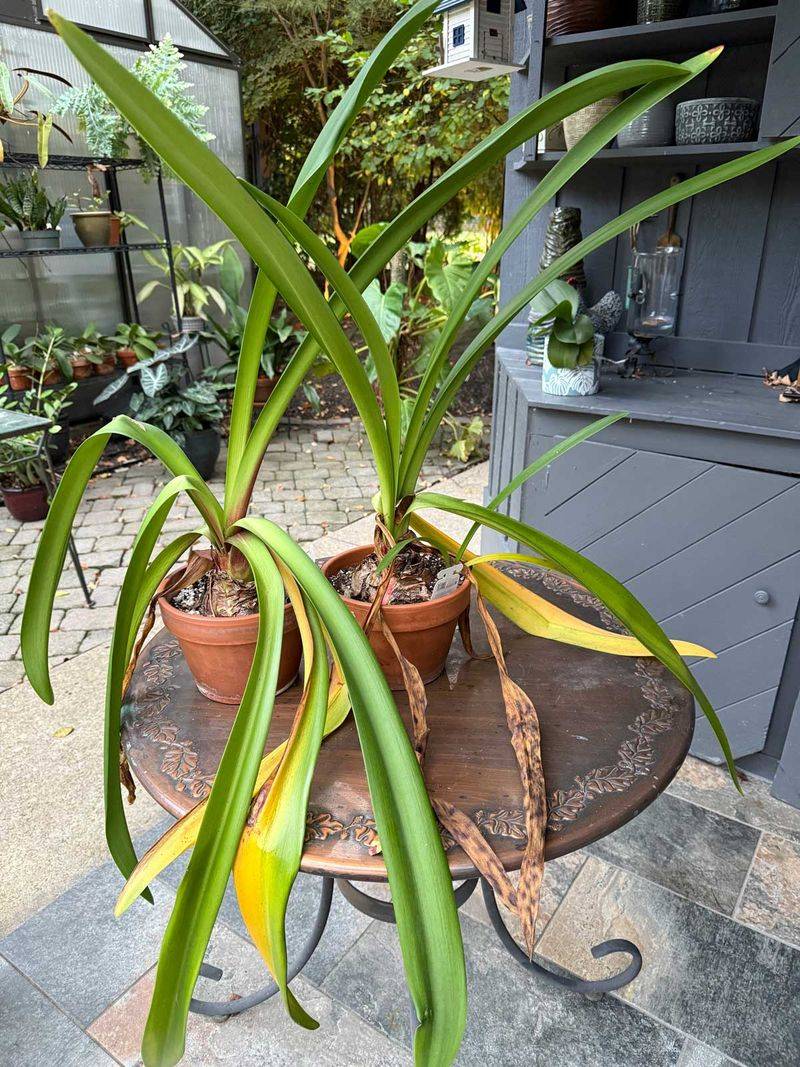
When the leaves have yellowed and dried on their own, you can begin a managed rest. Remove the dead foliage only after it has fully died back.
Pulling off leaves that are still partly green throws away energy the bulb has not yet collected.
Once the plant is resting, stop watering. Move the pot to a cool spot, such as a basement, an unheated closet, or a cool garage that stays above freezing.
Recommendations vary by source, with roughly 45 to 55°F in some guides and 50 to 60°F in others, and a rest of about 6 to 12 weeks, as summarized by Illinois Extension.
Treat those numbers as ranges, not a magic setting. Slightly warmer or cooler will not necessarily ruin your bulb, but freezing temperatures and hot rooms are best avoided.
Both Iowa State and Maryland describe cool rest as part of their routines.
A managed rest is not the same as forgetting the pot in a corner. Check it every week or two for mold or mildew, and look for a soft, mushy bulb.
A firm bulb in dry, cool air is what you are aiming for.
If you spot mold, move the bulb to a spot with better airflow and wipe off the surface growth. A neglected bulb in damp, warm conditions is more likely to decline than to rebloom.
Warmth and light restart growth after the rest
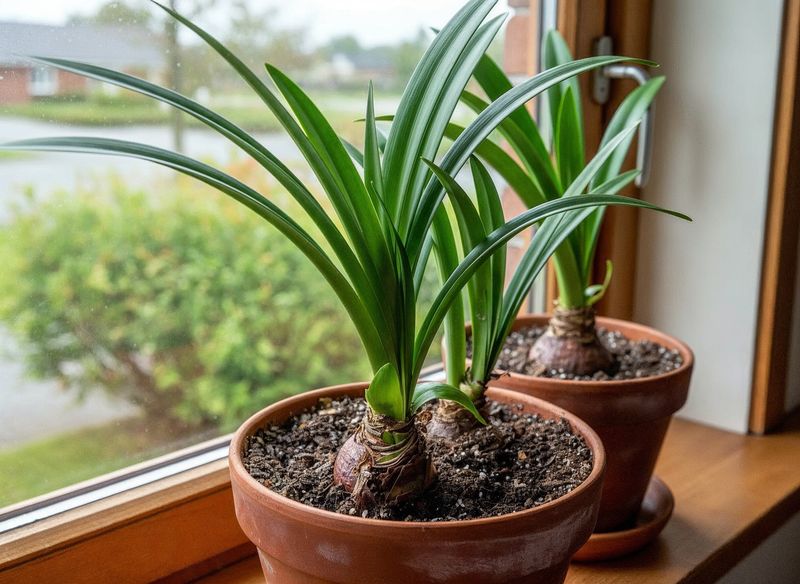
When the rest period ends, it is time to wake the bulb. Move the pot to a warm, bright place and give it a good drink.
After that, water when the soil surface is dry, just as you did during the leafy season.
Once you see growth developing, begin feeding again. A flower stalk or new leaf tip pushing up from the bulb is your signal that the restart is working.
Rotate the pot every few days so the stalk grows straight instead of leaning toward the window.
As for timing, UNH Extension says flowering commonly takes about four to six weeks after dormancy. That is a common pattern, not a countdown clock.
Some bulbs wake up fast and others take their time.
The Illinois guidance reminds us that a bulb with thin reserves may put up leaves first, or only leaves. If that happens, keep the plant growing and try again next season.
Patience pays off here. Steady warmth, bright light, and measured watering give the bulb its best shot without any need for fuss.
A mid-October start does not support a Christmas-bloom promise
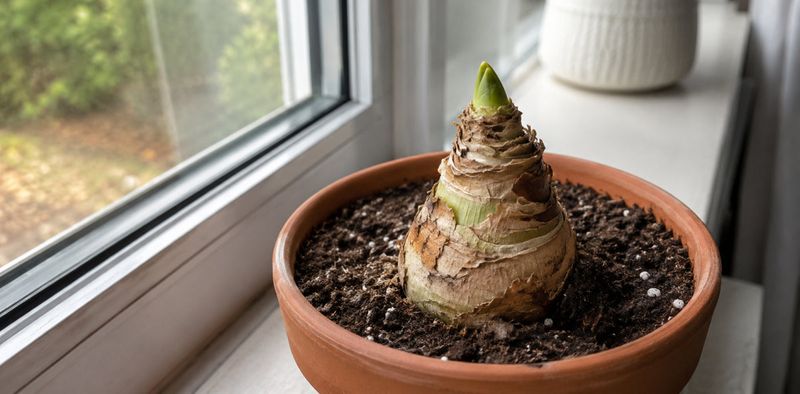
Let’s do the math, because the calendar matters. On October 15, 2026, Christmas is about 10 weeks away.
A bulb that is still leafy and has not started its rest is behind schedule for a December 25 bloom.
UNH Extension describes guidance of 8 to 12 weeks of rest plus another 4 to 6 weeks for flowers. Add those together and you get roughly 12 to 18 weeks, which is more than the time left.
The same guidance suggests starting dormancy in late summer or early fall for holiday timing.
So a bulb beginning the process in mid-October should not be expected or promised to flower by Christmas. Some may surprise you, but planning around a surprise sets you up for disappointment.
Keep that timing call separate from the bigger question of whether the bulb can bloom again. It may.
Minnesota Extension explains that results depend on stored nutrients, so the exact date depends on the bulb’s reserves, prior care, and how quickly it regrows.
A practical next step is to treat this year as a recharge year. If you want holiday flowers next time, mark late summer on your calendar and plan backward.
Judge success beyond one holiday
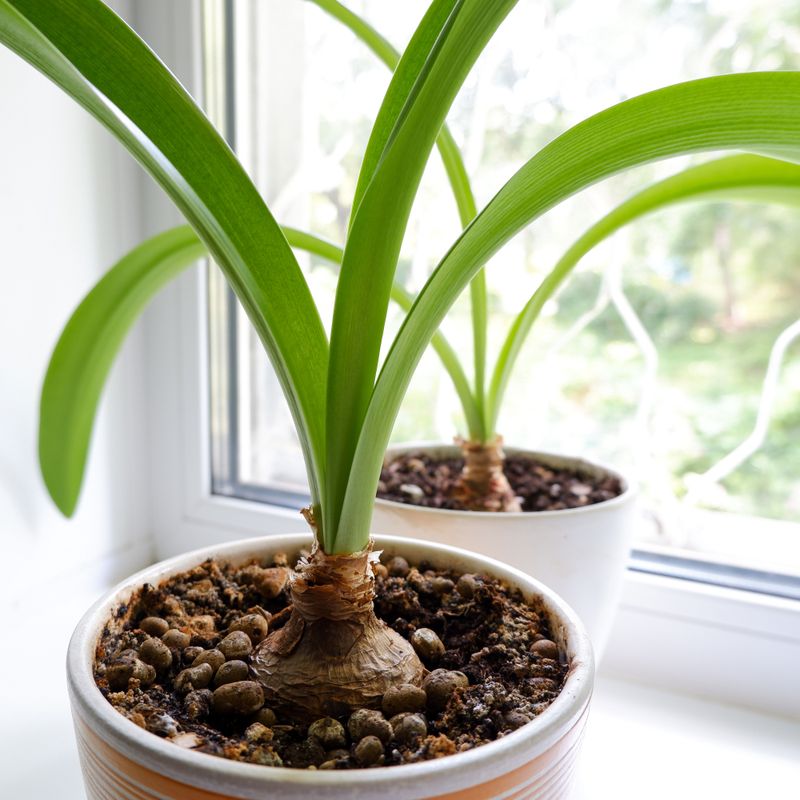
Keep the healthy leaves working, wait for natural dieback before any rest, and treat rebloom as possible rather than assured. Illinois Extension and Minnesota Extension both point to good care and stored energy as the foundation.
Do not toss a viable bulb just because it misses the Christmas window. Some bulbs, especially waxed ones, may not come back at all, but a firm bulb with healthy leaves deserves a fair try.
A late bloom in January or spring is still a bloom worth waiting for.