
How North Carolina Homeowners Can Spot a Possible Fire Ant Mound and Decide What to Do Next
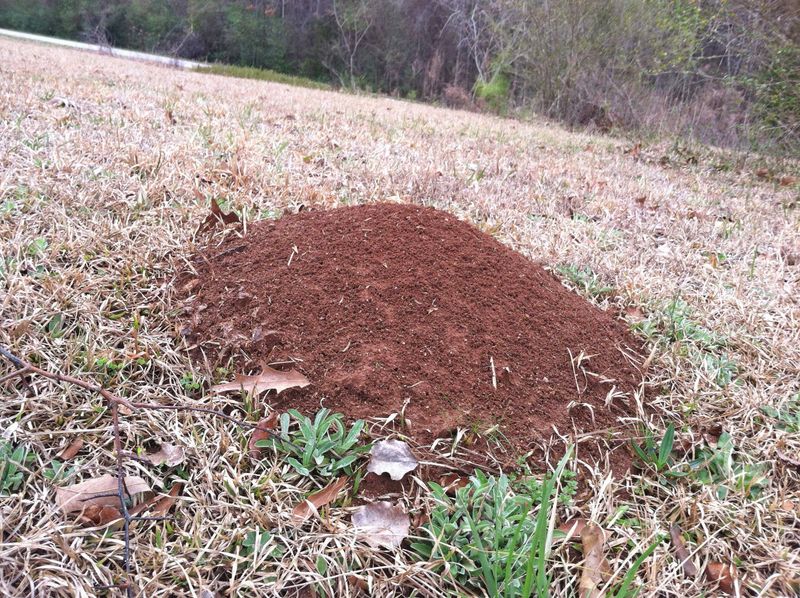
A small pile of loose soil in the lawn might be nothing, or it might be a nest of ants that sting. Kids and dogs find these spots long before adults do, so knowing what to look for matters.
Appearance only gives clues, though, and plenty of ants in North Carolina yards do useful work. This guide shows how to stay cautious, get a real identification, and avoid harming the wrong ants.
A raised mound is a warning, not a diagnosis
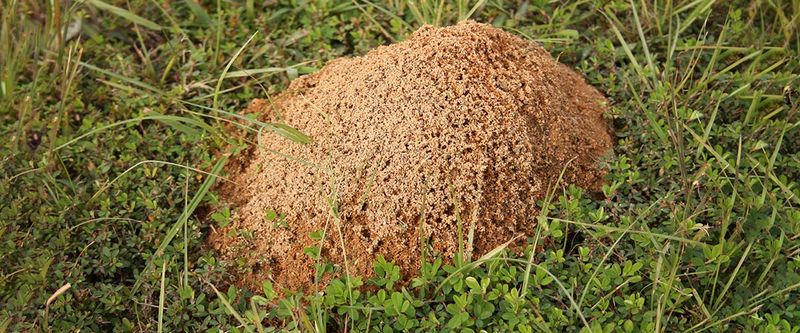
A conspicuous mound of loose soil in a sunny lawn is a good reason to slow down. It may be a fire-ant nest, and fire ants bite and sting.
Until you know more, keeping children and pets away is a sensible, low-cost precaution.
Here is the part that surprises people: a mound alone cannot confirm what lives inside. NC State Extension notes that other fire-ant species also live in North Carolina and can be hard to tell apart from the red imported fire ant.
So a raised mound is a prompt to be careful and to get identification, not proof of one particular species.
Native ants build conspicuous nests too. NC State’s turf pest guide lists several mound-building Formica ants that are generally not the same health concern as fire ants.
That is why treating every ant hill with pesticide is not a good plan.
Think of identification as two jobs in one. It protects the people and pets who use your yard, and it protects the native ants and other ground-dwelling life that belong there.
What you can fairly conclude from a mound is simple: stay back, look from a distance, and find out more before acting.
The mound’s setting and shape offer clues
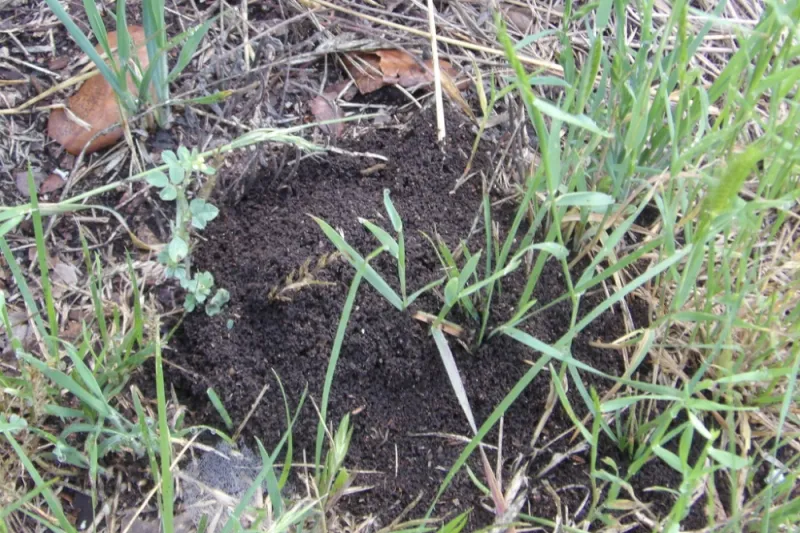
Where a nest sits can tell you something. Fire ants tend to build in open, sunny spots such as lawns, sunny garden edges, and sparse grass.
A pile of soil in deep shade under old oaks is less typical, though that is a clue and not a rule.
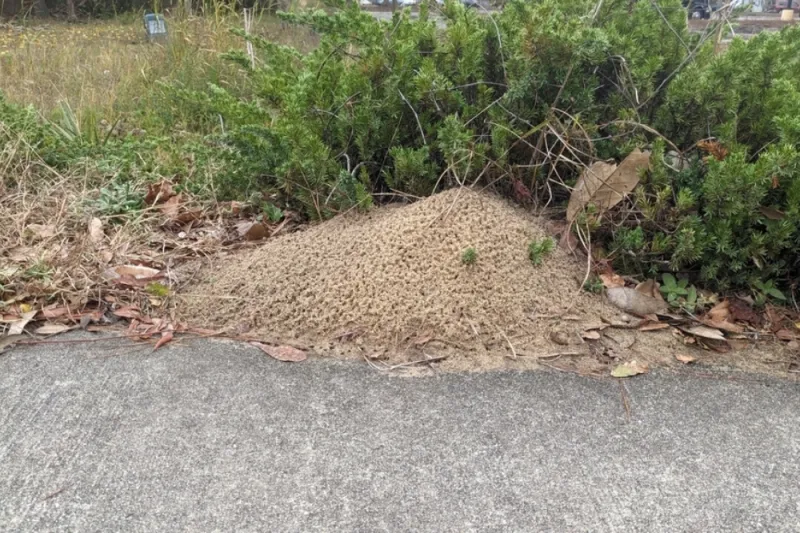
Soil changes the look of a mound. NC State Extension describes imported fire ant mounds as often dome-shaped in clay and more irregular in sandy soil.
A Piedmont yard with red clay may show a tidy dome, while a Coastal Plain yard with sand may show a flatter, messier heap.
Weather matters as well. Mississippi State Extension explains that mounds can become more obvious after rain or in cooler, wet periods and harder to see in hot, dry weather.
Colony age plays a part too, since young nests may be small or barely visible.
Use these clues to decide how careful to be, always from a few steps away. Sun, shape, and season can raise your caution, but none of them can name a species.
Keep your boots and your curiosity off the mound.
Ants can narrow the question, but not settle it
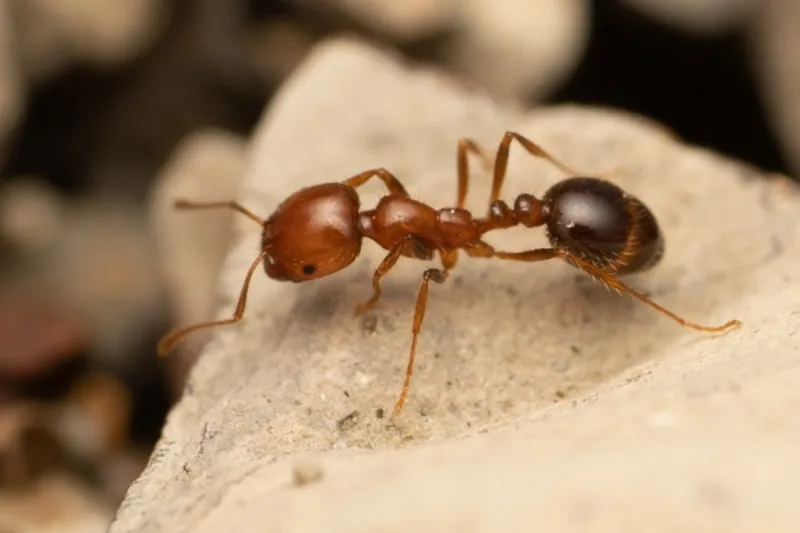
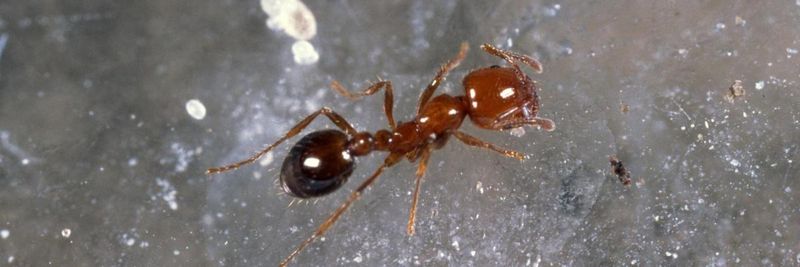
Ant color and size can help a little. Red imported fire ant workers range from reddish-brown to dark, and a single colony has workers of several sizes rather than one uniform size.
Seeing ants that vary in size on a raised mound adds to the reasons for caution.
Fire ants also react fast. According to NC State Extension’s landscape guide, a disturbed colony can pour out aggressively.
That is a reason to stay away, not a reason to poke a mound to watch what happens.
Here is the catch. Color and a mound do not settle the species.
NC State Extension notes that tropical and southern fire ants also occur in North Carolina and can be hard to distinguish from the imported species.
If you want to look, use a phone camera with zoom from a safe distance, and take notes on where the mound sits and how it looks. Those photos can help an Extension agent later.
Never stir the nest to see who comes out.
Some native ants also build conspicuous nests
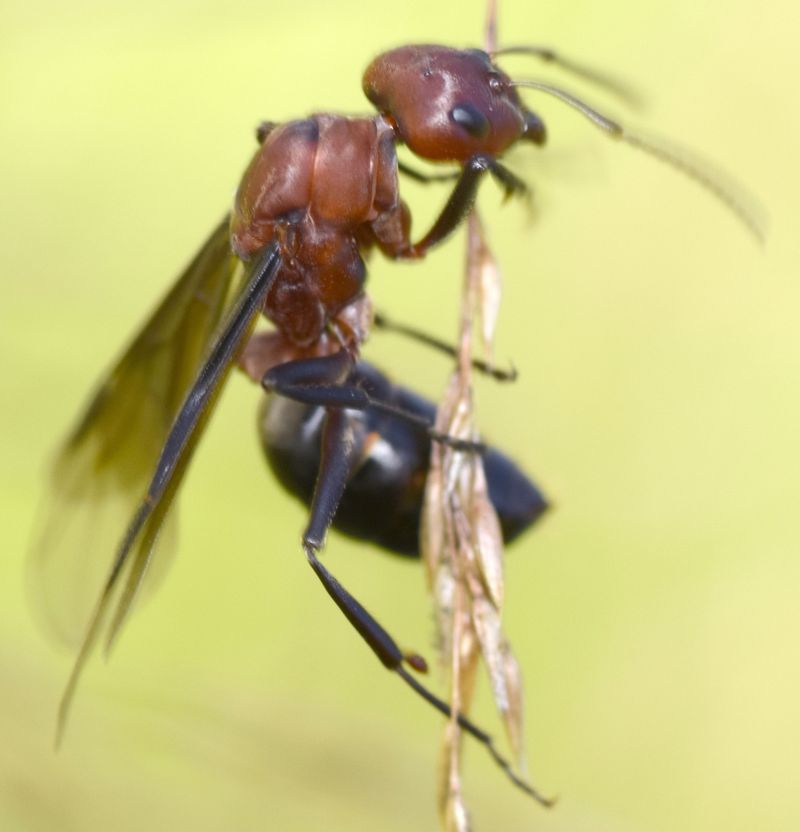
Not every big ant pile belongs to a fire ant. NC State Extension lists native Formica ants, including red wood ants, silky field ants, and Allegheny mound ants, that build nests or large mounds.
Mountain and woodland-edge yards are especially likely to host some of them.
According to the same guide, these ants generally do not pose the same human-health hazard as fire ants. They still can be nuisances, for example when a mound pops up in a play area or a path.
So native does not mean harmless, and a mound is not a diagnosis.
That balance is the heart of good stewardship. Native ants take part in the life of the soil, and spraying a nest you have not identified may harm helpful neighbors for no reason.
Equally, assuming every native mound is fine could leave you guessing about a real sting risk.
If a big mound shows up, treat it as a question to answer. Keep kids and pets back, snap photos from a distance, and ask your county Extension office.
Then choose whether the nest needs action or just some breathing room.
A missing mound or a top opening cannot clear the nest
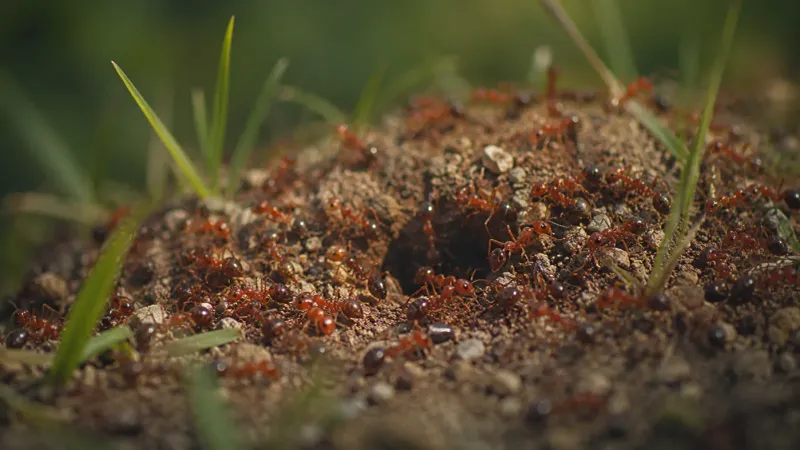
Some popular checks give false comfort. A visible hole in the top of a mound does not make it safe.
Mississippi State Extension explains that imported fire ant mounds typically lack a top opening, but swarming by winged reproductives can create temporary openings. An opening pattern is not a dependable safety test.
The reverse also fails. No visible mound does not mean no fire ants.
Young colonies may not have built an obvious mound yet, and NC State Extension notes that mound prominence changes with weather and soil. A flat, crumbly patch can still hold ants.
Please do not kick, dig into, bait, or break open a mound to find out. Disturbance can trigger defensive swarming and stings, a risk also covered in CDC/NIOSH guidance on stinging insects.
A practical habit helps here. Watch where you walk barefoot or mow, and keep a lookout for fresh soil piles after rain.
If a spot seems odd, give it space.
Keep people and pets back while you seek identification
Once you spot an uncertain mound, the safest next step is simple distance. Tell everyone in the household where it is.
Keep children and pets away, and don’t handle ants or disturb the soil.
You can mark the area with a flag or a few stakes placed from a safe distance. Mow carefully around it, or skip that patch until you know more.
Note the spot’s soil, sun, and recent weather in case an expert asks.
If identification matters, call your county Cooperative Extension center. NC State Extension recommends submitting a specimen for positive identification.
Do not collect one on your own from a suspected colony, though. Ask Extension how to collect or submit a sample safely.
Photos from a distance, taken with a zoom, are a good starting point for that call. As NC State’s landscape guidance shows, disturbed fire ants can respond aggressively.
A short wait for expert advice costs far less than a yard full of stings.
When control is warranted, target the nest
Identification should come before control, and not every mound needs treatment. A native nest far from play areas may be fine to leave alone.
A confirmed fire-ant mound near a patio, sandbox, or dog run is a different story.
If treatment makes sense, pick a product labeled for your site and for the target pest. Follow the current label exactly, including its directions for keeping children and pets away.
Labels change, so read the one on the package you hold.
Targeted treatment has a stewardship bonus. NC State Extension says treating individual mounds uses less insecticide and can limit effects on other ground-dwelling insects, including ants.
UGA Extension likewise points to preserving competing ant species through careful insecticide use.
Skip the kitchen cures. NC State’s turf guidance says grits, molasses, aspartame, and club soda do not work.
Gasoline, diesel, chlorine, and ammonia are dangerous and can contaminate soil or groundwater, and hot water risks burns and plant damage.
A sting calls for prompt, proportionate action

Fire ants bite and sting, and the stings can raise itchy, fluid-filled pustules. NC State Extension describes these small blisters as a typical result.
Most reactions stay local, meaning sore, itchy, and limited to the sting area.
If someone steps into a nest, move them away first. Then brush the ants off briskly, as CDC/NIOSH guidance advises, since ants may cling and keep stinging.
Check clothing and shoes, and wash the area afterward.
Watch closely over the next while. Trouble breathing, serious swelling, chest pain, or other severe symptoms mean seeking immediate medical attention, and a severe allergic reaction is an emergency.
Don’t wait to see if it passes.
Details on fire-ant stings from NC State Extension can help you know what to expect. This article is not a substitute for medical care, so call a doctor if you are unsure.
Caution first, then identify and decide
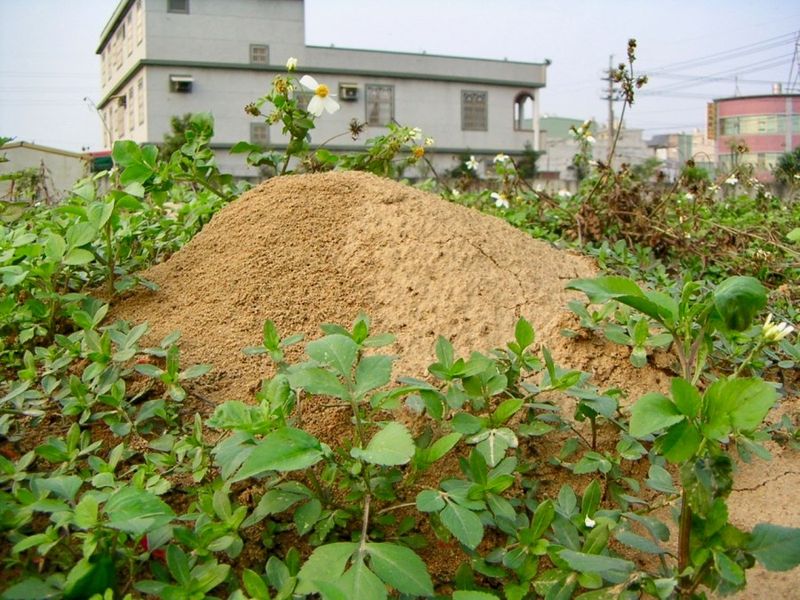
Start with distance: keep people and pets away from any uncertain mound, and never test it by disturbing it. Call county Extension for identification when it matters, then weigh NC State’s guidance on fire ants in turf and consider targeted, label-following control only if warranted.
A confirmed hazard deserves action, and an unidentified nest left alone is not neglect. Sometimes the wisest move in the yard is a few steps back and a phone call.