
Overwintering Tender Geraniums Indoors: How to Save Your Plants Before Frost and Help Them Bloom Again
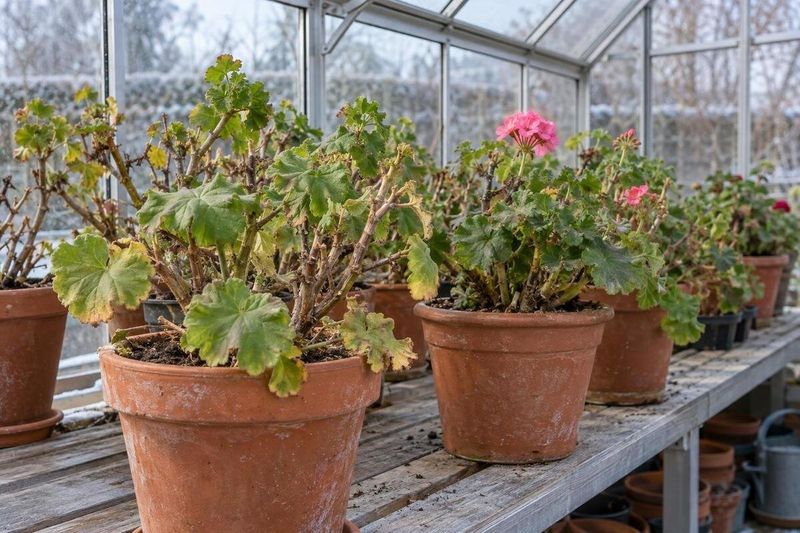
That red geranium on your porch will not survive the first hard freeze, but it does not have to be a one-season plant. Many of the geraniums sold for pots and beds can be carried through winter indoors and grown again next year.
The trick is knowing when to move them, how to prepare them, and what to expect afterward. Here is a simple method, plus an honest look at what it can and cannot promise.
The familiar bedding geranium is usually a tender Pelargonium
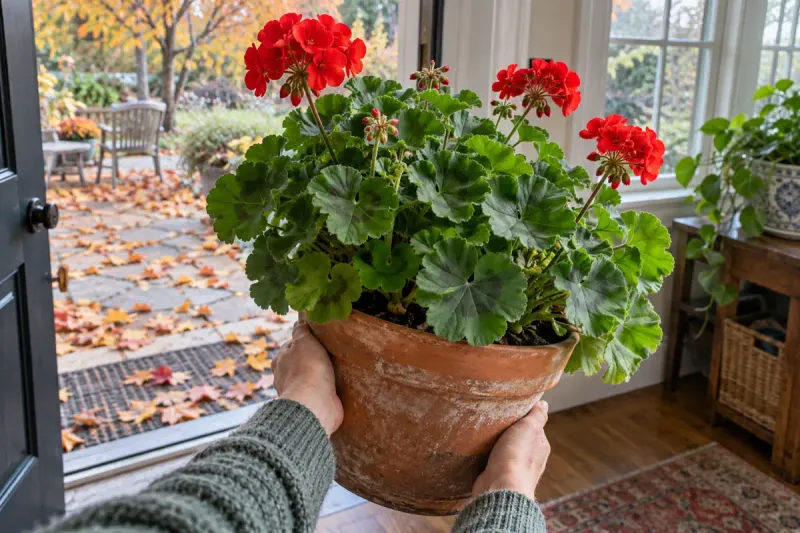
Most of the geraniums sold in garden centers for window boxes, patio pots, and flower beds are not true geraniums at all. They are tender perennials in the genus Pelargonium, and University of Minnesota Extension separates them from hardy true geraniums (genus Geranium), often called cranesbill, which stay in the ground all winter.
If your plant has rounded, slightly fuzzy leaves and big puffy flower clusters and it sat in a pot or bed all summer, it is almost certainly a Pelargonium.
That difference matters because a tender Pelargonium cannot handle frost. Extension guidance says to move or dig these plants before frost arrives, so do not wait for the first freeze to hit and hope for the best.
Check your local forecast in early fall and plan the move a little ahead of your area’s typical first frost date.
The main method in this article is to keep the plant growing as a houseplant. Illinois Extension describes several ways to overwinter geraniums, and the potted-houseplant approach is the most direct.
It can keep the same plant alive for another growing season, though it cannot promise a bloom date.
Bring a healthy plant inside before frost
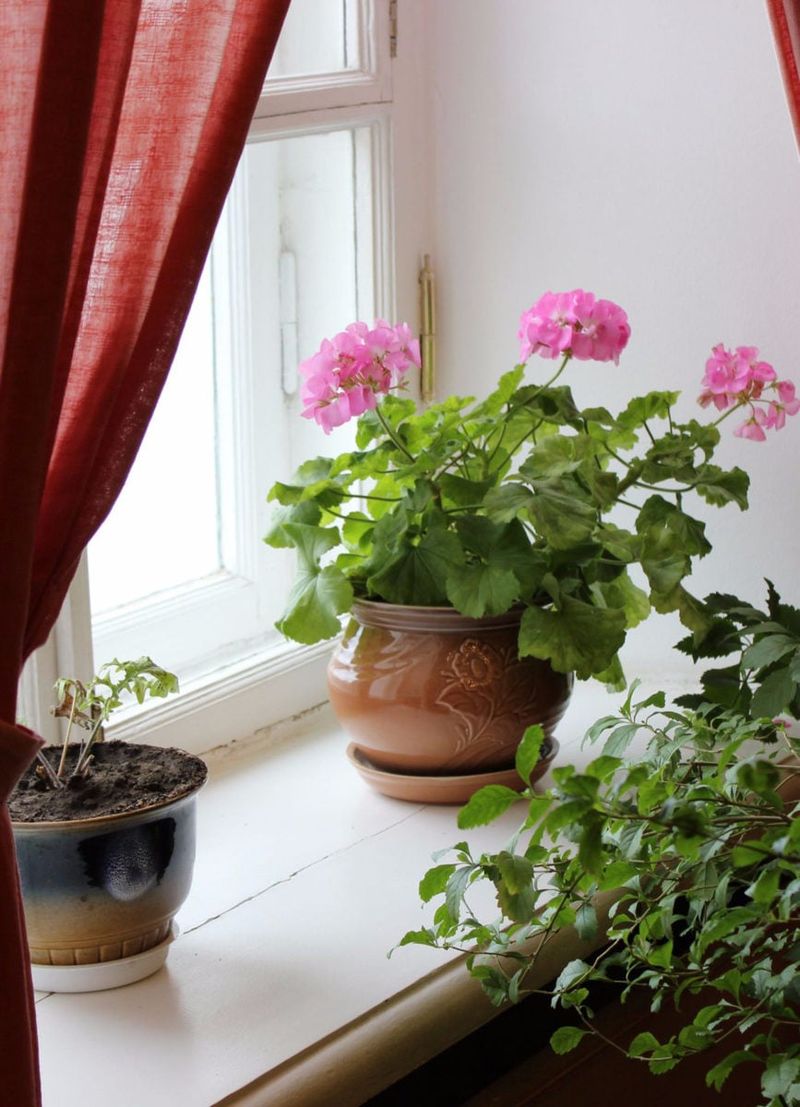
Before you carry anything through the door, give each plant a careful once-over. Turn the leaves over and look for tiny insects, sticky residue, or webbing.
Check the stems and the base for soft, mushy spots, and watch for discoloration, wilting, or shriveling.
Illinois Extension advises discarding plants that show signs of disease, rot, or insect infestation. Those problems are hard to manage indoors, and they can spread to your other houseplants.
It is tough to toss a plant you have enjoyed all summer, but a sick geranium may fare poorly in winter anyway.
For a healthy plant, the same extension guidance suggests pruning it back by about one-third to one-half. That makes it easier to fit in a window and gives you tidier growth to work with.
Treat that range as guidance rather than a strict rule.
Timing is the other half of preparation. Make the move before frost, ideally on a mild day, so the plant is not shocked by cold.
If you grew it in the ground, dig it carefully and pot it up in a container with drainage holes.
Use bright light and careful watering through winter
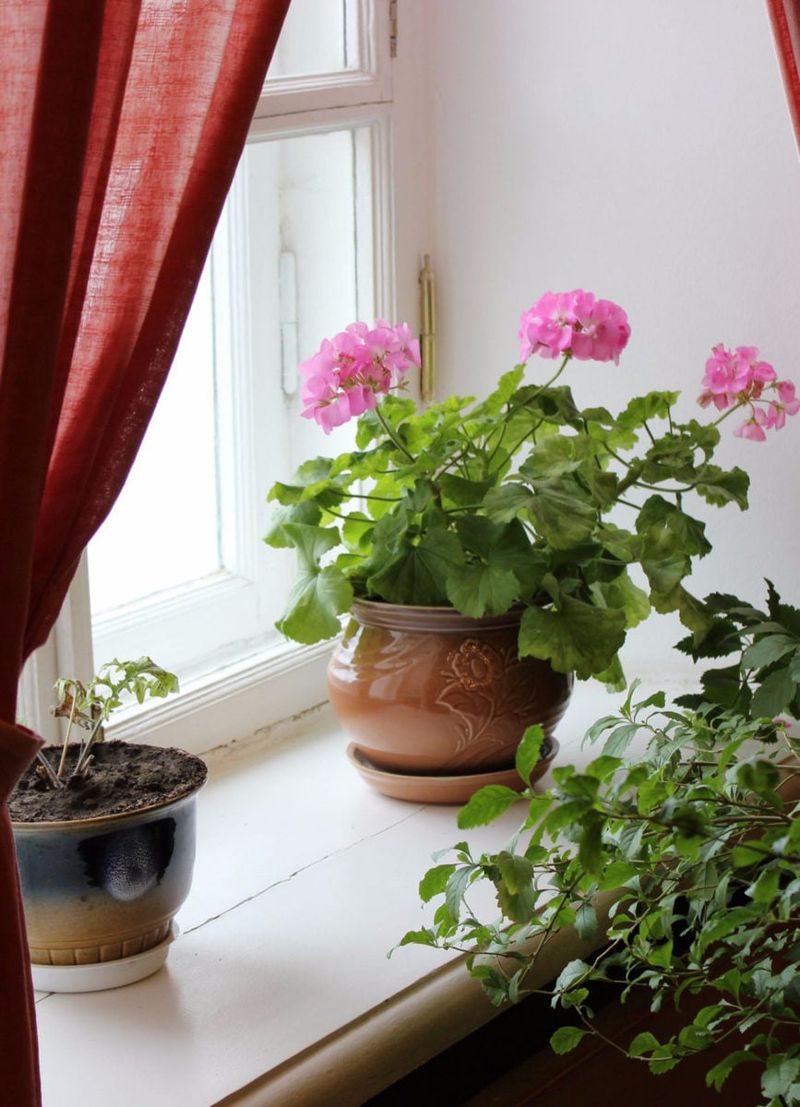
Think of this as running a small indoor garden for one plant. Set the pruned geranium in your sunniest window, or under supplemental lighting if windows are dim.
Illinois Extension suggests daytime temperatures around 65°F, with nights slightly cooler.
University of Minnesota Extension gives a similar range of 60 to 65°F for plants growing indoors. These are guidelines, not guarantees, so a slightly warmer or cooler room will not necessarily doom your plant.
Watering is where most people worry, so keep it simple. Poke a finger into the potting mix and water when it has dried out, rather than following a fixed calendar.
Make sure the pot drains well, and empty any saucer so the roots are not left sitting in water.
Watch the stems as the weeks go by. If growth turns long, thin, and lanky, the plant is probably not getting enough light.
Moving it closer to the glass or adding a grow light can help.
Hold off on fertilizer until you see active new growth. Feeding a plant that is barely growing does not help it.
Finally, keep this routine separate from dormant storage. A plant stored cool and dark has very different needs, and its limited watering should not be copied onto a growing houseplant.
Overwintering does not guarantee spring flowers
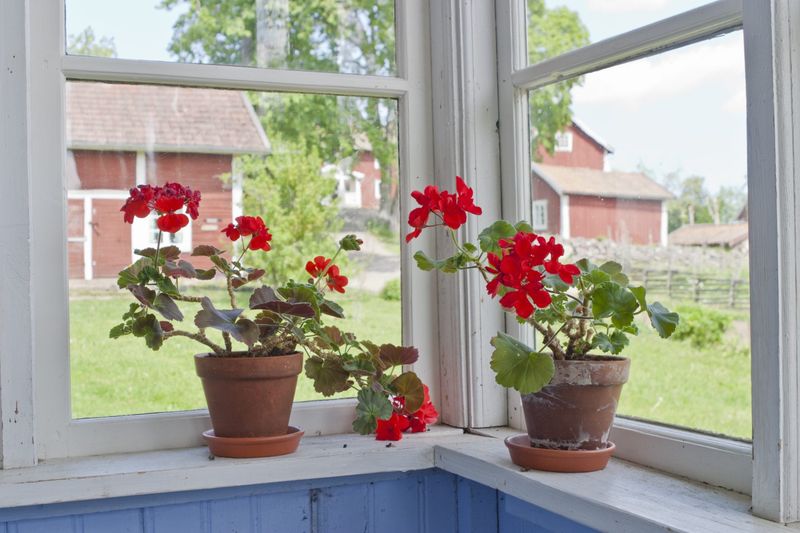
Here is the honest answer to the question many gardeners ask: a plant that survives winter may not be blooming by spring. Overwintering is about keeping the plant alive and restarting growth.
Flowers depend on light, temperature, plant health, and the type of geranium you have.
Bright light matters most. Minnesota Extension notes that inadequate light can lead to lanky growth, and a plant in that shape is less likely to flower well.
Do not panic if leaves drop soon after you move the plant inside. A geranium can lose some foliage and then leaf out again, and that alone does not tell you whether it will bloom later.
Plant type matters too. Martha or Lady Washington types are not like common bedding geraniums.
Minnesota Extension says they need cool night temperatures to blossom, and Illinois Extension’s Ask Extension answer on Martha Washington geraniums describes them as harder to rebloom.
A fair expectation is that your plant can survive the winter and may bloom again, without a promised date. If it has healthy green leaves in spring, you have succeeded at the main goal.
Choose dormant storage or cuttings when space is limited
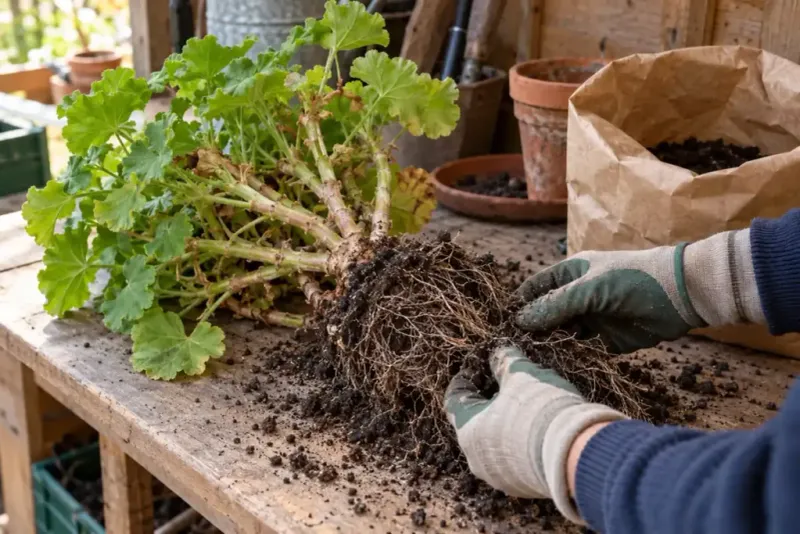
No sunny window to spare? You have two other options.
The first is dormant bare-root storage, which is a different method from growing a plant indoors. Illinois Extension recommends keeping dormant plants cool, around 45 to 50°F.
When the time comes, you cut the plant back to firm, green tissue, pot it, and grow it indoors until outdoor conditions allow. Illinois uses March as its example for restarting, but treat that as a regional example, not a date for every part of the country.
Be realistic about this route. Minnesota Extension calls bare-root storage challenging and recommends taking cuttings as a backup.
Do not apply growing-houseplant watering rules to a dormant plant, because the two methods call for different care.
Cuttings are the smaller-space choice. Take 3 to 4 inch tips from healthy stems, and expect rooting to take several weeks.
If you cover the container to hold in humidity, check it regularly for mold.
A few cuttings on a bright sill take far less room than a full plant, and they give you a spare if the original does not make it.
Keep the plant through winter and reassess in spring
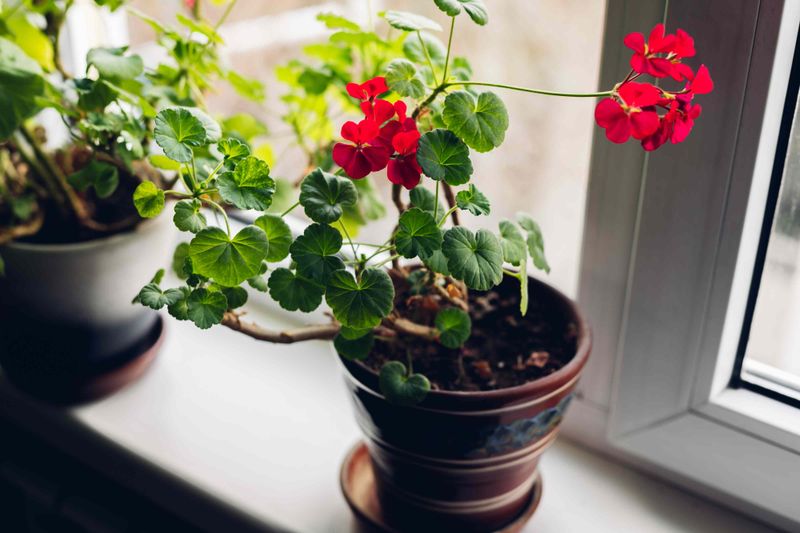
Move a healthy tender Pelargonium inside before frost, give it bright light, and water when the potting mix dries. Illinois and Minnesota extension guidance supports that routine as a way to carry the plant into another season, though neither source promises spring flowers.
When spring arrives, judge success by the plant’s health first, and let the blooms be a bonus. A green, growing geranium has already beaten the frost.