
Hummingbirds Gone For The Season? Here’s How To Clean And Store Your Feeder So It’s Ready In Spring
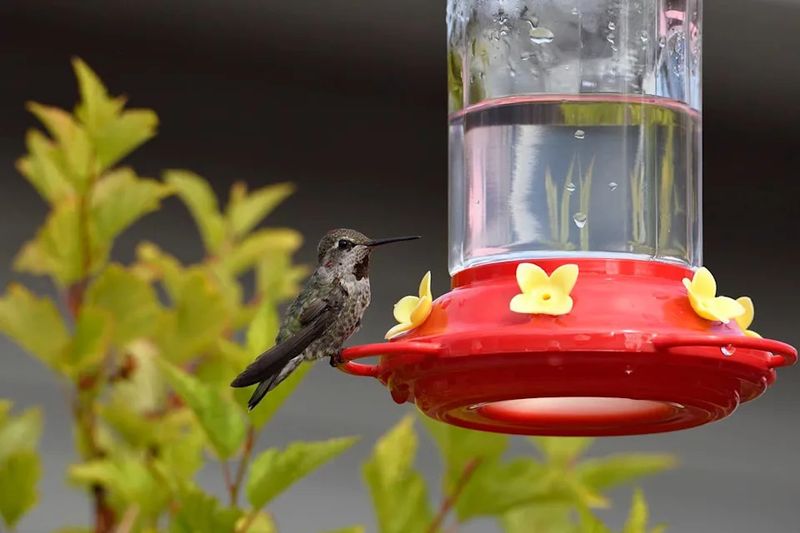
The last hummingbird zipped away, and now your feeder is hanging there, quiet and a little cloudy. Is it time to pack it up?
There is no single date that works for everyone, but a simple plan can help you decide. A few careful steps now will leave the feeder clean and ready whenever you want to use it again.
There is no fixed date to take a feeder down
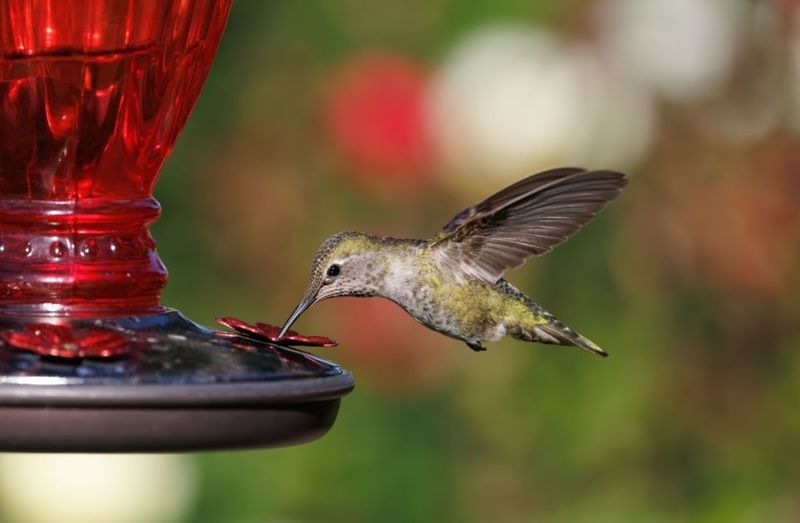
Hummingbirds do not follow one national calendar. Fall departures happen earlier in cooler northern yards and later in the South, so a date printed on a calendar cannot tell you when your own birds are gone.
A handy rule of thumb is to leave the feeder up for about two weeks after the last hummingbird you see locally. North Carolina Cooperative Extension suggests about that long, which gives a late migrant a chance to find a meal.
Think of it as a precaution, not a rule the birds follow.
Advice varies a bit. Cornell Lab of Ornithology recommends keeping feeders up for several weeks after the last bird, while Audubon says owners may take summer-only feeders down in fall whenever they choose.
So you have room to decide. Jot down the day you last see a hummingbird, count forward about two weeks, and adjust to fit your schedule and your local sightings.
Leaving the feeder up will not hold migration back
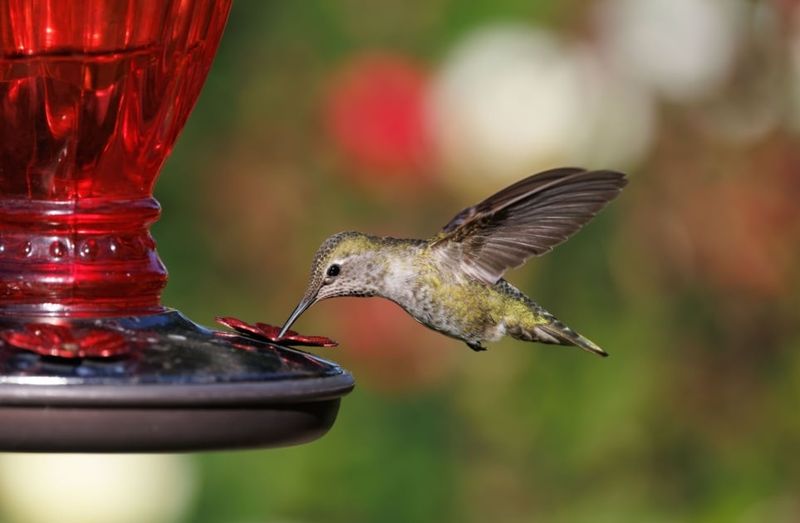
Plenty of people worry that a full feeder will tempt hummingbirds to linger when they should be heading south. Good news: it will not.
Hummingbirds leave on their own schedule, guided by daylight and instinct, whether or not a feeder is hanging in your yard. Cornell Lab calls this idea a myth, and Audubon and the Missouri Department of Conservation agree.
What does vary is who is still around. In some places a late traveler shows up after the summer birds have gone, and parts of the country host a few hummingbirds in winter, as noted in Audubon’s bird FAQ.
That is why your own backyard notes beat any national date. Watch what actually visits your feeder, and let that guide you rather than worry.
Empty the feeder and take it apart before cleaning
Start by pouring out any nectar left inside. Old sugar water has no use in storage, so dump it down the drain and set the feeder on a counter or by the sink.
Next, take the feeder apart as far as its design allows. Unscrew the base from the reservoir, and pop off any removable pieces.
Some models come apart into just two or three parts, while others have several.
Get to know the spots that need hands-on attention. The reservoir is the main bottle, the base holds the nectar at the bottom, and the seams are the joints where parts meet.
The feeding ports are the openings birds sip from, and many have little plastic flowers that lift off. Penn State Extension advises removing those flowers so you can scrub inside them.
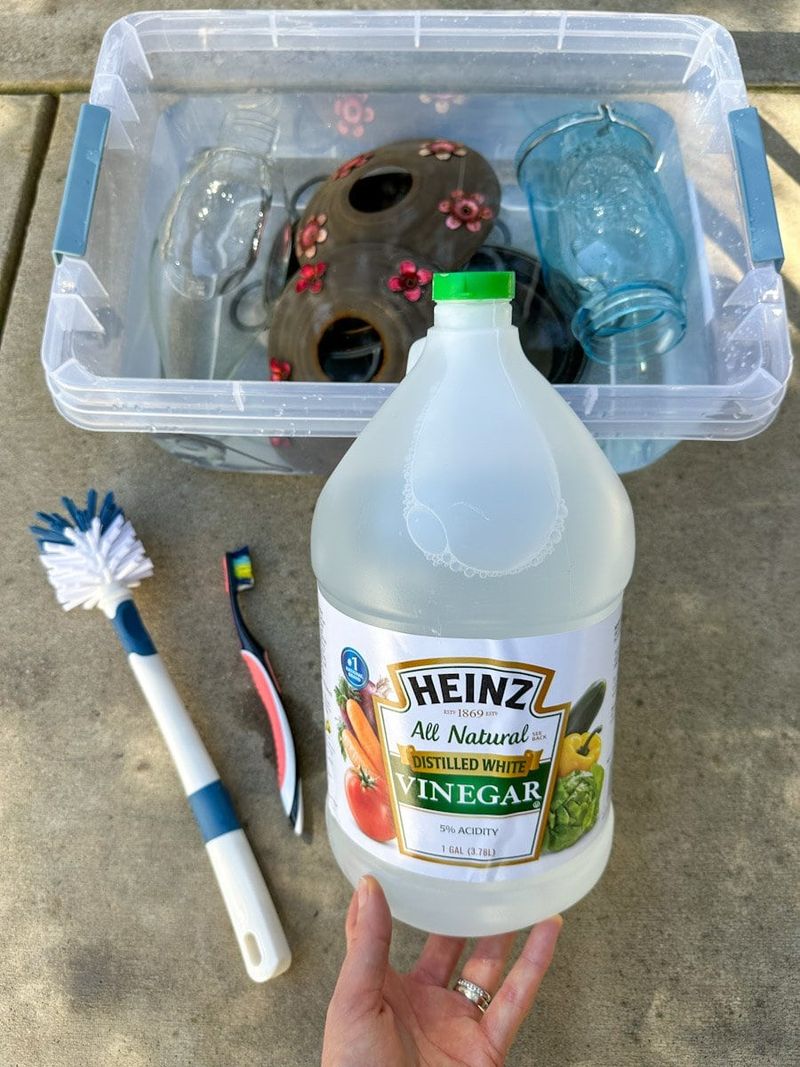
For routine cleaning, Cornell Lab recommends hot water and a bottle brush. Lay every piece out together so none go missing.
Small brushes reach the places a rinse can miss
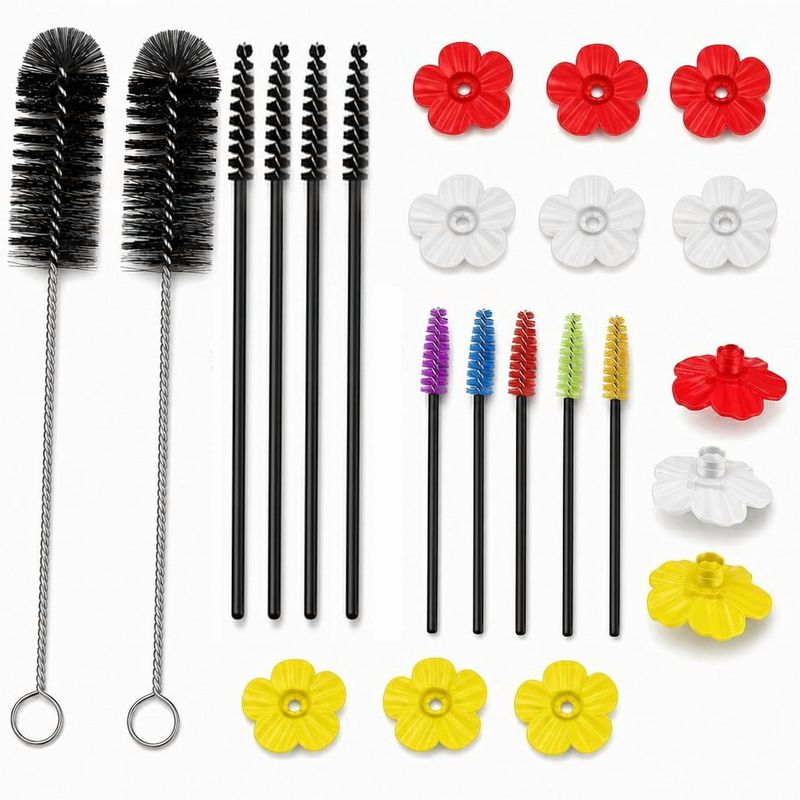
Residue loves to hide in tight corners, and a quick rinse will not reach it. Fill the reservoir and base with hot water and scrub with a dedicated bottle brush.
Then use a small port brush or a pipe cleaner on the feeding ports, the seams, and inside each removable plastic flower. If a part cannot be cleaned well, a quick rinse is not enough for it.
Advice on soap differs. Cornell Lab says to skip soap and detergent but allows a diluted bleach solution if it is rinsed thoroughly, while Penn State Extension also permits mild soap, weak bleach, or vinegar.
The simplest path is hot water and brushing.
If you choose a disinfectant, follow hummingbird-specific guidance and your feeder maker’s directions. Rinse each part many times until no smell remains.
You may wonder how worried to be about mold. A peer-reviewed study found microbes growing in feeder nectar, but most were not known bird pathogens, and it did not measure health effects.
UC Davis summarized that only a small share were linked to disease and still recommended regular cleaning.
In other words, there is no need to panic over a spot of film. Just scrub well and make cleaning a habit.
Let every part dry fully before storing it
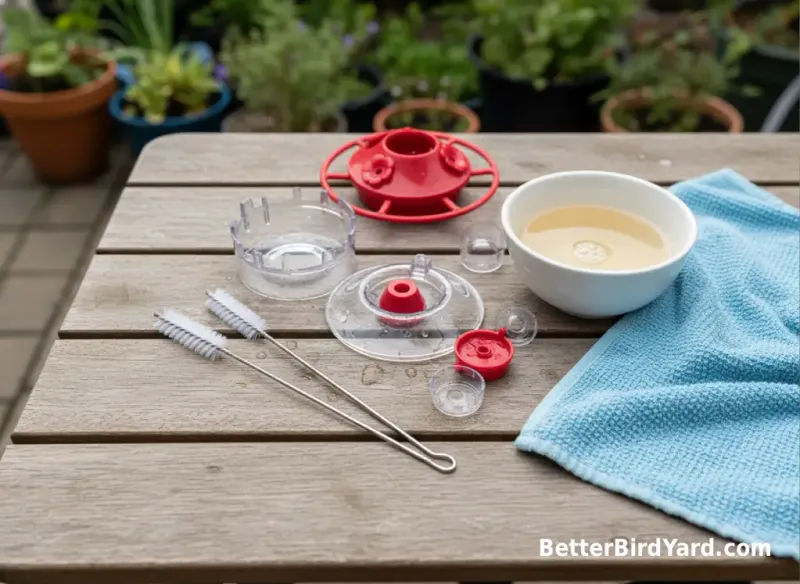
Patience pays off at this step. Spread the rinsed pieces on a clean towel or rack and let them air-dry until no moisture is left in the bottle, the ports, or the seams.
Check inside the narrow spots, since water can linger there.
Cornell Lab says to rinse thoroughly and let a feeder air-dry, even after a diluted bleach cleaning.
Once everything is bone dry, put the parts away together in a clean, dry place, such as a cabinet or a shelf in the garage. Keeping the pieces together means you will not hunt for a missing port in spring.
Sources like North Carolina Cooperative Extension back cleaning, rinsing, and drying. They do not say any special container or storage spot is required, so use what is handy.
Still seeing a hummingbird in freezing weather?
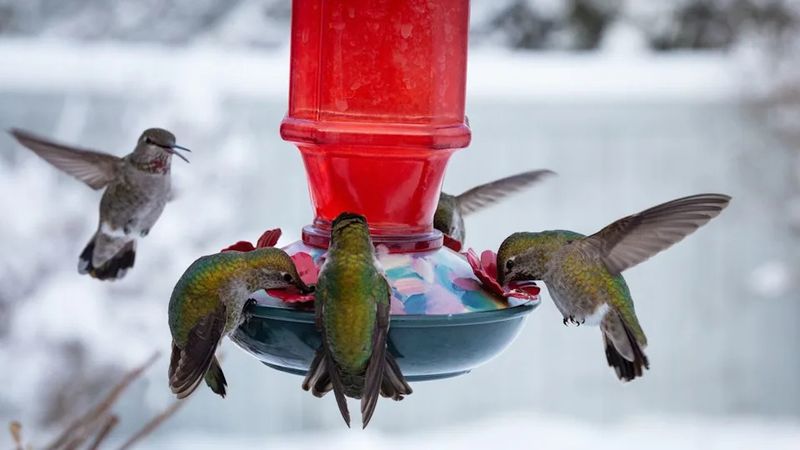
Sometimes a hummingbird keeps showing up after the others have gone. That could be a late migrant or a bird that winters nearby, though not every region has winter visitors.
In that case, you are no longer doing seasonal storage. You are deciding whether to keep feeding.
While a hummingbird is still visiting and you choose to continue feeding it, the main job is keeping nectar from freezing. Audubon says people who feed hummingbirds where nighttime temperatures regularly dip below freezing need to make sure the nectar stays liquid.
Oregon State University Extension suggests continuing the usual sugar-water mix for a bird that is present in frigid weather and bringing the feeder indoors at night if needed. Put it back out at first light.
Keep the feeder clean during this time too. Once the visitor stops coming for a couple of weeks, you can return to the shutdown steps above.
A clean feeder is ready for spring, not guaranteed visitors
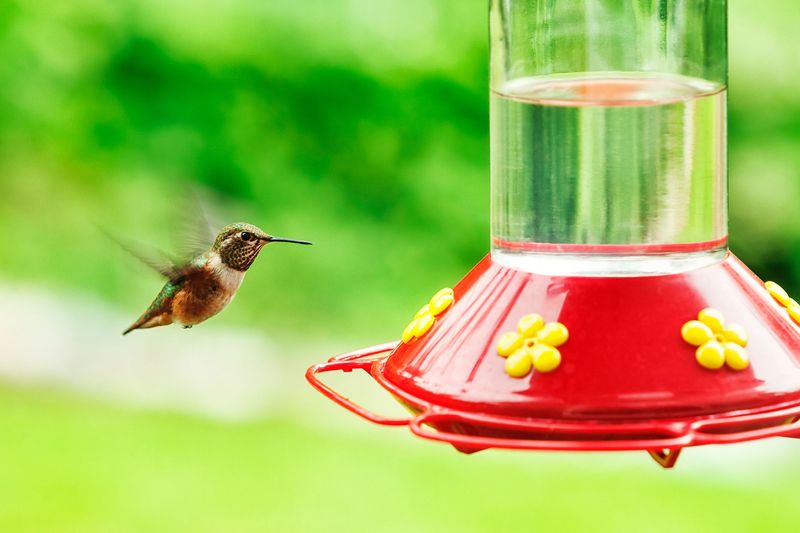
When local feeding is over and the feeder is clean and fully dry, tuck it away so it is ready to hang again. That is all the work asks of you until the weather warms.
Good upkeep supports hygienic use, but as Audubon’s hummingbird feeding FAQs make clear, visits depend on the birds and local conditions. No feeder can guarantee a visitor.
Still, a tidy feeder waiting on the shelf is a small, hopeful promise to yourself.