
Elephant-Ear Leaves Are Frost-Sensitive, So Here Is How to Save a Suitable Storage Structure in North Carolina
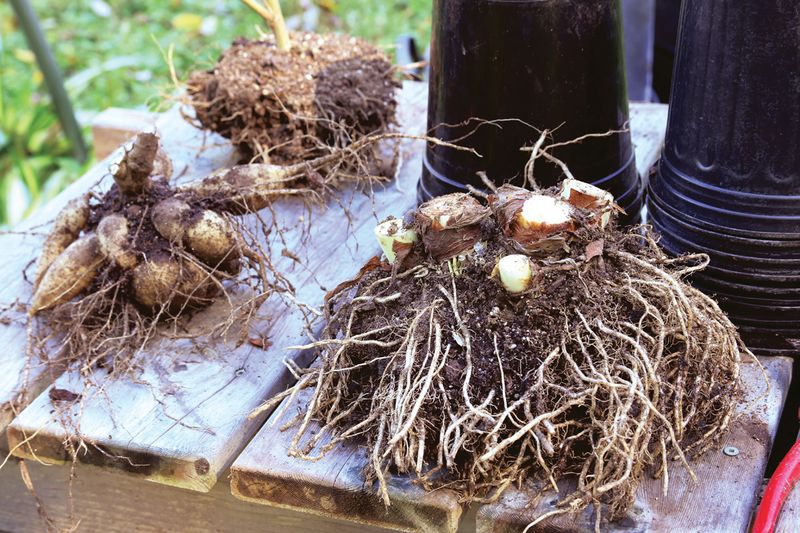
One hard freeze can turn big, glossy elephant ear leaves into limp, mushy rags. That sight makes many North Carolina gardeners think the whole plant is gone.
Often, the part underground still has a chance, and you may be able to save it. Here is how to figure out what you have and how to store it for next spring.
Identify the plant before planning for winter
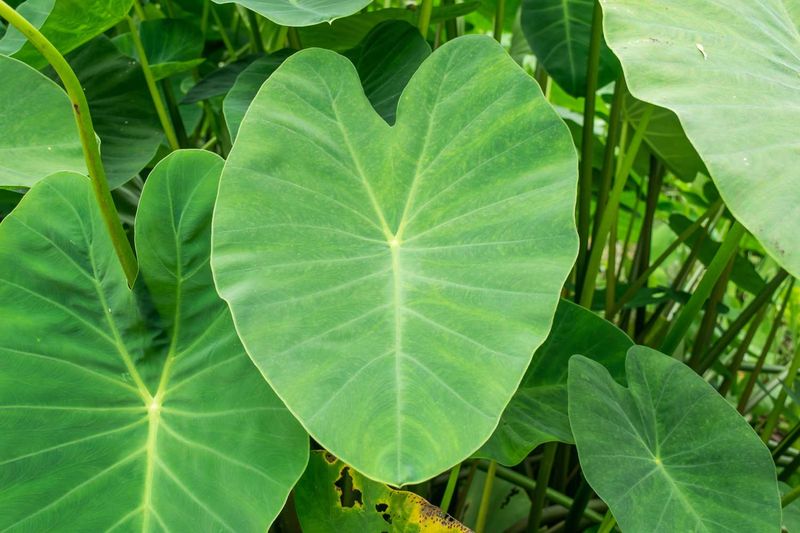
Garden centers sell many plants under the name elephant ear. According to University of Wisconsin Extension, the common name covers Colocasia, Alocasia, Xanthosoma, and other similar plants.
Most of them grow from corms, but some types do not form one.
That matters because people often say bulb when they mean something else. A corm is a swollen stem base, and a tuber is a bit different.
If you cannot tell which kind you have, check the plant tag or ask your local Extension office before you dig.
Leaves of all these plants are frost-sensitive. Frost damages them, and a hard freeze can finish them off.
What happens underground depends on the plant, your site, and the winter. N.C.
Cooperative Extension in Lee County notes that some semi-tropical elephant ears can survive winters in central North Carolina.
The mountains, Piedmont, and Coastal Plain do not share one winter. The UF/IFAS profile on Alocasia says freezing kills the foliage, though that plant may regrow from the base in USDA zone 8A and warmer.
That is not a promise for every cultivar.
So here is the honest goal. If your plant has a suitable underground structure, you may be able to save it by lifting and storing it.
Just do not count on it surviving in the ground, and do not count on storage working every time.
Use the forecast, not a fixed calendar date
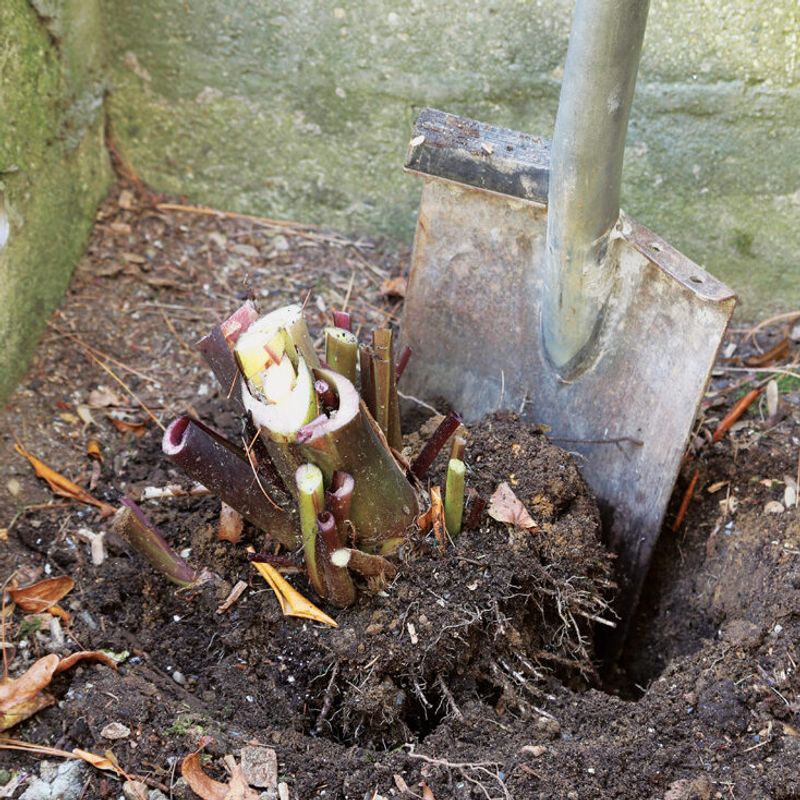
Advice on timing seems to disagree at first. NC State Extension says to dig tender bulbs after the foliage yellows following frost.
Other guidance says some elephant ears can be lifted before frost.
Both can work, because the real goal is avoiding a hard freeze on the underground part. A light frost may blacken leaves while the ground stays protected.
A hard freeze is the danger to the corm or other storage structure.
Watch the plant and the forecast instead of a date on the calendar. Mountain gardeners may need to act weeks before folks near the coast.
Wisconsin Extension says Colocasia and Alocasia can be lifted before frost.
If leaves are tattered and a hard freeze is in the forecast, plan to dig that week. If the plant looks fine and nights stay mild, you can wait a bit, but keep checking the forecast.
Never leave it waiting for leaves to die back while a hard freeze arrives.
Lift the storage structure gently
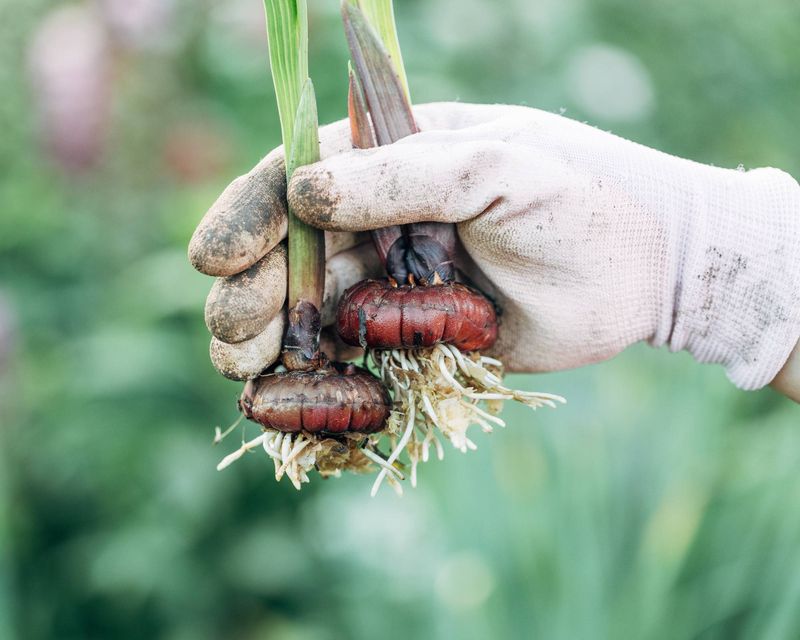
Put on gloves before you start. Elephant ear plants contain calcium oxalate crystals, and UF/IFAS notes these can irritate skin and that eating the plant can be harmful.
Keep it away from kids and pets, and never taste any part.
Choose a day when the soil is not soggy. A spading fork is gentler than a shovel blade, which can slice right through a corm.
Push the fork in a good distance from the stems, then work around the plant.
Loosen the soil in a wide circle and lift slowly. Pry up from below so the underground structure comes out whole.
Handle it carefully, because bruises and cuts give trouble a place to start.
This approach applies to plants that actually have a suitable corm or similar structure, as NC State Extension describes for tender plants. Set what you lift in a shaded spot, and move on to drying.
Cure it in shade with airflow
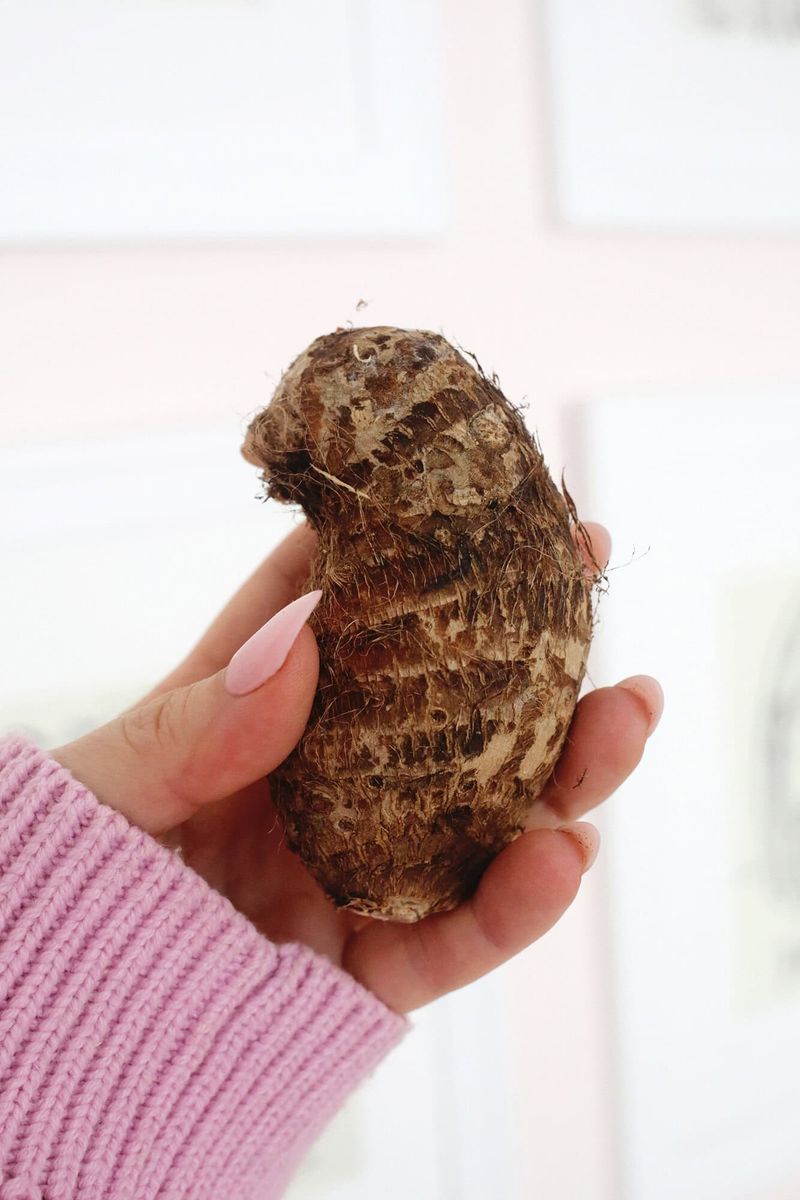
Curing simply means letting the lifted plant dry before storage. Pick a shaded, dry, well-ventilated place, such as a covered porch or an open garage.
NC State Extension says to spread tender bulbs in shade to dry.
Skip direct sun, which can overheat the material. Skip damp spots too, since moisture invites rot.
Lay each piece out so air can reach all sides, and do not pile them up.
How long should it take? Wisconsin Extension gives 1 to 3 days as a general guide for most tender bulbs.
That is not a schedule that fits every elephant ear, so judge by how the material looks and feels.
Once it feels dry to the touch, it is ready for the next step. Cool, wet weather may slow drying, so give it more time in a dry spot rather than rushing it.
Match storage conditions to the plant
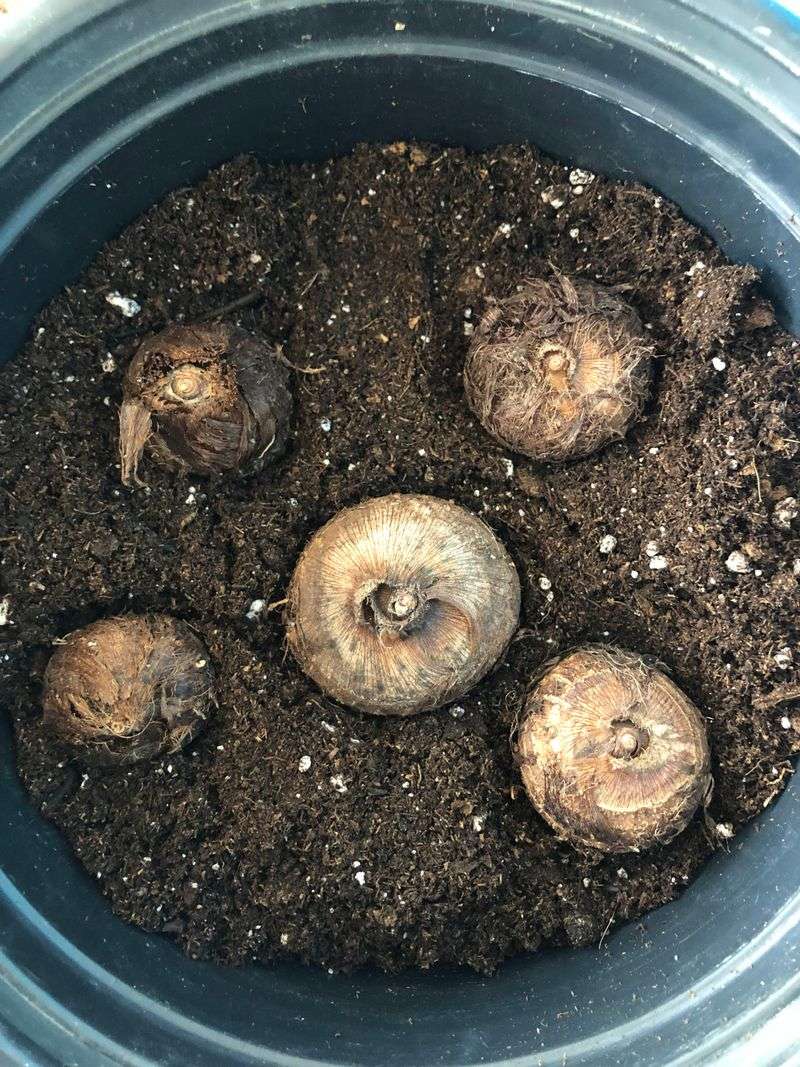
Many gardeners store tender bulbs in a cool basement, but elephant ears may need warmer storage than many tender bulbs. NC State Extension lists dry storage at 70 to 75°F specifically for Colocasia.
Penn State Extension likewise says elephant ears prefer warmer storage, into the 70s. So one cool temperature for every plant called elephant ear is a poor rule.
If you grow Alocasia or Xanthosoma, look up guidance for that type.
Pick a spot in the house that stays steady, like an interior closet or a shelf away from drafts. A thermometer helps you see what the spot really holds.
Keep it dry.
For the container, think airy rather than airtight. Wisconsin Extension recommends ventilated storage.
A cardboard box, paper bag, or crate with air holes can work. Label it with the plant type so you remember what is inside.
Check stored material through winter
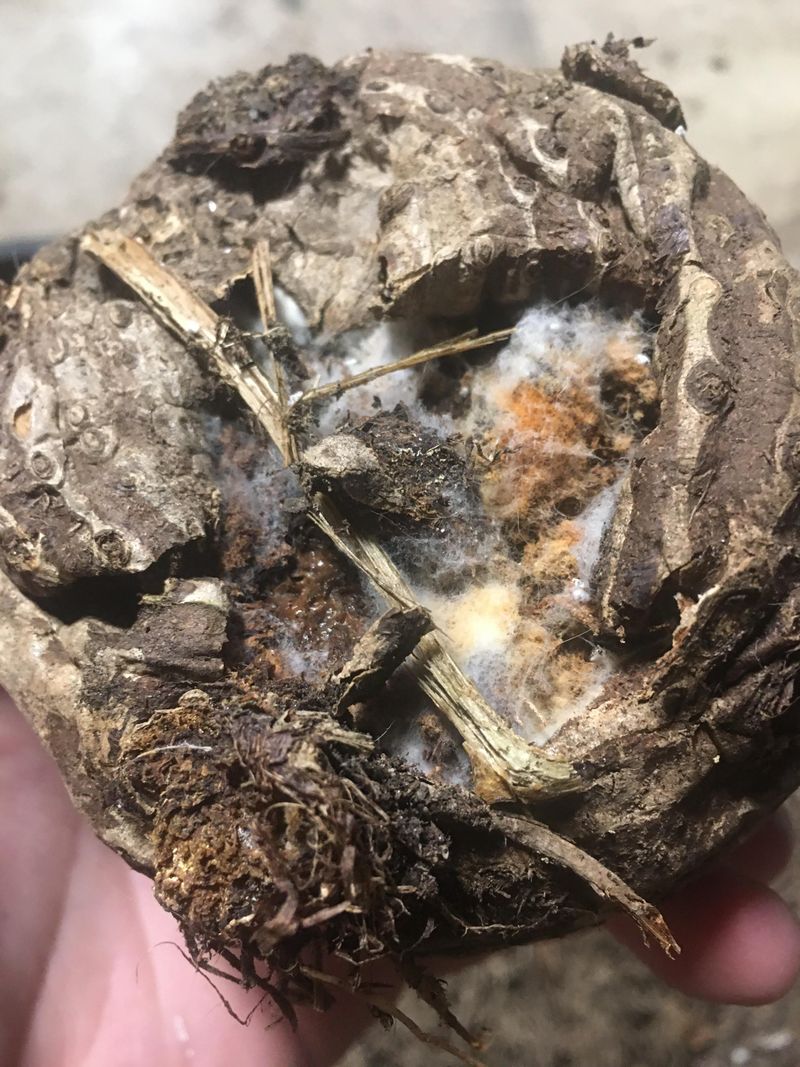
Storing the corms is not quite a set it and forget it job. Wisconsin Extension recommends checking stored material through winter for rot or shriveling.
Every few weeks, open the container and look closely. Rot may show up as soft, mushy, or moldy spots.
Shriveling looks like wrinkled, shrunken skin. Wear gloves while you handle them.
Checking does not guarantee success. It simply lets you notice trouble early.
If you spot a problem, you can at least see what is happening and ask your local Extension office for advice on that plant.
Put the lid back on loosely or keep the box open to air. Then return it to its warm, dry place.
Keep Colocasia esculenta out of waterways
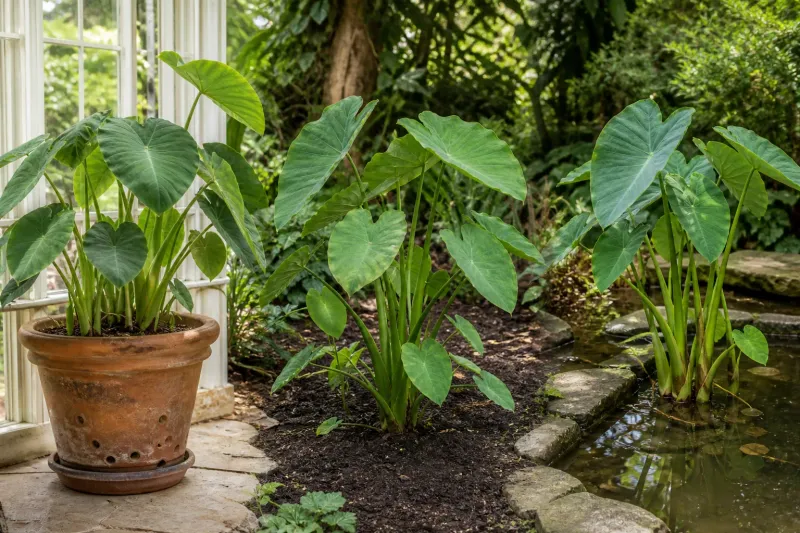
This warning is only for gardeners whose plant is Colocasia esculenta, also called taro. The North Carolina Natural Heritage Program documents it in the state, including established populations at Lake Waccamaw and along the Pee Dee River.
So do not dump its corms or plant material into waterways or wetlands. A peer-reviewed study of Carolina bay lakes raised concern about how this plant spreads in North Carolina waters.
This is not a claim about every plant sold as elephant ear. Other types are different plants.
If you are unsure which one you have, play it safe and keep all leftovers out of creeks, ponds, and ditches.
Extra corms can go in the trash instead. A wildlife-friendly yard starts with keeping nearby water clean.
A timely lift can improve your chances
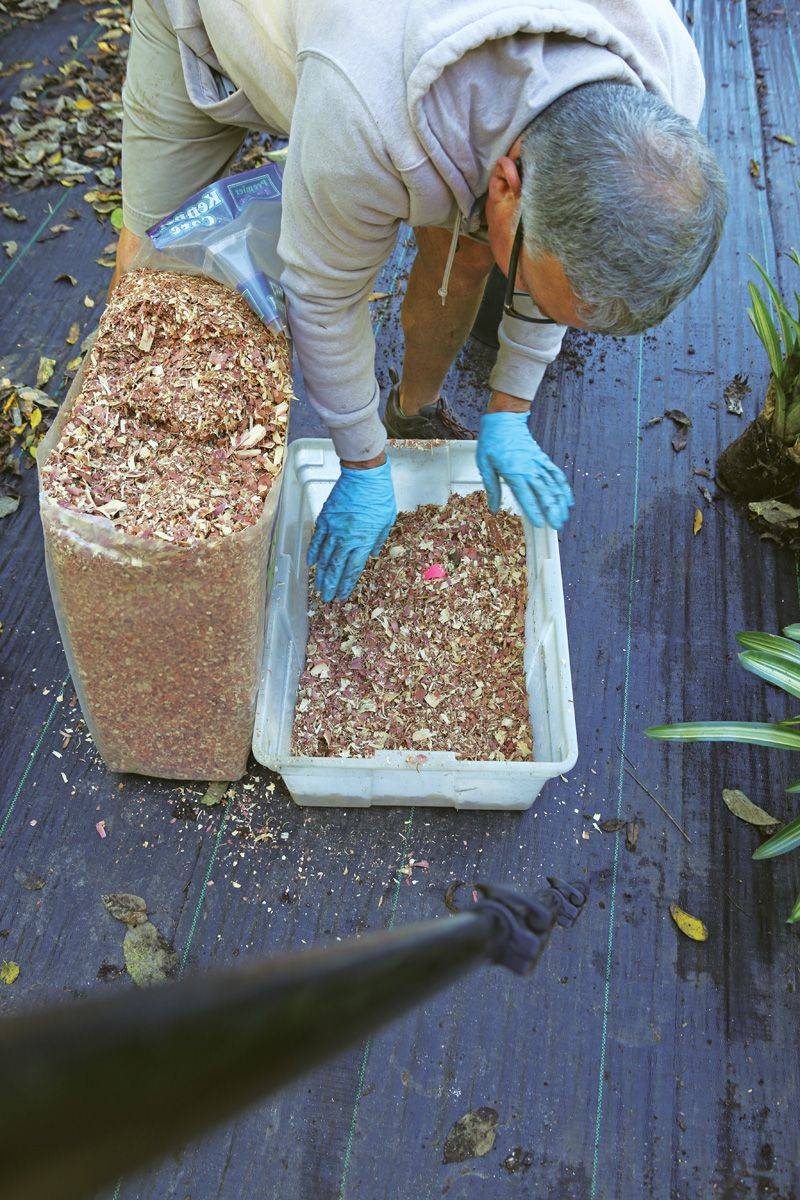
Outdoor survival varies. Some elephant ears may come back in central North Carolina, as local Extension notes, while others will not.
If your plant has a suitable storage structure, you can try to keep it by lifting before a hard freeze, then curing and storing it the way that fits the type. NC State Extension recommends storage for tender plants like Colocasia.
Success is never certain.
The leaves may fade, but your care can carry a piece of the plant into spring.