
Leggy Indoor Geraniums: Low Winter Light Is a Common Culprit and Pinching Helps Shape Them
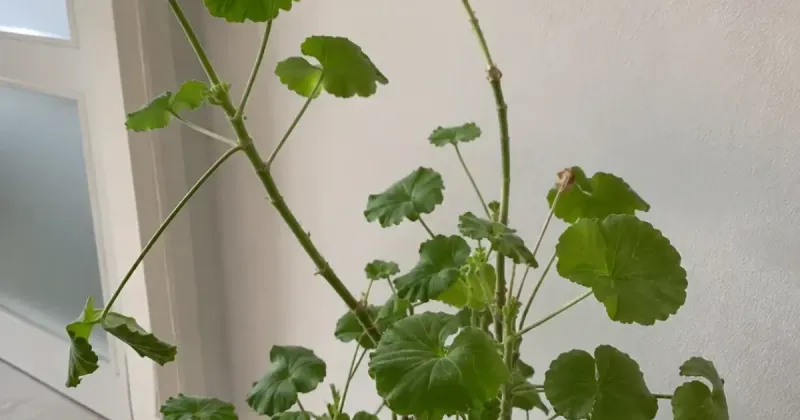
Your bedding geraniums came inside green and full, and now they look stretched, thin, and a little washed out. It is a worry-making sight, especially when you have kept these plants going for years.
Winter light is often part of the story, and the fix has a few steps that work best in the right order. Here is how to read the signs and what to do first.
Is a leggy geranium dying?
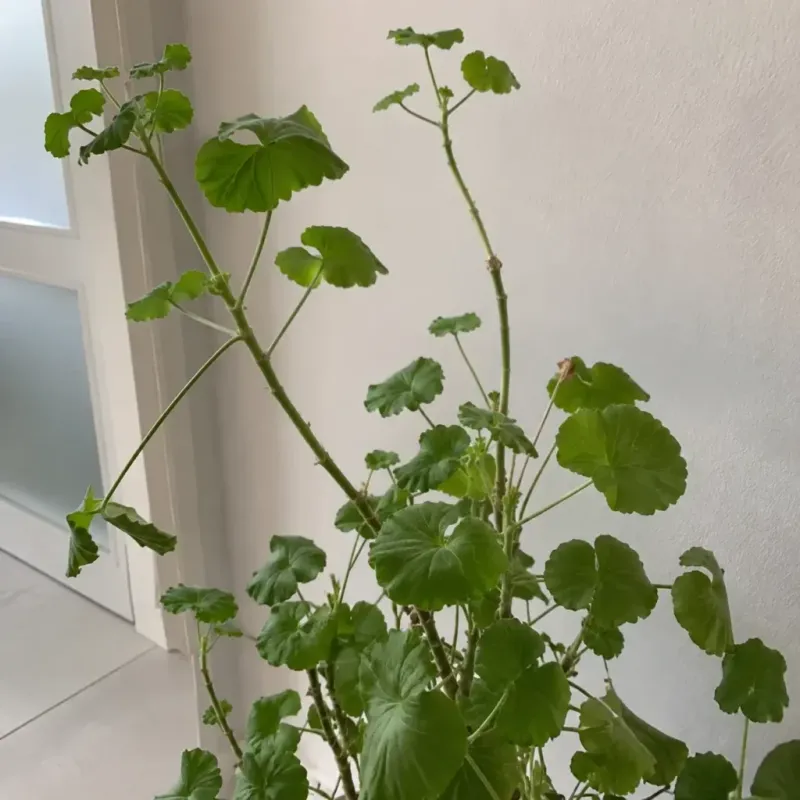
Long, thin stems and pale leaves make any gardener nervous. Here, “geranium” means the tender bedding plant, Pelargonium, which is the kind many people carry indoors for winter.
Hardy garden Geranium species are a different group, so this advice does not necessarily apply to them.
Legginess alone does not prove a plant is dying. It mostly tells you the stems have stretched, and that is a shape problem.
Still, nobody can promise a stretched plant will bounce back, so look at the whole plant. Iowa State guidance on overwintering geraniums treats Pelargoniums as plants you can carry through winter with care, but plant condition still matters.
Other symptoms point beyond shape. Purdue Extension advises discarding plants with leaf spots, wilting, darkened or rotting stems, shriveling, or blotchy coloring.
Pale or yellow leaves are also not a clear sign of one cause. Iowa State lists several reasons houseplants yellow and drop leaves, including light changes and blasts of cold or warm air.
Why winter light matters
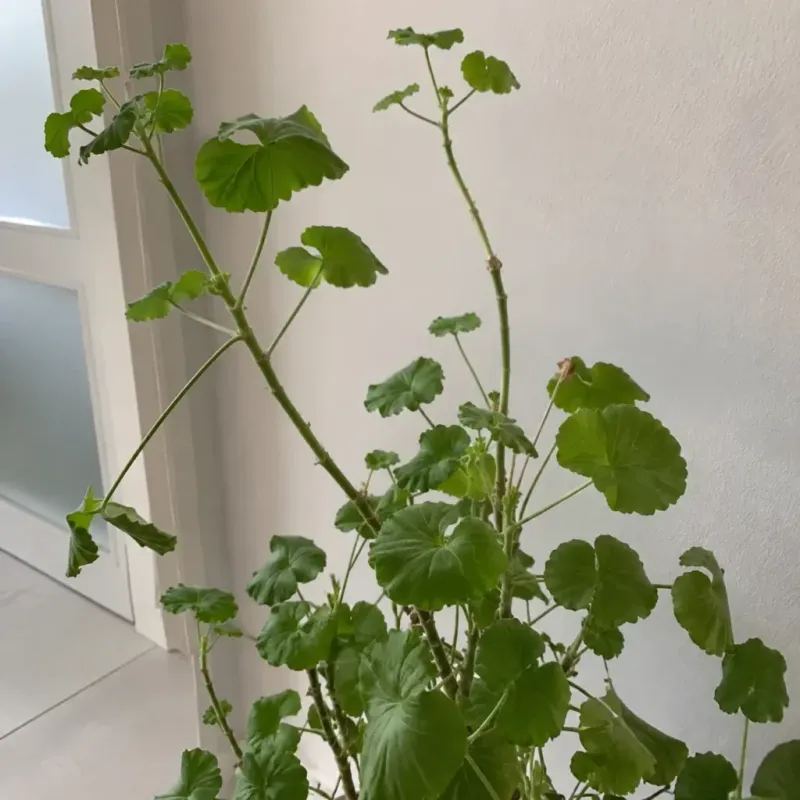
Geraniums are sun lovers. University of Minnesota Extension lists them among high-light plants and explains that too little light can lead to leggy growth and pale-to-yellow foliage.
Winter days are short and the sun sits low. Indoors, a plant that thrived on a bright patio may get only a fraction of that energy.
The stems stretch toward the glass, leaving long bare gaps between leaves.
Warmth can add to the problem. Iowa State notes that warm, poorly lit indoor conditions encourage lanky growth.
Heat alone does not explain it, but a toasty room with a dim window is a setup that invites stretching.
Keep in mind that low light is a common contributor, not the only one. If your plant has pale leaves but its stems are not stretched, or the yellowing comes with leaf drop, think about sudden changes in light or drafts of cold or warm air.
A quick look at where the plant sits and what changed lately can narrow things down.
Improve light before reshaping the plant
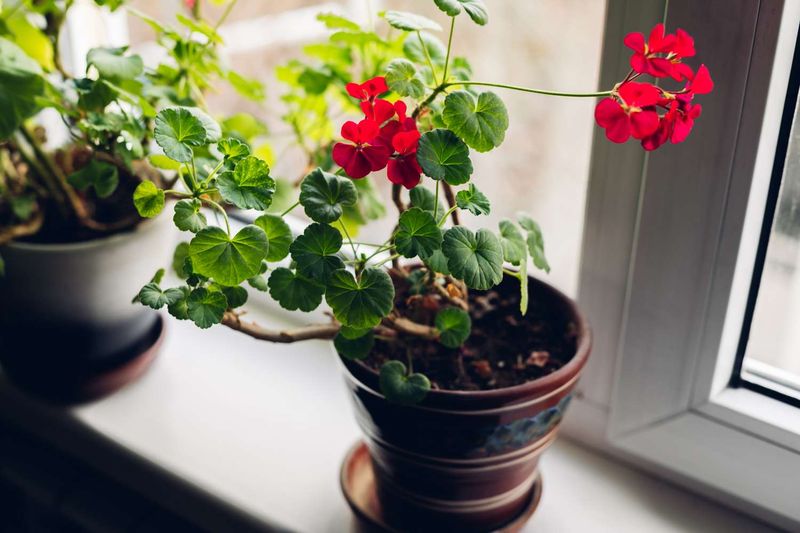
Light comes first. If your geranium is actively growing, move it to the brightest, sunniest window you have, or add a grow light.
A fresh cut on a dim plant just gives you new stems that stretch again.
New growth needs enough light to build a compact shape. That is why pruning alone does not solve a light shortage.
Fix the light, then reshape.
Iowa State suggests daytime temperatures of 65 to 70 degrees F and nights of 60 to 65 degrees F for overwintering potted geraniums. Treat these as handy targets rather than strict rules.
Cooler nights and a bright spot work better together than a hot room and a dim corner.
A few practical checks can help. Keep leaves from pressing against cold glass, turn the pot a quarter turn now and then so stems do not lean one way, and keep the plant away from heat vents.
If you use a grow light, place it close enough to matter and leave it on for a steady daily period.
Give the plant a couple of weeks in better light before judging results. New leaves that come in closer together and a deeper green are a good sign that the change is helping, though no one can guarantee a full recovery.
Pinch above a leaf node to encourage branching
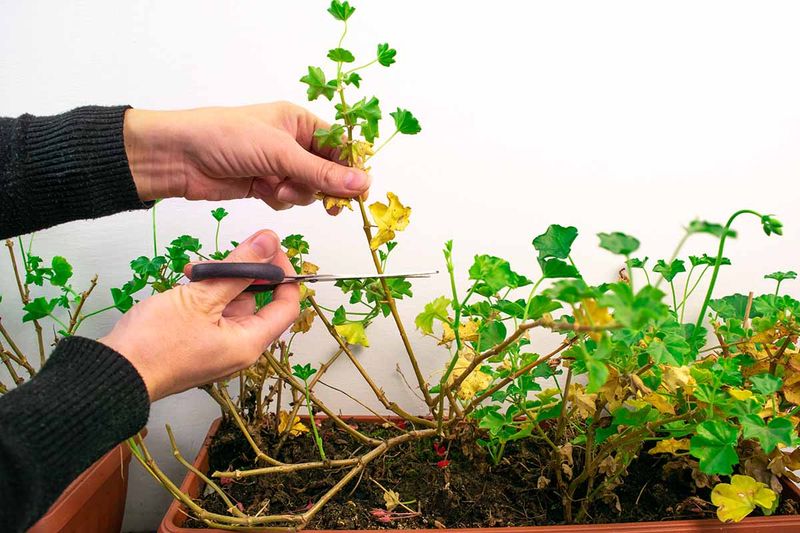
Once the light is better, a light pinch can improve the plant’s shape. Find a leaf node, which is the bump where a leaf attaches to the stem, and pinch or snip just above it.
According to University of Minnesota Extension, cutting at this spot encourages new, branched growth and a stockier plant.
Think of it as steering future growth rather than repairing what is already there. The stem you pinch will not shorten its old gaps, but buds below the cut can wake up and send out side shoots.
Over weeks, that may give you a fuller plant.
Pick a stem that looks firm and healthy, and use clean fingernails or sharp, clean snips. Work one stem at a time and skip any that are soft, darkened, or spotted.
Spread your pinches across the plant so it does not lose too much at once.
A pinch does not fix low light. If the window stays dim, new shoots may stretch just like the old ones, and results will not be instant or guaranteed.
Severe legginess may call for a larger cutback
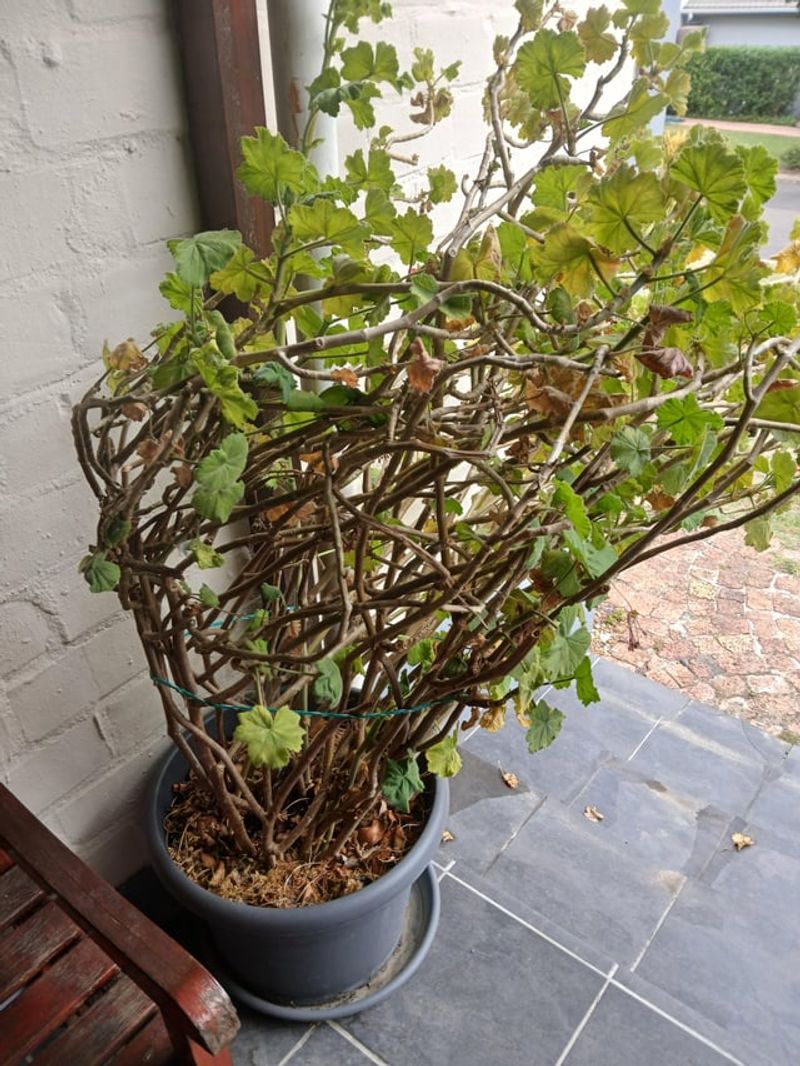
Some plants are too lanky for a simple tip pinch. If most stems are long and bare, removing just the tips leaves a tall, sparse plant with leaves only at the top.
A pinch and a substantial cutback are two different jobs. Iowa State advises cutting overwintered potted plants back by one-half to two-thirds in March.
That guidance is written for overwintered potted plants and that timing.
It is not a universal rule for every geranium or every overwintering method. Plants stored dormant, for example, follow a different routine, and extension advice varies with how and when a plant is carried through winter.
If you cut back, make each cut just above a node so new shoots have a place to start. Keep the plant in bright light afterward, since the fresh growth will need it.
Hold back on heavy watering until you see the plant using moisture again.
A big cut asks a lot of a plant, and it may not suit one that already looks weak, soft, or diseased. Choose stems that are firm and healthy, and wait for the right time instead of cutting in the middle of winter.
Match winter watering and feeding to the plant’s growth
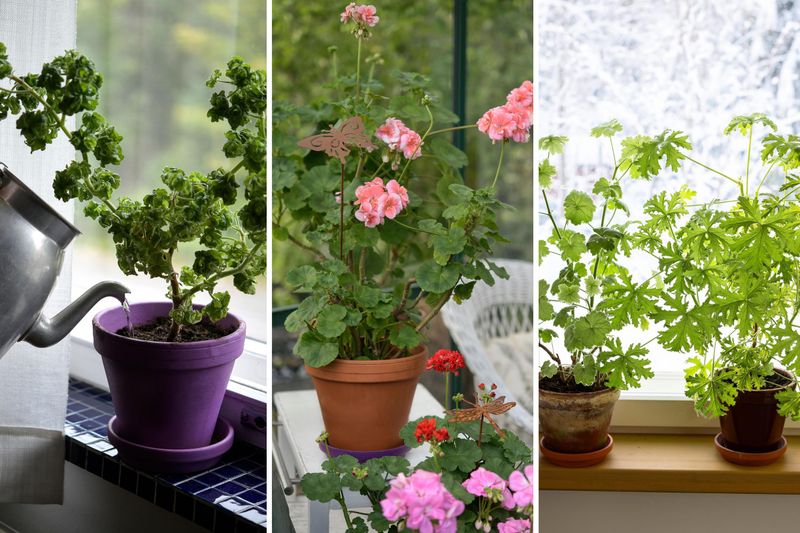
Water by the soil, not the calendar. Iowa State says to water potted overwintering plants when the soil surface becomes dry.
With less light, the plant uses less water than it did on the patio, so last summer’s routine will likely be too much.
Feeding depends on what your plant is doing. For a geranium that is actively growing in low light, Clemson advises reducing fertilizer.
Extra food will not cure pale, stretched stems.
For plants stored dormant, Minnesota guidance says to wait until new growth appears before fertilizing.
So the order is simple. Improve the light, reshape the plant if it needs it, then keep water and feed in line with how much the plant is growing.
Judge it by its overall condition, including firm stems and healthy leaves, since no step guarantees recovery.
A geranium by a bright window often shows its progress in small, steady new leaves.