
Fall Care Can Help Protect Next Summer’s Hydrangea Blooms
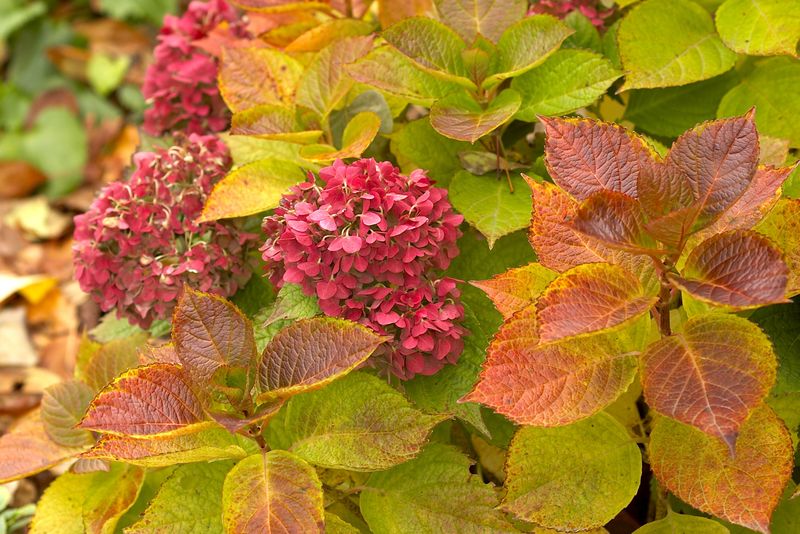
Your hydrangeas have dropped their petals, and the garden feels quiet. But for many hydrangeas, next summer’s flower buds are already tucked inside the stems.
What you do now, and what you choose not to do, can help protect those buds. Here is how to care for your plant without guessing wrong.
Why fall pruning can erase next summer’s flowers
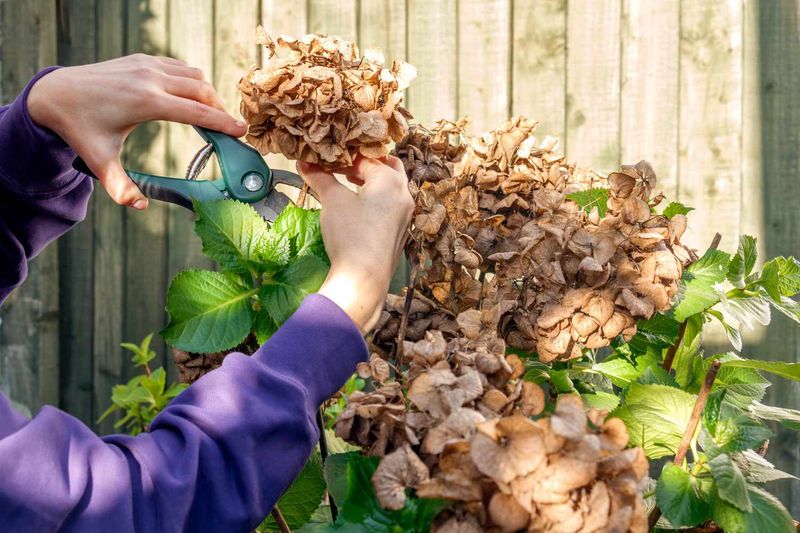
Timing matters because many hydrangeas set their flower buds by late summer. Bigleaf, oakleaf, mountain, and climbing hydrangeas bloom on old wood, which means the stems you see now carry next year’s flowers.
Cut those stems in fall, and you may remove the buds with them.
Other hydrangeas work differently. Panicle and smooth types bloom on new growth made in the coming season, so a cut is far less risky for them.
According to Penn State Extension’s pruning guide, the right timing depends on the species, and some reblooming bigleaf cultivars can flower on both old and new growth.
So where does that leave the idea that what you do before frost decides next summer’s flowers? It is only partly true.
Protecting existing buds can matter a great deal for old-wood types, but no single fall task guarantees blooms on every hydrangea. Plant type, cultivar, winter weather, and growing conditions all play a part.
There is also no universal frost deadline. For old-wood hydrangeas, the important buds may have formed well before the first frost.
That makes the safest fall move a simple one: hold back on big cuts until you know what you are growing.
Which hydrangea do you have?
Start with the plant tag. If you still have it, the label or cultivar name tells you which group your hydrangea belongs to.
A quick search of that name usually shows whether it blooms on old wood, new wood, or both.
No tag? Think back to where it came from, or check receipts and nursery records.
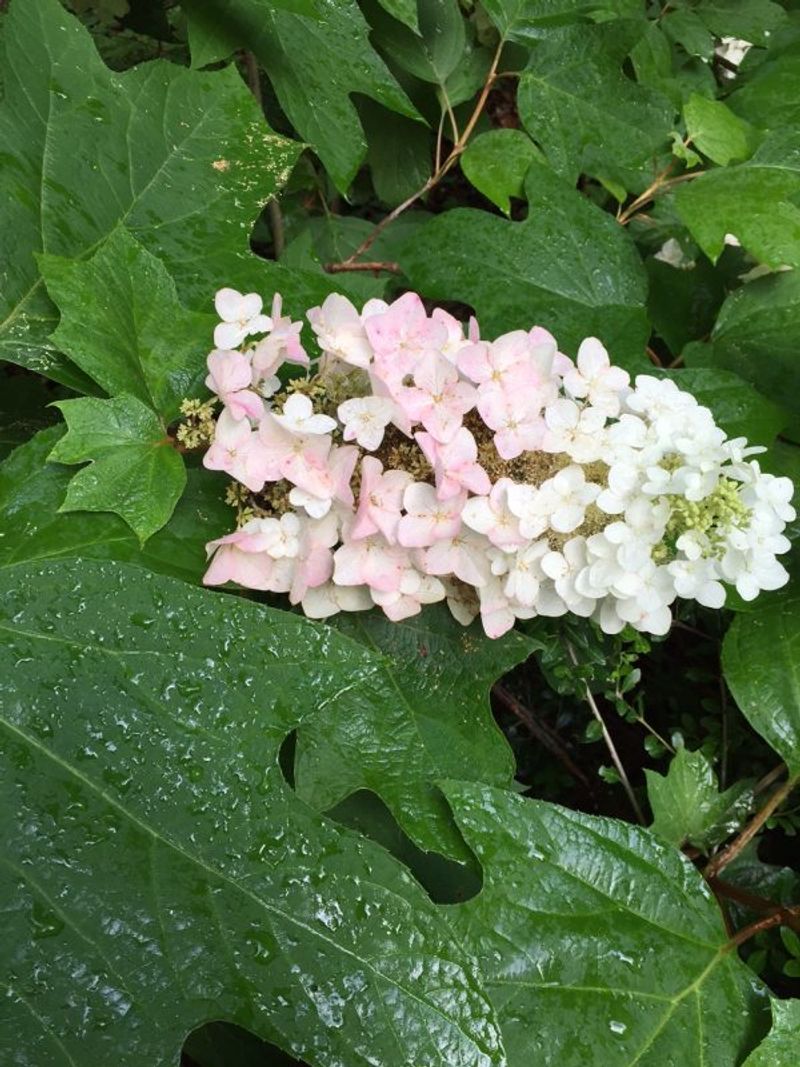
Leaf shape can offer clues too, since oakleaf types have lobed leaves like an oak, while panicle types often have cone-shaped flower clusters.
This step matters because a general hydrangea rule can send you in the wrong direction. Advice that works well for a panicle hydrangea could remove the flower buds on a bigleaf.
The University of Georgia’s bigleaf hydrangea guide notes that pruning at the wrong time is a common reason these shrubs fail to flower.
If you still cannot tell, do not guess. Leaving live stems unpruned is the safer fall decision.
You can watch how the plant blooms next summer and learn its habits before making any cuts.
Old-wood hydrangeas need restraint now
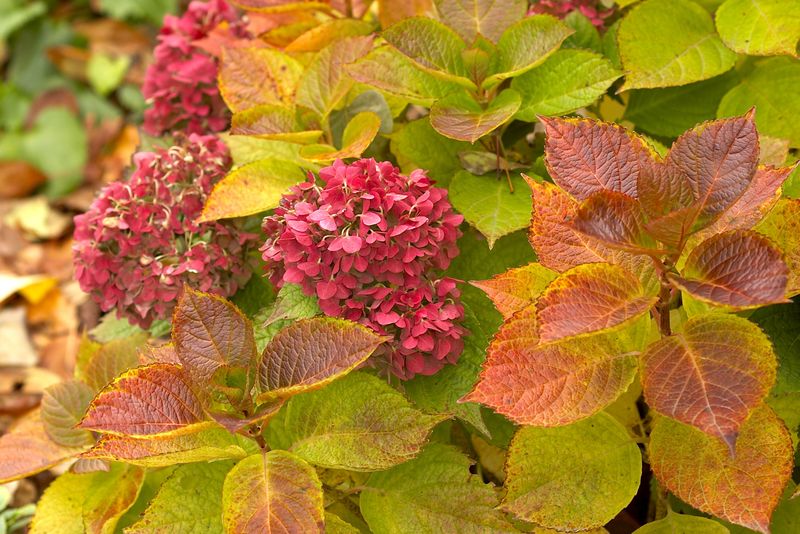
Bigleaf, oakleaf, mountain, and climbing hydrangeas call for the lightest touch in fall. Their live stems may hold next year’s buds, so substantial cuts can wipe out the show.
Leave those stems standing.
Say your bigleaf looks a little leggy or rangy right now. Resist the urge to even it out.
Extension guidance, including the University of Georgia’s bigleaf hydrangea publication, points to avoiding heavy pruning of live stems on these plants.
What can you remove? Dead wood is fine to take out, and it is easy to spot because it stays brittle and gray with no sign of life.
If you are not sure whether a stem is dead, wait until spring leaf-out and then cut only what stays bare.
Keep in mind that restraint protects your odds, but it does not promise flowers. A harsh winter or a late freeze can still harm buds.
For a refresher on how old-wood and new-wood types differ, see Penn State’s species-by-species pruning overview.
Do you need to deadhead?
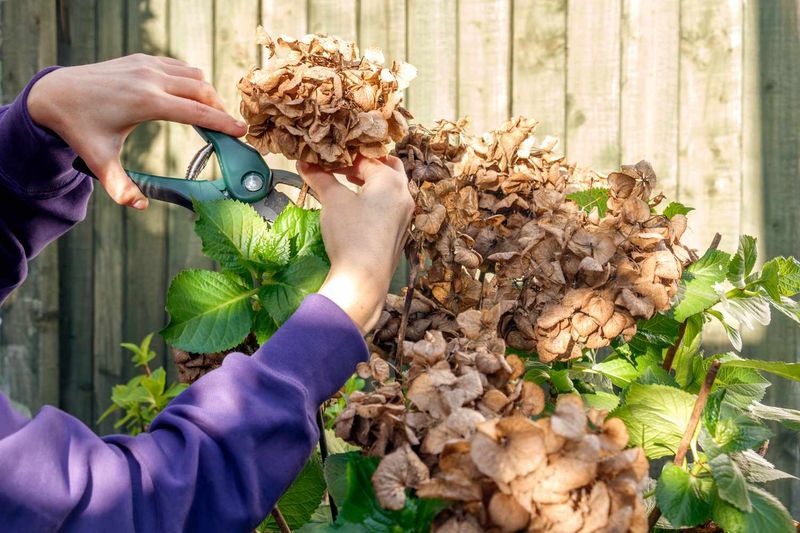
Deadheading means removing a spent flower head. Cutting a stem back is a different job entirely, and mixing the two up is where trouble starts.
Taking off the flower alone is harmless, while cutting far down the stem can remove buds.
Here is the good news: deadheading is optional. Extension answers, such as this Illinois Extension Q&A on winter hydrangea care, treat old blooms as something you can leave in place.
Your plant does not need the trim to stay healthy.
If you want a tidier look, snip just below the flower head and stop there. The University of New Hampshire’s pruning fact sheet cautions that aggressive cutting while deadheading can still take off buds.
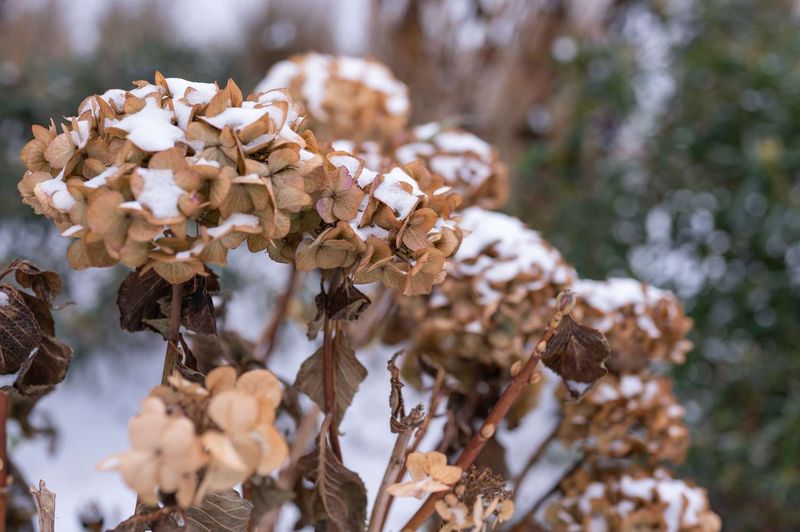
Many gardeners simply leave the dried heads. They turn lovely shades of tan, rose, and green, and they look striking with frost or a light snow on top.
Panicle and smooth hydrangeas follow a different schedule
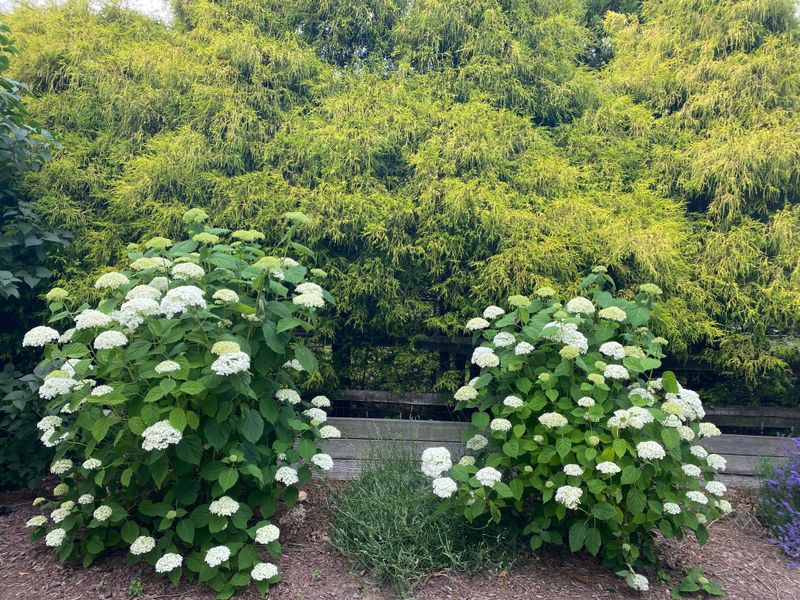
Not every hydrangea plays by old-wood rules. Panicle types, like ‘Limelight’, and smooth types, like ‘Annabelle’, flower on new wood, meaning the growth that appears next season.
Their buds are not sitting on last year’s stems waiting to be cut.
That is why pruning advice for them looks different. Iowa State Extension recommends size-reduction pruning of panicle hydrangeas in late winter or early spring.
Treat that as one reliable timing, not a rule for every plant. Species, cultivar, and local conditions can shift the best window, and a colder region may call for a different approach.
The overview from Penn State Extension is a handy comparison if you grow a mix.
In practice, if you have both types in one bed, handle them separately. Let the old-wood shrubs stand through fall, and save any shaping of your panicles for later, once you have checked guidance that fits your area.
Fall care supports the plant, but it cannot promise blooms
Modest care is the goal here. If fall turns dry, check the soil a few inches down and water when it feels dry, especially for shrubs planted this year.
Newer plants have smaller root systems and dry out faster.
Do not overdo it. Hydrangeas like steady moisture and well-drained soil, and soggy ground can cause its own problems, as noted in Penn State Extension’s winter injury article.
Water to moisten the soil, not to keep it saturated.
Mulch can help hold soil moisture. Spread a layer around the base and keep it from piling against the stems.
In colder, exposed spots, some gardeners protect bigleaf buds with a mesh enclosure filled with fallen leaves. The University of Georgia’s bigleaf guide describes this kind of protection, but it may not prevent winter injury.
Skip the fall fertilizer. It is not a proven bloom booster, and too much nitrogen can reduce flowering.
A missed bloom has more than one cause
A bloomless summer feels personal, and frost often takes the blame. But frost is only one suspect.
Extension guidance lists winter injury, late freezes, pruning, too little light, drought, and excess nitrogen as other causes.
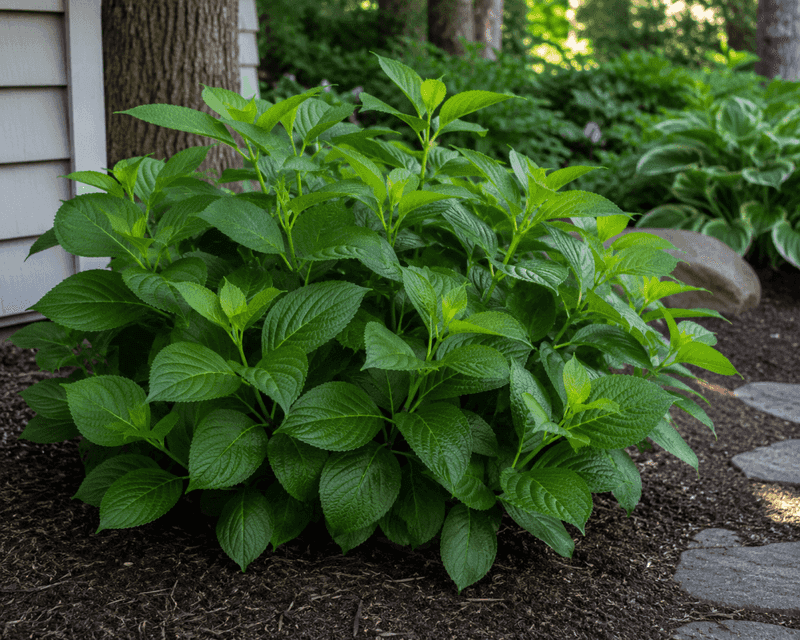
Use clues to narrow it down. Green, leafy growth with no flowers in a shady corner points to light.
Stems that look dead at the tips after winter suggest cold injury. A shrub trimmed in fall or early spring may have lost its buds to the shears, as the University of Georgia’s bigleaf hydrangea guide explains.
Feeding matters too. A lush plant near a heavily fertilized lawn may be taking in too much nitrogen.
Iowa State’s hydrangea guide recommends spring fertilizing, so fall feeding is no universal fix.
Reblooming cultivars can flower on old and new growth, which gives them a second chance. Even so, they can still suffer winter damage, as covered in Iowa State’s pruning page.
Preserve potential buds; don’t force a fall fix
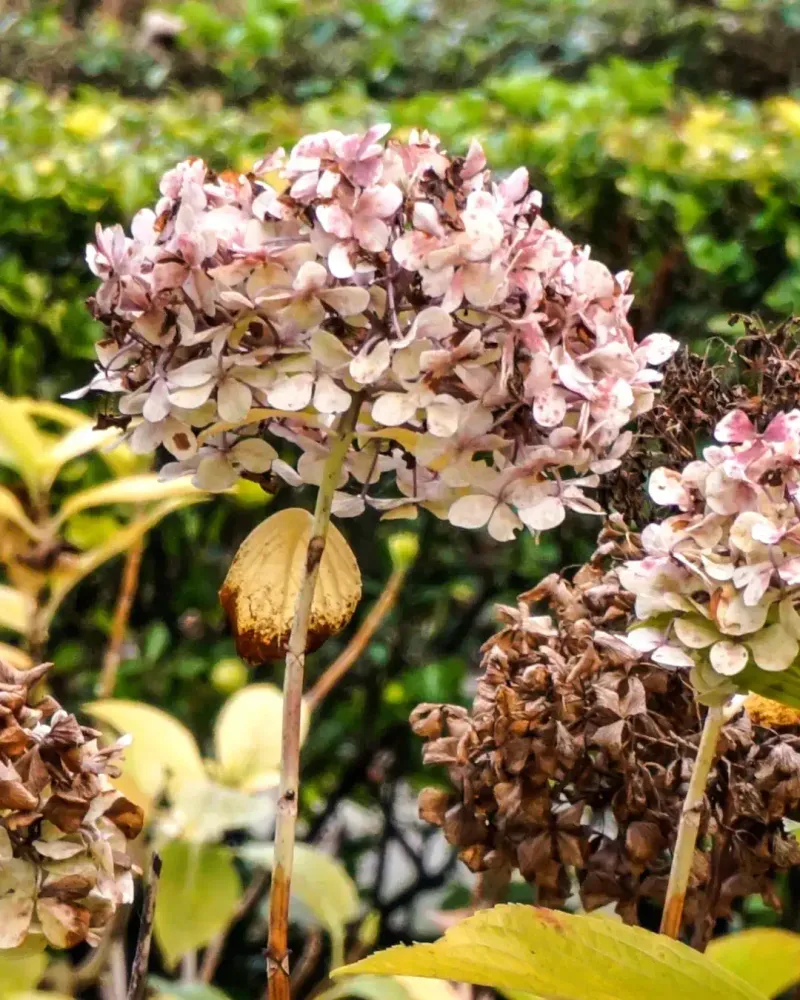
Identify your hydrangea first, using the tag or University of Georgia’s bigleaf guidance. If it blooms on old wood, or you cannot tell, skip any substantial cut.
For comparing types, Penn State’s overview helps.
Fall care is support, not a guarantee. Sometimes the best gardening move is putting the shears down.