
Checking Soil Moisture After Harvest Can Help Protect Next Season’s Blueberry Crop During Dry Weather
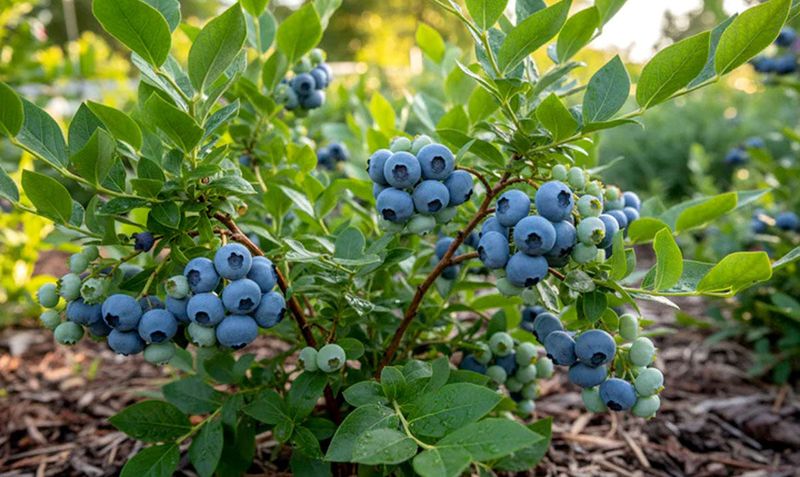
Once the last berries are picked, it is easy to figure your blueberry bushes can take care of themselves. But the plants are already busy setting up next year’s crop, and dry weather can get in the way.
A quick look at the soil can tell you whether your bushes need help. Here is how to check, what to do, and which fall chores you can skip.
Next summer’s crop begins taking shape after harvest
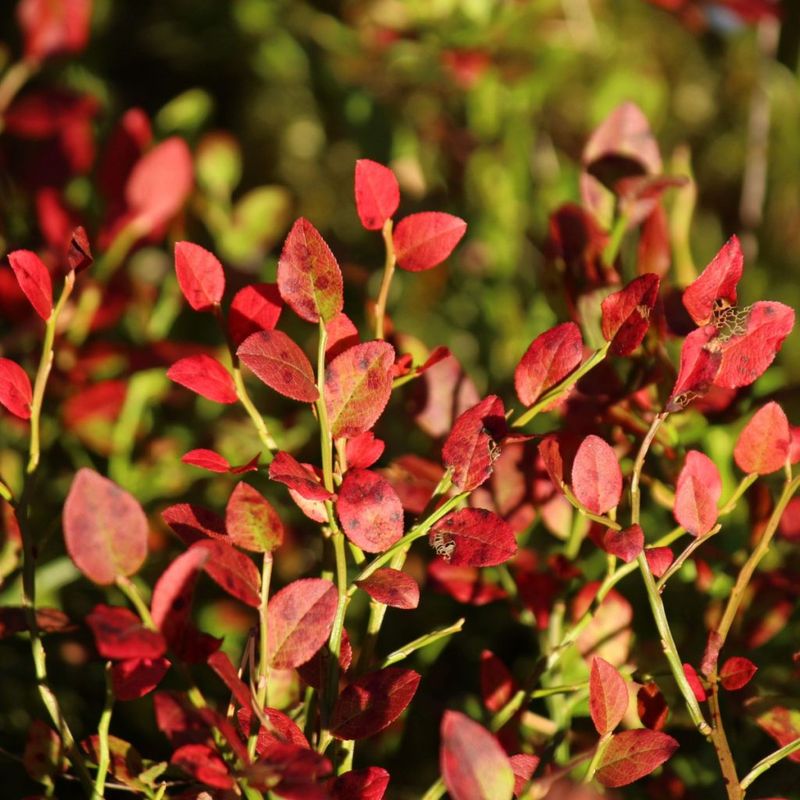
Picking the last berry feels like the end of the season, but your blueberry bushes are still working. During late summer and fall, they form the flower buds that will become next year’s berries.
That makes this a quiet but important window for the plant.
Here is where the trouble can start. According to Washington State University Extension, blueberries are vulnerable to drought, and Oregon State University Extension also stresses steady moisture for these shallow-rooted plants.
When the soil dries out while buds are forming, the bush may set fewer of them, which can lower the yield potential for next summer.
If your bushes look a little droopy or the leaves curl at the edges after a hot, dry spell, dry soil is one clue worth checking first. Many gardeners assume a plant needs no attention once the fruit is gone, so the soil never gets a second look.
The good news is that the fix is simple and does not require buying much. You are not trying to do a special fall ritual.
You are just checking whether the ground around your bushes has dried out, and responding if it has.
It helps to keep expectations realistic. Good moisture protects the crop your plant is already planning, but it cannot promise a heavy harvest.
Plant age, pruning, soil pH, and your growing conditions all play a part too, and later sections cover those.
If rain has been steady where you live, your bushes may be perfectly fine and you can skip the hose altogether. The goal is simply to avoid letting a dry stretch quietly cut into next year’s berries.
Check the soil before you reach for the hose
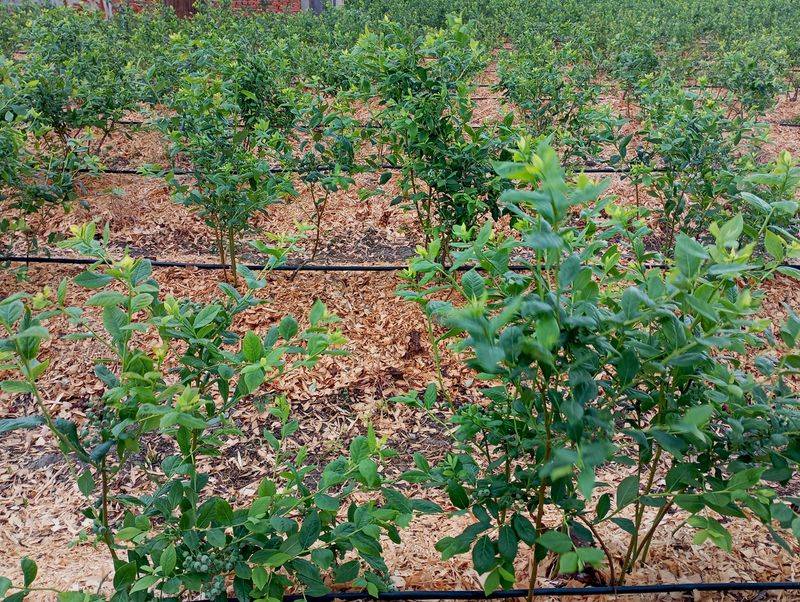
A blueberry bush can look fine on top while the soil underneath is bone dry. That is why the check starts at ground level.
Push a finger a couple of inches into the soil near the base of the plant, out toward the drip line, and see how it feels.
If the soil is damp and cool, hold off. If it is dry and crumbly several inches down, and the weather has been dry, the root zone probably needs water.
Recent rain, cooler temperatures, and shady spots can all mean the soil holds moisture longer than you expect.
Blueberries have fine, shallow roots, which is why they react quickly when the top layer of soil dries out. Water needs shift with rainfall, soil type, plant age, weather, and region.
A young bush with a small root system dries out faster than an established one, and sandy soil drains much faster than heavier ground.
You may come across numbers for how much water blueberries need. Washington State University Extension gives 1.5 to 3 inches per week during the growing season, counting rainfall.
That is a regional growing-season guideline for the Pacific Northwest, not a fixed fall schedule for every garden in the country.
Oregon State’s guidance also leans on adjusting to conditions rather than following a calendar. A simple rain gauge or a straight-sided can set out in the yard helps you see what nature has already delivered this week.
Make it a habit to check every few days during a dry fall stretch, especially while the leaves are still on the plant. Once the weather turns cool and wet, or the plant goes dormant, the need drops off.
Water dry bushes without keeping roots soggy
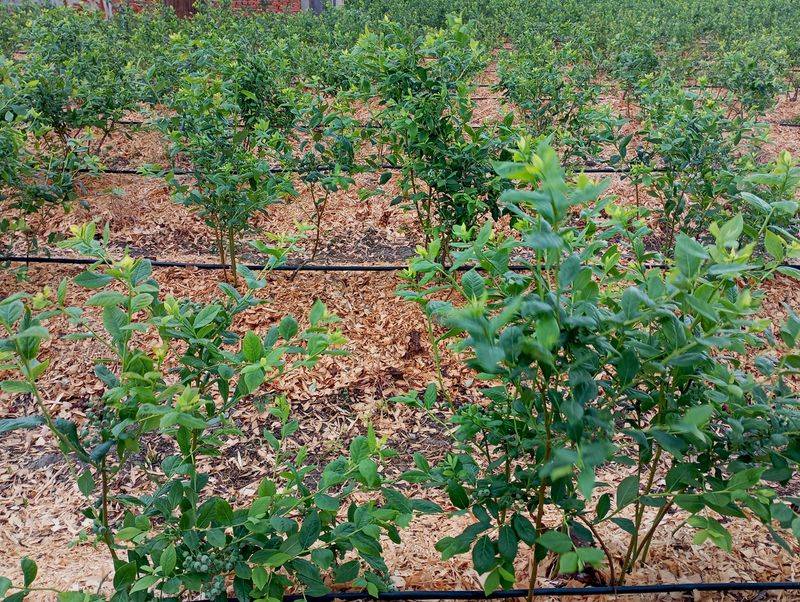
When the soil check says dry, the aim is modest: moisten the root zone and stop there. A slow, steady soaking near the base of the plant works better than a quick blast from a spray nozzle.
Soaker hoses or drip lines are handy because they deliver water right where the shallow roots are.
After watering, check again. Dig down a few inches an hour or so later, or the next day, to see whether the moisture reached the roots.
Then wait until the soil starts to dry again before repeating. That rhythm is more reliable than any set schedule.
Blueberries are not fans of wet feet. Oregon State University Extension advises wetting the root zone without leaving standing water.
Soil that stays saturated can starve roots of air and invite root disease, which is a bigger headache than a missed watering.
Irrigation research from Michigan State University also treats blueberry watering as a balance between drought and excess. Home gardeners can borrow that mindset by watering to need rather than by habit.
Watch for warning signs of too much water: puddles that linger, soil that feels soggy days later, or leaves that yellow and wilt even though the ground is wet. If you see those, back off and let the soil drain.
Morning is a good time to water because leaves dry out during the day. Keep it light-handed, and stop once the soil is moist through the root area.
Mulch helps hold moisture around shallow roots
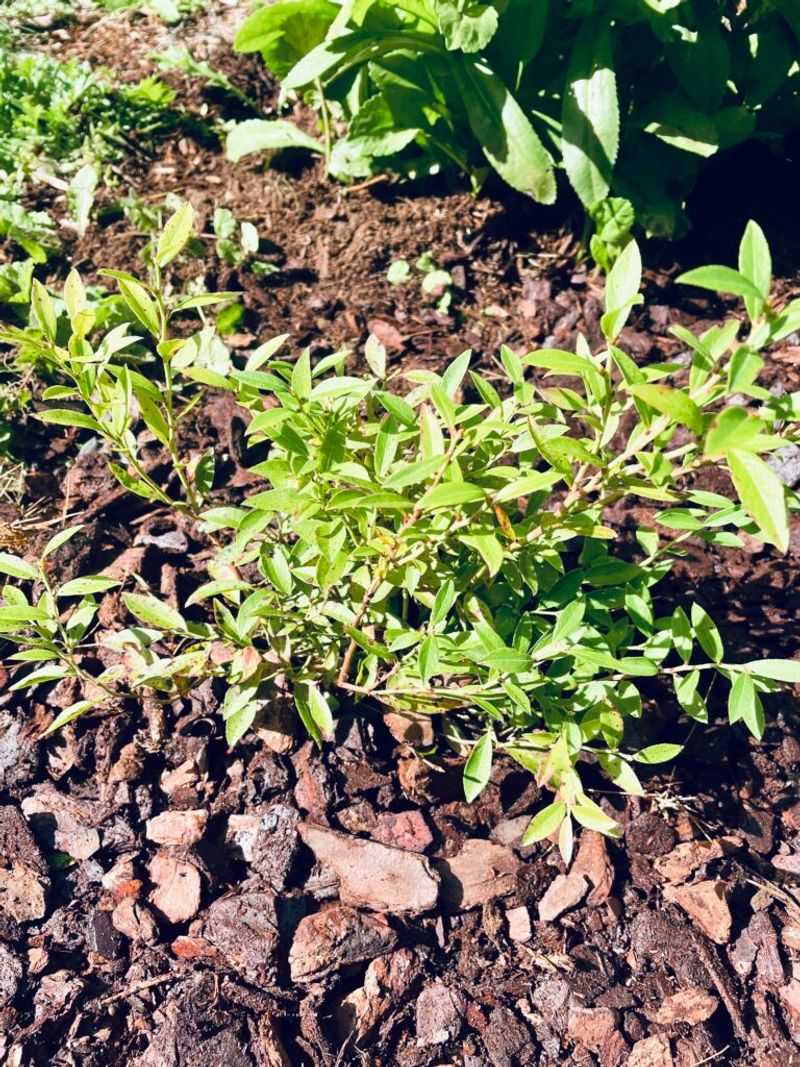
Mulch is the quiet helper in a blueberry bed. A layer over the soil slows evaporation, which keeps those shallow roots from drying out as fast, and it also keeps weeds from competing for water.
It works best alongside soil checks and watering, not in place of them.
What you use and how deep depends on where you live. Minnesota Extension suggests 2 to 4 inches of sawdust, peat moss, oak leaves, or pine needles for plantings there, topped up as needed.
Treat that as regional guidance rather than a national rule, and look up what your own state’s extension service recommends.
Take a look at your bed this fall. If the old mulch has thinned out or washed away, a refresh may be worthwhile.
If it is still a healthy layer, leave it be.
One mistake to avoid is piling mulch against the crown, the spot where the stems meet the soil. Pull it back a few inches so the base can stay drier and breathe.
Mulch heaped up against the stems can hold too much moisture right where you do not want it.
Mulch will not guarantee a bigger crop next year. Think of it as insurance for soil moisture and a weed fighter, which makes your watering efforts go further when the weather is dry.
Pruning and fertilizer timing depend on where you grow
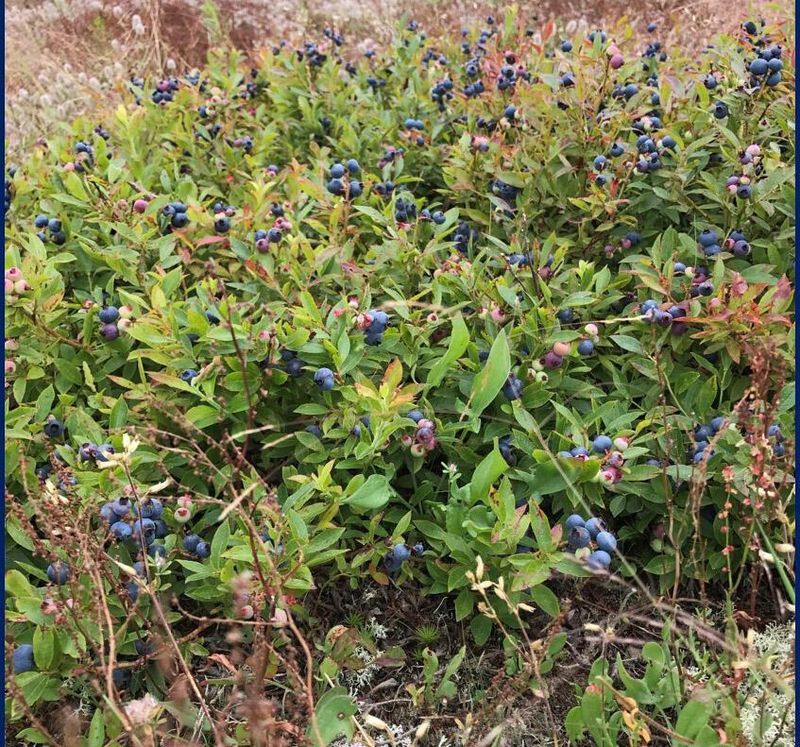
Plenty of advice says to prune and feed your blueberries right after harvest. Whether that suits you depends on your climate and the type of blueberry you grow, so it pays to look local before picking up the shears or the fertilizer.
In cooler regions, the usual advice is to prune while plants are dormant. Penn State Extension covers dormant-season pruning for home plantings, and Oregon State University Extension recommends dormant-season pruning for most types in its area.
Minnesota’s home-garden guidance also points toward dormant or early-spring work.
Warmer regions can look different. Mississippi State Extension advises pruning after harvest, but no later than August 1.
In Southern California, UC Cooperative Extension describes summer pruning for evergreen blueberries. Both can be right for their own places, which is why one national rule does not work.
Fertilizer has a similar catch. Oregon State cautions that late granular fertilizer can push tender growth that frost may damage, and it can reduce fruit-bud set.
Mississippi’s guidance allows post-harvest feeding in its setting, so regional advice should win over general tips.
If you are unsure, call or search your state’s cooperative extension service and ask about your blueberry type. Then you can plan pruning and feeding for the right season instead of guessing in the fall.
Poor growth can point to more than dry soil
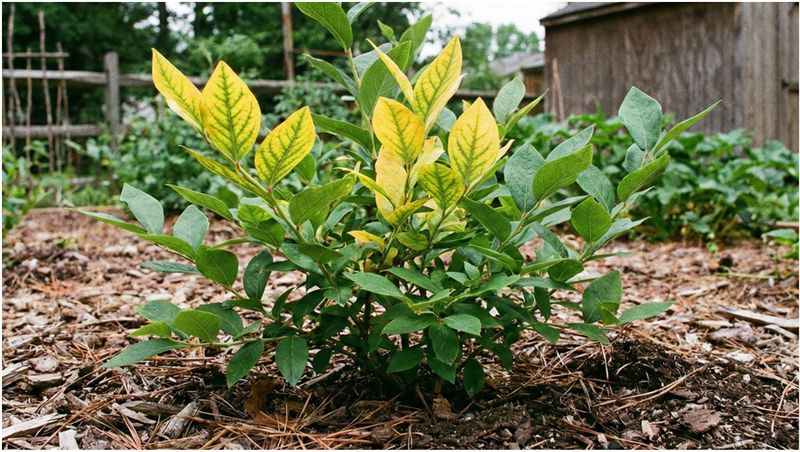
If your bush has yellow leaves or weak growth, dry soil is only one possible culprit. Soil pH is another big one.
Blueberries need acidic soil, and when the pH creeps too high, they have trouble taking up nutrients even if you water and feed well.
Minnesota Extension notes that blueberries struggle to take up nutrients above pH 5.5 and recommends monitoring soil pH. A simple soil test from your local extension office or a reliable kit tells you where you stand.
Resist the urge to sprinkle an acidifier on the soil just because the leaves look pale. Without a test, you can easily add too much or the wrong product.
Let the results and your local extension advice guide any amendment and its rate.
Other things shape how a bush performs, too. Young plants often produce lightly while they establish, pruning affects how much fruiting wood a plant carries, and sun, drainage, and variety all matter.
Oregon State’s guide covers several of these in its overall care advice.
So if your soil is moist and your bush still looks unhappy, test the pH before changing your watering. Matching the fix to the real cause saves effort and keeps you from stressing a plant that is already struggling.
Keep the fall routine focused on what your bushes need
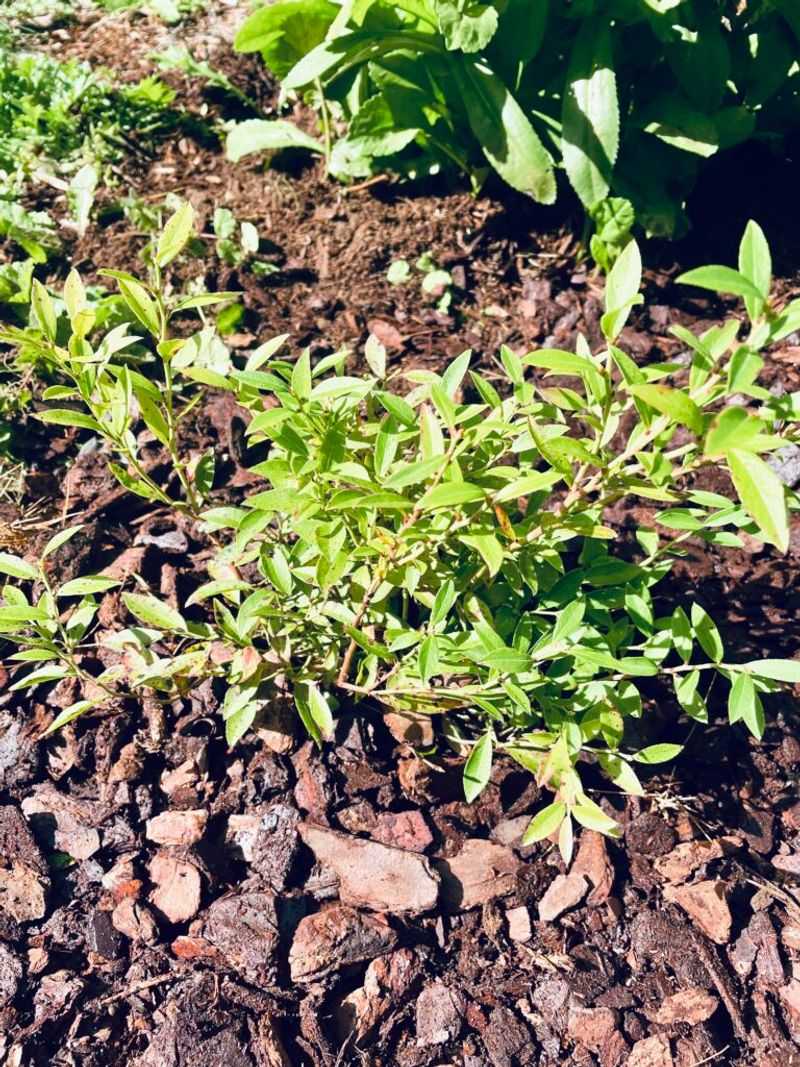
Once the berries are gone, a short routine is plenty: check the soil, water when a dry spell leaves the root zone parched, and keep a suitable layer of mulch in place. Per Washington State University Extension and Oregon State University Extension, steady moisture helps blueberries cope with drought.
Let your local extension guide pruning and fertilizer timing. These steps protect crop potential, but they do not promise a berry-heavy harvest.
A bush that never went thirsty has simply been given a fair chance.