
Your Tomato Leaves Turned Yellow This Year? These 17 Culprits Explain It (And How To Stop Them Next Spring)
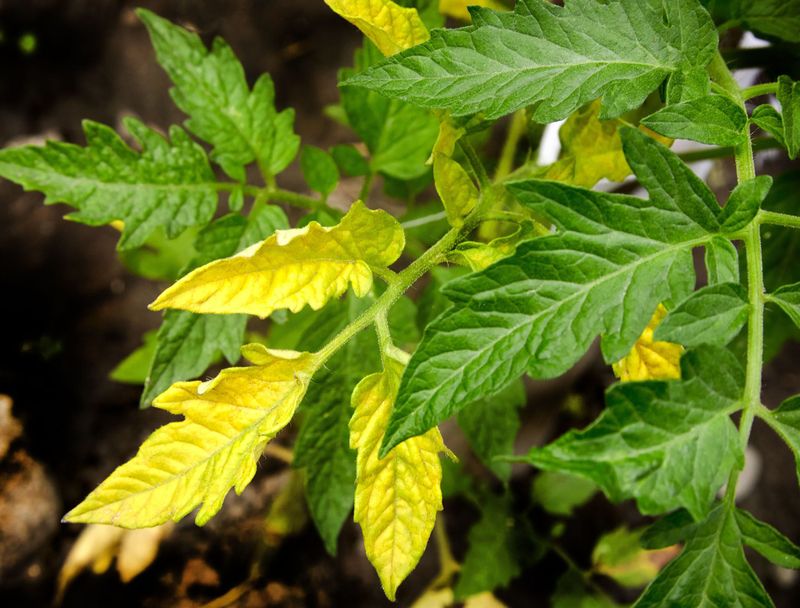
Yellow leaves on your tomato plants can be worrying, especially when you cannot tell what went wrong. The good news is that yellowing is a clue, and the way it looked can help you plan a healthier season next year.
Thinking back on which leaves changed, and when, may point you toward the most likely causes. Here is a checklist of possibilities to help you review your garden without blaming yourself.
Yellow leaves are a clue, not a diagnosis
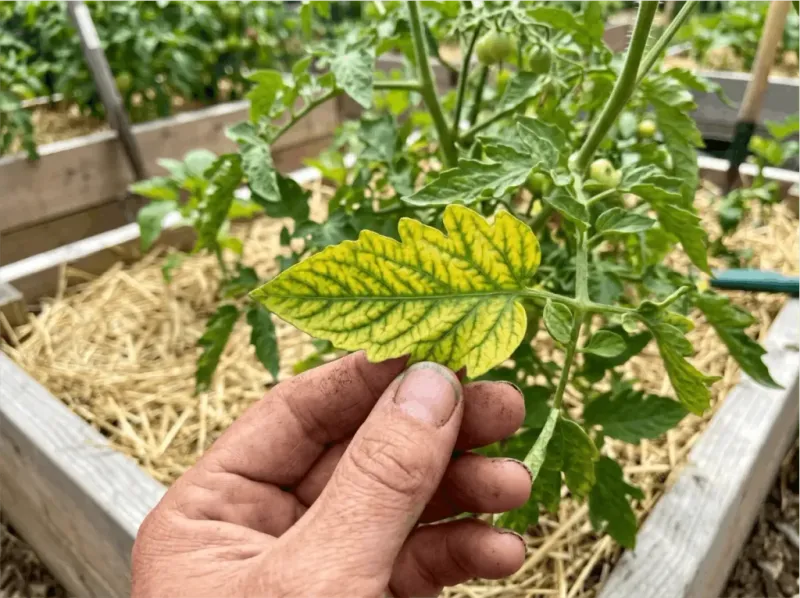
Picture your tomato plants at their worst this summer. Which leaves turned yellow first, the low ones near the soil or the new ones at the top?
That single detail is where a good review starts.
Yellow leaves are a symptom, not a diagnosis. The University of Minnesota’s tomato leaf discoloration guide treats yellowing as one sign that has to be sorted out alongside other clues.
Normal aging, water or temperature stress, nutrient problems, pests, herbicide injury, and disease can all produce it.
So think about the pattern. Was the color change even across a leaf, or did it come in patches, spots, or bands between the veins?
Did leaves curl or twist? Did the plant wilt in the afternoon, or stay small compared with its neighbors?
Each answer narrows the field a little, though none of them settles the question on its own.
You will see a list of 17 possible culprits in this article’s title. Treat that number as an editorial checklist of examples, not a scientific standard or a complete count.
Some items overlap, and some are variations on the same problem, so a single plant can have more than one thing going on.
The goal here is not to pick a treatment today. Instead, use University of Minnesota Extension tomato guidance as a reminder that figuring out the cause comes before acting on it.
Gather your memories, photos, and notes first. Then the next sections can help you match them to likely explanations, and show you where to ask for local help.
Older lower leaves may yellow as the plant grows
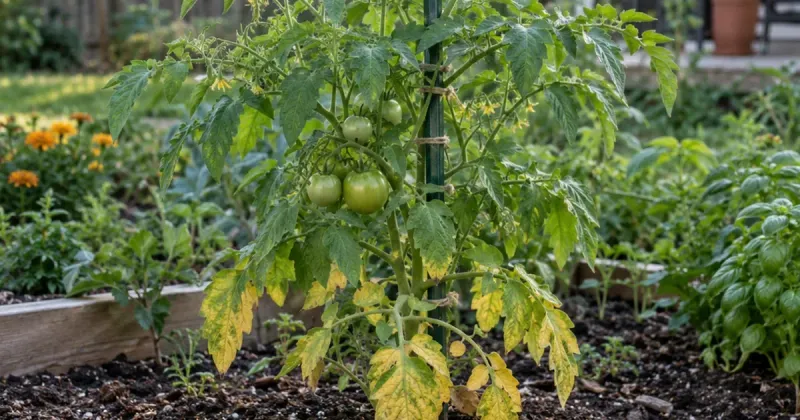
Sometimes a tomato plant is simply doing what plants do. As the canopy fills in, the lowest leaves end up in deep shade, and they may turn yellow and drop.
University of Illinois Extension notes that clear yellowing without spots can differ from disease-related yellowing.
Look back at your photos or memory for the pattern. Did the yellowing stay on a few of the oldest leaves near the base while the rest of the plant kept growing and setting fruit?
That is often consistent with normal aging.
Now think about the warning signs. Dark spots, rings, fuzzy patches, or yellowing that kept climbing the plant week after week suggest something more than shade.
A plant that wilted or stopped growing deserves a closer look too.
Leaf location is helpful evidence, but it does not name a cause by itself. Lower leaves can also yellow from nutrient shortages, root trouble, or leaf diseases, so an old leaf turning yellow is not automatically harmless.
A simple test for next year is to jot down how many leaves were affected and how far up the stem the change reached. If it stayed limited and the plant produced well, you may just have seen a normal part of the season.
Nutrient problems need more than a color match
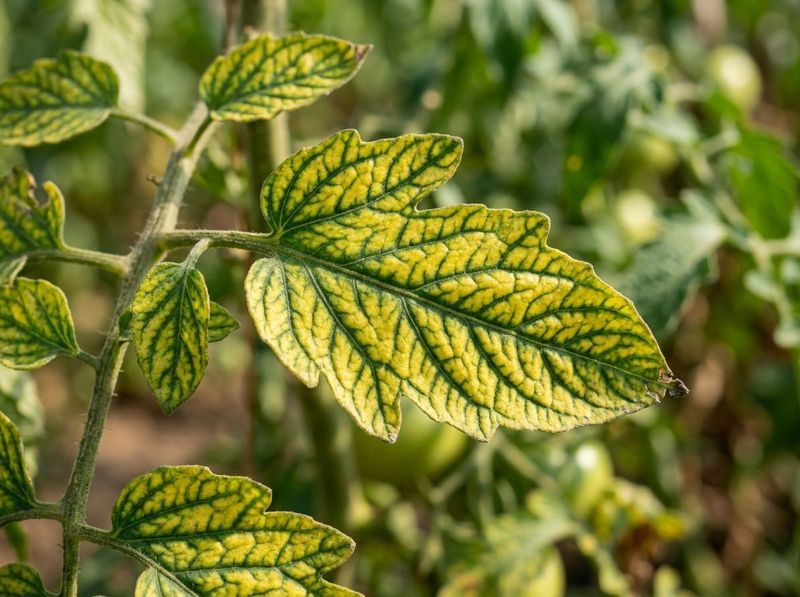
Nutrient shortages are the explanation many gardeners reach for first. Nitrogen deficiency often shows up as general yellowing that starts on older, lower leaves, as described in Colorado State University Extension tomato guidance.
Magnesium deficiency tends to look different, with yellowing between the veins of older leaves, according to University of Minnesota Extension.
Here is the catch. Those patterns can be confused with other problems, and lower-leaf yellowing is not specific to nitrogen.
Aging, disease, root damage, and wet or dry soil can all look similar, and nutrient symptoms can overlap with each other.
That is why a color match is not enough. Penn State Extension’s work on leaf tissue analysis for tomatoes shows that growers use testing, not appearance alone, to guide nutrient decisions.
For a backyard garden, the practical version is a soil test. Oregon State University has a guide to collecting soil samples that walks you through taking a useful sample.
Fall is a convenient time, since results can shape your spring plan.
More is not always better. Excess nitrogen can encourage lots of leafy growth at the expense of fruit, and overfertilizing can harm plants, as covered in Colorado State University’s soil and fertilization notes.
Epsom salts and other quick fixes are not a universal remedy for yellow leaves, so let the test results and product labels guide you.
Water and temperature stress require a look at growing conditions
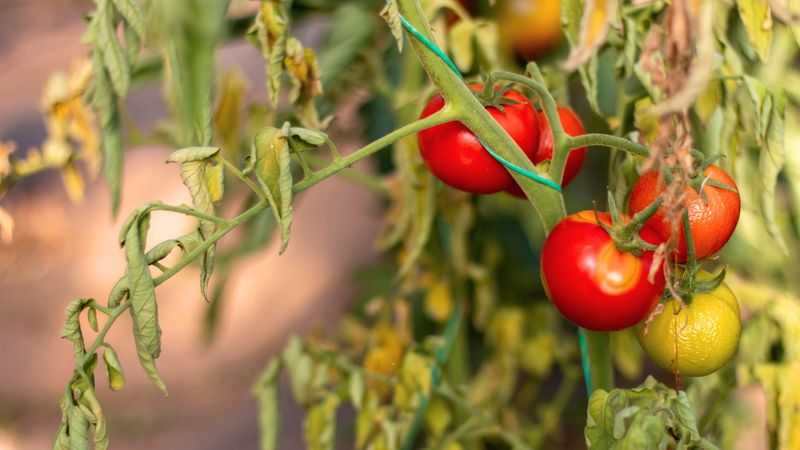
Few things stress a tomato plant like a rough stretch of weather. Too much water, too little water, and swings in temperature can all be linked to yellowing leaves.
The tricky part is that you cannot reliably tell overwatering from underwatering by leaf color alone.
Try rebuilding the season instead. Were there long wet spells, a heat wave, or a week when you traveled and the bed dried out?
Did water pool around the plants after rain? Persistently wet soil can damage roots, while dry soil and wilting can signal water stress, as explained in Oregon State University’s watering basics.
Soil moisture and drainage tell you far more than the leaf does. Pushing a finger into the soil near the plant, and noticing how quickly the bed drains, beats following a fixed schedule.
The University of Minnesota’s tomato guidance and its leaf discoloration guide both list growing conditions among the things to rule out before assuming disease.
For next season, the principle is steady moisture in the root zone. Water near the soil rather than over the leaves, and favor deeper, less frequent watering over daily sprinkles.
Wet foliage can help some leaf diseases spread, so keeping leaves drier is a bonus. Adjust to your own weather and soil, since no single schedule fits every garden.
Spots point toward leaf diseases, not yellowing alone
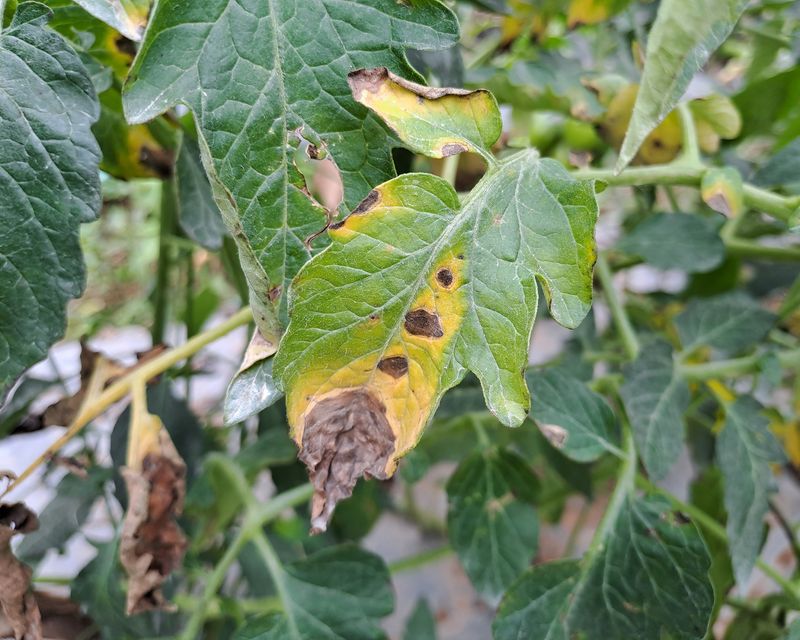
When yellow leaves come with spots, disease moves higher on the list. Early blight and Septoria leaf spot both often begin on lower or older leaves.
Early blight lesions are typically brown with rings, described by University of Minnesota Extension. Septoria produces many small spots, according to University of Illinois Extension.
Notice that the clues are the spots and their patterns. Yellowing with no lesions or other diagnostic signs is not enough to name a disease.
Similar-looking spots can come from different causes, so compare size, color, and shape before drawing conclusions.
Tomato leaf mold is a different, less common possibility. University of Minnesota Extension describes it as mainly a greenhouse or high-tunnel concern, and unlikely in typical home gardens.
If spots did show up, several habits can reduce risk next year. Remove affected foliage where appropriate, mulch to reduce soil splash, space plants for better airflow, and rotate tomatoes and related crops when you have room.
Rotation may be impractical in a small garden, and that is okay.
None of these steps guarantees prevention, and they will not cure an established infection. Hold off on fungicides until you know the likely problem, and follow the product label if you do use one.
Distortion, stippling, and stunting widen the search
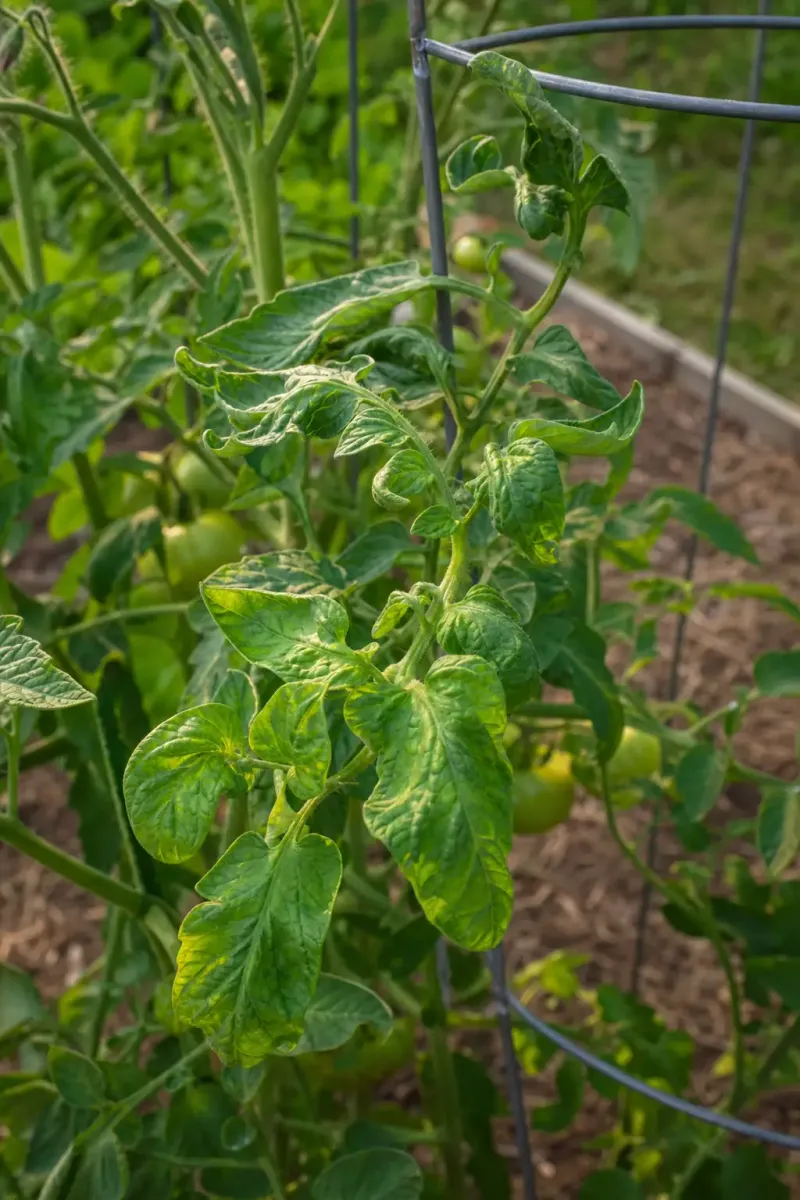
Some yellowing comes with clues that have nothing to do with spots. The University of Minnesota’s leaf discoloration guide lists several other possibilities, including wilt diseases, viruses, root-knot nematodes, herbicide injury, and spider mites.
Distortion and mottling may suggest a virus or herbicide injury. Twisted, curled, or oddly narrow new growth is worth noting, along with whether other plants nearby were affected.
University of Minnesota Extension explains that viruses cannot be cured with chemical products, so the focus is diagnosis and preventing spread.
Fine stippling and webbing on leaf undersides can point to spider mites, which are covered in University of Missouri Extension’s guide to aphids, scales and mites. A hand lens helps you look closely.
Stunting and root galls, which are swollen lumps on roots, may point to root-knot nematodes. Wilting along with yellowing can fit a wilt disease.
Check the roots of any plant you pull out in fall.
Remember that no single symptom confirms a cause. Tomato disorders from the same university shows how many problems can look alike.
When you are stuck, a local Extension office or diagnostic lab can help. Bring photos, a fresh sample if possible, and notes on what you sprayed nearby.
The tomato growing guide is a good companion while you wait for answers.
Turn this season’s clues into a better plan for next spring
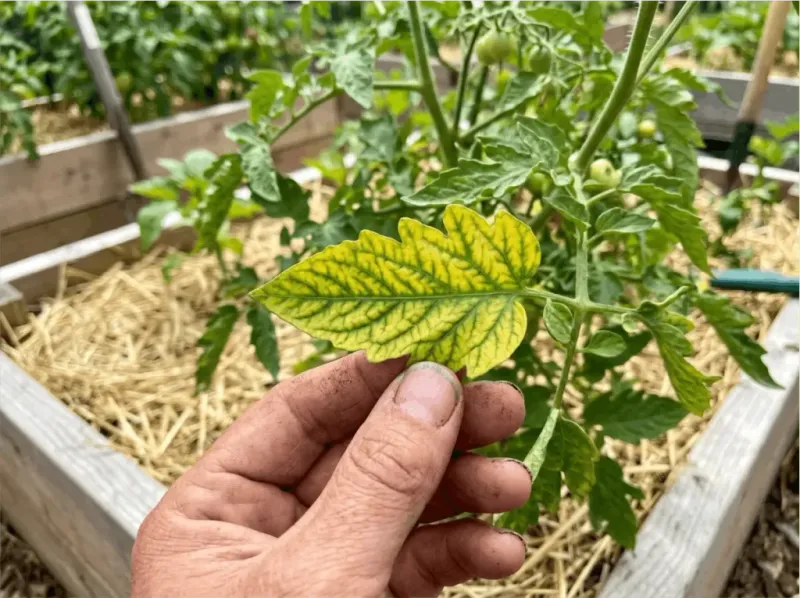
Before the memories fade, write down what you saw. Note which leaves changed first, what else showed up, and what the weather and watering looked like.
Photos on your phone work well, and a short note beside each one makes them more useful. The University of Minnesota’s tomato guidance supports this kind of careful observation.
Next, plan around what your records suggest. If water seemed involved, check soil moisture before watering and aim for steady root-zone moisture, as Oregon State’s watering basics recommends.
If you saw spots, think about reducing splash with mulch and giving plants room for airflow. Guidance on early blight and Septoria leaf spot describes these habits as ways to lower risk.
They do not guarantee prevention or cure a plant that is already infected.
For fertilizer, let a soil test lead. Oregon State’s soil sampling guide shows how to collect a sample.
Then follow the results and product labels instead of adding nutrients just because leaves looked yellow.
If your evidence is still unclear, contact your local Extension office or a diagnostic lab. Sending photos and notes can save you from guessing.
A tomato plant keeps a diary in its leaves, and a few good notes help you read it next year.