
North Carolina Box Turtles May Use Leaf-Covered Yard Areas as Weather Cools

Eastern box turtles live in many North Carolina neighborhoods, and cool weather changes where they spend their time. A leaf-covered corner of your yard may be more useful to a turtle than it looks.
You do not have to give up fall cleanup to help. A few small choices about what to keep, and where, can protect possible winter shelter.
Leaf litter can provide useful habitat
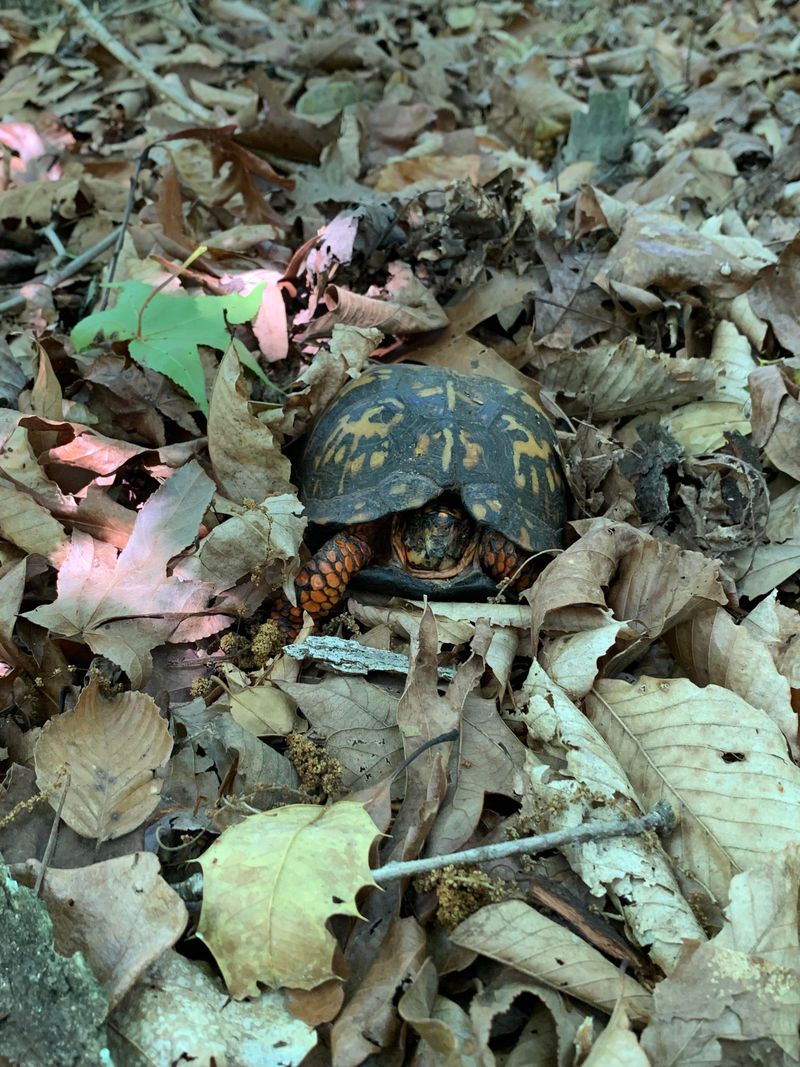
Eastern box turtles turn up across North Carolina, and the NC Wildlife profile notes they live in fields, forests, and neighborhoods. They are most common in or near wooded areas, so a yard that borders trees or shrubs may already be part of a turtle’s home range.
In winter they are typically dormant, tucked into soil or forest-floor leaf litter until warmer weather returns.
That is why a layer of leaves matters. Leaf litter works like a blanket, giving shelter and some insulation.
A U.S. Forest Service species review describes box turtles using moist soil or leaf litter for shelter, and lists deep litter-filled depressions, soft soils, thick brush, and woody debris as features of hibernation habitat.
Keeping some of that cover is a cautious, low-cost choice. It does not mean a normal rake-up will crush or expose a turtle.
No one can say that from the research available.
One study gives a hint of the concern, though it has limits. Researchers who tracked three-toed box turtles at two Missouri sites linked human leaf-litter removal to possible overwintering problems.
The authors said more data are needed, and Missouri is a long way from your Piedmont or Coastal Plain yard. Treat it as a reason for modest care, not a warning of certain harm.
Turtles may use more than one kind of shelter
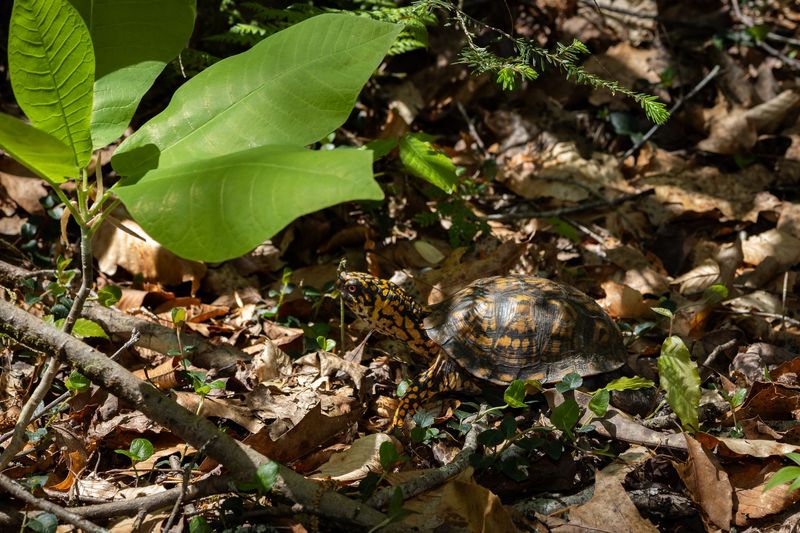
Box turtles are not picky about one perfect bedroom. Moist soil, leaf-covered depressions, stump holes, root masses, and woody debris all show up in descriptions of possible winter sites.
The Forest Service review points to soft soils, deep litter-filled dips, thick brush, and woody debris as hibernation features.
Think of that list as examples, not a checklist. A yard does not need every feature, and no single turtle uses them all.
NC Wildlife describes turtles burying in soil or forest-floor leaf litter, which suggests the covering itself matters as much as the exact spot.
Walk your property and look for places that already match. An old stump with rotted openings, a tangle of shrub roots, a shallow dip filled with oak leaves, or a bed of leaves beneath a hedge might all qualify.
Corners where the lawn meets woods or thick shrubs are good places to start.
A caution about brush piles: some turtles may use woody cover, but a backyard pile is not the same as a forest floor, and many turtles will never touch one. Your best bet is usually cover that is already settled in place, quiet, and a bit damp.
There is no single North Carolina fall deadline
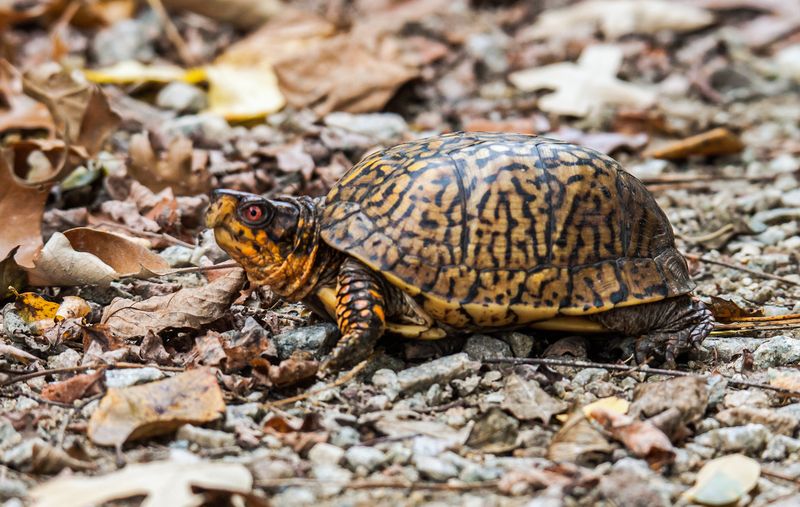
Calendars make tidy rules, but turtles do not read them. NC Wildlife says eastern box turtles are typically dormant in winter and may be active in spring and fall.
That leaves plenty of gray area in between.
So late October is not a reliable cutoff anywhere in the state. A mild week in the Coastal Plain may keep a turtle moving, while a cold snap in the mountains could slow one down much sooner.
Nothing in the general guidance can tell you whether a particular turtle in your yard is active or settled today.
Guidance from the Northeast offers a useful picture, with a limit. A Northeast best-practices document says activity usually ends around first frost, yet turtles may come back out during warm periods.
That timing was written for another region, so please do not treat it as an exact North Carolina schedule.
The practical takeaway is simple. Rather than racing a date, work as if a turtle could be around anytime from fall through spring.
Move slowly through leafy areas, and save any heavy digging for spots you have already decided to keep clear.
Choose a quiet corner for the cover you keep
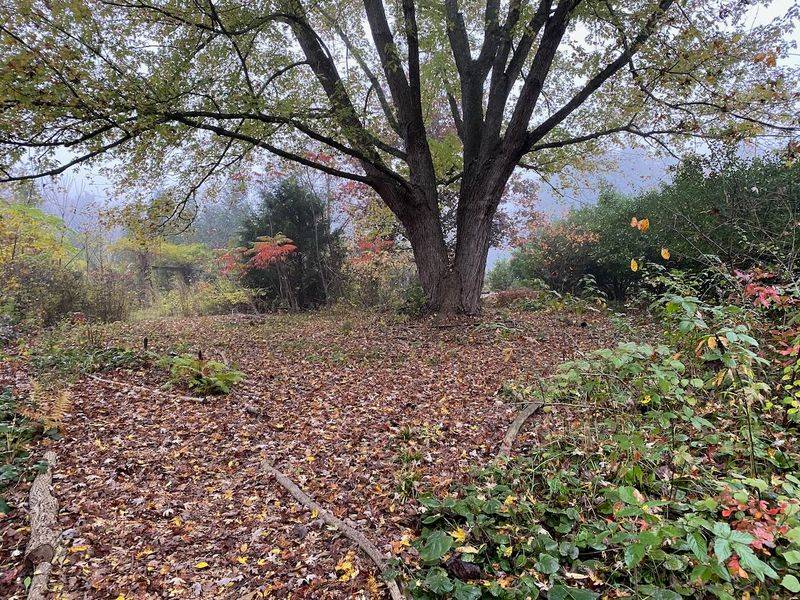
You can rake the lawn, clear the patio, and still hold back one patch. Pick a quiet spot, ideally where the yard meets woods or shrubs, away from foot traffic, mowers, and play areas.
Leave the leaves and any existing logs, sticks, or roots there as they are.
Skip unnecessary soil disturbance in that corner. Tilling, regrading, or planting new beds right there can undo the loose, covered ground that turtles may use.
If you want to add plants, choose another part of the yard this season.
Size is up to you. A modest patch is enough to count as a thoughtful choice, and the rest of the yard can be tidied however you like.
Tick-conscious readers can keep paths, play spaces, and the zone along the house clear while saving the far edge for wildlife.
If you like the idea of a brush pile, treat it as optional. NC State Extension suggests shelter features for backyard reptiles and amphibians, including leaf litter, downed logs, and brush piles.
Its design puts larger logs at the base, smaller branches above, in a dome about five feet wide. That is general wildlife-shelter advice, not a turtle-specific rule, and it does not promise a turtle will move in.
Existing cover still has the edge. Forest Service research ties turtle shelter to moist soil and leaf litter, so a settled leafy corner may do more good than a brand-new pile.
Give an encountered turtle space
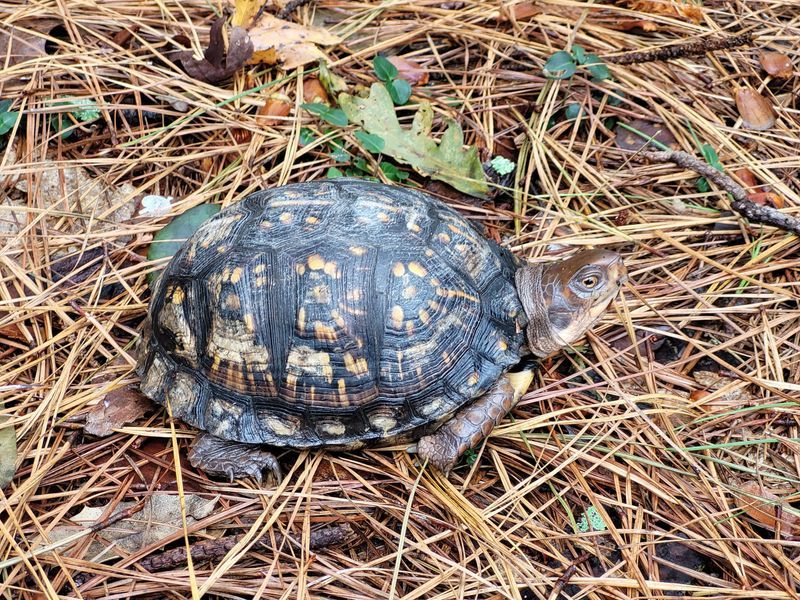
Sooner or later, a raking session may turn up a turtle. Stop, step back, and watch.
A box turtle that is walking or settling into leaves is doing what it needs to do, and it usually does not need help.
Resist the urge to carry it to a safer yard or bring it inside for the winter. NC Wildlife’s box turtle profile says moving turtles outside their home range is not advisable.
A turtle knows its own patch, and a new one can leave it lost and stressed.
If it is sitting in a spot where you were about to work, simply leave that spot alone for now. Rake somewhere else, mark the area with a stick or a flag, and keep pets and mowers away.
The exception is an obviously serious injury, such as a badly cracked shell or heavy bleeding. In that case, NC Wildlife’s injured wildlife page explains how to find help, and a licensed wildlife rehabilitator is the right call.
Check current state rules before collecting or keeping any wild animal.
Keep some cover, and clean the rest as needed
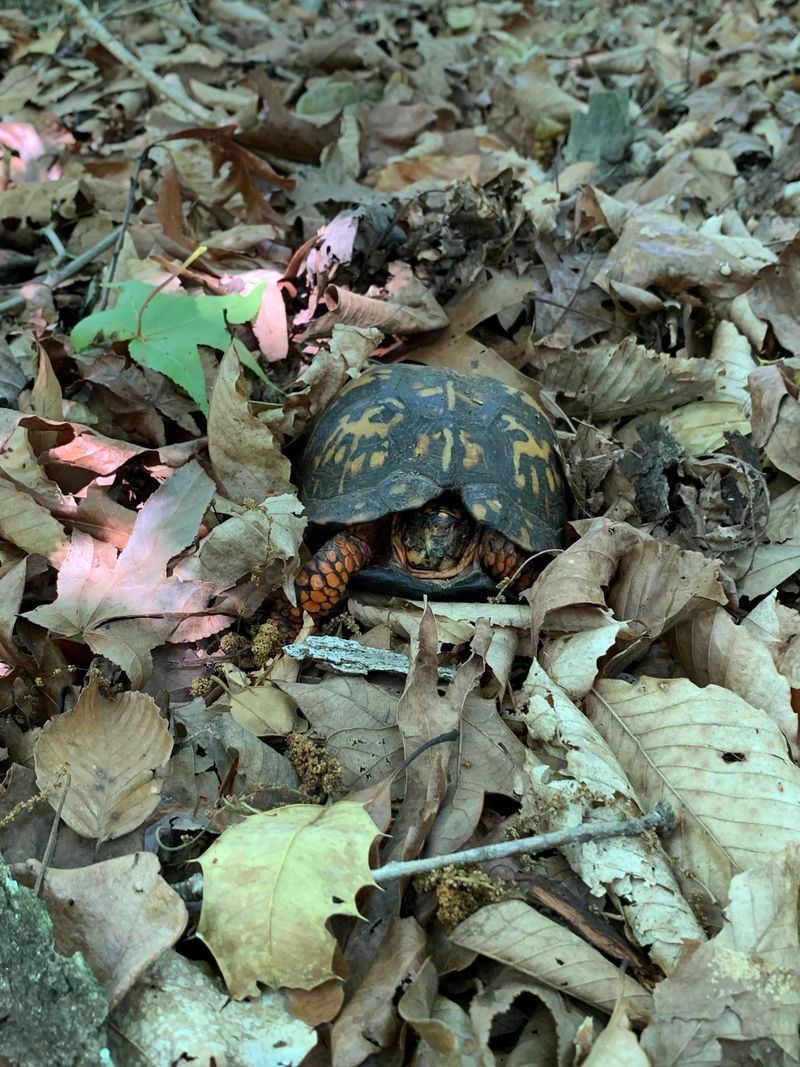
Here is the rule of thumb: leave one modest, quiet patch of leaf litter and existing cover alone, especially near woods or shrubs, and clean the rest as you see fit. It is a careful way to hold onto possible habitat, not proof that a turtle is there, and no one needs to keep every brush pile.
Forest Service research on box turtle shelter and NC State Extension’s backyard advice both point toward keeping some natural cover. A single leafy corner is a small gift for a neighbor you may never see.