
Why Your Geranium Leaves May Turn Yellow After You Bring Them Indoors for Winter
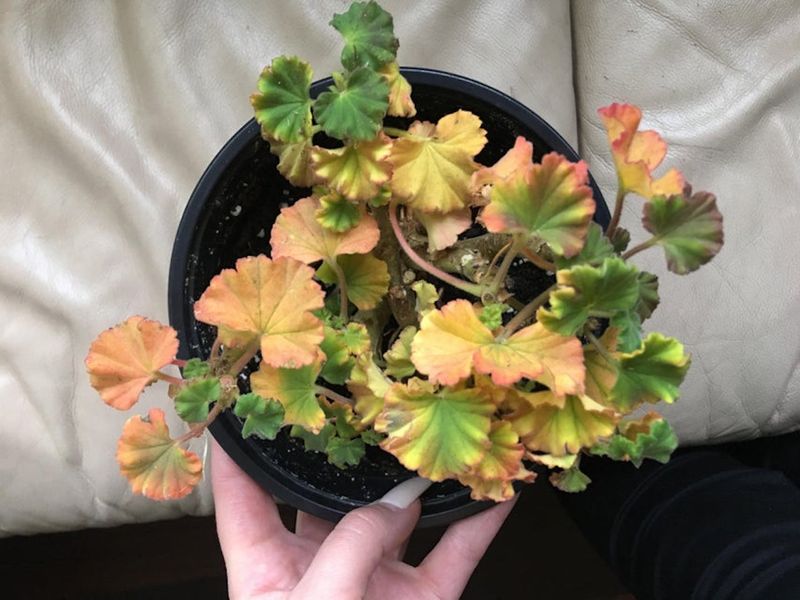
You carried your geranium inside to save it from frost, and now the leaves are turning yellow. It is a scary sight when you worked hard to keep that plant alive all summer.
The move indoors changes a lot for a plant, and light is often the biggest shift. Here is how to figure out what is going on and what to do next.
Why leaves may yellow after the move indoors
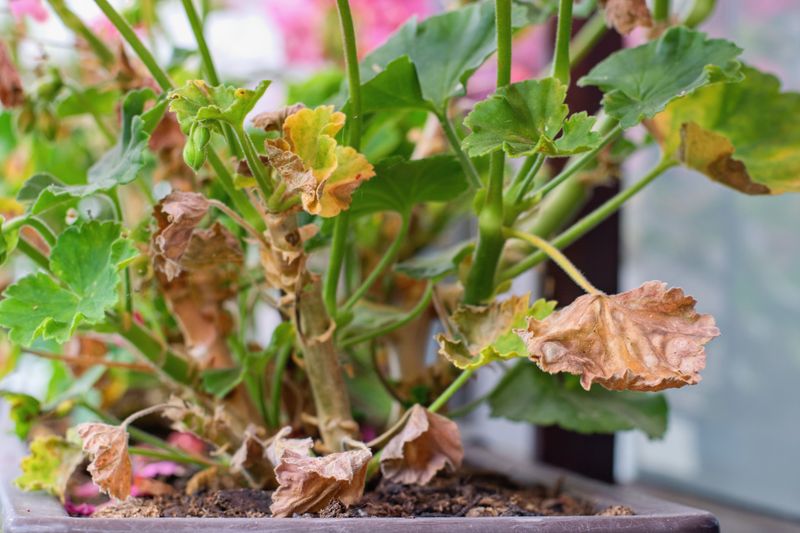
Garden geraniums are tender plants that spend the summer in strong sun and fresh air. Moving them inside is a big shock.
University of Minnesota Extension says geraniums will likely drop many leaves when brought indoors because the growing environment has changed, but they can leaf out again.
Light, temperature, humidity, and watering all shift at once. Penn State Extension describes some yellowing or leaf drop as a normal response to those changes.
So a few yellow leaves do not, on their own, mean the plant is dying.
Still, yellow is a vague signal. A leaf can turn that color for several reasons, and Iowa State University Extension lists overwatering, underwatering, cold, and low light among the possible causes of yellow or dropping houseplant leaves.
Pests and disease can cause similar symptoms too. That is why no single explanation fits every plant, and why it pays to look at the whole picture before changing anything.
A quick note on names. When people say geranium at a garden center, they usually mean a tender Pelargonium, the kind grown in pots and window boxes.
The Penn State guidance on bringing plants in applies to those. Hardy geraniums belong to a different genus, Geranium, and they usually stay outside in the ground, so their care differs.
According to UC IPM, the two groups are different plants that share a common name.
How lower light affects an indoor geranium
Even a bright room is dimmer than a summer patio. Outdoors, your geranium soaked up strong, direct sun for hours.
Inside, the same plant may get a fraction of that light, especially in winter when days are short and the sun sits low.
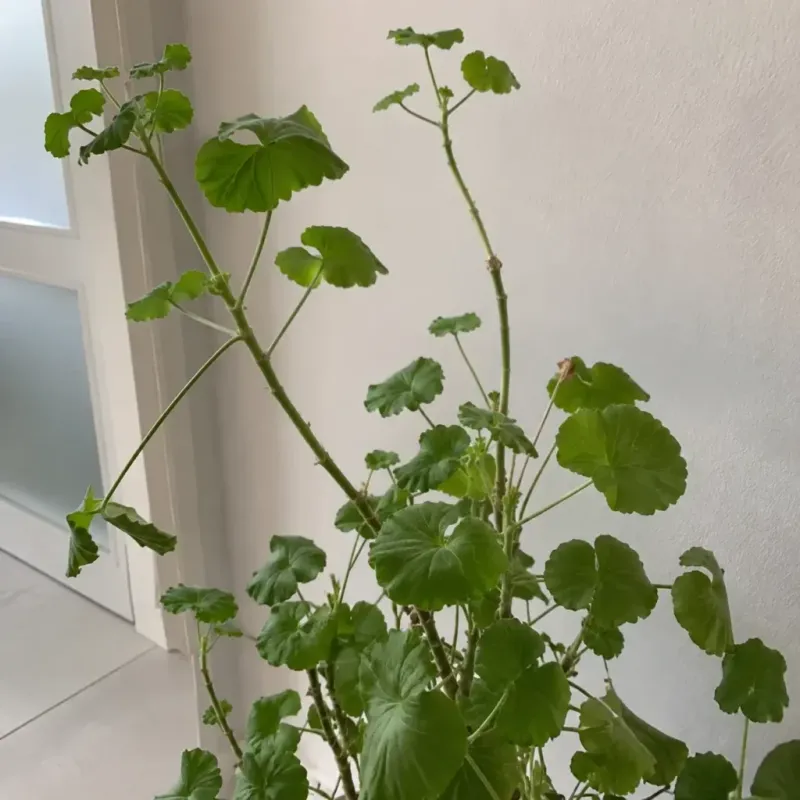
Plants make their food from light, so a sudden drop can leave a geranium running short. One common result is leaf loss, starting with older leaves that turn yellow and fall.
Another is weak, leggy growth, with long stems, wide gaps between leaves, and smaller leaves than the plant made outside. University of Minnesota Extension notes that reduced light can lead to this kind of spindly growth.
The sudden part matters as well. Penn State Extension suggests lowering a plant’s light exposure for one to two weeks before it comes inside, so the leaves can adjust bit by bit.
A plant that goes from full sun to a shady corner overnight has no time to adapt.
Think of low light as a likely suspect, not a verdict. If your geranium sits in a dim spot and yellowing began soon after the move, light is a strong clue.
If the plant sits in a sunny window and still looks bad, other causes deserve a look. Later sections cover how to check for those.
Check the soil before you water
Your watering habits from summer may no longer fit. Outdoors, sun and wind dry a pot fast.
Indoors, in cooler and dimmer conditions, the soil can stay wet much longer, and a plant that is growing slowly uses less water.
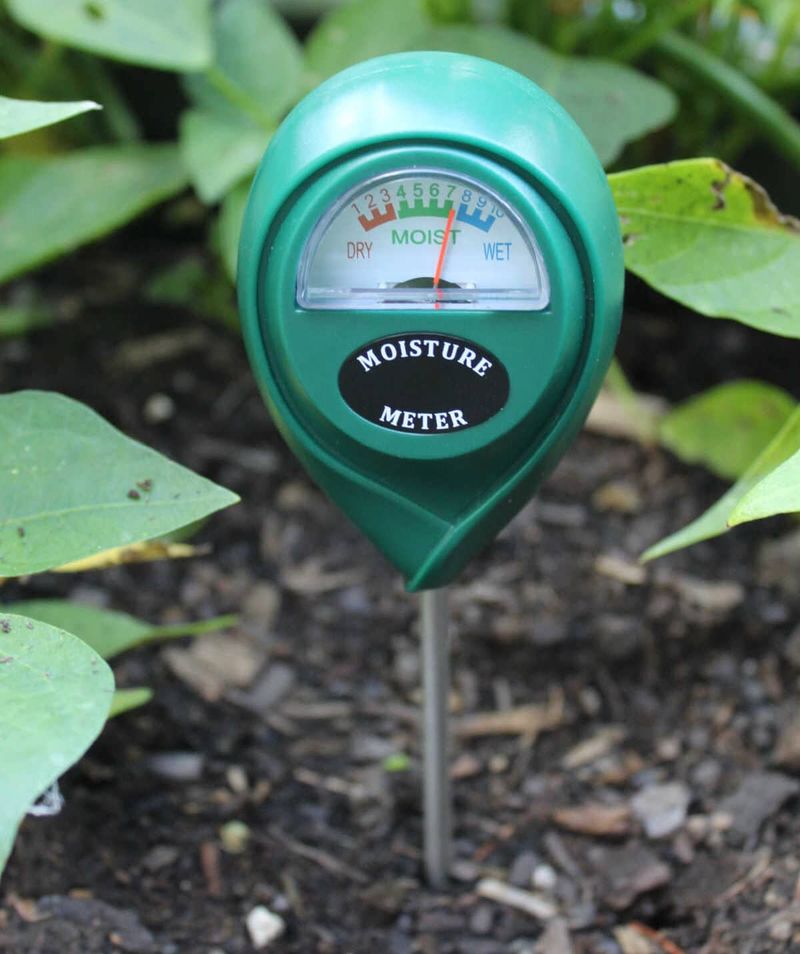
The fix is simple: use your finger instead of the calendar. University of Minnesota Extension advises watering an indoor geranium when the soil feels dry, and making sure the pot drains.
Push a finger into the soil about an inch or two. If it feels damp, wait.
If it feels dry, water until extra drains out the bottom, then empty the saucer.
No fixed schedule works for every home. Pot size, soil mix, room temperature, and light all change how fast the soil dries, so two geraniums in the same house may need water on different days.
Watch the clues too. Yellow leaves with soggy soil, a musty smell, or soft stems can point to too much water.
Yellow, crispy leaves with bone-dry soil that has pulled away from the pot can point to too little. Iowa State University Extension lists both as possible causes of yellow houseplant leaves.
Checking first keeps you from fixing the wrong problem.
A pot with no drainage hole is a red flag. If yours lacks one, consider moving the plant to a pot that drains.
Set up a bright spot away from cold drafts
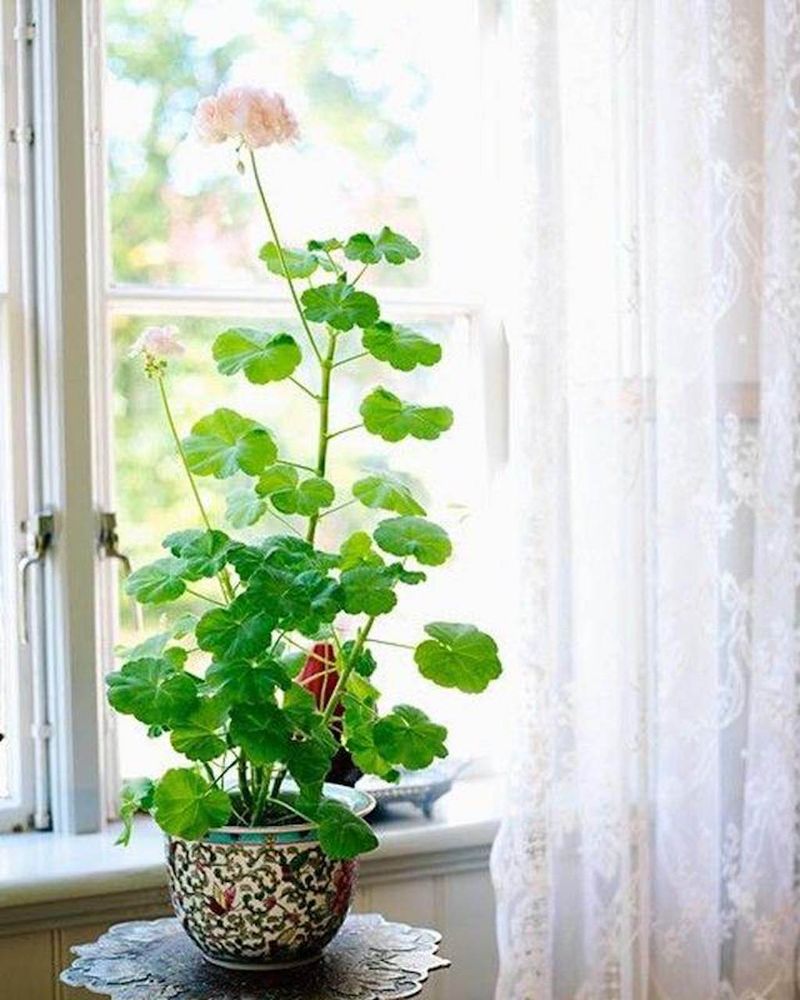
A geranium kept as an actively growing houseplant wants brightness. University of Minnesota Extension recommends a sunny window, usually a south-facing one, and supplemental light if the window is not enough.
A simple grow light placed above the plant can fill the gap on short winter days.
Temperature matters as well. The same Minnesota guidance suggests indoor temperatures around 60 to 65 degrees Fahrenheit and avoiding cold, drafty spots.
Keep the pot off icy window glass at night, and away from heating vents that blow hot, dry air. Extension advice on bringing houseplants in treats about 50 degrees as a caution point, not a precise injury line, so aim to avoid chilly extremes rather than chase an exact number.
If you have not moved the plant yet, plan ahead. Penn State Extension recommends reducing light for one to two weeks before the move, and UNH Cooperative Extension also suggests gradual adjustment to indoor light.
A shadier porch spot for a week or two can soften the shift.
This bright, active-growth plan is different from storing a geranium cool and dark for the winter. That is a separate overwintering method with its own needs, so do not mix the two.
If your plant is in a leafy, growing state, keep it in light and warmth that suits it.
When yellowing deserves a closer look
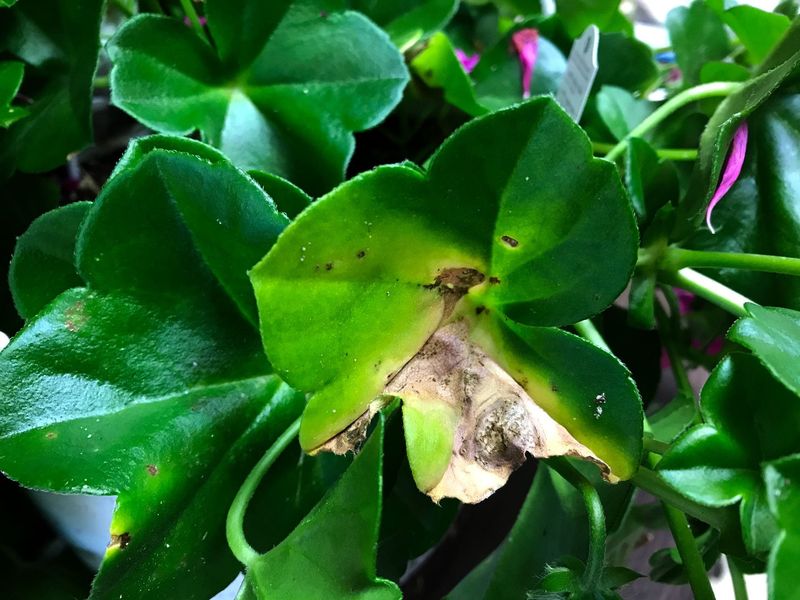
Some yellowing is part of the adjustment. But if leaves keep yellowing after you have fixed light, drafts, and watering, or if you see other odd signs, it is time to investigate.
Spreading damage, wilting, spots, or sticky leaves all suggest looking deeper. Iowa State University Extension recommends diagnosing from the soil, the timing, and the pattern of damage, not from color alone.
Start with a close inspection. Turn leaves over and check the undersides, then look at stems and around the pot for insects or fine webbing.
University of Minnesota Extension notes that indoor pests can spread to nearby plants, so isolate a suspect plant if you can. If you do need treatment, use only a product labeled for that plant, that pest, and indoor use, and follow the label.
Pesticides are not a first fix for yellow leaves.
Disease patterns are clues, not diagnoses. Penn State Extension describes rust as yellow specks on top of leaves with rust-colored pustules underneath.
Bacterial blight can bring water-soaked spots, V-shaped yellow areas, wilting, or blackened stems. Those patterns deserve more concern than a few evenly yellowing leaves after a move.
If you spot something like this, read up on the specific problem or ask your local extension office. Yellow alone rarely tells the whole story, but the shape, location, and company it keeps often do.
Watch for new growth, not greener old leaves
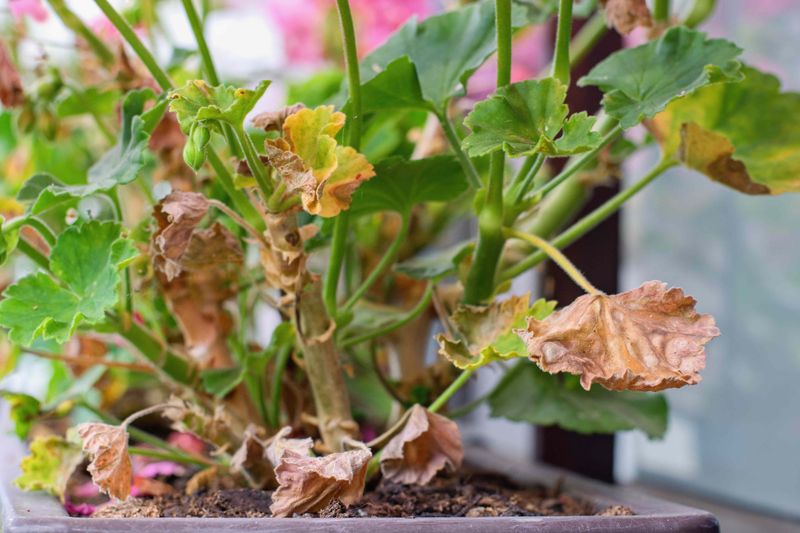
A yellow leaf will not turn green again, so do not judge your plant by it. Look at the tips of the stems instead.
Fresh, small leaves are a good sign that your changes to light, water, and warmth are working.
Penn State Extension describes adjustment taking one to two months. That is guidance, not a promise, so keep checking the soil and watching for the warning signs covered above.
Pulling off yellow or dead leaves is up to you. It tidies the plant, but it does not cure anything.
Fix the conditions first.
If you have no bright indoor space, University of Minnesota Extension lists taking cuttings as another way to save a geranium. A small cutting needs far less room than a full pot.
A geranium tells you how it is doing through what it grows next, not through what it already lost.