
Geraniums Not Blooming in Fall? What to Check Before the First Frost
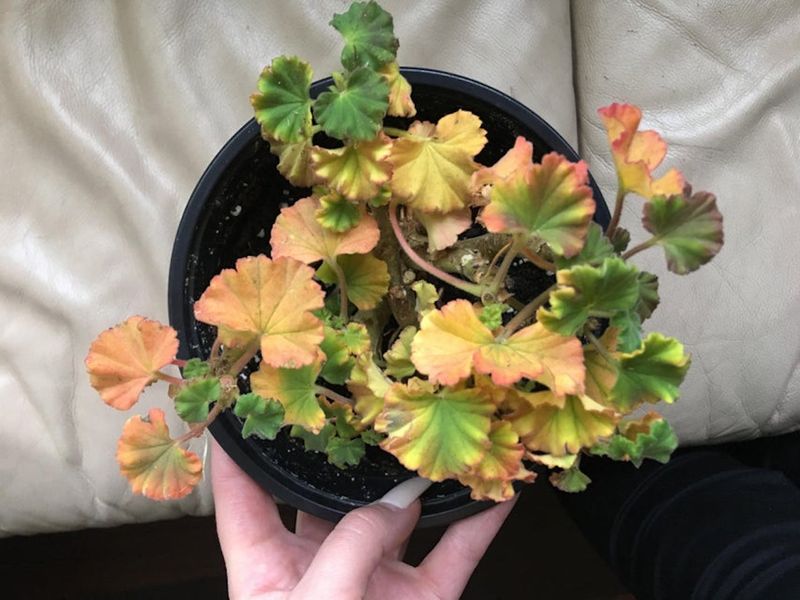
You walk past your geraniums every day, and the flowers that once lit up the porch are suddenly gone. It is easy to worry that you did something wrong or that the plant is done for.
Most of the time, a few simple checks can show you what the plant needs. Here is how to sort out light, trimming, water, food, and temperature so you know what may help and what cannot be promised.
Shorter days do not automatically switch off common geraniums
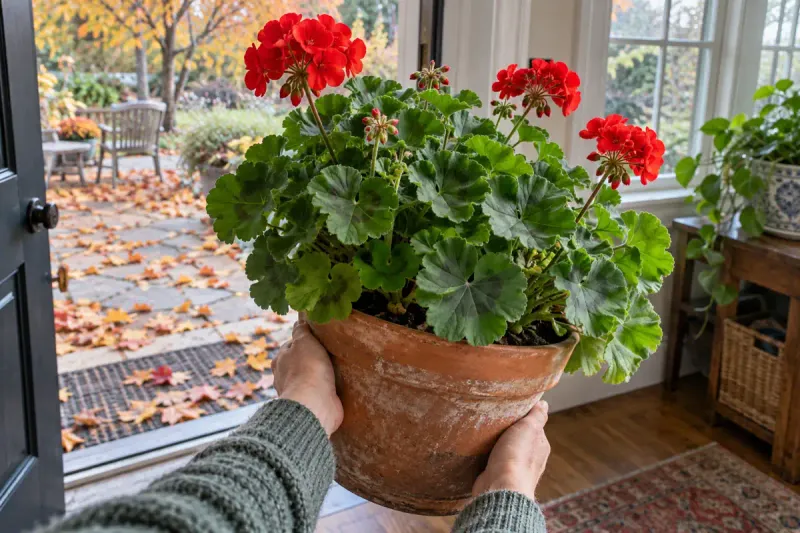
Your eyes are not playing tricks on you. Plenty of gardeners notice their geraniums slow down as autumn arrives.
But the calendar alone is not the whole story.
Common bedding geraniums, which are the zonal and ivy types, are day-neutral plants. Purdue Extension lists them that way, which means shorter days do not by themselves stop them from starting flower buds.
What shorter days can do is reduce the usable light your plant gets. A spot that was bright in July may be shaded by a tree, a roofline, or a lower sun angle in October.
Minnesota Extension notes that less sun means fewer flowers.
Even so, light is a possible contributor, not a proven cause for your particular plant. Watering habits, feeding, plant age, and the weather all play a part too, so the season alone cannot tell you what went wrong.
One more thing to sort out is the word geranium itself. Many people use it for two different plants.
The tender bedding plants in pots and window boxes are Pelargonium, while hardy perennial Geranium, also called cranesbill, is a different group. Illinois Extension treats common geraniums as tender annuals in its region.
The advice in this article is for tender Pelargonium, mainly zonal and ivy types. Do not apply it automatically to cranesbill in your perennial border.
Give the plant the brightest practical spot
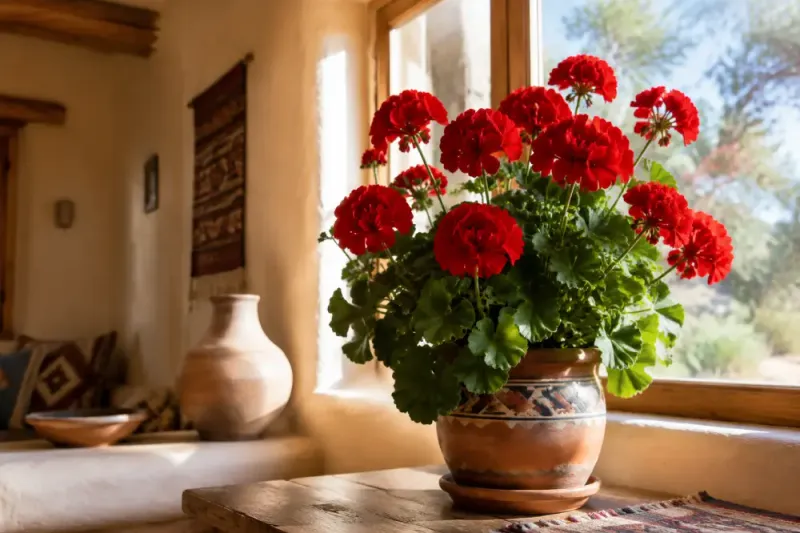
Light is the first thing to check, because it is the one factor tied most directly to how many flowers a geranium makes. Grab a notepad and watch the plant for a day.
Note how many hours of direct sun actually reach it.
For outdoor plants, Minnesota Extension recommends at least eight hours of sun a day. If your pots sit in a corner that now gets only a few hours, that gap may explain the lack of color.
Potted plants are easy to rescue. Slide them to the sunniest wall, step, or rail you have, and turn the pots now and then so all sides get light.
Plants growing in the ground cannot move, but you can trim back nearby growth that casts shade.
If your geranium has already come indoors, give it a sunny window, ideally one facing south or west. When a window is not bright enough, the same Minnesota guidance suggests adding supplemental light, such as a plant grow lamp placed above the plant.
Be honest with yourself about the outcome. More light gives the plant a better chance to keep flowering, but it does not guarantee a fresh round of blooms before frost arrives.
Think of it as removing an obstacle rather than flipping a switch.
Deadhead faded clusters without expecting an instant flush
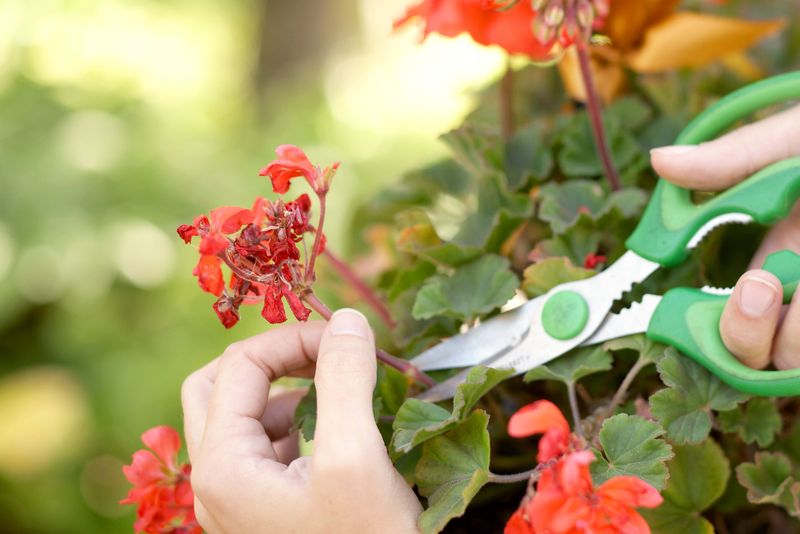
Spent flowers look tired, and they take up space on the plant. Removing them is simple routine care that keeps your geranium looking neat and can encourage repeat blooming.
Follow the faded flower stem down to where it joins the plant and snap or snip it off there. Leaving a bare stub behind looks messy and can rot.
Pick off any yellow or dead leaves while you are at it, since they tend to hold moisture and invite trouble.
Minnesota Extension describes removing faded flower clusters and dead leaves as part of normal geranium care. Notice what that guidance covers: tidy upkeep and repeat flowering over the season.
It does not promise a burst of color a week later. In fall, growth slows as light and temperatures drop, so new buds may take longer to appear, or may not appear before a frost ends the season.
A good habit is a quick weekly check. Look under the leaves, because old clusters sometimes hide there.
This job is only about spent material, so leave healthy green stems alone for now.
Pinch leggy stems to encourage fuller growth
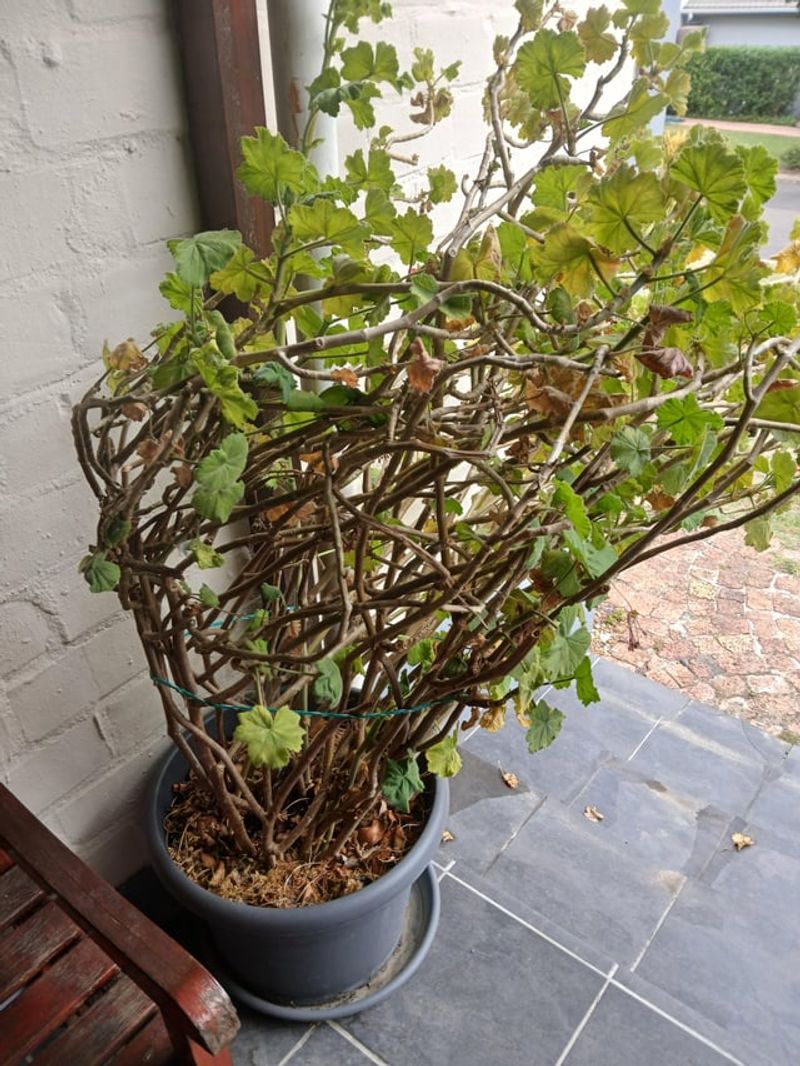
Leggy geraniums have long, bare stems with leaves only at the tips. That look usually comes from too little light, and it can make the plant seem sparse even when it is healthy.
Pinching is the fix for shape. Find a leaf node, the small bump where a leaf joins the stem, and pinch or cut the stem just above it.
Minnesota Extension describes this as a way to encourage branching and a fuller plant.
Guidance on flowering plants, such as this University of New Hampshire fact sheet, also treats pinching as a shaping tool. Fuller growth is the goal, not instant flowers.
So do not expect pinching to bring buds back quickly. A pinched stem puts energy into new side shoots first, and flowers come later, if at all.
With frost possibly near, keep trimming light. Heavy pruning can remove growth that is already developing and leave little time for recovery.
A few careful pinches on the worst stems are plenty.
Keep watering steady and fertilizer modest
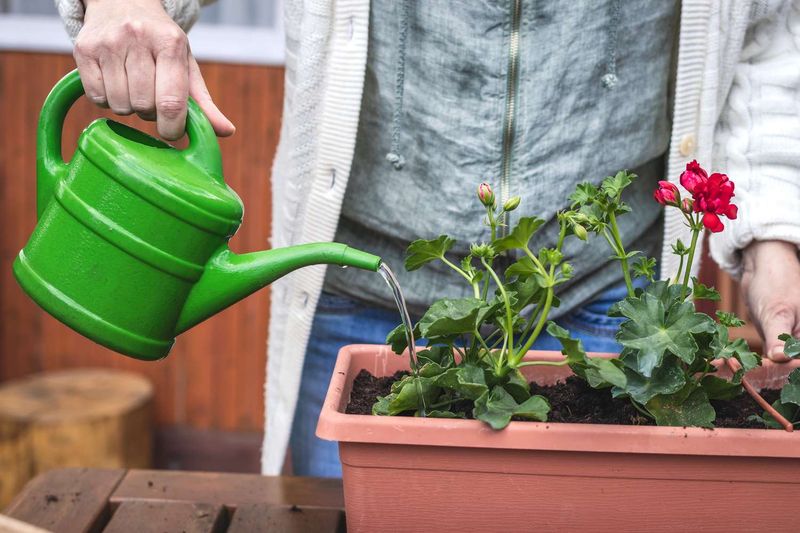
Watering mistakes can cause a geranium to sulk, and they run in both directions. Soggy soil can rot roots, while a plant left bone dry for too long gets stressed and drops buds.
Aim for well-drained soil that dries somewhat between waterings. For outdoor plants, Minnesota Extension suggests watering when the top 1 to 2 inches of soil are dry.
Push a finger in to check. Make sure pots have drainage holes and do not let them sit in a full saucer.
Indoors, the same idea holds. Clemson Extension’s indoor geranium guide also stresses good drainage and avoiding constantly wet soil.
Feeding is where many gardeners go too far. Geraniums need relatively little fertilizer, and Minnesota Extension warns they may flower poorly if overfertilized.
A bloom-booster is not a safe cure-all.
If you have an actively growing container plant, that guidance suggests a half-strength all-purpose fertilizer about every three weeks. Follow the product label.
Never feed a dry, wilted plant. Water it first and let it recover.
Plants in the ground, or plants that have slowed down for the season, usually need little or no extra food.
Temperature advice depends on the geranium
Temperature tips for geraniums often get lumped together, but the right numbers depend on which type you grow and where it lives. Lowering the temperature alone is not a known way to restart blooms.
For common zonal and ivy types kept indoors, extension guides give care targets rather than rebloom tricks. Clemson Extension lists about 65 to 70 degrees F by day and around 55 degrees at night.
Minnesota Extension gives 60 to 65 degrees as a suitable indoor growing range. Those sources differ, so treat them as a general comfortable zone, not one magic number.
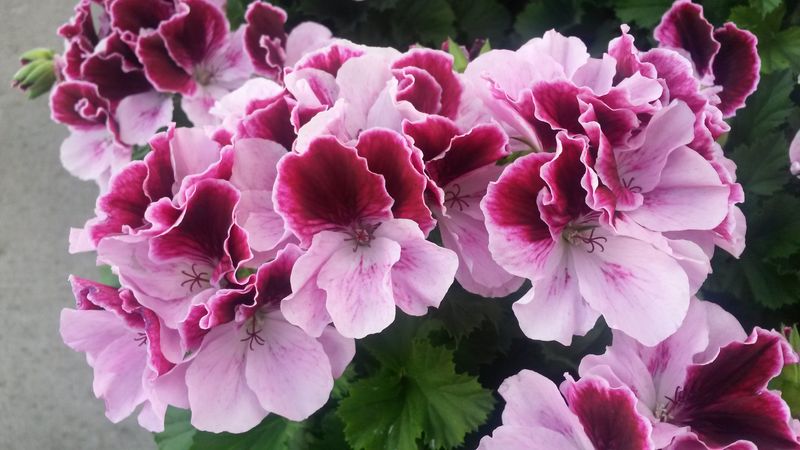
Martha Washington, or regal, geraniums are a different story. Minnesota Extension says they need cool nights of 50 to 60 degrees to blossom, and Clemson notes they are not heat tolerant.
They also respond to day length differently. Purdue classifies regals as long-day plants, unlike the day-neutral zonal geraniums.
Check the plant tag or the leaf shape. Regals have ruffled, often bicolored blooms, while zonals have rounder, often banded leaves.
Knowing which you have keeps you from applying the wrong advice.
Before frost, choose between indoor growth and dormant storage
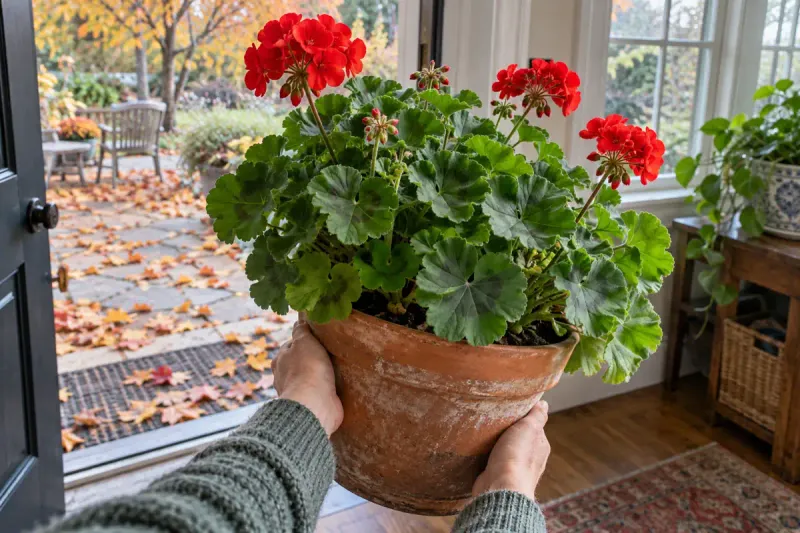
Your first frost date decides a lot. Tender Pelargoniums are not frost hardy, so if you want to save one, it has to come inside before frost arrives.
Illinois Extension lists common geranium as a tender annual with a bloom season of May through October, which shows why a rebloom before winter depends on where you live.
Local frost timing, the plant’s condition, and the light you can offer indoors all shape the result. No one can promise a bloom before cold weather ends the season.
You have two separate paths. The first is growing the plant indoors.
Clemson Extension’s indoor guide covers bright-light care for a plant you keep actively growing. Bright light matters for flowering, and Minnesota Extension gives 60 to 65 degrees as a suitable range.
The second is dormant storage. Minnesota Extension describes cool, dark storage as its own overwintering method.
It keeps the plant alive, not flowering.
Not every plant survives either approach. A weak or diseased plant may be better replaced, and a cutting from a healthy stem is a backup worth trying.
Start with light and make only the fixes the plant needs
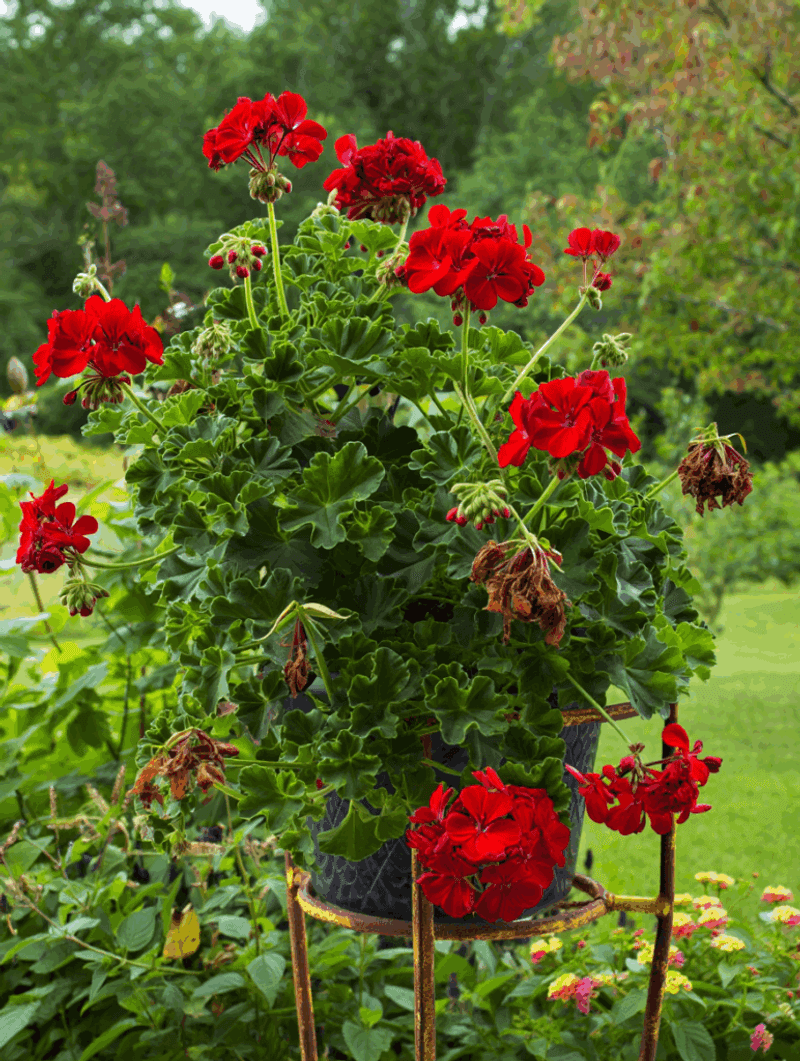
Work through the plant in order. Check the light first and move the pot to a brighter spot.
Next, remove faded clusters and dead leaves. Then look at your watering and feeding, and correct only what is off.
Skip heavy fertilizer and hard pruning, since both can backfire. Minnesota Extension’s geranium guide backs a light touch.
These steps may support more flowers, but frost has the final say. A quiet geranium is not a failed one, and a plant that rests is still a plant that lives.