
What Brown Hydrangea Blooms Are Telling You and How to Respond
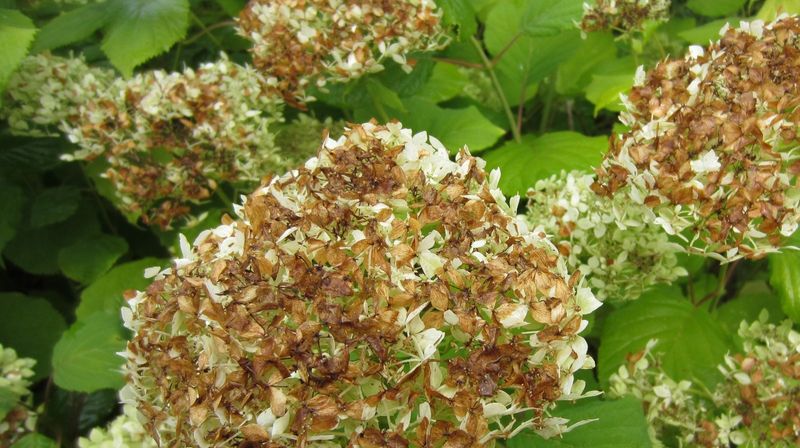
Your hydrangea flowers turned brown, and now you are wondering what you did wrong. Take a breath, because browning is a clue and not a verdict.
Sometimes it is plain old aging, and sometimes the shrub is reacting to heat, thirsty roots, too much sun, or a fungus. This guide shows you how to read the signs so you can fix only what actually needs fixing.
Brown flower heads do not always mean trouble
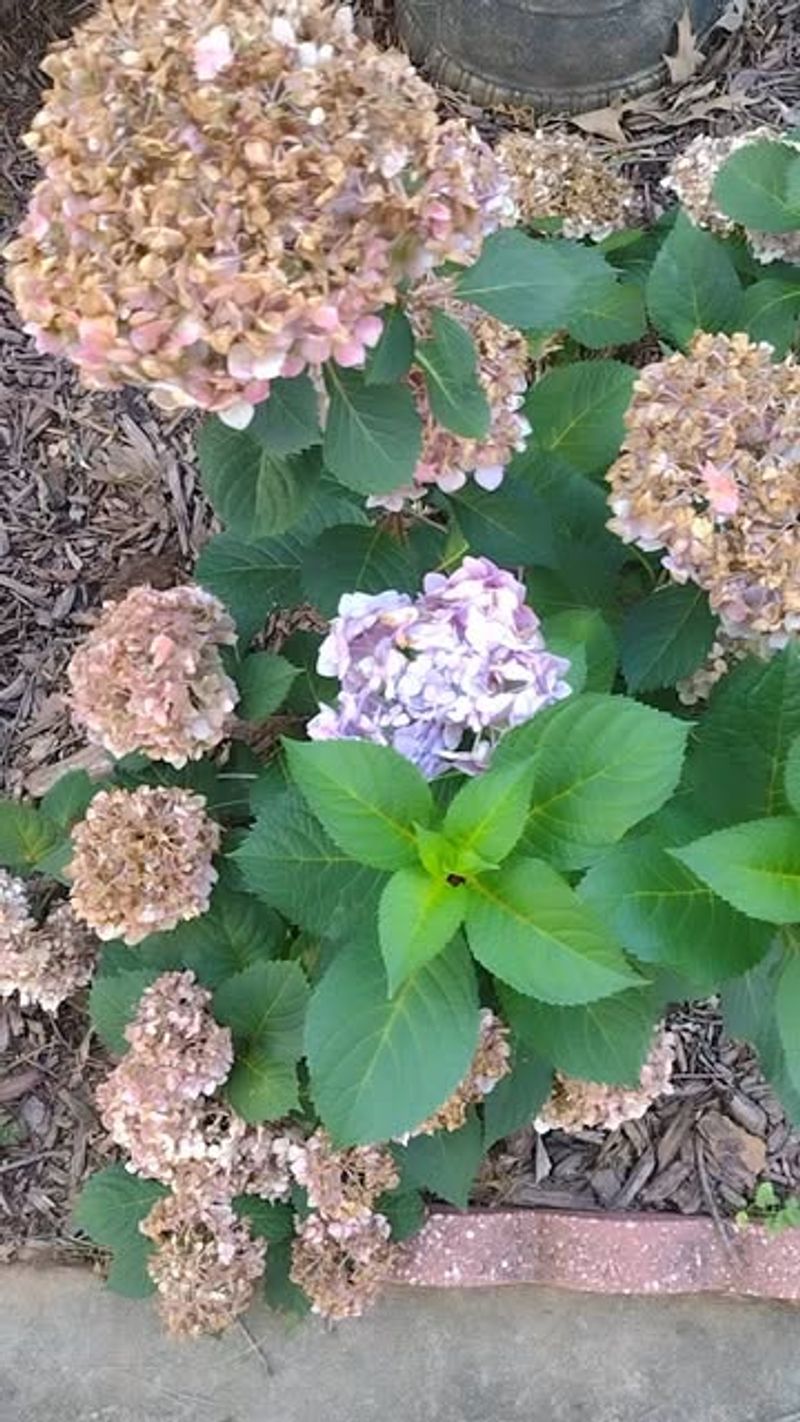
Hydrangea flowers are built to change as they age. Older heads may fade to pale, green, reddish, or brown tones before they dry out completely, and the timing varies from one variety to the next.
University of Maryland Extension advice points out that if the shrub and its leaves otherwise look healthy, browning alone may not call for any action.
So the first clue to check is the age of the bloom. A head that opened weeks ago and is slowly turning papery and tan is probably just finishing its job.
A head that browned quickly while still fresh deserves a closer look.
Next, step back and look at the whole plant. Are the leaves green and firm, or are they crispy, spotted, or drooping day after day?
Healthy leaves with aging flowers usually mean you can relax.
Browning combined with visible damage is a different story. Leaf scorch, mushy or blotchy petals, or a shrub that keeps wilting all point toward something worth investigating.
The sections ahead walk through each of those clues one at a time.
Think of this guide as a set of questions to ask, not a checklist of emergencies. Plenty of gardeners rush to fertilize, prune, or move a plant when all it needed was time.
A few minutes of careful looking can save you from fixing a problem that does not exist.
Try this today: pick one brown bloom and note how it feels. Dry, papery, and evenly tan suggests natural aging.
Wet, blotchy, or fuzzy suggests something else entirely.
Heat and dry soil can shorten a bloom’s life
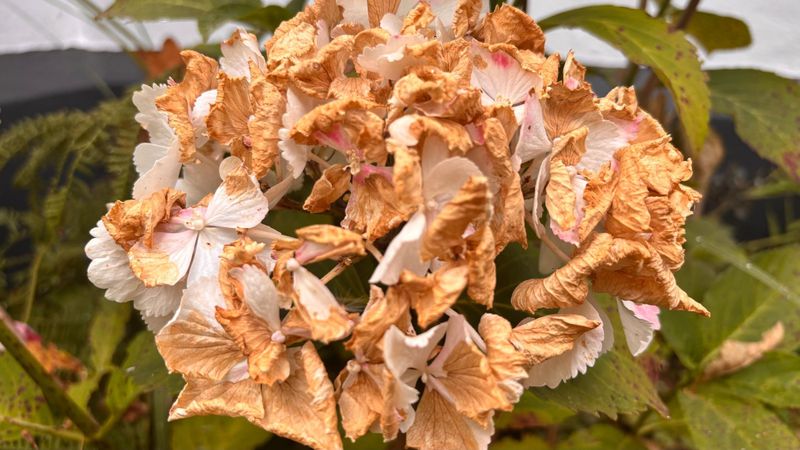
Picture a July afternoon at 95 degrees. Your hydrangea flowers have crisp, brown edges, and you wonder if you missed a watering.
Severe heat and water stress while a plant is in bloom can scorch petals, as described in University of Maryland Extension guidance on drought and heat stress.
Heat, sun, and dry soil often work together. A spot that gets blazing afternoon sun also dries out faster, so the flowers may suffer from several stresses at once.
That is why it helps to think about the conditions around your plant instead of blaming one cause.
Wilting is where many gardeners go wrong. Hydrangeas can droop in hot weather even when the soil is moist, and Maryland Extension’s hydrangea problem guide notes that plants often perk back up once temperatures fall.
Here is a simple test. Check the plant late in the afternoon, then again in the evening.
If it recovers on its own and the soil in the root zone is not dry, extra water may not be needed.
If the plant stays limp after sunset and the soil feels dry, thirst is more likely the culprit. In that case the scorched blooms are a sign the shrub went through a rough stretch, and the existing damaged petals will not turn green again.
Focus on your own yard. A south-facing wall, reflected heat from pavement, or sandy soil can create a hot pocket, even in a mild summer.
Those local details tell you more than the calendar does.
Does this hydrangea get more sun than it can handle?
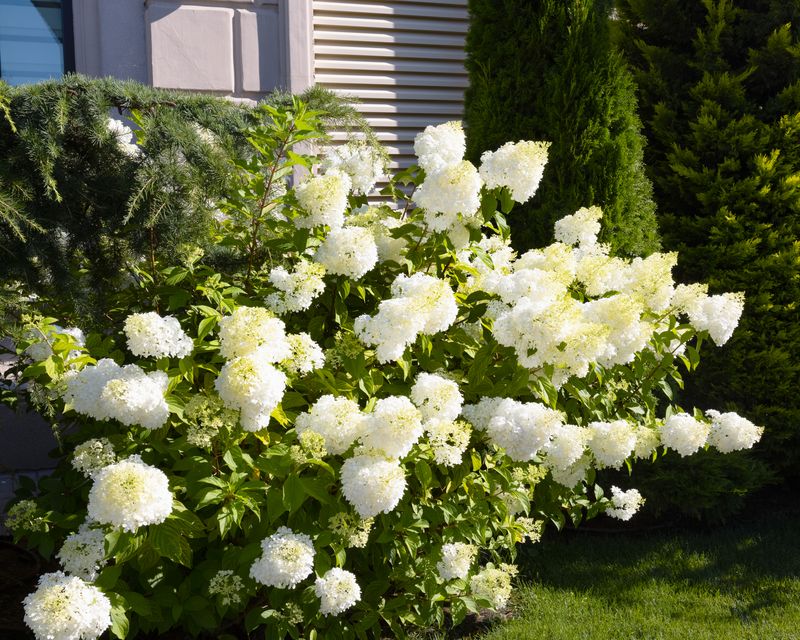
Not every hydrangea wants the same amount of light, and that is where many sun problems start. According to University of Maryland Extension, bigleaf hydrangeas generally prefer partial sun or shade, while panicle hydrangeas tolerate full sun to partial shade.
So the first step is knowing what you planted. Look at the plant tag or your receipt, or compare the flower shape.
Round mophead or lacecap blooms usually mean bigleaf, while cone-shaped blooms often mean panicle.
Full sun can raise a hydrangea’s water needs and may shorten how long the flowers last. A bigleaf planted in an open spot may brown faster than the same type tucked into morning sun and afternoon shade.
A panicle in that same open spot may be perfectly happy.
Watch the pattern through the day. Do the blooms look fine in the morning and stressed by mid-afternoon?
Are the browned petals mostly on the side facing the sun? Those clues suggest exposure is part of the story.
Hold off on digging up every hydrangea you own. Moving a shrub is stressful, and the fix may be smaller than that.
A bit of afternoon shade from a fence, a taller plant, or a shade cloth during heat waves can help, along with better soil moisture.
Consider local conditions too. Sun that feels mild in a cool northern yard can be intense in the South, so judge your own spot.
Let root-zone soil, not a calendar, guide watering
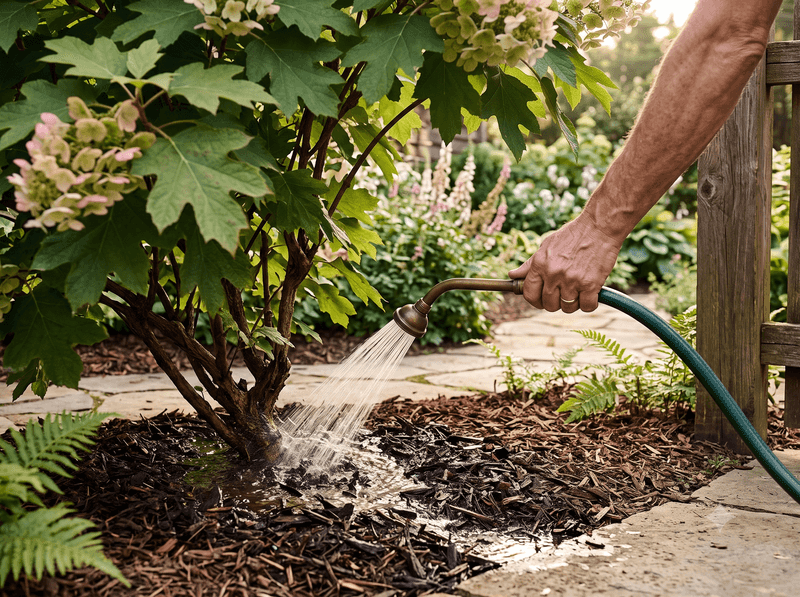
Forget “water every Tuesday.” Weather, soil type, and the age of your shrub all change how often it needs a drink. For established shrubs, University of Minnesota Extension advises checking the soil 6 to 9 inches deep in the root zone and watering when it is dry.
You can do this with a trowel or a long screwdriver. Dig a small hole near the drip line, grab a pinch of soil, and feel it.
If it clumps and feels cool and damp, wait. If it is dry and crumbly, it is time to water.
When you do water, go deep. Slow, thorough soaking sends moisture down to the roots, while frequent shallow sprinkles leave the roots near the surface and more exposed to heat.
Let the hose trickle at the base for a good while instead of spraying quick bursts.
Mulch can help hold moisture in the soil. A layer of shredded bark or leaf mulch around the shrub, kept off the main stems, may cut down how often you need to water.
Remember the wilting lesson. A drooping plant with moist soil may simply be coping with afternoon heat, as Maryland Extension’s heat stress page explains.
Check the soil first, and add water only if the root zone is dry.
Newly planted hydrangeas need closer attention than established ones, since their roots have not spread yet. Adjust for your own yard and the season.
Water-soaked spots and gray fuzz point toward Botrytis
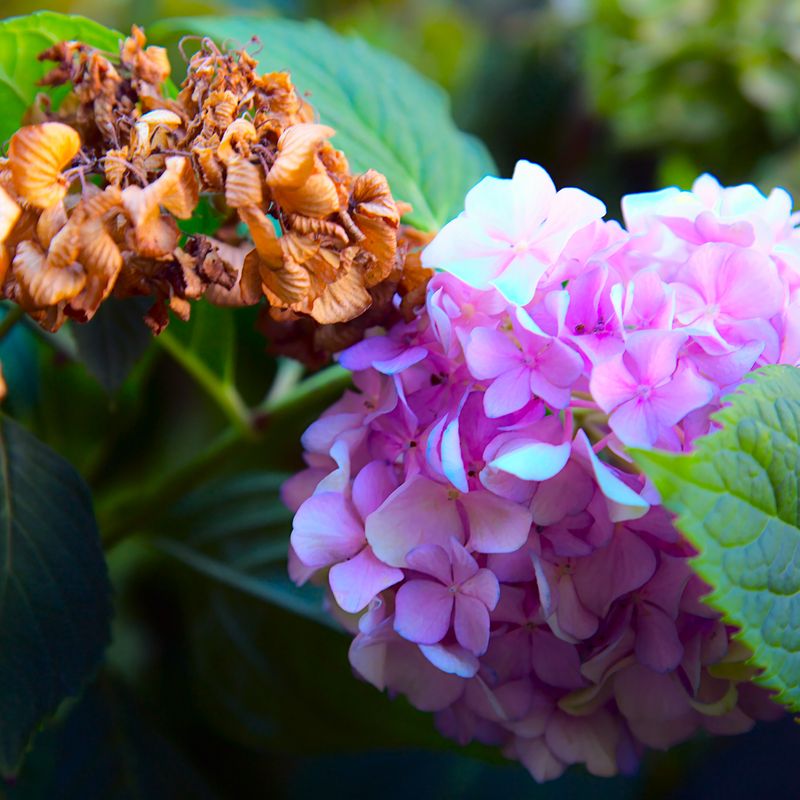
Some browning looks different from the dry, papery kind. Botrytis blight, a fungal disease, usually starts as small water-soaked spots on petals.
According to University of Connecticut Extension, those spots can enlarge into irregular brown blotches, and affected flowers may wither and grow fuzzy gray mold.
Weather is a big clue. Penn State Extension links the disease to cool, humid, wet conditions, so a stretch of rainy, muggy days with blooms turning mushy fits the picture better than a heat wave does.
If you see these signs, start with simple steps. Snip off diseased or decaying flowers and bag them instead of leaving them on the ground.
Open up airflow by thinning crowded stems or giving neighboring plants more room, and water at the base so the flower heads do not stay wet for long stretches.
Notice the difference between brief water on leaves and prolonged wetness. A splash of water in sunshine does not burn leaves, but flowers that stay damp for days give fungus a chance.
Skip the fungicide if your blooms are simply brown and dry. Without blotches, wet conditions, or gray growth, there is no sign of disease to treat.
If symptoms are unclear or keep spreading, UConn’s hydrangea fact sheet is a good place to start, and your local Extension office can help you identify what you are seeing.
Soggy soil matters most when the whole shrub declines
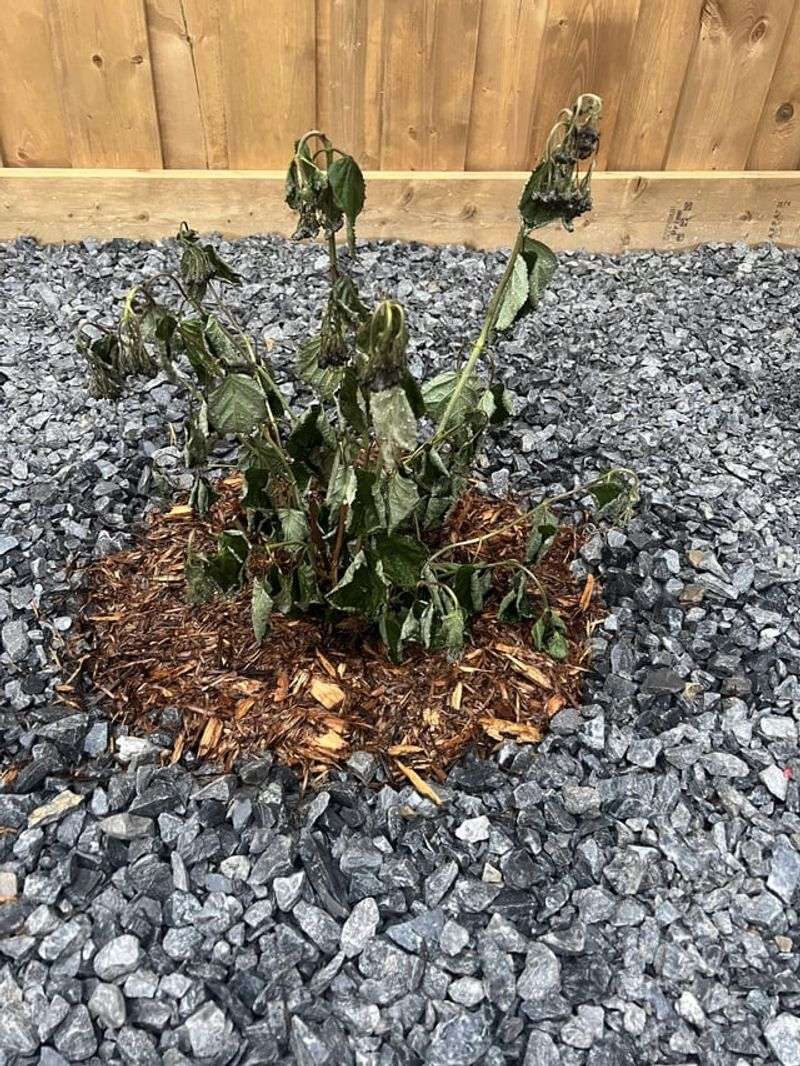
Brown flower heads alone rarely point to a root problem. Soil that stays wet for long periods is a different concern, and it matters most when the entire shrub looks off.
UConn Extension notes that poor drainage can favor root rot.
So what does a bigger problem look like? Think persistent wilting that does not bounce back, leaves that yellow or drop, stems that seem weak, and a plant that looks worse week after week.
Those signs together make root trouble more believable than a few brown flowers do.
If the soil is already wet, resist the urge to water. Wilting in wet soil can fool you into thinking the plant is thirsty, when the roots may be struggling to get air.
Push a finger or trowel into the ground first, and let it dry down if it is soggy.
Then look at the site. Does water pool there after rain?
Is the soil heavy clay that stays muddy? Is a downspout or sprinkler soaking that corner of the bed?
If the answers point to drainage, consider fixes that suit the situation, such as redirecting water, improving the soil structure, or planting in a better spot in the future. If the decline is serious, local Extension staff can help you sort out the cause.
Choose a small, evidence-based response
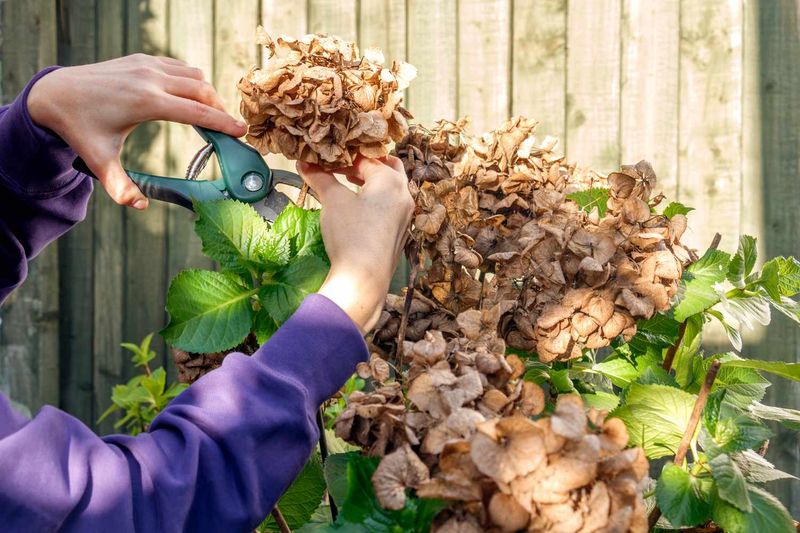
Start with the lightest touch. If old heads are drying naturally and the shrub looks healthy, leave them be, as Maryland Extension’s Ask Extension answer suggests.
Adjust watering or sun exposure only when your soil checks and site clues support it, and remove diseased or decaying tissue if Botrytis signs show up.
If spent heads bother you, clip just below the flower head. That is for looks only, since deadheading does not guarantee another flush.
Hold off on bigger cuts, because pruning needs differ by hydrangea type and when each one blooms.
Skip soil acidifiers too. Acidity influences pink or blue color in certain hydrangeas, according to Maryland Extension, and has nothing to do with brown petals.
A brown bloom is a note from your plant, and most of the time it is just saying the season is moving along.