
A Wilting Christmas Cactus Doesn’t Necessarily Mean It’s Dying: What to Check Before Bloom Season
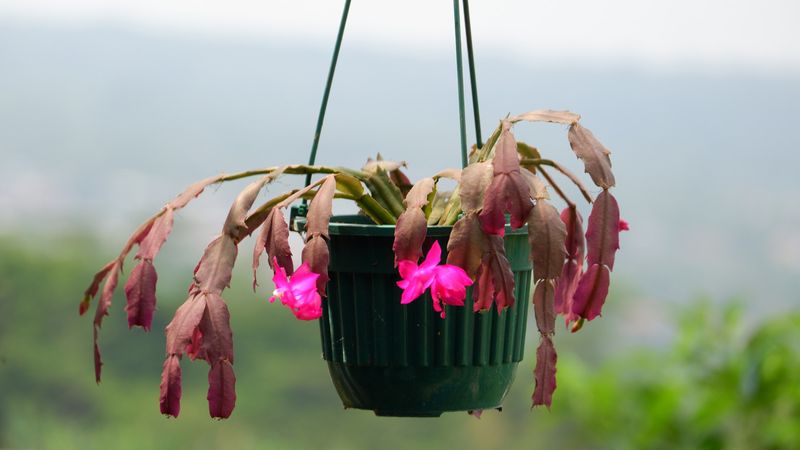
A droopy Christmas cactus can make any plant owner’s stomach drop. The limp stems look like a plant giving up, but they are really a clue that something about its roots, water, heat, or light needs a closer look.
Fall is when the plant starts setting buds, so steady care matters right now. Here is a simple way to check your plant today.
A limp stem is a warning, not a diagnosis
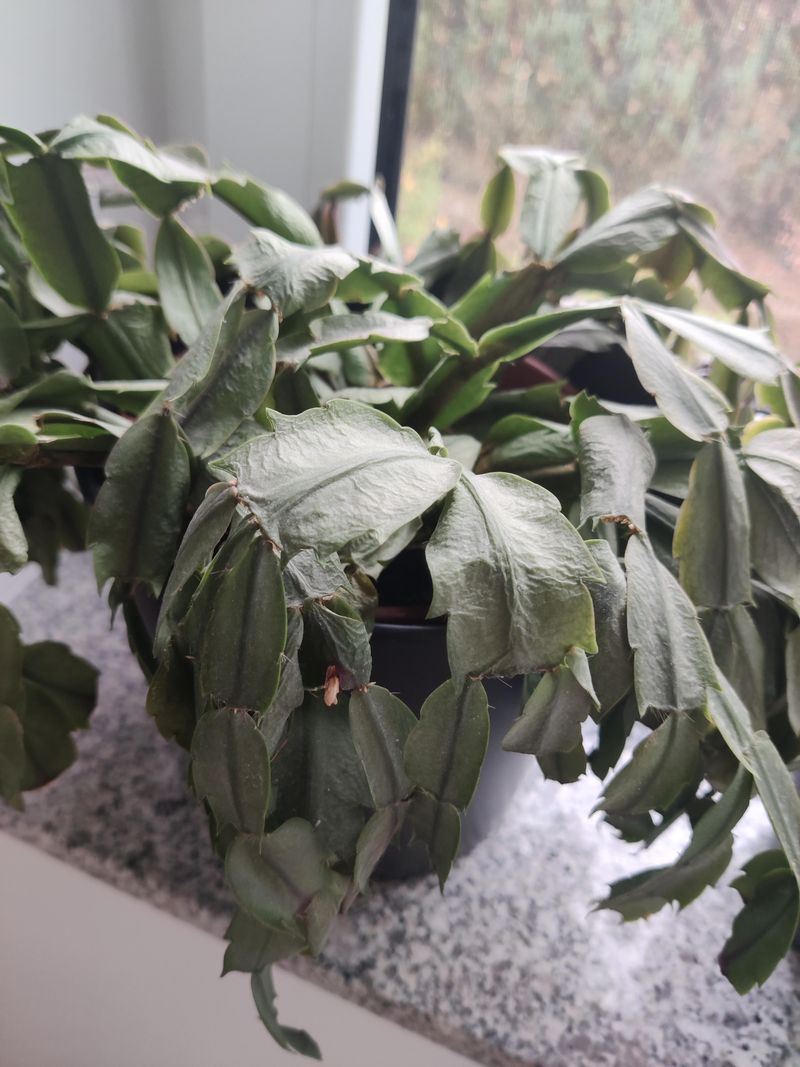
Picture two Christmas cacti with the same floppy stems. One is bone dry, and the other is sitting in soggy mix.
From across the room, they look identical.
That is the tricky part. Both too little water and too much water can make stems go limp, so the droop alone cannot tell you what is wrong.
It also cannot tell you whether the plant will bounce back.
The good news is that wilting does not necessarily mean your plant is dying. Holiday cacti are forest plants, not desert plants, and Iowa State guidance warns against both excessive dryness and excessive watering.
The plant is sending a signal, and your job is to read it before you reach for the watering can.
The other side of that honesty is that wilting does not prove the plant will recover either. If the roots have been damaged for a long time, it can be hard to save it.
University of Wisconsin Extension notes that plants with extensive root loss can be very difficult to rescue.
So here is the order we will follow. First, check the potting mix.
If it stays wet and the plant stays limp, look at the roots. Then adjust the growing conditions without sudden changes.
Extension guidance also stresses well-drained mix and a pot with drainage holes, as University of California guidance explains.
What the potting mix can tell you
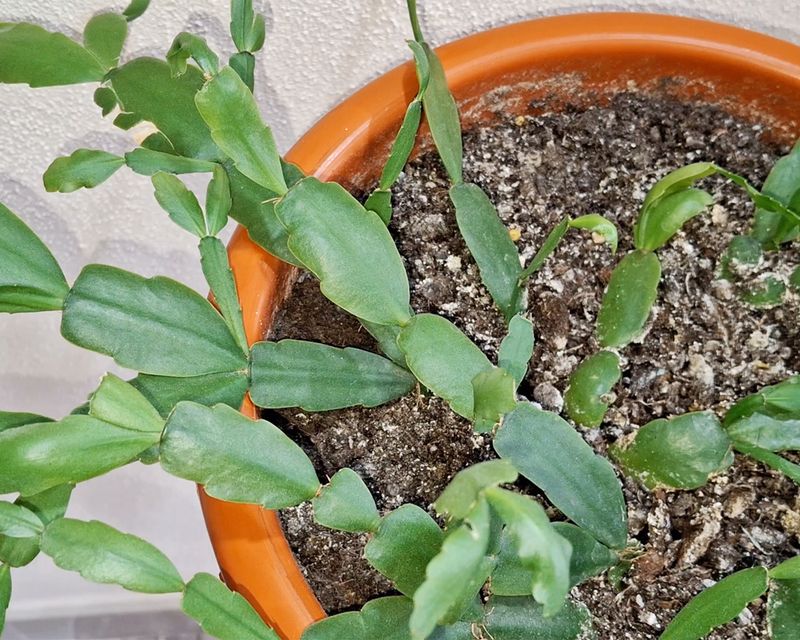
Before you water anything, stick a finger into the mix up to the first knuckle. That is roughly an inch down, and it is the quickest test you can do today.
It costs nothing and takes ten seconds.
If the mix feels dry at that depth, thirst is a reasonable suspect. If it feels damp or soggy, the plant is probably not short on water, and adding more could make things worse.
Both University of California guidance and Colorado State Extension point to soil dryness, not a calendar, as the cue for watering.
Notice what this check does and does not do. It narrows the possibilities, but it does not finish the diagnosis.
Dry mix points toward a watering problem. Wet mix with a limp plant points toward a root or drainage problem, which is where the next section picks up.
Also lift the pot and feel its weight. A pot that feels featherlight tells a similar story to dry mix, while a heavy pot suggests lots of water is still inside.
Check the saucer too, because water pooling there keeps the bottom of the mix wet longer than the surface suggests.
Leave the detailed watering steps for later. For now, just collect the clue and write down what you found.
When wet soil points to possible root trouble
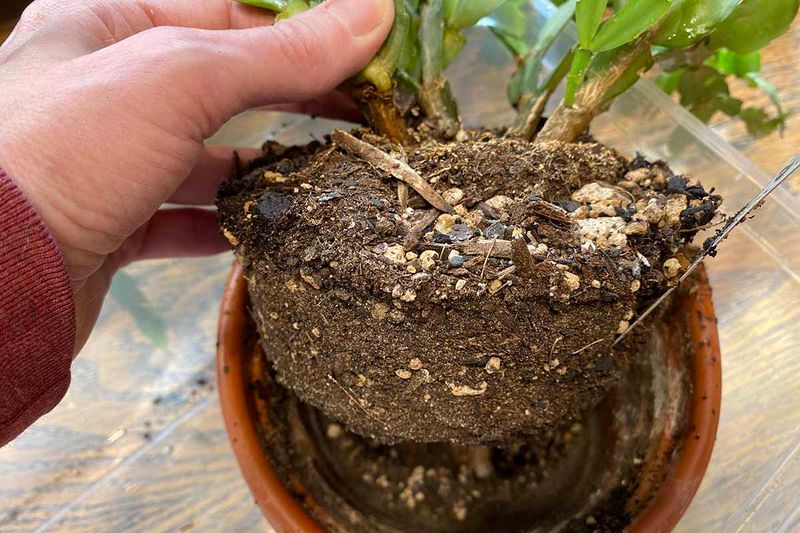
Here is the situation that worries people most: the mix is damp, yet the plant still sags. That combination deserves a look at the roots.
Soil that stays wet and drains poorly can favor root-rotting organisms. The Pacific Northwest Plant Disease Management Handbook describes soft, brown feeder roots along with wilting or collapse among the symptoms of stem and root rots.
Wisconsin Extension also recommends checking the root system when a plant sags even though its mix is moist.
To check, slide the plant gently out of its pot. Healthy roots tend to look firm and light in color.
Soft, brown, or mushy feeder roots may be a sign of root rot, though they are a clue and not final proof.
If you find damaged roots, trim away the mushy ones with clean scissors. Repot into fresh, well-drained mix in a pot with drainage holes, and hold off on heavy watering while the plant settles.
Be realistic about the outcome. University of Wisconsin Extension says extensive root loss can make a plant very difficult to save, though cuttings may preserve part of it.
If only a few roots look bad, there is more reason for hope.
Either way, you have learned something real about the plant, and that beats guessing.
Water by soil condition, not by calendar
A weekly watering schedule sounds tidy, but your cactus does not read calendars. Light, room temperature, pot size, and mix all change how fast the soil dries out.
That is why the soil check matters more than the day of the week.
If the mix is dry about an inch down, water thoroughly until extra water runs out the bottom. Then let that excess drain away fully.
If the mix is still wet, wait and check again in a day or two.
Never leave the pot sitting in a saucer of standing water. University of California guidance and Colorado State Extension both support letting the soil tell you when to water.
Timing gets extra important when buds appear. Iowa State cautions that excessive watering and excessive dryness can both contribute to bud drop.
So during budding, the target is mix that is never bone dry for long and never soggy.
A practical habit helps here. Try checking the mix when you pass the plant, such as every few days, and water only when the finger test says so.
That small routine replaces guesswork and keeps the plant from swinging between extremes.
Avoid heat and abrupt changes while buds form
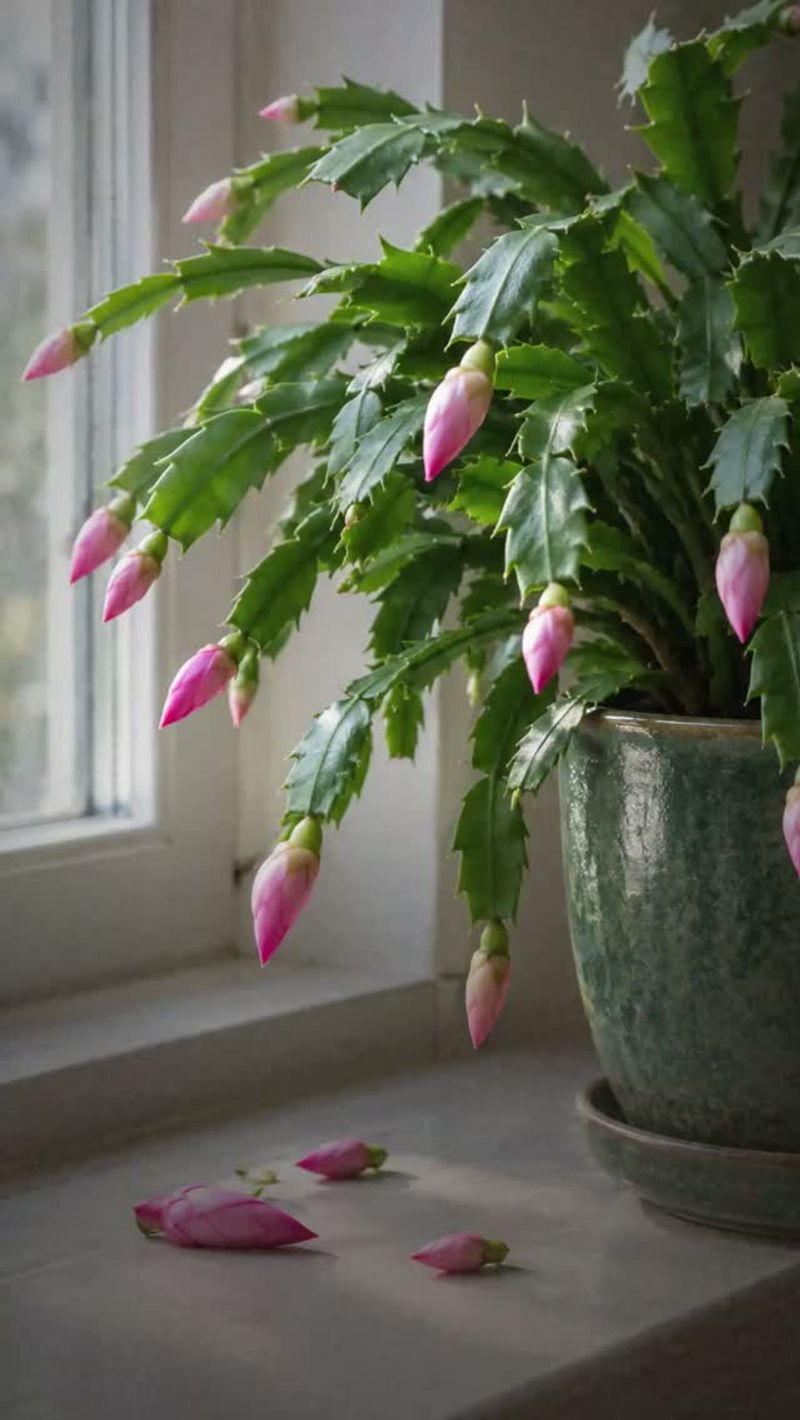
Once you have the water sorted, look at where the plant lives. Think of the spot as a stage: bright enough to see, but not blasted by sun or warmed by a heating vent.
Bright, indirect light during the day suits holiday cacti, while strong direct light can stress them. University of California guidance points to bright, indirect light.
A window with a sheer curtain often works well.
Heat sources and drafts are the next things to check. A plant parked next to a radiator, a heating vent, or a door that opens to cold air may get stressed and sag.
Moving it a few feet can make a difference.
Here is the catch for fall. Sudden changes to location, light, or temperature while buds form can contribute to bud drop, according to Iowa State.
A plant carrying buds usually does better when it is left alone.
Iowa State’s guidance on poor blooming also ties flowering to environmental conditions, so a stable spot helps there too.
Keep this separate from your soil and root checks. Environment fixes support the plant.
They do not replace finding out what is going on below the surface.
Bud-setting calls for steady care, not a rescue trick
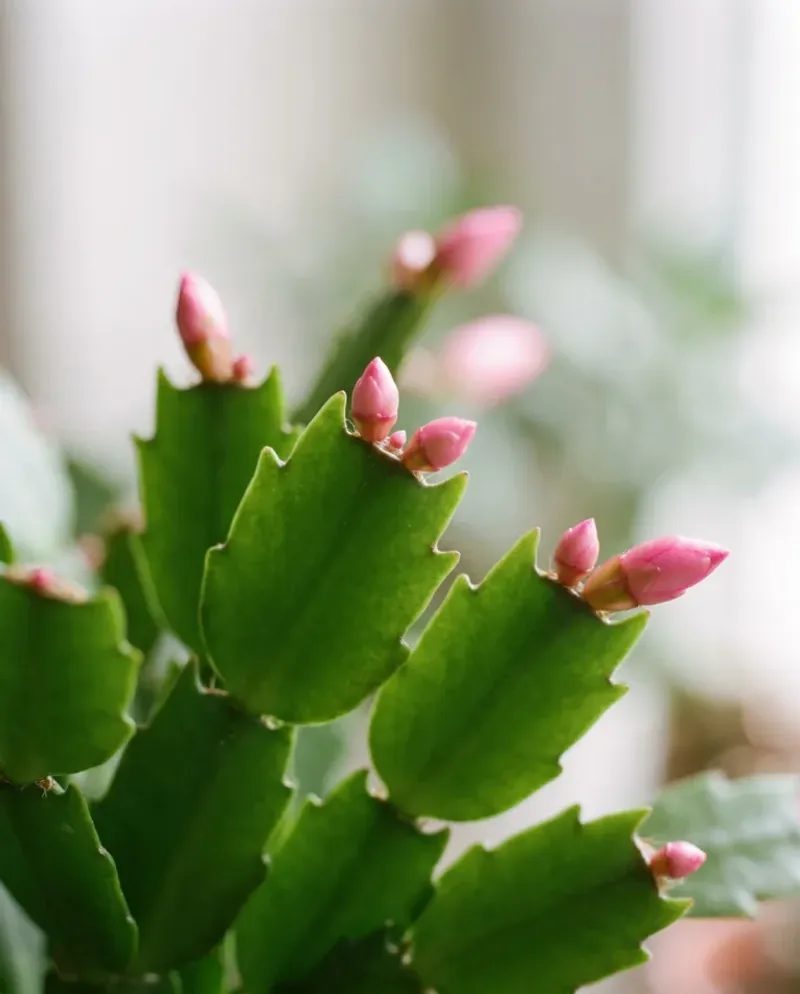
You may have heard that stressing a cactus makes it bloom. Skip that idea for a wilted plant.
Letting it dry out on purpose is not a rescue method, and dryness during bud development can contribute to bud drop.
What does help start flowers are seasonal cues: shorter days or longer uninterrupted nights, plus cooler conditions. These are bloom signals, not treatments for wilting.
A plant that is already limp needs a soil and root check first.
Numbers vary by source, so treat them as examples. Iowa State mentions 14 to 16 hours of uninterrupted darkness, nights around 60 to 65°F, and says temperatures above 70°F can prevent flowering.
Another Iowa State answer and Wisconsin sources give somewhat different figures, which is a hint that no single setting fits every plant.
Your plant’s type matters too. Many plants sold as Christmas cactus are really Thanksgiving cactus or hybrids, and they may not bloom on the same schedule.
University of Wisconsin Extension notes that cultivar responses differ, so timing may take some trial and error.
Check the stem edges for a clue. Rounded, scalloped segments suggest a true Christmas cactus, while pointed teeth suggest Thanksgiving cactus.
Either way, steady care is the safer path, and a bloom date is never guaranteed.
Make the next check, not a promise
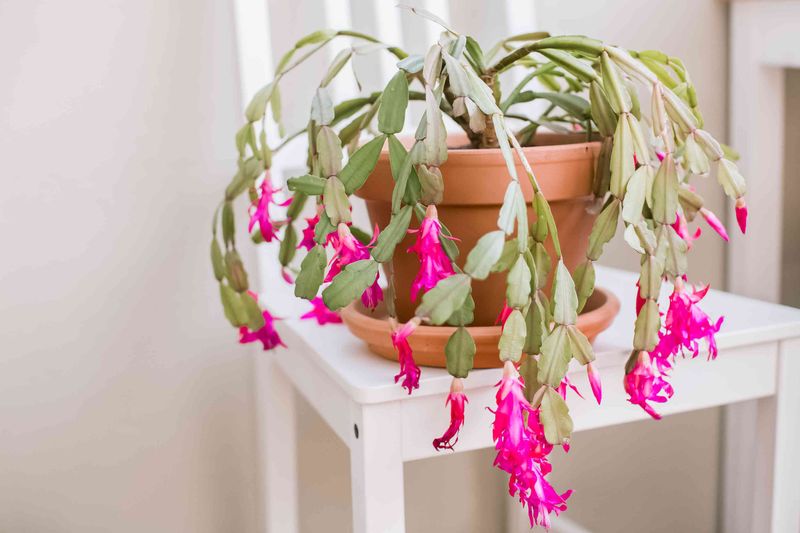
Keep the routine short. Check the mix an inch down.
Water only if it is dry there, and let the excess drain away. If the plant stays limp in moist mix, slide it out and look at the roots.
Then keep conditions steady while buds develop: bright indirect light, no drafts or heat vents, and no big moves. Some plants do recover, but Wisconsin Extension is clear that severe root loss can make saving a plant very difficult.
Iowa State offers the broader care picture.
No one can promise a bloom date. A droopy stem is simply your plant asking a question, and you now know how to answer it.