
Your Christmas Cactus Segments Turning Red Aren’t Always Trouble: Here’s What Your Plant Is Asking For
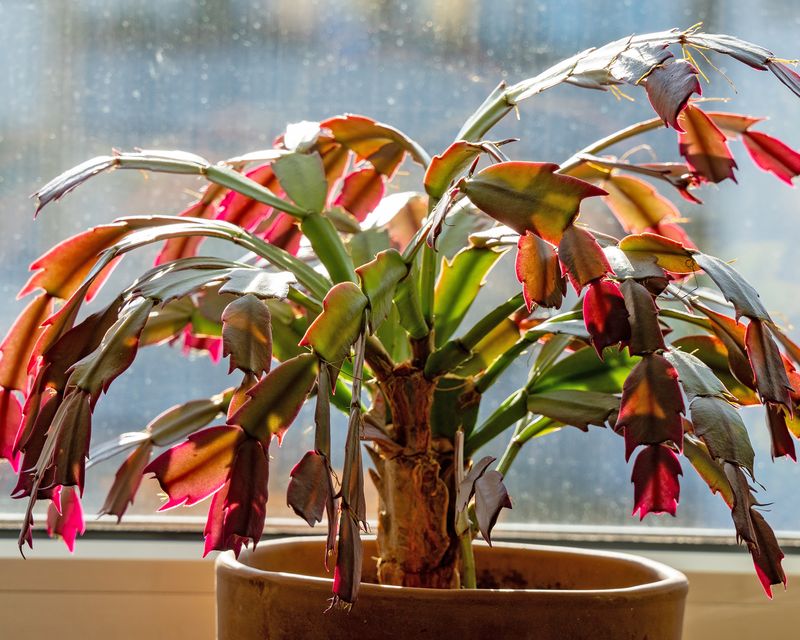
You walk past your holiday cactus and spot red or purple edges where there used to be plain green. It is easy to fear the worst, especially when you are hoping for blooms this winter.
The truth is that this color shift is a clue, not a verdict. A few quick checks can tell you what your plant may be asking for.
Red segments are a signal, not a diagnosis
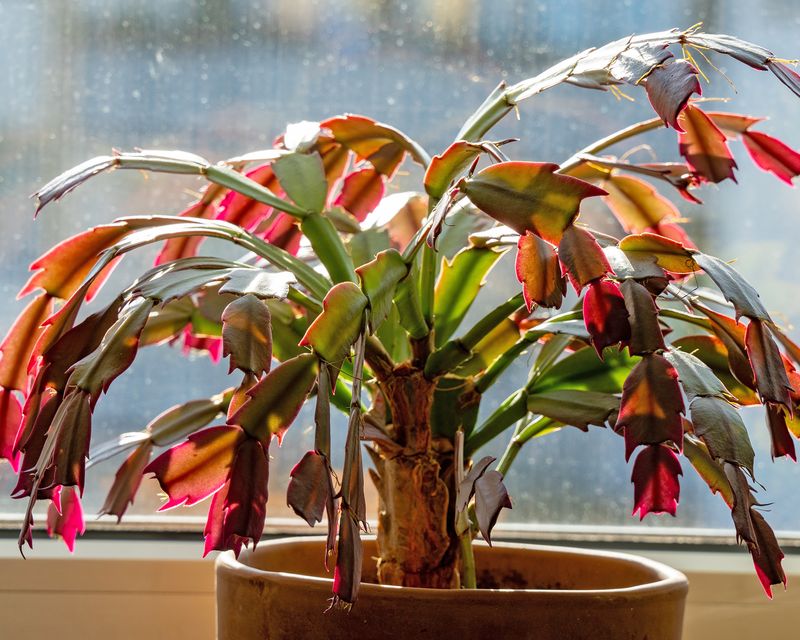
Picture a worried gardener holding a pot and wondering what went wrong. Red or purple color on a holiday cactus is a reason to look around, not a reason to panic.
It does not point to one single problem.
Quick vocabulary note: the flat, chain-like parts of this plant are stem segments, not true leaves. Botanists call them phylloclades.
That is why this article says segments throughout.
Another thing to know is that many plants sold as Christmas cactus are actually Thanksgiving cactus or hybrids. Their basic care is similar, so the advice here fits all of them.
Bloom timing can differ a little between types.
So what can cause the color? UC Master Gardener guidance lists too much sun, overwatering, and even the demands of a heavy bloom as possible reasons.
Michigan State University Extension also names too much direct light. Notice that these are several different explanations, and any one plant may fit only one of them, or none.
That is why the smartest first move is to inspect, not treat. Look at where the plant sits, feel the mix, check the drainage, and take stock of how the plant looks overall.
Then change only the thing your evidence points to. Red color alone is not a reason to reach for fertilizer, a new pot, or a bigger watering can.
Is strong direct sun reaching the plant?
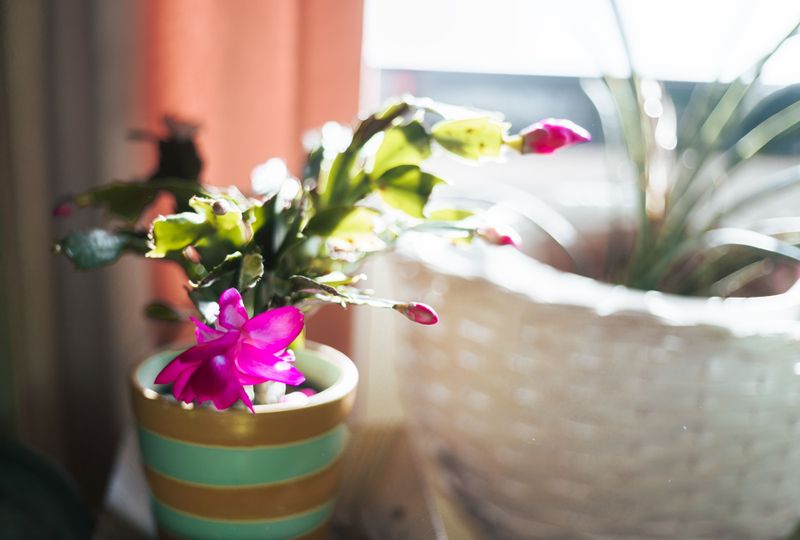
Spend a day watching the spot where your cactus lives. Does a hot, bright beam of sun land on it for hours, especially through a south or west window?
If so, light is a real suspect worth checking.
Holiday cacti come from shaded rainforest settings, where they grow on trees. They do best in bright, indirect or filtered light.
MSU Extension points to too much direct light as one cause of reddened segments.
If the plant is getting strong direct sun, a measured move can help. Slide it back from the glass, or hang a sheer curtain to soften the light.
A spot a few feet from a bright window often works well.
Here is the catch. Do not swing to the other extreme and tuck the plant into a dim corner.
University of Minnesota Extension describes bright light as part of good holiday cactus care, and a sudden jump into deep shade is a big change for the plant.
Also keep in mind that light does not explain every red segment. If your cactus sits in gentle, filtered light already, moving it will not necessarily help.
In that case, move on to the next check and let the evidence guide you.
Check the mix and drainage before watering
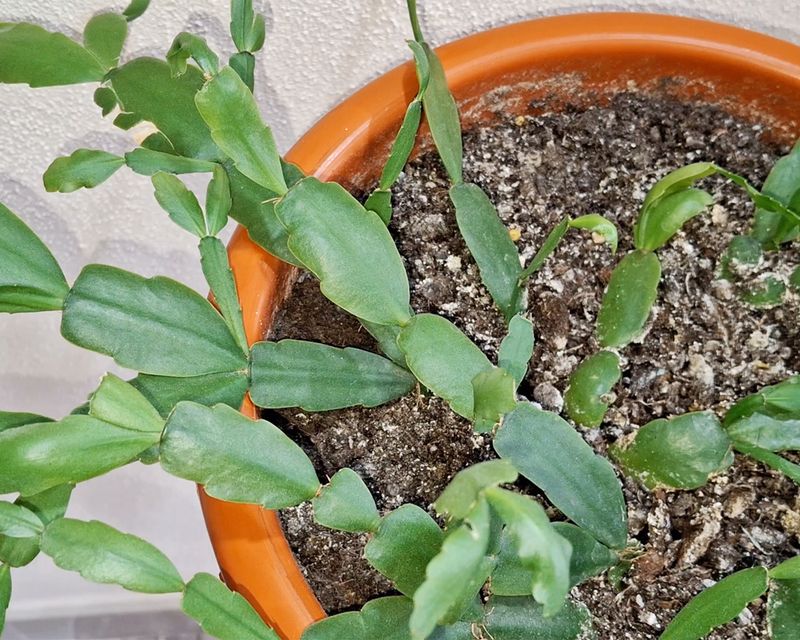
Before you pick up the watering can, put a finger into the mix. Push down about an inch or two and see whether it feels dry, damp, or soggy.
This simple test tells you more than the calendar does.
Holiday cacti are rainforest plants that need good drainage. University of Minnesota Extension notes they should not sit in waterlogged soil.
Lift the pot and look underneath. A pot with no drainage hole, or a saucer holding standing water, is a problem worth fixing.
If the mix is dry, water the plant based on what it needs, not on a fixed weekly schedule. Water until it drains out the bottom, then empty the saucer.
Check again before the next watering.
If the mix is wet, or stays wet for days, hold off. Let it dry appropriately and make sure the water can leave the pot.
UConn Extension explains that constantly wet conditions can lead to root rot.
One caution matters here. Red color by itself does not mean root rot, and it does not mean the plant is thirsty.
Treat the moisture and drainage you actually find, and skip the blanket advice to water more.
Limp segments need more than a glance
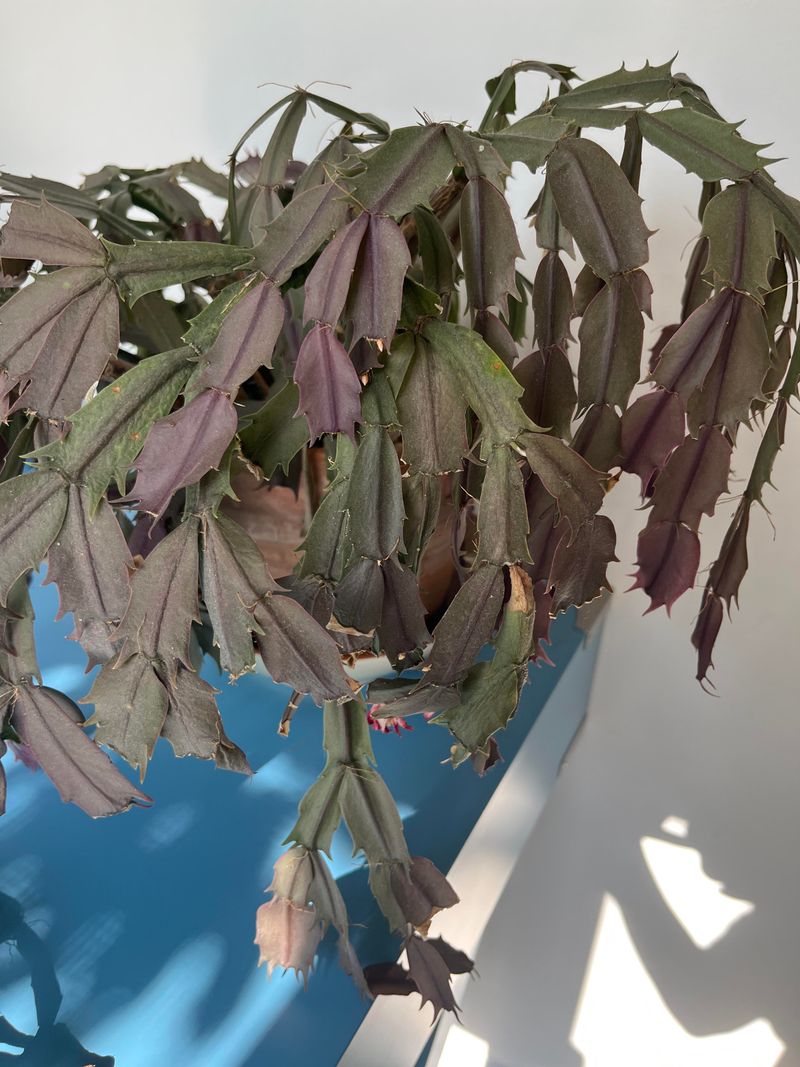
Shriveled, floppy segments look like an obvious cry for water. Yet a plant that has been drowned can look almost the same as one that has dried out.
The droop alone cannot tell you which story you are reading.
Why does this happen? UConn Extension ties root rot to wet conditions, and damaged roots cannot take up water for the plant.
So a soaked plant may wilt even though its mix is full of moisture.
Instead of guessing, line up the clues. Is the mix bone dry and pulling away from the pot edge?
That fits a thirsty plant. Is it heavy, soggy, or sour smelling?
That points toward too much water and possible root trouble.
Give the roots a closer look if wetness has lingered. Healthy roots tend to be firm, while damaged ones may look dark and mushy.
University of Illinois Extension also links watering problems to stress on the plant.
If the clues still do not agree, make the smallest sensible change and watch for a week or two. Slow, steady observation beats a dramatic rescue attempt.
A heavy bloom can also be part of the picture
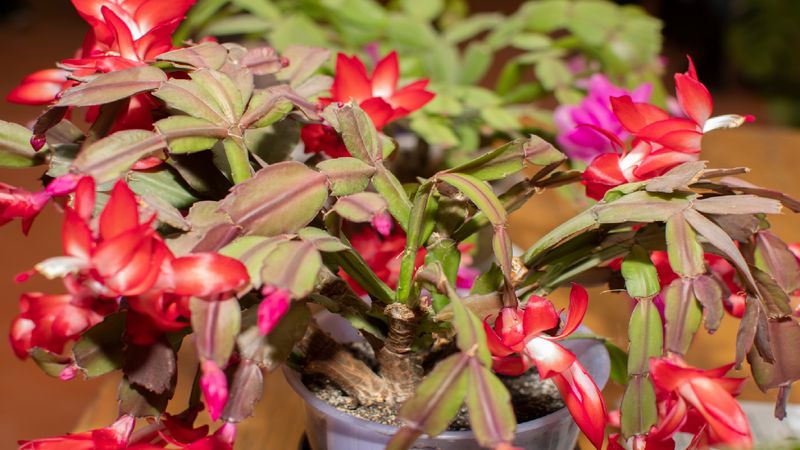
Sometimes the plant is not struggling at all. It is simply working hard.
Growing a crowd of flowers takes a lot of energy, and UC Master Gardeners include the demands of a heavy bloom among the possible reasons for red coloration.
Think of it like a marathon runner with flushed cheeks. The color can show up alongside a big effort, and it does not have to mean something is wrong.
That said, this is only one possibility, and not every red plant is blooming heavily.
So how do you use this idea? Look at the whole plant.
Are there buds or open flowers? Are the segments plump and firm?
Is the mix neither soggy nor bone dry? A flowering plant with red segments and otherwise good signs may simply be busy.
This is a good reminder that color does not point to one standard fix. A plant in full bloom does not need to be rushed into new treatment because of its hue.
It also does not mean the plant is sick or will stop blooming. Keep the light and watering steady, enjoy the flowers, and keep watching for other changes.
Set up fall buds with steady conditions
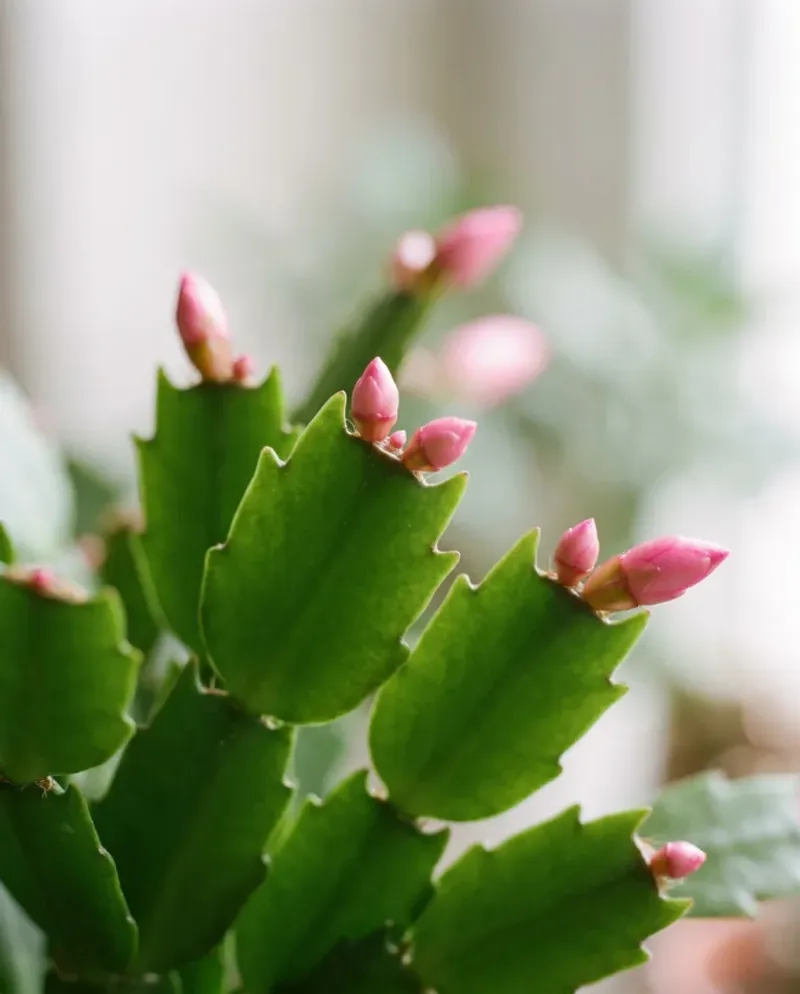
If your real worry is whether the plant will bloom, fall is the season to plan for. Extension sources agree on the basic recipe: bright daytime light, cooler nights, and long, uninterrupted darkness.
The exact numbers, though, are not the same everywhere.
MSU Extension recommends nights of 55 to 65 degrees Fahrenheit and at least 13 hours of darkness. University of Minnesota Extension and University of Illinois Extension describe similar cool-night, long-night conditions with their own thresholds.
Treat these as source-specific guidance, not one universal formula.
For darkness, a spare room that no one turns a light on in at night is a handy spot. Even a short burst of lamp light can break the dark stretch.
Keep the plant in bright light during the day.
Steadiness matters too. Sudden temperature changes and drafts can contribute to bud drop, as can watering problems.
A plant parked beside a heating vent or a drafty door may shed buds for those reasons.
Notice that this is a separate issue from color. Red segments do not predict that buds will fail, and they do not promise a bloom on a set date.
Bloom timing varies by plant type and growing conditions.
Choose the fix the evidence supports
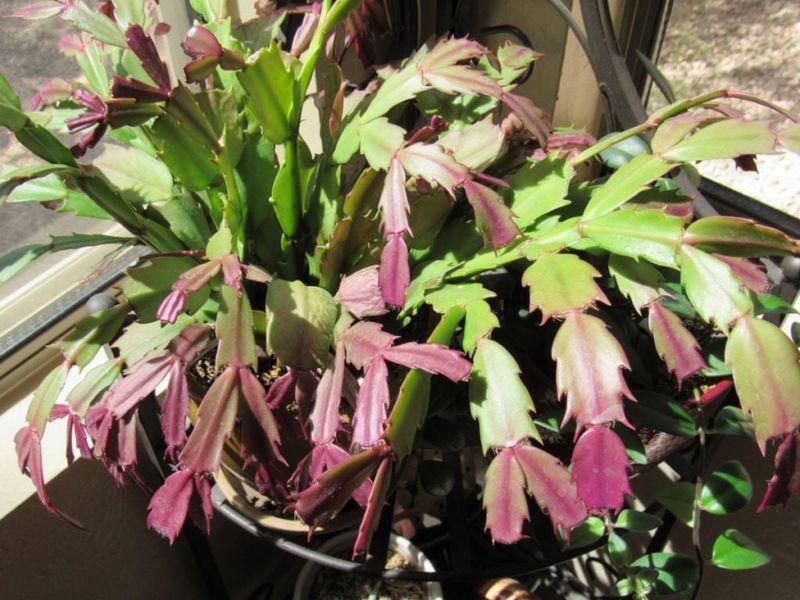
Work through the checks in order. First, look at the light: strong direct sun calls for a move to filtered light.
Next, feel the mix and check that the pot drains, using Minnesota and UConn guidance. Then weigh the plant’s overall condition, including any heavy bloom.
Change only what you actually find. Redness alone is no reason for fertilizer, repotting, or extra water.
Your cactus is giving you a hint, not a warning siren.