
Red, Limp Christmas Cactus Segments in Fall? Check the Window, but Check the Soil First
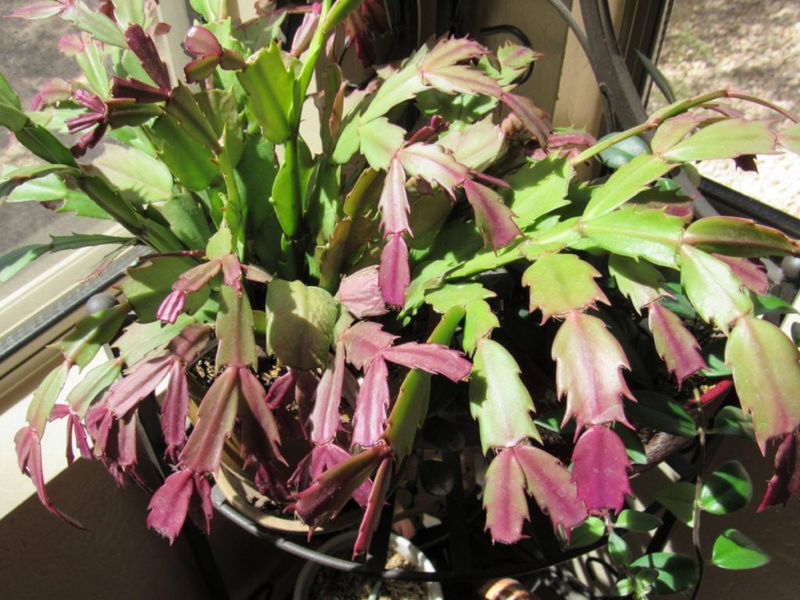
Red, floppy segments on a Christmas cactus can make any plant owner nervous. It is easy to blame the sunny window right away, but the real cause may be hiding in the pot.
Fall is when many holiday cacti start to show stress and get ready for buds. A few simple checks can help you figure out what your plant is trying to tell you without spending a dime.
Red and limp segments do not identify one cause
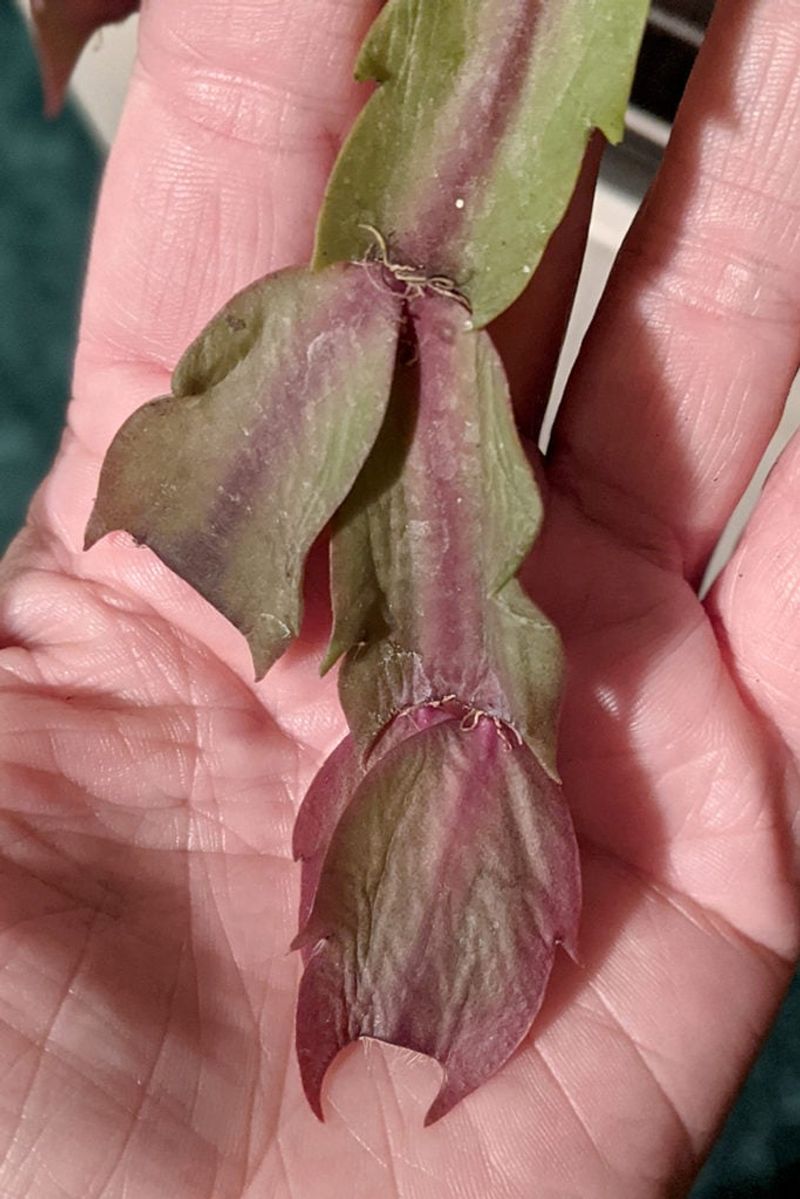
Spotting red edges and floppy segments on your Christmas cactus feels alarming, and it is natural to look for a quick culprit. The popular claim that red and limp means the plant is sitting too close to the window is only a guess, though.
Those two symptoms show up for several different reasons, so they work better as clues than as a final answer.
Red or pink coloring is a stress signal. According to UC Master Gardeners of Sacramento County, heavy blooming, too much sun, and overwatering are all possible causes.
UC ANR guidance adds that soil that stays dry for a long time can produce the same color change.
Limpness is just as tricky. A plant that is too dry goes soft, and so does a plant whose roots are struggling in soggy mix.
University of Minnesota Extension also points to watering and root trouble as common reasons holiday cacti wilt.
So the smart first move is to investigate. Look at where the plant sits, feel the potting mix, and think about what has changed lately.
Once you know which clue fits, you can choose a fix that actually matches the problem instead of trying everything at once.
What kind of window stress should you look for?
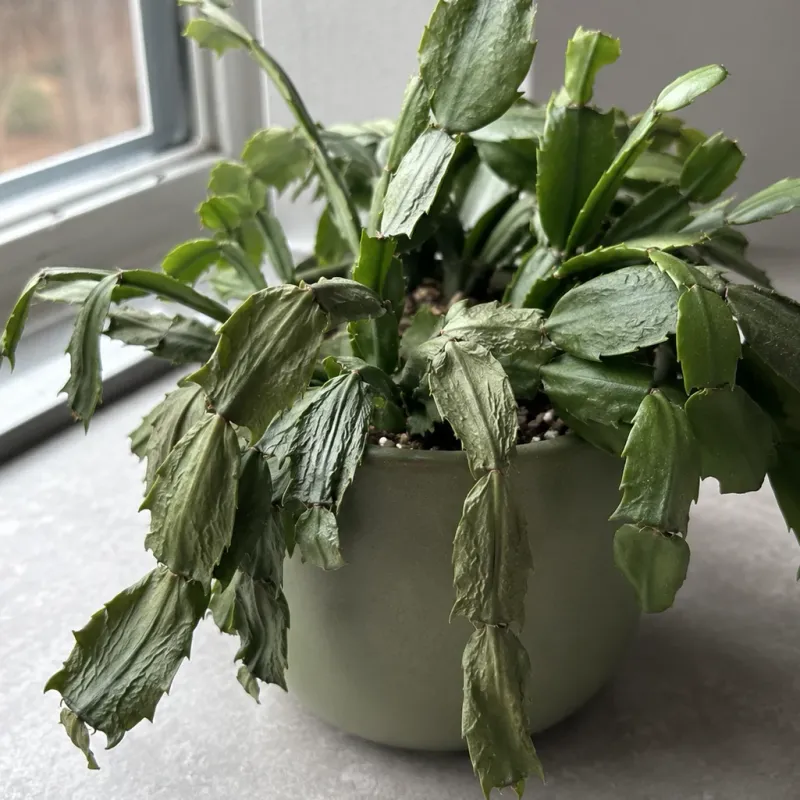
A window can mean very different things for a plant. One window brings hours of harsh afternoon sun, while another is simply cold on autumn nights, with a draft slipping around the frame.
Each situation stresses a Christmas cactus in its own way.
Holiday cacti prefer bright, indirect light indoors, and Iowa State University Extension notes that too much direct sun can stress or even sunburn them. Filtered light, such as sun through a sheer curtain, is gentler.
If the reddest segments face the glass and the sun hits them for hours, strong exposure is a reasonable suspect.
Cold is a separate question. Hold your hand near the glass and around the frame on a chilly evening.
If you feel a steady chill or moving air, the plant may be reacting to temperature rather than light. NC State Extension also stresses giving the plant a suitable spot with good light.
A bright window is not automatically a bad home. Your cactus still needs plenty of light to stay healthy.
Treat sun, cold, and drafts as possibilities to rule in or out, not as a diagnosis.
Check the potting mix before you change the watering
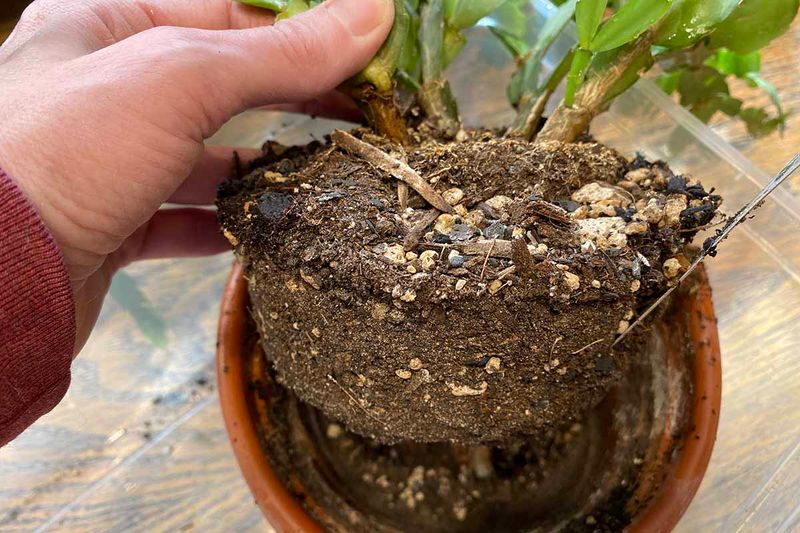
Before you reach for the watering can, push a finger about an inch into the potting mix. This takes ten seconds and tells you more than the leaves can.
Limp segments do not automatically mean thirst.
The guidance from UC ANR is to water when the top inch is dry. If your finger comes out dusty and the pot feels light, the mix is dry, and a thorough drink may be the right step.
Let extra water drain away afterward.
If the mix feels damp or wet and the plant is still wilted, think twice. Wet soil with a droopy plant can point to too much water or damaged roots, a pattern also described by University of Minnesota Extension.
Adding more water would only make that worse.
Look under the pot too. Empty any water sitting in the saucer, and make sure the drainage holes are open so the pot can drain freely.
Then hold off on watering until the top inch dries out again.
If the mix stays soggy for many days or the base of the stems looks dark and mushy, root trouble is likely. Moving the plant will not fix that, so correct the watering first.
Move the cactus only when its current spot is harsh
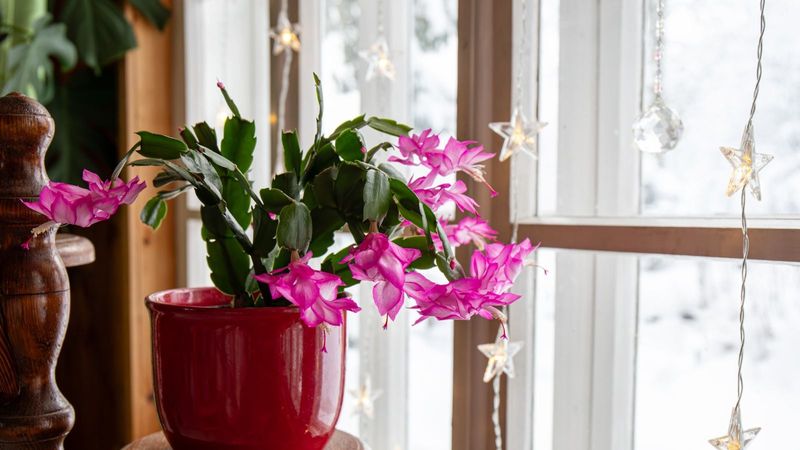
Once you have checked the soil, take an honest look at the spot. A move makes sense if the plant gets hours of strong direct sun or sits right against a cold, drafty window.
In those cases, shifting it helps remove a real source of stress.
The target is bright, indirect light away from drafts. Iowa State University Extension recommends this kind of light for holiday cacti.
A spot a few feet back from a sunny window, or behind a sheer curtain, often fits well.
Do not expect the move to cure everything. As UC ANR points out, watering problems and root damage need their own fixes.
A new location will not dry out soggy mix or revive dry roots.
If the current spot is bright but not harsh, and the soil check showed the real issue, leave the plant where it is. Pick one good location, set the plant there, and give it time.
Hopping between windows every few days adds new stress and makes it harder to tell what is helping.
Skip the emergency repot and fertilizer
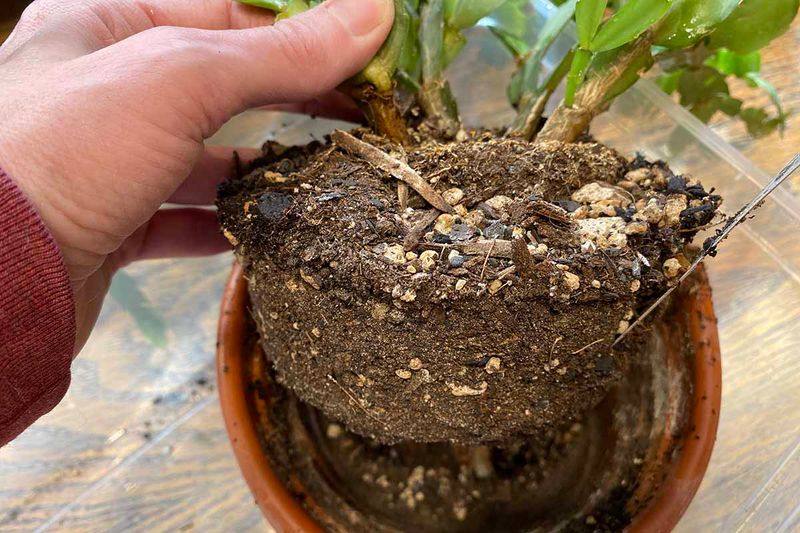
When a plant looks unwell, it is tempting to do something big. Fresh soil and a dose of fertilizer feel like care.
For red, limp segments, though, they are rarely the right first step.
Holiday cacti are happy being a little snug in their pots. Iowa State University Extension advises repotting only when a plant has truly outgrown its container, such as when roots are crowding out the mix or the pot tips over.
Red color alone does not tell you that.
Repotting also disturbs roots, which is a bad idea if they are already stressed by wet soil. If you suspect root trouble, check drainage and watering first, as University of Minnesota Extension suggests.
Fertilizer is not a treatment for limpness either. Routine feeding belongs in the growing season, not as a rescue for a stressed plant in fall.
Extra nutrients will not fix a dry, soggy, or too-sunny situation and may add to the strain.
Keep its fall location steady as buds develop
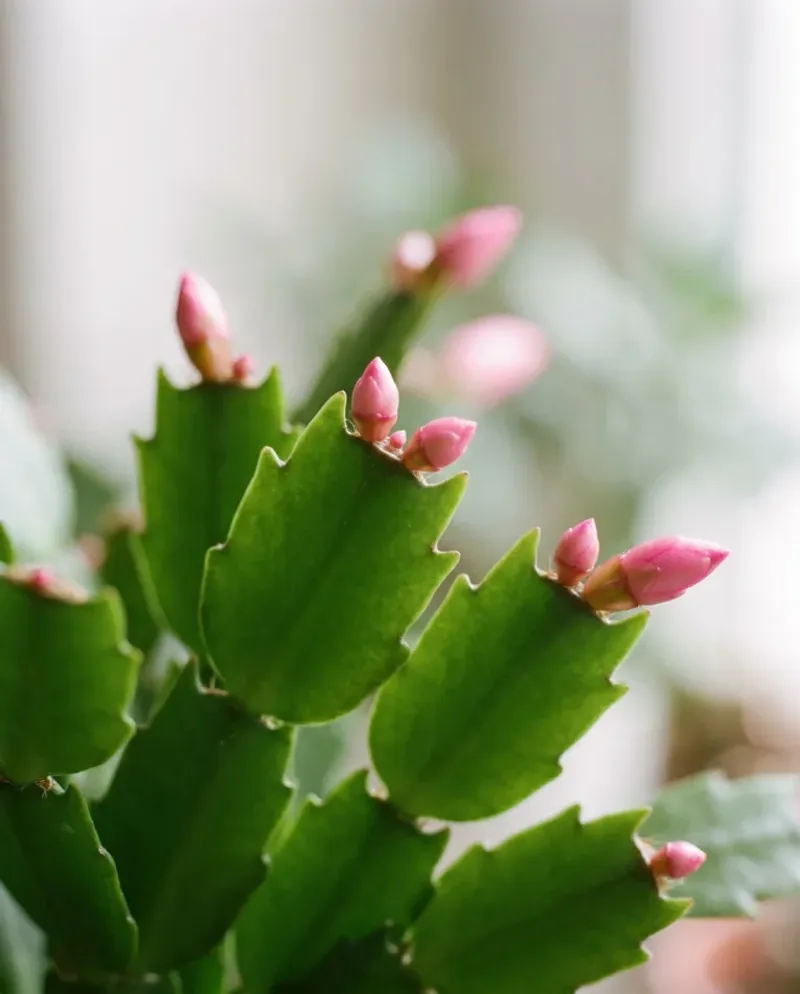
Fall brings cooler nights and long, uninterrupted darkness, and both can encourage holiday cacti to form buds. Not every plant will bloom, and timing varies, but a steady setting gives yours the best chance.
University of Minnesota Extension describes these conditions as helpful for budding.
So pick a bright spot without harsh sun or drafts, and let the plant settle in. According to Iowa State University Extension, sudden changes and repeated moves during bud development can cause buds to drop.
The routine stays simple: check the soil, fix a harsh spot if there is one, and skip extra projects. Some limpness may take time to sort out.
A cactus left in a calm, well-lit corner often does more on its own than one fussed over daily.