
The Two-Step Fall Fire Ant Routine That Clears North Carolina Yards Before Spring Mounds Return
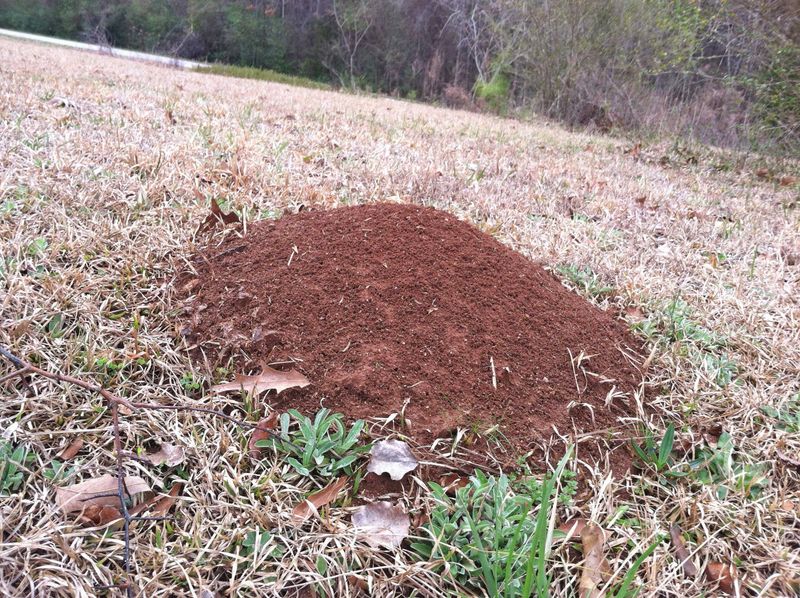
Few things ruin a barefoot afternoon faster than stepping into a fire ant mound. Many North Carolina homeowners hear that a fall routine of bait first, then spot treatment, can calm things down.
It can help, but it is not a magic reset button. Here is how to time it, do it carefully, and keep your expectations realistic.
Use conditions, not a late-October deadline
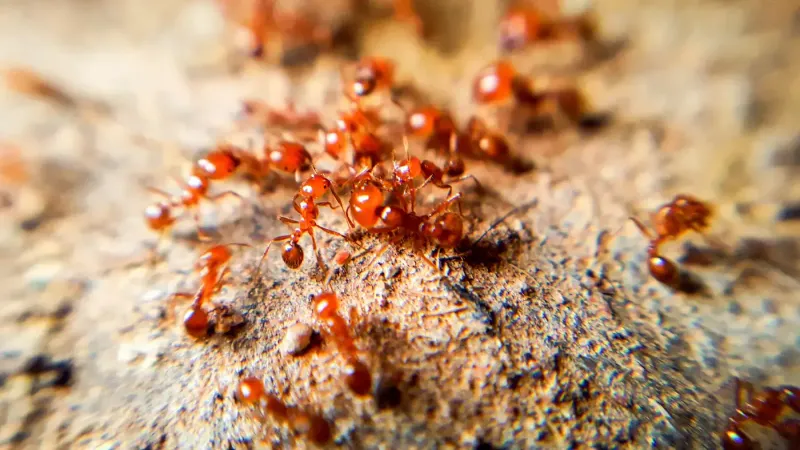
Red imported fire ants live in at least 75 North Carolina counties, including some isolated spots in the west, according to NC State Extension. A yard near Wilmington and a yard near Asheville do not share the same weather, so one calendar date cannot fit them both.
You may see the routine described as a late October job. That timing is not an established statewide treatment window.
NC State guidance for yards points to late September to early October, before the soil cools, as a preferred general time to treat.
Even that window is a starting point, not a deadline. Fall bait guidance from N.C.
Cooperative Extension says to bait only when ants are actively foraging and temperatures are suitable. A warm stretch in a coastal yard might allow it later, while a cold mountain yard may be past it.
Your best plan is to look at what the ants are doing right now. Call your county extension office for local advice, and read the product label before you buy or spread anything.
The calendar is a hint, and the ants are the answer.
Also keep in mind that this routine reduces fire ant activity. It does not promise a mound-free yard next spring, and the later sections explain why.
Check that ants are foraging before baiting
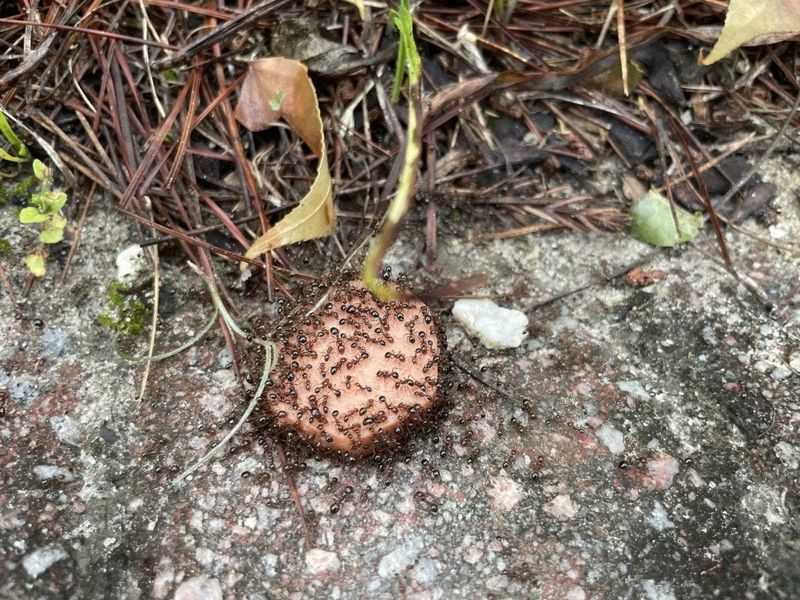
Bait only works if workers pick it up. Before you spread anything, run a simple food test.
Place a small bit of food, such as a piece of hot dog or a dab of greasy snack, on a paper plate or index card near a mound, as N.C. Cooperative Extension suggests.
Come back in about 30 to 60 minutes. If workers are swarming the food and hauling it off, they are foraging.
If the plate sits untouched, hold off and try again on a warmer day.
Temperatures matter, but the numbers vary. North Carolina sources give useful ranges of roughly 70 to 85 degrees Fahrenheit in some guidance and 70 to 95 degrees in others, depending on the treatment context.
NC State turf guidance is one place to see how those ranges are framed.
Because of that spread, treat no single number as a rule. A cool morning may be too slow, while the afternoon of the same day may be fine.
What you see on the plate, plus the temperature range printed on your product label, should decide the day.
Run the test near more than one mound if your yard is large. Sunny, open spots and shaded corners can behave differently in the same week.
Broadcast bait targets foraging colonies
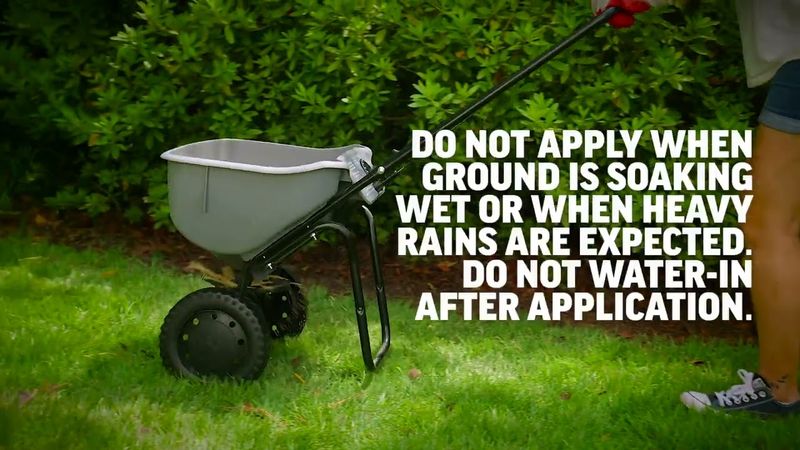
Step one is a broadcast bait, spread across the area rather than dabbed on individual mounds. The granules are made to smell and taste appealing, so foragers carry them back to the colony and share them.
That makes bait a colony-targeting tool, not an instant mound killer.
Freshness matters. NC State turf guidance recommends fresh bait and application on dry ground.
Old or damp bait can lose its appeal, so buy a package you will use soon and keep it sealed.
Placement is simple. Bait is generally applied around mounds, not on top of them, unless your product label says otherwise.
Disturbing a mound can send ants scattering and make them less likely to forage for bait.
Weather is the next label detail. Some products call for keeping the area free of rain or irrigation for at least 24 hours after application.
That interval belongs to products whose directions say so, so check yours instead of assuming.
Finally, NC State’s yard guidance cautions that not every bait is approved for broadcast use. The label spells out where you may spread it, how much to use, and what precautions apply near pets, gardens, and edible plants.
Using a product off-label is never a shortcut.
Allow time for bait to work
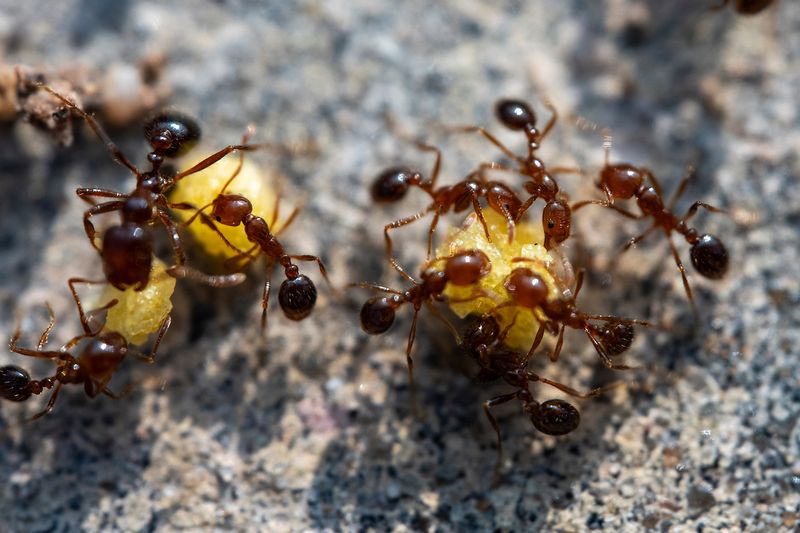
Patience is the hardest part. You may walk out two days after spreading bait and still see ants moving around a mound.
That does not prove the bait failed, because it takes time for workers to carry it in and for the colony to feel the effects.
How long depends on the active ingredient. UGA Extension reports maximum control in about 2 to 4 weeks for some baits, while insect-growth-regulator baits can take 2 to 6 months.
Knowing which type you bought tells you how long to wait before judging it.
Bait is also slower than many direct mound treatments. NC State notes this trade-off, so slower does not mean weaker.
It simply works on a different schedule.
Ordinary waiting is different from a real hazard. If a mound sits beside a play set, a walkway, or a spot where someone has been stung, you may not want to wait weeks.
In that case, NC State identifies mound drenches as a faster option.
Mark the date you applied bait and the product type on your phone. Then check the yard again at the interval your bait suggests, and treat any urgent trouble spots by the label.
Treat only specific nuisance mounds as needed
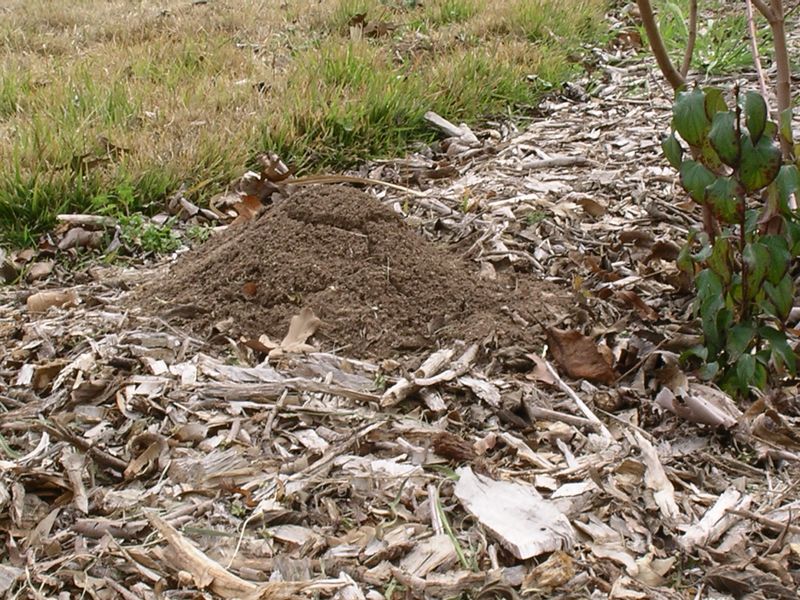
The second step is narrower than many people expect. It means treating particular mounds that are a nuisance or that survive after the bait has had time to work.
It does not mean drenching every mound you can find.
Timing keeps this step from backfiring. Applying a drench at the same time as bait wastes the bait, according to NC State.
Wait until the bait has had its chance, then decide which mounds still need attention.
Some mounds earn a quick response. A mound beside a front step, a vegetable bed edge, or a spot where kids play may be worth treating sooner.
NC State describes mound drenches as a faster option when stings are an urgent concern.
Choose a product labeled for the site where the mound sits. A product fine for a lawn edge may not be allowed in a garden bed, so read the directions first and follow them exactly.
Remember, too, that several mounds can belong to one colony, so a handful of leftover mounds does not always mean a handful of separate colonies. Treating the worst offenders and watching the rest is often enough.
Choose a control approach that fits the yard
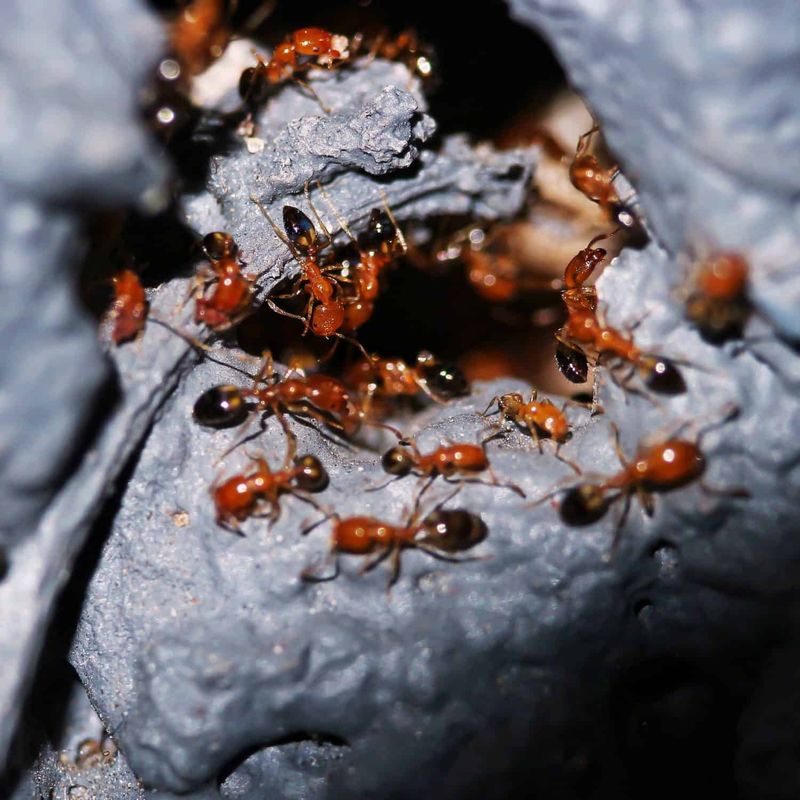
The two-step routine is a management option, not a rule for every yard. UGA Extension does not suggest broadcast treatment for some untreated areas that have few fire ant mounds and many native competitor ants.
Those native ants matter. They compete with fire ants for food and space, and University of Florida IFAS Extension treats preserving them through careful insecticide use as part of sustainable control.
Targeted treatment can fit better in that situation. NC State says individual mound treatments generally use less insecticide and affect fewer non-target ground-dwelling insects than broadcast treatments.
Fire ants are invasive and can harm wildlife, so doing nothing is not automatically the kind choice either. No option is harmless, and each one trades off fire ant pressure against effects on other insects.
A yard with many mounds across open lawn may suit baiting. A mostly native-planted yard with a few mounds may call for spot treatment only.
Whichever you pick, check the label for permitted sites and restrictions, and see EPA advice on reading pesticide labels before you open the package.
Expect suppression, not a guaranteed mound-free spring
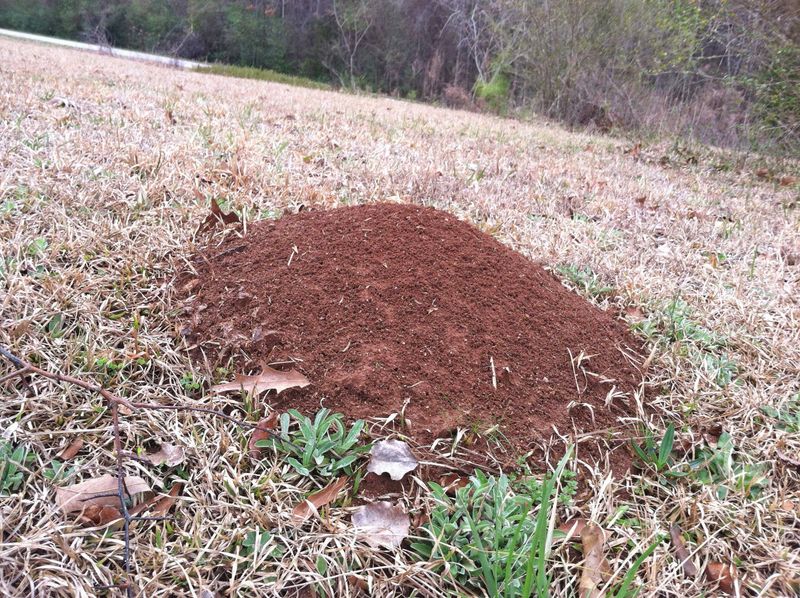
Here is the honest payoff. UGA Extension says broadcast bait can temporarily eliminate most mounds, often 90 to 95 percent for 6 to 18 months.
It does not wipe out fire ants or stop new ones from moving in.
Reinvasion comes from two directions: colonies on surrounding land and newly mated queens landing in your yard. UGA notes populations can fully recover within 12 to 18 months after the last bait treatment, so results vary from yard to yard.
Think of the routine as suppression, not a one-time clearance. You may see far fewer mounds in spring, or you may spot a few new ones, and both outcomes are normal.
The decision rule is short. Bait only when ants are foraging and the label permits it, following NC State guidance, then treat specific nuisance mounds if they remain.
A calmer lawn is a realistic goal, and a spotless one is not.