
Castor Oil Repellent for Moles: A Possible but Uncertain Lawn Option

Raised ridges snaking across your lawn can make any gardener nervous. A bottle of castor oil sounds like an easy answer, but the research is more mixed than the hype.
Before you spend money or spread anything on your grass, it helps to know what is digging, how much harm it does, and what castor oil can and cannot do. Here is a calm, step-by-step way to decide.
Are moles making those ridges?
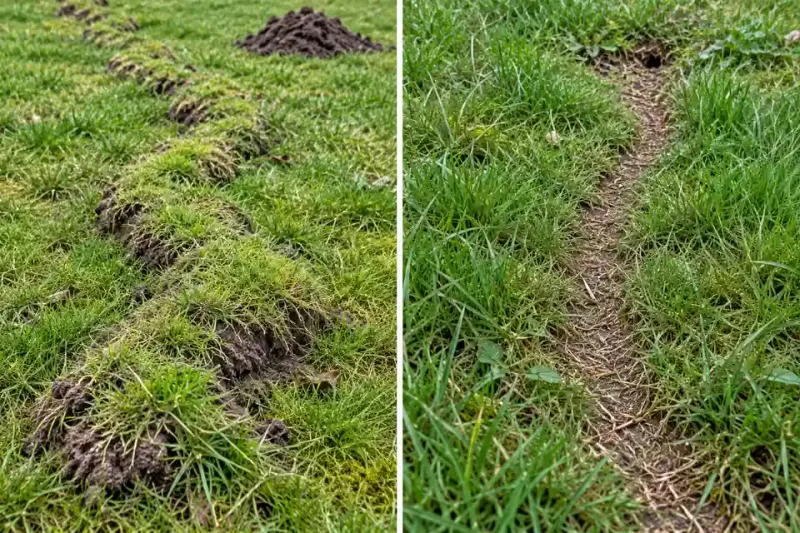
Soft, raised ridges that wind across the grass are a classic clue. Moles push up these ridges as they tunnel just under the surface, and they also leave cone-shaped soil mounds.
University of Maryland Extension describes both signs as typical of mole activity in lawns.
Voles leave a different pattern. They make narrow runways on the surface of the lawn, often hidden under grass or mulch, and these look like small trails rather than puffed-up ridges.
Since voles chew plants and moles do not, mixing them up can send you toward the wrong fix.
Treat each sign as a clue, not proof. A ridge alone is a good hint, but look at the whole picture.
Do you see mounds of loose soil? Are there thin open trails in the turf?
Is anything chewed near the base of your shrubs or perennials?
Walk the yard after rain, when fresh tunnels and mounds show up best. Make a few notes or take photos.
Iowa State Extension also offers a helpful overview of mole signs if you want a second description to compare against.
Getting the animal right first keeps you from spending time and money on a remedy meant for a different pest.
Moles disturb roots without eating them
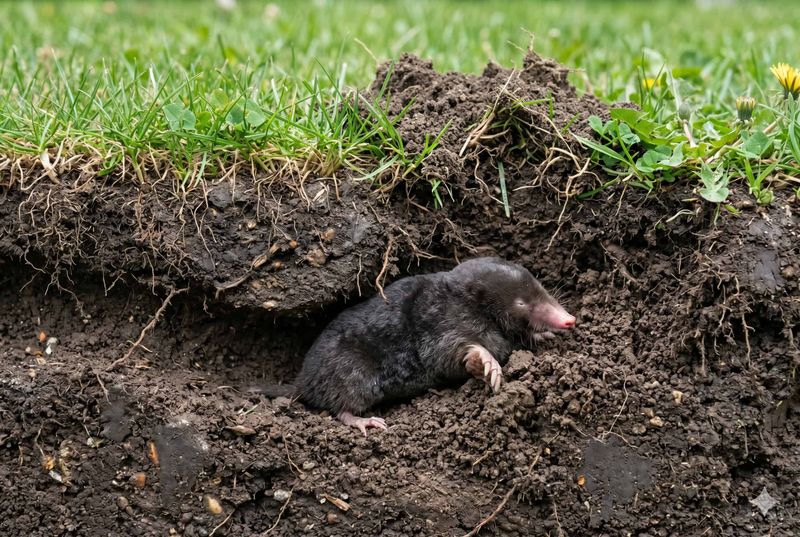
Moles are hunters, not plant eaters. Their menu is earthworms, grubs, and other small soil creatures, according to Iowa State Extension.
So the idea that moles are munching your hosta or tomato roots is a mix-up.
The trouble is indirect. As a mole tunnels, it can loosen the soil around roots and leave air gaps, so roots may dry out.
A small seedling or a shallow-rooted lawn patch can wilt or thin out along a tunnel line even though nothing ate it.
If you see plants actually chewed, gnawed bark, or roots missing, suspect voles instead. Voles eat plant material, and they sometimes use mole tunnels, which adds to the confusion.
Many people also assume moles mean a grub problem. That is not a safe guess.
University of Maryland Extension advises against treating for grubs unless you have confirmed an infestation, and grub treatments may not solve a mole problem anyway.
To check, cut a few small squares of turf and peel them back. Finding many grubs is a sign worth acting on, while finding few means you can skip the insecticide.
Flatten the damage and monitor the lawn
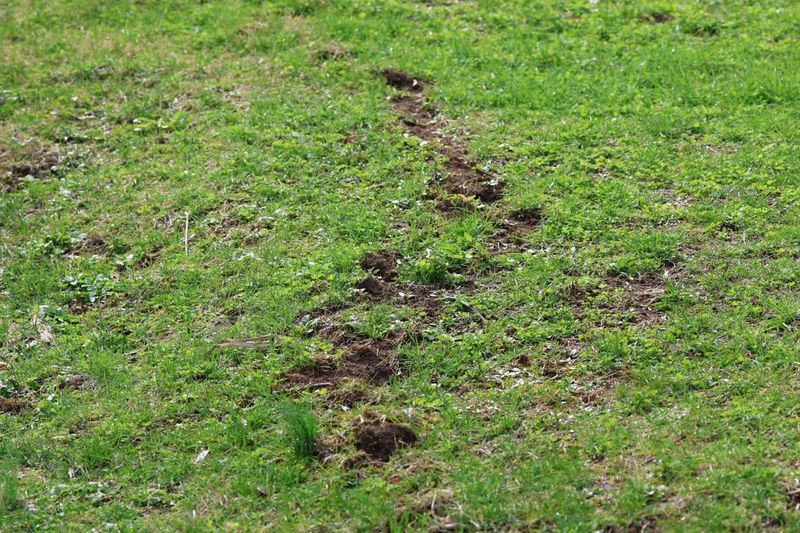
Sometimes the gentlest step is the best first one. Press down raised ridges with your foot or a lawn roller, rake out soil mounds, and reseed any thin spots.
It takes little time and costs almost nothing.
Be clear about what this does. Flattening repairs the look and feel of the lawn, but it does not remove the mole.
Think of it as cleanup that also gives you information.
That information is useful. If the ridges you flattened stay flat, the tunnel may be abandoned.
If they pop back up within a day or two, the mole is still using that route.
University of Maryland Extension notes that mole damage may be temporary and that populations can decline on their own. Waiting a couple of weeks while you watch can save you from a treatment you did not need.
Keep a simple log. Note new mounds, where they appear, and whether any plants are suffering.
If the damage stays small, you may decide the lawn can live with it. If it grows, you will have a clear record to guide your next move.
Castor-oil repellents may help, but results vary
Castor oil is the pantry-style option people hear about most, and it may help in some lawns. It is not the dependable fix the original headline promised.
Think of it as a possible, optional step with uncertain results.
Extension advice is mixed. Missouri Extension says castor-oil products may prevent eastern mole damage under some circumstances.
Iowa State Extension describes early encouraging results that did not hold up consistently in more testing.
A University of Kentucky field study shows the same mixed picture. Its pilot test found no significant difference between treated and untreated areas.
In a later test, activity dropped on treated lawns and was absent for six weeks on some, but the authors described only some level of efficacy.
Location matters too. That work involved eastern moles.
UC IPM reports no published research on western U.S. mole species, so results there are unclear.
Finally, reduced activity is not removal. A repellent may only nudge a mole elsewhere, possibly to a neighboring lawn or garden.
Go in expecting a maybe, not a guarantee.
Choose a labeled product, not a homemade recipe
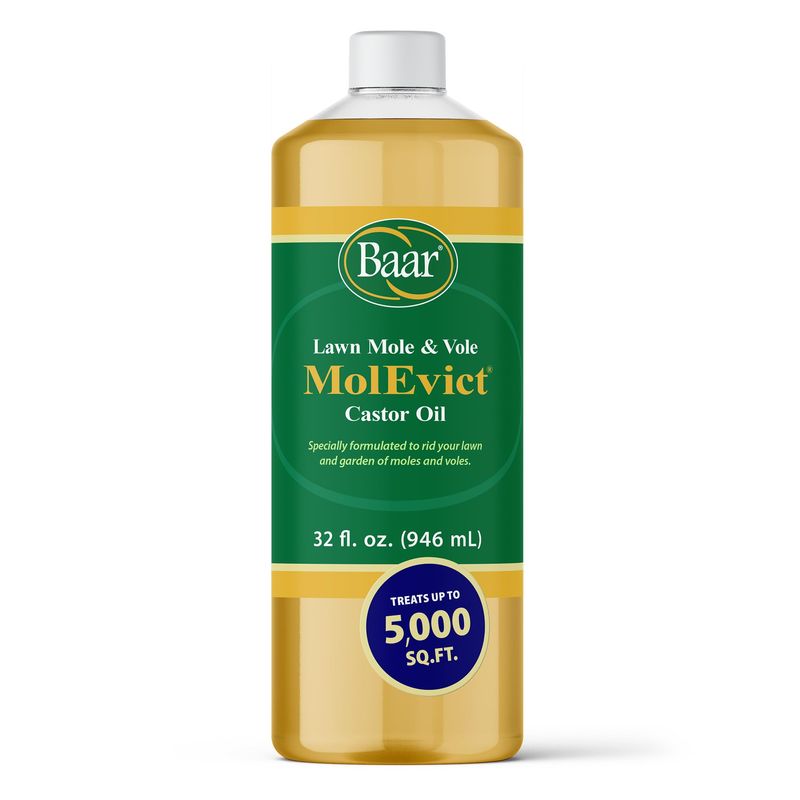
Plenty of online recipes mix castor oil, dish soap, and water. Research has not shown that these homemade blends work, and they are not equivalent to a tested, labeled repellent.
Skipping the recipe takes the guesswork out.
If you decide to try a repellent, pick a product labeled for moles and for your kind of site, such as a lawn. The label is your instruction manual.
The EPA explains that pesticide labels carry essential directions for use and safety.
Application details vary by product, so follow yours exactly. Amounts, spreading methods, and timing are not the same across brands, and no single schedule fits them all.
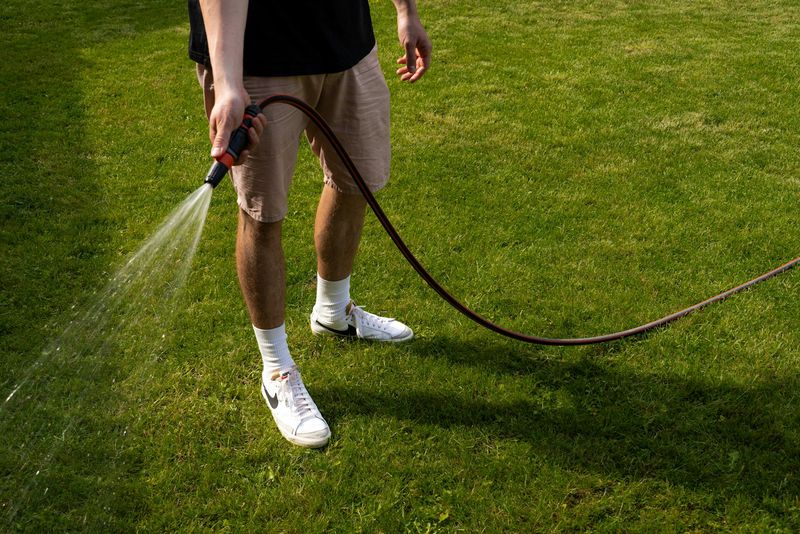
Watering is a good example. The Internet Center for Wildlife Damage Management describes watering in a castor-oil product and treating the area you want to protect, but it also warns that irrigation can leach the repellent.
Your label will say what is right for that product.
Treat only the area you need to protect, keep pets and kids in mind as the label directs, and give it time before judging the results.
Consider trapping when removal is the goal
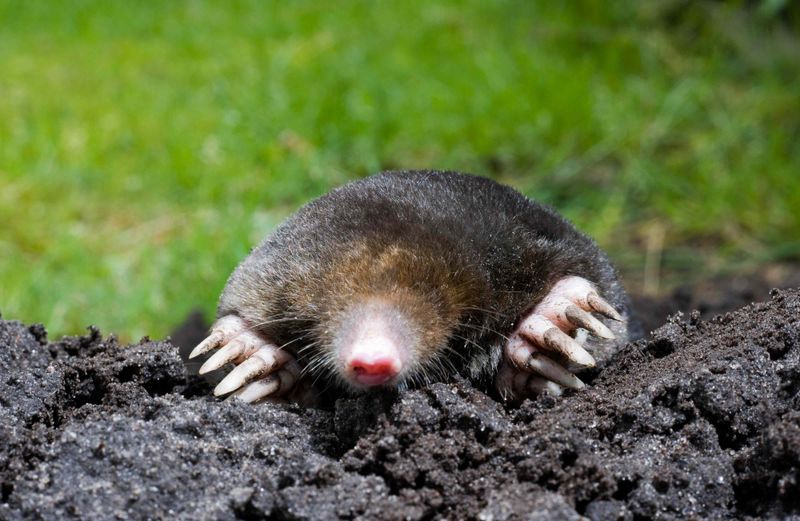
Discouraging moles and removing them are two different goals. A repellent aims to make your lawn less appealing, while removal aims to take the animal out of the picture.
If damage keeps coming back and you decide it is serious enough, removal may be worth considering.
Missouri Extension identifies trapping as the most successful and practical removal method. It is an established option, which is more than can be said for many home remedies.
Traps and repellents are not interchangeable, so choose based on what you want to achieve.
That does not mean every lawn needs trapping. If a few ridges are the only issue, flattening and watching may be plenty.
Trapping makes sense when the damage clearly outweighs the effort.
Be cautious with poisons. Iowa State Extension advises against some common home remedies, and toxic baits carry risks and uneven results.
They should not be a casual choice.
Skip bleach, lye, razor blades, human hair, chewing gum, and mothballs as well. They are not recommended and can create hazards.
Match the response to the damage
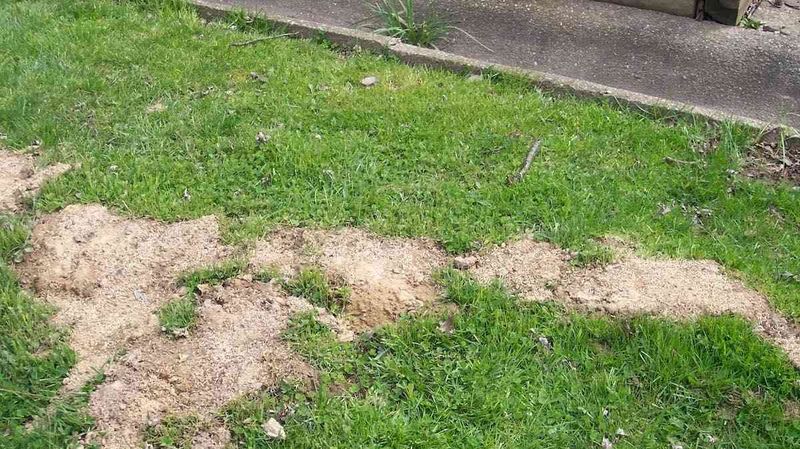
Start by confirming the animal, since ridges and mounds point to moles, while surface runways and chewed plants point to voles. Next, ask whether the damage truly calls for action.
If not, flatten and watch.
If you want to discourage activity, try a labeled repellent, and remember displaced moles may simply move next door. Save removal, such as trapping, for serious cases.
A lawn with a few ridges is often just a lawn with a visitor.