
Your Cucumber Vines Were Covered In Flowers But Gave You No Cucumbers – 7 Reasons Why (Fix Them Before Next Spring)
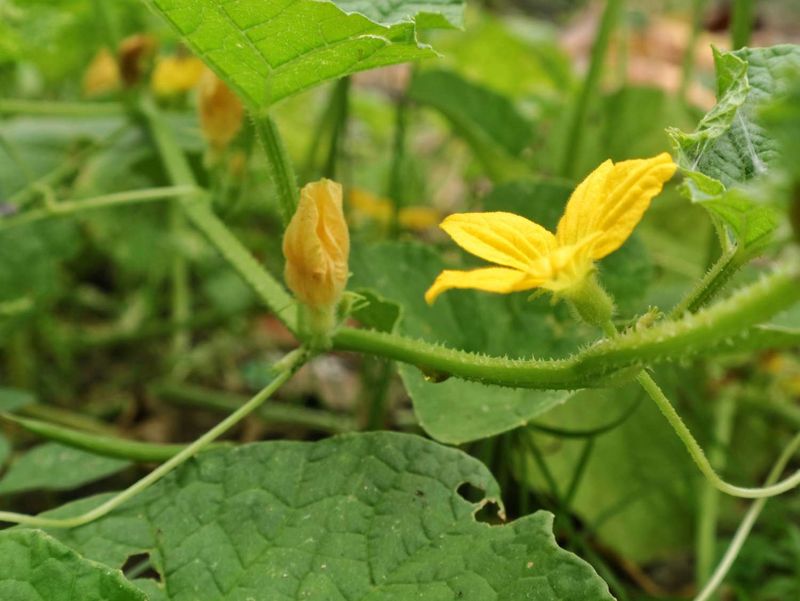
Your cucumber vines looked amazing, with bright yellow flowers everywhere, and then the cucumbers never showed up. That can feel like you did something wrong, but most of the time the cause is simple and fixable.
Each reason below comes with a clue you can check in your own garden. Work through them and you will know exactly what to change before next spring.
Are those flowers capable of becoming cucumbers?
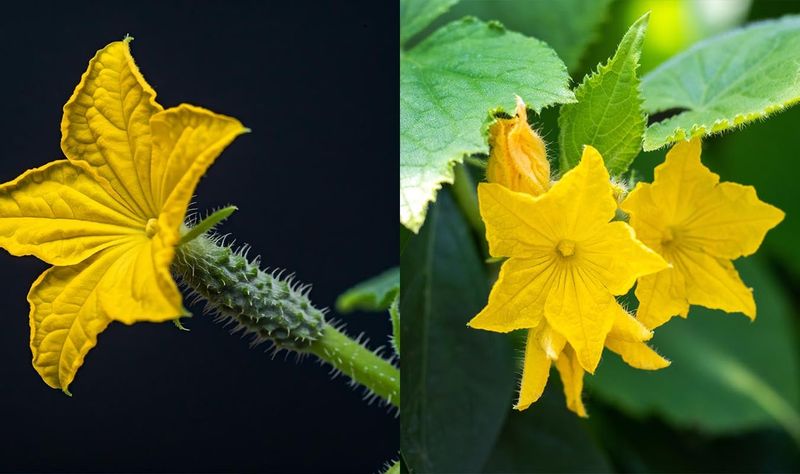
Before you change anything about how you grow your vines, take a close look at the flowers themselves. Cucumber plants make two kinds of blooms.
Female flowers have a tiny swelling behind the petals that looks like a baby cucumber. Male flowers sit on a thin, plain stem with no swelling at all.
Only the female flowers can turn into cucumbers. According to Michigan State University Extension, male flowers do not form fruit and naturally drop off after they bloom.
That means a vine can look covered in flowers and still have nothing to harvest yet.
The first wave of blooms is often mostly or entirely male. Plants tend to open male flowers first, and female flowers show up later.
So a pile of fallen yellow blossoms under your trellis in early summer is usually normal, not a sign of trouble.
Here is a quick test for next season. Walk the garden in the morning and count how many open flowers have that tiny ovary and how many do not.
A University of Minnesota Extension guide on growing cucumbers in home gardens is a handy reference for how the plants behave. If you see only male blooms, give the vine more time before you worry.
If female flowers are present but never swell, move on to the next causes.
Female flowers may not get enough pollination
Once you have found female flowers, the next question is whether pollen reached them. On varieties that depend on pollination, bees carry pollen from male flowers to female ones.
If too few bees visit, the little ovary may turn yellow and shrivel instead of growing.
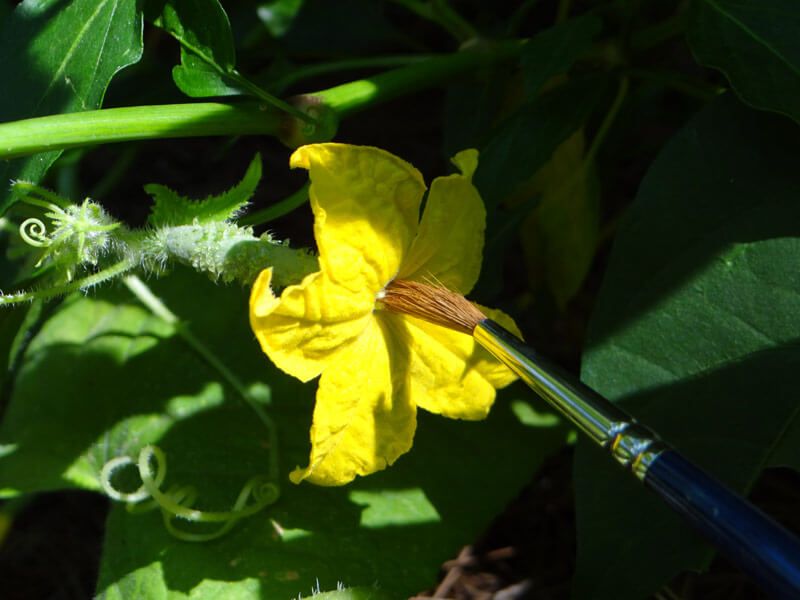
Hand-pollination is a quick option for those pollination-dependent varieties. Michigan State University Extension recommends doing it in the morning.
Use a clean, soft brush to pick up pollen from an open male flower, then dab it onto the center of an open female flower.
Planting flowers that attract pollinators is a good habit, but it is a longer-term habitat project. Do not count on it to fix fruit set within a few weeks.
Think of it as a way to build a better bee neighborhood over the seasons.
Be careful with sprays, too. Avoid spraying open cucumber flowers, since bees are working them.
If you decide you must use a pesticide, follow the product label’s pollinator precautions, as described in EPA pollinator protection guidance. No pesticide should be treated as automatically safe for pollinators.
The variety may need a pollenizer
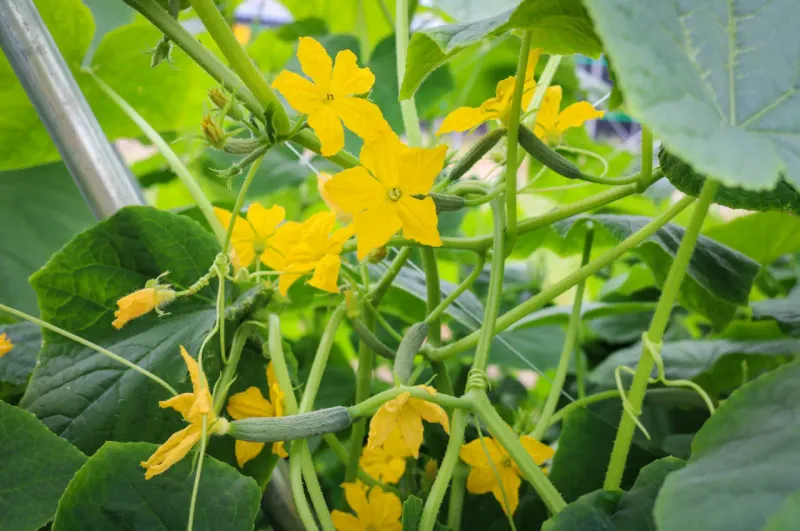
Your seed packet holds a clue that many gardeners skip. Two words matter here: gynoecious and parthenocarpic.
They sound alike, but they describe different things.
Gynoecious plants produce mostly or only female flowers. Parthenocarpic describes fruit that develops without pollination.
As Penn State Extension explains, some cultivars have both traits, but not all of them do.
A gynoecious variety that is not parthenocarpic needs pollen from a compatible pollen-producing cucumber. Mississippi State University Extension notes that packets of these varieties commonly include pollenizer seed.
Check yours to see whether it came with some, and read the instructions to see how many pollenizer plants to grow.
If you planted a gynoecious variety and skipped the pollenizer plants, that could explain a vine full of female flowers that never set fruit. On the other hand, parthenocarpic varieties do not need pollination to set fruit, which is why they are often grown in greenhouses, according to University of Alaska Fairbanks Extension.
Keep the packet or write down the variety name so you can check it next year.
Cool and hot weather can disrupt fruit set
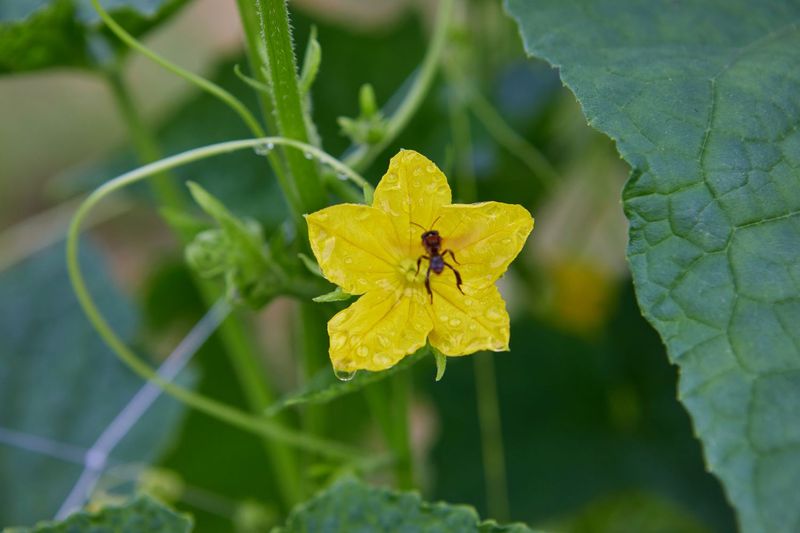
Weather can get in the way in two different ways, so it helps to keep them separate. Cool, rainy, or cloudy stretches can limit pollination, because bees fly less and flowers may not open or release pollen well.
High temperatures, on the other hand, can make it harder for plants to set fruit.
The University of Minnesota Extension guide on growing cucumbers describes both patterns. There is no single temperature number that applies to every garden, since results depend on the variety and the growing conditions.
Think back to the weeks when your vines were blooming. Was it a soggy, gray spell with few bees around?
Or a heat wave with scorching afternoons? Jot down what you remember, because it is one piece of the puzzle and not the whole answer.
Weigh weather alongside what you learned about flower type and variety. If your vines had plenty of female flowers and a variety that needs no pollenizer, weather becomes a stronger suspect.
For next season, think about planting timing that suits your local conditions. A local extension office can tell you when cucumbers typically do well in your area.
Timing helps, but it cannot guarantee a crop, since weather varies each year.
Excess nitrogen can favor vines over fruit
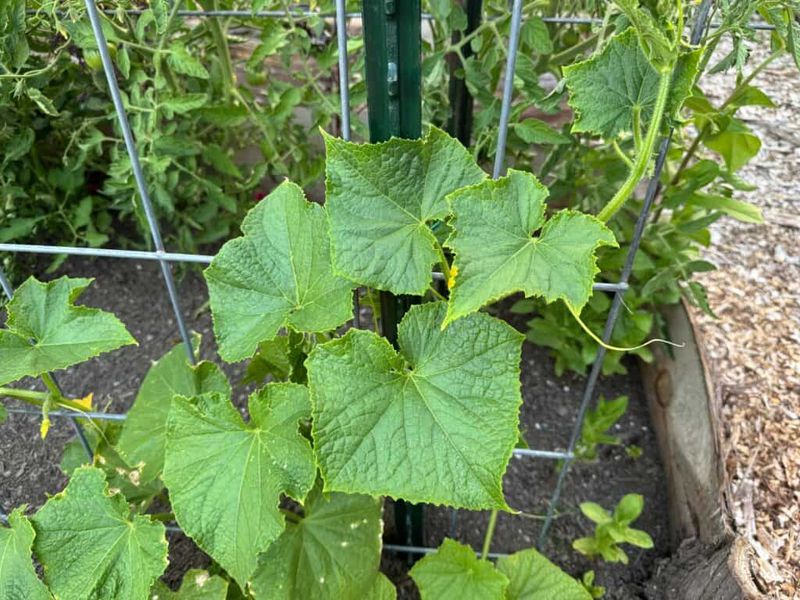
If your cucumber plant is huge, dark green, and leafy but light on blooms and fruit, nitrogen may be the reason. Too much nitrogen pushes a plant to pour its energy into leaves and long vines.
University of Florida IFAS notes that excess nitrogen can reduce flower and fruit production.
Many gardeners reach for more fertilizer when a plant is not producing. That instinct can backfire here.
A better first step is a soil test, which tells you what your soil already has.
Follow the balanced, appropriate fertilizer recommendation that comes with your results. Do not add phosphorus or potassium unless your test shows a deficiency.
Adding them without evidence will not help and could waste money.
Think about what you fed the bed last year. Did it get compost, manure, or a high-nitrogen lawn-style fertilizer nearby?
Those clues help you decide whether this cause fits. If your vines were lush and your soil test shows plenty of nitrogen, you have a good lead for next spring’s plan.
Water problems can harm developing fruit
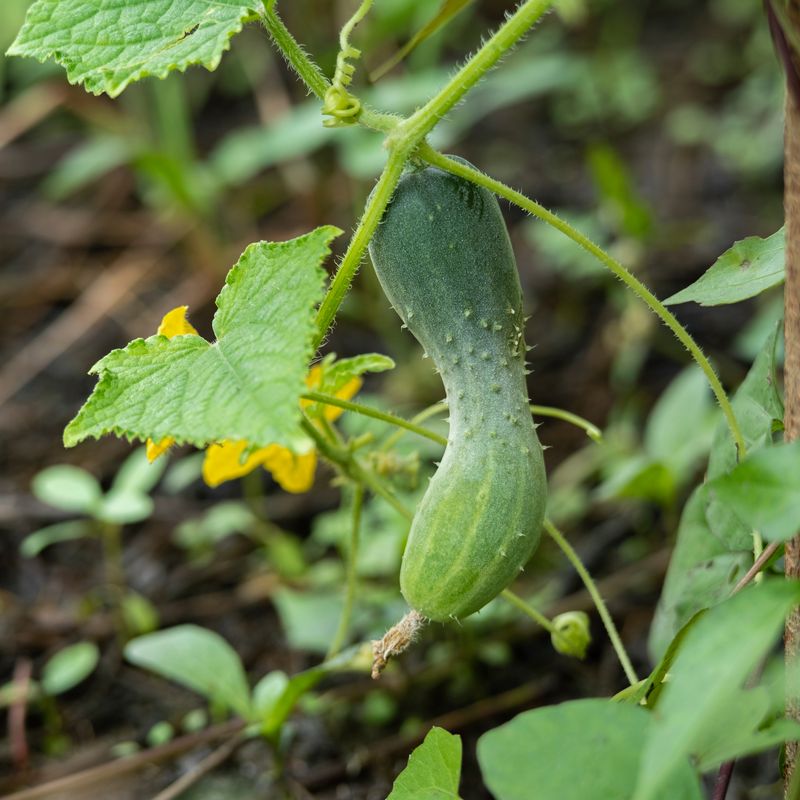
Water deserves a fair place on the list, but in proportion. Dry spells and soggy soil are better linked to trouble with fruit that is already forming than to flowers never setting at all.
So think of water as something that can spoil fruit development, not as a proven reason blooms fail.
The UC Statewide IPM Program says water stress around fruit set can lead to small or misshapen cucumbers. Too much water can cause fruit to split.
If you saw odd-shaped or cracked cucumbers, this cause fits well.
Aim for reasonably steady soil moisture and good drainage. Utah State University Extension suggests roughly 1 to 2 inches of water a week, depending on plant size.
That is a regional baseline, not a schedule for every yard, so adjust for your soil, rainfall, and heat.
A simple habit helps: push a finger an inch or two into the soil before you water. If it is damp, wait.
If it is dry, water deeply at the base of the plant. Mulch can also help keep moisture more even.
Use your observations to plan next spring
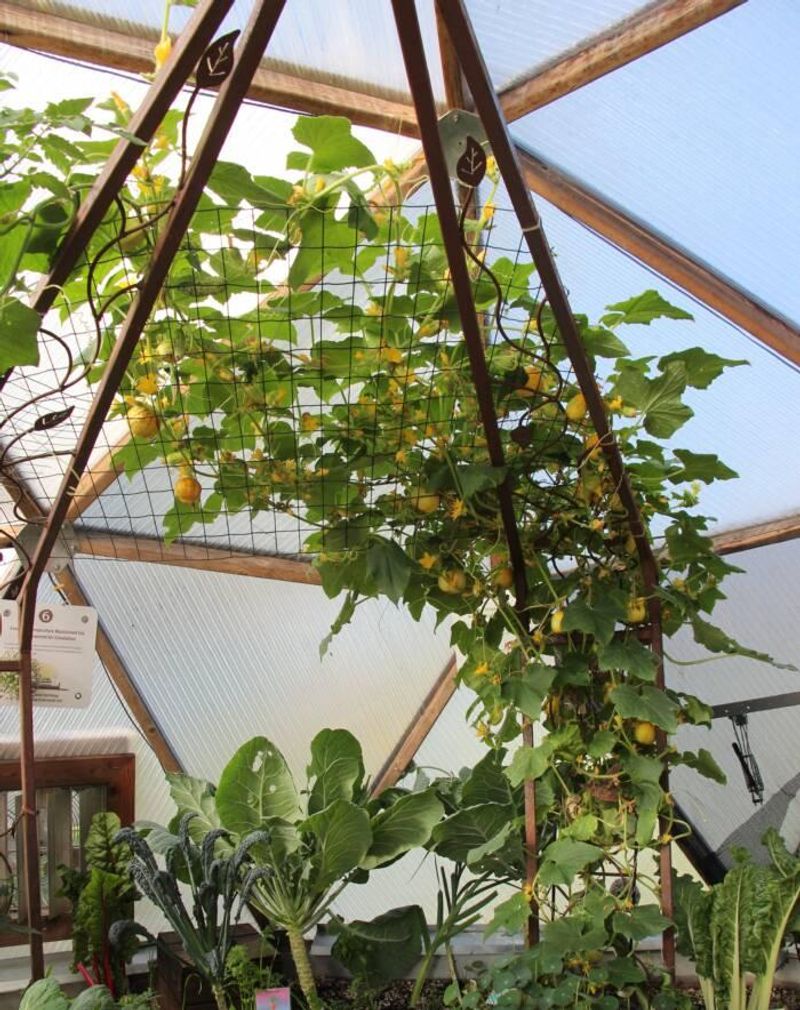
Work through the clues in order. First, tell male flowers from female ones.
Then check whether your variety needs pollination or a pollenizer, and think about bee activity and the weather during bloom. Last, review your fertilizer and watering habits.
Let what you saw guide the fix. Michigan State’s pollination guide helps with flower checks, while Mississippi State covers variety needs.
For feeding and watering, see University of Florida IFAS and UC IPM.
No single change guarantees a crop. Still, a garden notebook turns this year’s puzzle into next year’s cucumbers.