
Skip Hauling Your Whole Coleus Indoors This Winter When A Few North Carolina Cuttings Do The Job
That giant coleus pot on your patio has been glowing all summer, but it is not easy to carry inside. Frost can end its season fast, and many North Carolina gardeners hate losing a favorite color pattern.
A few stem cuttings may give you a way to keep the cultivar going without wrestling the whole plant through the door. Here is how to plan, snip, root, and care for them.
Cuttings can preserve the cultivar, not the sprawling plant
Picture the plant you love: wide, leafy, and packed with color after a long Carolina summer. A cutting will not keep that exact size or shape.
What it keeps is the plant’s identity, because a cutting grows into a clone of the parent cultivar, as Illinois Extension’s propagation guidance describes for stem cuttings in general.
That means your small start will look like a young plant at first. After it roots, it can grow back up into a fuller plant with time, light, and patience.
Many gardeners pinch the tips as it grows to encourage a bushier shape.
The effort is modest. NC State Extension’s Plant Toolbox says coleus cuttings root readily in water or clean potting soil.
Easy does not mean certain, though, and no research sets an ideal number of cuttings. Think of this as a practical option for saving a favorite cultivar, not a guaranteed substitute for the parent plant.
If your pot is huge, heavy, or simply too leggy for a living room, cuttings let you keep the variety while leaving the bulky original outside.
Take cuttings before frost threatens
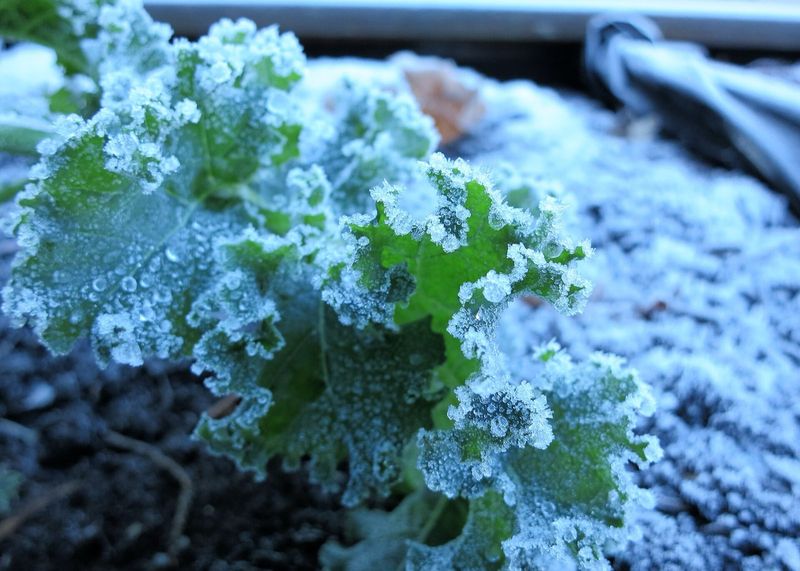
Coleus does not tolerate cold, so the time to act is before frost threatens, not after leaves are damaged. South Dakota State University Extension notes that coleus is frost-sensitive, and waiting for damage risks losing the plant you wanted to copy.
A healthy plant gives you better cutting material.
North Carolina is a big state, so there is no single date that fits everyone. A mountain yard near Boone faces cold much earlier than a garden on the Coastal Plain.
That is why NC State’s interactive frost date map is so handy, since it offers county and station-level information.
Look up the station or county closest to you and note the average first frost. Treat that as a planning estimate, not a prediction.
Averages are not a signal to leave coleus outside until that exact day.
Neighborhood conditions matter too. A low spot in your yard may get colder than a spot near a brick wall.
Pair the map with the actual forecast, and when a chilly night shows up in the extended outlook, take your cuttings that week.
Starting early also gives you room to try again if a first batch does not root.
Start with healthy stem tips
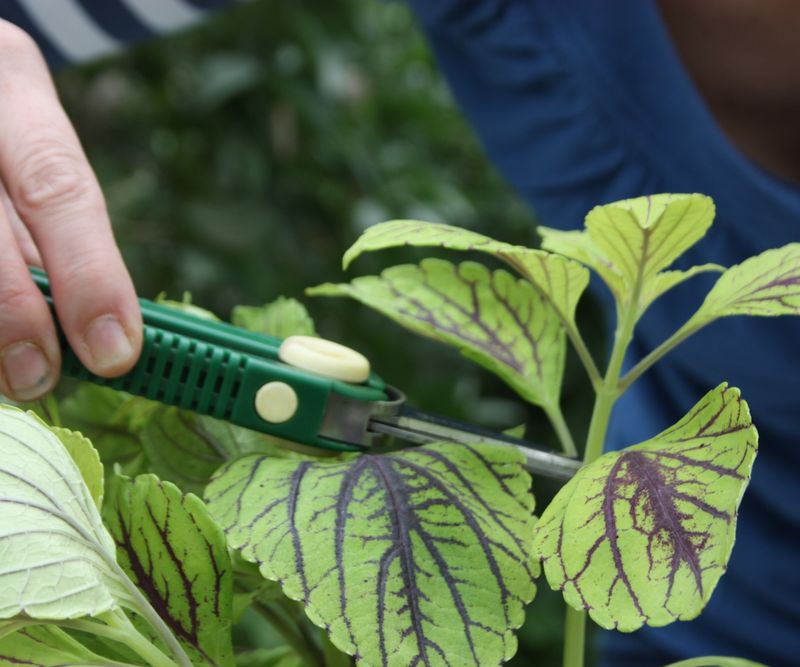
Walk around the plant and look for strong, vigorous tip growth. Skip stems that look weak, spotted, wilted, or chewed.
A healthy parent stem gives the cutting its best start.
A useful starting length is about 4 to 6 inches, which is the range given by University of Minnesota Extension. Treat that as a handy guideline, not a rule.
A slightly shorter or longer piece may work, though results can vary.
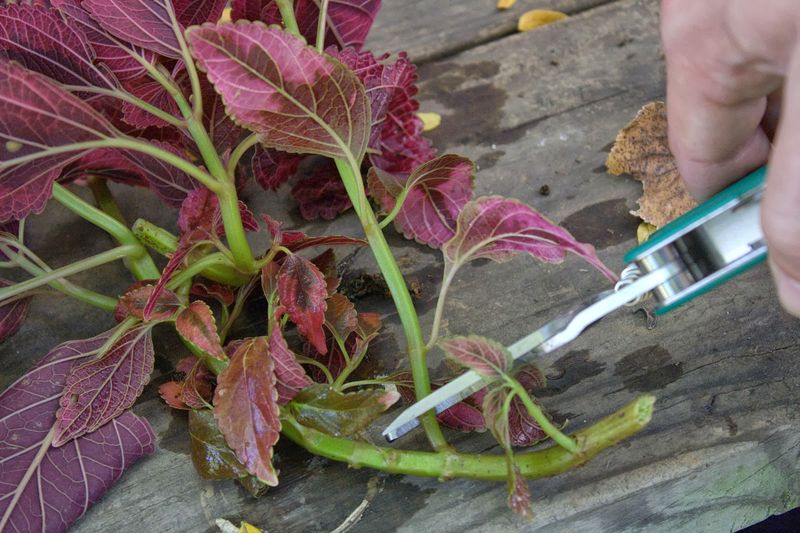
Use clean, sharp snips so the cut is neat. Cut just below a leaf node, which is the spot where leaves attach to the stem.
Roots tend to form from those nodes.
Next, strip the leaves from the lower part of the stem, the portion that will sit in water or rooting mix. Leaves left below the waterline or soil line can rot and cloud the water or invite problems.
Leave a few leaves at the top so the cutting can keep growing.
If flower buds show up on the tip, pinch them off. It is wise to take more than one cutting of a cultivar you really care about.
That is a sensible hedge, not a promise, since some cuttings may fail even when you do everything right.
Root coleus in water or potting mix
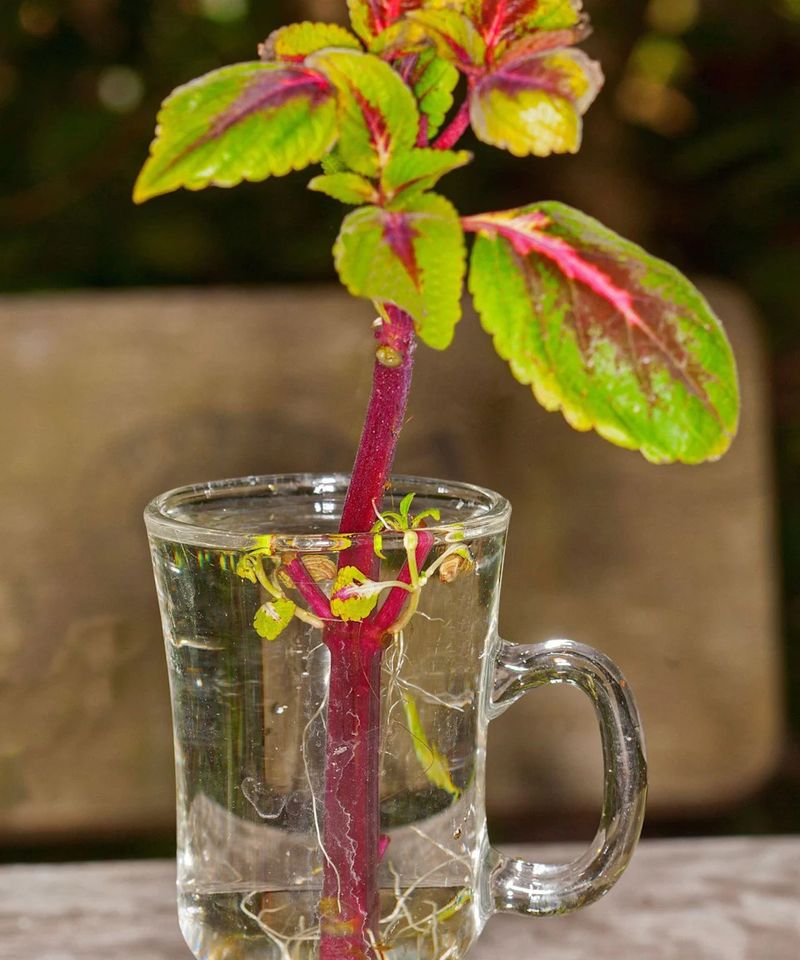
You have two good choices, and neither is universally best. NC State Extension says coleus can root in water or in clean potting soil.
Pick the one that fits your setup.
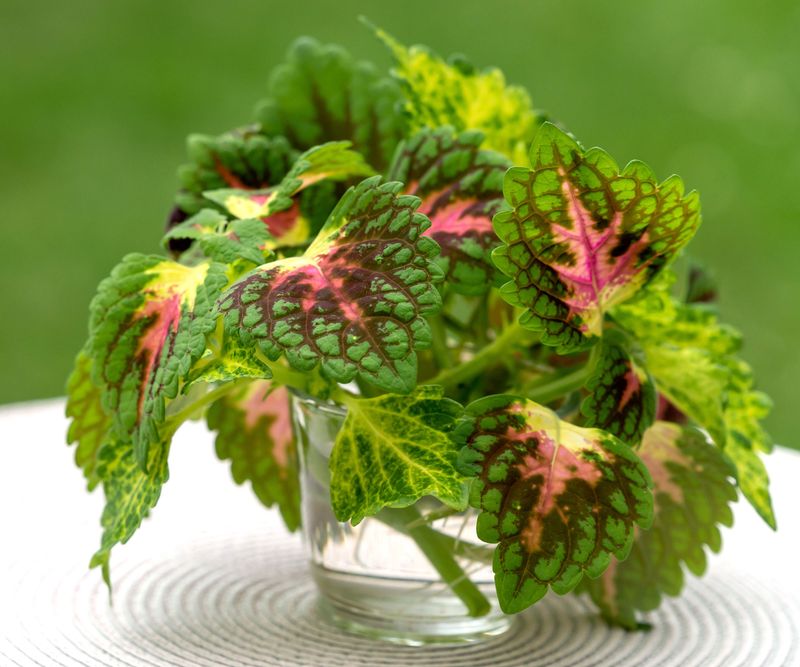
Water is easy to watch. Set the prepared cuttings in a clean glass so no leaves touch the water, and refresh the water if it turns cloudy.
Once roots begin to form, move the cutting into potting mix, as University of Minnesota Extension advises.
For direct rooting, push the cutting into a small pot of clean potting material. Use fresh mix and a clean container to cut down on disease.
Keep it evenly moist but never soggy, because soggy mix can rot the stem.
How long will it take? That depends on your method and conditions.
Minnesota’s guide gives about 2 to 3 weeks, while Chicago Botanic Garden reports 7 to 10 days for its method. Your home may land somewhere else, so do not set a firm deadline.
A gentle tug can hint at progress. If the cutting resists, roots are probably forming.
Trying both methods with a few cuttings is one way to see what works in your house.
Give indoor cuttings light and check for pests
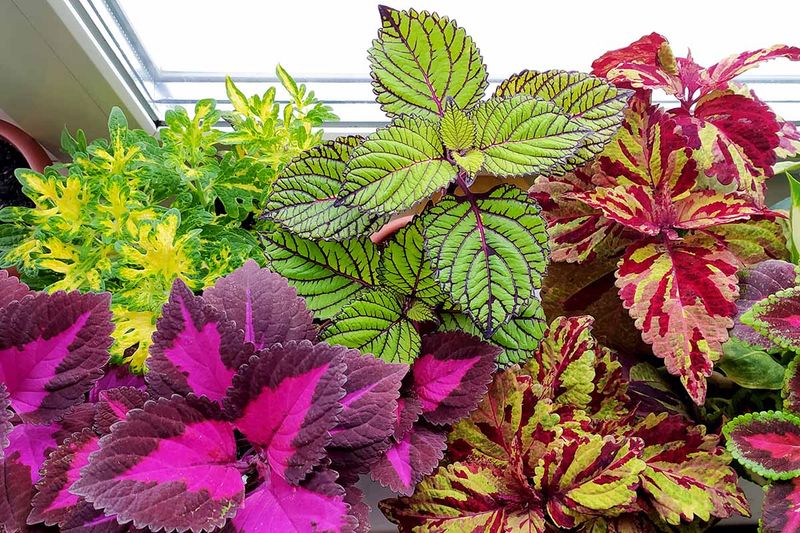
Moving cuttings indoors means skipping the heavy lifting, not skipping the care. Coleus still needs attention as a houseplant.
NC State Extension says it needs bright light indoors, so choose the brightest spot you have. If new growth looks stretched and pale, that is a clue the light may be too dim.
Check moisture regularly for cuttings planted in mix, keeping it evenly damp without letting it sit wet. A dried-out or waterlogged pot can undo weeks of work.
Pests deserve a look before anything crosses your threshold. NC State notes aphids, whiteflies, and spider mites on indoor coleus.
SDSU Extension also flags aphids, whiteflies, and mealybugs.
Turn leaves over and check the stems, tips, and where leaves join the stem. Look for sticky residue, tiny moving specks, cottony fluff, or fine webbing.
Examine cuttings outdoors before bringing them in, and keep checking them on the windowsill.
Check outdoor pots and nearby houseplants too, since pests can hop between plants. A few minutes each week can catch trouble while it is still small.
Plan for a chance, not a guarantee
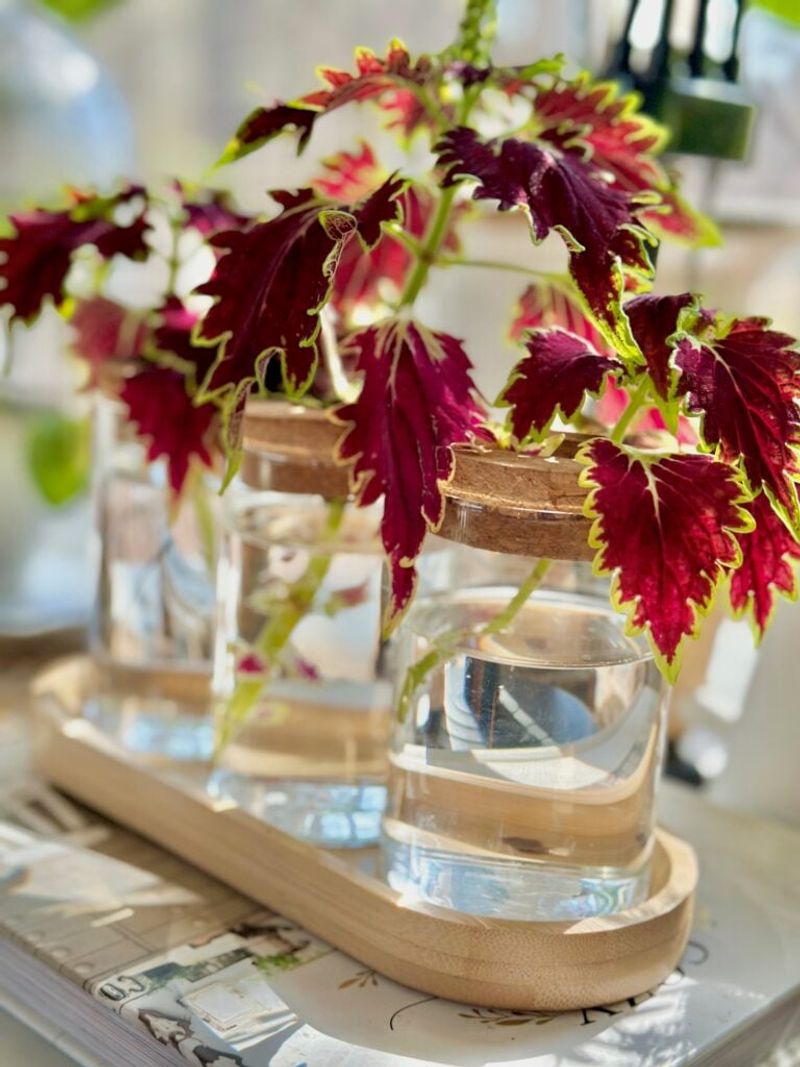
The sequence is simple: check your local frost information, snip healthy tips before cold arrives, pick water or clean mix, and give the starts bright light and regular pest checks. NC State Extension and University of Minnesota Extension both describe coleus as easy to propagate.
Easy still leaves room for a few misses, and no particular cutting count is guaranteed to work. What you may keep is the cultivar, not the big outdoor plant.
Some windowsill starts are a small price for next summer’s color.