
Holiday Cactus Care in Late Fall: Inducing Buds Versus Protecting Them
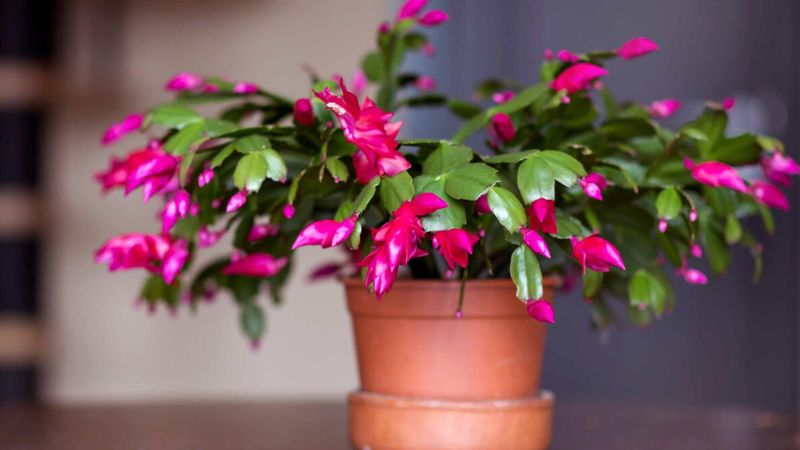
Is your holiday cactus covered in tiny pink tips, or still just green stems? That one detail changes what your plant needs right now.
Some plants are still waiting for the cues that start buds, while others are already building flowers that can be lost if conditions swing too much. A few simple checks can tell you which stage you are in and what to do next.
Has your plant set buds yet?
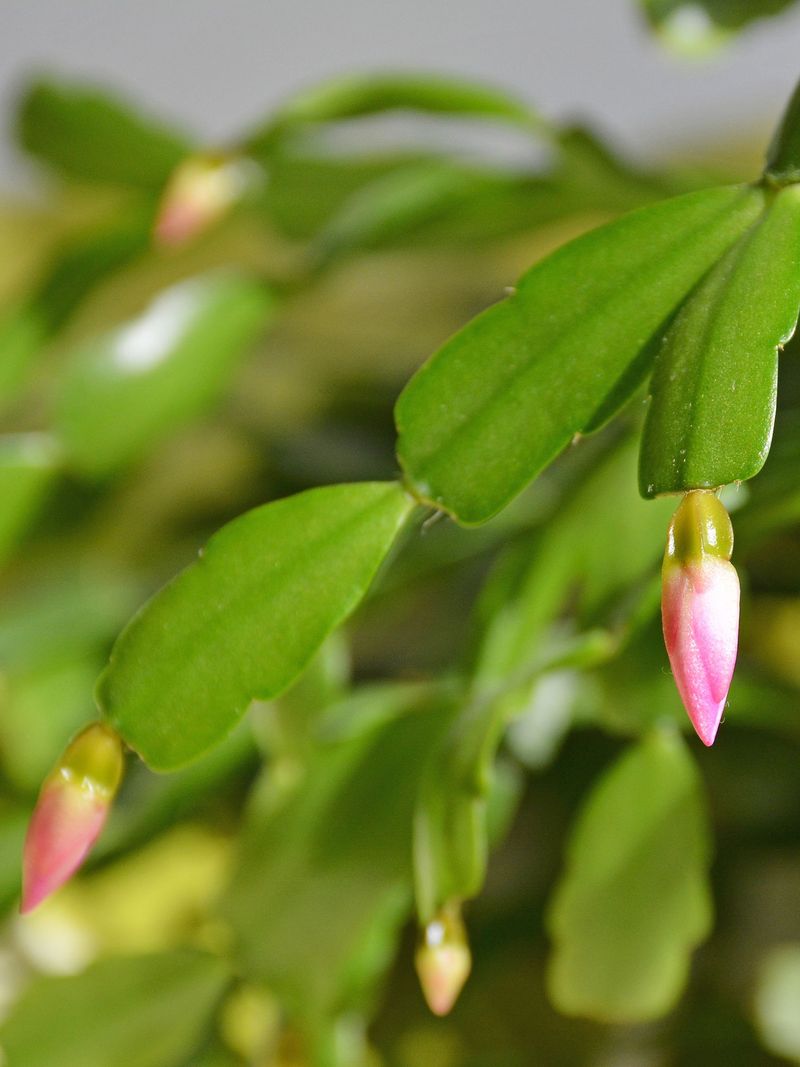
Start with a close look at the tips of the stems. Tiny bumps or swelling pink or red points mean buds are developing.
If the tips look like plain green segments, buds have not formed yet.
That one observation changes your job. Before buds appear, the goal is to give the plant the cues that encourage them.
After buds appear, the goal is to protect them from stress.
The first stage takes weeks. Illinois Extension guidance explains that long nights trigger bud formation, and that once buds have set, day and night length no longer affects flowering.
In other words, darkness is a cue for starting buds, not a rescue treatment for buds already on the plant.
Late in fall, your plant could be at either stage. A cactus kept in a cool, dim room may still be working toward buds, while one from a store or a warm greenhouse may already be loaded.
Plants also differ by type, age, and cultivar, and UMass Amherst Extension notes that timing varies from year to year among cultivars.
So please do not assume every plant needs more darkness. Check the tips first, then pick the path that matches what you see.
The name on the pot may not match the plant
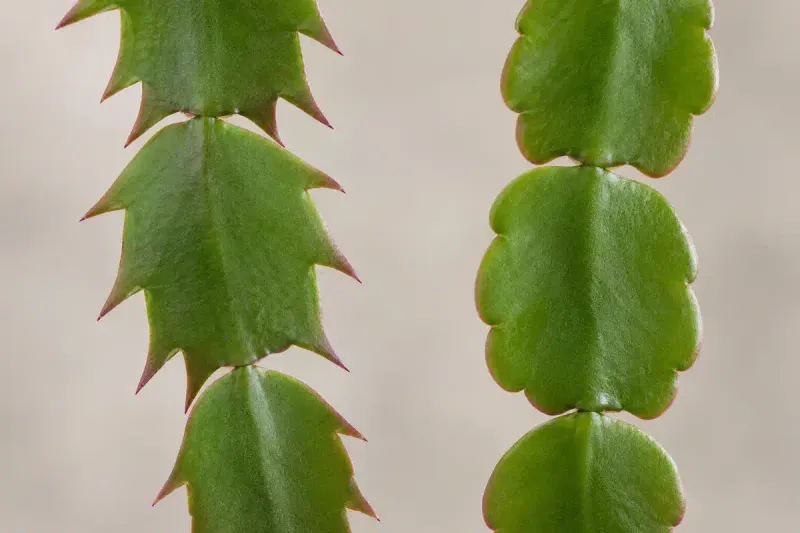
Many plants sold as Christmas cactus are really Thanksgiving cactus. The tag in the pot may not tell you which one you own, but the stems will.
Run your eye along a stem segment. Thanksgiving cactus segments have pointed, claw-like edges, almost like little teeth.
Christmas cactus segments are smoother and more rounded along the sides.
This matters because the two have different typical bloom windows. Illinois Extension describes Thanksgiving cactus flowering from about late November into late December, and Christmas cactus from about late December into March.
Treat those dates as a rough guide only. Hybrids are common, and growers can force plants to bloom on a schedule, so a plant from a store may flower earlier or later than its name suggests.
Home conditions shift timing too, and UMass Amherst Extension documents differences among cultivars.
If your plant is a Christmas cactus with no buds on December 1, that does not mean something is wrong. Look at the stems, note which type you likely have, and keep your expectations flexible.
Short days can trigger buds before they form
If you see no buds yet, long nights and cool temperatures are the cues to think about. Together they can start bud formation over several weeks.
The University of Minnesota gives approximate numbers. Minnesota Extension reports that buds form after roughly six weeks of short days.
With nights of 60 to 65 degrees F, it suggests at least 12 hours of complete darkness each night for about six weeks. Nights around 55 degrees F may also induce flowering, while nights above 65 degrees F make flowering less likely.
Think of those figures as guidance ranges, not guarantees. Cultivars and homes differ.
A room that is naturally dark at night, such as a spare bedroom, may be enough, so an exact blackout routine is not always needed. A bit of stray light does not automatically ruin your chances either.
Once buds are visible, the darkness advice is finished. Day length no longer controls flowering after buds set, so moving a budded plant into a closet will not help it.
You may read that deliberate drought or a bloom booster is the secret. Neither is essential.
UMass notes that water stress during flower induction can reduce bud set, and fall fertilizer advice varies, with UConn suggesting you stop feeding when plants come indoors. Steady care with decent drainage is the safer bet.
Keep developing buds in a stable spot
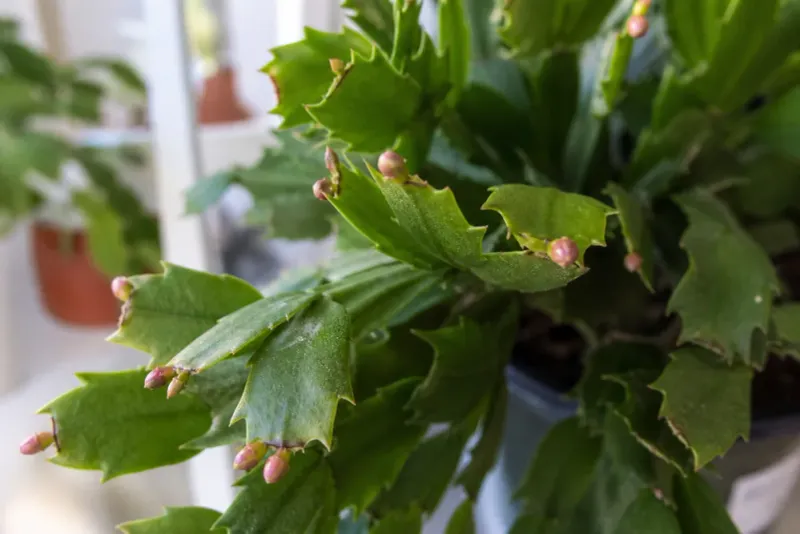
Once buds are forming, the plant does best when its surroundings stay predictable. Pick a bright spot for daytime light and let the plant stay there.
Extension guidance backs this up. Minnesota Extension recommends bright light and cool nights while avoiding drafts, heater vents, and excess water.
Look around your home for trouble spots. A window that gets cold at night, a spot beside an exterior door that swings open, or a shelf above a heating vent can all bring sudden temperature or humidity swings.
Abrupt shifts in temperature, humidity, or light can contribute to bud drop, as Illinois Extension describes. That includes moving the plant around, even for a good reason like tidying or decorating.
If you have to move it, try to choose one place and stick with it. Turning the pot or rearranging the room can wait until after bloom.
No single room or temperature guarantees flowers. The aim is simply to avoid giving the buds a reason to fall.
Water according to the soil, not the calendar
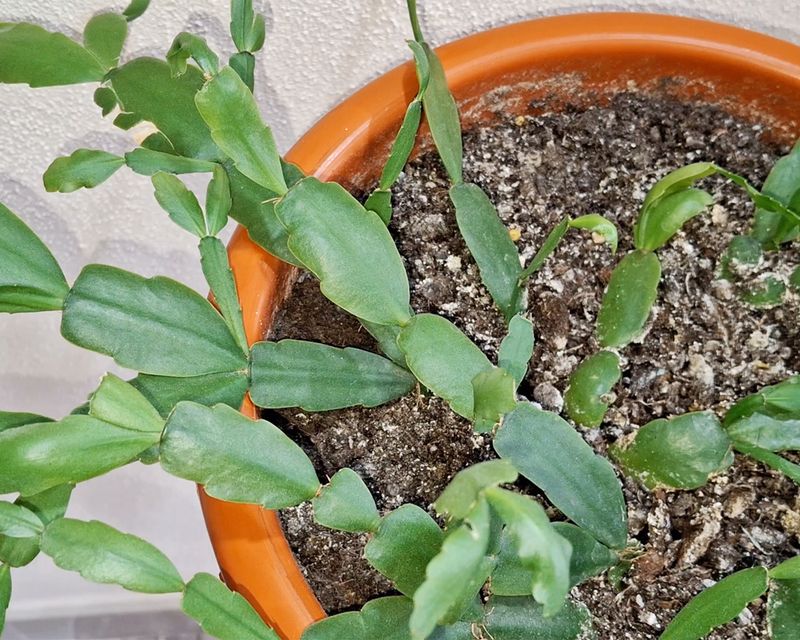
Because of the word cactus, many people keep these plants bone-dry. Holiday cacti, though, come from rainforest settings, where they grow on trees.
They are not desert plants.
What they need is drainage. Use a pot with holes and a mix that drains well.
Water thoroughly, let the extra run out, and never leave the pot sitting in a full saucer. Minnesota Extension describes this approach.
Let the mix dry somewhat between waterings, but do not let the stems shrivel. Push a finger into the soil an inch or two.
If it feels damp, wait. If it feels dry, water.
A fixed schedule ignores changes in light, heat, and pot size.
Drought is not a reliable way to get buds. UMass Amherst Extension reports that water stress during flower induction can reduce bud set.
If the plant looks wilted, check before you pour. Illinois Extension notes that a limp plant may be underwatered, or its roots may be damaged from staying too wet.
Feel the mix and look at drainage first, because more water can make an overwatered plant worse.
Bud drop is a clue, not a verdict
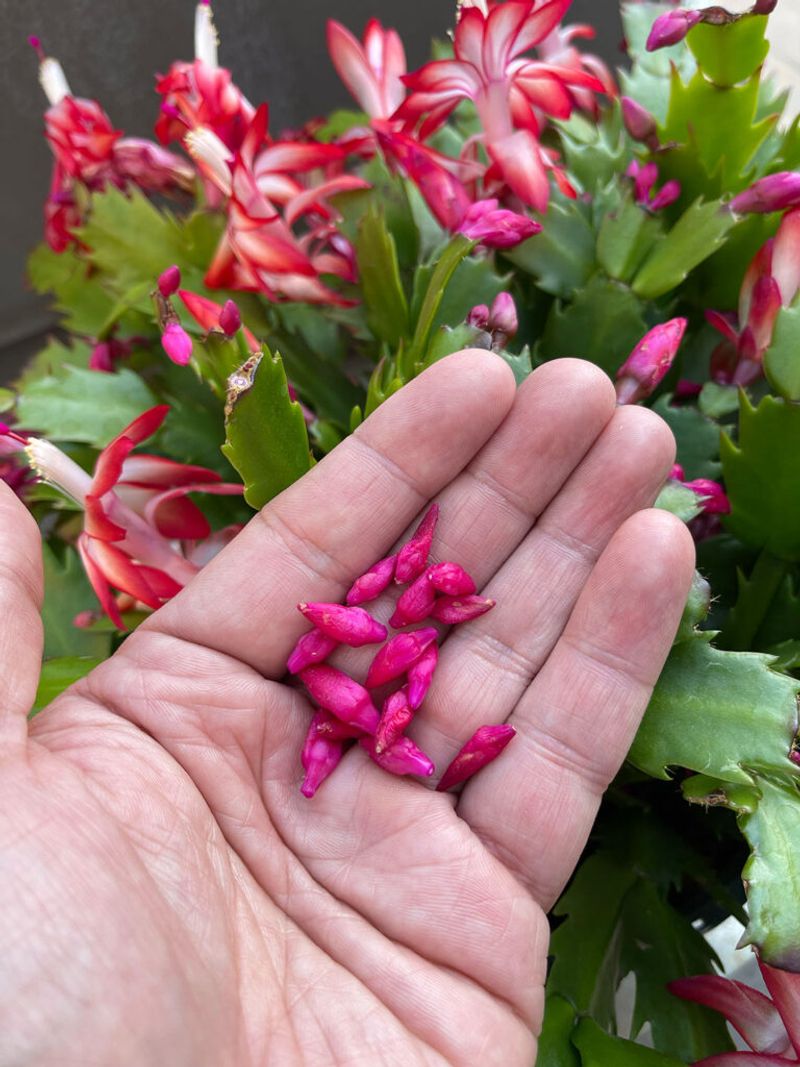
Finding buds on the floor is upsetting, especially when you have been caring for the plant for months. Take a breath.
A few fallen buds do not mean the plant is dying.
Work through a short checklist. First, think back over the last couple of weeks.
Did you move the plant, bring it home, or change the lighting around it?
Second, check for drafts and heat. A cold window, a door that opens often, or a nearby heater or vent can all cause trouble.
Illinois Extension lists sudden changes in conditions among the stresses that can lead to bud drop.
Third, test the potting mix. Soggy soil and very dry soil can both stress the plant, so feel the mix and check that water drains out of the pot.
Several stresses can contribute at once, so one dropped bud will not point to a single cause. Also, Minnesota Extension notes that a plant may shed some excess buds on its own.
If the plant still has plenty of buds, fix whatever you found and leave the rest alone.
Choose the next step for the plant’s stage
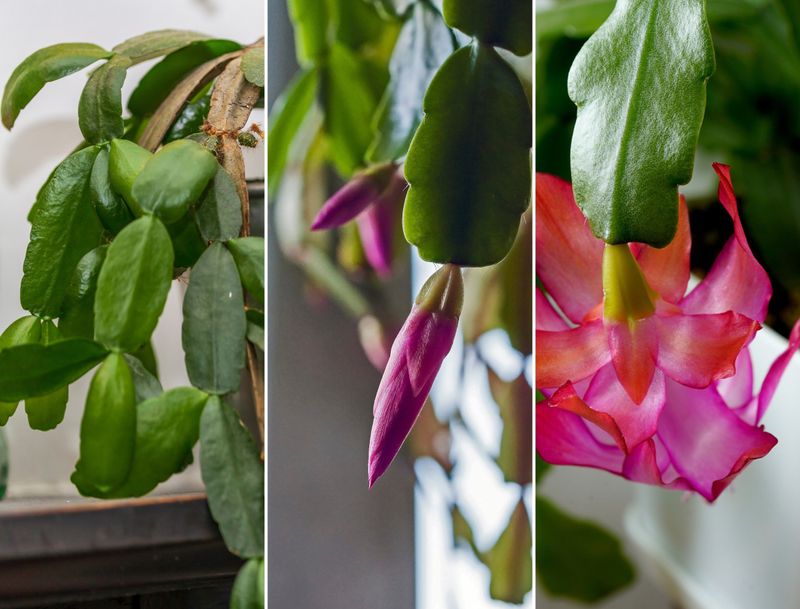
No buds yet? Offer long nights and cool temperatures within Minnesota’s guidance, and keep the soil lightly moist, not dry.
Buds already forming? Keep light, temperature, and soil moisture steady, as Illinois Extension advises, and make only needed changes.
None of this guarantees a holiday bloom. A calm plant simply has the best chance to show you what it can do.