
Blue Mistflower: A North Carolina Native Worth Considering for Late-Season Fall Color

Fluffy blue-purple flowers are not what most people expect in a North Carolina bed once summer starts to wind down. Blue mistflower is a native perennial that can supply them from late summer into fall.
It comes with real perks for pollinators and birds, and one big catch: it likes to spread. Here is how to tell whether it belongs in your yard.
Blue-purple flowers extend the garden’s season
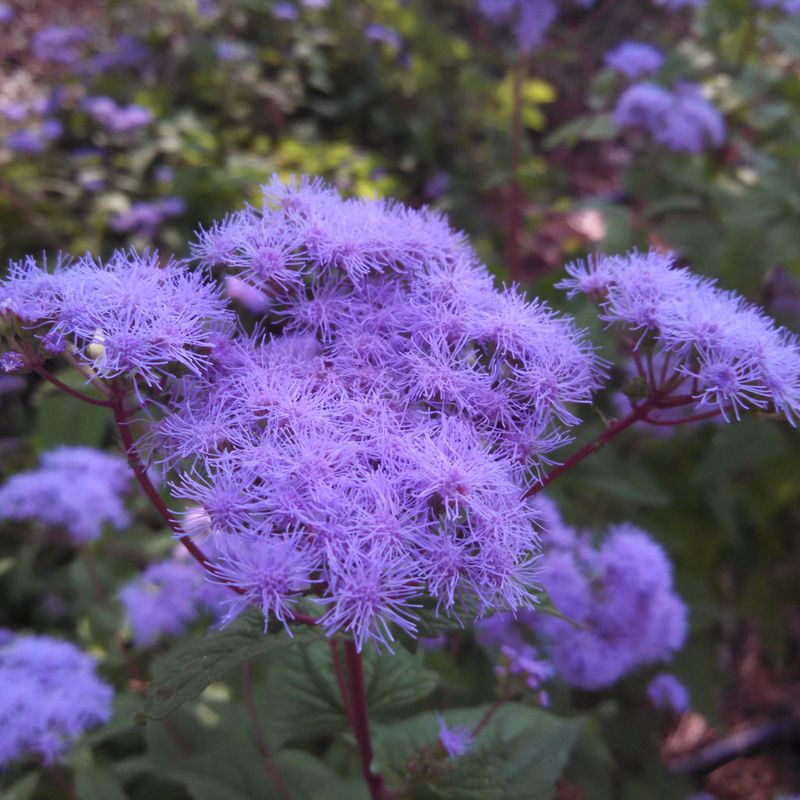
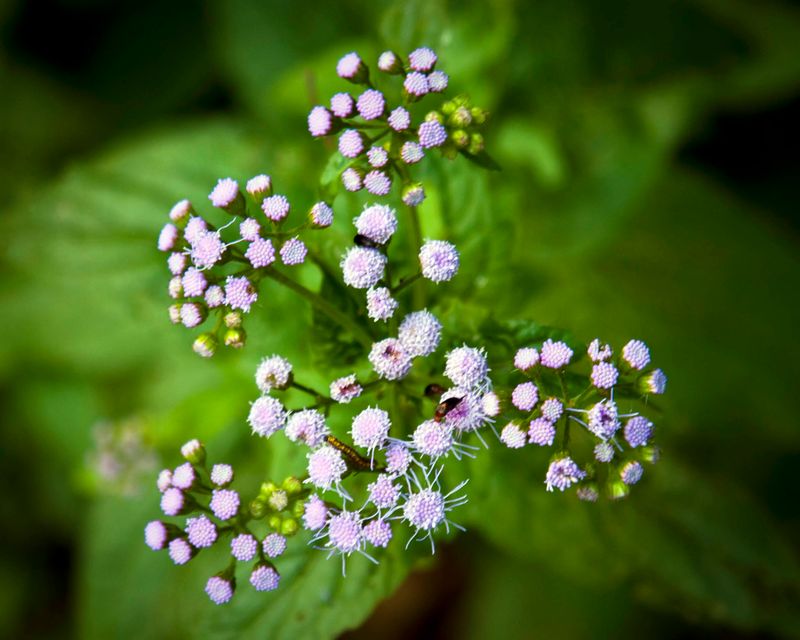
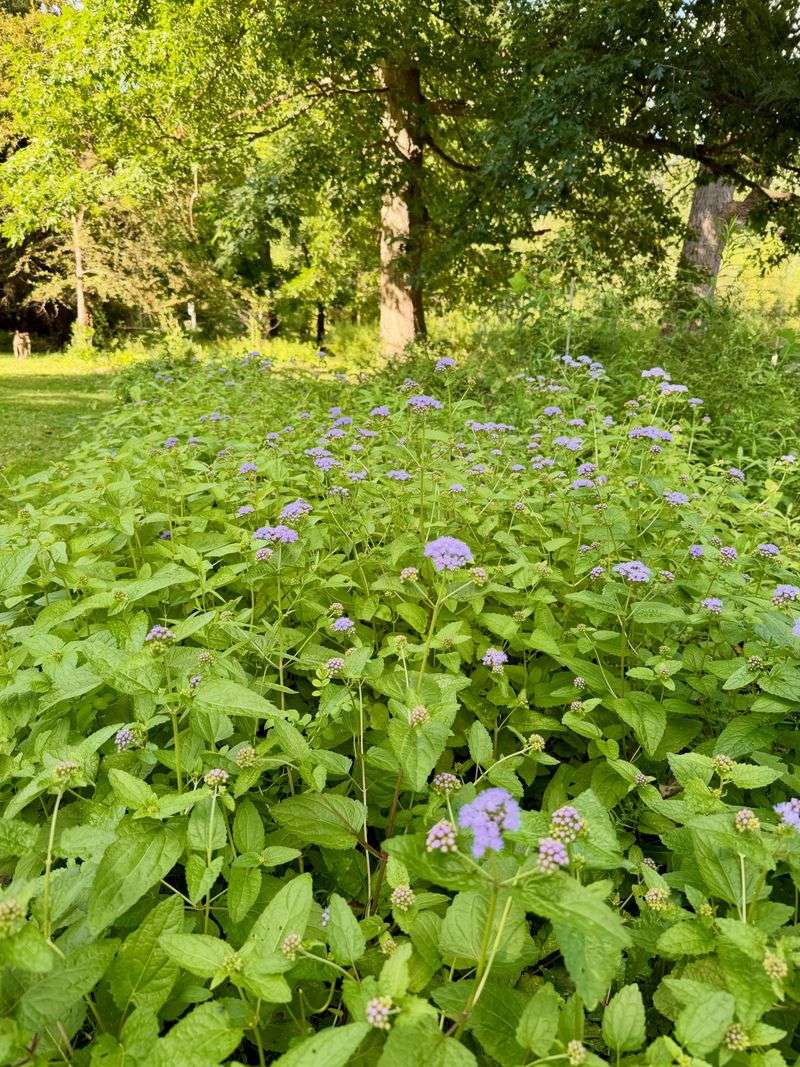
Picture a mound of soft, powder-blue pom-poms hovering over green leaves just as summer gardens begin to look tired. That is blue mistflower (Conoclinium coelestinum).
NC State Extension’s Plant Toolbox describes it as a North Carolina-native perennial with fluffy blue-purple flower clusters that bloom from late summer until frost.
Exact timing varies. NC State lists July to October, while a USDA Appalachian plant guide gives July to November.
Local weather, your region, and the timing of the first frost all shape when the flowers open and how long they last, so do not plan around a specific calendar date.
It also helps to keep the plant in context. Blue mistflower is one option for late-season color, not the only one.
The NC State Extension Gardener Handbook lists other native perennials with fall interest, including narrow-leaf sunflower, wrinkle-leaf goldenrod, and calico aster.
Nobody has measured how many North Carolina homeowners grow blue mistflower, so calling it rare would be a guess. What can be said is that its cool blue shade is a different look from the yellows and golds that dominate many autumn plantings.
If you want that contrast, it is worth a closer look, starting with whether your site can support it.
Match the plant to your North Carolina site
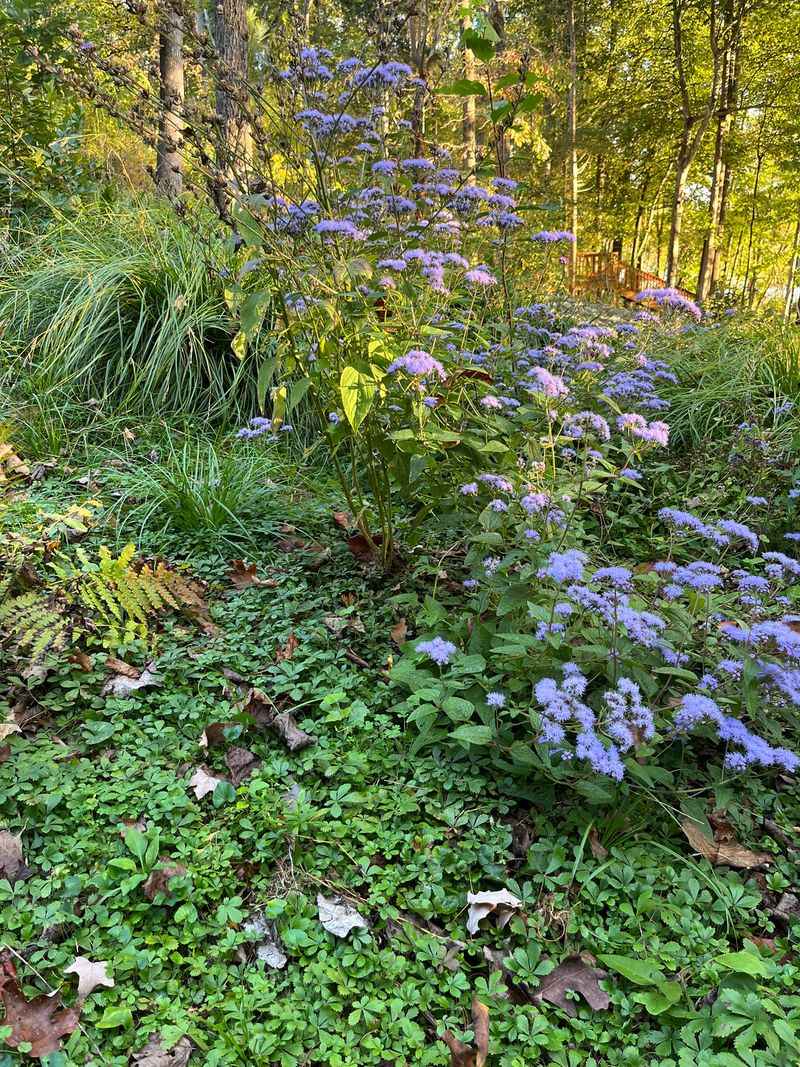
Before you buy, walk your yard and look for the wet spots. NC State’s Plant Toolbox records blue mistflower in the Coastal Plain, Piedmont, and Mountains, and lists a preference for sun to partial shade and moist soil.
It also notes tolerance of occasional flooding, which makes low spots and rain garden edges good candidates.
Clemson Extension likewise suggests sun to part shade, and describes soil as moist to well-drained. So a spot that never dries to dust, such as the base of a downspout or a swale, is a better bet than a baked, sandy slope.
A simple test: after a few days without rain, push a finger into the soil. If it stays damp a few inches down, you are in the right territory.
If it is dry and crumbly, expect to water often or choose a different plant.
Being native statewide does not mean the plant suits every yard. The NC State Extension Gardener Handbook encourages matching plants to your local ecoregion and site conditions, and it names the Coastal Plain, Piedmont, and Blue Ridge as useful guides.
Your own soil, light, and drainage matter more than the county line.
Describe its wildlife value precisely
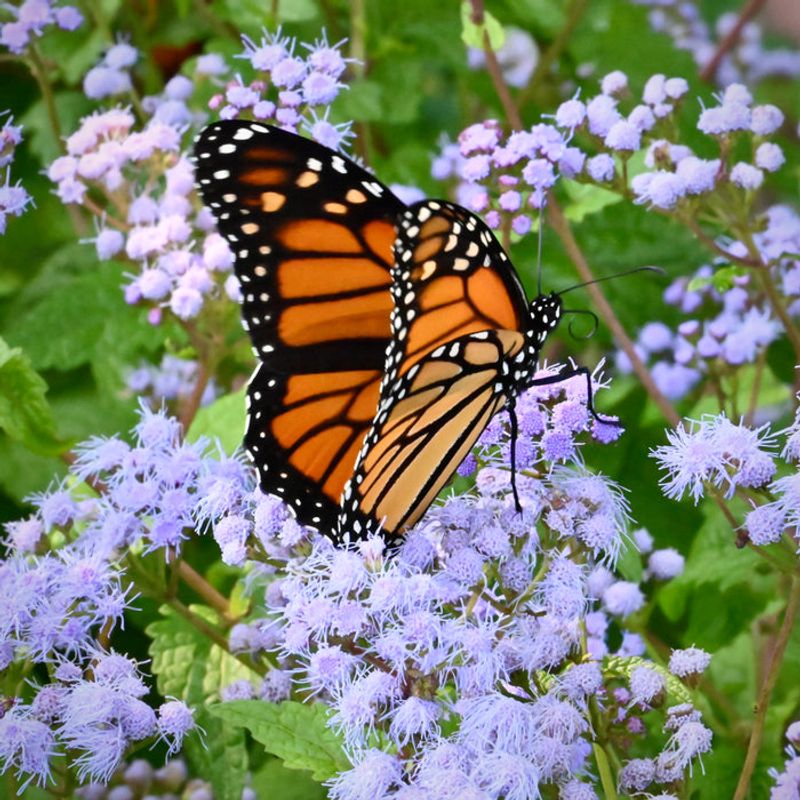
Flowers that bloom late can matter to insects looking for a meal. NC State’s Plant Toolbox says blue mistflower’s flowers attract pollinators and that birds use its seeds.
That is the documented core of its wildlife value.
The USDA Appalachian plant guide adds more detail on pollinators, including butterfly and bee use. If you plant it, a sunny day in the bloom season is a good time to stand nearby and watch who stops by.
Notice what these sources do not say. They do not name specific birds, and they do not tie the plant to fireflies, bats, or tick control.
Those claims have no support here, so it is best not to count on them.
Think of blue mistflower as one contribution to a wildlife-friendly yard, not a guarantee of visitors. Pairing it with other native plants that flower at different times gives pollinators more to work with across the seasons.
If you leave some seed heads standing after bloom, birds that use the seeds have a chance to find them.
Give its spreading habit room
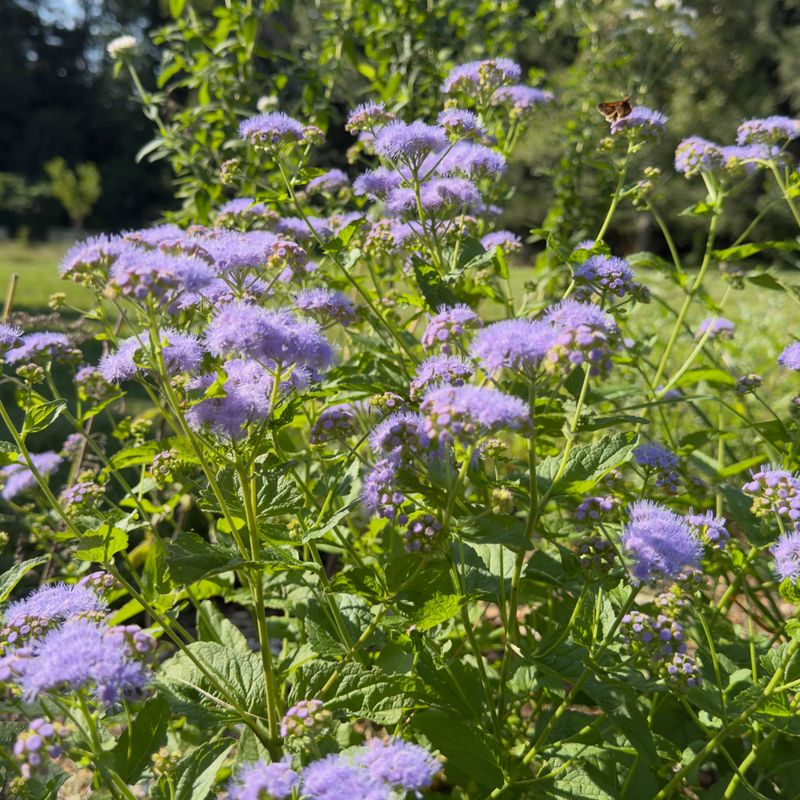
Here is the catch. Blue mistflower spreads by rhizomes, which are underground stems, and also by seed.
NC State’s Plant Toolbox notes that it grows rapidly and may become weedy, and the same source does not recommend it for smaller planting areas.
That makes it a better fit for a larger naturalized patch, a rain garden fringe, or a spot where you can watch its progress and pull wandering stems each season. Picture a mowed boundary or a path edge that holds it in place.
A narrow border beside prized perennials would be a much harder job.
Vigorous does not mean invasive in the usual sense. Blue mistflower is a North Carolina native, and non-native invasive plants are a separate problem because they arrive from elsewhere and push out local species.
The NC State Extension Gardener Handbook also cautions that native plants are not maintenance-free in home landscapes, and this one proves the point.
A practical check: if you find new shoots a foot or two beyond the original clump, that is the rhizomes at work. Digging them out early is far easier than waiting until the patch has filled the bed.
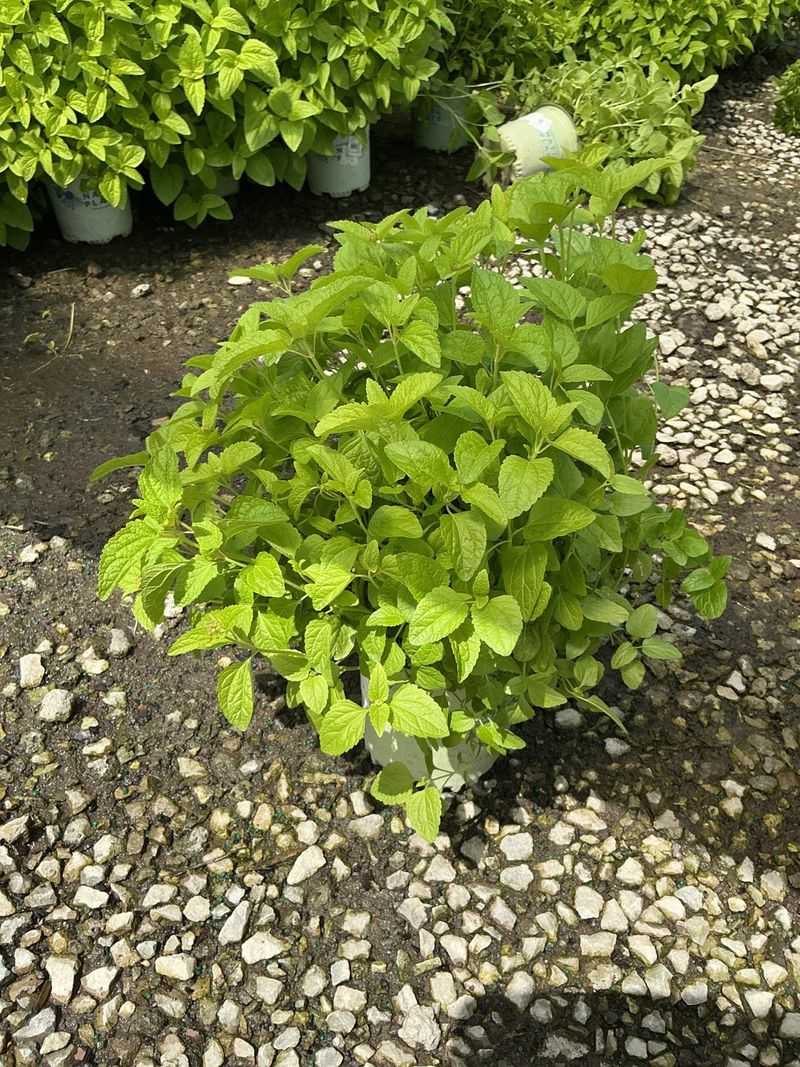
Start with a nursery-propagated plant
The temptation is real when you spot a blue haze along a roadside or creek bank. Resist it.
The NC State Extension Gardener Handbook warns that collecting plants from the wild can harm natural populations.
Wild-dug plants may also perform poorly after transplanting, since much of the root system is left behind. And for some protected species, collection may be restricted.
Blue mistflower itself is easy to find from growers, so there is little reason to take the risk.
Look for a native plant nursery or a garden center that can tell you its plants were propagated rather than dug. Ask directly.
A good grower will know the answer and may have local-ecotype options.
Once the plant is home, plan to water. The same handbook cautions that native plants are not maintenance-free and recommends watering new natives well while they establish.
For blue mistflower, which likes moist soil, that means checking the root zone often through its first season, especially during dry stretches. Mulch around the plant helps hold moisture, but keep it from piling against the stems.
Fall planting does not guarantee fall flowers
Planting season and bloom season are two different calendars. Blue mistflower’s flowers are a late-summer-to-fall feature, according to NC State’s Plant Toolbox.
Putting a plant in the ground in October will not produce a blue show that same month.
General North Carolina guidance does support fall planting for many plants. An N.C.
Cooperative Extension article explains why fall is a good time to plant. Be aware that it addresses trees and shrubs, not blue mistflower specifically, so treat it as a general principle rather than a plan for this plant.
The likely payoff from a fall planting is a later season, not instant flowers. Buying a plant already in bloom at a nursery can give you a preview, but the real test comes the following year, once roots have settled.
Early spring is another option the Plant Toolbox points to, since the plant can be propagated by division then. Whichever season you choose, keep the new plant watered.
Patience is part of the deal, and the reward is a stronger plant when its flowers finally open.
Choose it for the right patch
Blue mistflower may suit you if you can answer yes to three questions. Is your soil moist, is the spot sunny or partly shaded, and do you have room to watch a spreading plant?
NC State advises against it for smaller planting areas, and the Extension Gardener Handbook urges matching plants to site conditions.
If you have a small bed or dry ground, skip it and choose another native for fall color. A plant in the wrong place only becomes a chore.
In the right patch, though, it hands you a cloud of blue.