
Protect Next Summer’s Hydrangea Blooms: What To Do and What To Skip After the Flowers Fade
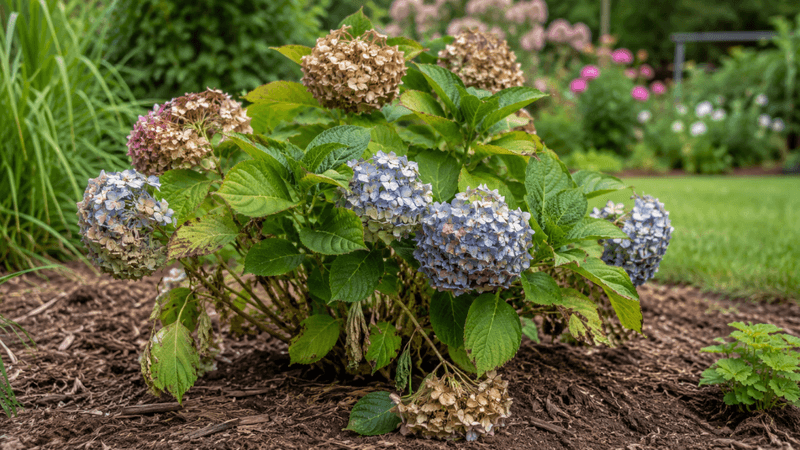
The flowers on your hydrangea are fading, and you may be wondering if you should grab the pruners. Some hydrangeas have next summer’s buds forming on their stems right now, so the wrong cut can cost you blooms.
No fall routine can promise a certain number of flowers, but a few simple choices can help you avoid common mistakes. Here is what to do, what to skip, and what to check if your shrub has been shy about blooming.
Your hydrangea’s type determines where next year’s flowers begin
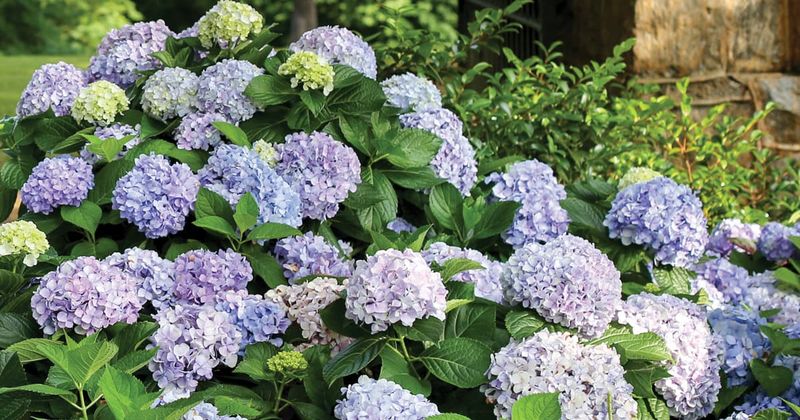
Before any pruning shears come out, it helps to know what kind of hydrangea you have. Hydrangeas are not all alike, and the biggest difference is where the flowers form on the plant.
Two terms matter here. Old wood means stems that grew during a previous growing season.
New wood means growth the plant produces in the current season.
According to Mississippi State University Extension, bigleaf hydrangeas (the mopheads and lacecaps), oakleaf hydrangeas, and mountain hydrangeas generally bloom on old wood. Panicle and smooth hydrangeas bloom on new wood.
The same source notes that flower buds on old-wood types form before the following season, which is why timing matters so much for them.
There is one wrinkle. Some reblooming bigleaf cultivars can flower on both old and new wood, so a simple old-versus-new rule does not always fit them.
If you bought a plant labeled as reblooming, treat it as its own case.
Think of this as orientation, not a pruning order. Your first step is simply to identify your plant.
Look for the plant tag, check your purchase records, or compare your leaves and flower shape with photos from a trusted extension site. Panicle types often have cone-shaped blooms, while oakleaf types have leaves shaped like oak leaves.
If you cannot tell what you have, that is perfectly fine. University of Maryland Extension stresses that pruning advice depends on the hydrangea group, so the safest move for now is to hold off on major cuts until you know.
A fall cut can remove flowers already waiting on old-wood stems
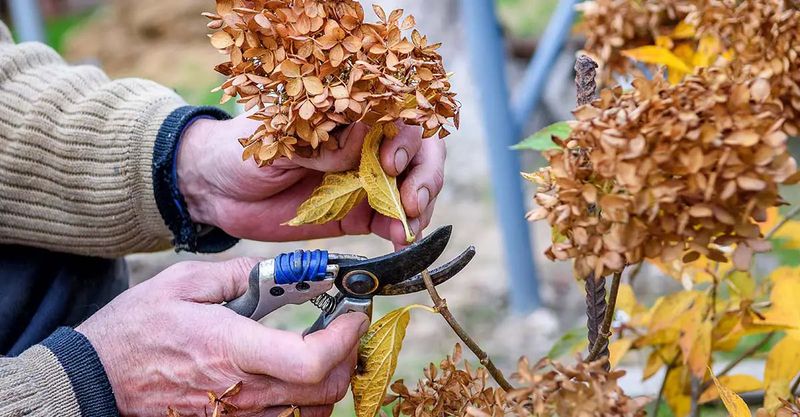
Picture this: a tidy gardener cuts the whole hydrangea back in October, and the next June brings green leaves and no flowers. It is a common story, and it is easy to avoid.
On old-wood hydrangeas, next summer’s flower buds may already be sitting on the stems. Illinois Extension describes these buds forming in late summer and fall.
A big fall cut can remove them along with the stems.
For bigleaf, oakleaf, and mountain hydrangeas, the safer plan is to skip substantial pruning in fall. These types are generally pruned shortly after they finish flowering, not as part of a routine fall cleanup.
If a stem is clearly dead, broken, or crossing another, a small targeted cut is low risk.
Notice that this advice follows the plant, not the calendar. There is no single date that works for every yard in the country, because growth cycles and frost timing vary.
What matters is the type of hydrangea and where it is in its growth cycle.
Also keep in mind that pruning is not a way to get more flowers. University of Maryland Extension explains that pruning can sometimes make flower clusters bigger while reducing how many clusters the plant makes.
When in doubt, put the pruners away for the season. Leaving stems alone costs you nothing, and it keeps those hidden buds safe.
New-wood hydrangeas can wait until late winter or early spring
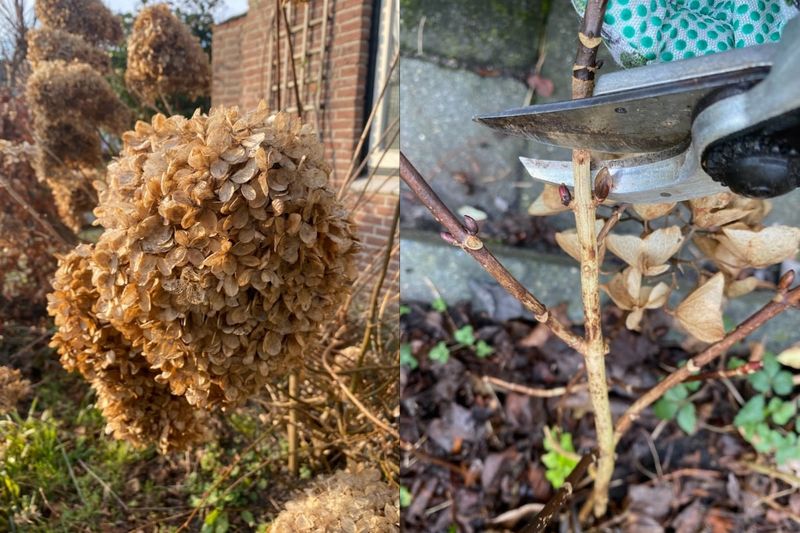
Panicle and smooth hydrangeas play by different rules. They flower on growth produced in the current season, so cutting their stems does not remove buds the way it can on old-wood types.
If pruning is needed, Illinois Extension points to late winter or early spring, before new growth begins, as a practical default. That gives you time to decide what the shrub needs once you can see its shape.
Notice the words “if pruning is needed.” Nobody has to cut a panicle or smooth hydrangea back every year. Some gardeners prefer to leave the dried blooms standing through winter for the look of them, and that is a fine choice.
This also does not turn into a fall pruning rule. Waiting until late winter is simply a convenient window for new-wood types, and it should not be copied onto every hydrangea in the yard.
The mix-up usually happens when a yard holds more than one kind of hydrangea. A cutback that is safe for a panicle hydrangea can wipe out the flowers on a neighboring oakleaf.
So before you prune anything, confirm which plant is which, and treat each one on its own terms.
Does deadheading help next summer’s flower count?
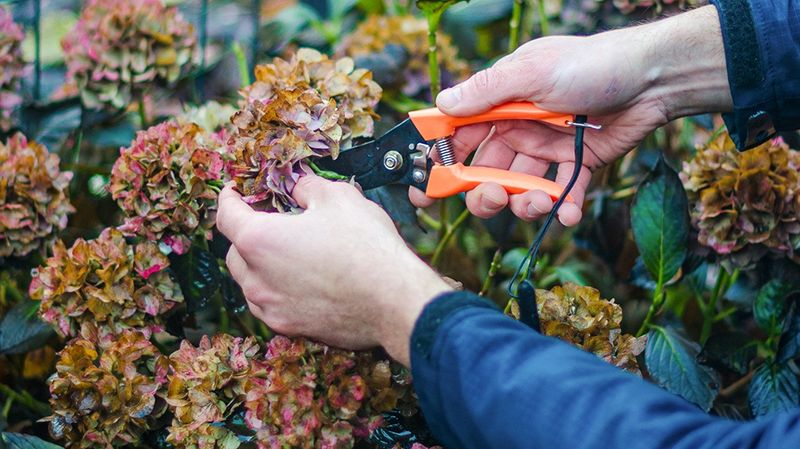
Short answer: no, removing faded flowers has not been shown to give you more blooms next summer. Deadheading is optional.
According to University of Maryland Extension, you can deadhead after flowering, but it is not required, and your plant does not need it to stay healthy. The one possible payoff is faster rebloom, and that applies only to varieties capable of repeat flowering.
So if you grow a reblooming bigleaf and want to nudge it along, snipping spent flowers during the growing season is reasonable. If you grow a once-a-year bloomer, leaving the old heads in place does no harm.
Some gardeners keep the faded blooms on purpose. The dried heads can add interest to a fall garden and may be left standing until you are ready to tidy up.
If you do deadhead, keep the job small. Remove just the old flower head, cutting above the first set of healthy leaves, rather than shortening whole stems.
That keeps deadheading separate from pruning, which is the task that can remove developing buds on old-wood types.
Skipping this chore is never a mistake you need to worry about.
Water during a dry fall, not by a frost-date formula
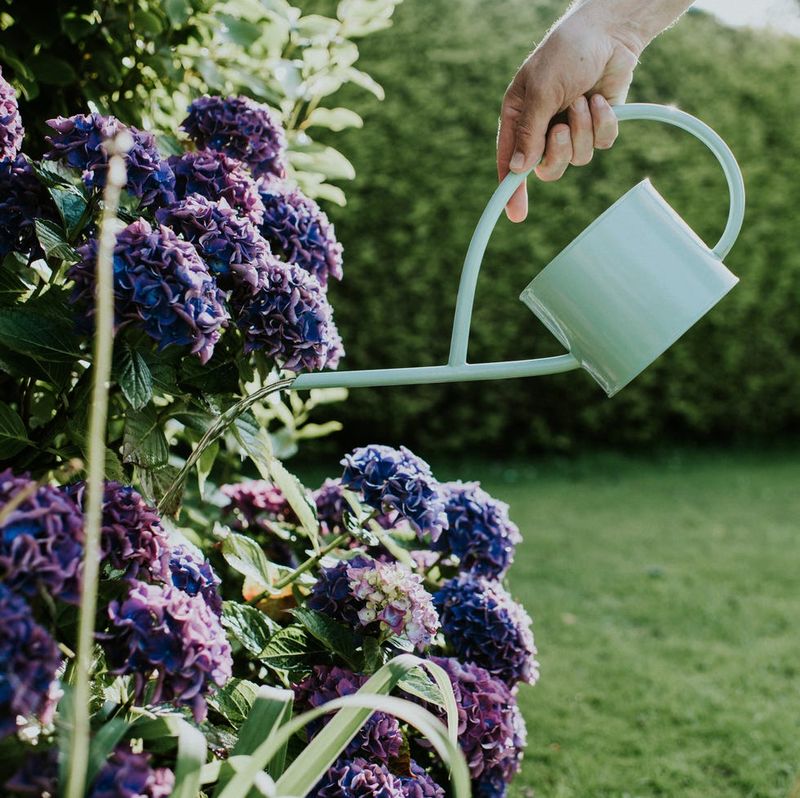
Watering in fall comes down to what the weather is doing, not what the calendar says. If rain has been missing for weeks, your hydrangea can use a drink.
Colorado State University Extension advises watering shrubs during prolonged dry fall and winter periods when conditions allow. The key condition is that the soil is not frozen.
That guidance does not set a special hydrangea watering deadline before hard frost.
A simple check works well. Push a finger or a trowel a few inches into the soil near the plant.
If it feels dry, water slowly at the base so the moisture soaks in instead of running off. If it is damp, wait.
Since frost dates differ so much across the country, a rule like “stop watering on October 15” would be wrong for many yards. Let the soil and the weather guide you.
Be clear about what this does. Watering is plant care that keeps the root zone from drying out.
It has not been shown to protect flower buds or add to your bloom count.
That should take some pressure off. A dry spell calls for a hose, a rainy fall calls for nothing, and neither decides next summer’s flowers.
Mulch supports the root zone, not a promised bloom count
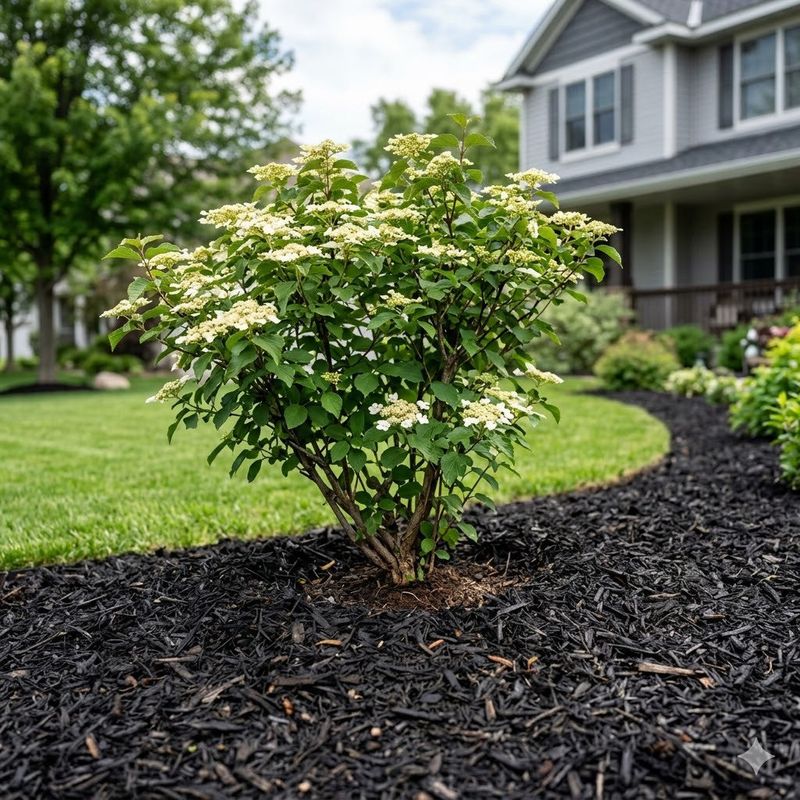
A layer of mulch is one of the kinder things you can do for the soil around your hydrangea. It just will not give you a guaranteed number of flowers.
Mulch can conserve soil moisture and moderate root-zone temperatures, which makes it a protective measure for the plant’s roots. It has not been shown to increase flower numbers or to keep flower buds safe.
For general landscape plants, Penn State Extension gives a mulch depth of 2 to 3 inches. Treat that as a starting point, since local climate, soil, and the needs of your particular plant all matter.
Placement matters as much as depth. Pull the mulch back so it does not touch the stems.
Piling it against the base can hold moisture against the plant, so leave a small gap, like a doughnut rather than a volcano.
If your bed already has a good layer of mulch, you may only need to fluff it or top it up where it has thinned. There is no need to add more just because fall has arrived.
Think of mulch as a blanket for the roots. It is helpful housekeeping, and it is not a bloom plan.
Poor blooms may have causes that fall chores cannot fix
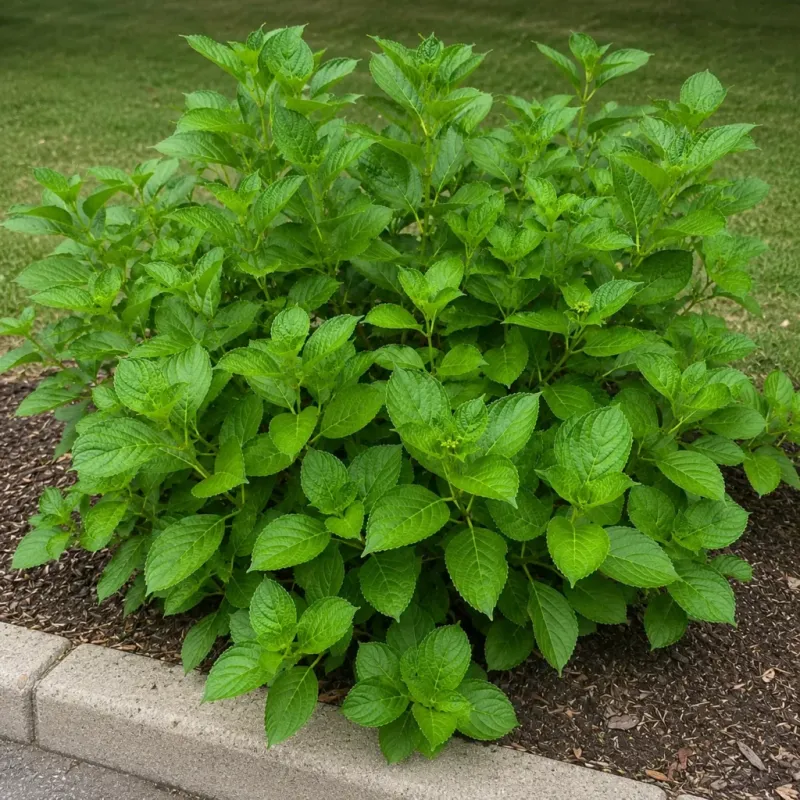
If your hydrangea gave you leaves and few flowers, please do not assume you did something wrong last fall. Plenty of causes have nothing to do with your autumn to-do list.
Winter cold and late spring frost can damage flower buds, especially on old-wood types. University of Maryland Extension lists cold injury, mistimed pruning, deer browsing, and excessive nitrogen among the possible reasons for poor bloom.
Winter protection helps in some cases, but it is not a guarantee.
Illinois Extension adds insufficient light and early frost to the list. A shrub that has slowly lost sun as nearby trees grew can bloom less each year.
Here are a few clues to check:
Chewed or snipped stem tips point to deer. Healthy green stems that died back to the ground after a hard winter suggest cold injury.
Lush leaves with few flowers, especially after heavy feeding, can signal too much nitrogen.
That last one is why fall fertilizing is not a bloom fix. High-nitrogen fertilizer can favor leafy growth and sometimes reduce flowering.
Rather than a blanket recipe, follow a soil test or guidance written for your specific plant.
Work through the list one cause at a time. Finding the real culprit is more useful than adding another chore.
Protect potential blooms without expecting a guaranteed count
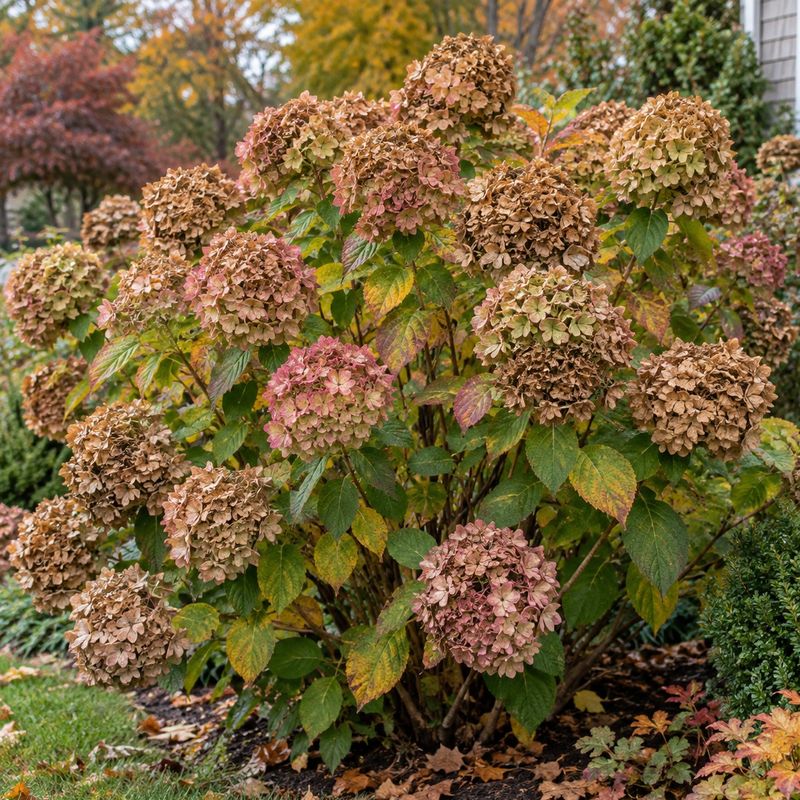
Start by identifying your hydrangea, because that one step guides everything else. On bigleaf, oakleaf, and mountain types, skip unnecessary pruning so you do not remove buds that Illinois Extension says may already be formed.
Water when fall stays dry and the soil is unfrozen, as Colorado State University Extension advises, and add mulch if the bed needs it, following Penn State Extension depth guidance. Both are plant-health care.
Since cold, frost, and growing conditions also play a part, as University of Maryland Extension notes, no step guarantees a flower count.
A hydrangea left alone is usually a hydrangea left safe.