
Should You Cut Back Purple Coneflowers in Fall? Seed Heads for Birds, Repeat Blooms, and Cleanup
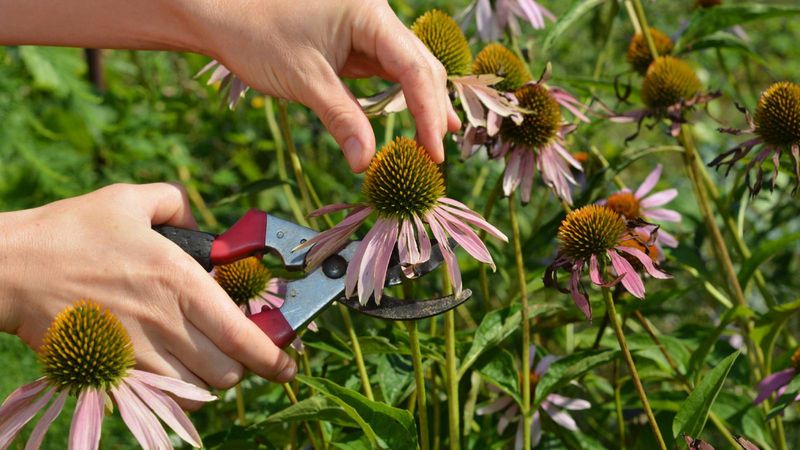
Your purple coneflowers are fading, and you may be wondering whether to grab the pruners or leave them alone. Both choices can work, and each one gives you something a little different.
Faded heads can feed hungry birds and even grow new seedlings, while careful trimming can keep flowers coming for a while longer. Here is how to pick the path that fits your garden.
Why leave a few faded heads standing?
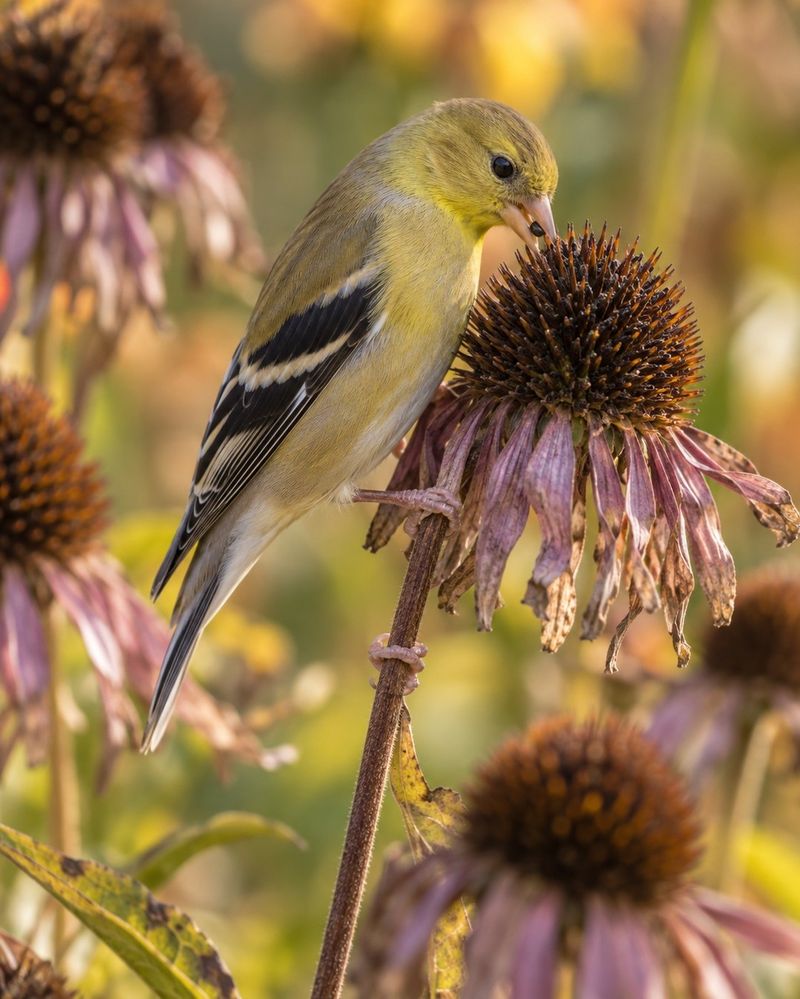
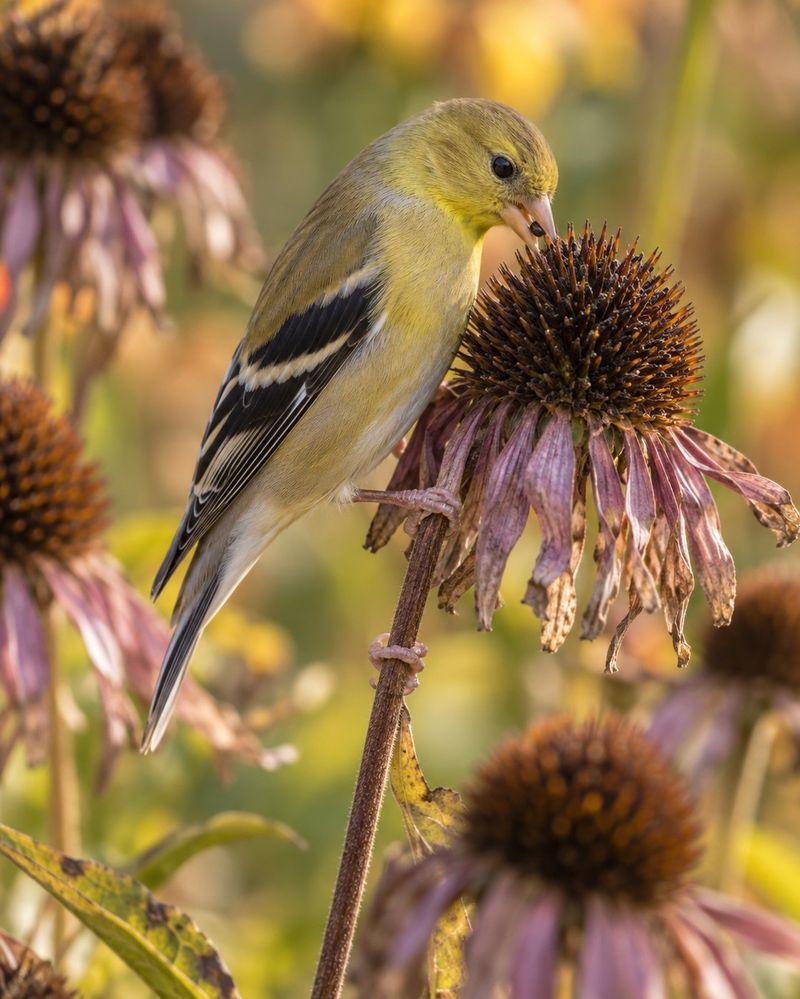
Once the petals drop, a purple coneflower seed head looks a bit scruffy. To a hungry bird, though, it looks like a snack bar.
Penn State Extension notes that goldfinches feed on purple coneflower seed heads, and that makes healthy faded heads a potential food source through fall and winter.
Notice the word potential. Seeds on the stem are food that is available, but nobody can promise which birds will stop by, how many, or when.
Some gardens get regular goldfinch visits, and others see very little. Think of it as setting out a small, free buffet and seeing who shows up.
Leaving heads also lets seeds mature. Iowa State Extension points out that if you want seed for birds, you can hold off on deadheading.
Some of that seed may drop to the soil, and you may find young coneflower seedlings nearby next season.
If that sounds like a bonus, you can simply leave a handful of heads standing. If you like a tidy bed or do not want volunteers popping up, you can cut them before the seeds ripen.
Nothing about this is a rule. It is just a choice about what you want your garden to give back.
One more perk is purely visual. Dark, sturdy seed heads sticking up through frost or snow add shape to a bed that would otherwise look flat and empty in winter.
A few standing stems can make a quiet garden feel a lot more alive.
Deadheading trades seed for more flowers now
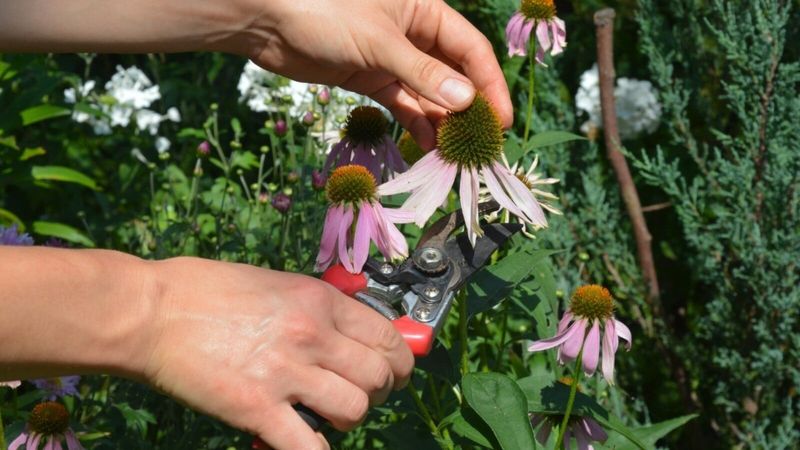
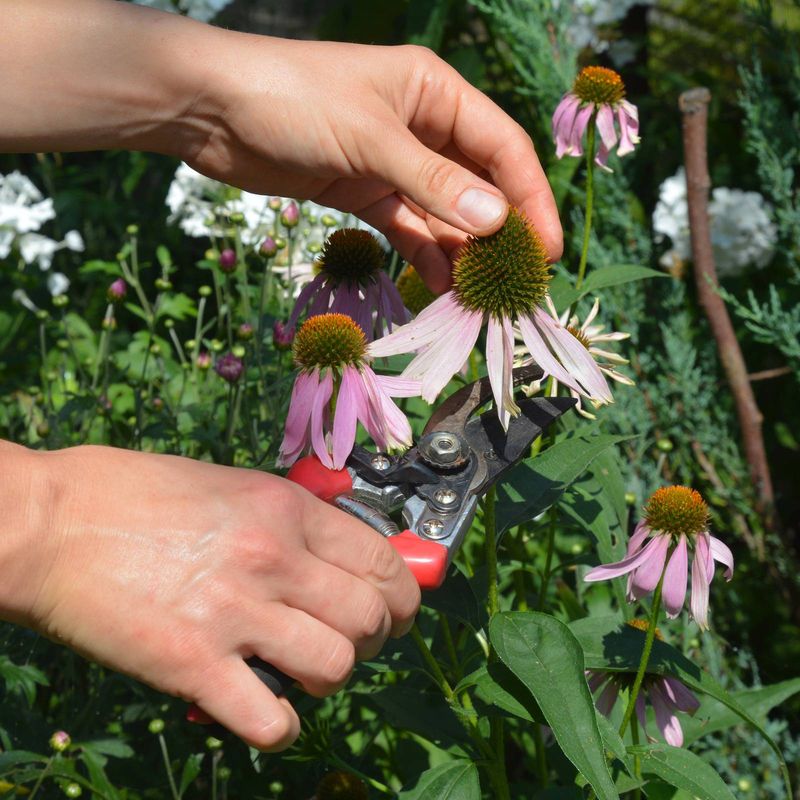
Picture a coneflower in midsummer with a few tired blooms and a few fresh buds. Snipping off the tired ones may nudge the plant to push out more flowers before the season ends.
University of Illinois Extension describes pruning perennials this way as one route to longer-lasting blooms.
There is a catch. A plant that never gets to make seed has nothing to offer a hungry finch later on.
As Iowa State Extension explains, deadheading and seed for birds pull in opposite directions, so you are trading seed for a chance at more flowers now.
Here is a practical way to picture it. Cut the heads on the plants by your patio, where you want color for as long as possible.
Leave the heads on plants at the back of the border, where seed and winter shape matter more than another round of petals.
It also helps to be clear about what deadheading does not do. The extra flowers it may encourage arrive during the same growing season.
Nothing in the guidance we reviewed shows that deadheading, or skipping it, changes how big your blooms will be next summer.
So if a coneflower looks a little thin this year, you have not failed it by leaving heads on, and you have not doomed it by trimming them. Cut where you want more color now, and leave the rest for the birds.
A flexible fall plan keeps both options open
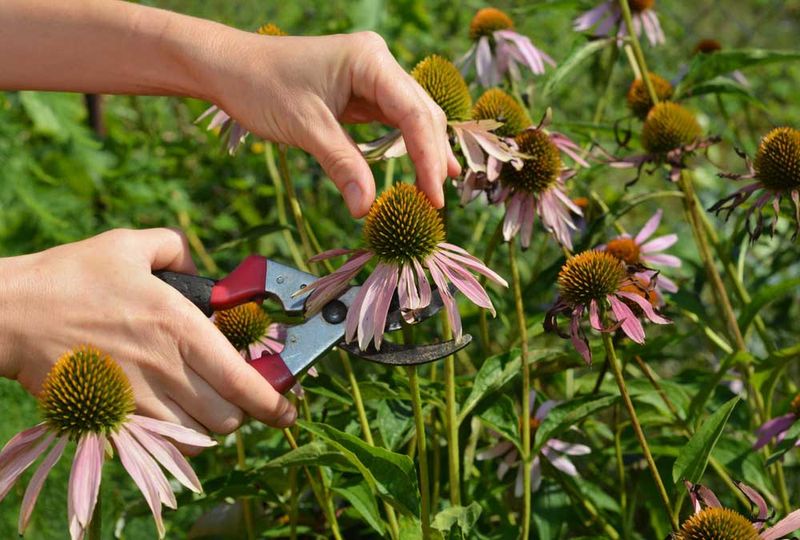
If you like having both options, here is an easy sequence. While the plants are still blooming, snip off faded flowers here and there to encourage more color.
Then, as the season winds down, stop and leave some of the healthy heads in place.
That is the whole plan. It is not a schedule your plants need to stay healthy, and the sources do not require it.
Iowa State Extension lays out the trade between more flowers and more seed, and this simply lets you enjoy a bit of each.
Leaving late heads gives birds a potential winter food source and gives seeds a chance to drop. If you would rather skip volunteers, cut the heads before the seeds mature.
Either way, you are in charge, and neither choice is wrong.
One thing to know about seedlings: if your coneflowers are hybrids or named cultivars, the babies may not look like their parents. University of Illinois Extension notes that results can vary, and Clemson Extension covers the many species and cultivars in the genus.
A pink, double-flowered parent might produce plain, single-petaled offspring.
Treat any seedlings as a surprise rather than a copy. Some gardeners love the mix, and others pull the extras while they are small.
A small, pleasant gamble is a good way to think about it.
When can you cut established plants back?
Leaving seed heads for a few months does not mean you are stuck with old stems forever. Cutting back is a separate decision, and the timing is fairly relaxed.
Clemson Extension lists fall, winter, or early spring as acceptable times to cut back established Echinacea.
Penn State is a little more specific for purple coneflower. Its guidance says to cut the plants back in spring before new growth begins.
So if you live where winters are cold, waiting until late winter or early spring fits that advice and keeps the seed heads available longer.
Here is a simple way to choose. If you like a clean bed going into winter, cut in fall and enjoy the tidy look.
If you want seed for birds and some winter shape, wait, then cut once the days start warming and before fresh green shoots get tall.
When you do cut, trim the old stems down near the base of the plant. Watch for little leaf clusters starting at the bottom so you do not snip off new growth by accident.
If you are not sure, a quick look at the crown of the plant will tell you.
You can also split the difference. Cut back the plants near the house in fall and leave the ones along the fence until spring.
Diseased or mite-affected plants need cleanup
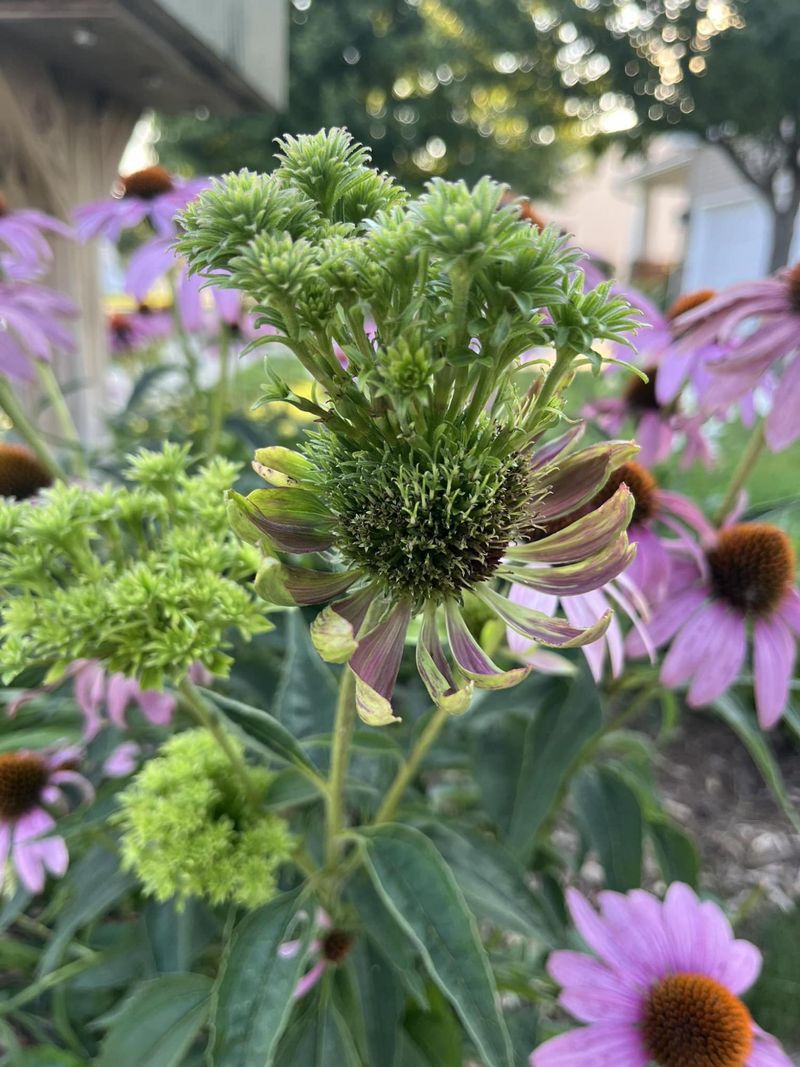
Everything so far applies to healthy plants. If a coneflower looks sick, the advice flips, and the plant is not worth saving as bird food.
Seed heads from a troubled plant are not a good thing to leave standing.
Start with the flowers themselves. Aster yellows can make blooms look twisted, greenish, or oddly bushy, and the plant may seem off overall.
Clemson Extension advises removing and destroying plants infected with aster yellows rather than keeping them in the garden.
Eriophyid mites are another problem. These tiny pests can damage flower heads and leave growth looking distorted.
For mite-affected plants, Clemson says to cut them to the ground in fall, then remove and destroy the debris.
Destroy here means do not leave the cuttings on the bed, and do not toss them in a compost pile. Bag them up and put them out with the trash instead.
If you are not sure whether a plant is just aging or actually affected, look at the pattern. A single odd flower on an otherwise normal plant may be nothing.
Several deformed heads, stunted growth, or strange color across the plant is a good reason to take action, and your local extension office can help you confirm what you are seeing.
What this fall choice can—and cannot—do
Here is the quick decision guide. Leave some healthy heads if you want potential bird food or a few seedlings.
Deadhead while the plant is still blooming if you want a shot at more flowers this season, and cut plants back in fall, winter, or spring, or clean up affected plants as directed.
What this choice cannot do is promise a result. Iowa State, Clemson, and Penn State support these care choices, but none of them show that leaving heads makes next summer’s blooms bigger.
They also do not guarantee more birds.
A seed head is a small gift, not a guarantee. Leave a few, and see who comes.