
Mulching Fall-Planted Garlic in North Carolina: Local Timing, Loose Cover, and a Spring Restart
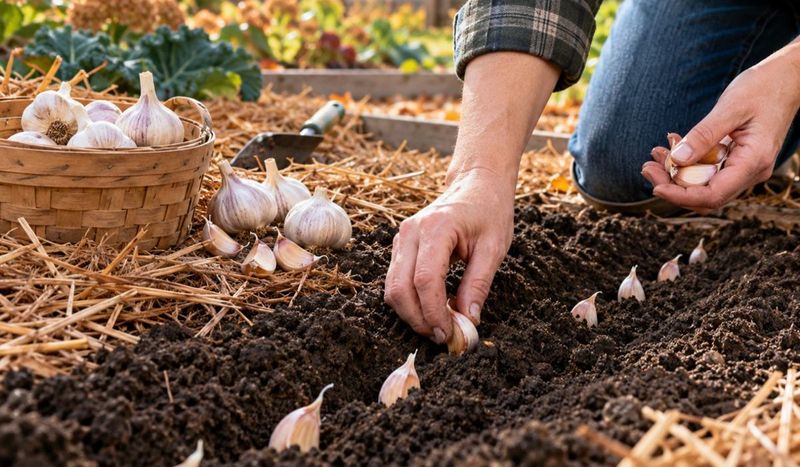
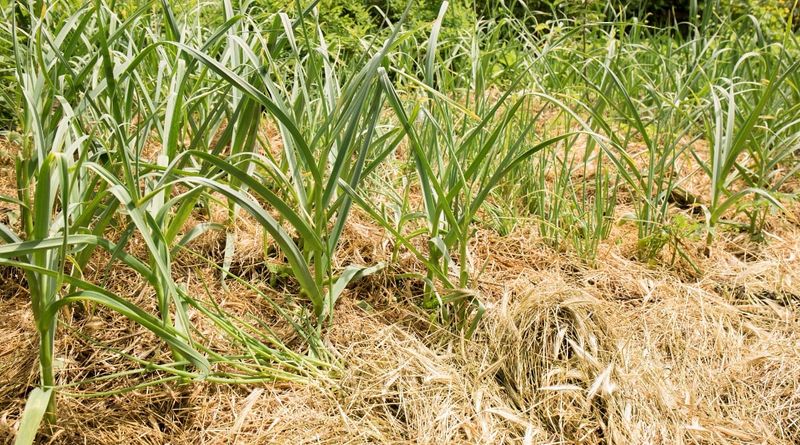
Picture a bed of green garlic shoots poking up through a light blanket of straw while the rest of the yard is still waking up. Getting there starts with a few choices you make in fall, and mulch is one of them.
In North Carolina, the right timing and the right kind of cover depend on where you live and what you planted. Here is how to cover your beds in a way that fits your yard.
The first hard freeze is not a statewide deadline
Many gardeners hear “mulch before the first hard freeze” and picture a single date on the calendar. North Carolina is too varied for that.
A Piedmont yard, a Coastal Plain bed, and a mountain garden each hit their first hard freeze at different times, so no one date fits everybody.
What matters more is how much time the cloves get to settle in. NC State’s garlic plant guide says garlic needs about 4 to 6 weeks to establish before the ground freezes.
The same guide gives late October through November as the usual planting window, and it notes planting can stretch into December in more southern areas.
Planting windows shift across the state. Extension guidance from Burke County in western North Carolina describes a September to October planting window.
Meanwhile, an eastern North Carolina garden calendar recommends planting garlic cloves and onion sets into November.
Keep in mind that these are planting windows, not mulching deadlines. They tell you when cloves should go in the ground, not the exact day a mulch layer must be down.
If you planted a bit later than planned, you have not necessarily missed some universal cutoff.
A better approach is to plant on the schedule that suits your region, then add mulch after planting as your local weather and soil allow. Check your county Extension office for timing that matches your area, and watch your own forecast and soil rather than a statewide date.
A loose cover can buffer garlic through winter
Winter soil does not stay at one steady temperature. Warm spells, cold snaps, and overnight freezes can swing the ground back and forth, and that can be rough on newly rooted cloves.
A layer of mulch acts like a light blanket that slows those swings.
That is the main reason gardeners cover garlic. University of Minnesota Extension recommends straw or leaf mulch on garlic to moderate winter temperature fluctuations and control weeds.
Minnesota winters are far harsher than most of ours, but the basic idea carries over to a North Carolina bed.
Weed control is the second payoff. Fall and winter weeds such as chickweed and henbit can crowd young garlic, and a layer of cover makes it harder for them to take hold.
Fewer weeds means less competition for water and nutrients when the garlic starts growing again.
Think of these as possible benefits, not promises. Mulch does not make a bed freeze-proof, and it cannot guarantee that every clove survives or that spring growth will be vigorous.
Variety, drainage, weather, and general care all play a part.
If you want a quick check, look at your bed on a cold morning. Soil that is covered and crumbly usually holds steadier than bare, crusted ground.
That small difference is what you are aiming for.
Choose a loose layer of straw or chopped leaves
Once your cloves are in the ground, cover the bed with something airy. Clean straw and chopped leaves are both good choices.
North Carolina Cooperative Extension lists straw and chopped leaves among suitable garden mulches.
Chopping leaves matters. Whole leaves can mat down into a soggy sheet, while shredded ones stay fluffy and let air and water move through.
Running a mower over a pile of oak or maple leaves is an easy way to get there, and it makes use of what your own yard drops each fall.
Look for straw that is clean, meaning free of weed seed and herbicide residue. Hay often carries seed heads and can seed your bed with grass.
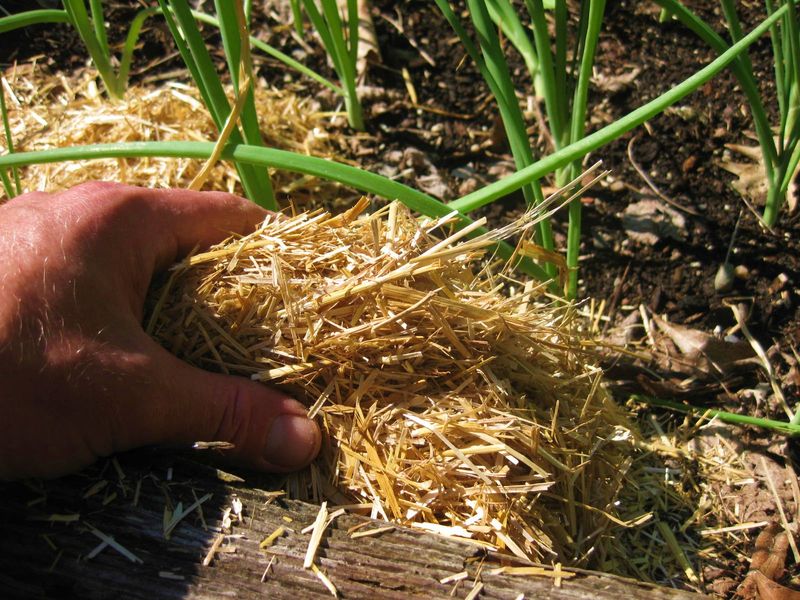
Fluff the straw as you spread it so it does not lie flat.
For depth, University of Minnesota Extension suggests 3 to 4 inches of straw or leaf mulch for garlic. That is a general Extension reference, not a depth tested in North Carolina for every site.
In a milder, wetter spot, you may want to start on the lighter side and see how the bed responds.
This advice is for garlic. Onions have their own needs, which we will get to shortly, so do not assume the same cover works the same way for them.
Wet, compacted mulch can work against the bed
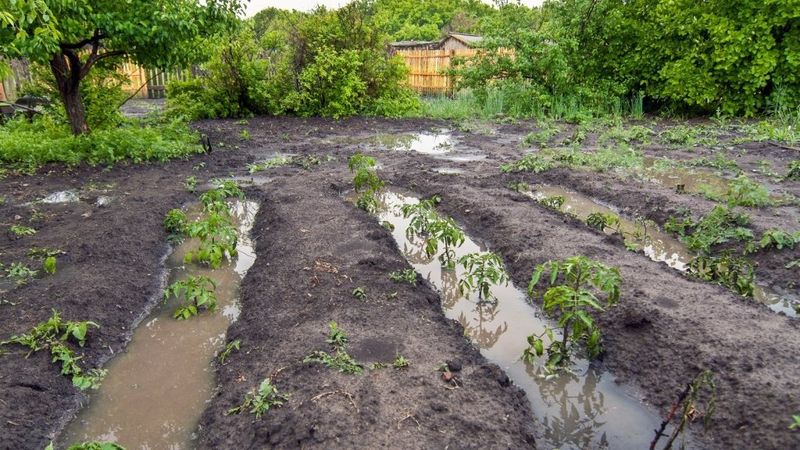
More mulch is not always better. A thick, soggy blanket can hold cold and moisture against the soil instead of protecting it.
In a wet North Carolina winter, that can cause real trouble for garlic.
University of Wisconsin Extension cautions that heavy mulch can delay spring soil warming, keep wet soil from drying out, or block moisture from soaking in. It specifically warns about wet leaves and fine sawdust, which pack down tightly and form a dense mat.
Here is how that plays out. Whole leaves from a rainy week can stick together like wet paper.
Sawdust can crust over and shed water instead of absorbing it. Under either one, the soil stays cold and clammy while the garlic is trying to restart.
Good drainage helps a lot. Raised beds, loose soil, and a slight slope all keep water from sitting around the cloves.
If your yard has heavy clay, as many Piedmont lots do, mix in compost before planting so water can move through.
Watch the bed as the season goes on. If the mulch feels slimy, smells sour, or stays soaked days after rain, fluff it with a hand rake or pull some of it aside.
A wet spring calls for a second look at the cover, and a thinner layer is often an easy fix.
Onions need a cultivar-aware winter plan
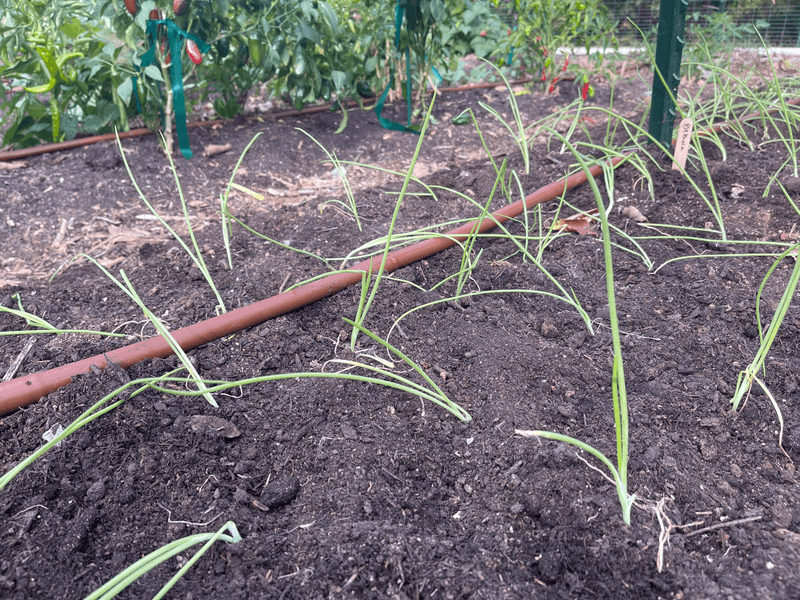
Garlic and onions are cousins, but they do not handle winter the same way. Before you mulch an onion bed, sort out what you actually planted: fall-planted bulbs or sets, or onions started from seed or spring transplants.
Each one follows a different schedule.
Onions respond to day length as well as temperature. NC State’s bulb onion guide explains that cultivar and planting date affect bulb formation, bolting, and overwinter survival.
Cold tolerance varies by cultivar, and planting too early in fall can raise the chance of bolting, when plants send up a flower stalk instead of making a good bulb.
That guide is production-oriented, so home gardeners should check local variety recommendations instead of assuming any onion set will make it through winter. An eastern North Carolina Extension calendar recommends short-day varieties such as Grano or Texas supersweet for that area.
Treat those names as examples for the east, not a list for the whole state.
The sources reviewed do not set one mulch depth or one freeze deadline for every North Carolina onion. So there is no tidy rule to borrow from garlic.
If you mulch onions, keep the layer light, watch how the plants respond, and lean on advice from your county Extension office.
A simple habit helps: write down the variety and planting date for each onion bed. Next fall, you will know what held up and what did not.
Reassess the mulch as spring approaches
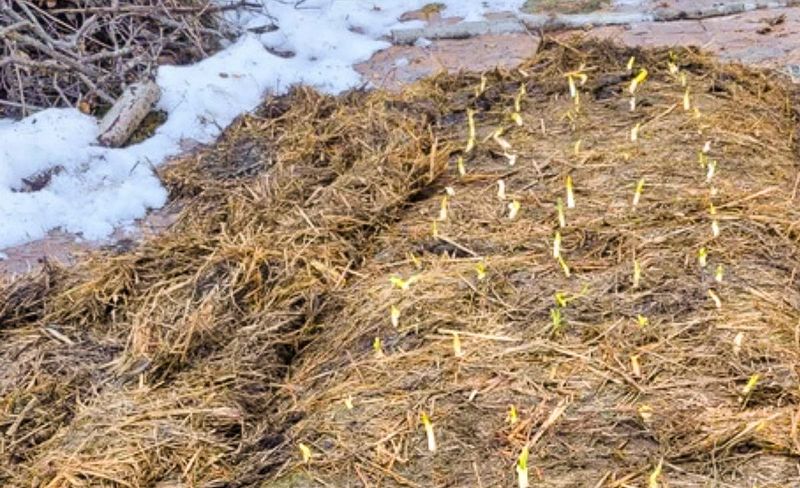
When late winter arrives and the garlic shoots start to push up, the mulch has a new job to think about. Leaving it alone is not automatic, and neither is clearing it all away.
The right call depends on how your bed looks.
Removing cover warms the soil sooner. University of Minnesota Extension says gardeners can pull mulch back after hard freezes to warm the soil, or leave it in place to help hold moisture and suppress weeds.
University of Wisconsin Extension likewise advises removing winter mulch after hard freezes, with the option to put it back later for weed control.
Use your own bed as the guide. Push a finger into the soil.
If it is cold and soggy under a thick layer, thin the mulch or rake it aside. If the soil is warming and drying out nicely and weeds are starting up, a light layer can stay or return.
Mountain gardeners may see hard freezes well into spring, while Coastal Plain beds often warm much sooner. That is why a calendar date will not do the job for you.
Keep the cover loose and thin rather than leaving a heavy layer untouched by default. A quick check every week or two as temperatures climb is usually enough to catch problems early.
Aim for a spring restart, not a guarantee
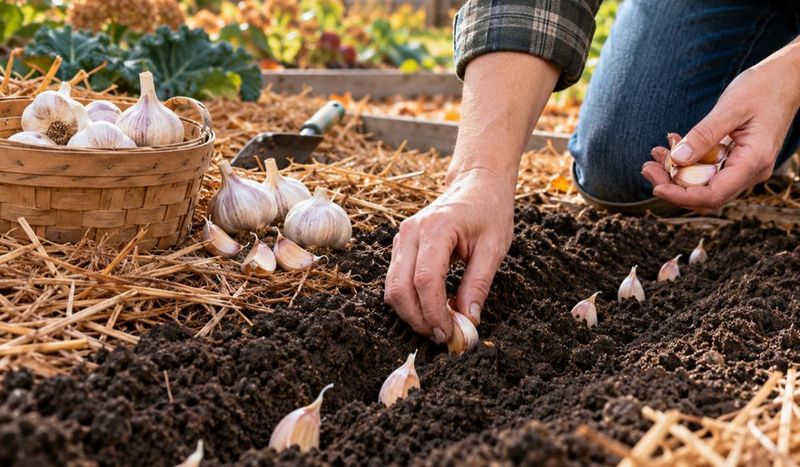
The payoff you are working toward is a bed that wakes up in spring and keeps growing. North Carolina Extension describes garlic returning to growth in spring, with harvest around June.
A suitable mulch may help the bed through winter, but it does not promise how strong that growth will be.
Evidence from elsewhere shows both the promise and the limits. A 2025 University of Maine trial at a single Maine site, using one hardneck variety, found higher winter survival in straw-containing treatments than in uncovered soil.
It says nothing certain about North Carolina survival or yield.
So the practical path is simple: pick a loose cover, adapt it to your region, and check the bed again when spring arrives.
Mulch is a helping hand, and the garlic still does the growing.