
Tomatoes That Turn Red On Your Kitchen Counter: 13 Ways To Ripen The Green Ones Before Frost Wins
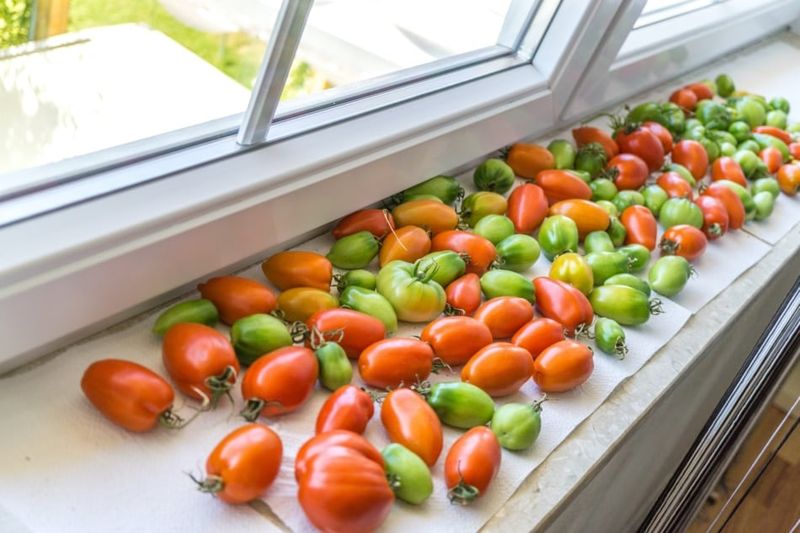
The forecast says frost tonight, and your tomato plants are still loaded with hard green fruit. Do not panic, because many of those tomatoes can still turn red indoors.
Tomatoes keep ripening after you pick them, as long as they are mature and handled the right way. Here are 13 simple ways to save your harvest and enjoy homegrown tomatoes for weeks after the garden shuts down.
1. Pick Mature Green Tomatoes Before the Hard Frost
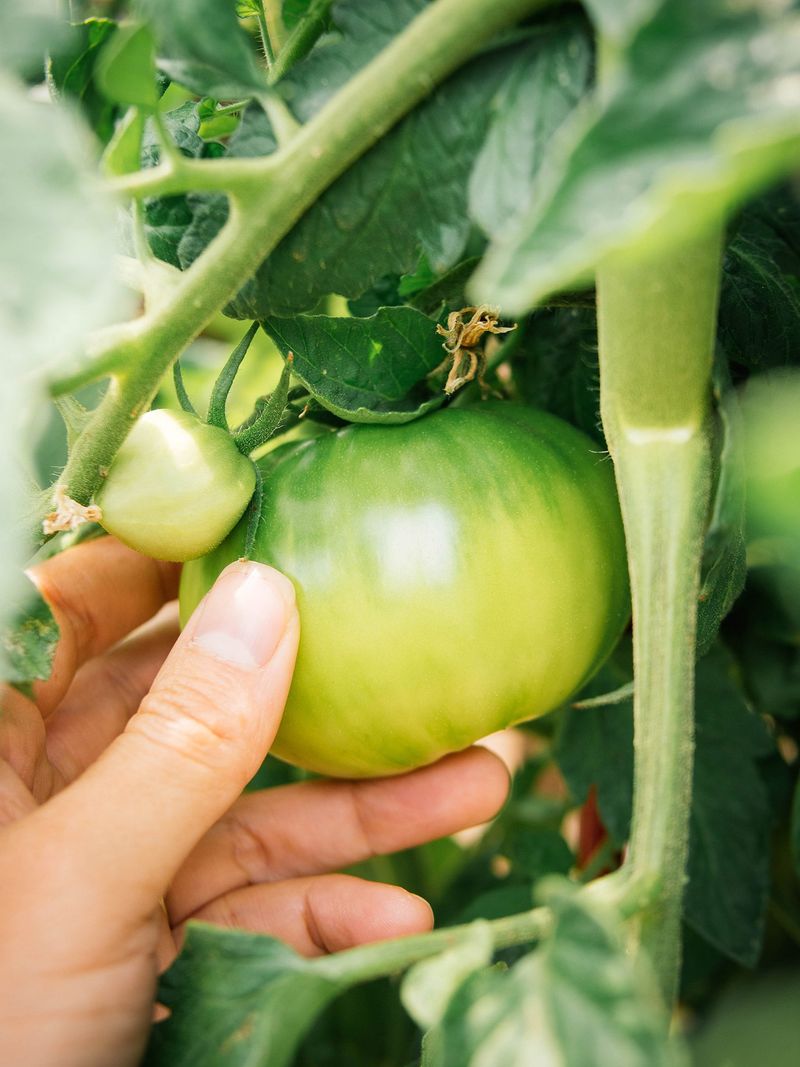
Timing is the whole game here. A tomato touched by a hard frost turns mushy and watery, and it will never ripen into anything you want to eat.
Look for fruit that has reached full or nearly full size, with skin that looks glossy and slightly pale instead of dark, flat green. Gently slice one open if you are unsure.
A mature green tomato has jelly-like seeds that slide away from the knife instead of getting cut in half.
Tiny, hard, dull fruit usually lacks the stored energy to ripen, so those are better for fried green tomatoes or relish. Leave a short bit of stem attached when you pick, because a stem stub keeps the fruit from getting punctured and lets less rot creep in.
2. The Brown Paper Bag Trick
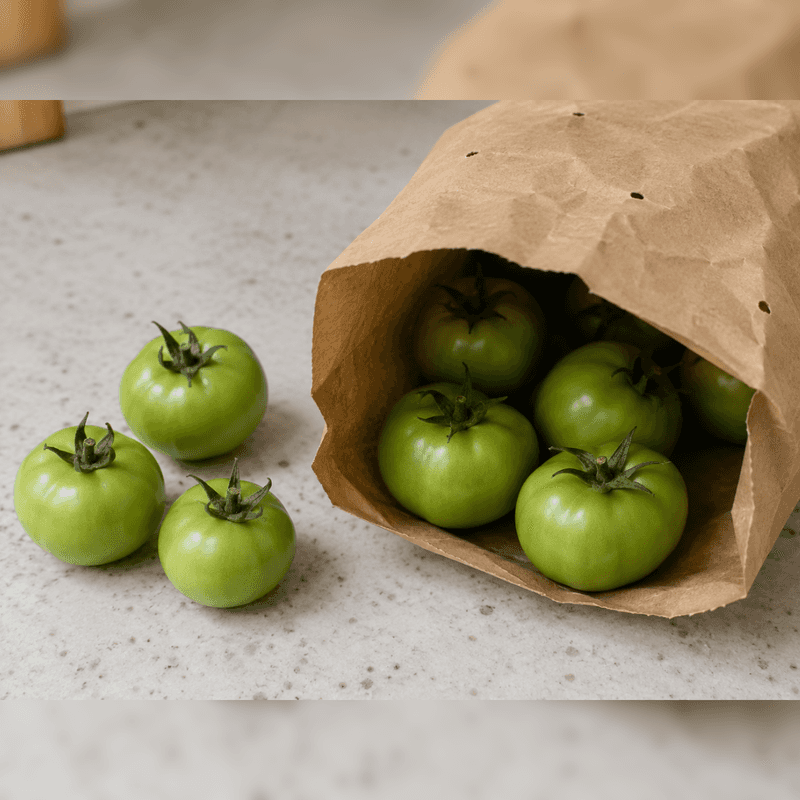
Grandmothers have sworn by this one for generations, and science backs them up. Tomatoes release ethylene, a natural ripening gas, and a paper bag holds that gas close to the fruit.
Drop three to five green tomatoes into a brown paper bag and fold the top over loosely. Paper breathes, so extra moisture escapes instead of building up into mold.
Peek inside every couple of days. Pull out anything that has turned red, and toss any fruit with soft spots before it spoils its neighbors.
3. Add a Ripe Banana or Apple
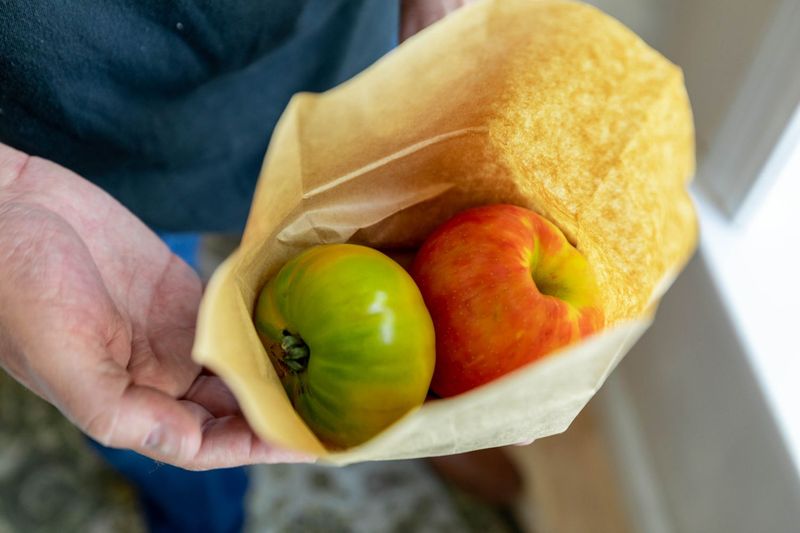
Want things to move faster? Invite a ripe banana or apple to the party.
Both fruits pump out a lot more ethylene than a green tomato does. Tucking one into your paper bag or box raises the gas level and can shave days off the wait.
A banana with brown freckles works especially well. Swap it out once it gets mushy, since a rotting banana adds moisture and fruit flies, not speed.
One apple or banana per bag of five or six tomatoes is plenty.
4. Cardboard Box Lined With Newspaper
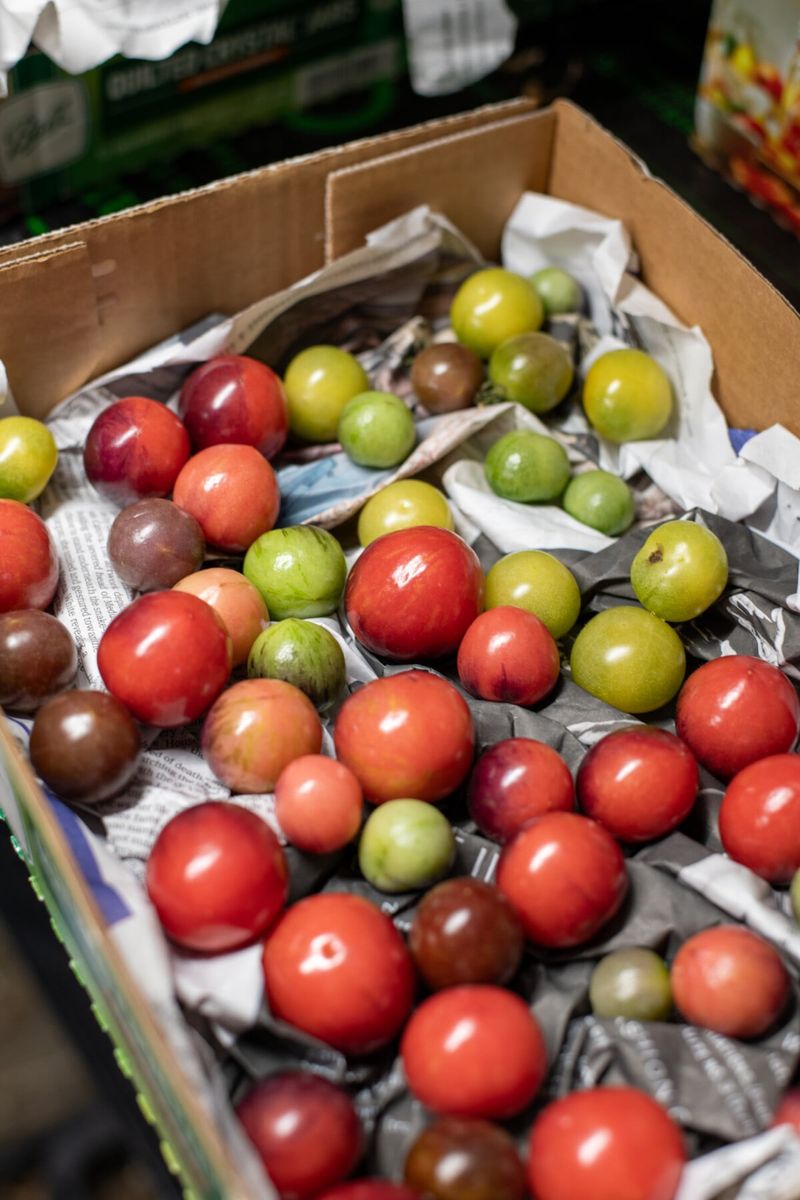
When the whole crop comes in at once, bags just will not cut it. A shallow cardboard box handles a big harvest without fuss.
Line the bottom with newspaper and set the tomatoes in a single layer, stem side up. If space is tight, you can stack two or three layers with newspaper between each one.
The paper soaks up moisture and cushions the fruit.
Close the flaps loosely and keep the box somewhere cool and dry, like a spare room or basement shelf. Check it every few days and pull the reds to the kitchen.
5. Wrap Each Tomato in Newspaper
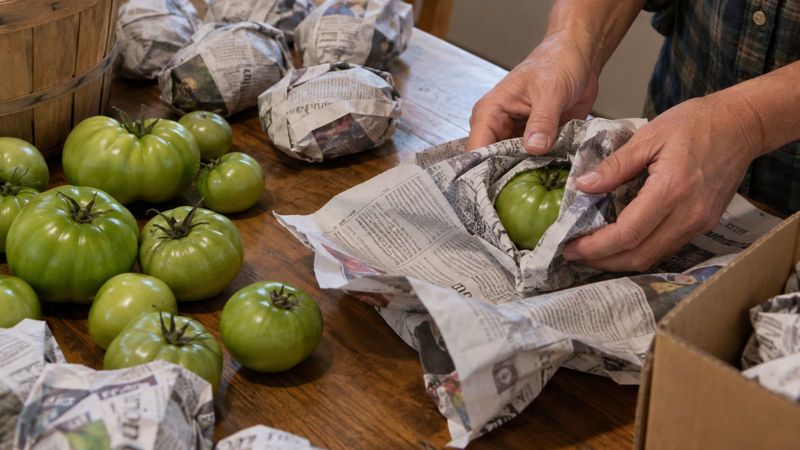
Think of it as a little sleeping bag for every tomato. Wrapping fruit one by one is old-school, but it solves the biggest headache of indoor ripening.
One rotten tomato can quickly ruin a whole box. A newspaper wrap keeps each fruit in its own space, so trouble stays contained.
The wrap also holds in some ethylene and slows moisture loss, which helps prevent shriveling. Unwrap a few at a time each week to see who is blushing.
6. Hang the Whole Plant Upside Down
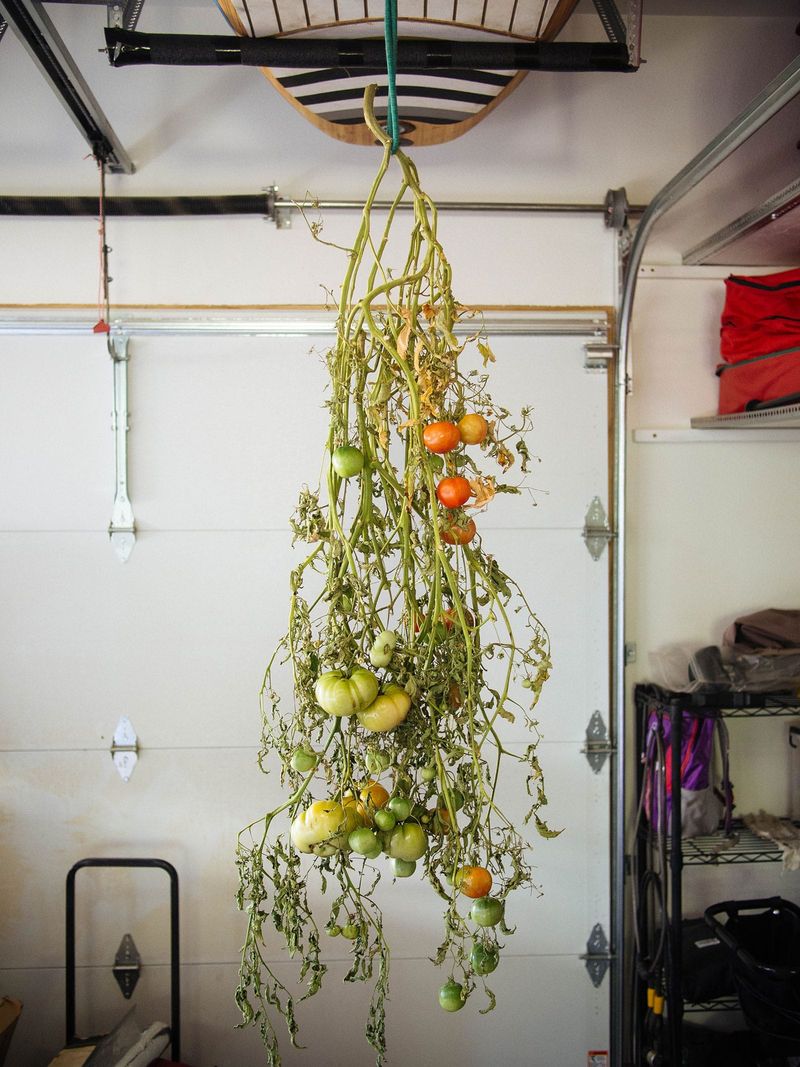
Short on time before the freeze? Skip picking fruit one at a time and pull the entire plant, roots and all.
Shake off the soil and hang it upside down from a nail or rafter in a garage, shed, or basement with decent airflow. The plant keeps feeding its fruit for a while, and tomatoes ripen slowly over several weeks.
Lay an old sheet or box underneath, because ripe fruit tends to drop. Strip off any diseased leaves first so mold does not spread.
7. Keep the Room Between 68 and 77 Degrees
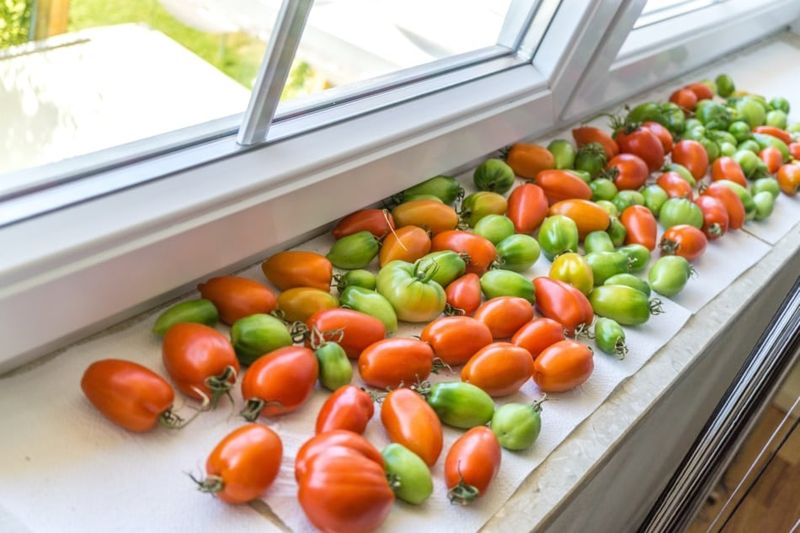
Here is the number that matters most. Green tomatoes ripen best between 68 and 77 degrees Fahrenheit.
Below 50 degrees, the enzymes that create red color shut down, and the fruit may stay pale forever. Above about 86 degrees, ripening stalls too, and color comes out blotchy and orange.
A normal heated kitchen usually lands right in the sweet spot. Avoid spots near the stove, heater vents, or a cold back porch.
8. Skip the Sunny Windowsill
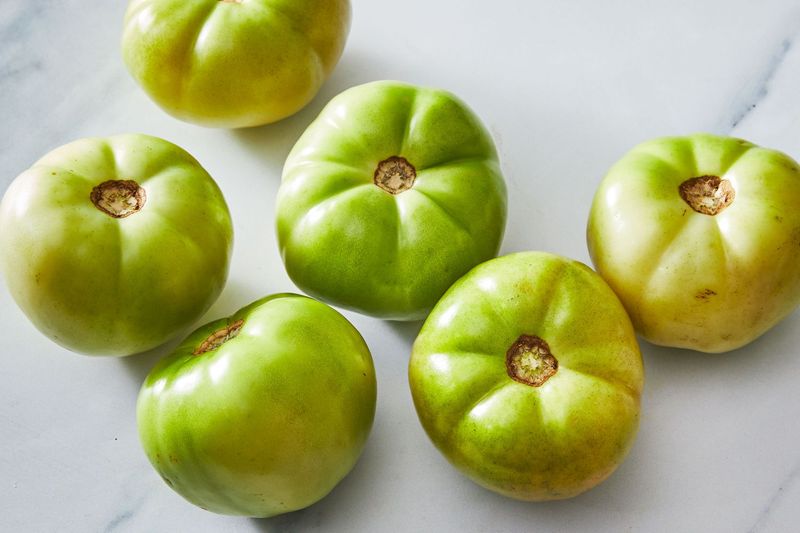
Surprised? Most people are.
Picked tomatoes do not need light to turn red.
The windowsill myth stuck around because sunny sills are often warm, and warmth is what really does the work. Direct sun can actually overheat the fruit, toughen the skin, and leave it shriveled.
A shady counter, cupboard, or drawer gives you the same color with better texture. Darkness is perfectly fine.
9. Stagger Ripening With Cooler Storage
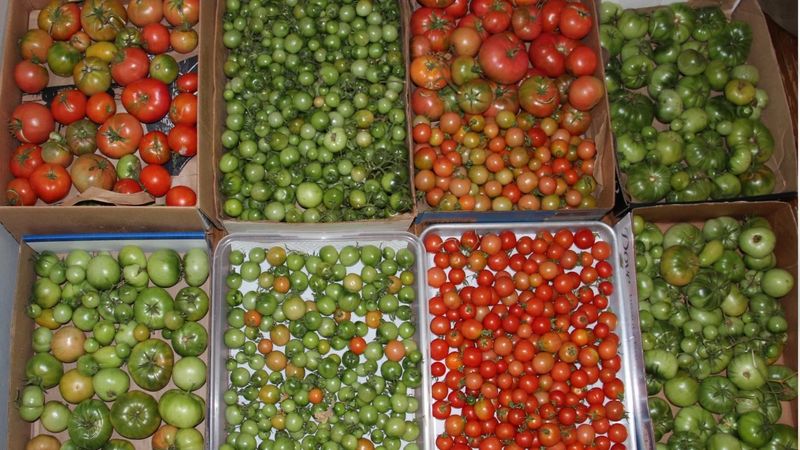
Nobody wants forty ripe tomatoes on the same Tuesday. Splitting your harvest between warm and cool spots spreads the reward out.
Keep a small batch in the kitchen near 70 degrees for fruit within a week or two. Store the rest in a cooler place around 55 to 65 degrees, like a basement, where they ripen slowly.
With this trick, many gardeners enjoy fresh tomatoes for a month or longer after frost. Just stay above 50 degrees.
10. Sort Tomatoes by Color First
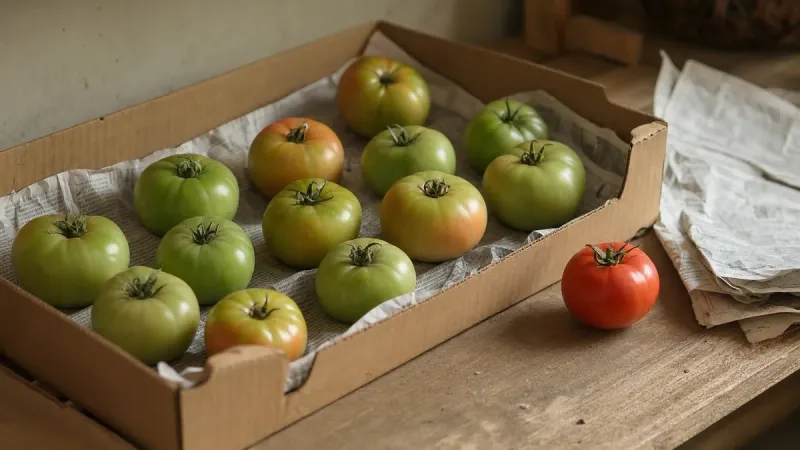
A quick sort saves a lot of guessing later. Spread the harvest on a table and group it by stage.
Breakers, fruit showing a blush of pink or yellow, can go right onto the counter and ripen in days. Solid green ones belong in bags or boxes for the long haul.
Toss split, bruised, or frost-hit fruit into a separate bowl to cook soon. Mixing damaged fruit with healthy fruit invites rot.
11. Brush Off Dirt, Do Not Wash
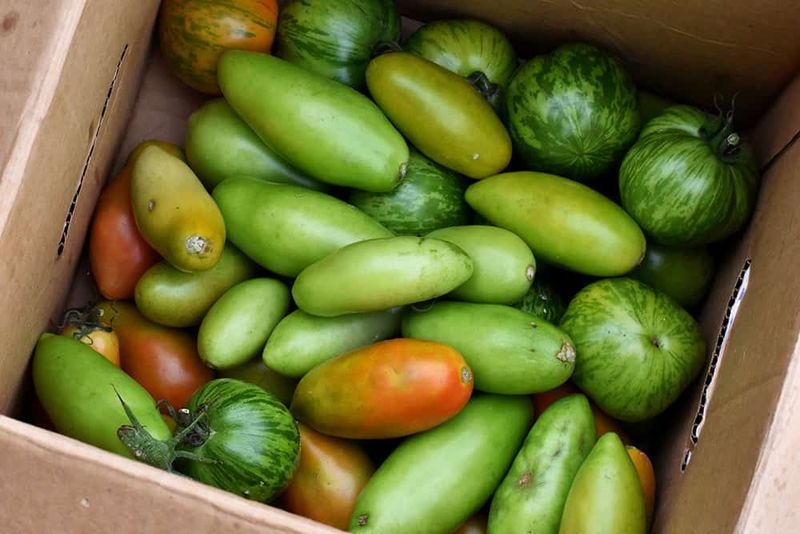
It feels cleaner to scrub them. Resist the urge.
Extra moisture on the skin encourages mold during storage. Use a dry cloth or soft brush to remove loose soil, then let the fruit sit out to air dry if it is damp from dew.
Save the real wash for when the tomato is red and ready to eat.
12. Keep Them Out of the Fridge
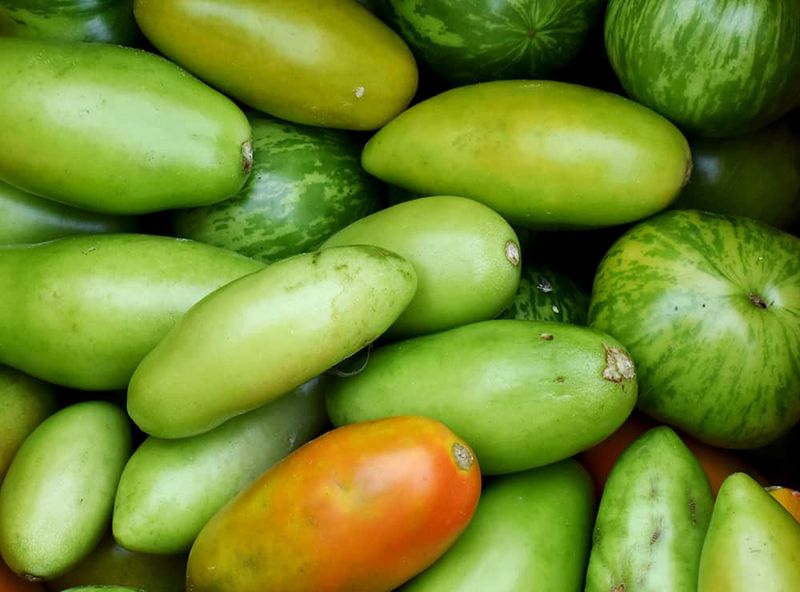
Cold is the enemy of a green tomato. Putting unripe fruit in the refrigerator stops ripening in its tracks.
Chilled fruit also loses flavor and turns mealy. Even after it warms back up, it rarely recovers.
Keep tomatoes at room temperature until fully red. If you must slow down ripe ones, chill only briefly and let them warm before eating.
13. Check Every Few Days for Rot
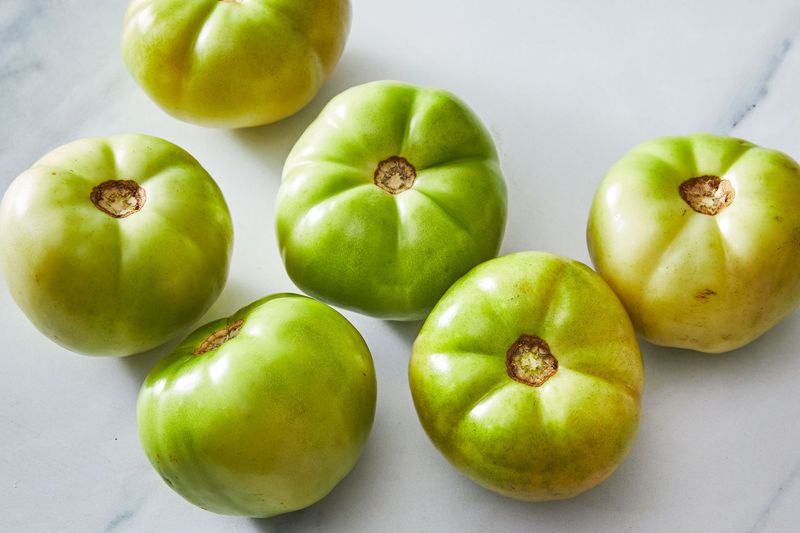
Five minutes twice a week can save your whole crop. Ripening indoors is easy, but it is not a set-and-forget job.
Look and gently feel for soft spots, mold, or leaking juice. Remove problem fruit right away and swap out any damp newspaper.
Move red ones to the counter for eating. Your reward is homegrown flavor long after frost has claimed the garden.