
Thinking About Tossing Your Amaryllis Bulb After It Blooms? Post-Bloom Care Can Help It Flower Again
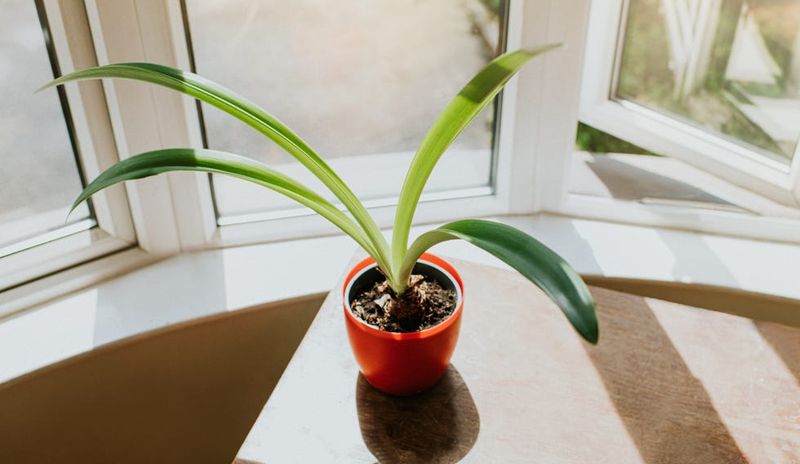
The flowers on your holiday amaryllis have faded, and the pot looks a little sad on the windowsill. Before it heads to the trash, know that many of these bulbs can live for years.
With a few months of the right care, your bulb gets a real chance to bloom again. Nothing can promise flowers, but the effort is small and the payoff can be big.
After flowering, remove spent blooms and keep healthy leaves
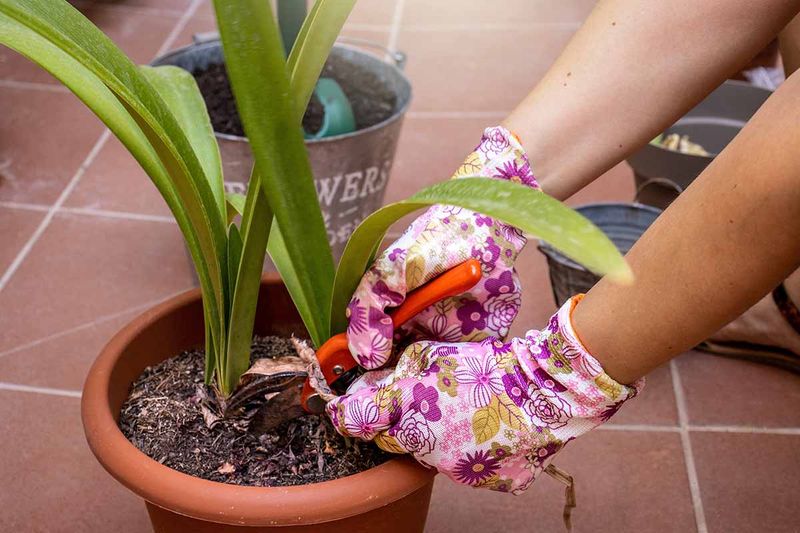
Once the petals wilt and droop, snip off the spent flowers. Removing them keeps the plant from forming seed, which would pull energy away from the bulb.
That energy is exactly what the bulb needs to store for another try at blooming.
Leave the leaves alone. Extension guidance from Illinois Extension says to remove the faded blooms but keep the healthy foliage, since green leaves make food for the bulb through photosynthesis.
Cutting them off right after flowering works against everything you want the bulb to do.
What about the tall flower stalk? If it is still green, you can leave it in place until it turns yellow, because a green stalk can keep making food too, as described by University of Minnesota Extension.
Once it yellows and softens, trim it back near the top of the bulb.
So a regular potted amaryllis is not a disposable decoration. A quick tidy-up now sets the stage for the months of growth ahead.
Think of the leaves as the bulb’s battery chargers: the longer they stay healthy, the better the chance of flowers later.
Support the bulb through months of active growth
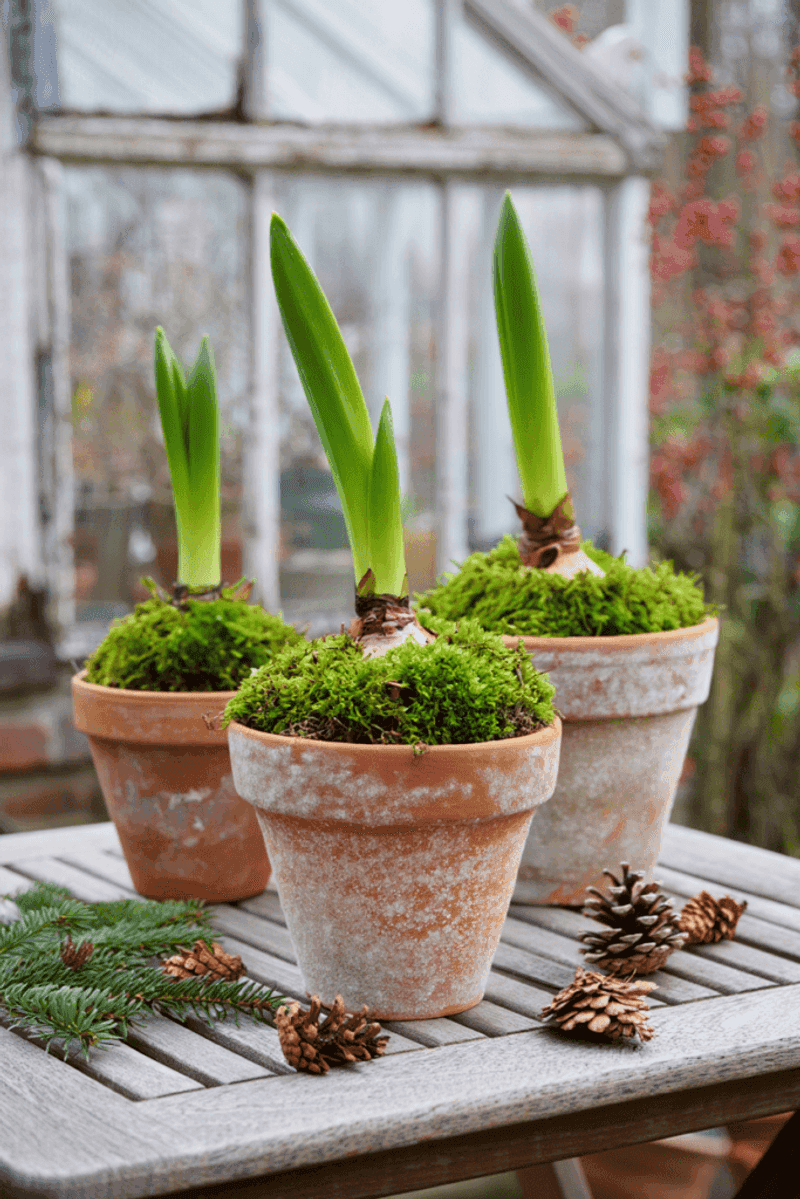
Strong, healthy leaves are how the bulb refills its energy tank after flowering. According to Iowa State University Extension, a bulb that has not stored enough energy may grow leaves but skip flowers the next season.
That is why the months after blooming matter so much.
Park the pot in a bright, sunny spot indoors. A south-facing window often works well.
Turn the pot now and then so the leaves grow evenly instead of leaning toward the glass.
Water when the soil surface is nearly dry, then let the extra water drain out. Never leave the pot sitting in a saucer of water, since soggy soil can rot the bulb.
A leaf tip turning mushy or a bulb that feels soft is a clue that the soil stays too wet.
During active growth, feed with a regular houseplant fertilizer and follow the directions on the label. Extension sources vary on how often to feed, so the label is your best guide.
You can read more in Iowa State’s advice for after blooming.
Good care improves the odds, but it cannot guarantee flowers. If next season brings only leaves, keep going.
The bulb may simply need another year of growth to build up its reserves.
Summer outdoors is an option, not a requirement
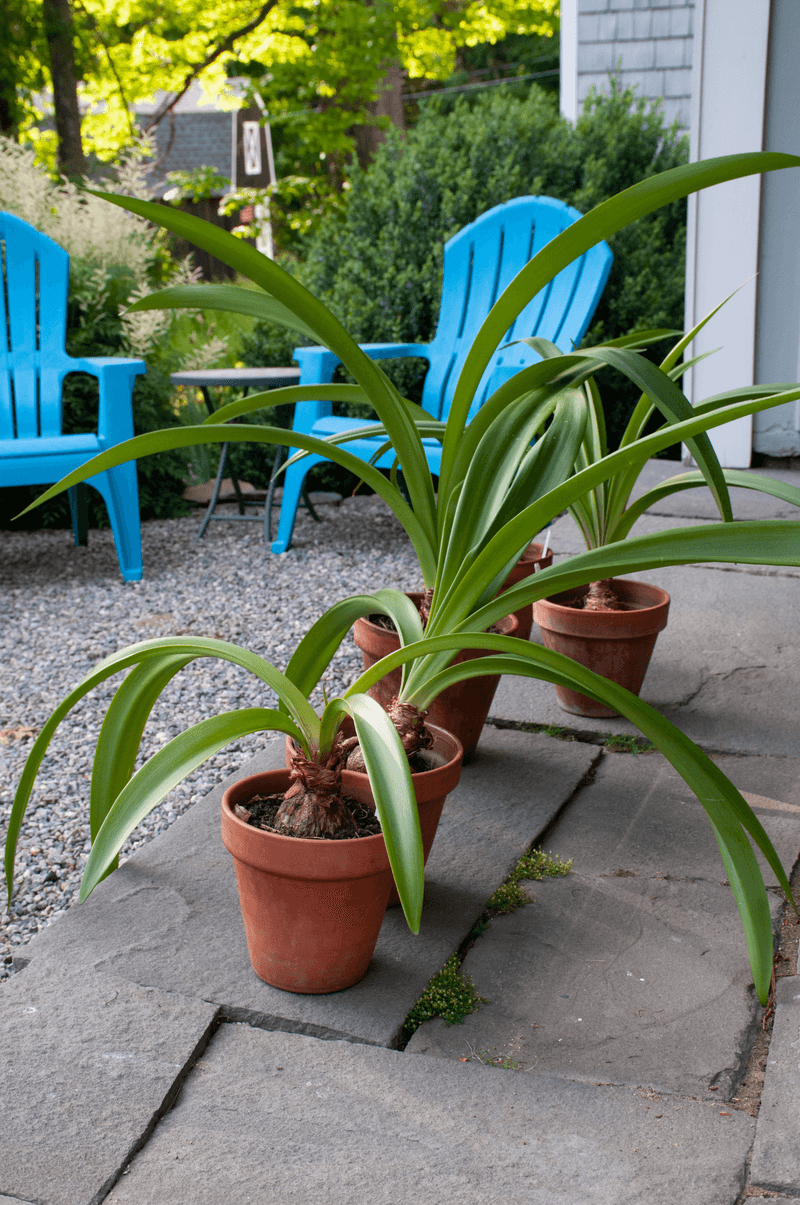
If you like the idea, your amaryllis can spend summer outside. Wait until frost danger has passed in your area, then move the pot out.
Plenty of people skip this step and keep the plant on a sunny windowsill all year, and that is fine too.
Don’t rush it into full sun. Both Illinois Extension and University of Minnesota Extension suggest easing the plant into the change.
Start in shade or indirect light for several days, then gradually give it more sun. Leaves that turn pale or scorched are a sign the sun came too fast, so back off to shadier ground.
Keep watering and feeding while the leaves grow. Outdoor pots dry out faster in warm, windy weather, so check the soil often.
Make sure the pot drains well and that rain cannot leave it sitting in water.
Plan your return date early. Amaryllis does not tolerate freezing temperatures, so bring the pot indoors before the first frost.
Set a reminder on your phone for early fall so a cold snap does not catch you off guard.
A cool rest can help time winter flowering
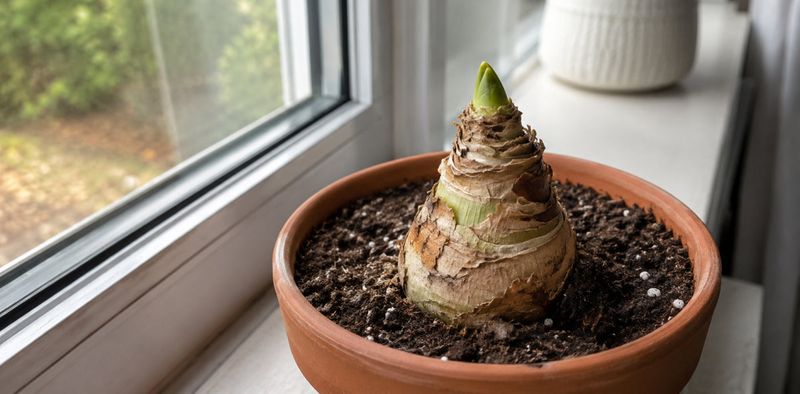
Here is where advice gets mixed. Illinois Extension and University of Minnesota Extension both say an amaryllis can rebloom without a rest.
They describe a rest period as a way to control when the flowers show up.
Iowa State takes a different approach. Its post-bloom guidance includes a cool rest as part of the routine.
So a rest is a tool for timing, not a rule that every bulb must follow.
If you want blooms around winter, a common approach is to stop watering and keep the potted bulb somewhere cool and dry for about 8 to 12 weeks. Then move it back to a warm, bright spot and water again when new growth appears.
Sources differ on exact temperature, timing, and whether darkness is needed, so treat these numbers as a loose guide, not a fixed calendar.
Count back from when you would like flowers and plan the rest around that. The bulb’s health matters more than the exact dates.
A bulb that grew strong leaves all season is in better shape than one that struggled.
Even a perfect rest does not promise flowers the following winter. As Iowa State’s amaryllis overview points out, a bulb may not bloom the next season.
If yours skips a year, keep caring for it and try again.
Waxed bulbs may not recover
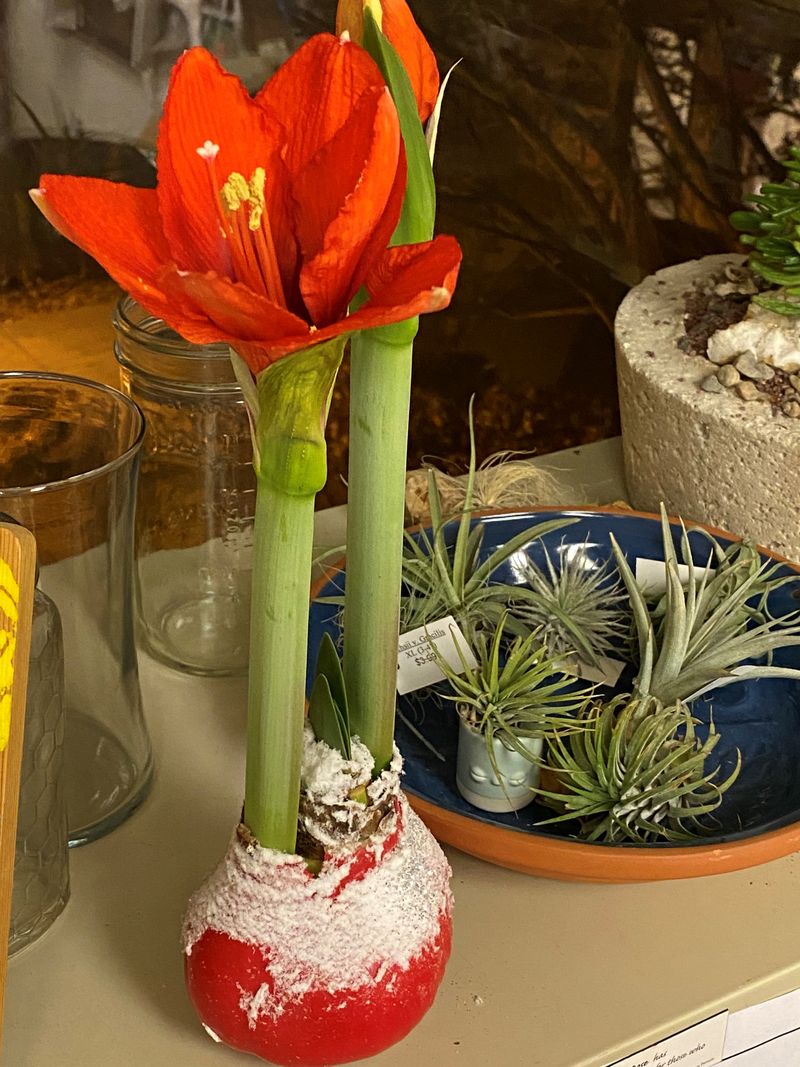
Waxed amaryllis bulbs are a different story from the potted kind. Sellers offer them as single-use gifts that flower with no soil or water.
The wax coating is not designed for long-term growing.
You can still try to save one. Iowa State University Extension says saving a waxed bulb is possible but not recommended.
You would carefully remove the wax and plant the bulb in soil, then grow it like a regular bulb.
Results are uncertain. The bulb may have used up much of its energy to bloom, and handling it can cause damage.
If it sprouts leaves, treat it like any other amaryllis. If it turns soft or shows no growth after a few weeks, it may not have made it.
No need to feel guilty about trying, and no need to expect success. Think of it as a low-risk experiment with a gift you would otherwise toss.
Keep amaryllis away from cats and dogs
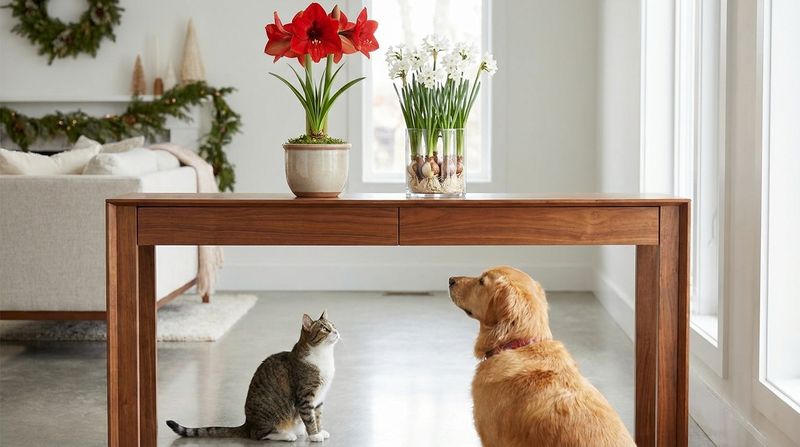
Amaryllis is toxic to cats and dogs if eaten. The ASPCA lists signs such as vomiting, diarrhea, and abdominal pain, among others.
Place the pot where curious pets cannot reach it, and keep bulbs, trimmed leaves, and stalks out of reach as well. Clean up cuttings right away.
These steps lower the risk, but they cannot remove it entirely, so watch for any chewing.