
Dormant Hardwood Cuttings: A Low-Cost Way to Start New Shrubs in North Carolina
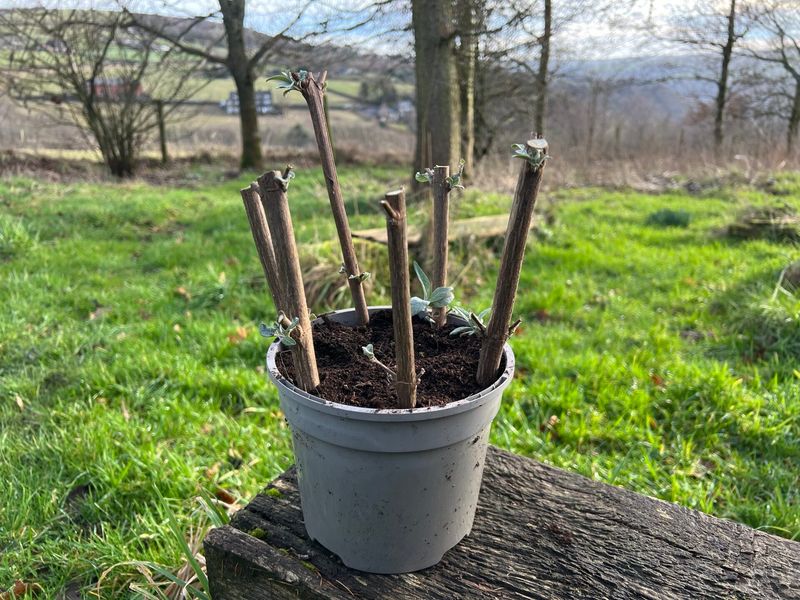
Some of the shrubs in your yard can make new plants from a few bare winter stems. Taking dormant hardwood cuttings costs far less than buying nursery plants, and it lets you copy a shrub you already know and like.
Results vary by species, timing, and setup, so it helps to know the steps before you snip. Here is how North Carolina homeowners can try it the smart, wildlife-friendly way.
Let dormancy—not the calendar—set the date
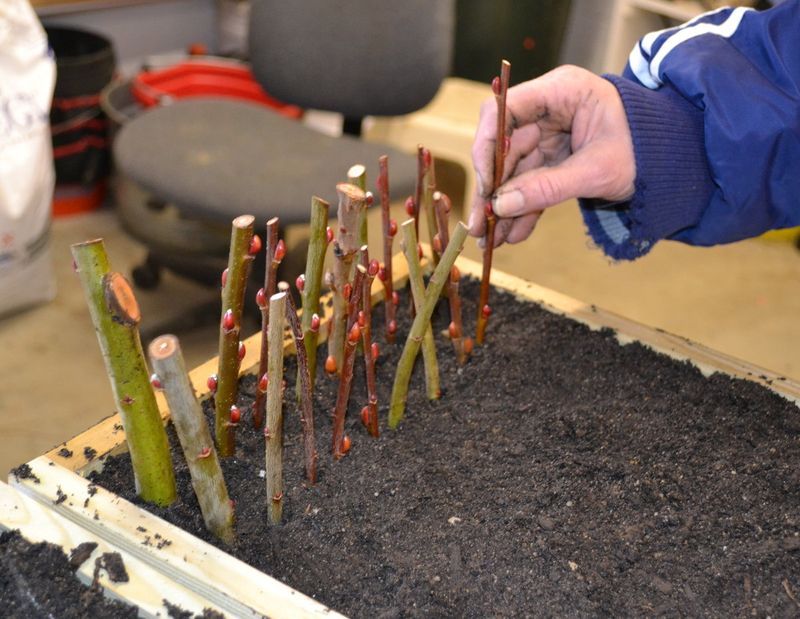
Garden calendars make it sound simple, but your shrub cares more about its own condition than the date. Hardwood cuttings come from mature, firm stems on a plant that has gone dormant.
NC State Extension says the general window runs from late fall through early spring, but it also stresses that growth stage matters more than calendar dates.
So what should you look for? Leaf fall is your best first clue.
When a deciduous shrub has dropped most or all of its leaves and the stems feel firm rather than soft and floppy, it is entering dormancy. Buds should still be tight and closed.
North Carolina stretches from the Coastal Plain to the Piedmont to the mountains, and a shrub in Wilmington may settle down weeks after one near Asheville. A mild fall can also delay dormancy in one yard while a neighbor across the county is already bare.
Species differ too, so watch your own plant instead of copying a date from someone else.
Plan to finish before buds begin to swell and expand. Once buds start opening, the stem is shifting its energy toward growth, and the cutting loses the steady dormant state that makes this method work.
If you are unsure, check the buds each week on a mild day. Tight buds mean you still have time, and plumping buds mean it is time to wait for next year.
Choose a suitable, responsible parent plant
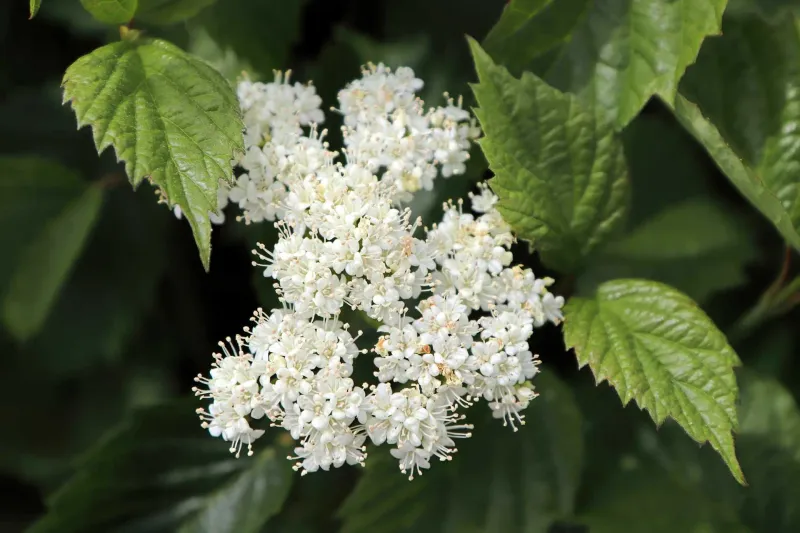
A good cutting starts with a good parent. Pick a shrub you can identify by name that looks healthy, with strong stems and no signs of disease or heavy insect damage.
Knowing exactly what you have lets you look up its needs for sun, soil, and mature size before you grow a whole row of it.
Not every shrub roots well from dormant stems, so favor species known to work. NC State’s propagation chapter lists viburnums (Viburnum spp.) and American holly (Ilex opaca) as hardwood cutting candidates.
Treat those as examples, not a promise. Individual species and cultivars can behave differently, so check the exact plant and its site needs first.
Stewardship matters here too. NC State’s wildlife landscaping guide points to native viburnums and hollies as alternatives to autumn olive, which is invasive in North Carolina.
Growing natives gives birds and pollinators more to use in your yard.
Never propagate invasive shrubs or vines. Chinese privet, Japanese privet, autumn olive, Japanese honeysuckle, and Oriental bittersweet are all on NC State’s invasive list.
Elderberry deserves caution as well. The general guides disagree on how to propagate it, so skip it for this project unless you confirm the method for your exact species.
Select and orient mature stems
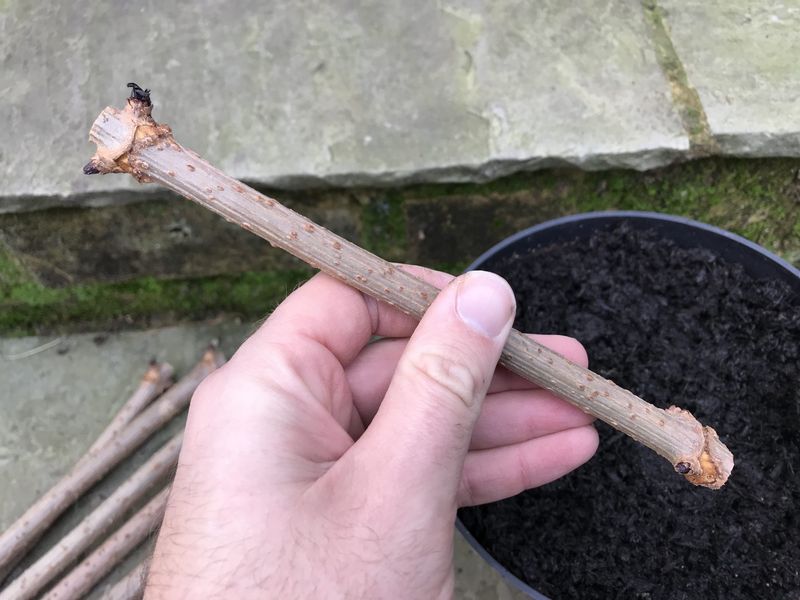
Grab clean, sharp pruners and look for vigorous, hardened-off growth. Most hardwood cuttings come from the previous season’s growth, which is firm and has finished maturing.
Iowa State Extension notes that many plants can be cut from a longer stem in sections, though the best size varies by species.
Here is a trick that saves headaches. Make a flat cut at the bottom of each piece and an angled cut at the top.
Later, when a handful of bare sticks all look alike, the angle tells you which end points up. A cutting stuck in upside down is unlikely to root well.
Keep a bundle of pieces together with the bottoms facing the same direction, and label them with the plant name. If you take cuttings from more than one shrub, a simple tag prevents mix-ups.
Cut a few extra, since not every stem will root. The NC State handbook also reminds gardeners to choose stems at the right stage of maturity.
Remember that a cutting is a clone. It reproduces the parent plant exactly, flaws and strengths included.
Some cultivars are patented, and vegetative propagation of some patented plants is prohibited, so check the plant tag or the nursery’s information before copying a named variety.
Set up a moist, well-drained rooting bed
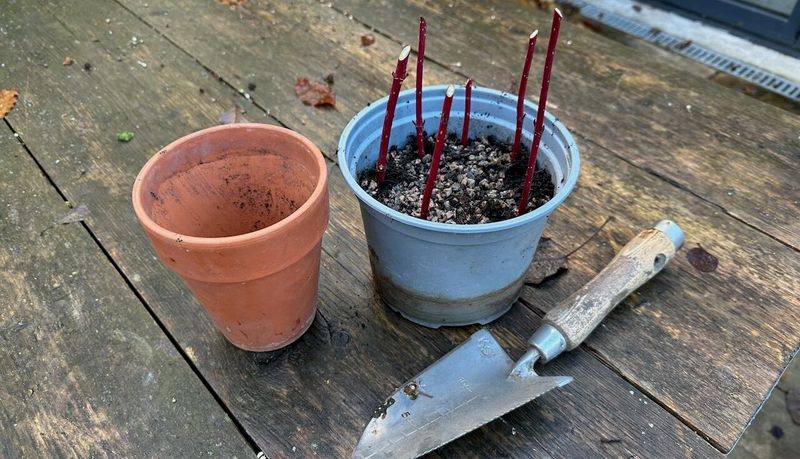
Think of the rooting medium as a damp sponge that never turns into a swamp. You want something that holds moisture but drains well, such as a mix with plenty of perlite or coarse sand.
Soggy mix can rot a cutting before roots get started.
Push each cutting in base-down. Iowa State’s guide advises leaving at least one bud or node below the medium and at least one above it.
Water enough to keep the mix evenly moist, not saturated.
For dormant cuttings rooted in containers, a USDA NRCS technical note recommends bright light without direct sun. A bright porch or sheltered spot works well in many yards.
Check the pots often so they do not dry out or sit in puddles.
Rooting hormone is optional and depends on the species. NC State and Iowa State both treat it as a helper, not a guarantee.
Too much powder can actually lower rooting, so use only what the product label directs. Your costs stay small: pots, mix, labels, and maybe a small container of hormone.
Treat spring growth as progress, not proof
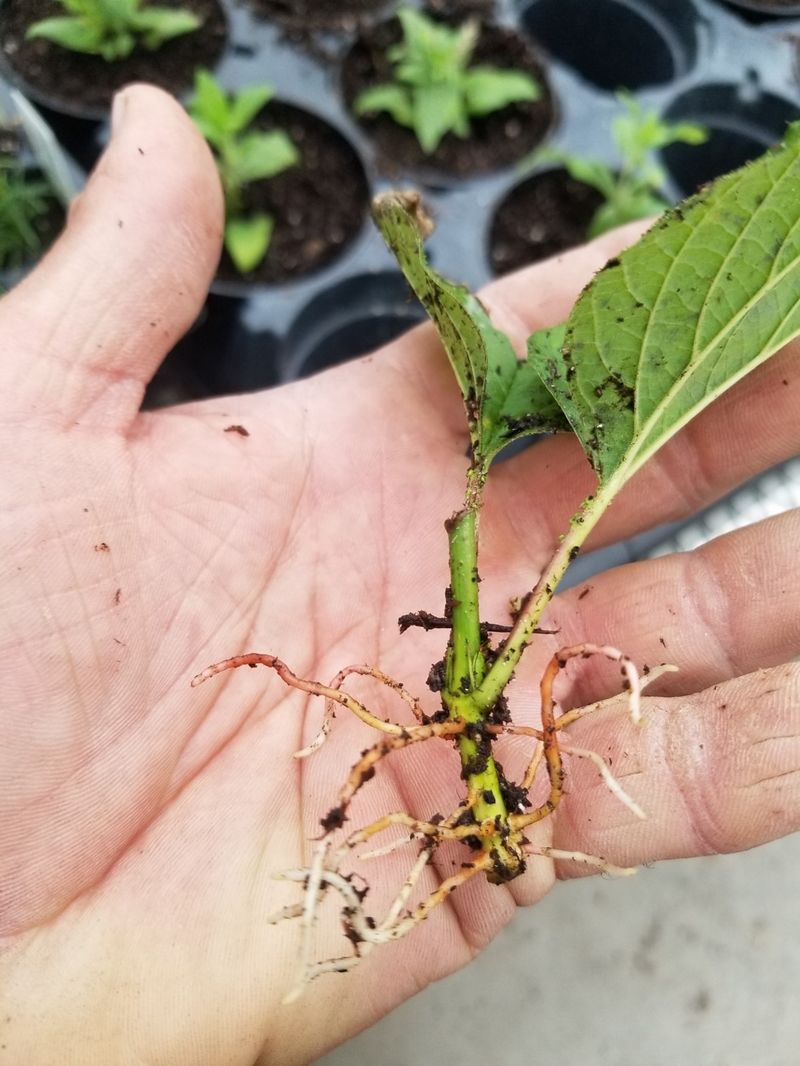
Picture a cutting that sprouts green leaves in April. It looks like a win, and it might be.
But leaves can open using energy stored in the stem, even when roots have not formed yet. A cutting with new growth and no roots can wilt and fail when warm weather arrives.
Iowa State Extension gives six to eight weeks as a likely rooting period under suitable conditions. Dormant hardwood cuttings can take longer than non-dormant ones, and timing shifts with the species and your setup.
Some cuttings may be slower, and some may never root.
So test before you celebrate. Look for root development, or give the stem a slight, gentle tug.
If you feel resistance, roots are likely holding on. If it slides out easily, tuck it back in and give it more time.
Treat budbreak as a good sign, not a finish line. A rooted cutting is still a small, tender plant, far from a substantial shrub.
Patience now saves you from losing the whole batch.
Harden off rooted cuttings before transplanting
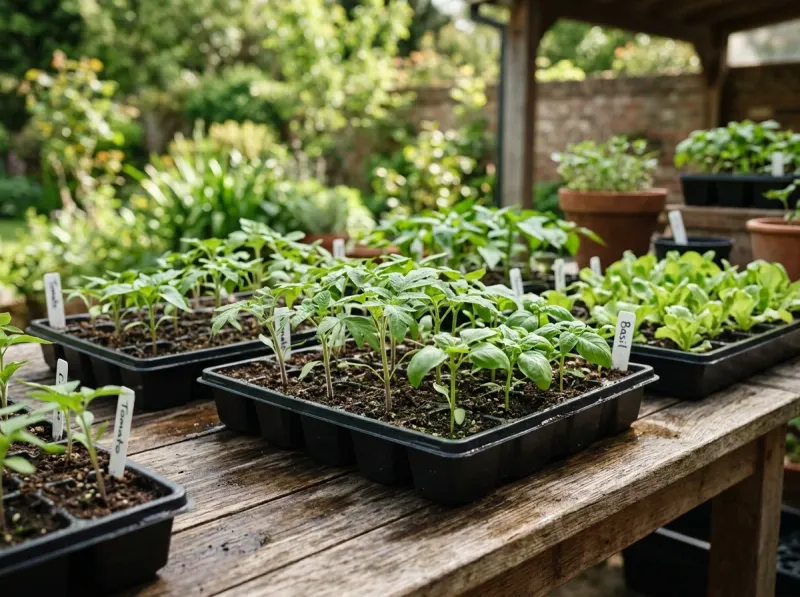
Once roots are confirmed, resist the urge to rush your new plants into the ground. Rooted cuttings often need more time in pots or a protected grow-out bed.
Iowa State Extension recommends hardening them off before transplanting and notes that a rooted cutting can take several years to become a substantial plant.
Hardening off means toughening young plants gradually. Set them outside in a sheltered, shady spot for a few hours, then lengthen the time and add more light over a week or two.
Wind, sun, and temperature swings are less of a shock this way.
Spring is not an automatic planting time. Iowa State points to early fall for planting young plants in the ground, but that is one state’s guidance and not a rule for every North Carolina yard.
Your region, soil, and the species’ needs should shape the date.
A few snipped stems can start a low-cost project that fills your yard with native shrubs over time. A row of finished shrubs takes seasons, not one spring.