
Why Creeping Charlie Keeps Coming Back: Incomplete Removal Leaves Parts That Regrow, and Stolons Root at Nodes Near the Soil Surface
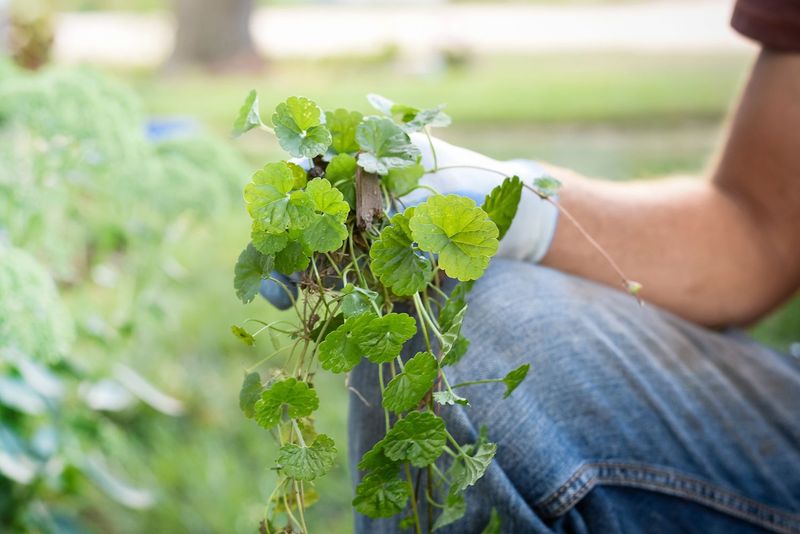
You pull a patch of creeping Charlie, rake the soil smooth, and a few weeks later green scalloped leaves are back. It can feel like the weed is winning, but there is a clear reason it happens.
Knowing how this plant spreads helps you pick a plan that fits your lawn and your patience. Fall turns out to be a helpful time to act, though it is not a magic date.
Pulling does not trigger the comeback
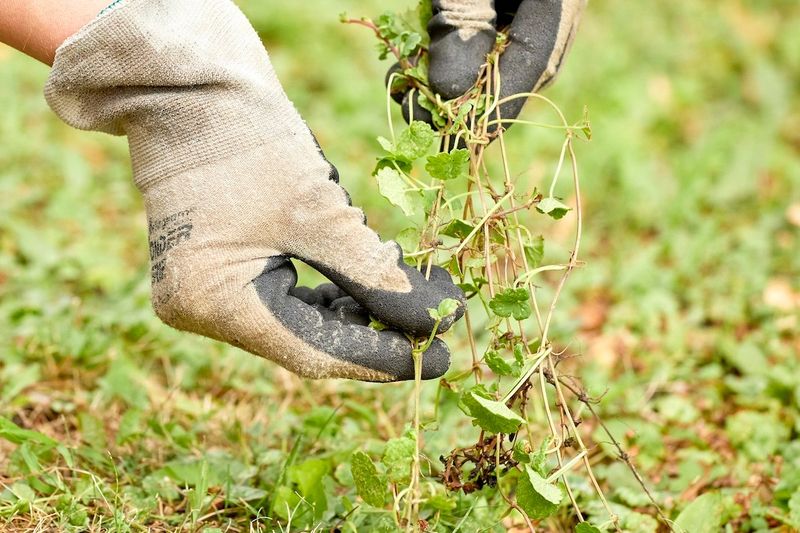
Here is some reassurance first: pulling creeping Charlie does not make it return. The weed comes back when small living pieces get left behind.
A bit of stem, a rooted node, or a scrap of root can all start a new plant.
That is a different problem from saying hand-pulling cannot work. University of Minnesota Extension lists pulling as an option, and Iowa State University Extension describes it as a practical choice for small infestations.
The catch is that you have to remove roots and shoots and keep checking for regrowth.
In a lawn, the weed weaves through the grass, so it is easy to leave a few pieces behind. That does not mean you did something wrong.
It means the job is often a matter of repeat visits rather than one big pull.
So think of a comeback as a clue. It points to leftover plant parts, not to your hands causing trouble.
A small, fresh patch pulled carefully and watched closely has a good chance of being cleared.
Bigger patches are a different story, and the next sections explain why. Once you see how the plant is built, the regrowth stops feeling mysterious and your options get easier to sort out.
Stolons root at nodes near the soil surface
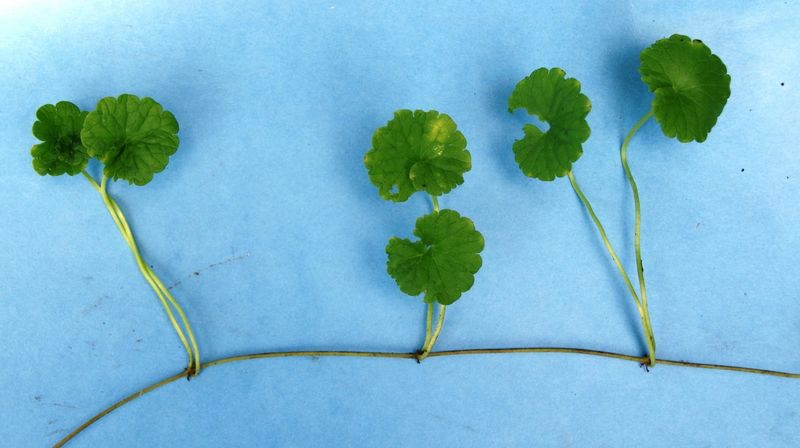
Creeping Charlie, also called ground ivy, travels on stolons. Those are creeping stems that run at or along the soil surface and can root at their nodes, the joints where leaves attach.
University of Minnesota Extension notes the plant can also spread by seed and by rhizomatic growth, which happens below ground.
That mix is why a missed runner is not always rooted underground. Often it is a surface stem with nodes ready to root wherever they touch soil.
Below-ground growth is a separate route the plant can use too.
Before you act, make sure you have the right plant. University of Maryland Extension describes ground ivy with rounded or kidney-shaped leaves with scalloped edges, leaves growing in opposite pairs, and square stems.
In spring you may also see small blue-purple flowers. Run a stem between your fingers and feel for the four-sided shape.
If it matches, you have a confirmed identification.
Knowing the structure helps you plan. Any piece with a node can potentially root, so careful removal and follow-up matter more than speed.
Hand-pulling works best on small patches
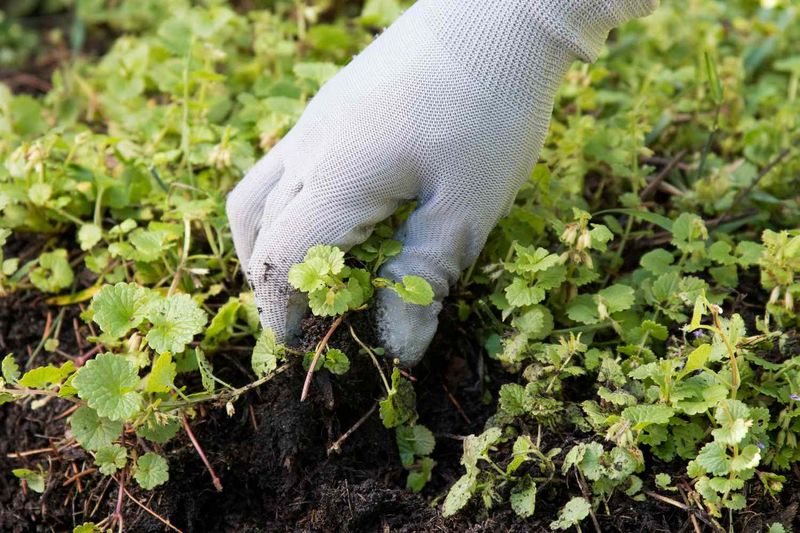
Timing your pull after rain or a deep watering makes a real difference. Moist soil loosens its grip, so stems and roots slide out more fully.
Sources such as University of Minnesota Extension recommend this approach for small areas.
Work slowly and follow each stem back to its end. Take both the shoots and the roots, and bag the pieces rather than leaving them on the soil.
Then look over the spot every week or two, because Iowa State University Extension points out that regrowth checks are part of the job.
Garden beds are the easiest place to win this way. University of Illinois Extension recommends digging and hand-pulling in beds, where you can lift the plant out and keep it from creeping back in.
An established lawn is trickier. The weed tangles with grass blades and roots, so complete removal is harder, and repeated pulling may be needed.
If your patch is the size of a doormat or smaller, pulling is a reasonable first move. If it covers much of the lawn, treat pulling as one tool and read on for other options.
Fall is a useful treatment window, not a one-shot cure
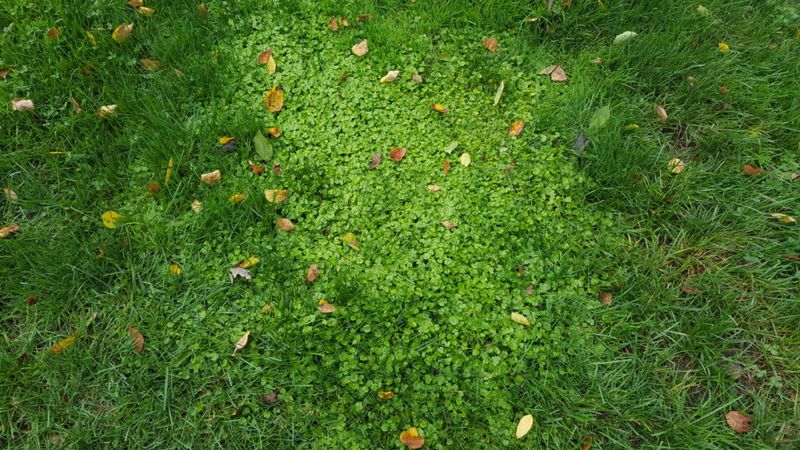
Extension guidance often points to fall for herbicide treatment because creeping Charlie is still actively growing then. University of Illinois Extension describes mid-to-late fall as a helpful period.
Exact timing depends on where you live and on the product directions.
Active growth is the key idea. Plants that are dormant or stressed by drought are not in the same condition, so treating them is not supported by the guidance we reviewed.
Fall is not the only choice, either. University of Wisconsin-Madison Extension also discusses spring options, and University of Minnesota Extension notes that persistent patches may need more than one treatment.
Plan on a season of watching rather than a single spray. Mark your calendar for a follow-up check, and look at the product label for timing.
The Wisconsin lawn guide at Managing Broadleaf Weeds in Lawns is a good example of how regional advice is laid out.
Fall gives you a good shot, not a promise. Pairing it with patience keeps expectations realistic.
Let the product label guide lawn treatment
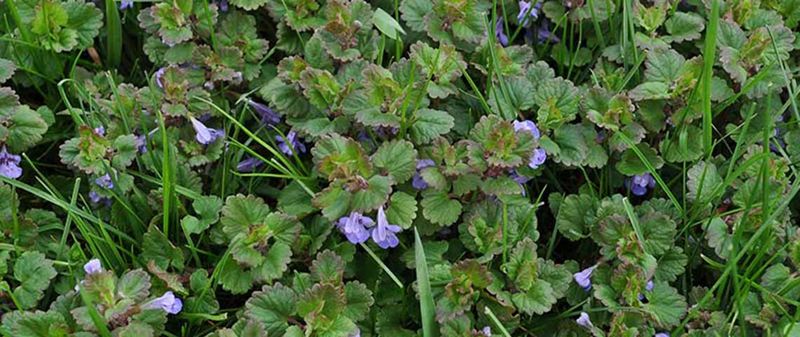
Before buying anything, flip the bottle over. A lawn herbicide should say that it can be used on your type of grass and should list creeping Charlie or ground ivy as a target weed.
If it does not, leave it on the shelf.
Ingredients vary by product and by region. Extension pages from University of Illinois Extension and University of Wisconsin-Madison Extension mention ingredients such as triclopyr and, in some cases, fluroxypyr or combination products.
No single one is best for every lawn.
The label is your rulebook for rates, timing, weather, and re-entry. UC Statewide IPM Program offers a handy walk-through of how to read one.
If the weed grows in patches, spot treatment can limit how much product you use. Treat only the areas that need it rather than the whole yard.
Keep lawn products on the lawn. Garden beds call for different tools, such as digging and pulling, and a lawn herbicide is not a bed treatment.
Protect nearby plants and skip unreliable shortcuts
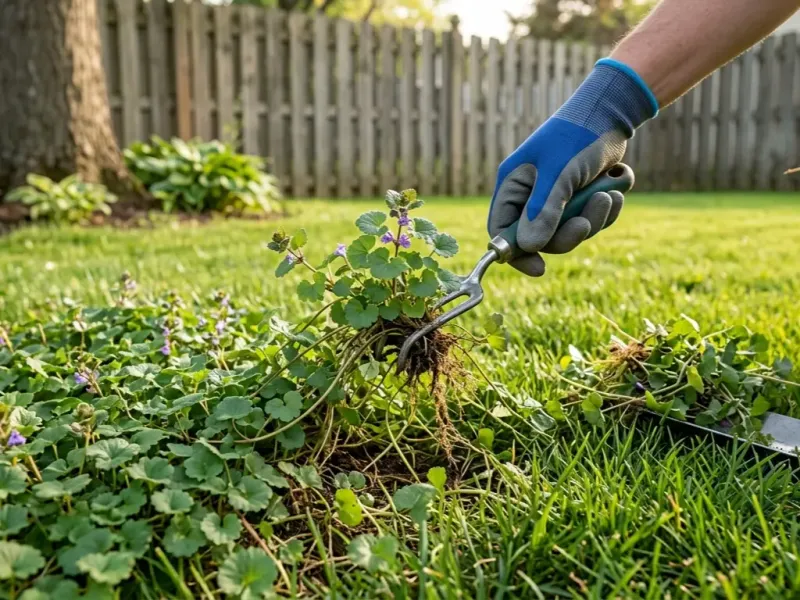
Lawn herbicides made for broadleaf weeds can also hurt flowers, vegetables, and other broadleaf plants you like. That can happen if the product lands on them or if spray drifts.
University of Wisconsin-Madison Extension raises this caution.
The EPA’s introduction to pesticide drift explains how spray can travel off target. Follow the label for precautions around people, pets, and water, and take extra care near beds.
The UC IPM label guide shows where to find those details.
Shortcuts tempt everyone, but a couple are worth skipping. Wisconsin Extension says borax is typically ineffective or inconsistent, can damage turf and other plants, and boron can build up in soil.
Aggressive dethatching is not a simple fix either. Cutting and combing the weed can spread nodes and may make the problem worse.
Slow and careful beats fast and risky here. Your hydrangeas and tomatoes will thank you.
Dense turf shapes the long-term outlook
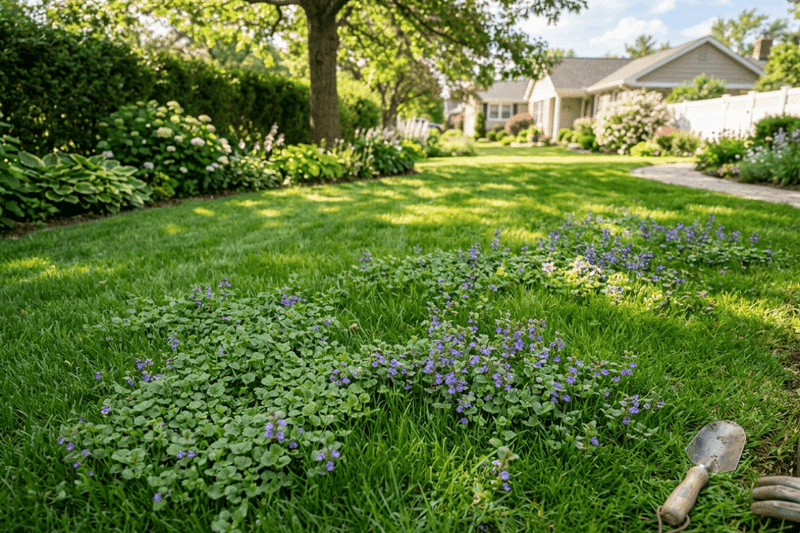
Thick, healthy grass is one of the best long-term defenses. University of Illinois Extension points to dense turf as a way to keep weeds from getting a foothold.
Shade changes the picture. Grass is less competitive in low light, so creeping Charlie may keep returning there.
University of Wisconsin-Madison Extension suggests looking at lawn care and site conditions rather than leaning on repeated herbicide alone.
It is also fine to let some spots go. Illinois Extension notes ground ivy may be tolerated as a groundcover in some shaded places where grass struggles.
Here is a simple decision path. For a small patch, pull it when the soil is moist and check back.
For a larger lawn infestation, consider a label-directed treatment while the weed is actively growing, and plan a follow-up.
For a persistent problem, revisit the site: light, mowing, and turf thickness. Some corners may do better as a green groundcover than a battleground.
Gardens rarely reward perfection, and a calm, steady plan usually outlasts a frantic one.