
Don’t Blast Your Lawn With Weed Killer Yet: Wild Violets Keep Coming Back Because Of Their Roots, And Here’s How To Choose A Fix
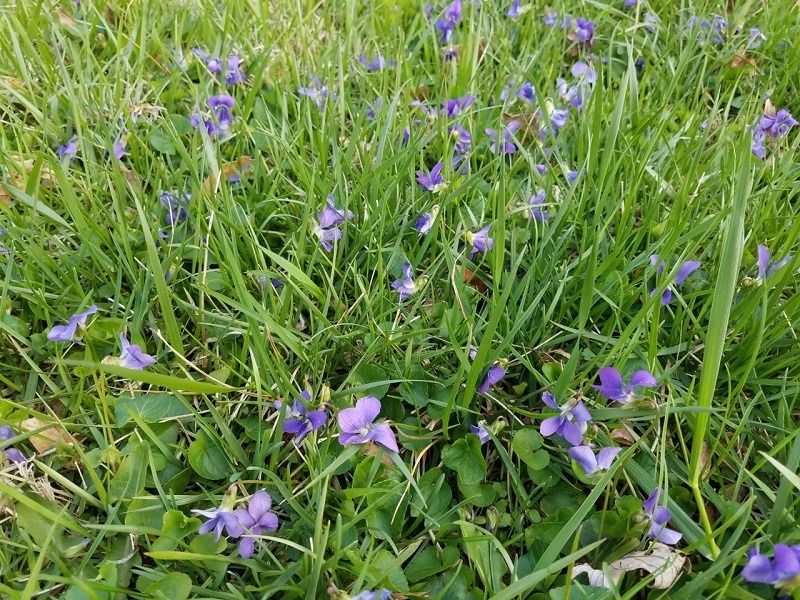
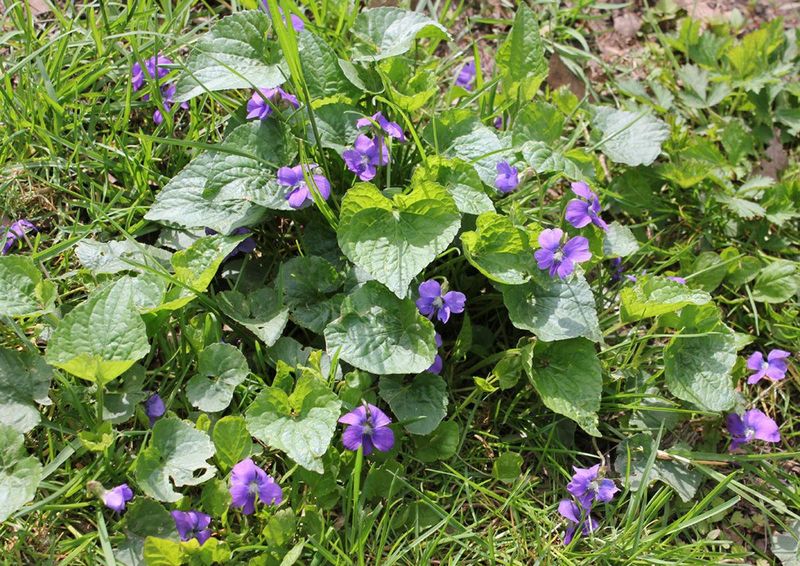
You mow the purple-flowered patch, pull a few handfuls, and a few weeks later the violets are right back. Those heart-shaped leaves are tougher than they look, and a quick spray often leaves them barely bothered.
There is no single magic fix, but there are smart options that match the size and spot of your patch. Here is how to pick one without harming your grass or nearby plants.
Why wild violets keep returning
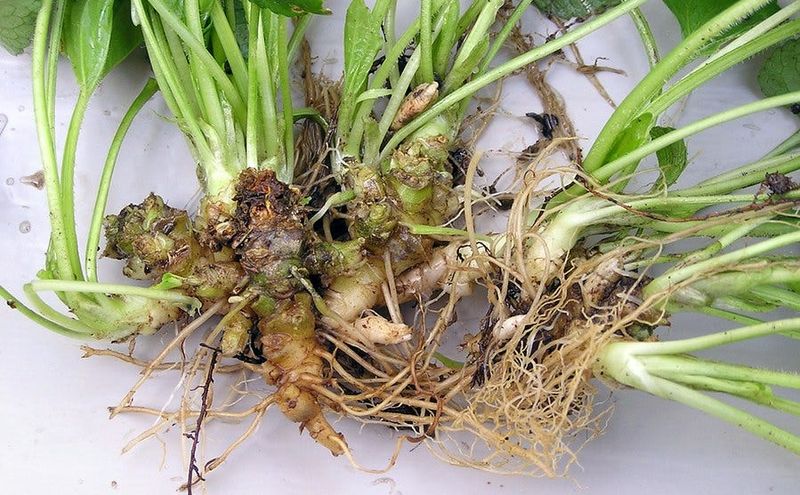
Mow down a patch of wild violets, and it can look like you won. Give it a few weeks, and fresh leaves pop up in the same spot.
The reason sits mostly out of sight.
Violets spread by seed, and perennial kinds also spread through creeping rhizomes or underground rootstocks. People often call all of this the roots, and that works as shorthand.
But Penn State Extension notes that this underground growth is part of what makes wild violet so hard to control.
Think of the leaves as the part you see and the rhizomes as the pantry below. Cut the tops, and the plant can draw on stored energy to send up new growth.
That is why trimming or mowing alone rarely clears an established patch.
Seeds add another layer. Violets can drop seed and start new plants away from the original clump, so a small patch can slowly become a bigger one over a few seasons.
University of Illinois Extension also treats violets as a weed that takes persistence. Not every violet species or every lawn behaves exactly the same way, so your results may differ from a neighbor’s.
Still, the pattern holds often enough to plan around: if only the tops come off, expect regrowth.
Knowing this helps you set a fair goal. You are not failing when violets return after a quick cleanup.
You are just up against a plant built to come back.
Why pulling and spraying can disappoint
Two separate problems trip up gardeners. One is below the soil, and the other is on the leaf.
Start with pulling. When you tug off leaves or snap stems at the surface, the underground growth stays put.
Iowa State Extension points out that removing only the tops is unlikely to control established plants, though digging can work on small infestations when enough of the underground growth comes out.
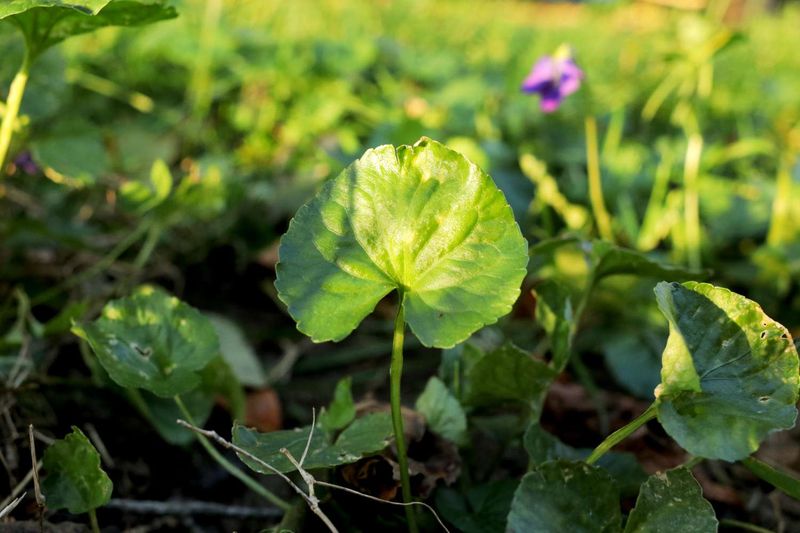
Now the spray side. Violet leaves have a waxy surface, and Penn State Extension explains that this coating can make it hard for herbicide to get into the plant.
So a spray that works on a thin-leaved weed may bounce off a violet more than you would expect.
Notice that roots are not the whole story. Rhizomes explain the regrowth, and the waxy leaf helps explain why some sprays seem to do little.
Both can be true in the same patch.
None of this means every pull or every spray fails. A small clump dug out carefully can be gone for good, and the right product used the right way can knock back a bigger area.
The point is that quick, casual attempts often disappoint.
Before you grab a jug or a trowel, size up the patch. How big is it, and is it in a lawn, a flower bed, or a shady corner?
Those answers decide which path makes sense.
Decide whether every patch needs to go

Before you start any control plan, ask a simple question: does this patch actually bother you? Violets in the middle of a lawn you want to look uniform are one thing.
Violets tucked under a tree or along a back fence are another.
There is a good reason to pause. Iowa State Extension notes that violets provide early-season nectar and serve as host plants for fritillary butterflies.
For some gardeners, that is enough reason to let a few clumps stay.
A practical way to decide is to sort your violets by location. Patches that are crowding out turf in a sunny, high-use lawn may be worth controlling.
Patches in a shady corner where grass never grew well may be fine to leave, or even to enjoy.
You can also mix approaches. Keep violets in one wild corner, and remove them where they are creeping toward a vegetable bed or a path.
Choosing to keep some violets is not giving up. It is a decision, and it can save you time, effort, and the risk of using products where you do not need them.
Once you know which patches must go, the next step is matching the method to each one.
Dig out small patches thoroughly
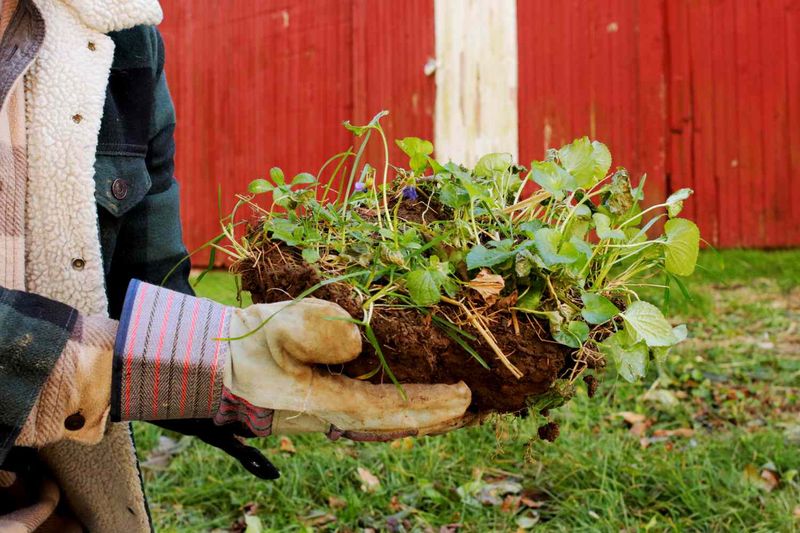
For a small patch, a trowel can be your best tool. Digging works when you take out as much of the underground growth as you can, not just the leaves you see.
Iowa State Extension says digging can work on small infestations if enough of the root system comes out.
Garden beds are the easiest place to try it. The soil is looser, and you can see what you are removing.
Loosen the ground around the clump, lift the whole thing, and follow any creeping white or tan stems with your fingers.
Go deeper than feels necessary. A shallow pass can leave rhizome pieces behind, and those can sprout again.
Check the same spot every couple of weeks and dig out any new shoots early.
Lawns are harder. Established turf has grass roots woven through the violet growth, so removing every bit of underground stem is often impractical.
Penn State Extension describes wild violet as hard to control in turf, which fits what many gardeners find.
If you dig in a lawn, plan to fill the hole with soil and reseed or patch the grass so weeds do not move in. For a big, spreading mass, though, digging may cost you more turf than it saves.
For widespread lawn patches, check herbicide labels
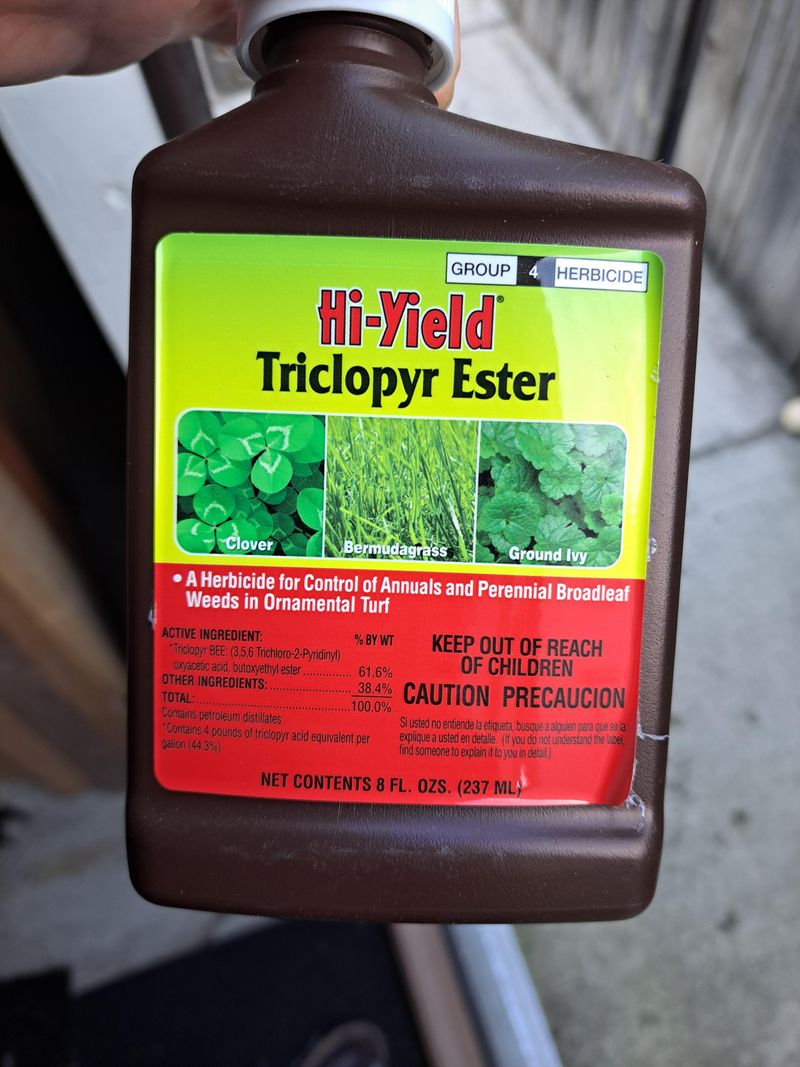
When violets cover a large part of the lawn, digging stops being realistic. Extension sources point to herbicides containing triclopyr as among the more effective choices.
Penn State Extension and Kansas State both discuss it for violet control.
That does not make it right for every yard. Grass types differ in how well they tolerate a product, so the label for your exact product must list your site and your turf species.
The EPA explains that directions on a pesticide label are legal requirements, not loose suggestions.
So read the whole label before you buy and again before you spray. Look for the turf species, timing, precautions, and any limits on use.
This article skips rates and temperature limits on purpose, since those belong to the product in your hand.
Also think about the plants next door. Spray can drift, and the EPA’s overview of pesticide drift shows how products can travel off target.
University of Minnesota Extension describes herbicide injury on garden plants, so keep sprays away from tomatoes, hydrangeas, and other beds.
Do not add dish soap or another homemade booster unless the label specifically allows it. And treat flower beds as a different job from lawns, since a lawn product may not be labeled for them.
Fall can help, but one treatment may not be enough
Fall gets a lot of attention for perennial weeds, and for good reason. Plants that are still growing in autumn are moving energy toward their underground parts, which can make treatment more effective.
University of Tennessee Extension emphasizes fall control and repeated effort.
But fall is not the only window. University of Illinois Extension allows spring or fall treatment, and Iowa State lists both too.
What matters most is that violets are actively growing and that your product label allows the timing you choose.
That is why a calendar date will not do. A mild southern fall and a chilly northern one are different, and so is a stressed, dried-out violet patch versus a healthy one.
Let plant condition, local weather, and the label guide you.
Then plan for a second round. Iowa State says two applications a few weeks apart may be needed, while Penn State notes that control can take repeated treatments, sometimes over more than one year.
Whether and when to repeat is a label question, not a general schedule. No source promises that one fall spray clears the underground growth.
Kansas State also discusses herbicide options, but the product in your hand sets the rules.
Treat fall as a helpful opportunity, not a guarantee.
Help turf compete without expecting a cure
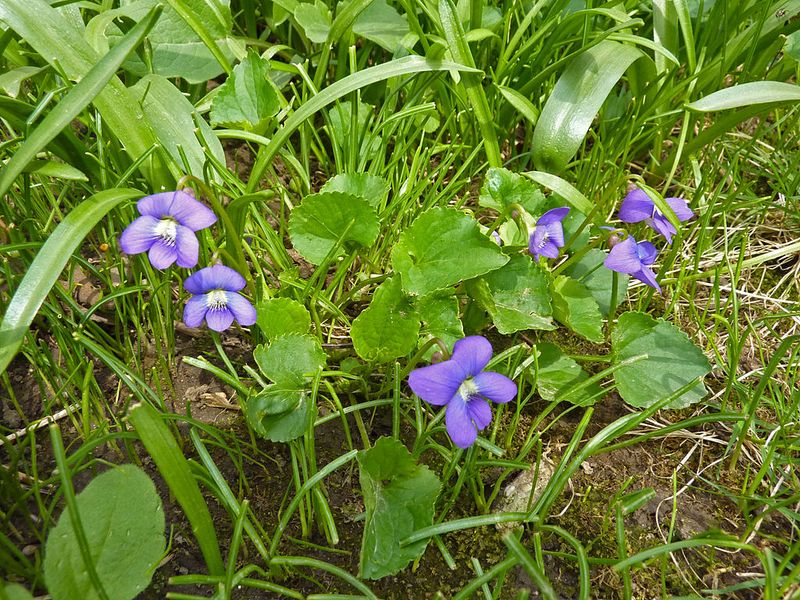
A workable plan is simple. Dig small patches in beds or tight spots, taking as much underground growth as you can.
For widespread lawn patches, consider a lawn herbicide only if its label covers your site and grass, and expect to repeat the effort.
Then give the grass a fighting chance. Penn State and Illinois Extension both point toward healthy turf, since thin grass in shade gives violets room to spread.
Dense, site-appropriate turf can slow them down, but it will not erase an established patch alone.
Violets may keep testing your patience for a few seasons. That is normal, not a sign you did something wrong.
Wild violets do not leave on a timetable, so the winning move is steady, patient care.