
Red-Purple Christmas Cactus Stem Segments: What They Mean And What To Check
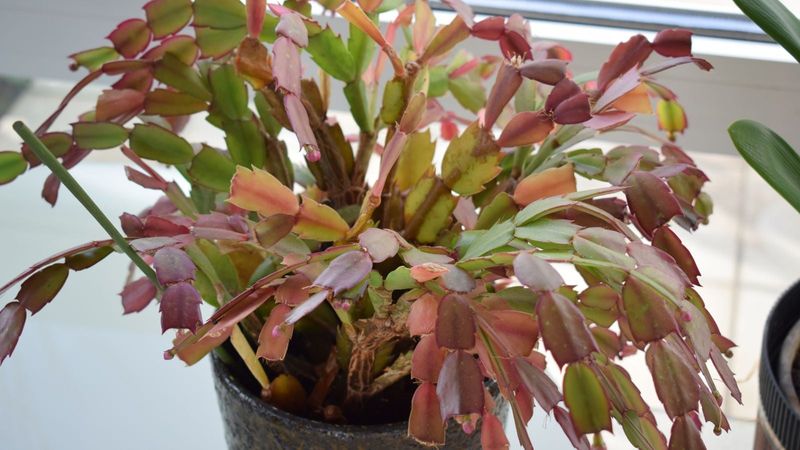
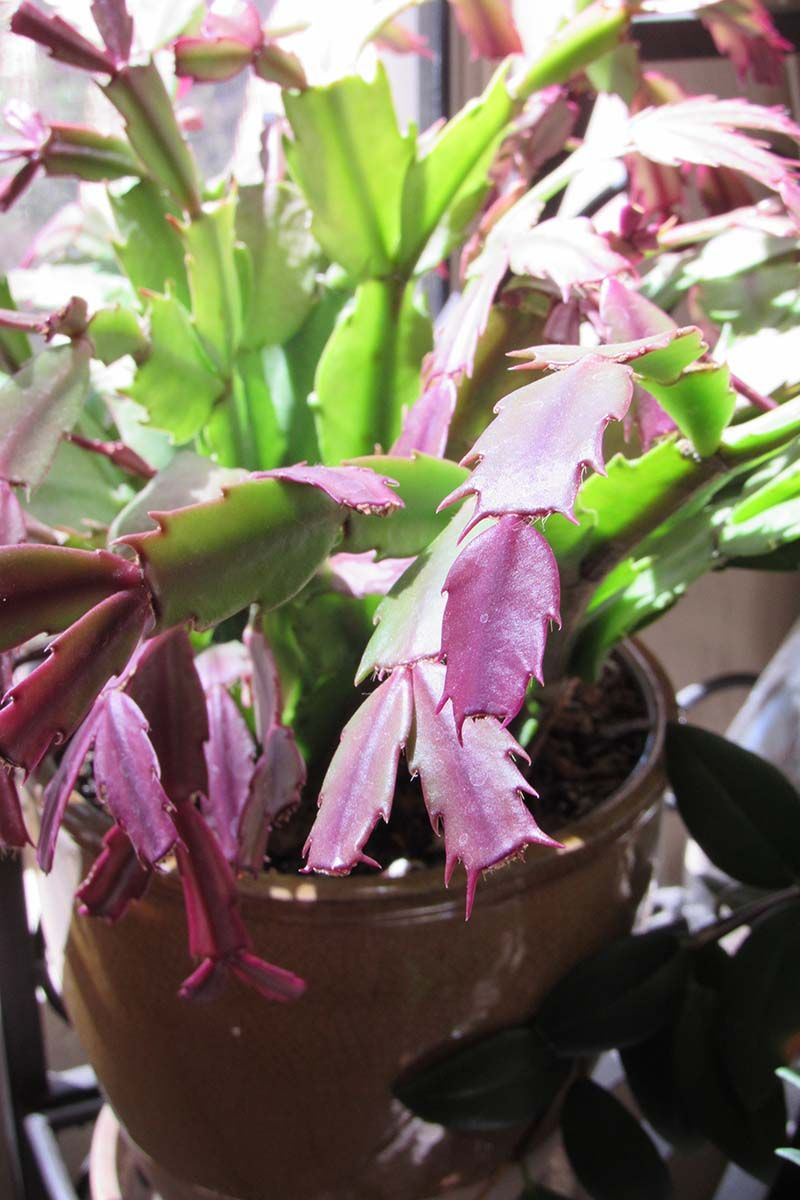
You glance at your holiday cactus and spot reddish-purple tints on the stem segments. It looks alarming, but color is only a clue, not a final answer.
Light, temperature, and watering can all play a part. A few calm checks can tell you what your plant needs next.
Red-purple segments are a clue, not a verdict
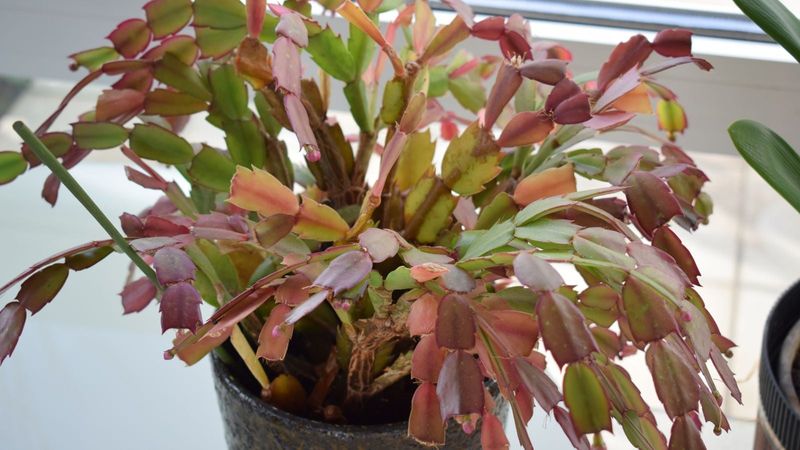
Those flat, scalloped pieces most of us call leaves are really stem segments. They do the work of leaves, which is why a color change on them gets your attention fast.
A reddish-purple tint can be a sign of stress, but the color by itself cannot tell you whether your plant is dying.
Extension guidance backs up that cautious view. One Ask Extension answer lists bright light, high temperatures, and possible nutrient deficiencies as causes of the color.
So strong light is one plausible suspect among several, not a proven culprit for every plant.
Watering and roots deserve a spot on the list too. University of Minnesota Extension points out that soggy mix can lead to root rot, and a struggling root system can show up as problems above the soil.
Those problems usually come with other signs, such as limp or shriveled segments, segments dropping off, or soil that never seems to dry out.
So think of the red-purple tint as a prompt to look around. Ask yourself where the plant sits, how bright that spot gets in the afternoon, how close it is to the glass, and how the soil feels a couple of inches down.
Also check whether the plant looks otherwise firm and healthy. If the segments are plump and the mix drains well, a simple placement tweak is a low-risk first step.
If you see other symptoms, you will have good reasons to dig deeper instead of guessing.
Is strong window light stressing the plant?
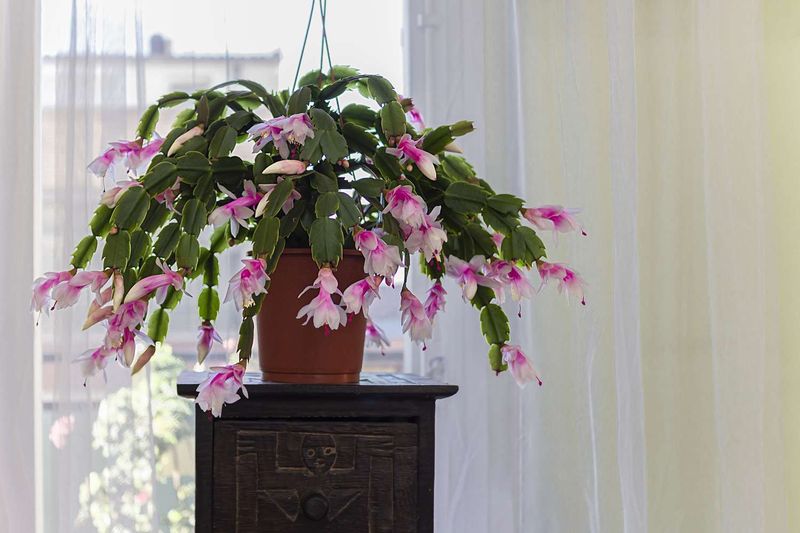
Picture where your cactus lives in the wild: shaded branches in a rainforest, with light filtering through the canopy. That background helps explain why holiday cacti tend to do best in bright but indirect or filtered light.
University of Connecticut Extension describes them as plants that like bright light without harsh direct sun, and other university guides from Wisconsin and South Dakota say much the same.
If your plant sits in a window that blasts it with strong afternoon sun, that exposure is a reasonable thing to test. Try a sheer curtain, or slide the pot a bit to the side so the sun does not hit the stem segments directly for hours at a time.
Think of it as a trial, not a guaranteed cure, because the tint could have another cause.
Keep the plant bright, though. Moving it to a dim hallway swaps one problem for another and may work against flowering.
A spot near an east-facing window, or a few feet back from a sunnier one, often gives plenty of light without the harshness.
After the change, watch the new growth and the overall look of the plant for a few weeks. Do not expect the colored segments to turn green on a schedule.
Nothing in the guidance promises that, and a steady, comfortable spot matters more than quick color change.
Cold glass can damage foliage, but it is not a proven color diagnosis
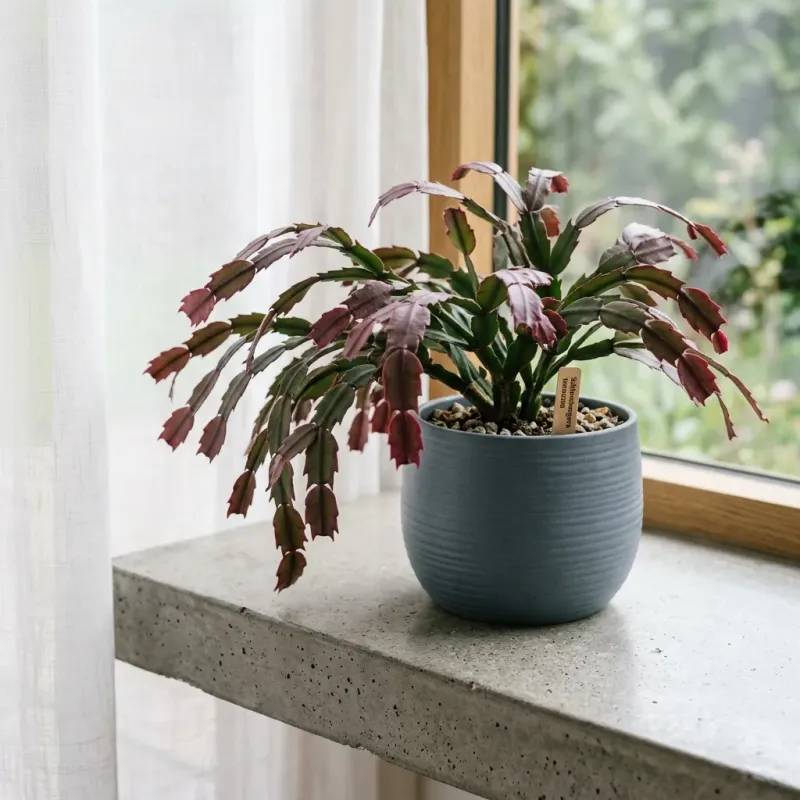
Windowsills get chilly on winter nights, and the glass is the coldest spot of all. University of Illinois Extension notes that cold glass can injure houseplant foliage and that the air near a window can run colder than the rest of the room.
Iowa State Extension also warns that cold exposure can harm holiday cacti.
Here is the careful part. Those sources talk about cold damage in general.
They do not say that cold glass causes red-purple stem segments, so it would be a stretch to blame the glass for your plant’s color.
Still, keeping the plant away from the cold is a cheap, sensible move. Make sure no stem segments press against the pane, and shift the pot a few inches back from the window.
Also steer clear of spots near leaky frames, exterior doors, or vents that blow cold or hot air.
On a frosty night, a quick test helps: lay your hand on the glass and then on the air a few inches away. If the difference is big, your cactus feels it too.
A small move now is a gentle adjustment, and it does not rule out other causes you may still need to check.
What do the soil and stems tell you about watering?
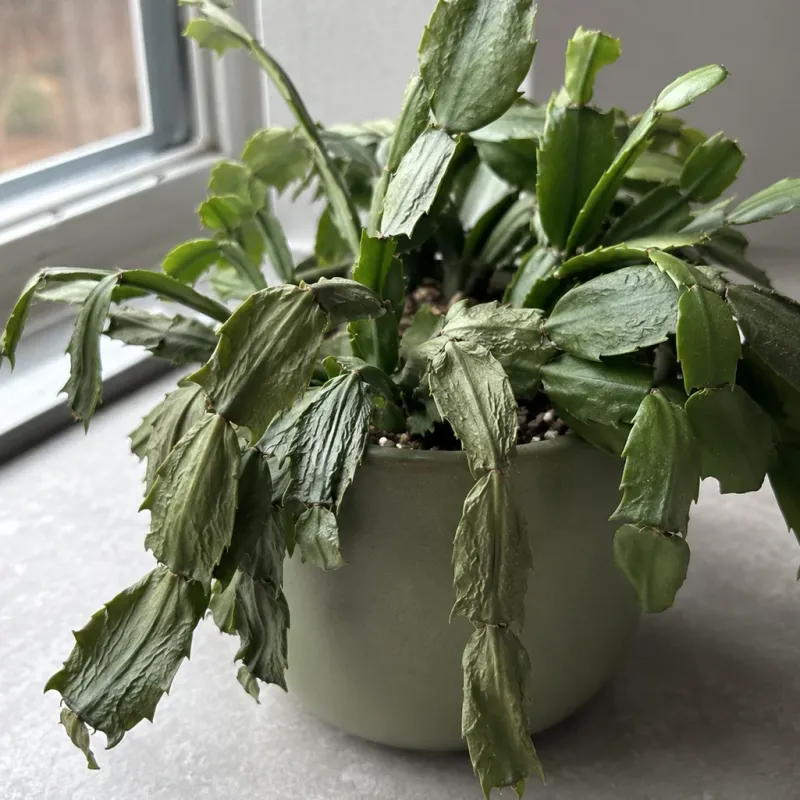
When the color change comes with other symptoms, the next step shifts. Limp or shriveled segments, segments falling off, or a mix that stays wet for days all point you toward drainage and roots instead of color alone.
Red tint plus soggy soil is a very different situation from red tint on a plump, firm plant.
Holiday cacti need a well-draining mix and should never sit in standing water. University of Minnesota Extension warns that too much moisture can lead to root rot.
UConn Extension adds that watering depends on the mix drying and on the plant’s condition and season, and that a plant that dries out badly and then gets heavy watering can be stressed as well.
Check that the pot has drainage holes and empty the saucer after watering. If the plant looks wilted but the soil is wet, that combination is consistent with rot.
Penn State Extension describes root problems that can cause wilting and decline.
If you suspect trouble, slide the plant out of its pot and look at the roots. Healthy roots look firm, while dark, mushy roots suggest rot and mean the mix needs to be refreshed and the watering routine rethought.
Resist the urge to pour on more water just because the plant looks unhappy. Extra water can make a wet-soil problem worse.
Let the mix tell you when it is ready for a drink.
Why fertilizer is not the first fix
Plenty of gardeners reach for plant food when leaves change color. With a holiday cactus, that instinct deserves a pause.
One Ask Extension response lists nutrient deficiency as a possible cause of reddish color, but it is a single answer to an individual question, not a confirmed diagnosis for your plant.
Color alone cannot show that your cactus is hungry. The same tint can show up with strong light, warm temperatures, or root trouble, and adding fertilizer to a stressed plant with wet, unhappy roots would not fix any of those.
A better order of operations is simple. First look at the light, and see whether the plant gets harsh sun for long stretches.
Then check the moisture, feeling whether the mix is soggy or bone dry, and confirm the pot drains. Finally, scan for other signs, such as limp segments or segments dropping.
If all of that checks out and the plant otherwise looks healthy, you have time to keep observing. There is no feeding schedule or supplement here that can promise to bring the green back, so skip the shopping trip for now.
When buds are forming, keep conditions steady
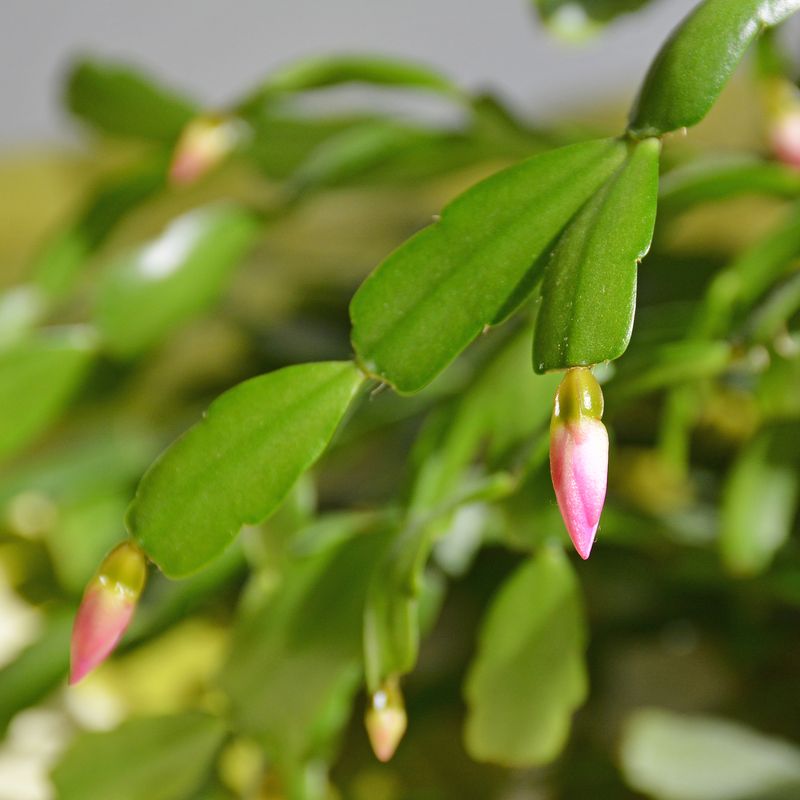
Once tiny buds show up at the tips, the goal changes from fixing to protecting. Pick a bright, indirect spot that stays away from cold glass and drafts, and then leave the plant there.
University of Minnesota Extension and Iowa State Extension both note that drafts and swings in temperature, light, or humidity can contribute to bud drop.
That means no shuffling the pot from room to room each week, and no sudden moves from a cool porch to a warm kitchen. Make any needed placement change once, early, and keep it modest.
It also helps to remember that plants sold as Christmas cactus may really be Thanksgiving cactus or hybrids, as South Dakota State Extension explains. Bloom timing and some care responses differ, so your plant may not follow the same calendar as a neighbor’s.
As for color, no source promises that red-purple segments will turn green before the flowers open, so do not chase it with more moves, more water, or extra feeding. Keep the setting stable, check the soil now and then, and watch how the plant behaves.
A calm cactus often rewards patience with blooms, even if a few segments stay tinted.