
Keep Your Kitchen Herbs Alive On The Windowsill All Winter With These 13 Simple Habits
Your basil drooped, your parsley turned yellow, and now you are wondering if your windowsill herbs will make it to spring. Winter is tough on kitchen herbs because the days get short, the air gets dry, and the glass by the sink gets cold at night.
The good news is that most herb trouble comes from a few small habits that are easy to change. Here are 13 simple ones that can help your rosemary, thyme, chives, and friends stay green and snippable all season long.
1. Pick Herbs That Actually Like Living Indoors
Not every herb is cut out for a winter indoors, and that is not your fault. Some plants simply handle low light and dry air better than others.
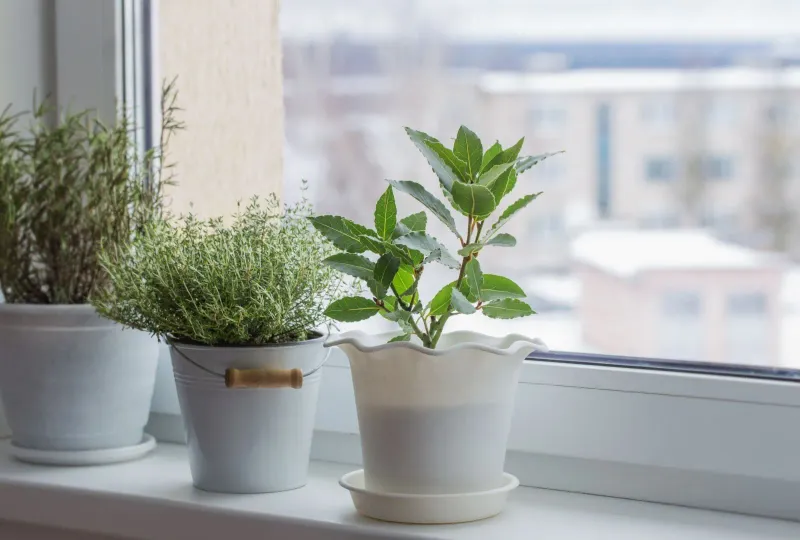
Rosemary, sage, thyme, oregano, chives, mint, and parsley are the tough crowd. They slow down in winter but usually keep going if you give them decent light.
Basil is the drama queen of the group, since it wants steady warmth and lots of bright sun that most winter windows just cannot give.
If your basil keeps fading no matter what you do, try treating it as a short-term crop. Snip it often, use it up, and start a fresh pot from seed or a cutting later.
Spend your real care on the herbs that are built to last until spring.
2. Bring Outdoor Herbs Inside Slowly
Picture going from a breezy porch to a stuffy living room overnight. Your herbs feel that same jolt when they get moved inside all at once.
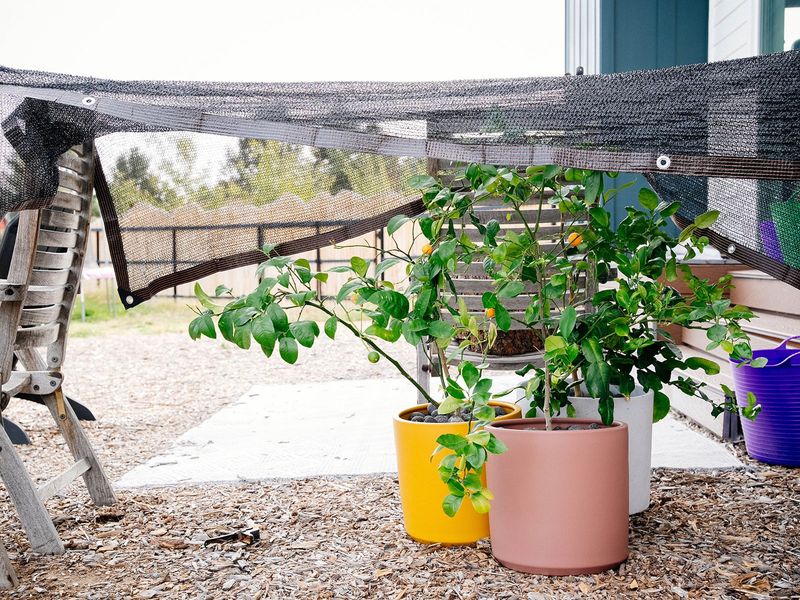
About 7 to 10 days before your first expected frost, shift outdoor pots to a shadier, sheltered spot. This lets them get used to lower light before they ever see your kitchen.
Once nights stay below about 50°F, bring them in for good.
A little leaf drop in the first week or two is normal. Hold off on fertilizing or repotting while they adjust, and let them settle in before you judge how they are doing.
3. Check Every Leaf for Hitchhiking Pests
Aphids are tiny freeloaders, and they love a free ride into a warm house. One infested pot can spread trouble to every plant on your sill.
Before any herb comes inside, flip the leaves and look at the undersides closely. Check the stems and the soil surface too.
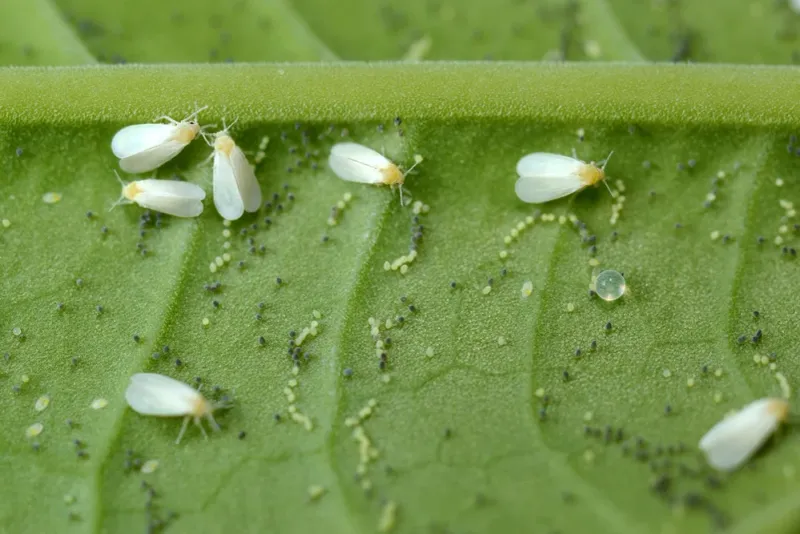
You are hunting for aphids, spider mites with their fine webbing, or whiteflies that flutter up when you touch the plant.
If you spot them, rinse the plant well with a strong spray of water or use insecticidal soap. Keep any treated plant apart from the others for a week or so.
That small wait can save your whole windowsill.
4. Claim Your Brightest Window
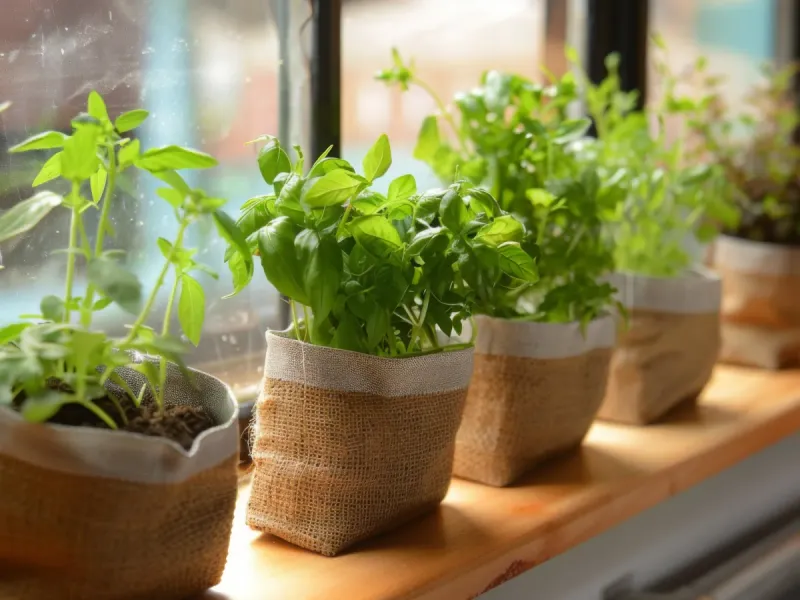
Light is the number one thing your herbs miss in winter. Pale, floppy stems are their way of telling you they are hungry for sun.
Find the brightest window you have, ideally facing south or west. Most herbs want 6 to 8 hours of direct light a day, and winter days make that hard to reach.
A north window, sadly, rarely cuts it.
Clean the glass too, since dust and grime block more light than you might think. Pull back sheer curtains during the day.
Every extra bit of sunshine counts when the days are this short.
5. Add a Grow Light When the Sun Falls Short
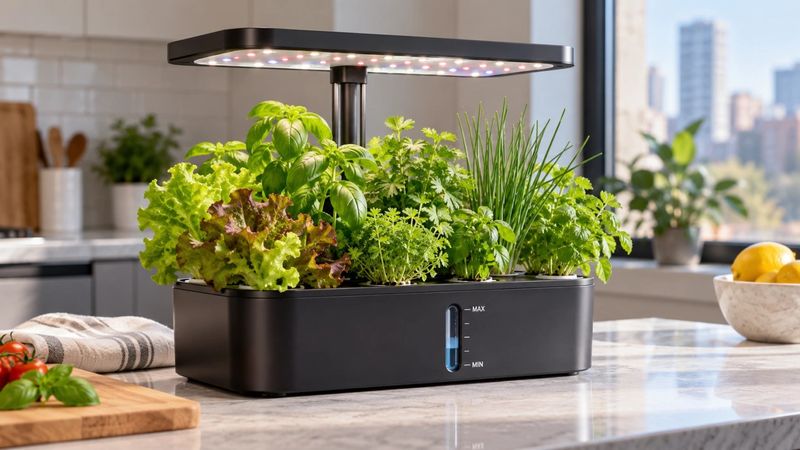
Some winters, even your best window just is not enough. Stretchy stems and washed-out leaves are the classic sign.
A simple full-spectrum LED grow light can fill the gap without costing much. Set it about 6 to 12 inches above the tops of your plants and run it 12 to 16 hours a day.
A cheap outlet timer makes this almost effortless.
You do not need a fancy setup. A clip-on light over a few pots can turn a sad, leggy parsley into a compact, leafy one within a few weeks.
6. Water Less Than You Think
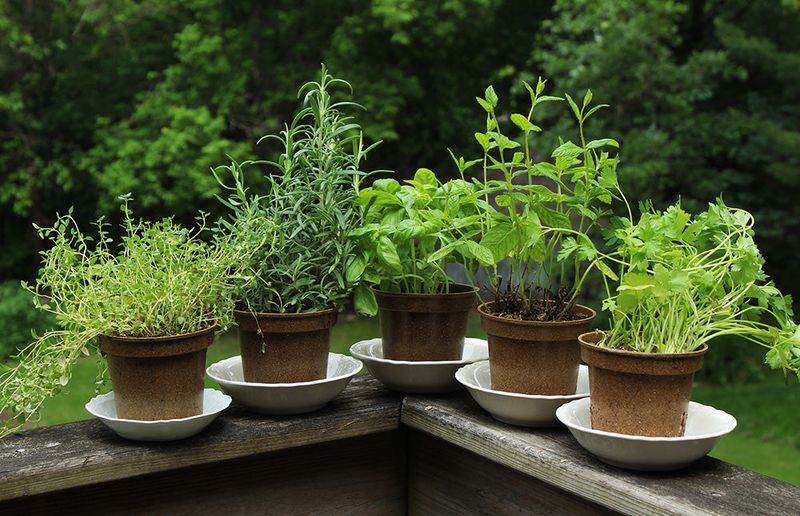
Here is the sneaky truth: more indoor herbs die from too much water than too little. Slow winter growth means the roots drink much less.
Before you water, push a finger one to two inches into the soil. If it feels dry, water slowly until a little drains out the bottom.
If it still feels damp, wait and check again in a day or two.
Rosemary is especially touchy, since soggy roots can kill it fast. Empty saucers after watering so pots never sit in a puddle.
Skipping a watering is almost always safer than adding an extra one.
7. Fight Back Against Dry Furnace Air
Crispy leaf tips in January? Your furnace may be the culprit.
Heated air pulls moisture out of leaves faster than roots can replace it.
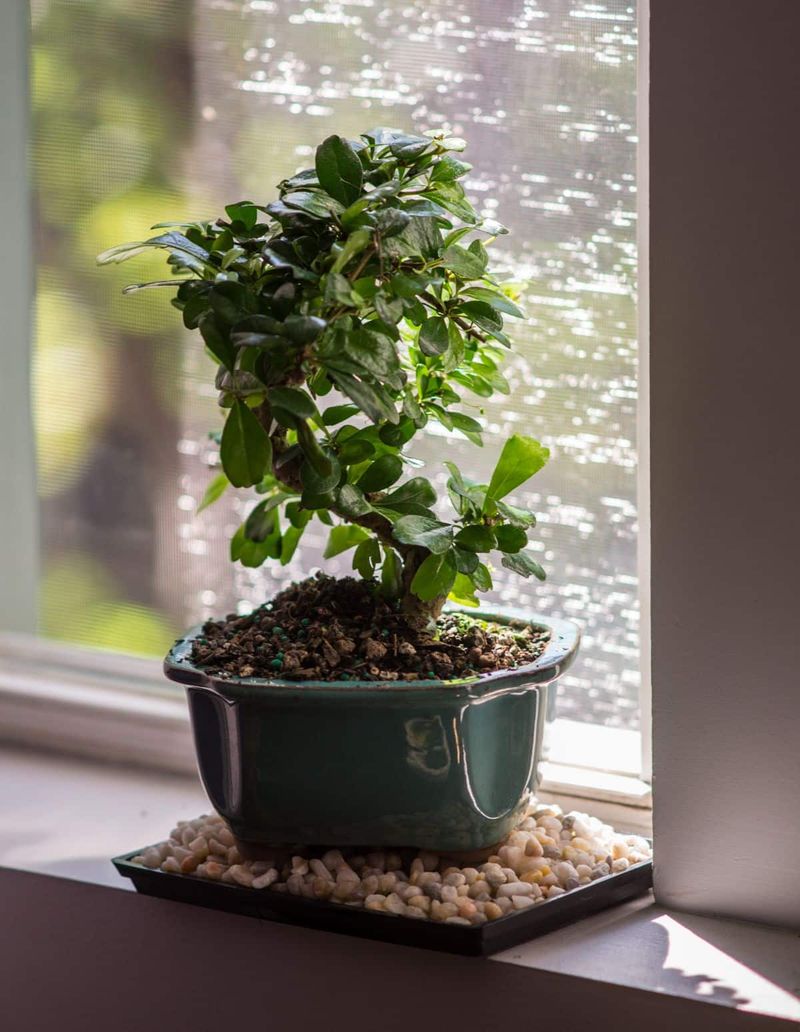
A pebble tray is an easy fix. Fill a shallow tray with pebbles, add water just below the top of the stones, and set pots on it so the bottoms stay dry.
Grouping plants together also helps, since they share a little pocket of moist air.
Light misting can help basil or parsley. Skip it for rosemary, though, because damp leaves can invite powdery mildew.
8. Keep Them Away From Cold Glass and Hot Vents
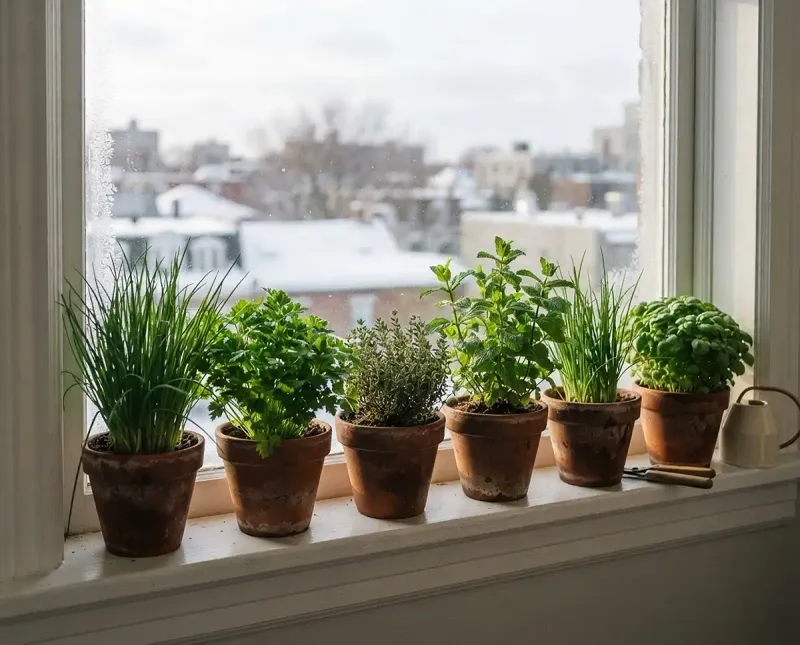
Windowsills can swing from cozy at noon to freezing at midnight. Leaves that touch icy glass can blacken or wilt overnight.
Most herbs feel best around 60 to 70°F in the day and a bit cooler, about 55 to 60°F, at night. Slide pots a few inches back from the pane on very cold nights.
Closing the blinds behind them after dark can also block some of that chill.
Heat vents and radiators cause the opposite problem, drying plants out fast. Aim for a spot that stays steady, not one that blasts hot or cold.
9. Go Easy on the Fertilizer
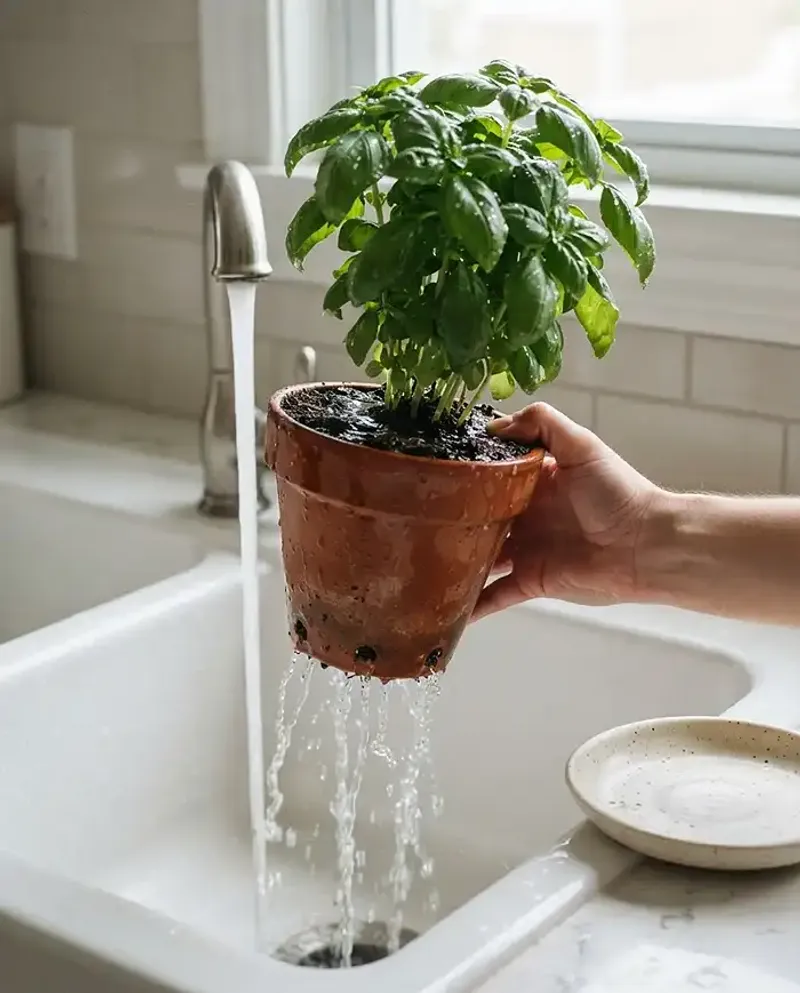
Feeding a resting plant is a bit like offering a big dinner to someone who is half asleep. Most of it goes to waste, and extra salts can build up and burn roots.
If your herbs are mostly resting, skip fertilizer entirely until spring. If they are growing well under a grow light, a quarter-strength organic liquid feed every 4 to 8 weeks is plenty.
Watch for a white crust on the soil or pot rim. That is often salt buildup, and a good flush of plain water can help clear it.
10. Make Sure Every Pot Can Drain
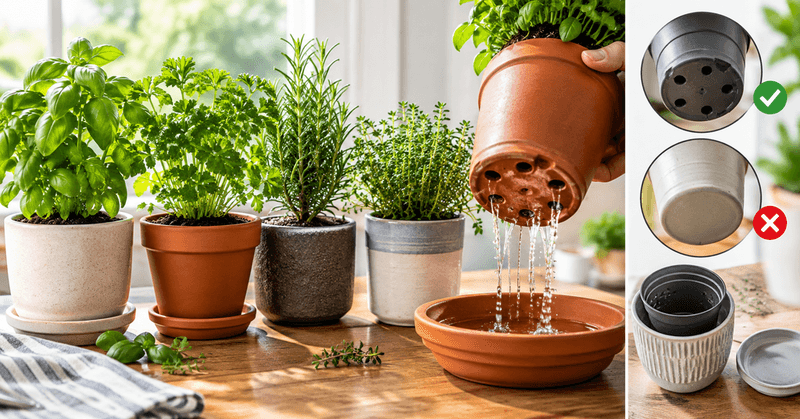
Those cute decorative pots with no holes? They are quietly drowning a lot of herbs.
Water has nowhere to go, so roots sit wet and start to rot.
Always use containers with drainage holes. If you love a fancy pot, use it as a cover and keep the herb in a plain nursery pot inside it.
Just tip out any water that collects at the bottom.
Fill pots with a light, fast-draining potting mix, not garden soil. Thyme, oregano, and rosemary come from dry, rocky hillsides, so they especially appreciate soil that dries out between drinks.
11. Snip for Bushiness, Not Just for Dinner
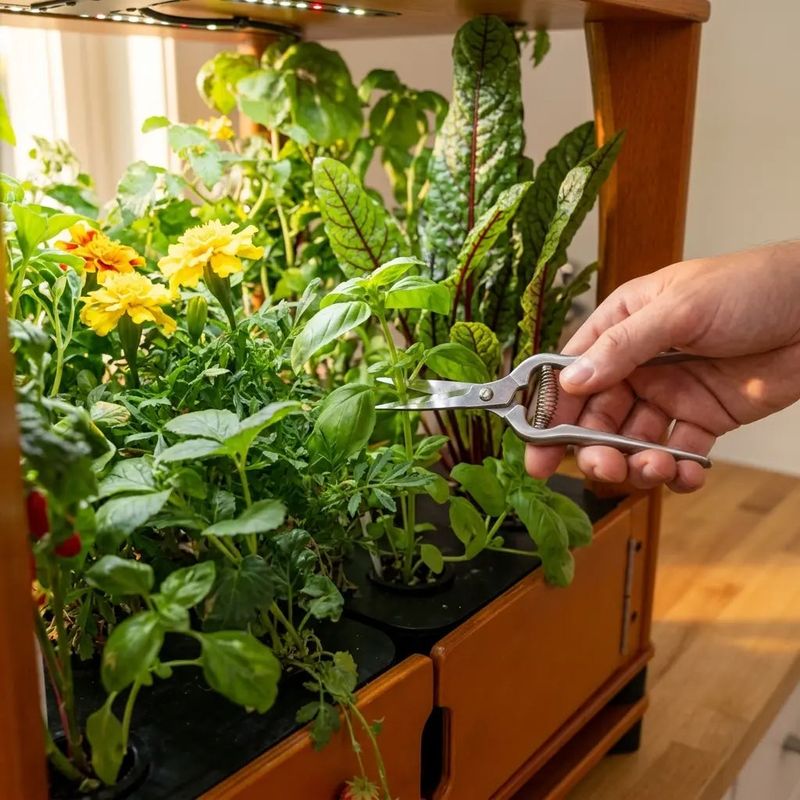
Good news for cooks: harvesting can actually make your herbs healthier. The trick is where you cut.
Snip stems just above a leaf node, the spot where a pair of leaves meets the stem. The plant answers by sending out two new shoots, which builds a fuller, bushier shape.
Never take more than one third of the plant at once, since winter regrowth is slow.
Pinch off any flower buds on basil or mint too. Once herbs flower, the leaves can turn bitter and growth slows down.
12. Give Pots a Quarter Turn Every Few Days
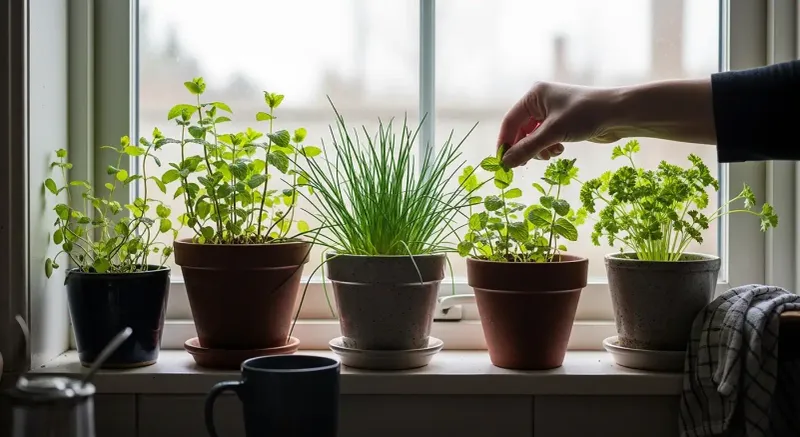
Ever notice your herbs leaning like they are trying to peek outside? Plants stretch toward light, and on a windowsill that means one side gets all the sun.
Give each pot a quarter turn every few days. It takes seconds, and it keeps growth even instead of lopsided and leggy.
A simple way to remember is to rotate whenever you water. Your chives and parsley will grow upright and full instead of bending toward the glass.
13. Keep the Air Moving

Outdoors, breezes keep leaves dry and pests unsettled. Inside, still air can let powdery mildew and gnats move right in.
A small fan on its lowest setting a few feet away can mimic a gentle breeze for an hour or two a day. Leave a little space between pots so air can flow around each plant.
Fun fact: light movement may even help stems grow a bit sturdier. It is one of the easiest habits on this list, and it can reduce a lot of winter headaches before spring arrives.