
17 Fall-Planted Bulbs That Fill Your Yard With Color Before Anything Else Wakes Up Next Spring
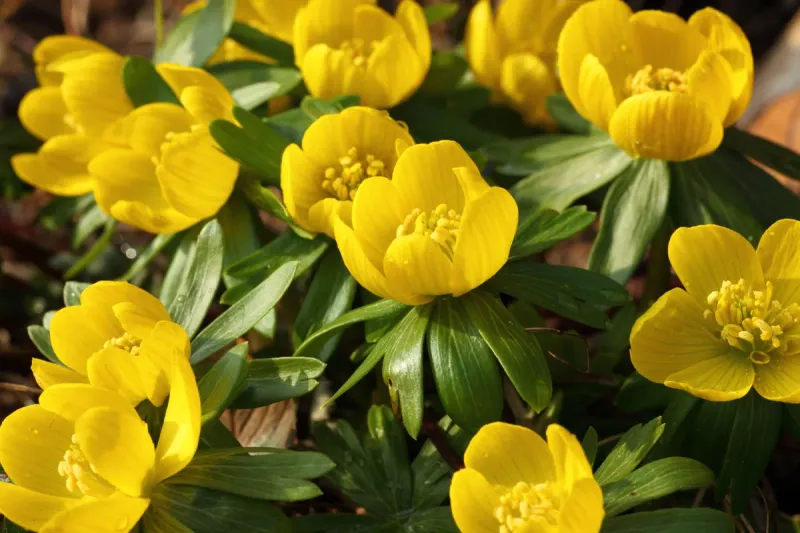
Late winter can make a yard look tired, brown, and a little hopeless. The good news is that a handful of bulbs you tuck into the ground this fall will push up color while your hydrangeas and roses are still fast asleep.
Most of them cost very little, need almost no care, and come back year after year. Here are 17 early risers worth planting before the ground freezes, plus the simple mistakes that keep them from blooming.
1. Crocus
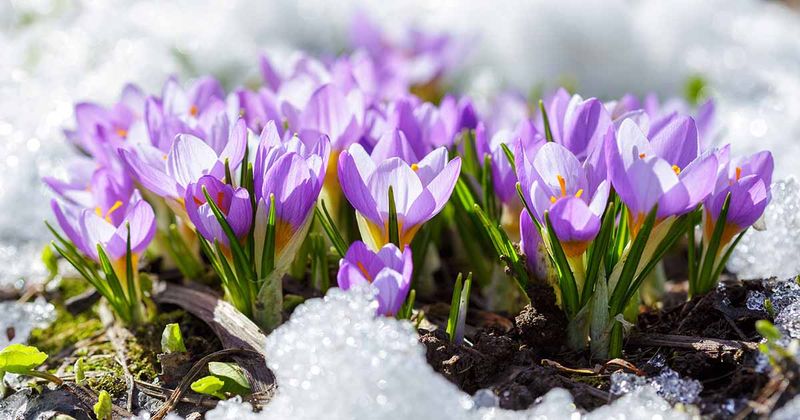
Picture a gray March morning, and then a cluster of purple cups popping open beside the driveway. Crocuses are often the first sign that winter is losing its grip, and they sometimes bloom right through a late snow.
Plant the small corms 3 to 4 inches deep in a sunny spot. They look best tucked along walkways, borders, or even scattered right into the lawn, where they finish before the first mowing.
If yours came up last year but skipped blooming, shade is the usual culprit. Crocuses open only in sun, so move them somewhere bright this fall and let the leaves yellow fully before you cut anything back.
2. Snowdrops (Galanthus)
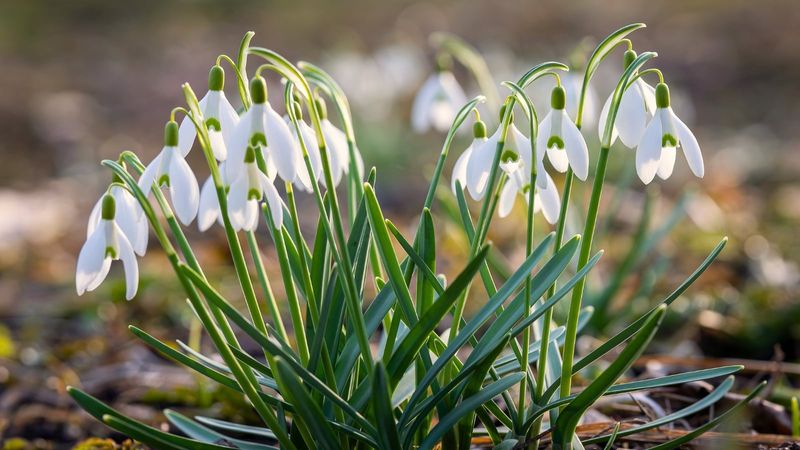
Gardeners in old England used to call them Candlemas bells, because they showed up around early February like clockwork. Snowdrops still keep that schedule, nodding their white heads over frozen ground when nothing else dares to move.
Each flower has tiny green markings on the inner petals, which you only notice when you bend down close. That small detail is half the fun.
Snowdrops are basically critter-proof, so deer and squirrels leave them alone. Plant them under deciduous trees or along a shady path, then leave them be.
Over a few years, a handful of bulbs can spread into a carpet.
3. Early-Blooming Daffodils
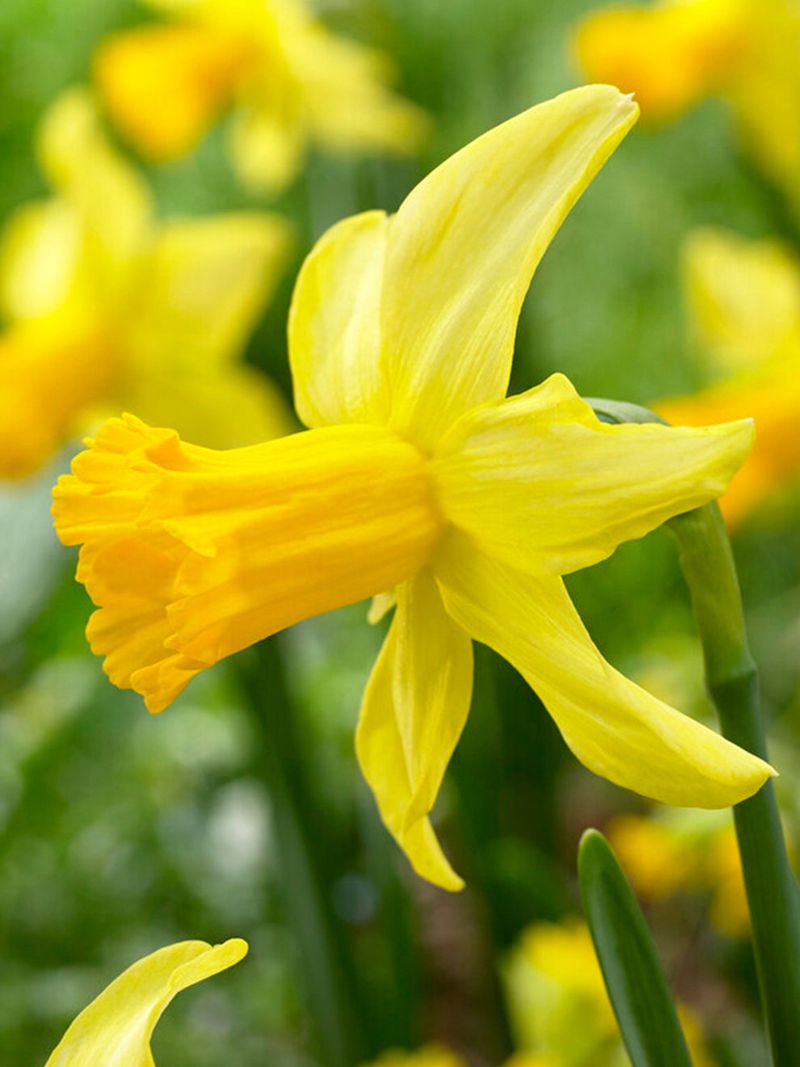
Ask almost any longtime gardener which bulb never lets them down, and daffodils win the vote. They are hardy, reliable, and deer simply will not eat them.
For the earliest show, look for varieties like February Gold, Tete-a-Tete, or Rijnveld’s Early Sensation. Plant bulbs 6 inches deep with the pointed end up, in full sun to part shade.
A common worry is daffodils that send up leaves but no flowers. That usually means the foliage was cut too soon last spring or the clump has gotten crowded.
Let leaves die back naturally for about six weeks, and divide old clumps in early fall to get blooms back.
4. Winter Aconite (Eranthis)
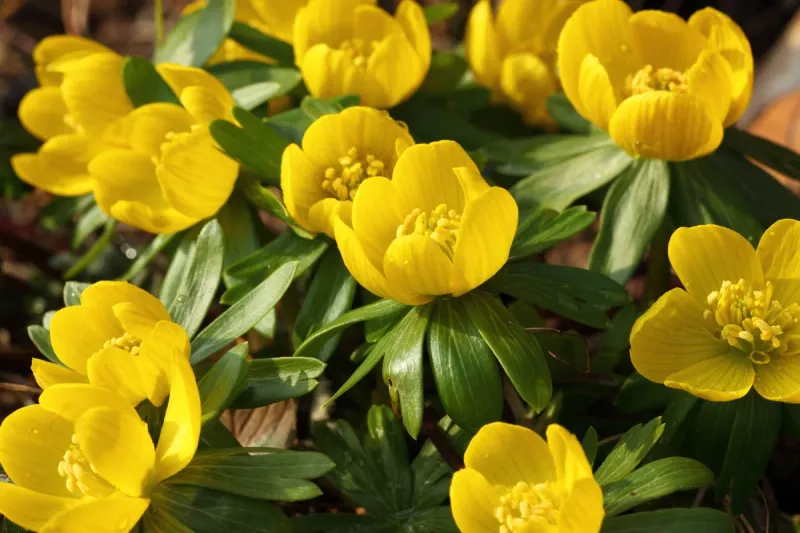
Tiny golden buttercups wearing green ruffled collars, blooming in the dead of winter. That is the cheerful little trick winter aconite pulls off every year.
These flowers look best in bold, natural drifts under shrubs or trees where you will not disturb them. They love moist soil and hate drying out.
One tip saves a lot of heartbreak: the knobby tubers are often sold very dry. Soak them in water overnight before planting in early fall, set them 2 to 3 inches deep, and expect a modest first year.
By year three, the yellow tends to spread on its own.
5. Glory-of-the-Snow (Chionodoxa)
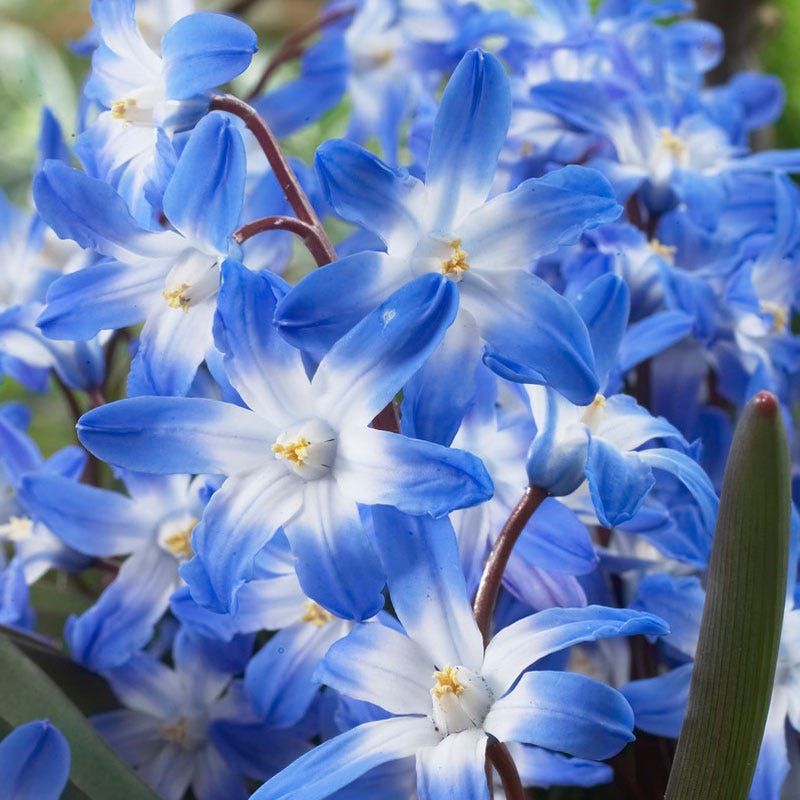
Right when the snowdrops fade and before tulips show up, there is an awkward gap in most yards. Glory-of-the-snow fills it with starry blue flowers that have bright white eyes.
The name comes from its habit of blooming as the last snow melts in its native mountains of Turkey. Plant bulbs about 3 inches deep in sun or light shade, in groups of 25 or more for real impact.
Chionodoxa seeds itself freely, so a small patch slowly becomes a blue river. It is lovely under shrubs or around the base of a tree where grass struggles anyway.
6. Grape Hyacinth (Muscari)
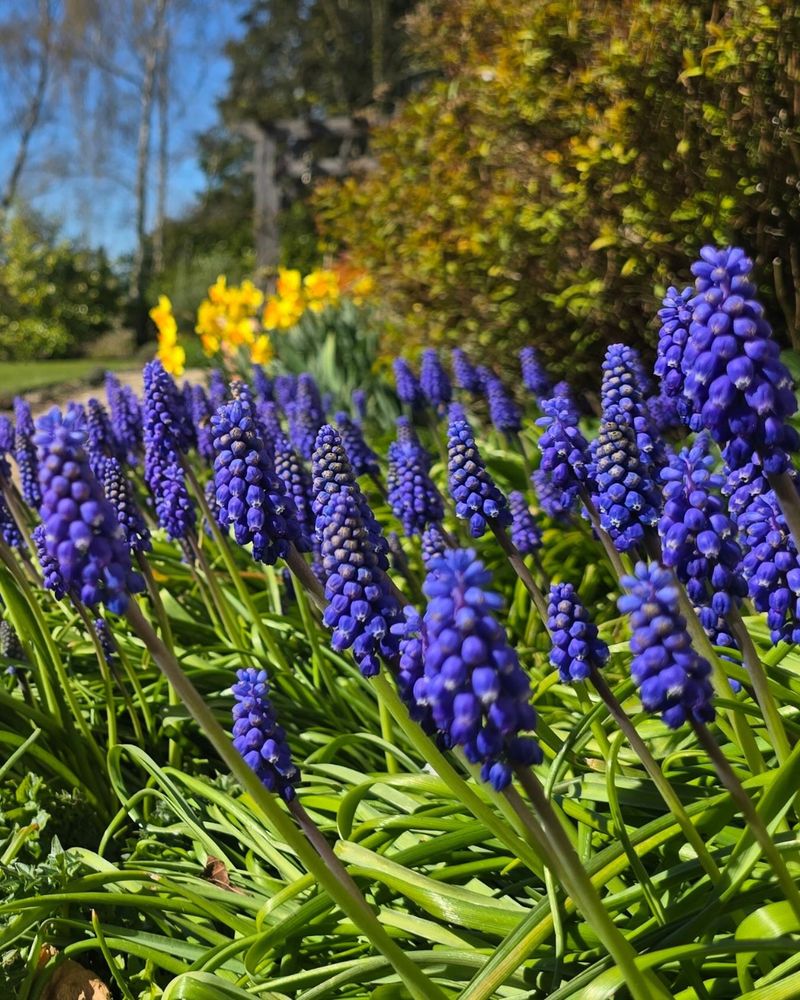
Kids love these. The tight little spikes really do look like bunches of grapes, and some even smell faintly of grape soda.
Muscari are tough, reliably perennial, and spread well. Plant them 3 to 4 inches deep in sun or part shade, and line them along a path or tuck them under taller daffodils for a classic blue-and-yellow combo.
Do not panic if grassy leaves pop up in fall. That is normal behavior for grape hyacinths, and the plants will still bloom fine in spring.
7. Hyacinth
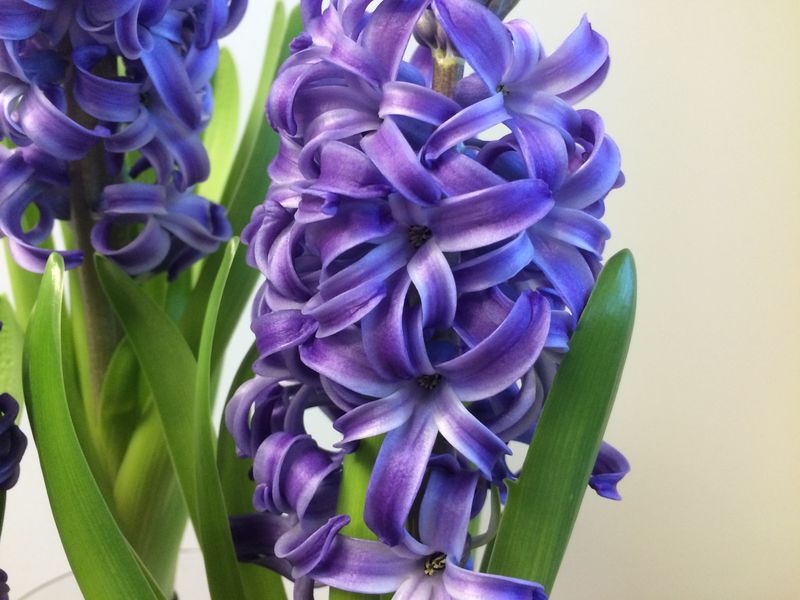
You usually smell hyacinths before you see them. One clump by the front steps can perfume the whole porch on a mild spring afternoon.
The thick flower spikes come in pink, purple, blue, white, and even peach. Plant bulbs 6 inches deep in well-drained soil, near doors, windows, or walkways so the scent actually gets enjoyed.
Wear gloves when handling the bulbs, since they can make skin itchy. Also expect flower spikes to get a little looser and more relaxed after the first year, which many gardeners actually prefer.
8. Striped Squill (Puschkinia)
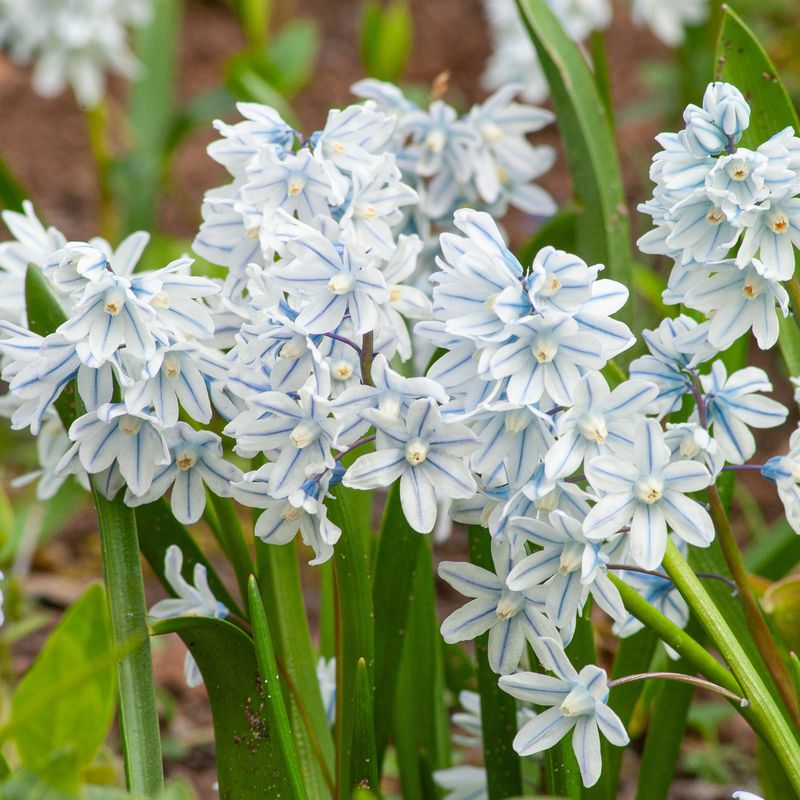
Lean in close and each pale flower shows a thin blue stripe down the center of every petal, like it was painted with a fine brush. Striped squill is the quiet, elegant cousin in the early bulb crowd.
It is extremely hardy and both deer and rabbits ignore it. That makes it a smart choice if critters have chewed your tulips in years past.
Plant bulbs 2 to 3 inches deep in well-draining soil, in full sun or part shade. Clusters of a dozen or more look best, especially along the front of a bed.
9. Siberian Squill (Scilla siberica)
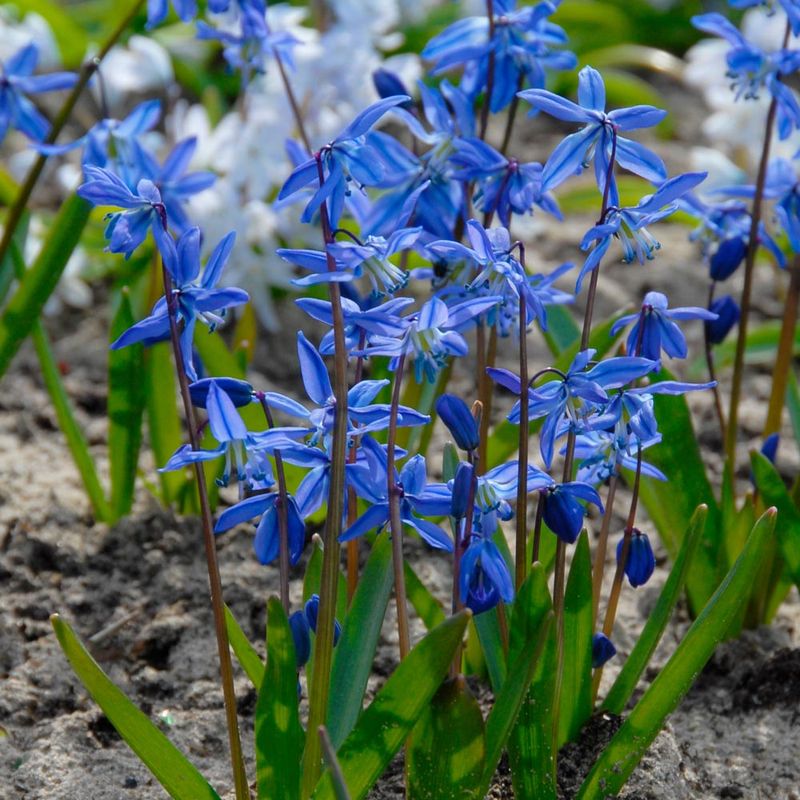
Few flowers come in a blue this intense. Siberian squill opens in a deep, almost electric shade that seems to glow on cloudy days.
It also has serious spreading power. Plant 3 to 4 inches deep in sun to light shade with good drainage, and it returns and multiplies every year.
Some old neighborhoods in the Midwest have entire lawns turned blue in April from plantings made decades ago. Critters leave it alone, but be honest with yourself before planting: if you want neat, contained beds, give it a spot where wandering is welcome.
10. Summer Snowflake (Leucojum)
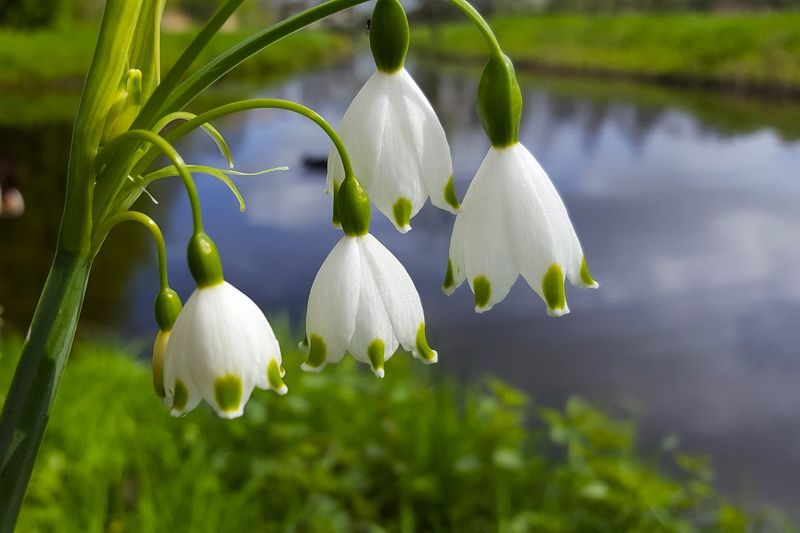
Despite the name summer snowflake, this one blooms in spring, sometimes as early as February in warmer zones. Confusing?
A little. Charming?
Absolutely.
The white bells look like snowdrops at first glance, but every petal tip carries a tiny green dot. Stems are taller, too, so they show up nicely above emerging perennials.
Leucojum tolerates damp spots better than many bulbs, so it is great near downspouts or low corners where tulips tend to rot. Plant about 4 inches deep and leave clumps undisturbed.
11. Dwarf Iris (Iris reticulata)
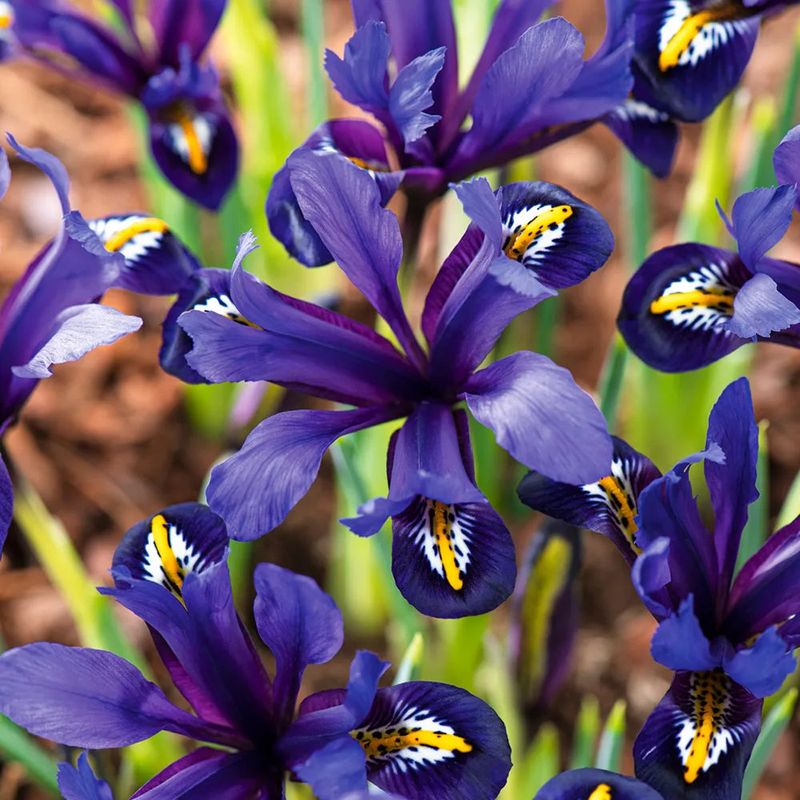
Only 4 to 6 inches tall, dwarf irises pack the detail of a full-size iris into a flower you can hold between two fingers. They often bloom in late winter, ahead of almost everything.
Colors run from deep violet to sky blue, with gold markings on the falls. Many are lightly fragrant, and deer tend to skip them.
Plant 3 to 4 inches deep and about 3 inches apart in well-drained soil and full sun to part shade. Soggy ground is their weakness, so a rock garden or raised edge keeps them coming back.
12. Species Tulips
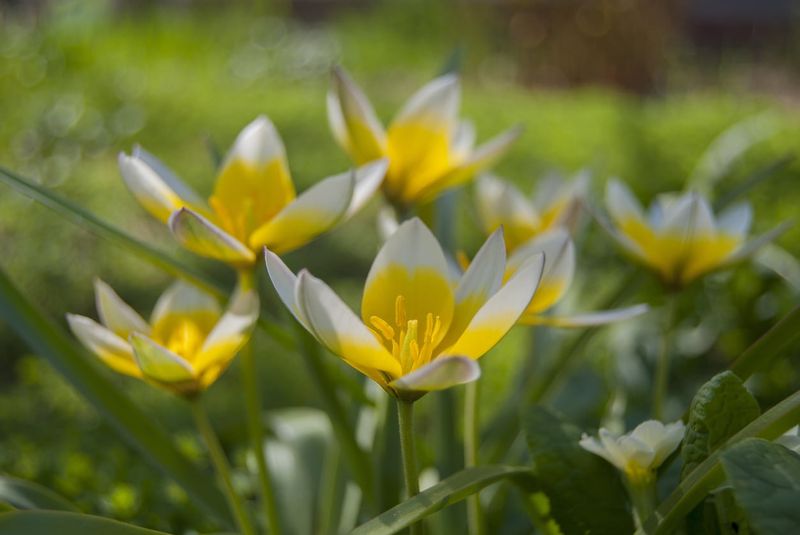
Tired of tulips that bloom gloriously once and then vanish? Species tulips might be the fix you have been looking for.
These wild-type tulips, like Tulipa kaufmanniana, Tulipa tarda, and Tulipa turkestanica, are shorter and earlier than the big hybrids. Many open into flat stars on sunny days and return reliably year after year.
Plant 6 to 8 inches deep and 4 to 6 inches apart in full sun with sharp drainage. Wet soil is what usually rots tulips, so skip heavy clay spots or amend them with grit.
13. Snake’s Head Fritillary (Fritillaria meleagris)
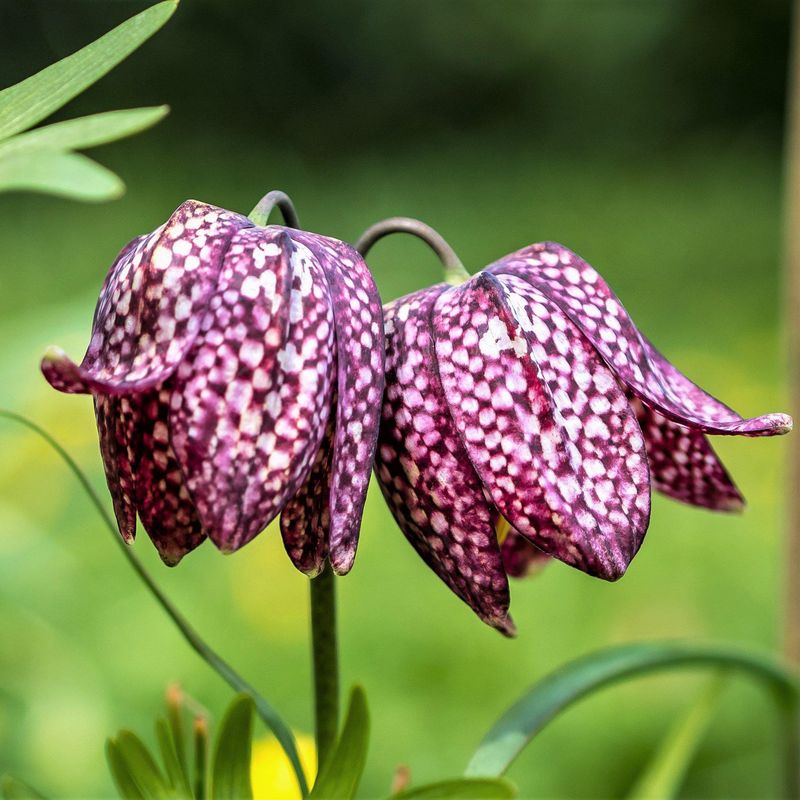
Visitors always stop at this one and ask if it is real. The hanging bells are printed in a purple checkerboard pattern that looks almost hand-stitched.
Snake’s head fritillary blooms in April or May and adds an exotic touch that no other spring bulb quite matches. Rodents generally pass it by.
While most fritillaria like sun, this species prefers dappled shade and soil that stays slightly moist. Plant bulbs 3 to 4 inches deep, and do it promptly after they arrive, since the bulbs dry out quickly.
14. Star of Bethlehem (Ornithogalum)
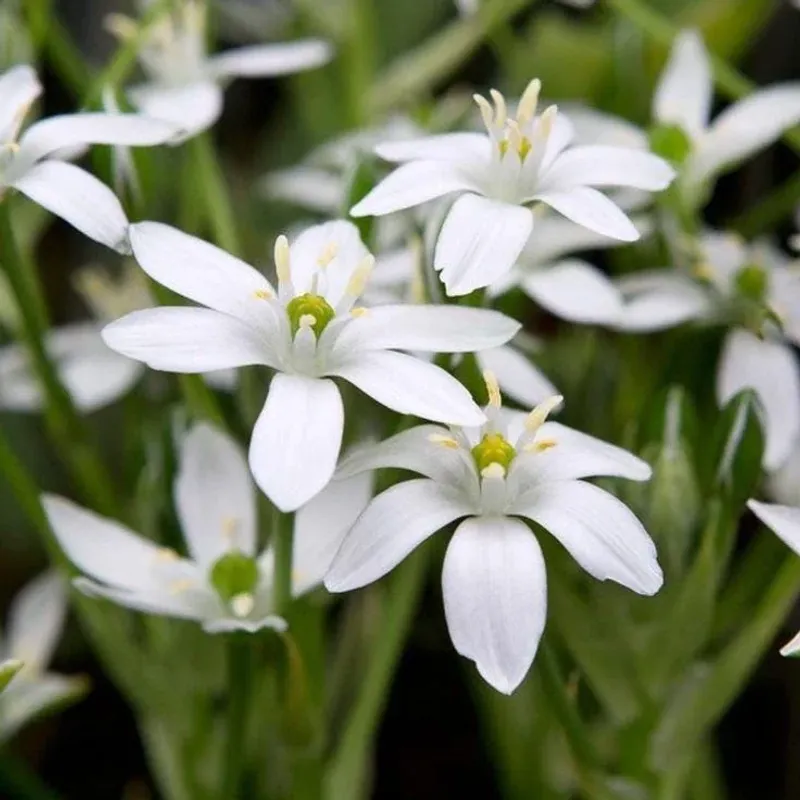
On cloudy days you might walk right past it. Then the sun comes out, and clusters of bright white stars suddenly open across the bed.
Star of Bethlehem thrives in full sun or light shade with well-drained soil. Plant 3 to 6 inches deep and 4 to 6 inches apart.
A fair warning: the common type, Ornithogalum umbellatum, spreads aggressively and is considered invasive in parts of the US, and all parts are toxic to pets. Choose a well-behaved species like Ornithogalum nutans, or plant in a contained spot.
15. Grecian Windflower (Anemone blanda)
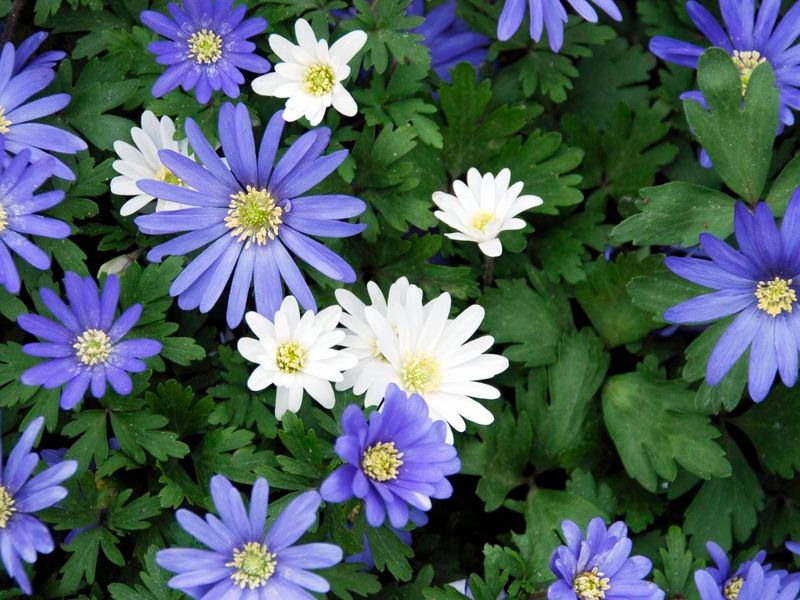
Think of a daisy that decided to bloom in April instead of July. Anemone blanda makes low mats of blue, pink, or white flowers that sway in the slightest breeze.
They grow from hard, wrinkled little tubers that look like nothing at all. Soak them for a few hours before planting so they wake up, then set them 2 inches deep.
If you cannot tell which side is up, plant them sideways and they will sort it out.
Over time, windflowers spread by tuber and seed into lovely woodland drifts.
16. Spring Starflower (Ipheion uniflorum)
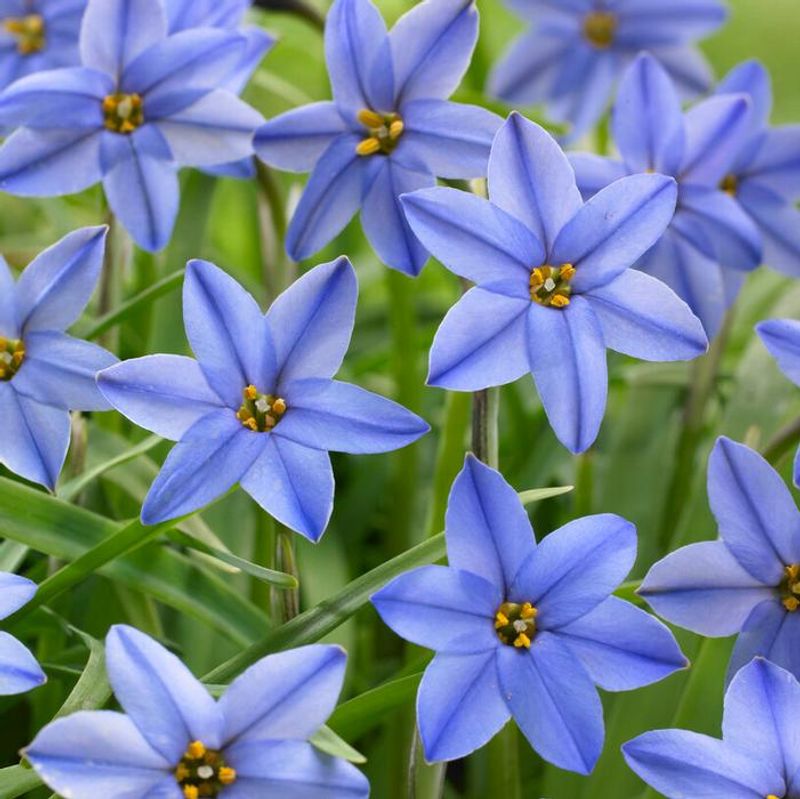
Most early bulbs flash and fade in two weeks. Spring starflower keeps going for up to eight weeks, which makes it one of the best values on this list.
The fragrant stars come in deep blue, white, or soft violet-blue. Deer and rabbits leave them alone, and they handle Southern heat better than many bulbs.
Plant in fall, 2 to 3 inches deep and 3 to 4 inches apart, pointed end up. Give them sun to part shade and moderately fertile, well-drained soil, and they will slowly fill in.
17. Trout Lily (Erythronium)
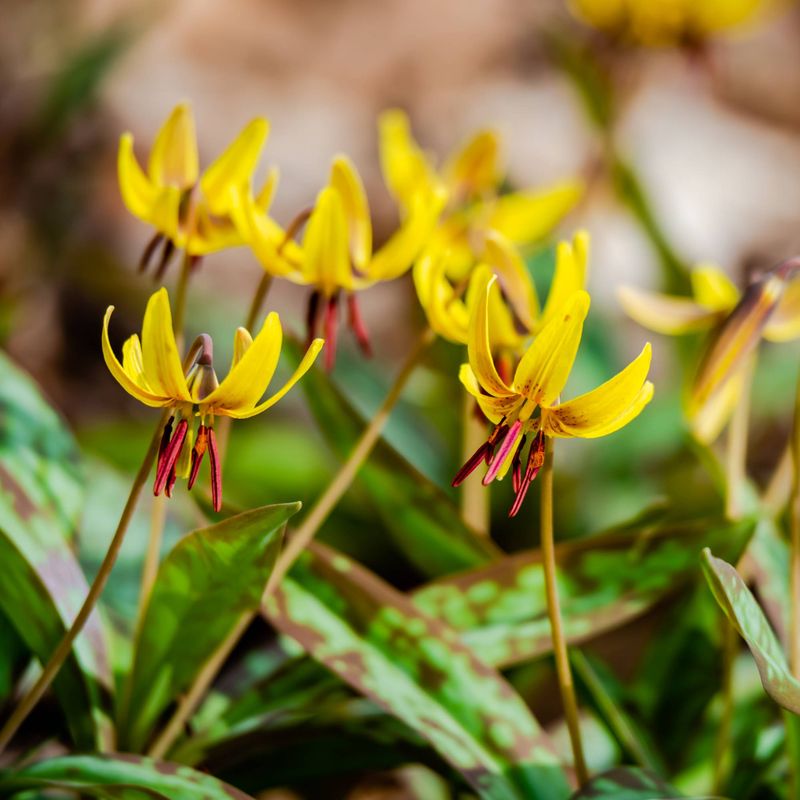
Flip over a leaf and you will see where the name comes from. The foliage is mottled with brown and green, just like the speckled side of a brook trout.
Above those leaves, nodding yellow, white, or pink flowers sweep their petals backward like tiny lilies. Trout lilies are native woodland plants in much of the US, so they fit right into shady, natural gardens.
Plant the bulbs about 3 to 4 inches deep in rich, moist soil under trees. Be patient, since young plantings may take a couple of seasons before they flower well.