
Those Brown Rosettes Left On Your Echinacea Feed Winter Birds, So Here’s Why You Should Skip The Fall Cleanup
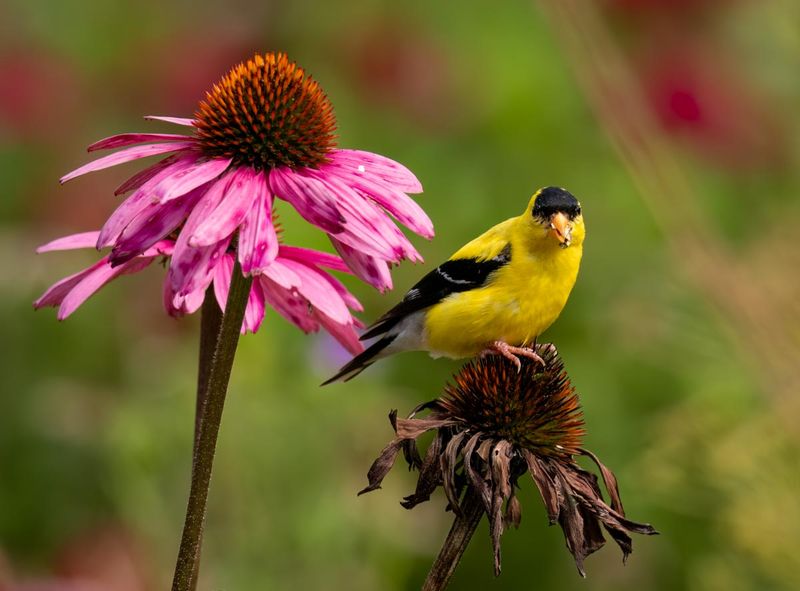
Your purple coneflowers have faded, and the spiky brown centers look a bit scruffy next to the fall mums. Before you grab the pruners, it helps to know what those dried heads can do.
Goldfinches and other birds may stop by for the seeds, and standing stems can offer a spot for some insects. Whether you leave them or cut them is your call, and your echinacea will be fine either way.
Those brown cones are seed heads
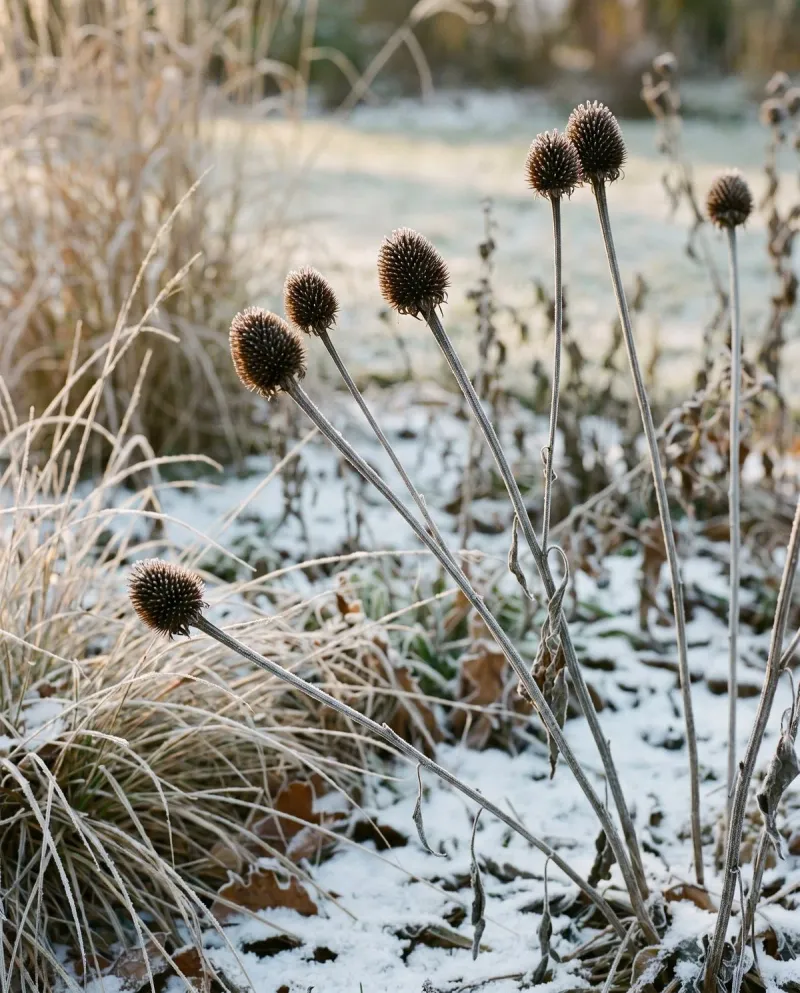
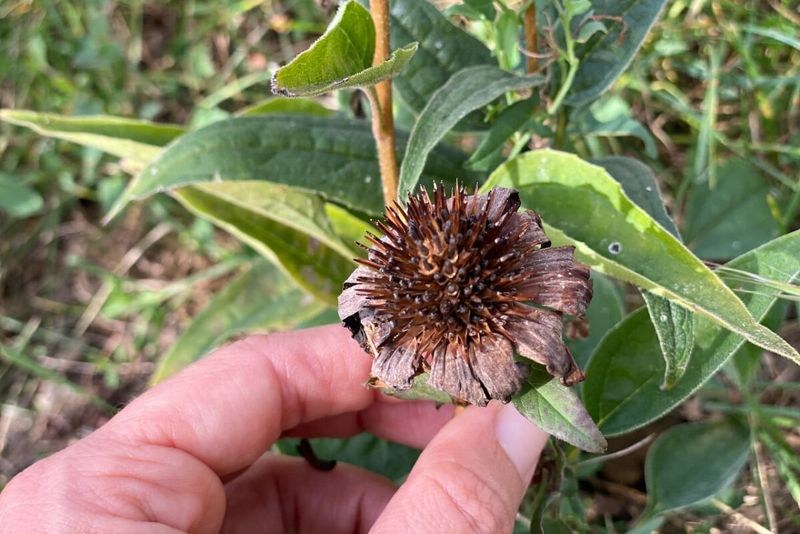
Walk out to your echinacea in October and you will see dark, bristly cones on top of sturdy stems. Despite the nickname some people use, they are not rosettes.
They are spent blooms, also called seed heads or cones, and the dried dark center is the part that holds the seeds, according to Iowa State Extension.
It is easy to see why many gardeners want to tidy up. Brown stalks can look messy, and a clean bed feels like a job finished before winter.
Nothing is wrong with that instinct, and cutting back healthy plants will not hurt them.
Still, the dried heads give you a choice worth knowing about. If your plants are healthy, you can leave the stems standing for possible wildlife value, such as bird food and insect habitat.
Or you can cut them down and enjoy a neater yard. Neither option is a mistake, so the rest of this article helps you pick what fits your garden, your tolerance for self-sown seedlings, and your habitat goals.
Goldfinches can find food in the seed heads
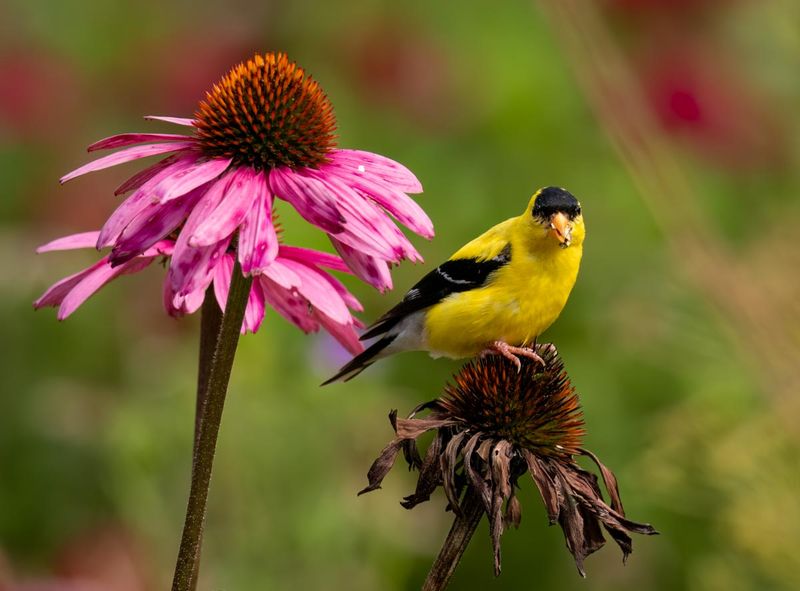
Seeds are the reason birds visit. Clemson Extension notes that goldfinches eat coneflower seeds, and the Xerces Society lists Echinacea among the seed heads birds use.
Leaving healthy heads up gives them a chance to feed on what your plants already made.
Picture a gray January morning with frost on the stalks. A small flock lands, clings to the cones, and picks out seeds one by one.
For many gardeners, that scene alone is a good reason to hold off on cleanup.
Keep expectations realistic, though. Not every head will get eaten, and some may stay full of seed until spring.
Birds also have plenty of other food sources, such as other native plants and feeders, so your echinacea is a bonus rather than something they depend on.
If you want to try it, leave a few of the sturdiest, healthiest stems standing where you can see them from a window. Cut the rest if you like.
Even a small cluster of seed heads can add some life to a quiet winter garden, and you can watch to see which visitors show up.
Standing stems may provide insect habitat
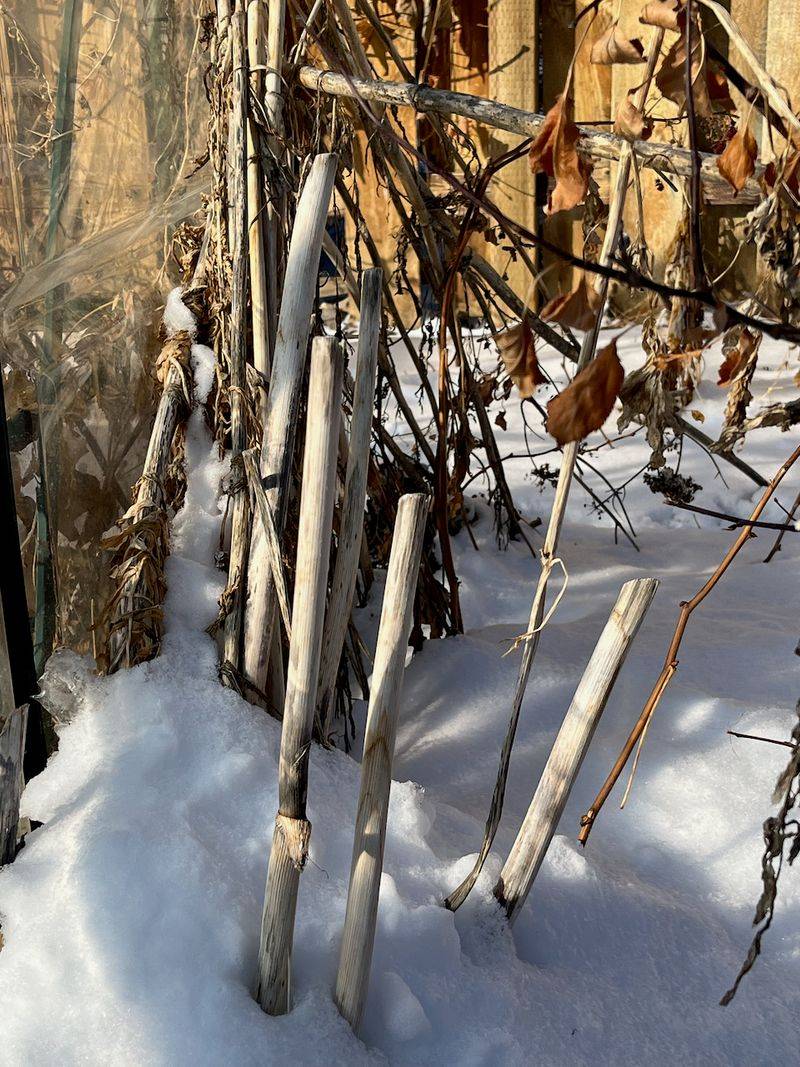
Birds take advantage of the seed heads, but the stems do a different job. Some insects, including certain native bees, use dead plant stems for nesting or for riding out winter.
The Oregon State Extension suggests leaving some stems behind as bee habitat, and the Xerces Society describes how standing plant material can serve as nesting and overwintering sites.
The word to hold onto is potential. Plenty of coneflower stems will have nobody living in them, and the sources do not say every stem is occupied.
They also do not say that every insect using a stem is a helpful one. Think of standing stems as an open door, not a guaranteed guest list.
For a gardener, that means a low-effort way to offer options. A few stems left in a corner of the bed cost you nothing and may be used by something small.
If you prefer a clean look near the patio, tidy that area and keep stems in a back border instead.
Either way, you are making a habitat choice rather than following a rule.
Echinacea does not need its heads to return
Here is the part that should ease any worry. Your echinacea does not need its brown heads to come back.
The USDA Forest Service describes echinacea storing food in its underground parts during dormancy, and that stored energy is what powers spring growth.
Because of that, timing is flexible. Clemson Extension says dead stems can be removed in fall, winter, or early spring.
If you already cut yours in October, your plants are not in trouble.
Heads do release seed, so leaving them can spread new plants around. That is a separate matter from the health of the parent plant, which survives underground whether the stalks are standing or not.
A practical way to think about it: if you see bare ground where your echinacea grew, look for small green shoots at the base in spring. Slow starts are common in cool weather, so give them time before assuming anything is wrong.
Cleanup choices will not guarantee a spring return, but cutting a healthy plant is not a reason to expect it to fail.
Choose when to remove heads based on your garden
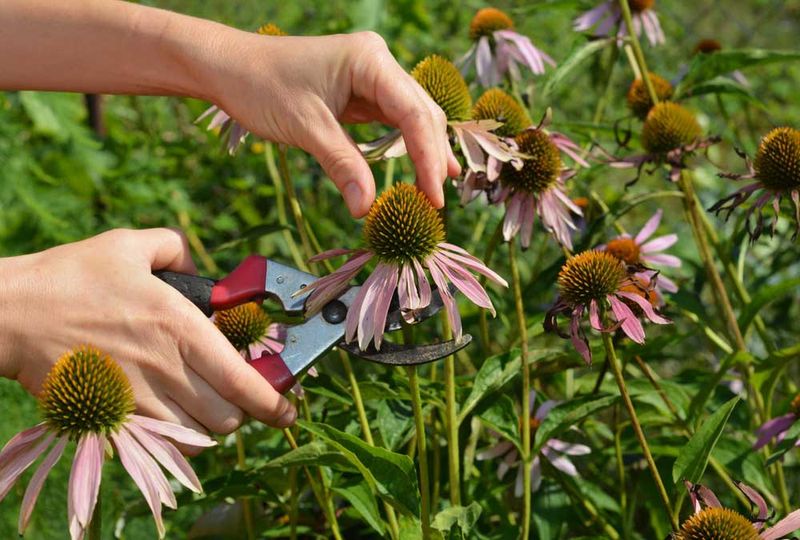
Self-seeding is the biggest practical factor. Purple coneflower can reseed readily, according to Iowa State Extension, so leaving heads can mean more seedlings next spring.
Removing spent heads before they set seed can reduce them, and deadheading during bloom season can encourage repeat flowers.
If you grow a named hybrid, think twice before welcoming every seedling. Ask Extension notes that seedlings from hybrids may not germinate or may look different from the parent plant.
In a relaxed, naturalized bed, surprises can be fun. In a planned border, you may want to snip heads early.
Disease is a different situation. Routine cleanup is not a treatment, but some problems call for specific action.
Clemson Extension advises cutting back plants affected by eriophyid mites in fall and removing the debris.
For aster yellows, Illinois Extension advises removing infected plants, including roots, and destroying them. Look for twisted, green, or distorted flowers as a clue.
If your plants look healthy, the decision comes down to seedlings and habitat goals. If something looks off, treat that plant as the exception.
Leave some stems or trim them in spring
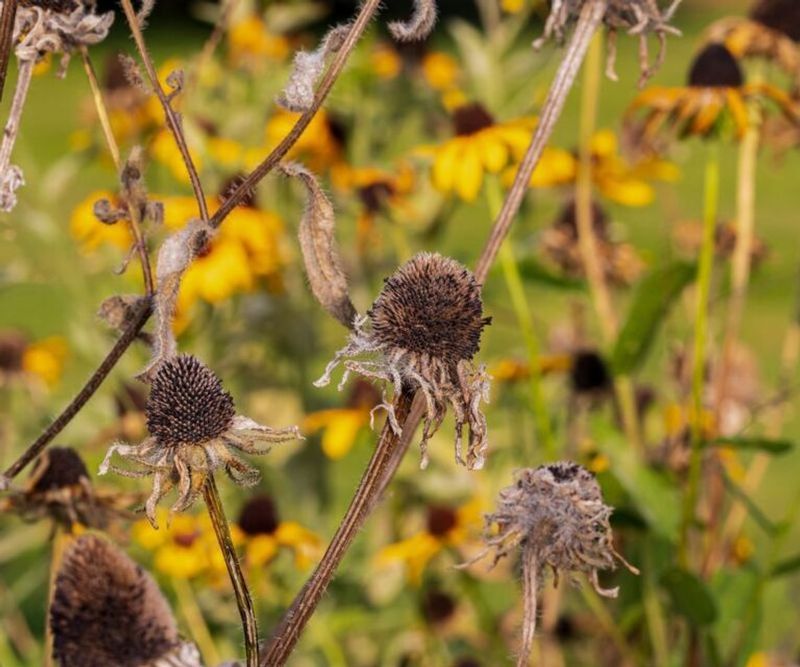
A simple middle path works well for many yards. Leave healthy stems standing through winter if bird food and possible insect habitat appeal to you, then cut them back in spring when you are ready to clean the bed.
When you do cut, you do not have to take every stalk to the ground. The Xerces Society suggests leaving cut stems at varied heights, about 8 to 24 inches, while Oregon State Extension suggests keeping 8 to 10 inches of coneflower stems as potential native bee nesting habitat.
Treat those numbers as options, not requirements.
If you would rather cut in fall, that works too, since Clemson Extension lists fall, winter, and early spring as fine times. Your plants return from their roots either way.
Pick the approach that matches your yard and your energy. A tidy bed and a ragged, bird-friendly one can both be good gardening.