
A Strong Late-Summer Herb for North Carolina Yards: Meet Mountain Mint
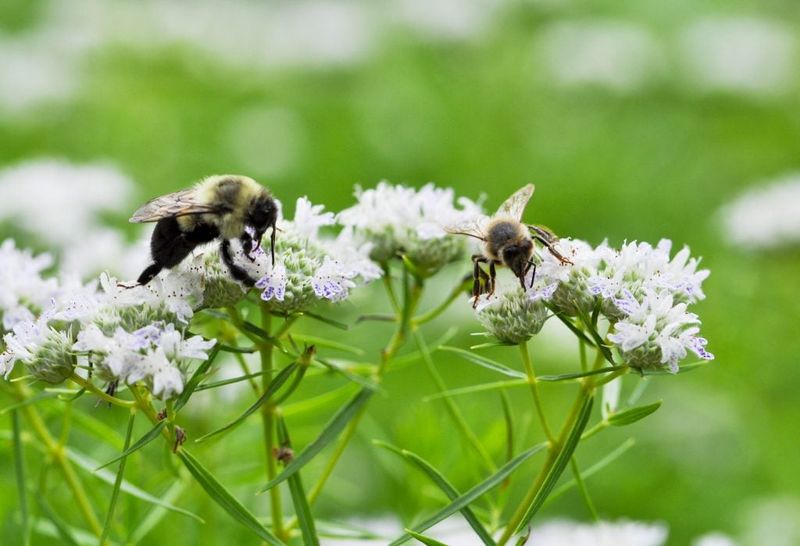
Most herbs in a North Carolina yard start struggling once July turns brutal, dropping leaves or simply refusing to flower when the heat presses down week after week. Mountain mint is a native perennial that holds its ground in those conditions, attracting pollinators through the hottest stretch of summer when the garden looks exhausted.
For homeowners across the Piedmont, Coastal Plain, and mountains who want something useful and wildlife-friendly in a dry, sunny bed, it deserves a serious look.
A strong late-summer candidate, not a 95-degree guarantee
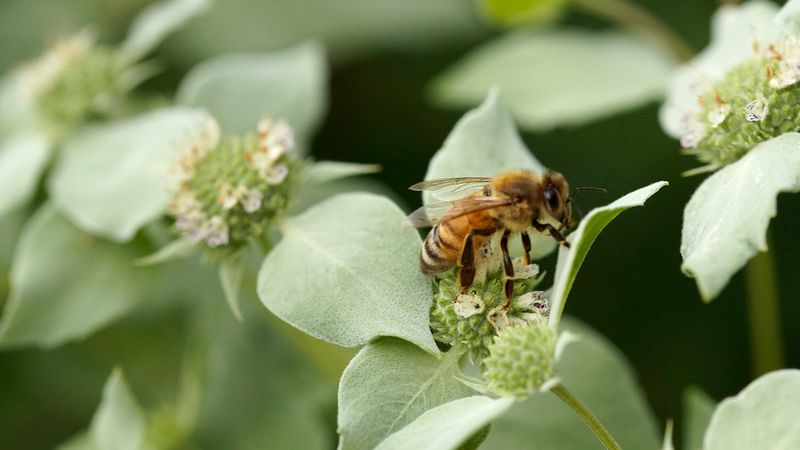
Mountain mint earns its reputation as a credible late-summer herb not through marketing, but through documented traits: native perennial habit, drought tolerance, a preference for dry soils, and a bloom window that stretches through summer. NC State Extension’s genus profile identifies mountain mint as native to all regions of North Carolina and suited to edible, native, and pollinator gardens alike.
That combination of regional nativity and dry-soil performance makes it a strong candidate for the kind of hot, drying beds that defeat many other herbs by August.
One qualification matters before planting: the claim that any herb “keeps growing” at exactly 95 degrees is an editorial shorthand, not a plant-science threshold. No controlled North Carolina trial has measured mountain mint’s growth rate at that specific temperature across every microclimate in the state.
What the sources do support is that established plants, sited appropriately, tend to remain productive through ordinary late-summer heat and dry spells.
Hoary mountain mint (Pycnanthemum incanum) is specifically described by NC State as drought-tolerant and able to grow well in dry soil, with a bloom period running June through August. Duke Gardens notes that regional mountain mints attract insects from late June through September, covering exactly the stretch when other plants are winding down.
That late-season activity, combined with native status and dry-soil performance, is the real case for mountain mint, not a temperature promise or a statewide ranking no source has made.
Choose the species that fits your North Carolina region
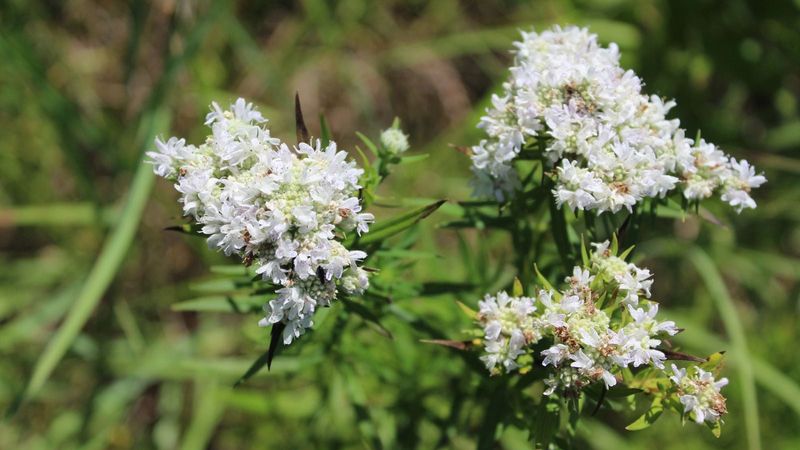
“Mountain mint” covers multiple species, and picking the wrong one for your region or soil type can undermine the plant’s best traits before it even gets established. The two species most relevant to North Carolina homeowners are hoary mountain mint (Pycnanthemum incanum) and narrow-leaf mountain mint (Pycnanthemum tenuifolium), and they are not interchangeable.
Hoary mountain mint is the better fit for dry, sunny Piedmont and mountain sites. NC State lists it for those two regions and describes it as drought-tolerant with a preference for well-drained soils in moist-to-dry conditions.
The silvery-white bracts near its flowers make it visually distinctive, and its documented comfort in dry soils aligns well with the rocky, thin, or clay-heavy patches common in Piedmont and mountain yards that drain quickly in summer.
Narrow-leaf mountain mint offers a wider regional range. NC State lists it across all three of North Carolina’s major regions, including the Coastal Plain, and describes it as tolerant of occasionally dry conditions.
Its documented ability to grow in clay, loam, sand, and shallow rocky soils gives Coastal Plain gardeners a native option suited to their variable, often sandy or wet-season-heavy conditions. For any reader in the Coastal Plain, narrow-leaf is the more appropriate starting point.
One species to be aware of but not confuse with these two is Pycnanthemum muticum, which Duke Gardens notes prefers moister conditions. If you are selecting from a native plant nursery and the label only says “mountain mint,” ask for the species name.
Moisture preferences differ enough between species that the genus name alone is not enough guidance for a hot, dry site.
Match the planting site to the plant’s real strengths
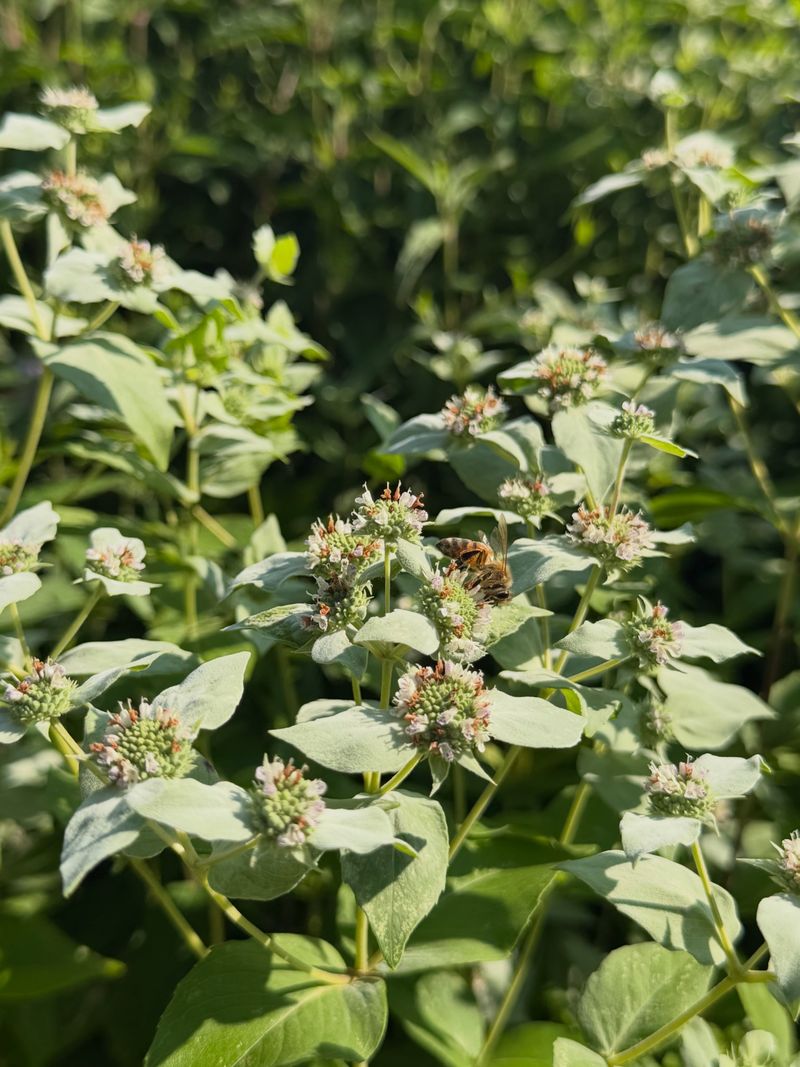
Before buying a plant, walk the planting area during the hottest part of a summer afternoon and honestly assess what you see. Mountain mint flowers best in full sun, and a bed that gets six or more hours of direct sun daily will support the most blooms and the most pollinator activity.
Partial shade is tolerated, but flowering tends to thin out, which reduces both visual appeal and wildlife value.
Soil conditions matter as much as light. Hoary mountain mint’s documented preference is well-drained soil in moist-to-dry conditions, which means it thrives where water moves through quickly rather than pooling.
A bed that stays wet after rain, even briefly, is not a drought site just because it dries out between storms. Poor drainage combined with summer heat can stress or rot roots just as surely as extended dry weather.
Narrow-leaf mountain mint handles a broader range of soil textures, including clay, loam, sand, and shallow rocky ground, which gives it more flexibility on sites where drainage is inconsistent.
Slope, exposure, and surrounding plants all shift the effective water needs of any bed. A south-facing slope in full sun dries faster than a level bed with afternoon shade from a nearby shrub.
Heavy competition from tree roots or aggressive perennials can pull moisture away from a young mountain mint before it can establish its own root system. NC State Extension’s ornamentals guidance notes that irrigation requirements depend on weather, soil texture, drainage, mulch, shade, plant size, and time since transplant, and the same logic applies to perennial herbs.
A hot site is not automatically a good site unless drainage, competition, and exposure also line up with the species you are planting.
Establishment—not neglect—builds drought resilience
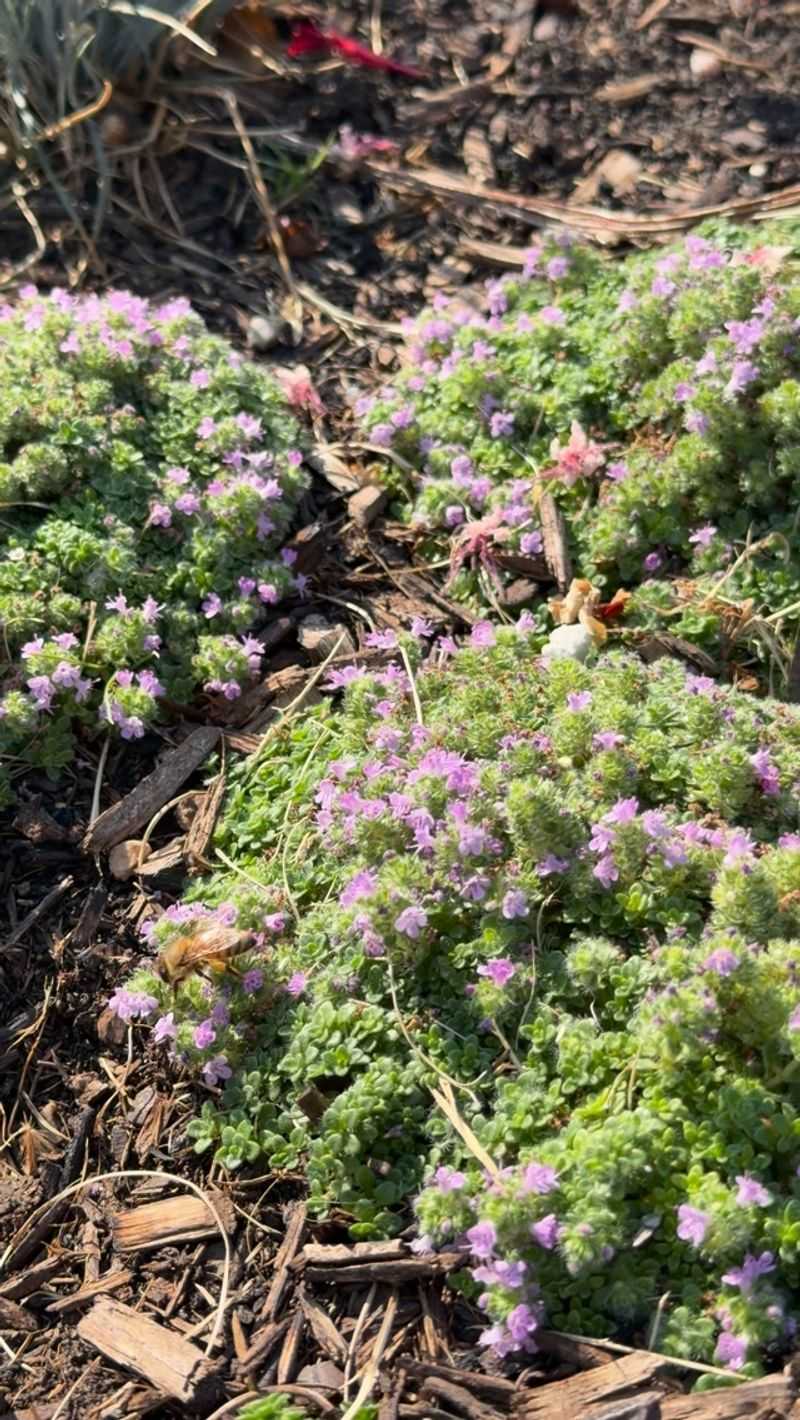
Drought tolerance is a trait that develops over time, not one that kicks in on planting day. A mountain mint transplant sitting in the ground for two weeks has a limited root system that cannot reach moisture deep in the soil, and it can wilt or fail just as quickly as any other new perennial during a dry stretch.
The plant’s eventual resilience depends entirely on getting through establishment in good shape.
Check soil moisture before watering rather than following a fixed calendar schedule. Push a finger two inches into the soil near the root zone; if it feels dry at that depth, water thoroughly.
NC State’s home garden quick reference recommends deep, infrequent watering over frequent shallow watering, because deep watering encourages roots to grow downward where soil moisture stays more stable through heat. Shallow, frequent watering keeps roots near the surface, where they are most exposed to drying conditions.
NC State’s vegetable gardening handbook recommends applying organic mulch to conserve soil moisture, with a one-to-two inch layer cited for general vegetable and herb beds. Keep mulch pulled back from the crown and stems to prevent rot at the base of the plant.
Mulch slows evaporation, moderates soil temperature, and reduces the frequency with which you need to irrigate during the first summer.
NC State’s herbaceous ornamentals guidance recommends watering at the soil surface or plant base, preferably in the morning. Overhead watering that wets foliage and sits overnight can increase disease pressure.
Once the plant has had a full growing season to develop its root system, it becomes genuinely more resilient to dry stretches, but that resilience still has limits during a prolonged heat-and-drought event. Even an established plant benefits from a deep soak when the soil is dry and temperatures have been extreme for more than a week.
Late-summer flowers support wildlife and limited kitchen use
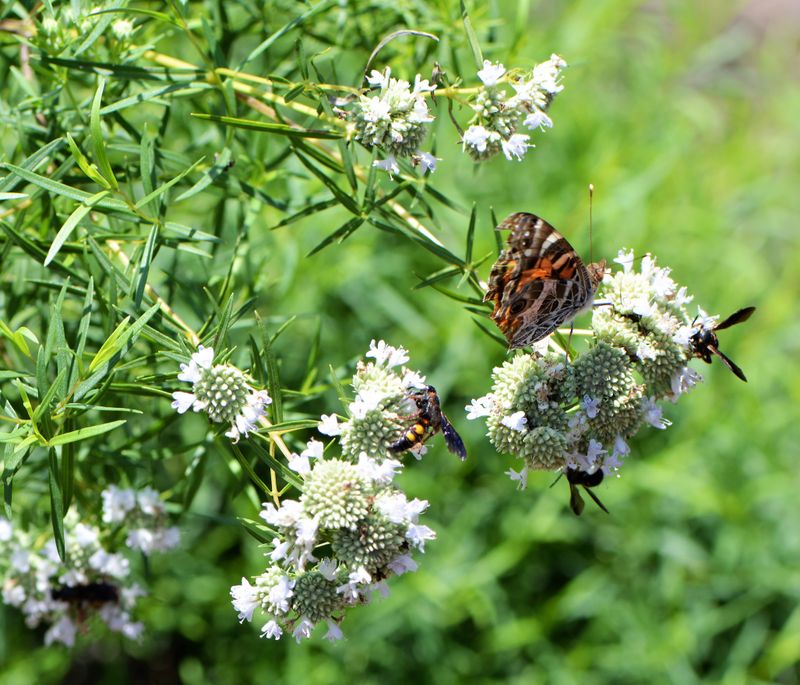
Walk past an established mountain mint in late July and the activity around it is hard to miss. Bees of several species, butterflies, and other insects work the small white flowers continuously during the heat of the day, at exactly the time when many other garden plants have stopped blooming.
NC State’s genus overview lists mountain mint as a pollinator-garden plant, and the NC Native Plant Society describes mountain mints as important food sources for many insects. That insect activity is habitat value, not pest control, and it should not be framed as a substitute for tick management or registered repellents.
Bloom timing varies by species. NC State reports June through August for hoary mountain mint, and the same window for narrow-leaf mountain mint.
Duke Gardens describes regional mountain mints attracting insects from late June through September, which covers the most demanding stretch of the NC summer.
In the kitchen, mountain mint is useful in a limited and specific way. NC State notes that leaves can be used in cooking and teas, and for narrow-leaf mountain mint specifically, dried leaves and flowers work for teas and flavorings.
That is a genuine culinary role, but it is not a one-for-one replacement for basil, rosemary, oregano, or spearmint. The flavor profile is different enough that substituting it directly in a recipe without adjusting will produce unexpected results.
Only consume mountain mint that you have positively identified and harvested from a clean, pesticide-free site. Extension guidance warns that some mint-family plants are inedible or toxic, and visual identification of mint-family plants can be unreliable without experience.
Do not make medicinal claims based on tea or leaf consumption; the sources support flavoring use, not clinical applications.
Give a spreading native herb a boundary
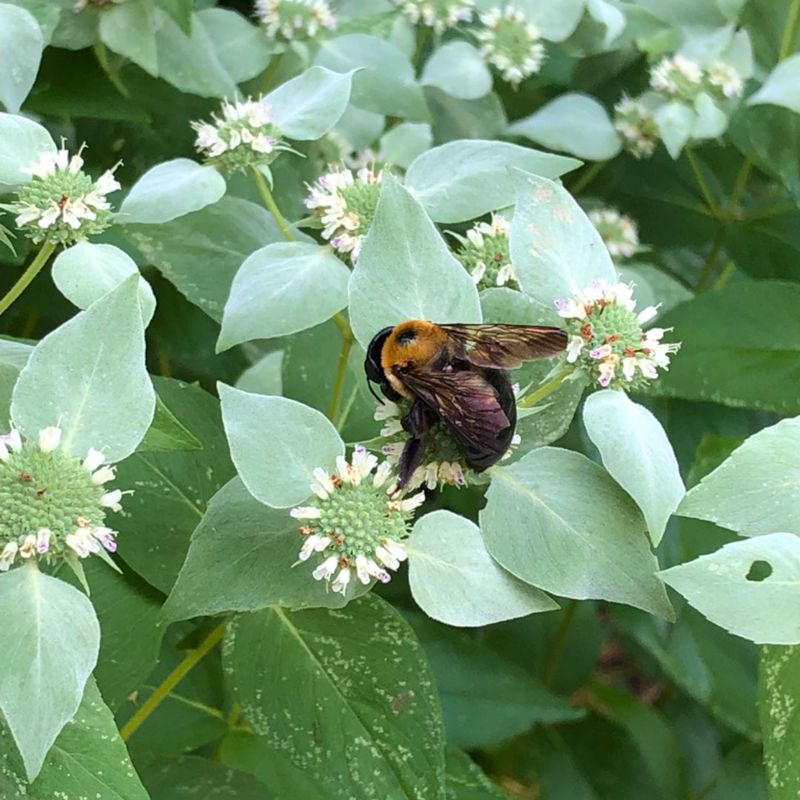
Native status does not mean low-maintenance, and mountain mint is a useful example of that distinction. Left to its own devices in a hospitable site, it spreads by rhizomes, and NC State specifically notes that hoary mountain mint can naturalize and become weedy.
That tendency is not a reason to avoid it, but it is a reason to plan before planting.
NC State’s genus overview and the narrow-leaf mountain mint profile both acknowledge spreading by rhizomes as a characteristic of the genus. A defined bed with physical edging, such as a metal or plastic border set several inches deep, slows lateral spread and keeps the plant from moving into lawn or adjacent beds.
Without some form of boundary, a vigorous clump can double in diameter over a few seasons.
Monitoring once or twice per season takes only a few minutes. Look for new shoots appearing outside the intended boundary and remove them promptly while the rhizomes are shallow and easy to pull.
Division every two to three years keeps the central clump productive and gives you divisions to share or relocate. Removing excess plants is straightforward when the clump is young; waiting until a large colony has developed makes the job considerably harder.
The plant’s value to pollinators and its late-summer performance are real, but they do not cancel out the maintenance tradeoff. A homeowner who plants mountain mint in an open bed without edging and then ignores it for several seasons may find it occupying more space than intended.
Treat it as a useful, wildlife-friendly perennial that rewards modest, consistent attention rather than one that manages itself indefinitely.
Heat and drought still work together against plants
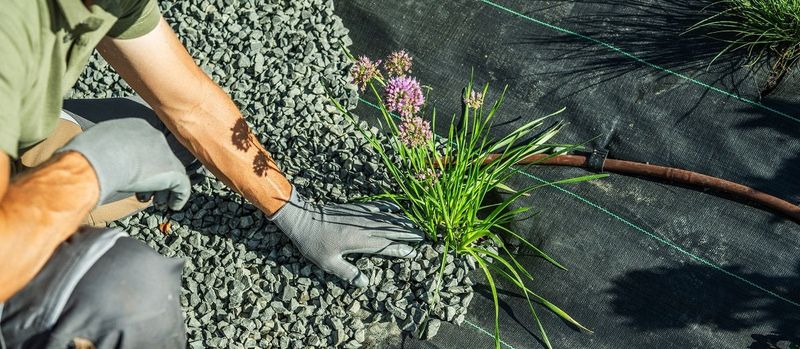
Resilience and immunity are different things, and conflating them leads to plants that die from neglect disguised as confidence. Research on plant stress shows that combined heat and water stress can reduce plant growth more severely than either stress alone, meaning a hot week with no rain hits harder than either condition by itself.
Mountain mint handles dry heat better than many herbs, but that advantage has a ceiling.
Success in late summer looks like continued seasonal growth or bloom under ordinary conditions, not uninterrupted lush growth through every extreme event. An established mountain mint in a well-drained, full-sun Piedmont bed will likely keep flowering through a typical August.
During an extended heat-and-drought event, say two or more weeks with temperatures above 95 degrees and no meaningful rainfall, even a well-established plant may show wilt or slow its growth noticeably. That is normal plant behavior, not a sign that the species was misrepresented.
NC State’s ornamentals guidance recommends adjusting irrigation based on observed soil moisture and site conditions rather than following a fixed schedule. During a prolonged dry stretch, check the soil at root depth every few days.
If it is dry several inches down, water deeply and then allow the soil to partially dry before watering again. Watering at the base of the plant in the morning, rather than overhead in the evening, reduces disease risk while delivering moisture where roots can use it.
The plant’s documented drought tolerance means it recovers well from moderate dry spells and typically does not need the frequent watering that more tender herbs require. That is a practical advantage in a busy NC summer, but it works best when you stay observant rather than assuming the plant is always fine.
Plant the mountain mint that matches your yard
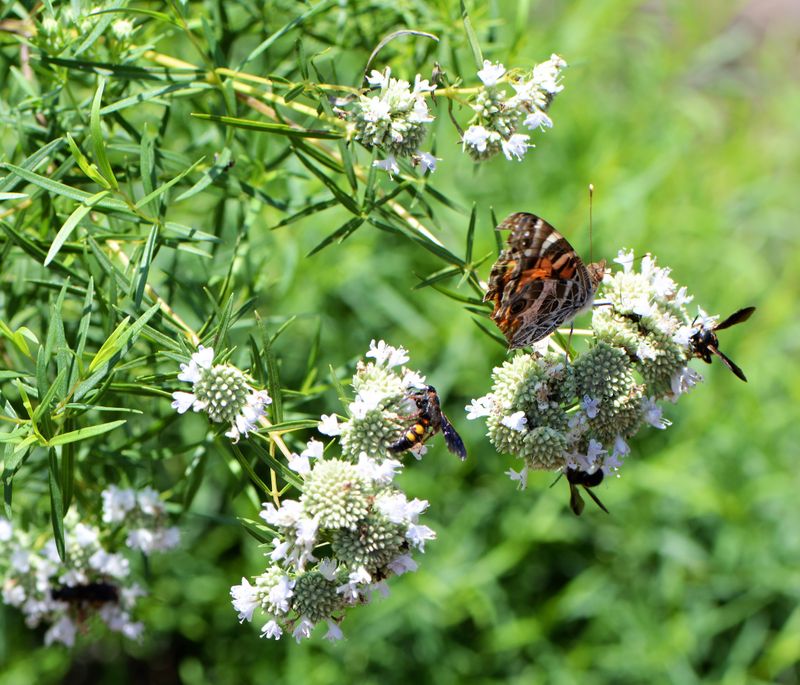
Piedmont and mountain gardeners with dry, sunny beds and good drainage have a strong candidate in hoary mountain mint (Pycnanthemum incanum). Coastal Plain gardeners, or anyone working with a wider range of soil textures, will find narrow-leaf mountain mint (Pycnanthemum tenuifolium) the more regionally appropriate choice.
Whichever species fits your site, three actions determine whether it delivers on its late-summer promise. Establish it carefully with consistent moisture and mulch through its first growing season.
Monitor soil moisture during dry stretches and water deeply when needed, rather than assuming the plant is always fine. And give it a defined bed with edging from the start to manage its rhizomatous spread before it becomes a larger project.
The appeal of mountain mint is specific and honest: late-summer flowers that feed native pollinators, decent performance in dry conditions once established, native status across North Carolina, and modest culinary use in teas and flavorings. Site conditions, establishment care, and ongoing observation determine whether those traits show up in your yard.
A well-sited, well-established mountain mint in a defined bed is one of the more rewarding native perennials a North Carolina homeowner can grow, not because it is invincible, but because it earns its place in an honest late-summer garden.