
The North Carolina Native That Turns The Empty Corner By Your Gate Into A Buzzing Pollinator Patch
That narrow strip of ground beside your gate probably collects weeds, bare dirt, or nothing useful at all. Plenty of North Carolina homeowners have one: a forgotten corner that is too awkward for a shrub and too visible to ignore.
Blunt mountain mint, a North American native perennial, is worth a serious look for that spot because research shows it can draw an impressive range of pollinating insects during summer and into early fall. One plant will not instantly transform any corner into a wildlife sanctuary, but a well-sited native perennial is a real step toward making that overlooked space matter.
Make the gate-side corner more useful, not magically buzzing
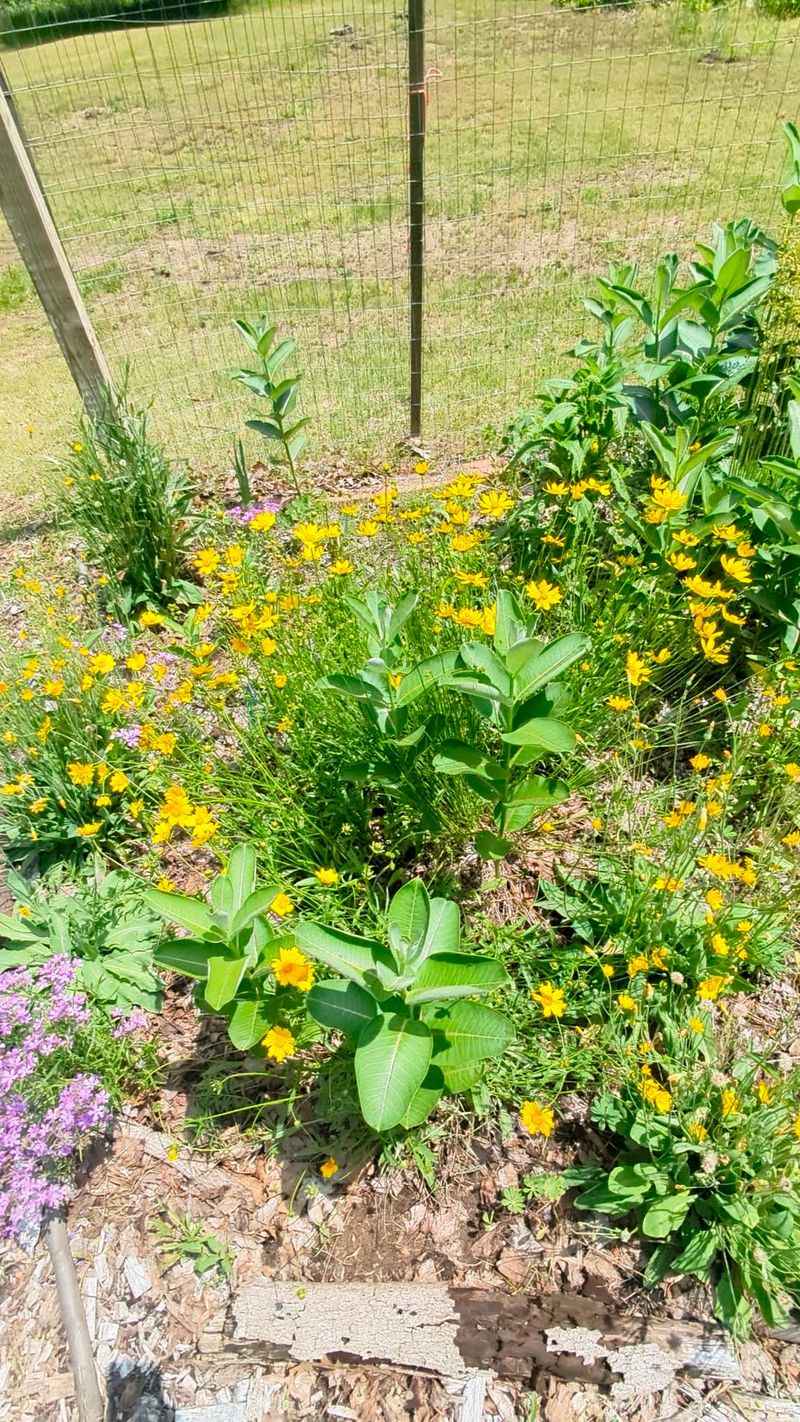
Side-gate corners have a way of staying neglected. The space is usually too narrow for a large shrub, too shaded for turf grass, and too close to the walkway for anything that sprawls.
Most homeowners either mulch it and call it done or watch it fill with weeds season after season. Reframing that corner as a small, intentional native planting is a practical goal, and it starts with honest expectations.
One perennial cannot guarantee that your gate-side strip will immediately fill with insects. Pollinator activity depends on site conditions, surrounding habitat, plant maturity, weather, and what else is blooming in the neighborhood.
A newly planted native may look quiet for a season or two while it establishes roots and builds up flowering stems.
What a well-chosen native plant can do is add useful floral resources right where you have unused space. NC State pollinator guidance points out that native plants often establish more reliably, tolerate local drought cycles better, and provide wildlife resources that fit the region’s insect community.
That combination makes a native perennial a smarter investment for this spot than a non-native ornamental that happens to flower.
Mountain mint is the subject of this article, and the specific species matters. The common name covers a whole genus of plants, and their sizes, habits, and documented pollinator records are not identical.
The practical goals here are straightforward: support visiting insects during bloom season, keep the gate swinging freely, preserve walkway clearance, and avoid introducing anything invasive. Those goals are achievable with the right plant and a realistic plan.
Why blunt mountain mint earns a close look
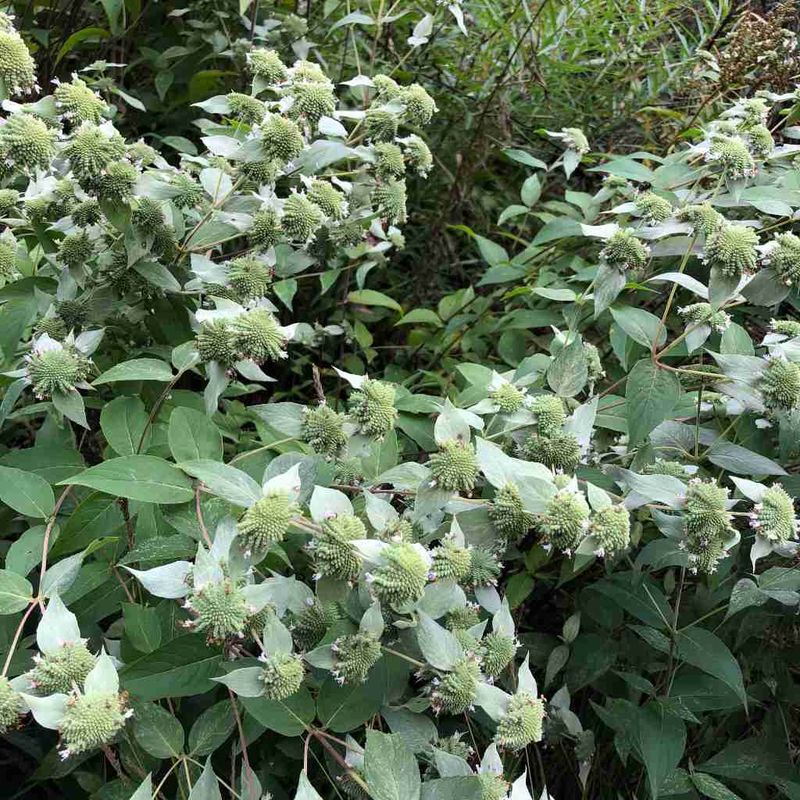
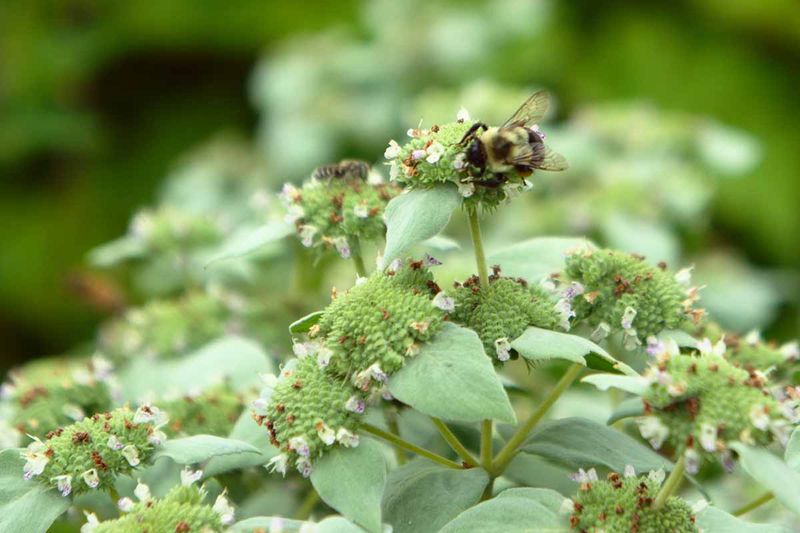
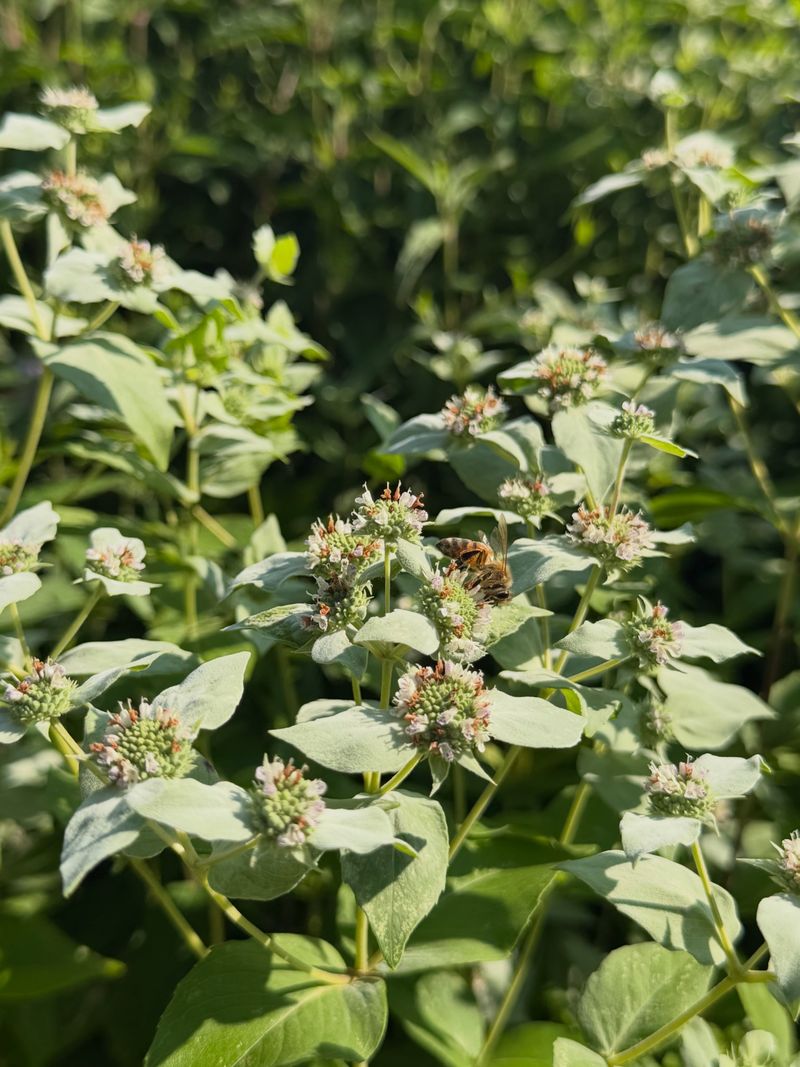
Blunt mountain mint, known botanically as Pycnanthemum muticum, is a herbaceous perennial native to eastern Canada and the eastern United States. NC State Extension’s plant toolbox lists it as suitable for native gardens, butterfly gardens, pollinator gardens, and rain gardens across North Carolina, which is a practical signal that it fits the state’s climate and soil range.
Its flowers are small, densely packed clusters that run from white to pale lavender with purple markings, and they open from midsummer into early fall, covering a useful stretch of the season when many other natives have already finished blooming.
The strongest performance data for this species comes from a 2012-2015 trial conducted at Penn State’s Southeast Agricultural Research and Extension Center. Researchers compared 86 native plant species and cultivars side by side and tracked pollinator visits over multiple seasons.
Penn State’s published summary of that trial reports that P. muticum received the most pollinator visits of any plant tested and attracted the most diverse group of visitors, including bees, butterflies, wasps, syrphid flies, and tachinid flies. That is a notably wide range of insect types for a single plant species.
Those results support describing blunt mountain mint as an unusually strong performer among tested natives, but they do not promise identical results in every residential yard. A trial plot managed under research conditions differs from a corner bed next to a wooden gate.
Performance in your yard will depend on sun exposure, soil drainage, plant age, nearby pesticide use, and what other plants are blooming in the surrounding area. A mature, well-sited plant in a pesticide-light neighborhood is likely to attract more visitors than a young plant in a heavily treated yard.
The modest size of the individual flowers does not appear to limit their appeal. Many insect groups, including short-tongued bees and small flies, find dense, open flower clusters easier to work than deep tubular blooms.
That accessibility likely contributes to the wide visitor diversity recorded in the Penn State trial.
Match the species to the width of the strip
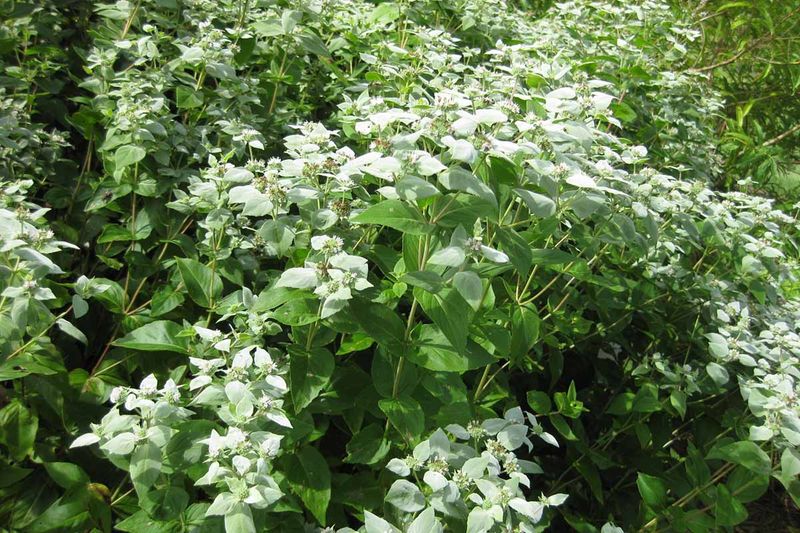
Before purchasing any mountain mint, measure the actual usable width of the gate-side strip. Blunt mountain mint generally reaches about 3 to 4 feet tall and 2 to 3 feet wide at maturity, according to NC State’s plant profile for P. muticum.
That footprint is manageable in a corner with 2 to 3 feet of open ground on each side, but it can crowd a narrow passage where the gate and a fence post already take up most of the available space.
For a genuinely tight strip, slender mountain mint, Pycnanthemum tenuifolium, deserves a look. NC State’s profile for P. tenuifolium describes it as a stiff, erect, compact plant usually about 2 feet tall, though it can reach 4 feet under good growing conditions.
It is listed as native across North Carolina’s Mountains, Piedmont, and Coastal Plain, so it fits the state’s three main gardening regions just as well as its larger relative.
Slender mountain mint is not simply a smaller copy of blunt mountain mint. Its leaves are narrow and thread-like rather than broad, and its flower clusters are somewhat smaller.
It has not been the subject of the same large-scale pollinator trial as P. muticum, so the documented evidence for visitor diversity and visit frequency is stronger for blunt mountain mint. Choosing slender mountain mint for a tight space means trading some of that performance evidence for a better physical fit.
Both species can spread by rhizomes, and NC State’s native plants chapter notes that slender mountain mint can spread rapidly and benefits from confinement by hardscape. Neither species will stay quietly inside its original nursery-container footprint, so the width of the strip is not the only measurement that matters.
Depth from the walkway edge, distance to the gate post, and the presence of a paved border all factor into which species is the safer fit.
Give the plant sun, drainage, and room to mature

Choosing the right spot matters as much as choosing the right species. Blunt mountain mint performs best in full sun to partial shade, and Penn State’s pollinator powerhouse summary supports the expectation that full sun should produce the strongest flowering.
A gate-side corner that catches at least six hours of direct sun daily is a good candidate. A strip that stays mostly shaded by a fence, a wall, or an overhanging tree is a harder sell, and flowering may be noticeably reduced.
Soil drainage is the other non-negotiable. NC State’s profile for P. muticum lists moist, well-drained soil as the preferred condition.
A corner that holds standing water after rain or stays waterlogged through winter is likely to stress or kill the plant before it reaches its productive years. If the site drains poorly, amending the soil or raising the bed slightly before planting is worth the extra effort.
Measure the mature footprint before you dig. Account for the gate swing, the walking clearance you need to pass through comfortably, and the distance to any nearby hardscape.
A plant that starts at 12 inches wide will eventually reach 2 to 3 feet wide for blunt mountain mint, and that growth happens steadily over two to three seasons. Leaving adequate room at planting avoids the frustration of cutting the plant back every time you open the gate.
Fall is generally a favorable planting season for native perennials in North Carolina because roots can establish during cooler, wetter months before summer heat arrives. NC State’s landscaping for wildlife guide and the hummingbirds and butterflies publication both support fall as a productive window for native plantings.
That said, a fall-planted perennial still needs regular establishment watering through dry spells, and mountain-region gardeners should account for earlier frost dates when timing the installation.
Contain the mint before it reaches the walkway
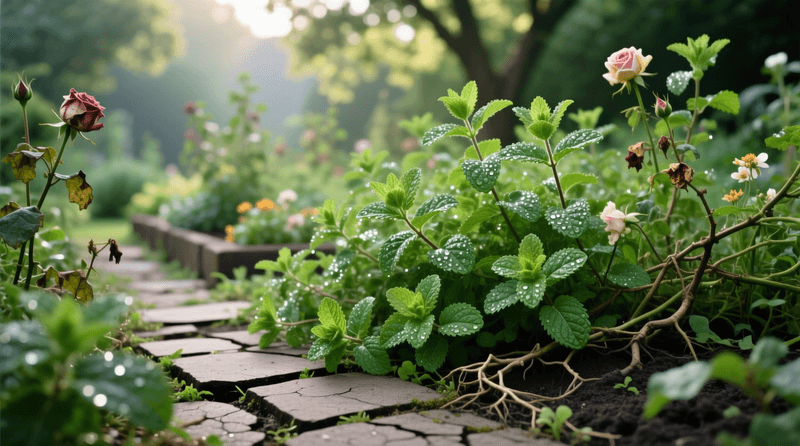
Rhizomatous spread is the one habit that surprises most homeowners who plant mountain mint for the first time. Blunt mountain mint can push underground stems outward each season, and in a favorable corner with good drainage and sun, that growth can be vigorous enough to qualify as weedy.
NC State’s profile for P. muticum is clear that the plant is not considered invasive, but it also recommends spring root pruning with a spade when spread becomes unwanted. Those two facts belong together: native and not invasive does not mean stationary.
Slender mountain mint carries the same caution. NC State’s profile for P. tenuifolium notes that it can spread rapidly and benefits from confinement by hardscape.
A gate-side location often already has useful boundaries: a paved walkway on one side, a fence post or gate frame on another, and perhaps a driveway or a mulched bed edge on a third. Working with those existing hard edges is the easiest way to keep either species from migrating.
Where hardscape does not provide a natural border, a metal or composite landscape edging set 6 to 8 inches deep can slow rhizome spread. The edging will not stop every runner indefinitely, but it gives the plant a clear boundary and makes annual spring pruning more straightforward.
Run a flat spade along the inside edge of the border each spring before new growth gets tall, and remove any sections that have crept beyond the intended footprint.
NC State’s native plants handbook chapter distinguishes clearly between native species that spread vigorously and those classified as invasive. Mountain mint falls firmly in the first category: it is a regionally appropriate plant that needs management, not removal.
Framing it that way keeps the maintenance task proportionate and avoids the mistake of pulling out a productive pollinator plant because it grew faster than expected.
Build habitat around the mountain mint
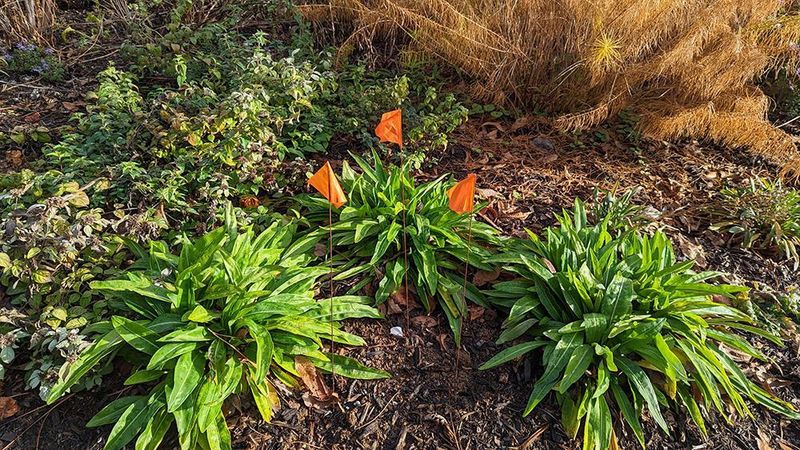
Mountain mint supplies one strong floral resource during its bloom window, but a single species cannot cover every need pollinators have across the full growing year. NC State’s native plants handbook recommends including at least three regionally native species blooming during each growing season or bloom period, not simply three species spread across the entire calendar year.
That distinction matters: a spring bloomer, a midsummer bloomer, and a fall bloomer each serve insects at different times, and gaps between bloom periods leave foraging insects without a reliable local food source.
For a gate-side corner that already includes mountain mint as its summer anchor, consider adding a native spring bloomer such as wild blue indigo or a native violet, and a fall bloomer such as a native goldenrod or aromatic aster. Each addition extends the window when the corner is actively useful to visiting insects, rather than leaving it productive only during mountain mint’s summer-to-early-fall bloom.
Nesting and overwintering habitat matter as much as flowers. Penn State’s guide to moths as pollinators and Penn State’s protecting pollinators resource both point out that many insects overwinter in standing stems, leaf litter, and patches of bare or loosely covered soil.
Leaving mountain mint stems standing through winter rather than cutting them to the ground in fall, and keeping a layer of leaf litter nearby, can make the corner more useful than a tidied-up bed would be.
Pesticide use is the fastest way to undermine a pollinator planting. EPA pollinator protection guidance recommends following product label restrictions carefully, avoiding applications while plants are in bloom or while pollinators are actively foraging, and observing any timing restrictions the label specifies.
Penn State’s pollinator myths article makes a point worth repeating: organic or natural pesticide products can still kill insects that contact them, and EPA’s neonicotinoid labeling guidance addresses the additional risks of systemic products. Evening or nighttime applications may reduce direct exposure to daytime foragers, but label directions, residual toxicity, drift, bloom restrictions, and the presence of nocturnal pollinators still apply.
No application timing or product type is automatically safe around a blooming native planting.
Choose the right mountain mint and set realistic expectations
Two species, one practical decision. When the gate-side corner has 2 to 3 feet of usable width and receives good sun, blunt mountain mint, Pycnanthemum muticum, is the stronger choice based on available pollinator evidence.
The Penn State trial results give it the clearest documented record for visitor diversity and visit frequency among the native plants tested. When the strip is genuinely narrow or the gate clearance is tight, slender mountain mint, Pycnanthemum tenuifolium, is the more space-conscious fit, with the understanding that its pollinator record is less extensively studied.
Whichever species you choose, the same checklist applies. Match the plant to a site with adequate sun and well-drained soil.
Account for rhizomatous spread using hardscape, edging, or annual spring root pruning. Water consistently through the first season and into dry spells during the second.
Leave some standing stems and leaf litter over winter to support overwintering insects. Keep pesticide use away from the planting during bloom periods, and read product labels before applying anything nearby.
A mature, well-sited mountain mint can make an overlooked North Carolina corner meaningfully more useful to visiting insects, but results will vary with site conditions, surrounding habitat, and the health of the broader yard. The corner will not transform overnight, and it will not sustain pollinators on its own.
What it can do, as part of a broader native planting, is give that wasted strip a job worth doing.