
An Overlooked North Carolina Native That May Help Keep Your Birdbath Busy All Summer
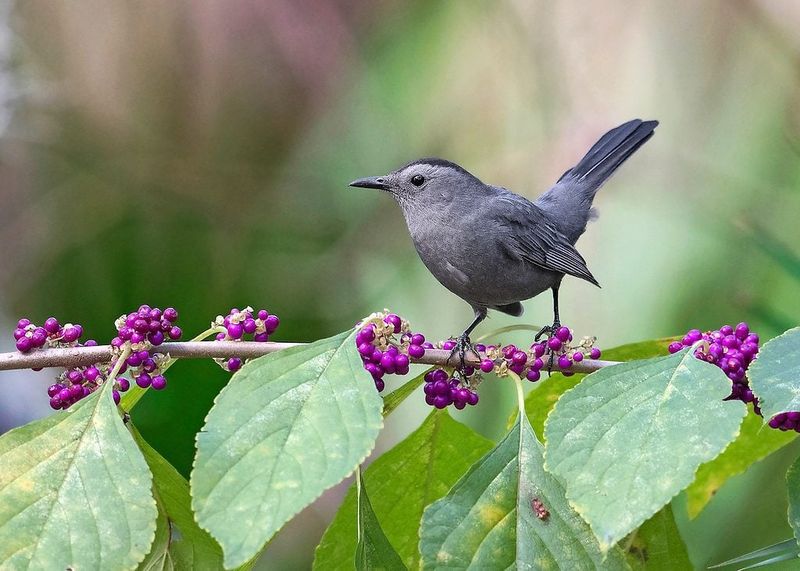
Most North Carolina yards have a birdbath sitting in the open, and most of them stay quiet. Pairing that water with the right native shrub nearby can make the whole setup more inviting to songbirds.
American beautyberry, Callicarpa americana, is an underused native plant that grows across the state and offers seasonal berries, leafy cover, and structure that may complement a well-placed birdbath. The catch is that no single shrub guarantees a splashing basin, so understanding what beautyberry actually provides, and when, is the real starting point.
An overlooked native for a bird-friendly yard
Walk past most garden centers in North Carolina and you will find row after row of azaleas, gardenias, and ornamental grasses, but American beautyberry rarely gets a dedicated display. That absence from the mainstream is part of what makes it worth a closer look.
As an editorial observation rather than a verified statewide ranking, beautyberry is one of the more underused native shrubs available to North Carolina homeowners who want to support local wildlife.
The plant in question is Callicarpa americana, and the species name matters. NC State Extension identifies American beautyberry as native across all three major regions of North Carolina, covering the Coastal Plain, the Piedmont, and the mountains.
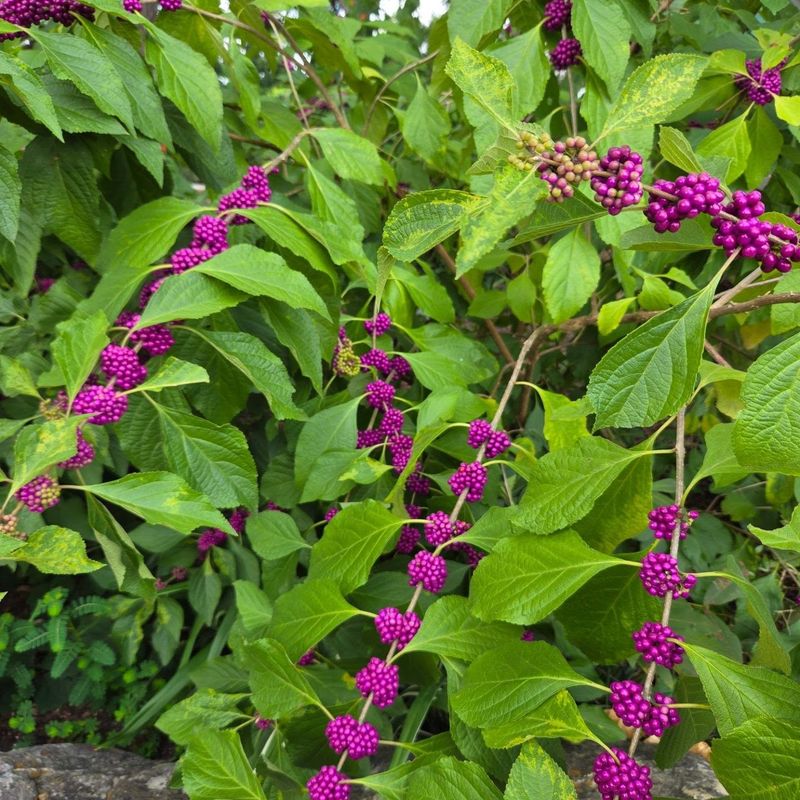
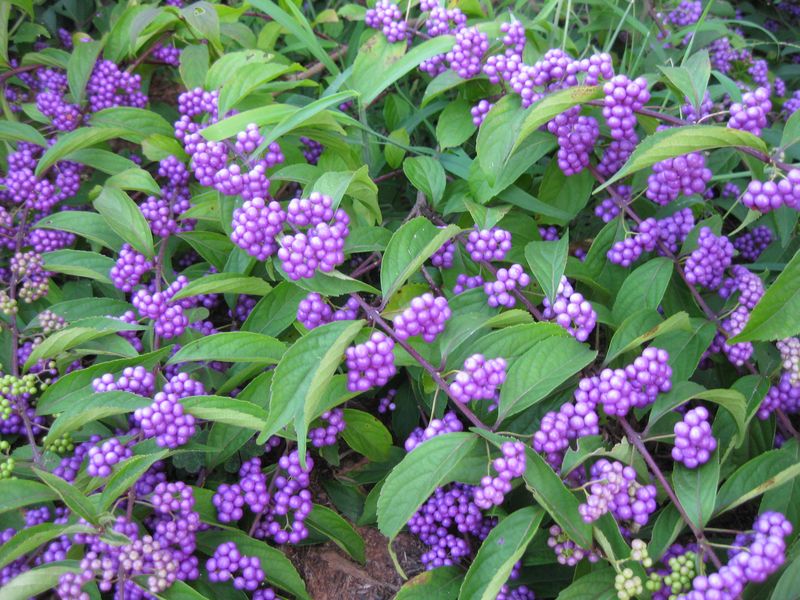
At maturity, the shrub typically reaches 3 to 8 feet tall and 3 to 6 feet wide, with arching stems that give it a relaxed, open shape. Its defining feature is the dense clusters of bright purple berries that form along the stems from August through October and may persist into early winter.
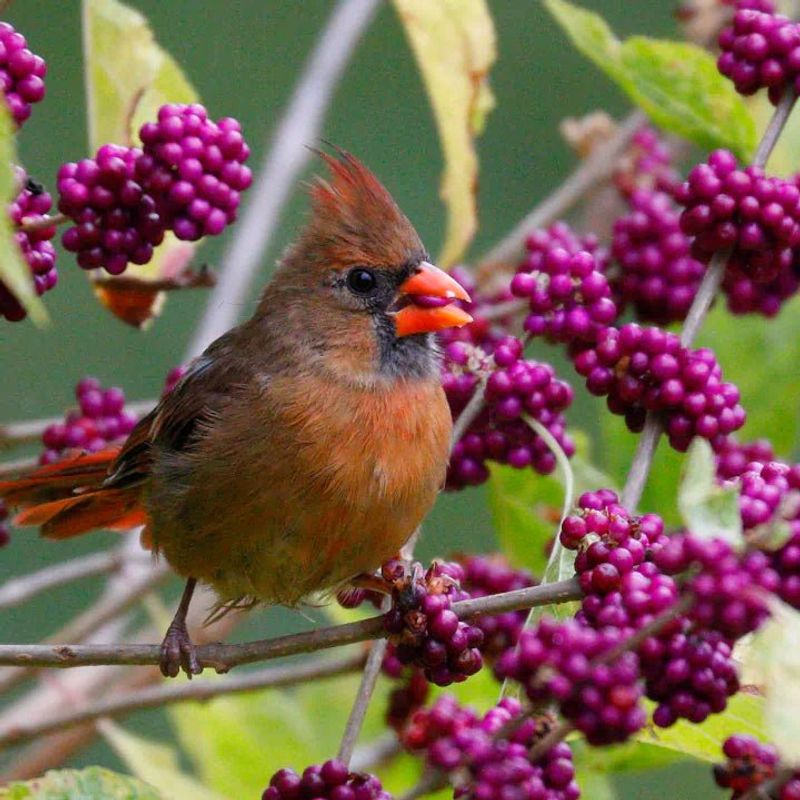
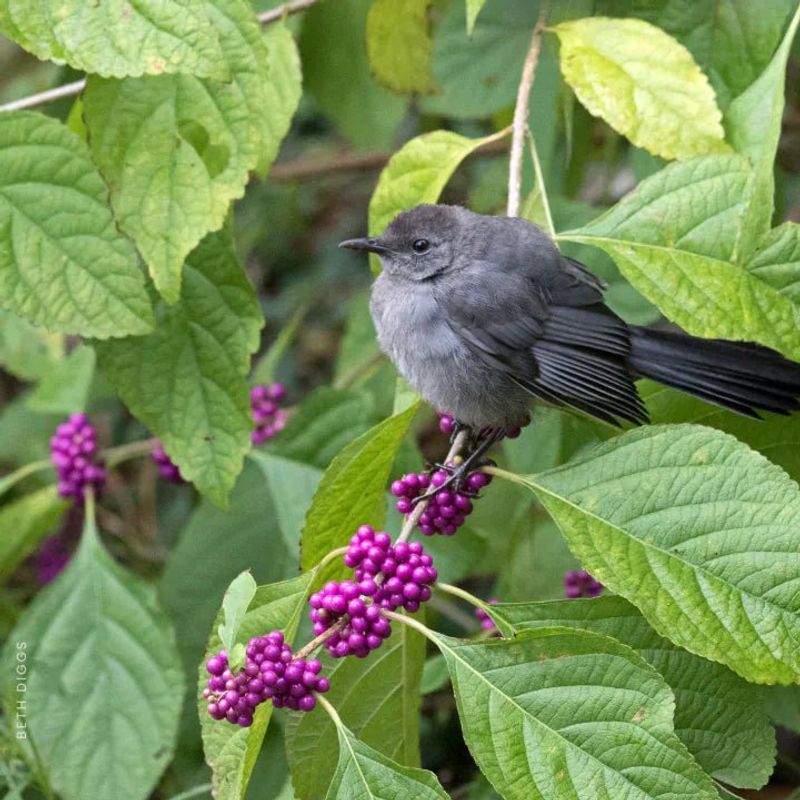
Those berries are documented food for several songbirds. American robins, brown thrashers, purple finches, and eastern towhees are among the species recorded using the fruit.
NC Wildlife guidance notes that native shrubs supply food, shelter, nesting habitat, and escape cover, which are the basic elements that make a yard usable for birds year-round.
Beautyberry can plausibly contribute food and structure to the area around a birdbath, but no published evidence shows that it keeps a basin busy with bathers or guarantees bird visits throughout every week of summer. NC Wildlife recommends diverse plantings rather than relying on a single species, and that same principle applies here.
Think of beautyberry as one useful piece of a larger habitat plan, not a stand-alone solution.
What the shrub provides across the seasons
Beautyberry earns its keep at different points in the year, and knowing that calendar prevents disappointment. The shrub flowers in late spring and early summer, generally through June and into July, producing small pink to lavender blooms along the stems.
Those flowers can attract pollinators, adding another layer of activity to the yard. Then, from roughly August through October, the berries develop and ripen into the vivid purple clusters the plant is known for, and those fruits may hang on into early winter if birds and small mammals do not strip them first.
What this timeline means in practice is that beautyberry does not deliver ripe fruit during June and July. If birds are visiting your yard or birdbath during those months, the draw is more likely insects, the water source itself, surrounding vegetation, or nearby trees than beautyberry berries.
NC State Extension confirms that the berry season runs from August through October, so the shrub’s strongest direct food contribution comes in late summer and fall.
Insects are especially important to songbirds during the nesting season, when nestlings depend on protein-rich prey rather than fruit or seeds. NC Wildlife reports that roughly two-thirds of North Carolina’s songbird species rely primarily on insects, particularly during breeding.
Native plantings support insect communities broadly, and a yard with several species of native shrubs, trees, and perennials will generally support more insect diversity than one with a single specimen shrub.
The birdbath provides water, and beautyberry provides seasonal fruit and warm-season foliage. Neither one substitutes for the other, and neither replaces the value of a yard with varied native habitat.
NC Wildlife’s guidance on feeding wildlife responsibly consistently points toward habitat diversity as the foundation, with individual plantings playing supporting roles.
Match the plant to your North Carolina site
American beautyberry is adaptable, but adaptable does not mean indestructible. Getting the site conditions right matters more than any other single factor in whether the shrub establishes well and eventually produces fruit worth talking about.
The good news is that NC State Extension lists beautyberry as suitable across the Coastal Plain, Piedmont, and mountains, so most North Carolina homeowners can consider it regardless of where they live in the state.
The shrub handles full sun to partial shade, which gives it flexibility in yards that have a mix of open and filtered light. Good drainage is the non-negotiable requirement.
Beautyberry does not tolerate standing water or consistently soggy soil, so avoid low spots that pool after rain. Sandy Coastal Plain soils generally drain well but may need organic matter at planting to help with moisture retention during dry spells.
Clay-heavy Piedmont soils can drain poorly, so amending the planting area or choosing a slightly elevated spot helps. Mountain sites tend to offer cooler temperatures and variable moisture, so check drainage before committing to a location.
Deer browse is a real consideration in many parts of North Carolina, particularly in suburban edges and rural-adjacent neighborhoods. Beautyberry is not deer-proof, and repeated browsing can set back establishment significantly.
If deer pressure is high in your area, some protection during the first growing season may be worth the effort.
At maturity, the shrub reaches roughly 3 to 8 feet tall and 3 to 6 feet wide, so give it room to spread naturally. NC State Extension recommends planting several shrubs of the same type near each other to improve fruit production, so if space allows, a small grouping of two or three plants will generally outperform a single specimen.
Beautyberry is deciduous, meaning it drops its leaves in fall and stands bare through winter. For year-round cover near a birdbath, pair it with evergreen natives such as American holly, yaupon, wax myrtle, or eastern redcedar.
Place the birdbath near cover, not inside it
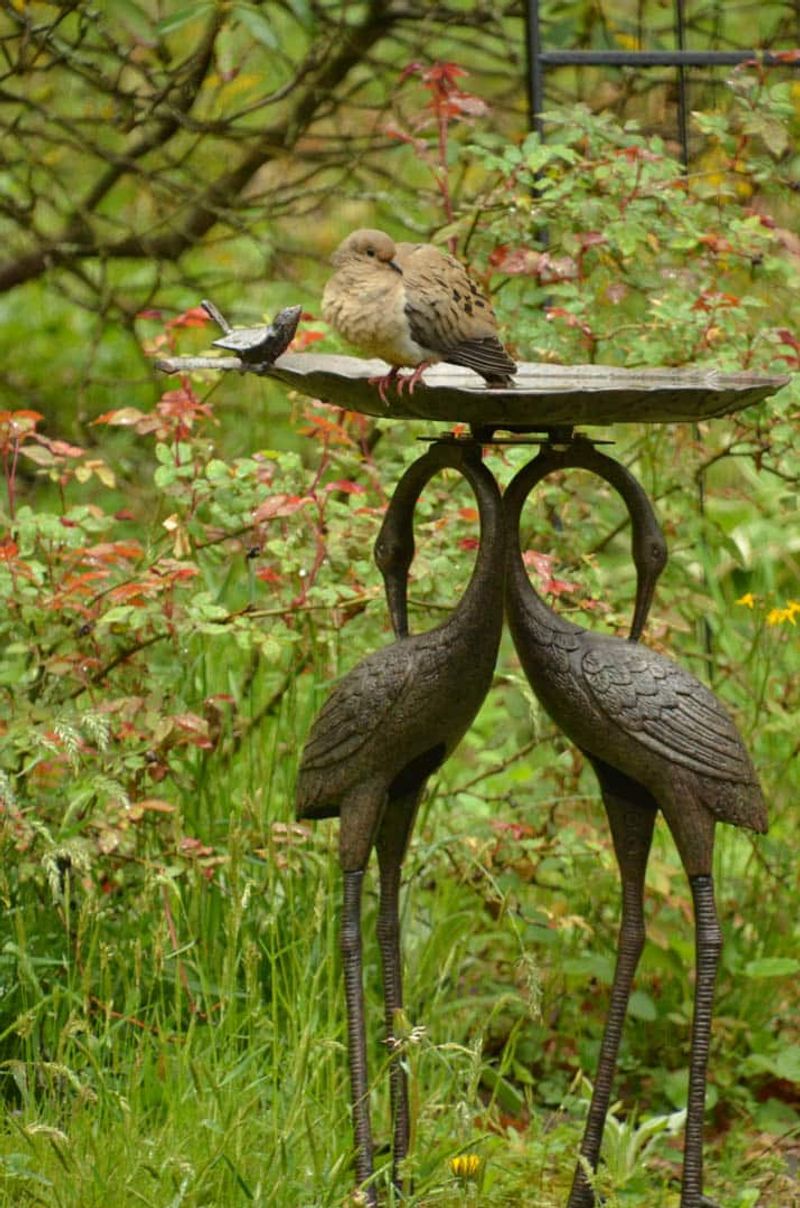
Where you put the birdbath matters as much as what you plant nearby. Birds need two things at once when they stop to bathe: a clear view of approaching threats and a quick escape route into cover.
Getting that balance wrong in either direction causes problems. A bath sitting in the middle of a wide-open lawn gives birds little protection from hawks.
A bath tucked inside dense shrub branches gives cats and other ambush predators too many places to hide.
Audubon recommends placing birdbaths near shrubs or dense vegetation so birds can retreat quickly after bathing, while also keeping the basin visible enough that predators cannot approach unseen. A practical working distance is roughly 10 to 15 feet from shrubby cover or a perching branch, close enough for a fast retreat but far enough that nothing can crouch undetected at the basin’s edge.
That guidance applies to any well-placed birdbath and is not specific to beautyberry.
Never position the bath directly inside a beautyberry’s arching branches or beneath any dense overhanging vegetation. Penn State Extension cautions against placing baths under feeders or heavy overhanging branches, where seed hulls, droppings, and leaf debris fall directly into the water and contaminate it rapidly.
A bath that needs cleaning twice a day because of overhead debris is harder to maintain and less likely to stay fresh.
Cats deserve specific mention. Domestic and feral cats are effective predators of bathing birds, and dense shrub cover near a bath can work in a cat’s favor just as easily as it works in a bird’s.
NC State’s guidance on managing urban habitats for birds emphasizes balancing escape cover with open sightlines so that neither hawks nor ground predators have an easy advantage. A nearby perching branch, a shrub border set back from the basin, and an unobstructed approach from multiple directions give bathing birds their best chance.
Build a shallow, usable birdbath
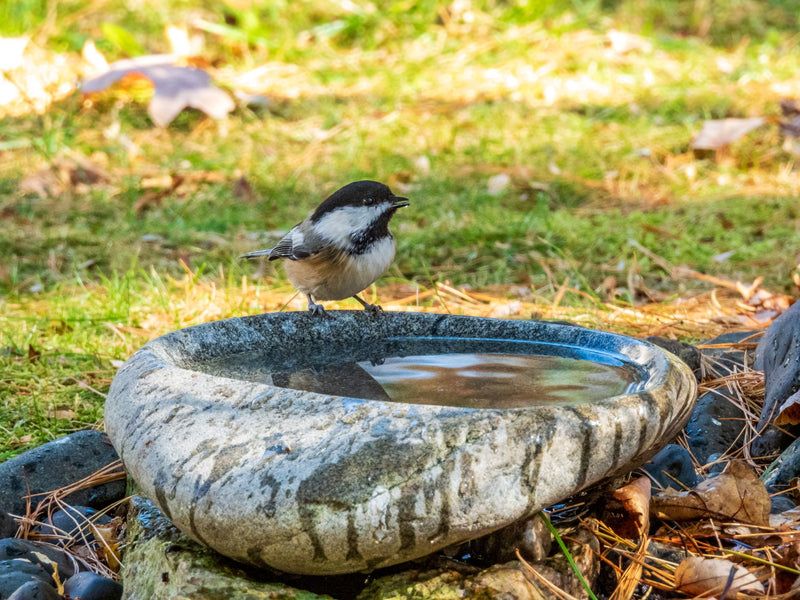
A birdbath that birds actually use is shallower than most people expect. Many commercial baths are too deep for smaller songbirds, which need to judge depth at a glance and feel secure footing underfoot.
Getting the basin right is a straightforward fix that makes a bigger difference than almost any other adjustment.
Audubon recommends water approximately 1 to 1.5 inches deep for a simple bath aimed at songbirds. Broader source guidance suggests that basins up to about 2 to 3 inches deep can work when the floor slopes gradually from a shallow edge to a deeper center, giving birds a choice of wading depth.
The key principle is to keep the shallowest entry point accessible and to avoid a steep-sided basin where a small bird cannot find footing. Adding flat stones or a large smooth rock partially submerged in the basin gives smaller birds a stable platform and helps them gauge how deep the water actually is.
Surface texture matters too. A rough basin floor or a textured insert prevents slipping and gives birds the grip they need when they are actively splashing.
Glazed ceramic baths look attractive but can be slippery when wet, so a rough insert, a layer of small stones, or a textured mat improves usability significantly.
Audubon notes that moving water, such as a dripper, fountain, or mister, may help birds locate the bath through sound and the visual shimmer of rippling water. That effect comes entirely from the water feature itself, not from any nearby plant.
A simple solar-powered dripper costs little and can make a quiet basin noticeably easier for birds passing through the yard to find. Audubon’s spring migration guidance also highlights reliable water as a meaningful resource for birds moving through residential areas, reinforcing that the bath itself carries real habitat value independent of what surrounds it.
Keep the water fresh for wildlife
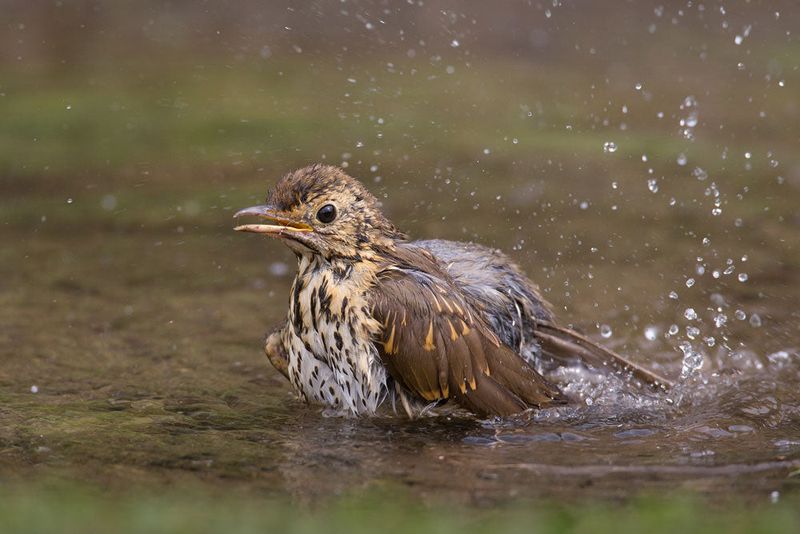
Fresh water is the feature that makes a birdbath worth having. Stagnant water in a basin does not just look uninviting; it can carry pathogens that move between birds sharing the same water source, and it gives mosquitoes a productive place to lay eggs.
Summer heat speeds up both problems, which means warm-weather maintenance has to be more frequent than most people assume.
Penn State Extension recommends changing birdbath water daily during summer when possible, combined with weekly scrubbing using a brush, mild soap, and water. Rinsing thoroughly after any cleaning is essential so that soap residue does not remain in the basin.
USGS advises emptying and cleaning baths at least weekly to reduce mosquito breeding and notes that a dilute bleach solution can be used during disease events, with thorough rinsing and complete drying before refilling. Always wash your hands after handling birdbath water or cleaning equipment.
Location affects how fast the water degrades. Baths placed directly under bird feeders collect seed hulls, husks, and droppings that fall from above and foul the water within hours.
Thick overhanging branches drop leaf debris, insects, and bird waste at the same rate. Keeping the bath in a location with overhead clearance, as noted in the previous section, reduces how often you need to intervene.
One point worth stating plainly: there is no benefit to leaving dirty water in place. Birds do not build immunity by drinking or bathing in contaminated water, and the risks of disease transmission among birds sharing a fouled basin are real.
A clean, freshly filled bath that gets scrubbed weekly is safer for the birds visiting your yard and easier to maintain consistently than one that is cleaned only when it looks obviously bad. Beautyberry adds seasonal food and cover to this setup, but it plays no role in water quality.
That part is entirely up to you.
Verify the species and prune at the right time
Two separate errors can quietly undermine a beautyberry planting before it ever gets going. One happens at the nursery, and the other happens in late spring with a pair of pruning shears.
Both are easy to avoid once you know what to watch for.
At the nursery or garden center, check the label carefully. NC State Extension identifies American beautyberry as Callicarpa americana, the species native to North Carolina.
Japanese beautyberry, Callicarpa japonica, is an introduced species from China and East Asia that NC State notes can naturalize or become weedy in the landscape. Both plants produce berry clusters and are sometimes sold simply as “beautyberry” without a species name on the tag.
Ask specifically for Callicarpa americana, and if the nursery cannot confirm the species, source the plant from a native plant nursery or a reputable native plant sale where provenance is documented.
The pruning question comes up every late winter, and the timing matters more than most gardeners realize. Beautyberry flowers and fruits form on new growth produced each season, so cutting the shrub back hard in late winter encourages vigorous new stems that will carry that year’s berries.
NC State recommends cutting back to about 1 foot high when appropriate. Complete that work before early March where feasible, because once the calendar turns, the risk of disturbing nesting birds rises quickly.
NC State’s guidance on managing backyards for birds advises avoiding routine shrub and tree pruning from early March through late July to reduce the chance of damaging active nests. If you missed the late-winter window, hold off on routine pruning until August at the earliest.
And regardless of the calendar, always check a shrub carefully for an active nest before cutting anything. A nest with eggs or chicks should not be disturbed under any circumstances.
Plan the pruning schedule around the birds, not the other way around.
Use beautyberry as one part of the habitat plan
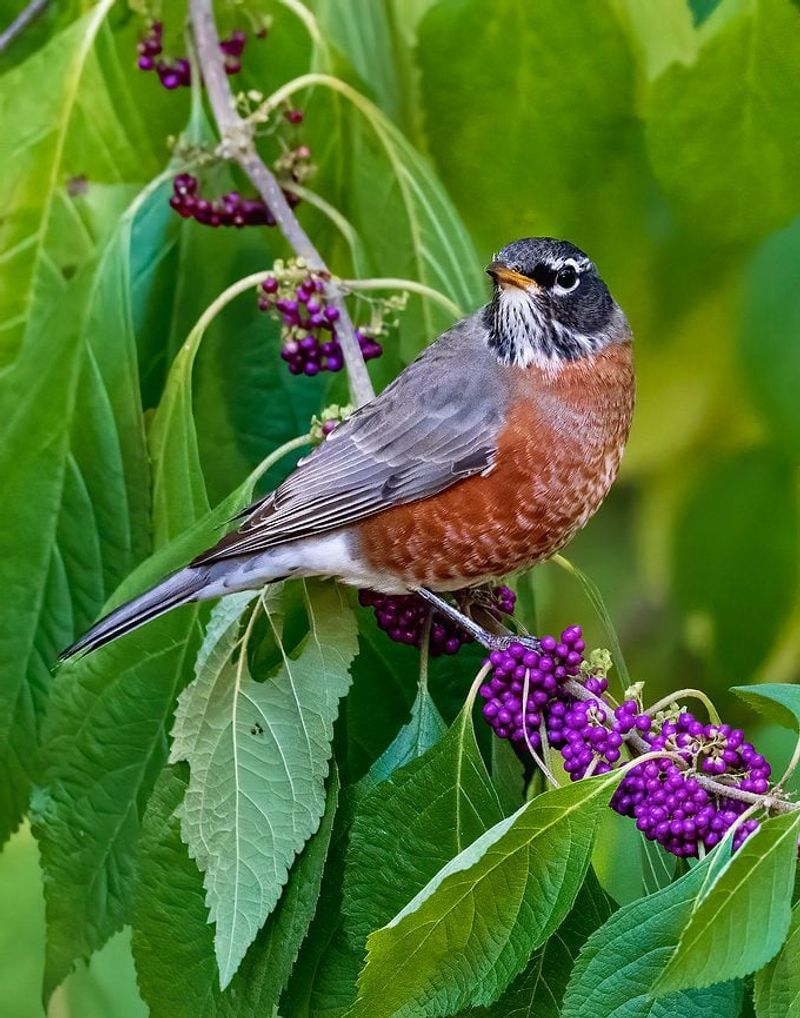
American beautyberry earns its place in a North Carolina yard as a seasonal contributor, not a guaranteed crowd-pleaser. Planted in a well-drained spot, confirmed as Callicarpa americana on the label, and paired with a diverse mix of native shrubs, trees, and perennials, it adds late-summer and fall berries along with warm-season foliage that gives birds structure and cover near a water source.
The complete picture looks like this: choose the correct species, match it to a site with good drainage and appropriate light, group several plants together when space allows to improve fruit production, and fill in the surrounding yard with other native plantings that support insects and provide year-round cover. Keep the birdbath shallow, add stones for footing, position it near but not inside protective vegetation, change the water frequently in summer, and scrub the basin on a regular schedule.
NC State Extension’s profile of American beautyberry and NC Wildlife’s guidance on responsible wildlife habitat both point toward layered, diverse plantings as the foundation of a functional yard for birds.
Audubon’s water guidance reinforces that reliable, clean, accessible water is a meaningful draw on its own. Beautyberry’s berries ripen mainly from August through October, so the shrub’s strongest food contribution comes in late summer and fall rather than across every week of the season.
A yard built around that honest timeline, with varied native habitat and a well-maintained bath, gives birds real reasons to stay.