
If Your Hydrangea Blooms Turn Brown Overnight, Here Are 13 Fixes Before The Whole Show Fades
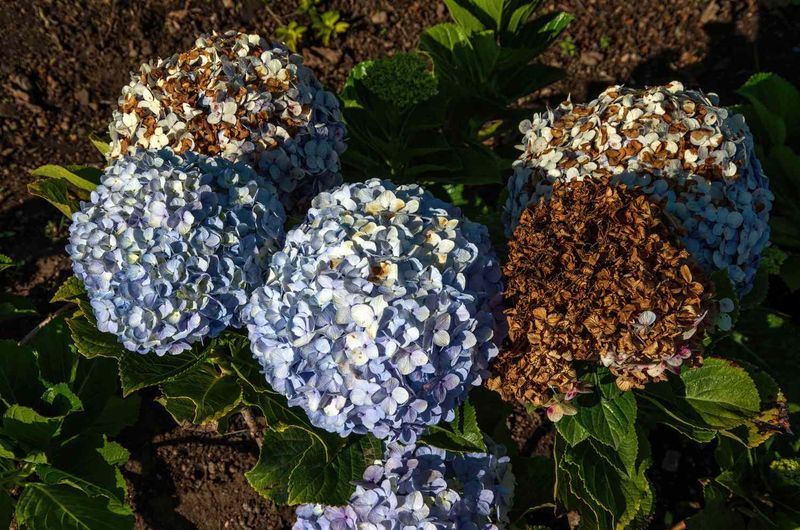
You walked outside expecting a wall of blue and pink, and instead your hydrangea looks scorched and sad. Brown blooms feel like a punch to the gut, but they are usually your plant sending an easy-to-read distress signal.
The good news is that most causes are simple to fix, and you probably already have what you need. Here are 13 rescues to try before the rest of the flowers go crispy.
1. Provide Afternoon Shade for Sensitive Varieties
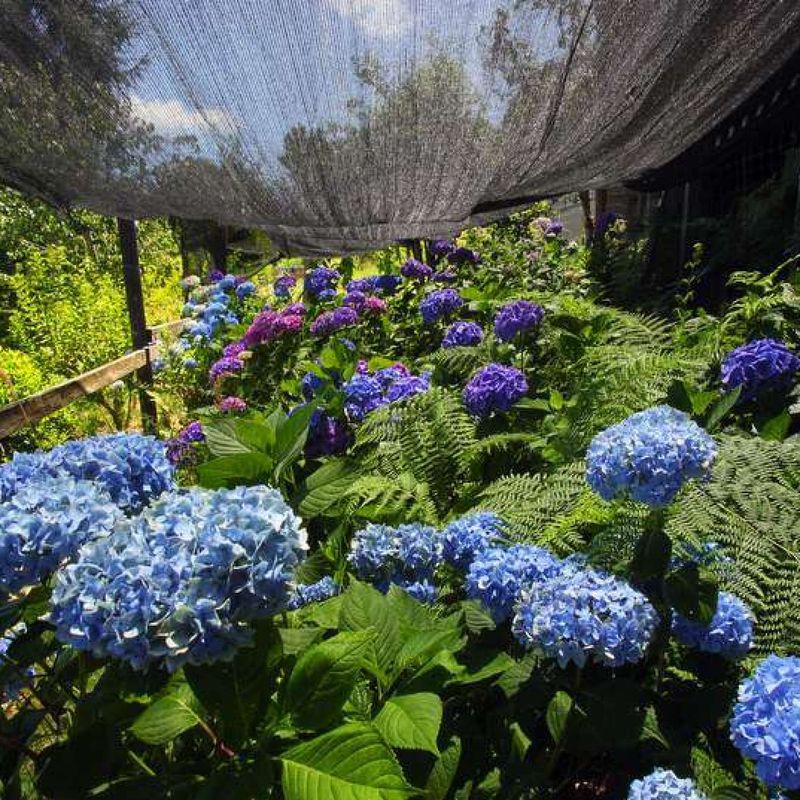
Mophead and lacecap hydrangeas have thin, delicate petals that behave a lot like tissue paper in a heat wave. When the harsh midday and afternoon sun hits them full-force, the color can drain and the edges crisp up in a single hot afternoon.
If your plant sits in a spot that bakes from noon onward, that sun is likely the culprit. A little strategic shade during those brutal hours makes a huge difference.
Try planting a taller companion nearby, hanging a shade cloth, or positioning the plant where it catches gentle morning rays instead. Morning sun plus afternoon shade is the sweet spot that keeps blooms plump and colorful.
2. Relocate Potted Hydrangeas to a Shadier Spot
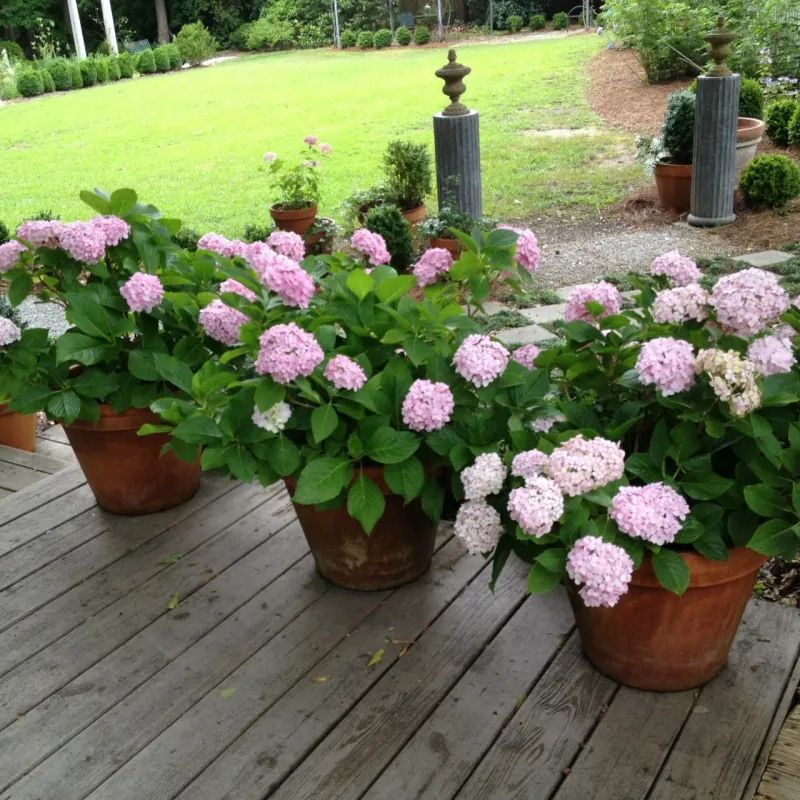
One big perk of a potted hydrangea is that it can move, and that mobility is your secret weapon against browning. Containers heat up fast and dry out even faster, which stresses the roots and cooks the blooms.
When you notice the flowers turning brown on a sunny patio, simply slide the pot to a cooler location. A spot with morning light and afternoon shade often revives the whole plant within days.
Watch how the light moves across your yard over a day. You might be surprised how much cooler one corner stays, and your hydrangea will thank you for the upgrade.
3. Water Deeply and Consistently
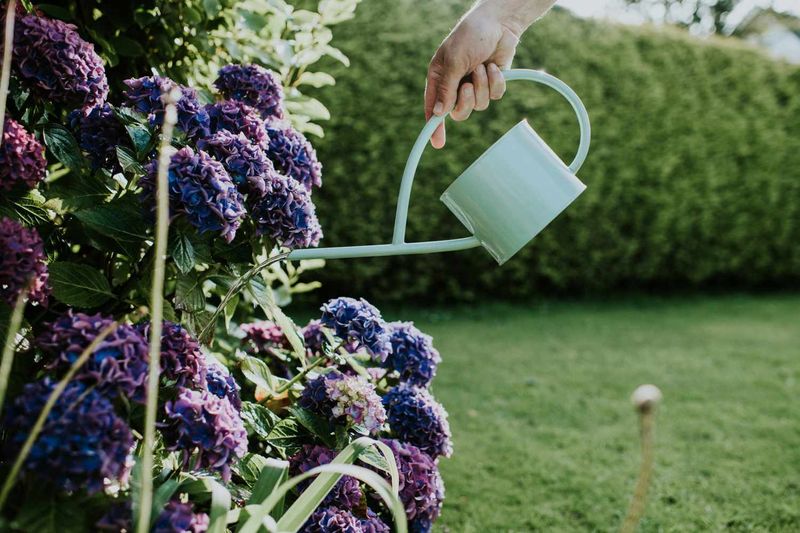
Hydrangeas practically wear their thirst on their sleeve, and the name itself hints at how much they love water. Shallow sips that only wet the top inch of soil leave the deeper roots parched, and that stress shows up as wilting, fading, browning flowers.
Aim for about an inch of water per week, more during heat spells. Water deeply every few days rather than a light splash every day.
A slow, thorough soak encourages roots to grow down where moisture lasts longer. Stick your finger a couple inches into the soil to check, and if it feels dry down there, it is time to drench.
4. Check Soil Moisture to Avoid Overwatering
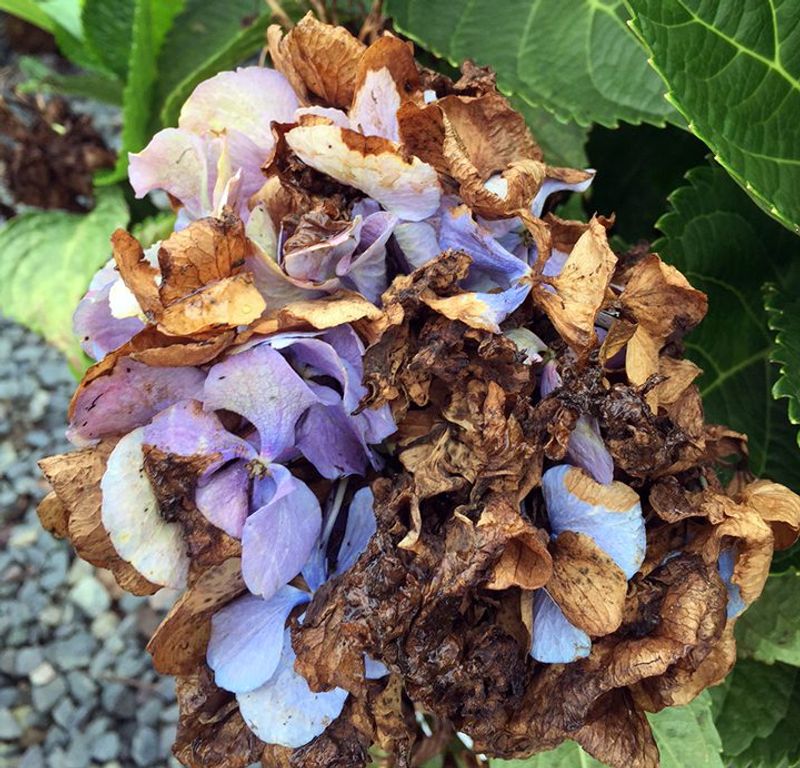
Believe it or not, drowning your hydrangea can look almost identical to starving it of water. Too much love in the form of constant watering leaves the soil soggy, roots suffocate, and blooms turn brown while lower leaves yellow and drop.
The target is moist, never muddy. If the soil squishes like a wet sponge or smells sour, back off the hose for a few days.
Good drainage is key here, so if water pools around the base, consider amending the bed or adding organic matter. Your plant wants a steady drink, not a swamp.
5. Water at the Base of the Plant
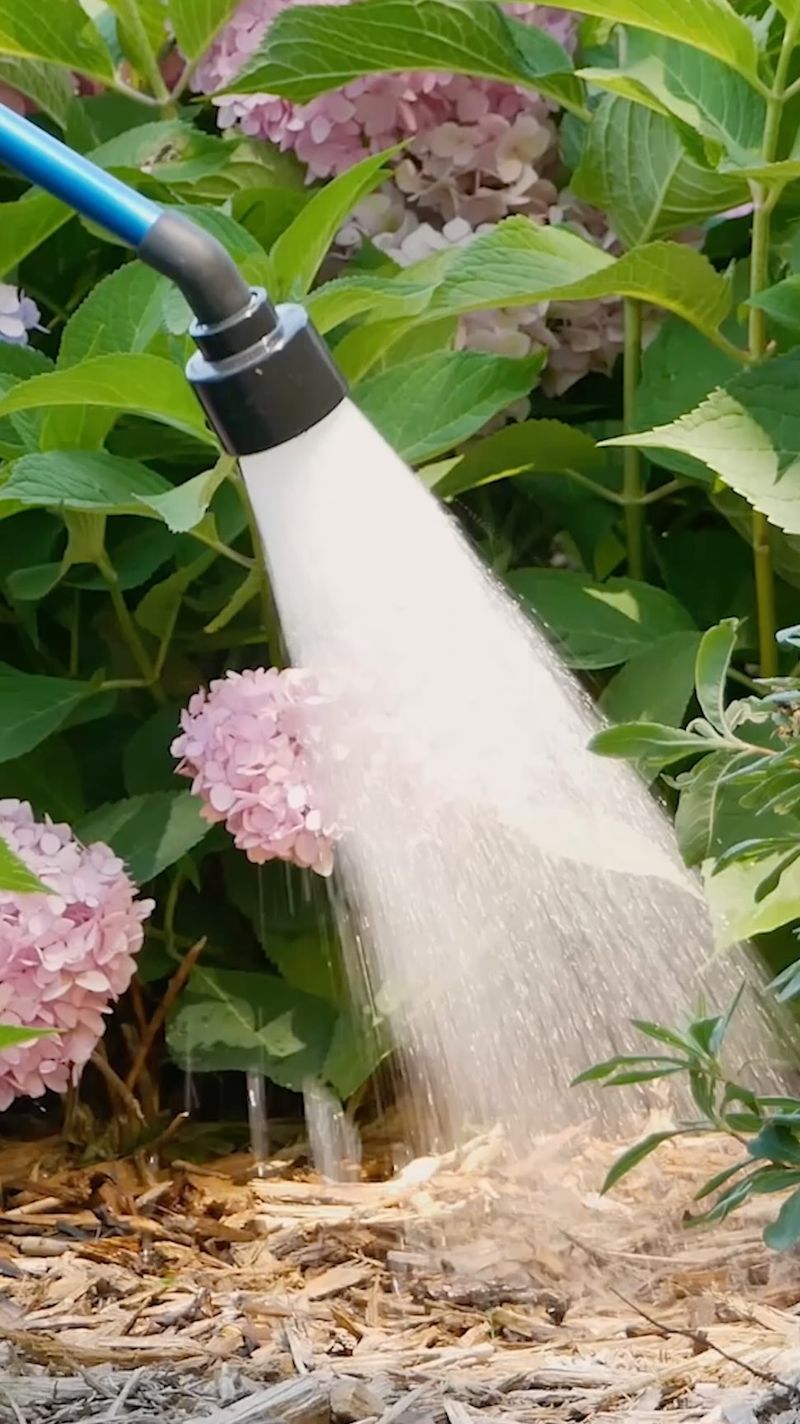
Splashing water over the leaves and flowers every day feels satisfying, but it can quietly invite trouble. Wet foliage becomes a playground for leaf-spot fungus, and that fungus browns both the leaves and the blooms.
Direct your water low, right at the soil where the roots can drink it up. A watering wand or soaker hose makes this easy and keeps the canopy dry.
Morning watering also helps any stray droplets dry off quickly in the sun. Keep the leaves dry, and you cut off one of the sneakiest causes of brown blooms.
6. Apply a Layer of Mulch
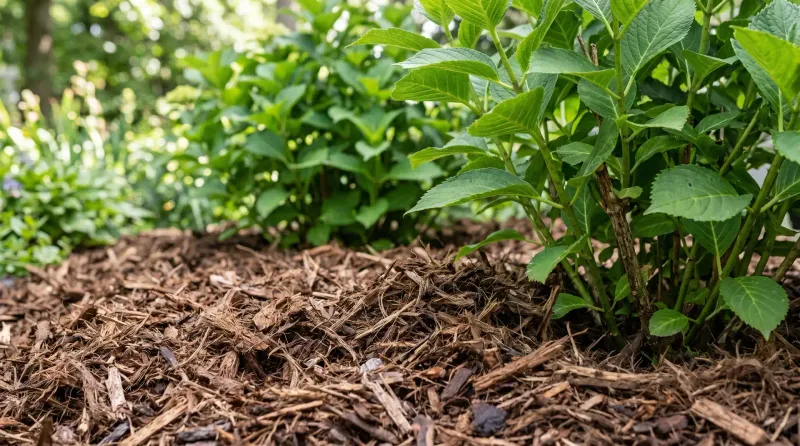
Mulch is the quiet hero that works while you are inside sipping iced tea. A few inches spread around the base acts like a blanket, holding moisture in the soil so the roots do not dry out and stress the blooms in hot weather.
Bark, wood chips, or shredded leaves all do the job nicely. Keep the mulch a couple inches away from the main stems so nothing stays soggy against the wood.
As a bonus, mulch keeps roots cooler and blocks weeds that would otherwise compete for water. One afternoon of mulching can spare you weeks of watering worry.
7. Deadhead Brown Blooms
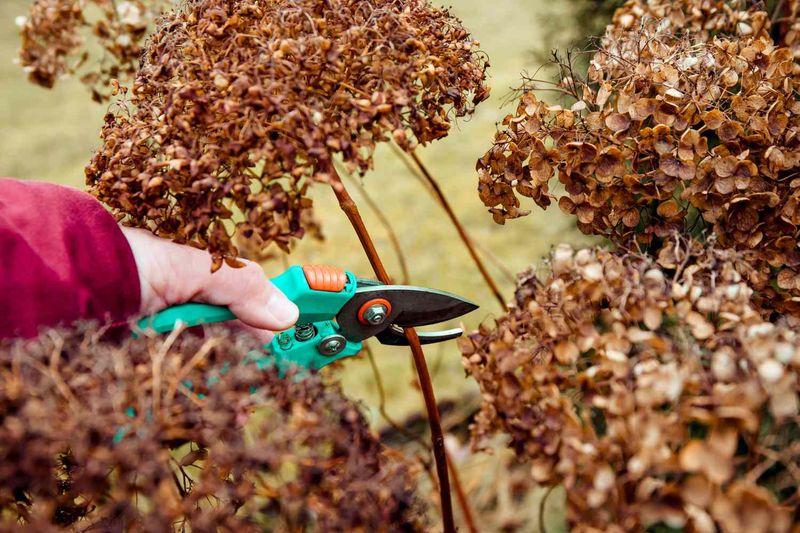
Once a bloom has gone brown and papery, it is not coming back, and leaving it hanging just drags down the whole display. Snipping those spent flowers cleans up the look instantly and signals the plant to focus energy elsewhere.
Clip each browned bloom just below where it joins the stem, using clean, sharp shears. Take your time and step back now and then to keep the shape balanced.
For reblooming varieties, this little grooming session can nudge the plant to push out fresh flowers. Think of it as a haircut that makes room for a second act.
8. Apply Fertilizer Correctly
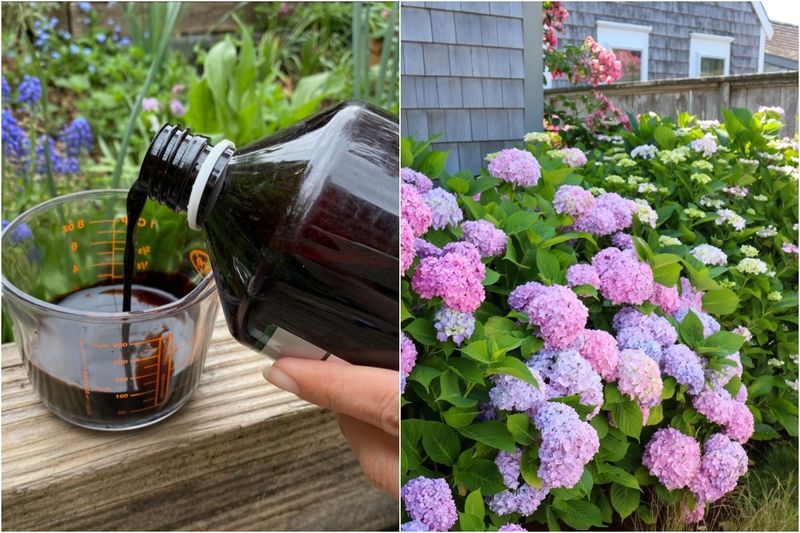
More fertilizer does not equal more flowers, and heavy-handed feeding can actually scorch your hydrangea from the inside out. Too much synthetic fertilizer, especially dumped on dry roots, causes fertilizer burn that browns leaf edges and blooms.
Always water the plant well before and after feeding, and stick to the label rate rather than eyeballing a generous scoop.
A balanced, slow-release feed once or twice in the growing season is usually plenty. When in doubt, feed lightly, because a hungry hydrangea recovers far more easily than a burned one.
9. Use Aluminum Sulfate Carefully
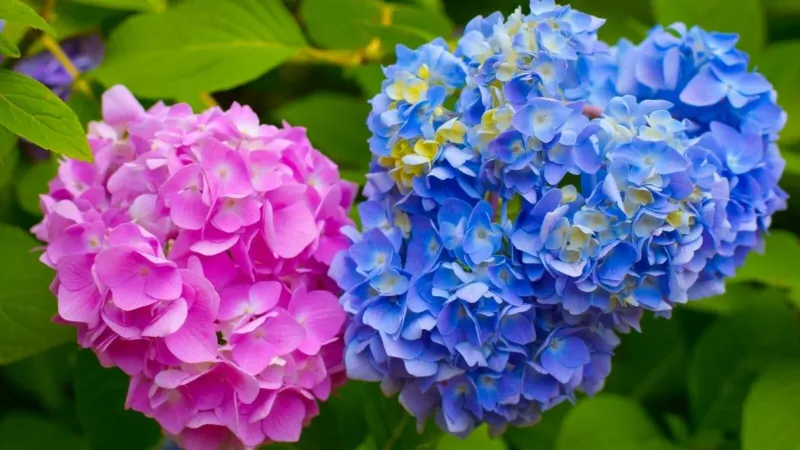
Chasing that dreamy blue color with aluminum sulfate is popular, but it comes with a warning label of sorts. Applied too strong or onto a thirsty plant, it can stress the roots and leave you with brown blooms instead of blue ones.
Stick precisely to the recommended rate and only apply when the plant is already well hydrated. Never treat a dry, wilting hydrangea.
Go slow and adjust over a season rather than trying to force a dramatic change overnight. Patience gives you that vivid blue without the crispy casualties.
10. Protect from Strong, Drying Winds
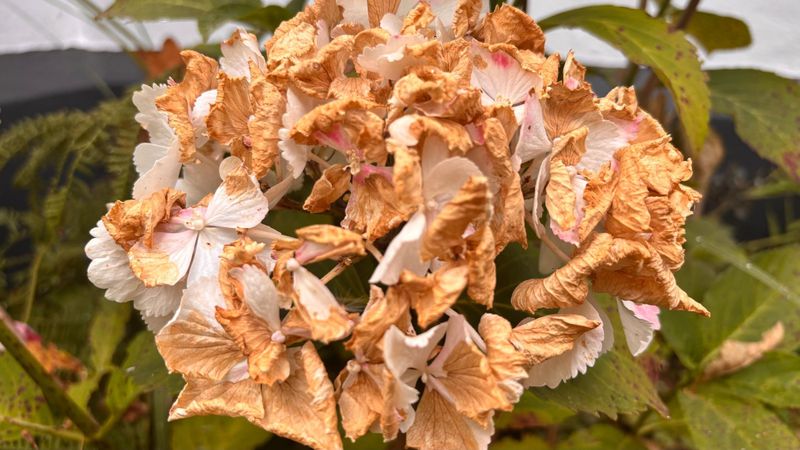
Wind is the sneaky stressor most gardeners never suspect. A steady, drying breeze pulls moisture out of leaves faster than the roots can replace it, leaving foliage curled and blooms edged in brittle brown.
Exposed corners and open, breezy spots are the usual trouble zones. If your hydrangea sits in a wind tunnel between buildings or fences, that constant gust is working against it.
Create a windbreak with a fence panel, a taller shrub, or a cluster of companion plants. A little shelter keeps the plant hydrated and the blooms looking fresh.
11. Shield Plants from Chemical Exposure
Sometimes the browning has nothing to do with sun, water, or wind, and everything to do with an accidental splash. Chemicals from cleaning products, weed killers, or even the runoff from pressure washing your siding can burn hydrangea blooms on contact.
If your plant hugs the house and you have been doing outdoor projects, that spray may have caught the flowers.
Cover nearby hydrangeas with a sheet or plastic before any cleaning or spraying job. A minute of prep protects your blooms from a chemical burn that no amount of watering can undo.
12. Consider Transplanting in Autumn for Better Sun Exposure
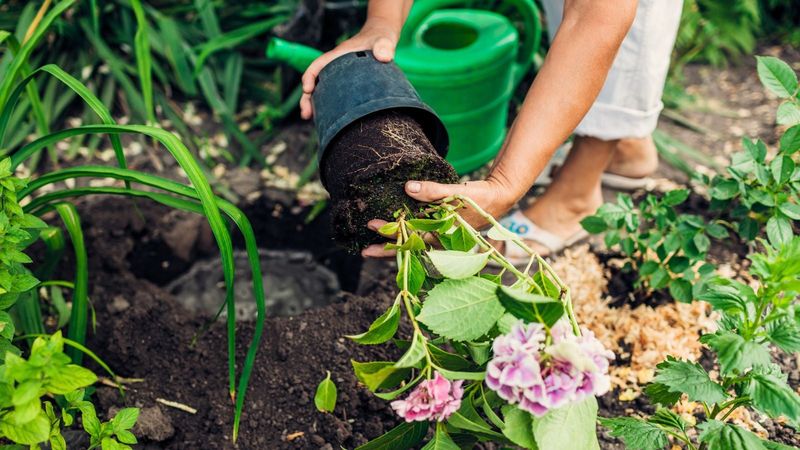
When an in-ground hydrangea browns year after year in the same sunbaked spot, the real fix is a change of address. Moving it permanently to a shadier site solves the problem for good, but timing matters enormously.
Wait until autumn to transplant, when the weather cools and the plant is winding down for the season.
Digging it up during the heat of summer piles transplant shock on top of existing stress, which can be a death sentence. Give it a cool-season move and let the roots settle before next year’s bloom show.
13. Reinvigorate Stressed Plants with a Seaweed Tonic
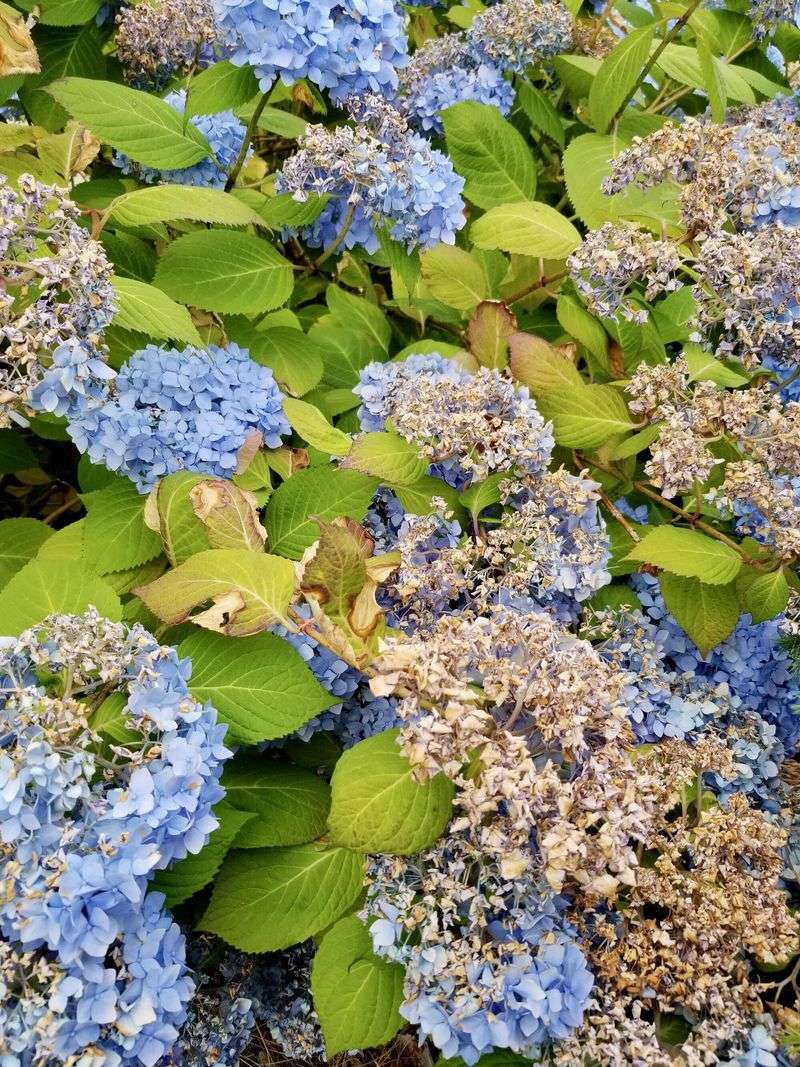
For a hydrangea that has been through the wringer with heat or drought, a seaweed tonic acts like a spa day. The natural nutrients can stimulate the roots to pull in more moisture and food, helping the whole plant bounce back.
Mix a liquid seaweed feed according to the directions and pour it around the base of a well-watered plant.
It is not a magic wand, but for a stressed shrub it may give roots the boost they need to recover. Pair it with the other fixes on this list, and your hydrangea has every chance of finishing the season strong.