
Barred Owls Calling Outside Your North Carolina Window in November: What the Calls Can and Cannot Tell You
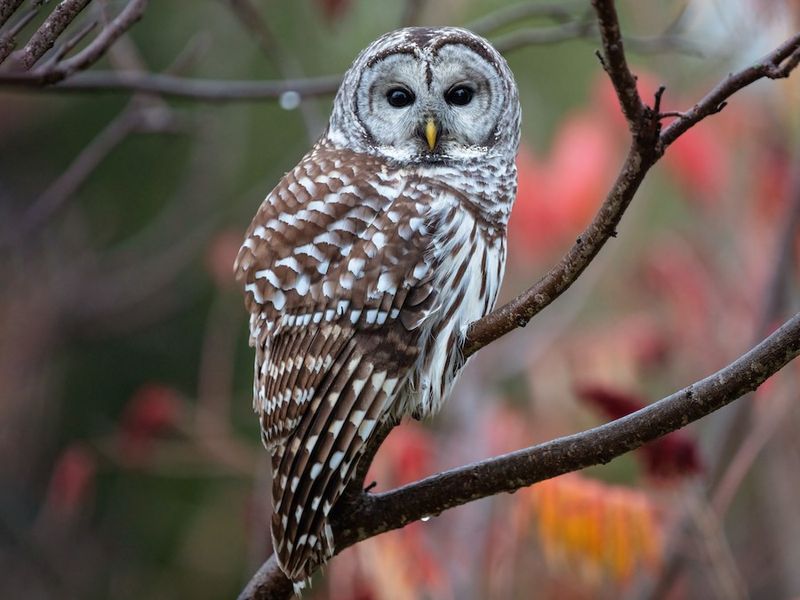
A deep, rolling hooting outside your bedroom window on a cold November night can stop you mid-thought. Many North Carolina homeowners hear it and wonder if the owls have picked a tree in the yard.
The truth is more interesting, and a little less certain. Knowing what those calls can and cannot tell you helps you care for your trees and your wildlife neighbors.
A November call is a clue, not a tree choice
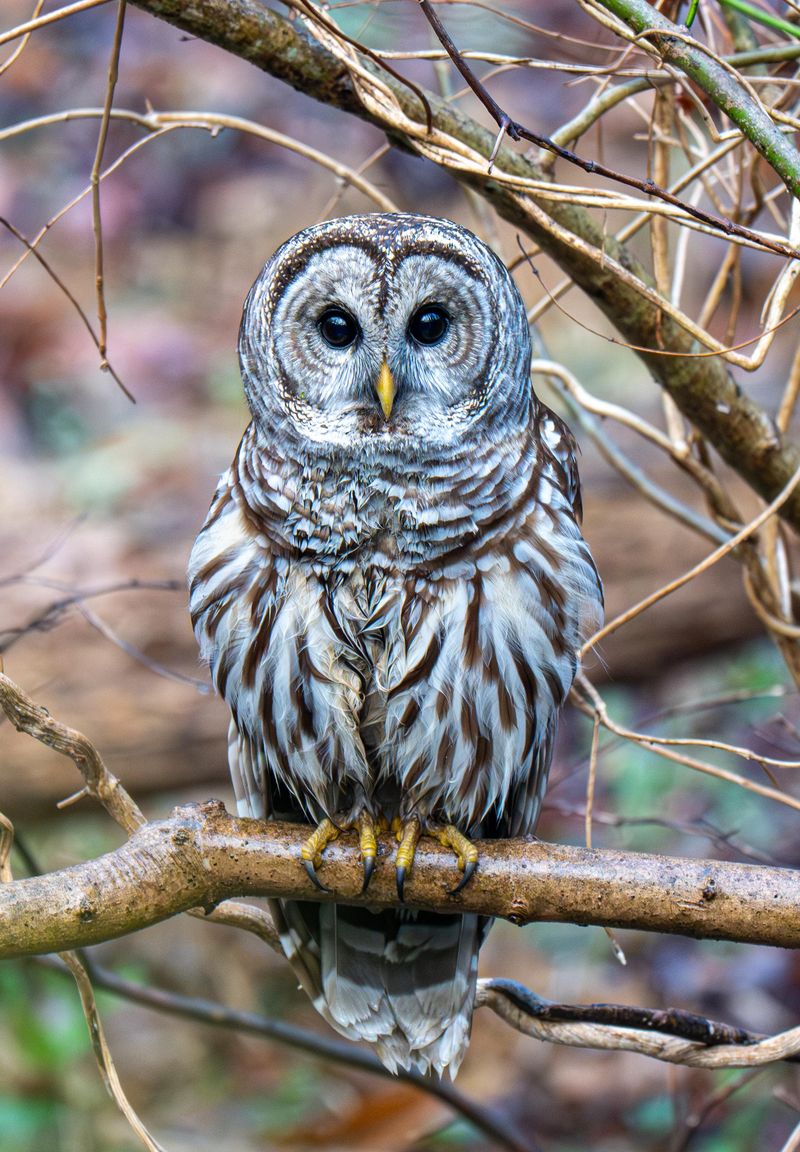
Hearing a Barred Owl in November is a real treat, but the call alone cannot tell you that a pair has chosen a nesting tree. An owl’s voice may mean it is talking with a mate, defending ground, or simply announcing itself.
It cannot show a nest-site decision.
Here is what is known. The North Carolina Wildlife Resources Commission describes breeding in the state as beginning in late winter, preceded by a stretch of vocal courtship.
Barred Owls also call all year, so a hoot in any month is not a calendar stamp for nesting.
Fall adds another possibility. Cornell’s life history notes point out that calling picks up in late summer and fall, and Cornell’s bird cam FAQ suggests this may be linked to young owls dispersing.
So a November call has several plausible explanations, and courtship is only one of them.
There is also the matter of distance. Owl calls carry far through quiet woods and neighborhoods.
The bird you hear from your bedroom could be perched in your oak, or it could be several yards or several lots away.
Think of the call as a clue that Barred Owls are active somewhere near you. The sections ahead walk through the timing, the nesting habits, and the gentle yard steps that make sense whether or not an owl ever nests nearby.
Courtship timing makes November possible, not certain
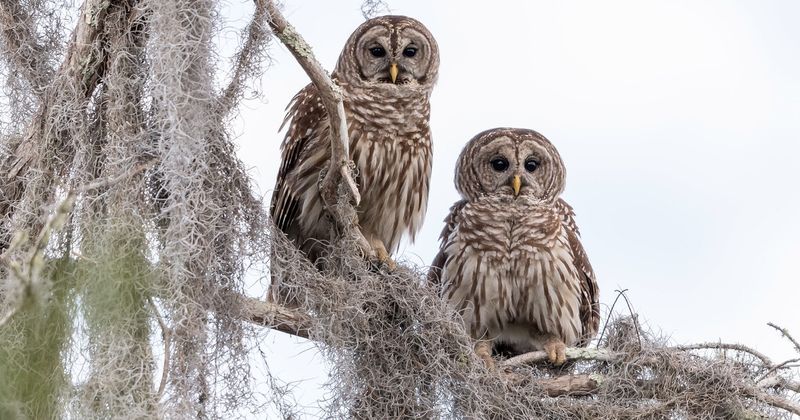
Sources describe the owl year at different levels of detail, and that is why November is a gray area. The state wildlife agency keeps it broad, saying breeding begins in late winter.
That wording points to nesting itself, not to every call that comes before it.
A regional reference, Common Owls of North Carolina, is more specific. It lists courtship beginning as early as October and eggs showing up from December through March.
By that timeline, courtship in November is possible.
Possible is not the same as certain. The two descriptions do not clash so much as zoom in on different stages.
One looks at the start of breeding, while the other looks at the lead-up of courtship and egg-laying.
Courtship is also not the only reason for a fall call. Barred Owls are vocal in every season, and fall calling may come from young owls moving away from where they were raised.
Territorial calls and other social chatter between neighbors can fit in too.
So when you hear that rolling hoot at 10 p.m. in November, nothing in the sound can sort these explanations apart. A courting pair, a defending adult, and a wandering youngster can all sound alike to a person in a bathrobe at the window.
The honest answer is that the call alone cannot tell you which one you heard.
Barred Owls favor cavities in large trees
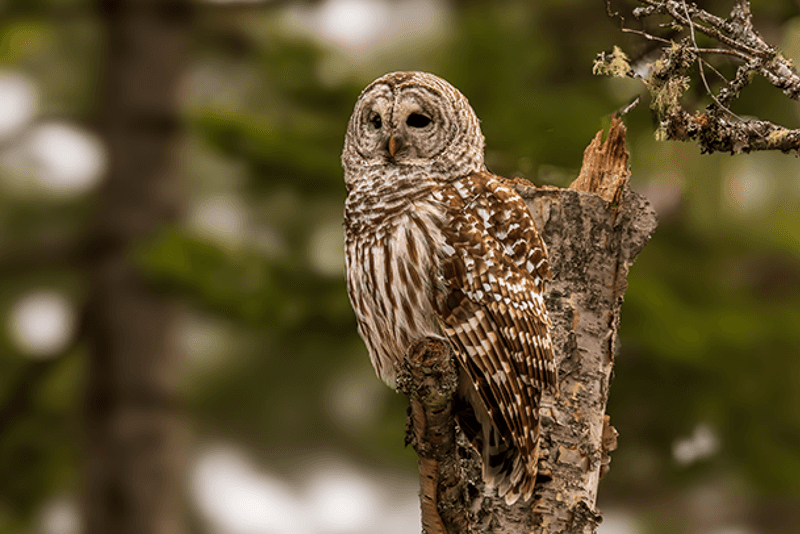
When Barred Owls do nest, they usually pick a cavity in a large tree, living or dead. According to Cornell’s life history page, they may also take over an old platform nest built by another animal, such as a hawk or squirrel.
In North Carolina, the Wildlife Resources Commission reports that Barred Owls live statewide, though they are relatively scarce in the mountains. They can nest in wooded suburban areas, which is why a neighborhood with mature trees may host them.
Its preferred nest site is a cavity in a living or dead tree.
Here is a detail that matters for anyone trying to read the calls. Cornell reports that Barred Owls may scout nest sites as early as a year before they use them.
A tree an owl visits this November might not hold eggs until a later season, or ever.
The same source says it is unknown whether the male or the female picks the site. That means even the owls’ own division of labor is not settled, so no one can say who is deciding or when.
Put those facts together and the limits become clear. A call does not point to a tree.
It does not show whether a pair exists, whether a site is being considered, or whether the bird is anywhere near your property line.
Mature cavity trees are worth keeping when safe
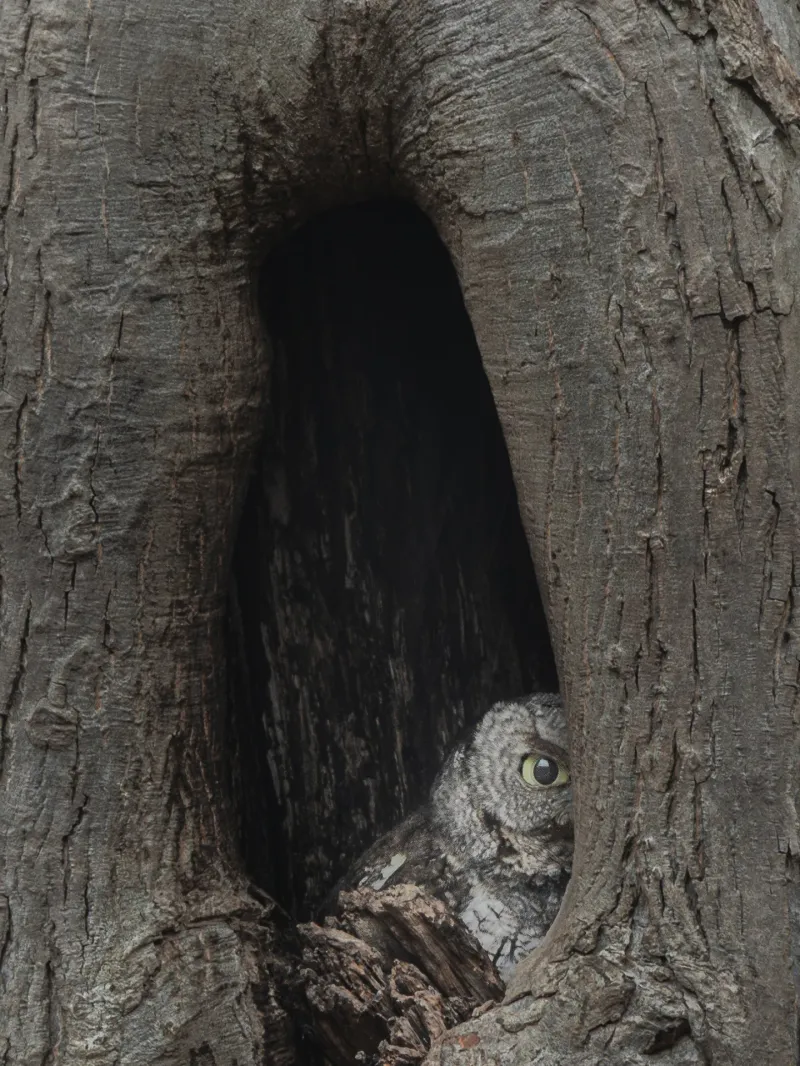
Older trees with hollows are quiet workhorses in a backyard. Cavities in large living or dead trees give owls, woodpeckers, and other wildlife places to nest and shelter.
NC State Extension’s owl guidance supports the habitat value of these older trees.
So the stewardship move is simple. If a mature tree with a hollow can be kept safely, keep it.
That choice helps a range of native wildlife, whether or not owls ever move in.
Keep your expectations realistic, though. A cavity is only one piece of owl habitat, and Cornell’s species account describes owls that use large trees across wooded territories, not a single yard tree.
Saving one oak will not guarantee that a pair arrives or stays.
Habitat value and hazard are separate questions. A tree can be good for wildlife and still be unsafe near your roof, driveway, or play area.
Calls from an owl should never be the reason to decide either way.
If you have a real worry about a leaning trunk, large dead limbs, or signs of decay, talk with a qualified tree-care professional. Do not cut, prune, climb, or poke around inside a tree because you think an owl might be using it.
Let an expert judge the tree itself, not the sounds coming from it.
Listen from a respectful distance
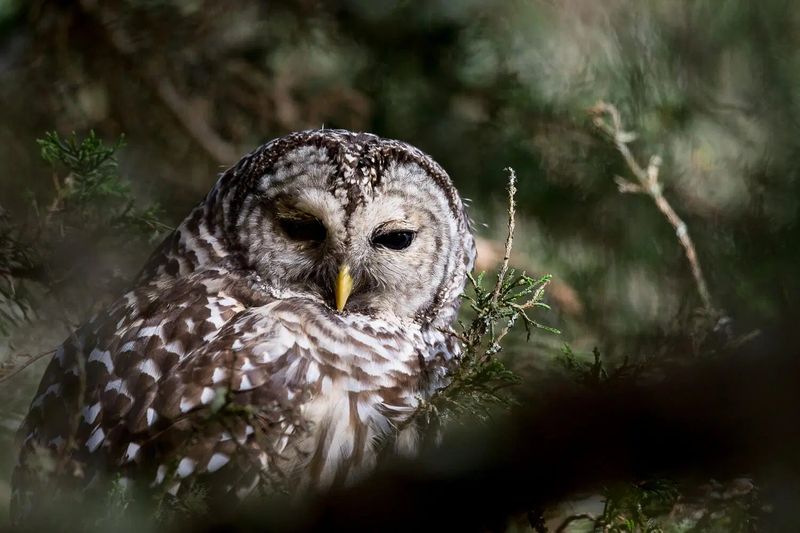
The best way to enjoy a calling owl is also the easiest. Stay inside, turn off the porch light if you can, open a window a crack, and listen.
A notebook by the window lets you jot down times and how often the calls come.
If you want to go outside, keep a respectful distance. Do not walk toward a tree you suspect holds a nest.
Skip the flash on any owl at night, and do not play recorded owl calls to lure one closer.
That advice comes from birding ethics. The American Birding Association’s code of ethics urges birders to avoid disturbing birds and to limit playback.
A U.S. Fish and Wildlife Service brochure reproduces the same guidance.
These are standards for being a considerate neighbor to wildlife.
The law is a separate matter. The North Carolina Wildlife Resources Commission states that it is illegal under federal and state law to injure, harass, kill, or possess a bird of prey, or to harm or remove its nest.
Keeping your distance is good practice on its own terms, apart from those rules. A quiet, patient listener gives owls room to go about their lives, and that is what the owls need from you.
Let the call stay a mystery for now
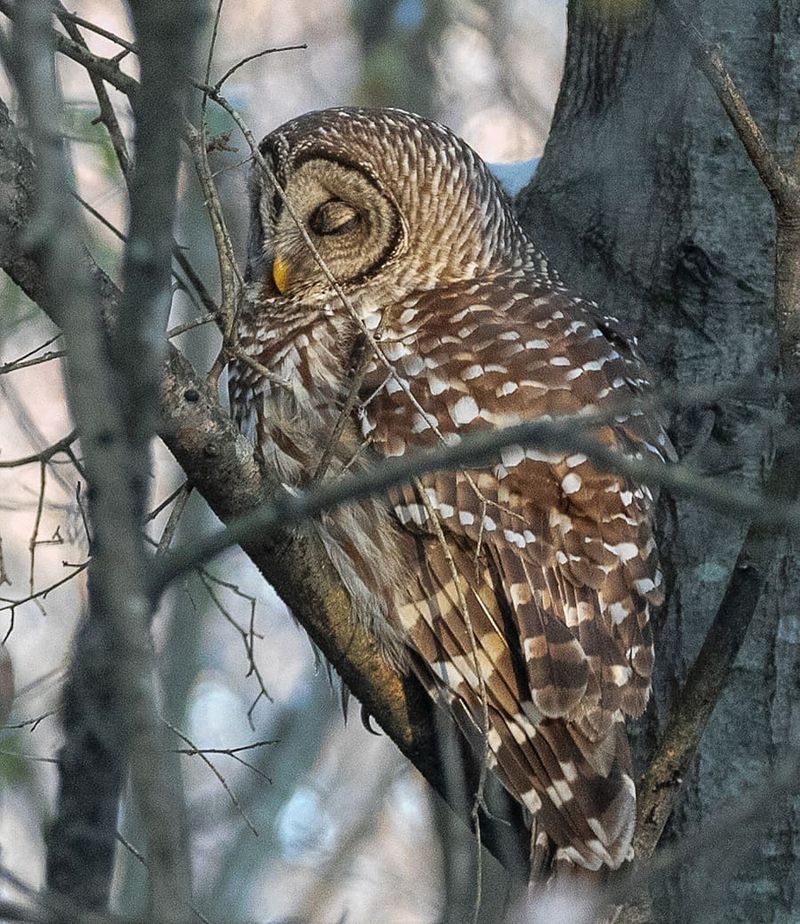
A November hoot tells you Barred Owls are active somewhere nearby, as Cornell’s life history notes would suggest for a species that calls year-round. It does not name a nest tree.
Keep suitable old trees where you safely can, and follow the birding ethics habit of giving owls space.
Some questions are better left open. The owl keeps its secret, and your yard is better for it.