
Your Garlic Planted In The Next Few Weeks Turns Into Fat, Full Heads By Early Summer
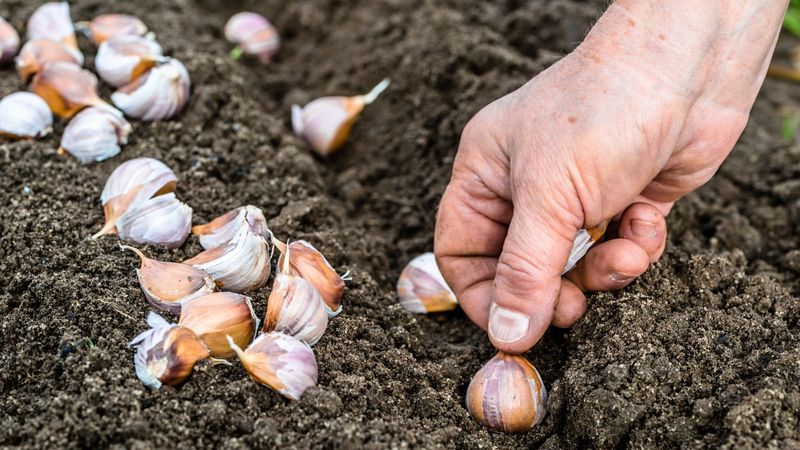
Garlic planted in fall can give you a nice harvest the following summer, and it takes very little space. The cloves root before winter and then wait for spring to grow.
Timing, clove choice, and bed care all change how big your bulbs get. Here is how to plant garlic now and care for it all the way to harvest.
When should you plant garlic in your region?
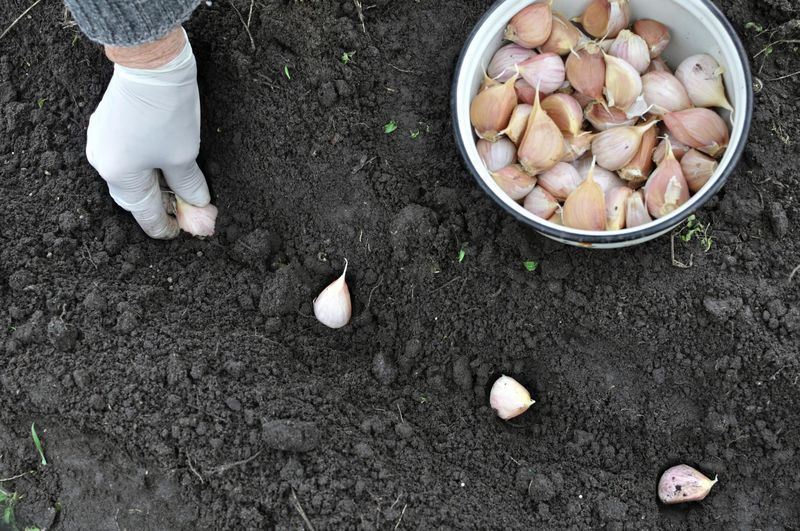
Plenty of garden posts say to plant in the next few weeks, but your calendar depends on where you live. Garlic wants time to grow roots before the ground freezes, and that window looks different from state to state.
Illinois Extension guidance suggests planting four to six weeks before the ground freezes, with October to early November as the central Illinois window. Minnesota Extension recommends planting one or two weeks after the first killing frost.
Those two pieces of advice are not the same, and both make sense for their own climates.
Why plant in fall at all? Cloves set in the ground then can build roots before winter arrives.
Cold exposure also helps many varieties form bulbs, though not every type has the same cold needs. Some varieties do better when planted in spring, and Utah State Extension notes that spring planting can work there, even if bulbs often come out smaller.
Your best move is to look up your state or county Extension office and find its planting window for garlic. Then plant while your soil is still workable, meaning you can dig it without hitting frozen clumps.
Fall planting improves your odds of a good harvest, but it is not a promise, so a little local research goes a long way.
Choose firm cloves, and save the largest for planting
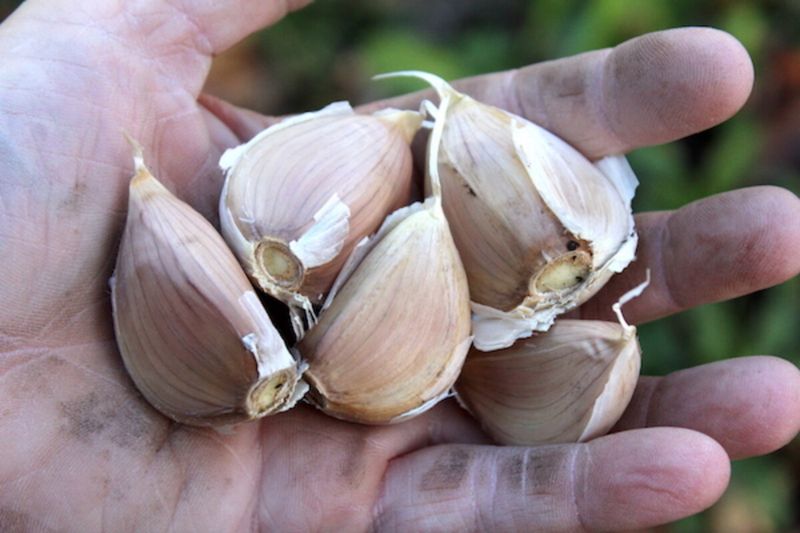
Bulb size starts long before the shovel comes out. Pick cloves that feel firm and look healthy, and set aside the biggest ones for planting.
Larger cloves tend to produce larger bulbs, which improves your odds without guaranteeing anything.
Garlic is usually grown from individual cloves, not true seed. That means any problem hiding in a clove can travel into your bed.
University of Georgia Extension points gardeners to reliable planting stock for that reason, and a reputable seed-garlic grower or garden center is a smart place to start.
What about a bulb from the grocery store? Some gardeners have good luck with them, but you cannot always tell where they came from or whether they carry disease.
If you try one, treat it as an experiment and keep your main planting to trusted stock.
Wait to break apart the bulbs until just before planting. Maryland Extension advises keeping the papery skin on each clove, since it helps protect it.
Toss any soft, shriveled, or moldy cloves, and plant the biggest, firmest ones first. The smaller cloves can go into the kitchen.
Prepare a sunny bed with room for each clove
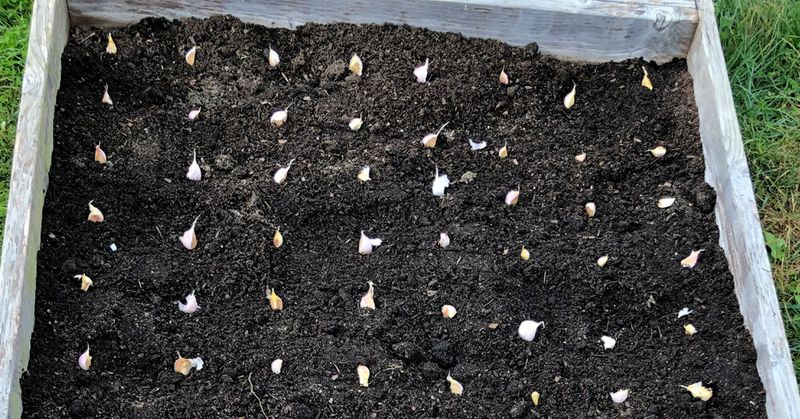
Garlic likes a spot that gets plenty of sun and drains well. Soggy ground can lead to rot, so skip low corners where water pools after rain.
Loosen the soil and mix in compost if your bed is heavy or tired.
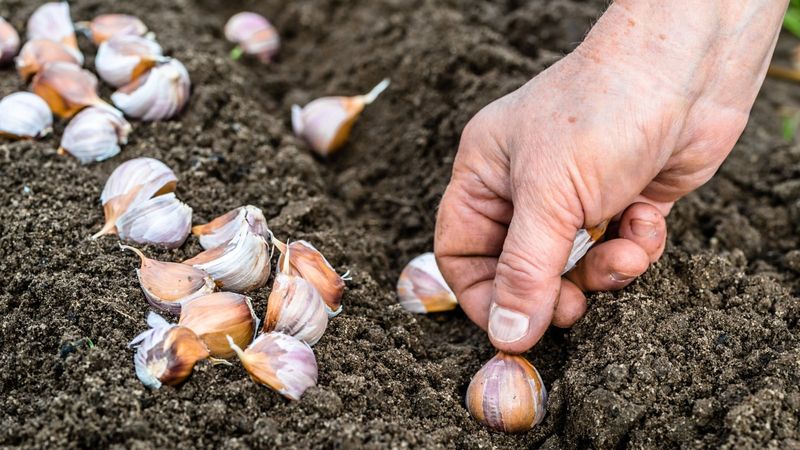
Set each clove with the pointed end up and the flat root end down. Spacing of about 4 to 6 inches between cloves is supported by Illinois Extension and other university guidance.
Giving each plant elbow room helps it reach for light, water, and nutrients without a fight.
Depth is where advice splits. Sources describe it differently, and some measure from the top of the clove while others measure to the bottom.
Check what your local Extension office recommends for your area, since soil type and winter cold both play a part. Minnesota, Maryland, and Utah guides each have their own take.
Good soil and fair spacing set the stage for healthy plants. They do not decide bulb size by themselves, because variety, weather, and care matter too.
Think of the bed as giving your garlic a fair start.
Mulch protects the bed, but conditions should guide the amount
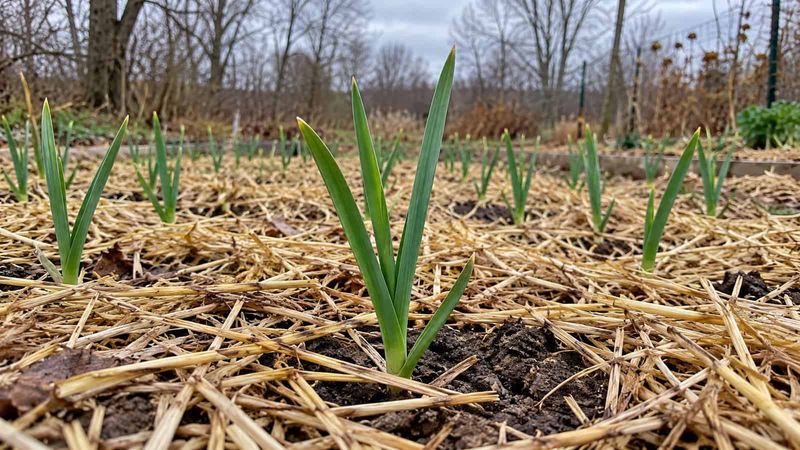
A blanket of mulch can do a lot of quiet work over winter. It moderates swings in soil temperature, helps guard against frost heaving, holds moisture, and keeps weeds from getting a foothold.
Straw and shredded leaves are common choices.
Minnesota Extension recommends 3 to 4 inches, which fits a place with cold winters. Treat that number as one regional example, not a rule for every yard.
A gardener in a milder climate may need much less.
More is not always better. Wisconsin Extension cautions that heavy mulch can delay spring warming or keep wet soil from drying out.
Garlic sitting in cold, soggy ground in spring is not happy.
That is why spring handling matters. Minnesota describes removing mulch after the risk of hard freezes passes as one option.
If your spring is wet and cool, pulling it back or thinning it may help the soil warm and dry. If your spring is dry, leaving a lighter layer may help hold moisture.
Watch your own bed. Soil that feels cold and muddy is a clue to lighten up, while dry, crusty soil says the mulch can stay.
Keep weeds down and moisture steady as garlic grows
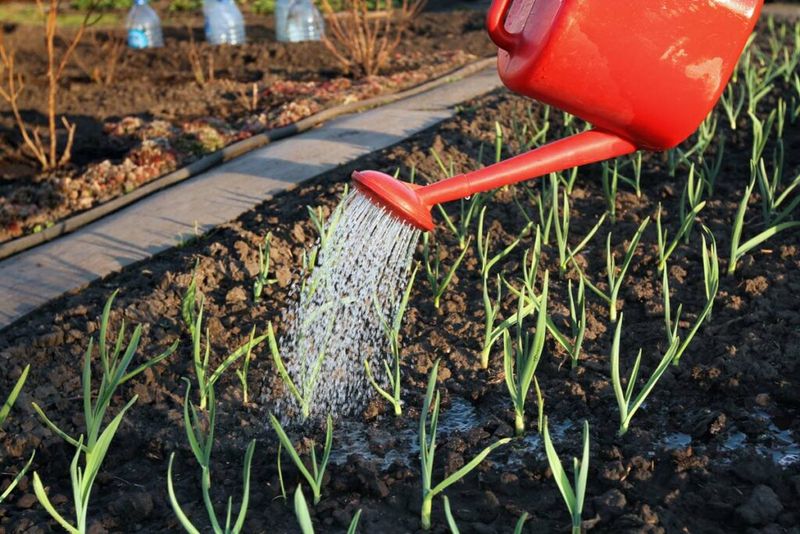
When spring arrives and green shoots push up, your garlic is back to work. It is not a strong competitor, so weeds can crowd it out.
Wisconsin Extension notes that weed pressure can reduce bulb size.
Pull weeds by hand while they are small, and be gentle near the shallow roots. A light layer of mulch can help, as long as it is not so thick that it holds the soil too wet.
Check the bed every week or so, since weeds can take over fast in warm spring weather.
Garlic also needs steady moisture while it is actively growing. Feel the soil a couple of inches down, and water when it dries out.
Minnesota Extension gives about an inch per week as a guide, but that is a local figure, not a national rule. Rainfall, soil type, and heat all change what your bed needs.
Avoid waterlogging, because soaked soil can harm roots. Georgia Extension also stresses attentive care as part of a good crop.
Garlic is easygoing, but it is not a plant you can fully forget.
Leaves that yellow early or soil that stays swampy are clues to adjust your watering. Steady and moderate beats heavy and occasional.
Hardneck scapes are edible, and removal may help bulbs
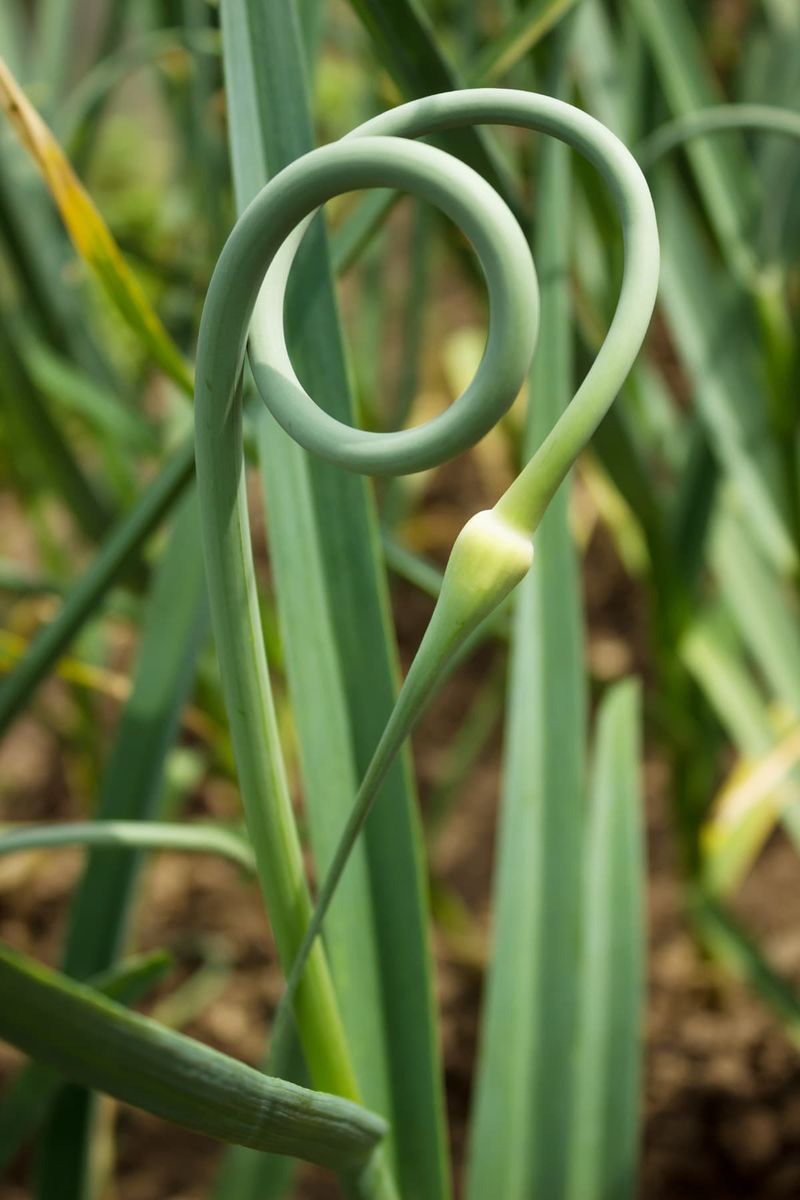
Around late spring, hardneck garlic sends up a curly flower stalk called a scape. You will recognize it as a green, twisting stem rising from the center of the plant.
Scapes are edible, with a mild garlic flavor that works in pesto, stir-fries, and eggs.
Many growers snip them off so the plant can put more energy into the bulb. Maine Extension and Washington State Extension both describe removal as a common practice for bulb development.
The benefit varies, though, and no guidance supports a fixed gain in bulb size. Wisconsin Extension reports a much smaller yield effect in well-fertilized soil than in poorly fertilized soil.
So think of scape removal as something that may help, and a tasty bonus either way.
Only hardneck types make scapes. If your garlic is a softneck variety and has no stalk, there is nothing to cut.
Snip hardneck scapes once they curl, and then enjoy them in the kitchen.
Let the leaves—not the calendar—signal harvest time
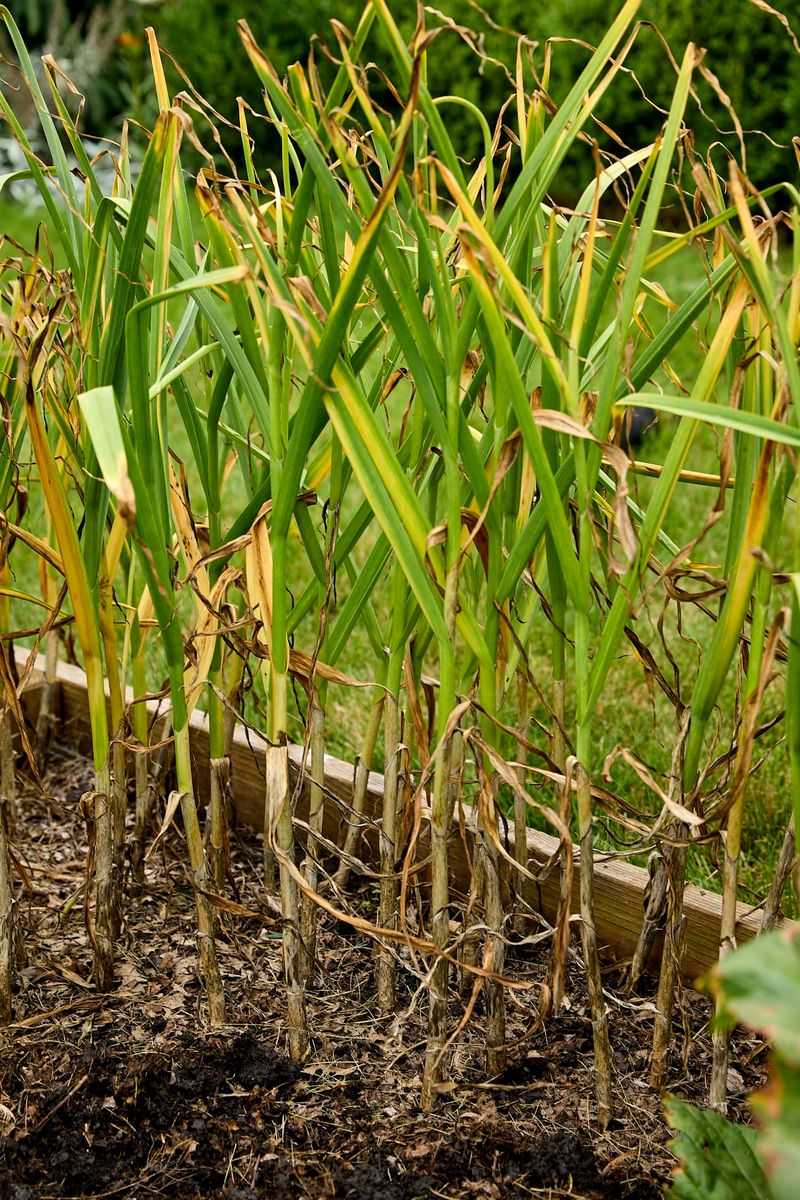
Your garlic will not read the calendar, so watch the leaves instead. Minnesota Extension recommends harvesting when the lower leaves turn brown while about half or more of the upper leaves are still green.
Each leaf above ground matches a wrapper around the bulb, so green leaves mean wrapping still forming.
Timing swings a lot by region. Minnesota guidance points to late June through late July, Maryland Extension gives about July 1, and Georgia Extension ranges from late May to mid-July.
So early summer is possible in some places, but it is not a dependable promise everywhere.
Picking too early can mean smaller bulbs. Waiting too long can let the cloves separate and the wrappers split, which hurts storage.
If you are unsure, dig up one test bulb and look at it.
Loosen the soil with a fork and lift the plants gently rather than pulling them by the stems. Then cure them by drying the whole plants in a warm, dry, airy place out of direct sun.
Once the leaves and necks are fully dry, you can trim and store your garlic.
Fall planting improves the odds, not the guarantee
A good garlic harvest comes from many small choices adding up, from local timing to healthy cloves and a well-kept bed. Variety, climate, and growing conditions still shape both bulb size and harvest date, as Minnesota and Maryland guidance show.
Let your local Extension office set your calendar. Garlic rewards patience more than hurry.